TOKYO and LONDON — The III Marine Expeditionary Force in Japan confirmed on Monday that Devin Jacob Ballard, 20, a Marine lance corporal, was the service member arrested on Sunday on suspicion of murdering a Japanese woman in a city near a U.S. base.
Ballard is assigned to the III MEF, a spokesperson told ABC News, adding that the force would not release further personal or administrative details “to protect the integrity of the ongoing investigation and adhere to privacy regulations.”
Asked whether the arrest has prompted any additional measures, including changes to liberty or personnel restrictions, 1st Lt. Tyler N. Thomas, media engagement officer for the III MEF, told ABC News, “All U.S. service members in Japan are subject to strict off-duty conduct and liberty guidelines.”
“While we continuously review our security posture and force discipline, we have no announcements regarding changes to liberty policies at this time,” Thomas added.
Ballard, who was named on Sunday by the Japanese media, was arrested on Sunday after the woman’s body was found early on Saturday in Naha, the capital city of the Okinawa prefecture. Police identified the deceased as Anna Yagi, 39, saying she was pronounced dead at the scene after being found at about 4:30 a.m. on Saturday.
Ballard was arrested on suspicion of murder and robbery. Police found Anna Yagi’s backpack near the hotel with her wallet still inside. Surveillance video indicates the suspect left the scene on foot.
Investigators are examining Ballard’s movements before and after the incident and the nature of his relationship with Yagi.
Japanese officials lodged what they described as a “strong” protest against the United States on Sunday, as word of the apparent killing spread.
“The occurrence of such an extremely brutal and heinous incident is a matter of profound regret, and as the Government of Japan, we have lodged a strong protest with the U.S. side,” Japanese Prime Minister Sanae Takaichi said on Sunday.
Shinjiro Koizumi, the Japanese minister of defense, said late on Sunday that his office summoned local U.S. military leaders to convey “Japan’s extremely serious concern regarding the robbery and murder incident that occurred in Naha City, Okinawa Prefecture, while strongly protesting to the U.S. side.”
When asked whether the case could fuel distrust of the U.S.- Japan alliance, Koizumi said the incident must not be allowed to shake public confidence in that alliance, including among Okinawa residents.
The United States has more than 50,000 soldiers, sailors, airmen and Marines stationed throughout Japan, including on several bases in Okinawa, an island chain in the south. Okinawa hosts a large share of the U.S. military presence in Japan and remained under U.S. administration until its 1972 reversion to Japan.
Ballard’s force, the III Marine Expeditionary Force, said on Sunday that it was “actively cooperating with Japanese authorities,” adding, “We extend our deepest condolences to the victim’s family and friends.”
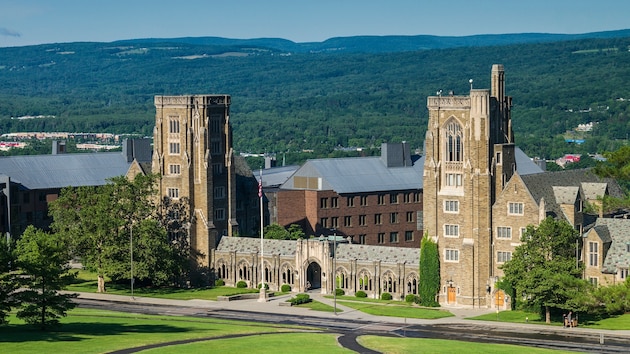
USA, New York, Finger Lakes Region, Ithaca, Cornell University, elevated view of McFaddin Hall, summer (Walter Bibikow/Getty Images)
Some of the fraternity brothers later accused of sexual assault at Cornell University attempted to contain the allegations in the weeks following the incident, apparently worried about what would happen to their own reputations and futures on campus, according to text messages, phone calls, and other records reviewed by ABC News.
Students who later spoke to campus authorities described the efforts by some in Chi Phi as “damage control” to ensure the woman allegedly assaulted — now known as Jane Doe — was “not upset about the situation,” according to school records reviewed by ABC News.
The fraternity brothers’ efforts came as Jane Doe’s perception of what occurred that evening in October 2024 appeared to change from believing the sexual encounters were largely consensual to describing them in a phone call as a “gang rape.”
“The only way for me to heal is to know what happened,” the woman, then a Cornell junior, told one of her alleged attackers, Matthew Ingalls, over the phone one day before she went to the Cornell University Police Department on Nov. 8, according to a recording of the call obtained by ABC News. “That’s why I’m trying to just piece it together, you know, like I’m just like confused.”
Ingalls, according to police records of the incident, invited Jane Doe to the fraternity house. He has not responded to requests for comment but previously denied wrongdoing as have the other brothers named in a civil suit brought by Doe. Ingalls has not been charged with a crime.
During Cornell’s investigation, he said he was too intoxicated to consent and suggested that Jane Doe actually assaulted him, according to school records reviewed by ABC News.
The Oct. 19, 2024 incident at the Chi Phi house has led to a national outcry and brought renewed urgency to the American debate over sexual violence and what constitutes consent between adults when alcohol, drugs and pressure intersect.
ABC News has reviewed records from Cornell’s internal investigation — which began in November 2024 and lasted through May 2025 — as well as communications between the students at the center of the allegations that shed light on how Doe’s account of the incident evolved, as the men involved appeared to portray the story to seem more benign.
Jane Doe has described an evening that started casually when she went to visit her friend and his fraternity house. It soon would turn into a nightmare, she later told police, as a sexual encounter between Jane Doe and two men grew to include others all while she was plied with alcohol and drugs.
“They tried to contact [Jane] almost every day after it happened to, I guess, keep them on her good side and keep her happy and not upset about the situation,” Jane Doe’s friend later told campus authorities the following May, according to records reviewed by ABC News.
Those efforts apparently were unsuccessful. Jane Doe reported the incident to Cornell Police as a rape and the allegations triggered a response from the leadership of Cornell’s Chi Phi chapter, according to text messages obtained by ABC News.
“F—-,” one brother wrote in a group chat on Nov. 8, 2024. “Should I call [Jane]?”
“Wait a bit for me and [Executive Board] to figure out what we’re doing cuz there are a couple of other things going on,” the fraternity’s president wrote. “When was the last time you spoke to [Jane]?”
The same day that Jane Doe went to police, Cornell’s Chi Phi fraternity was suspended, and the allegations triggered a monthslong investigation by Cornell University, which resulted in two men being expelled while others were suspended.
Cornell Police began investigating the incident in November 2024, memorializing her first report: “A female undergraduate student reported that she was recently raped by 8-10 men at the Chi Phi fraternity house.”
Prosecutors did not seek additional records of the incident beyond Jane Doe’s six-page statement to campus police and did not review the voluminous record of the internal probe.
Tompkins County District Attorney Matthew Van Houten said in a statement last week that Doe’s original statement suggested the sex and drug use was consensual.
Last week, New York Gov. Kathy Hochul removed the local DA from the case and named state Attorney General Letitia James to take over the criminal investigation of the incident. Separately, Cornell has announced an outside law firm would be tapped this week to review the university’s handling of the allegations and subsequent investigation.
‘What y’all did would be classified as gang rape’
In the days immediately following the incident, Jane Doe stayed in touch with some of the men she later accused of assaulting her – at first sharing concerns about her reputation and physical health.
“I will also say this is f—–g RUINING my life temporarily. My reputation is destroyed and I’m utterly ashamed. I’m f—–g pissed cause this many people shouldn’t know and I feel like I know who some of the rats in the room were,” she wrote to Ingalls, who had invited her to the fraternity that night.
Within two days of reporting the incident to police, Jane Doe contacted Ingalls and two other men allegedly involved in the incident to get their assessment of what happened that evening. She said she had been to the emergency room and going through therapy in order to deal with the physical and psychological fallout. She recorded the phone calls and later provided them to Cornell University.
“If I just know what happened, then I can feel a little bit better and move on and maybe be able to stay at this school,” Doe told Ingalls, according to a recording of the call.
She mentioned that she had sustained physical harm from the episode, was struggling to finish the semester and could not understand how the events of the evening transpired.
Ingalls was insistent: “You did tell me you were sober, by the way,” he said, according to the recording. “You did, you said you hadn’t been anywhere.”
She pushed back, saying “That is not true. I never would have said that.”
Jane Doe also asked about how so many people ended up in the bedroom where the sexual encounters took place over the course of hours.
“Do you remember how any of these guys walked in?” she asked.
“The door was just unlocked…the party was sort of like crowded…there was nowhere else to go,” he responded.
Nowhere in that conversation did Ingalls mention the messages he sent into his fraternity’s Snapchat group in which he openly invited others to the room.
“Like you can walk in and whip it out,” the Ingalls wrote in the group, which had nearly 60 members. “Boys come whip it out.”
Those messages were provided to university investigators and have been obtained by ABC News.
At one point in the call, Jane Doe described the incident bluntly: “What y’all did would be classified as gang rape.”
“It’s possible that both of us like remember this and it’s not true,” Ingalls said at another point during the call.
“I don’t think that that’s true. No, no, because I remember looking up and being like that is too many people,” she responded.
‘F—k, should I call [Jane]?’
When Chi Phi was notified about the chapter’s temporary suspension the same day Jane Doe went to police, some of the brothers tried to figure out the source of the allegation, according to text messages reviewed by ABC News.
“What’s the plan of action? Should I call [Jane Doe)? I don’t think she would have reported this,” Ingalls wrote in a small group chat.
Chi Phi’s then-president urged Ingalls to wait, pointing to how Cornell University initially listed the incorrect date for the alleged incident.
Within the chat, the brothers tried to reconcile what date the incident took place by comparing the themed parties that took place that month.
“Wait that was the night with [Jane Doe],” one brother wrote. “What party did we have on the 19th?”
“The 25th was the risky business party,” one brother wrote, while the incident took place the prior week during their Hawaii-themed party.
When police later questioned witnesses to the incident, one brother told police the incident had been discussed casually during a fraternity meeting, rather than a coordinated response.
“These guys were just being idiots and like we’re very open about doing this kind of gross thing to most people and so that was it,” one brother said. “We didn’t like have it aside – like this happened once. No it was like just a quick thing.”
‘If the evidence is convincing enough to let us go….’
Months later, when Jane Doe made a statement before one of Cornell’s internal investigative hearings, she explicitly called out what she described as “the coverups these boys attempted.”
Investigators looked into at least one instance when Ingalls appeared to ask one witness to “submit new evidence” that could exonerate him.
“You could submit new evidence that could get me and [Name Omitted] dismissed immediately. Even if [Jane Doe] found out it doesn’t matter, if the evidence is convincing enough to let us go then it’s proof she lied.”
“I don’t have evidence,” the woman – a friend of Jane Doe – said over Snapchat.
The friend shared the message with Jane Doe, who reported it to the university. The witness later told campus investigators that Ingalls sent her other messages to convince her to believe his account.
“From the beginning, after it happened and [Jane Doe] started telling me that it was not consensual from the beginning,” she said. “He wants to convince me that she is lying and he tried to convince me in other messages like this one that she was lying and he said that, ‘You know that she’s lying And you know that we would never do this.’”
Caleb Flynn listens to the reading of his guilty verdict inside the Miami County Court of Common Pleas, Sept. 29, 2026, in Troy, Ohio. (Pool via ABC News)
An Ohio man who was found guilty of murdering his wife and staging the crime scene to make it seem as if an intruder had broken into their home and fatally shot the mother of two is set to be sentenced on Monday.
Caleb Flynn, 40, a former pastor who once appeared as a contestant on “American Idol” in 2013, was found guilty of aggravated murder and multiple counts of murder, felonious assault and tampering with evidence in connection with the death of his wife, 37-year-old Ashley Flynn.
The jury deliberated for nearly 2 1/2 hours before reaching a verdict on Sept. 29, finding him guilty of all charges. His sentencing hearing is set to begin at 3 p.m. ET Monday. He faces up to life in prison without parole.
Caleb Flynn called 911 early on Feb. 16 to report that his wife had been shot by an intruder at their home in Tipp City, north of Dayton. He was arrested three days later.
Prosecutors alleged that Caleb Flynn “executed” his wife by shooting her twice in the back of the head in bed so that he could be with his mistress and manipulated the crime scene to make it seem as if an intruder had broken in through the garage.
During closing arguments, Miami County Assistant Prosecutor Matthew Joseph pointed to evidence including the physical scene and a side garage door he said was made to look as if an intruder had damaged it, Caleb Flynn’s 911 call, text messages between the defendant and his mistress discussing the end of his marriage and digital records from the night of the shooting, which he argued “leads straight to the defendant.”
“The evidence showed that being the victim would allow the defendant to keep his lucrative job working for Ashley’s family business, he would benefit from Ashley’s life insurance, and he could keep his position as a working worship leader with zero impact to his reputation within the church,” Joseph said during closing arguments on Sept. 29 in the Miami County courtroom. “The evidence does not tell the story of an intruder.”
Defense attorney Patrick Mulligan argued during his closing that the state’s evidence is circumstantial, and that the only thing prosecutors proved was that Caleb Flynn was having an affair.
“Connecting a couple of meaningless dots doesn’t solve the case,” Mulligan told jurors.
Caleb Flynn did not testify during the trial and the defense called no witnesses.
He denied killing his spouse in an interview with police days after the deadly shooting, according to video shown during the more than weeklong trial.
His former mistress testified for the state during the trial, reading from some of the more than 100,000 messages they exchanged over her two days of testimony.
“If I could literally kill her and not go to hell, I would do it in a heartbeat,” Caleb Flynn said in one message from May 2025, Botner testified.
Following the guilty verdict, Mulligan told reporters that he expected there to be a notice of appeal filed.
When asked what appellate issues they have, he said, “There’s a lack of evidence on prior calculation and design.”
Prosecuting Attorney Paul Watkins, whose office prosecuted the case, thanked the jury “for their dedication to justice in this case.”
In a statement read by Watkins, Ashley Flynn’s family said they “refuse to let the evil that ended Ashley’s life have the final word in her story.”
“Ashley loved Jesus with her whole heart. Her faith wasn’t simply something she simply spoke about. It was how she lived,” the statement said. “She loved people well, found joy beyond her circumstances, prayed boldly for her family, and wanted her life to point people to Jesus.”
“Most of all, she loved being a mom,” the statement continued. “She prayed over her girls, taught them to love God, and showed them what it looked like to live with faith, kindness, joy, and grace.”
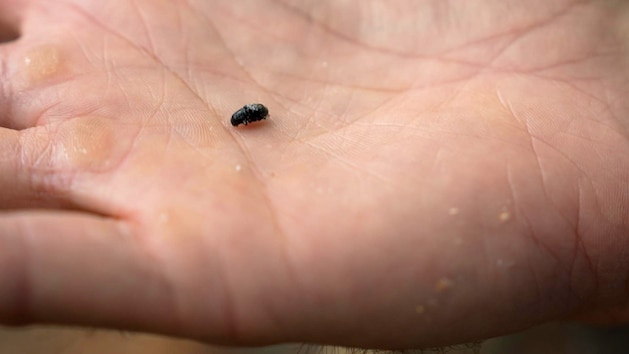
The mountain pine beetle is the size of a grain of rice but can inflict colossal harm to forests. (ABC News)
To walk deep into the mountain forests at the doorstep of the Rocky Mountains, is to encounter the fragrant majesty of century-old ponderosa pine trees famous for lining ski slopes, National Park trails and residential neighborhoods.
Now, those iconic Colorado trees — already under strain from record heat and prolonged drought — are threatened by a rapidly growing outbreak of silent killers: the mountain pine beetle.
The size of a grain of rice, the native forest insect can attack a tree in a matter of weeks, feeding upon its critical tissues and effectively strangling it from within.
“Once a tree has been attacked, it’s likely to die,” said Sarah Hart, a forest ecologist with Colorado State University. “For managing large landscapes, we really don’t have particularly effective strategies to stop it.”
WATCH: Outbreak: Hidden Costs of the Climate Crisis at 7 and 9 p.m. ET Monday on ABC News Live PRIME, streaming on Hulu, Disney+ and ABC News apps.
More than 700,000 acres in Colorado are affected, officials say. Climate change is blamed for supercharging the emerging outbreak, with no end in sight.
Some state officials have called them “zombie forests”: ponderosa that appear to be healthy but are under existential threats from a changing climate that may result in extinction in some areas.
“We’ve had this dearth of precipitation, above-average temperatures — It’s kind of like attacking the bank when there’s no security guard,” said Dan West, an entomologist with the Colorado State Forest Service. “These trees are standing there with not a lot of defenses.”
The cost of responding to the pine beetle outbreak, along with the financial impacts from other climate-change influenced environmental threats, are at the heart of a major Supreme Court case being argued Monday in Washington.
The City of Boulder and Boulder County, Colorado, in 2018 sued major fossil-fuel producers Exxon Mobil and Suncor Energy, seeking financial damages under state public nuisance law.
Their complaint alleges the companies “knowingly caused and contributed” to climate change by promoting fossil fuels “while concealing and/or misrepresenting the dangers,” including “devastation” to forests from an “epidemic” of mountain pine beetles.
Exxon and Suncor, which declined interviews for this story, argue in court papers that the Boulder lawsuit is based on a “dubious theory,” insisting local harms from the global phenomenon of climate change cannot be pinned on individual companies.
They’re asking the U.S. Supreme Court to toss the case out.
“National issues should be decided at the national stage, and that means Congress needs to be the one to decide what are the rules for who pays, who ultimately pays, what are standards for imposing those costs,” said Michael Williams, solicitor general of West Virginia, which has joined 25 other states backing Exxon and Suncor.
“If these suits go forward, higher gas prices are maybe the smallest consequence. I think it’s even bigger than that and you’re going to see some of these industries potentially shutter entirely,” Williams said.
Boulder city and county officials declined interview requests about the case.
Longtime Boulder resident Paul Chinowsky, a civil engineer specializing in climate impacts, said he doesn’t want the oil companies to go bankrupt but agrees they should chip in for alleged harms from their product.
“Let’s be real. We can’t live today without some level of fossil fuels, but we need regulation,” Chinowsky said in an interview in his neighborhood on the outskirts of Boulder.
“We see streets getting resurfaced. We see drainage systems getting updated, and we think of it all as, well, this is just a part of regular maintenance. Climate change is putting an accelerator on that,” he said.
Boulder and Boulder County say in court documents that they’ve spent millions on road repairs, storm drainage improvements and utility upgrades to keep pace with other environmental threats amplified by climate change.
“It’s become a significant element of the city’s budget,” said John Tayer, CEO of the Boulder Chamber of Commerce. “There are direct costs associated with the change in climate. Just everything from rising heat, which leads to greater air conditioning costs. It can slow down outdoor work because of the risk to the workforce from heat exposure. It’s across the board.”
Then there is the mountain pine beetle.
Driving from Boulder along Interstate 70 into the Front Range, rust-colored clusters of dead ponderosa pine streak the mountainsides. From above, the scale of the crisis is even more dramatic.
Bark beetles killed more than 54 million acres of pines across the West in the early 2000s, an area the size of the state of Utah. The new outbreak is expected to be much worse for communities in fire-prone areas.
“We’ve seen a lot of sporadic wildfire activity when you have a lot of dead trees like this,” said Dan Gibbs, a veteran wildland firefighter who heads Colorado’s Department of Natural Resources, “Bark beetle-kill timber burns differently than I would say a green, alive forest.”
Teams of state foresters are scrambling to clear beetle-killed trees from hillsides near residential communities to reduce fuels for fire, one dead tree at a time. The cost to state taxpayers: $10,000 per acre, Gibbs said.
“Fire hazard, impacts to recreation, impacts to watersheds — the [dead trees have] a huge ripple effect on almost daily life of Coloradans and visitors,” he said.
If the nation’s highest court allows Boulder to sue Exxon and Suncor for damages, it won’t halt a pine beetle outbreak that state officials say will last from years to decades. But supporters of the case hope it brings increased accountability — and more funding to protect Colorado’s ponderosa pines and the people who love them.
“Oftentimes the people and the organisms that are facing the most dramatic impacts of climate change are not the ones who are benefiting from what’s causing climate change,” said Hart. “I do think that there should be greater accountability for those negative effects.”
The U.S. Supreme Court reconvenes Monday on the eve of the midterm elections to begin a new term that will confront a fresh wave of appeals from President Donald Trump and the prospect of explosive legal challenges to 2026 election results.
The first case for oral argument involves climate change and a blockbuster bid by local governments to sue energy companies for financial damages over alleged harms from fossil fuels — the first-of-its-kind dispute to reach the justices. Potentially billions of dollars are on the line.
This year the court will also decide whether states can ban semi-automatic weapons like the AR-15; deny federal ballots to voters who don’t provide proof of citizenship on state registration forms; and block religious schools from taxpayer-funded programs when they discriminate against LGBTQ+ families.
It is also considering whether to weigh in on state laws mandating display of the Ten Commandments in public school classrooms; legal shields for medical providers who mail abortion pills out of state; and, regulation of prediction markets like Kalshi and Polymarket.
These cases are not expected to be decided before the midterms in November.
“Is the court a Republican court? Is it resolving disputes in the name of justice or some broader set of principles? I think it’s a very live question,” said Genevieve Lakier, a constitutional scholar at the University of Chicago Law School. “This term, like the last, is going to provide fuel to the fire of that question.”
The justices will decide the legality of the Trump administration’s rapid deportation of immigrants to third countries — without giving them a chance to raise fears of persecution — and the indefinite detention of immigrants awaiting deportation proceedings without a chance for release on bond.
The president also has personal appeals before the court. He wants the justices to invalidate an $83 million civil judgment against him in the E. Jean Carroll defamation suit; revive a conspiracy claim against Hillary Clinton and the DNC from the 2016 campaign; and allow defamation claims against CNN from the 2020 election to go forward.
“The Supreme Court’s term is, in part, going to involve a lot of election drama,” said William Baude, a prominent conservative law professor at the University of Chicago and member of the Federalist Society. “The 2026 midterm elections are upon us, and the court has already had several pieces of litigation related to that, and has more to come at any moment.”
A majority of Americans believe that the justices are motivated mainly by politics in their decision-making and that this court — with a 6-justice conservative supermajority — rules often for Trump, a Marquette University poll found last month.
But many scholars, and the justices themselves, argue that public perception is not matched by reality.
On dozens of other matters that reached the court on the emergency docket, however, the conservative majority has been much more deferential to the president. By one analysis, he has won about nine times out of ten.
“I don’t see this as a court that is just like, ‘We’re just going to rubber stamp what the current administration does.’ You know, quite the opposite,” Justice Elena Kagan, a member of the court’s liberal minority, told a judicial conference over the summer. “I think that that is a bad rap.”
Former Solicitor General Donald Verrilli, who served in the Obama administration, said the Court has been deliberate in asserting its independence from the president.
“It’s doing so at a time in which there really is a pretty darn serious constitutional clash going on,” Verrilli said last month. “Though, I think it’s certainly right it is not a MAGA court.”
Veteran court watchers note, however, that every term comes with surprises.
“Will the court continue to hold the line against the president’s never-ending assault on the rule of law? Will the court otherwise break down 6-3 in favor of conservative positions?” said Irv Gornstein, executive director of the Supreme Court Institute at Georgetown Law Center.
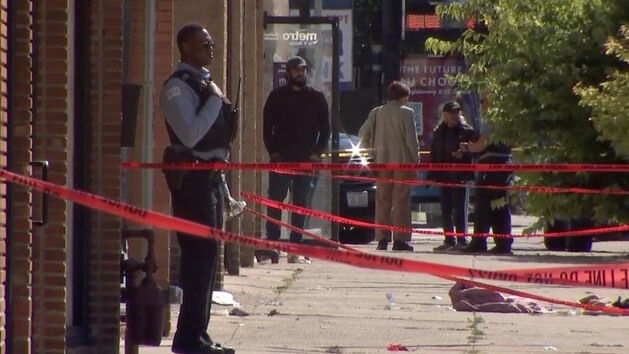
Chicago police officer stands amid the taped-off crime scene, where a 7-year-old girl was fatally stabbed in broad daylight, October 3, 2026. (WLS)
A 7-year-old girl was fatally stabbed on a sidewalk in a shopping district of Chicago over the weekend by a woman who was detained at the scene of the crime by bystanders, according to police.
The incident occurred just before noon local time on Saturday in the Chatham neighborhood on Chicago’s South Side, according to a statement from the Chicago Police Department.
The victim was walking southbound on the sidewalk when the unidentified suspect approached her, police said.
“The offender displayed a sharp object and stabbed the victim multiple times in the back,” according to the police statement.
The girl was taken to Comer Children’s Hospital, where she was pronounced dead, police said.
The Cook County Medical Examiner’s Office has identified the young victim as Edimari Hernandez Chacon, according to ABC Chicago station WLS.
“Bystanders who saw the stabbing occur detained the offender,” according to the police statement.
The adult female suspect was injured as she was being detained, police said, who added that she was treated at a hospital for non-life-threatening injuries and then taken into custody.
Detectives are investigating the attack, police said.
Security video from the area appeared to show the young victim walking hand-in-hand with a woman before the suspect stabbed her, WLS reported.
Additional video appeared to show bystanders rushing toward the scene to detain the suspect, who was outside the camera’s view.
Police have not said if the suspect knew the girl or whether the stabbing was a random attack.
“I am deeply saddened by the senseless stabbing of a 7-year-old child in our neighborhood. My heart goes out to her family, friends, and everyone who is affected by this horrific incident. No child should ever have to experience violence or fear while simply walking down the sidewalk,” Chicago Alderman Michelle Harris, who represents the Chatham neighborhood, said in a statement posted online.
Harris also praised the actions of the bystanders who detained the suspect: “Their quick actions may have prevented further harm.”
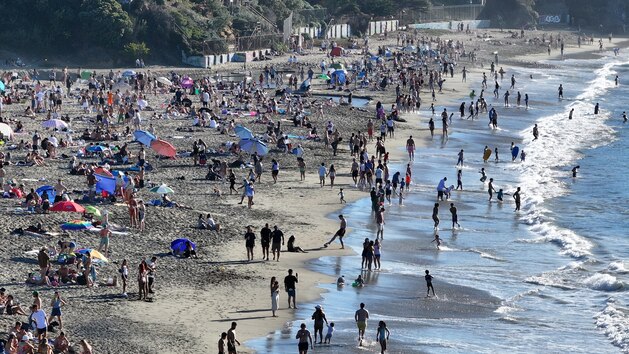
People flock to Baker Beach near the Golden Gate Bridge as a heat advisory is issued in San Francisco, California, October 3, 2026. (Anadolu via Getty Images)
More than 35 million people are under heat alerts on Sunday afternoon as a dangerous multi-day October heat wave continues across nearly all of California.
Temperatures are expected to soar up to 20 degrees above normal for this time of year, into the 90s and 100s, from Northern California, including the San Francisco Bay Area, to the Mexico border.
In some areas of California, especially urban areas, warm nights will provide little to no relief.
Los Angeles and San Diego remain under an extreme heat warning, with heat advisories posted on Sunday for San Francisco and Sacramento.
Temperatures Sunday afternoon once again soared into the 90s across much of California, with some areas surpassing 100 degrees.
High temperatures on Sunday afternoon will be near 104 in downtown Los Angeles, 103 in Bakersfield, and will climb well into the 90s in San Diego and Sacramento.
The extreme heat warnings in Southern California will remain in effect until 8 p.m. local time on Thursday.
The heat will expand over much of the West over the next 24 hours, with temperatures running well above average for early October across a large part of the region.
Highs on Monday will reach the upper 80s as far north as southern Idaho and Montana, challenging daily record highs in Boise and Billings.
It will also be heating up in Denver on Monday, with afternoon temperatures in the upper 80s, potentially challenging a daily record high as well.
On Saturday, at least eight Southern California cities broke daily high-temperature marks, including Anaheim and San Diego, which both reached 105 degrees, and Santa Ana, which hit 107 degrees.
Meanwhile, Vista, Calif., north of San Diego, reached a high temperature of 108, breaking a daily temperature record and tying an all-time record high set on June 30, 1985.
Rounds of heavy rain across parts of the Gulf Coast and Southeast
Flood watches remain in effect from southeastern Louisiana to southern Georgia, including New Orleans; Mobile, Alabama; Tallahassee, Florida; and Brunswick, Georgia.
There is a level 2 of 4 risk on Sunday afternoon for excessive rainfall and flash flooding from southeastern Louisiana to the Florida panhandle and up into South Carolina.
Torrential rain could also trigger potentially significant flash flooding across portions of South Texas on Sunday afternoon and into the evening.
The biggest rainfall totals will occur along portions of the northern Gulf Coast, the Florida Panhandle, and from Mobile, Ala., and Biloxi, Miss., to Pensacola and Panama City, Fla., and Brownsville, Texas. In these areas, 2 to 6 inches of rain is forecast, with localized totals of 8-10 inches possible.
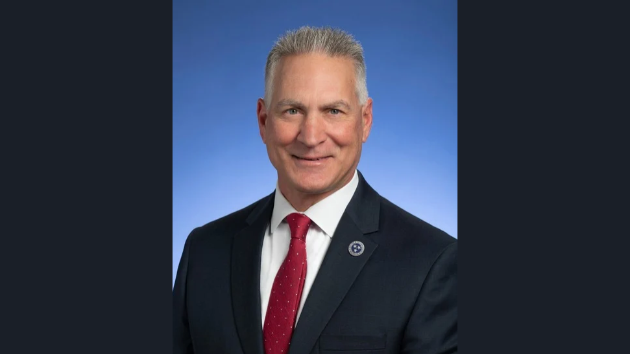
Commissioner Frank Strada (Tennessee Department of Correction)
Tennessee Department of Correction Commissioner Frank Strada said he will resign days after Christa Pike was hospitalized following a botched execution attempt, according to Gov. Bill Lee.
The Tennessee governor’s statement on Saturday did not directly reference the situation with Pike, who is currently “critically ill,” unconscious and on a ventilator in a hospital following the Sept. 30 failed execution. In the announcement, Strada said that stepping aside was “in the best interest of Tennesseans as the independent review moves forward.”
“I believe this review is entirely appropriate and necessary, and I look forward to doing everything I can to help determine exactly what occurred,” he said in a statement.
Lee said he accepted Strada’s resignation and the commissioner would leave his post at the end of the month.
“Commissioner Strada has served with integrity, and I appreciate his willingness to put the interests of Tennesseans first during this difficult moment,” the governor said in a statement.
An interim commissioner will be announced at a later date, the statement noted.
Pike’s attorneys, Randy Spivey, Kelly Gleason, Stephen Ferrell and Luke Ihnen, responded to the Strada stepping down in their own statement.
“The resignation of Commissioner Strada is justified, but it does nothing to help Christa now. What happened to her Wednesday reflects a systemic failure that goes far beyond any one person,” they wrote. “We hope the Governor’s call for a full, independent review will expose the profound problems within Tennessee’s entire death penalty system.”
ABC News’ Sabina Ghebremedhin contributed to this report.