
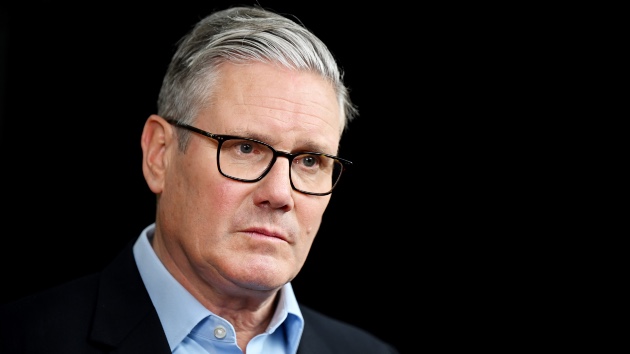
(LONDON) — British Prime Minister Keir Starmer met with his Cabinet on Tuesday amid pressure from scores of his own Labour Party lawmakers to resign, following the party’s poor performance in last week’s local elections in which it came in second to the right-wing populist Reform Party.
Starmer met with his Cabinet at the prime minister’s Downing Street residence in London, with BBC News reporting that the prime minister said during the meeting that he refused to step aside.
The turmoil comes ahead of the King’s Speech and official opening of Parliament on Wednesday, an annual ceremonial event, during which King Charles III will set out the incumbent Labour government’s legislative agenda for the coming term.
Scores of Labour members of parliament have written to Starmer asking him to step down following last week’s local elections — as of Tuesday morning, the number was reportedly more than 81 — representing about 20% of the party’s members of the House of Commons.
But those lawmakers have not publicly backed a single potential leadership challenger, which is required to trigger a leadership contest. Starmer has said he will stand again in the event of a new leadership contest.
On Tuesday, Miatta Fahnbulleh — the minister for devolution, faith and communities — became the first government minister to resign in protest of Starmer’s continued leadership. “I urge the Prime Minister to do the right thing for the country and the Party and set a timetable for an orderly transition,” she wrote in a post to X.
Starmer has long said he intends to see out his full five-year term, which began with his party’s 2024 landslide election victory that ended 14 years of Conservative Party government and delivered Labour a historic majority in the House of Commons.
When he came to office, Starmer promised a departure from the policies of his five consecutive Conservative predecessors. But frustration with the pace and scale of reform has grown among some factions of the party during his first two years in power.
In last week’s elections, voters in England chose the leaders of their local councils and — in some cases — mayors. In Scotland and Wales, voters selected members of their devolved national parliaments.
The results were widely interpreted as a repudiation of Labour’s performance to date by British voters. The elections saw Labour lose 1,498 councillors in England and lose control of both the Scottish and Welsh parliaments, prompting immediate demands for change in Downing Street.
Labour held 1,068 councillors but were leapfrogged by the populist, anti-immigration and right-wing Reform Party — led by Nigel Farage — which emerged with 1,452 councillors, the most of any party.
On Monday, Starmer said during a speech, “I know that people are frustrated by the state of Britain, frustrated by politics and some people are frustrated with me. I know I have my doubters, and I know I need to prove them wrong, and I will.”
“We are not just facing dangerous times, but dangerous opponents, very dangerous opponents,” he said, framing Labour as the only was to prevent the country heading down a “very dark path.”
Defense Minister John Healey was among those who publicly backed the prime minister on Tuesday.
“People are worried about current conflicts and looming global crises. They expect their government to lead the country through, as the PM is doing,” he wrote on X.
“More instability is not in Britain’s interest. Our full focus now must be on dealing with immediate economic & security challenges,” Healey added.
Copyright © 2026, ABC Audio. All rights reserved.