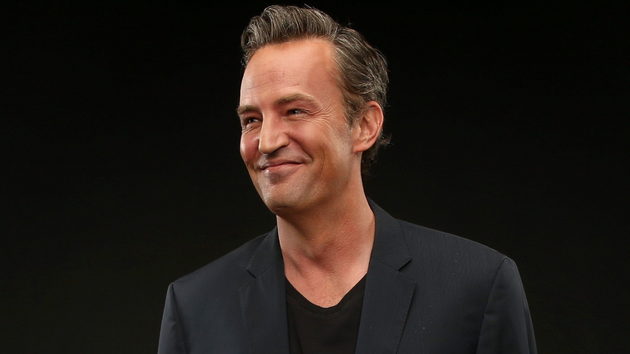
Matthew Perry poses for a portrait during CBS’ 2014 Summer TCA tour at The Beverly Hilton Hotel on July 17, 2014, in Beverly Hills, California. (Christopher Polk/CBS via Getty Images)
A documentary about the late Matthew Perry is headed to Netflix.
The streaming service has announced a new three-part documentary series about the Friends actor, who died on Oct. 28, 2023, at 54 years old.
Called The One About Matthew Perry, this will be the first in-depth, definitive documentary about the actor. It is directed by Emmy Award winner Mary Robertson and premieres to Netflix on Oct. 27.
The series will feature never-before-heard testimonies from Perry’s sister, Mia Perry Bowick, as well as lifelong best friends of the actor. It will also have unreleased photos and videos from the Perry family’s private archive.
“Told through intimate testimonies from close family and friends, this documentary event reveals the real Matthew Perry—generous, funny, vulnerable, larger than life—and the battles he fought to become the man behind the icon. A raw record of a life lived in full, and the honesty that became his greatest legacy,” according to the docuseries’ logline.
“Matthew Perry was one of the comedic geniuses of our time. Through his many films, TV and stage performances, and his unforgettable portrayal of Chandler Bing, he made millions of us laugh, connect, and feel a little less alone,” Robertson said in a press release. “He also gave us so much more by bravely speaking about addiction. Yet the public only knew part of his story. That’s why we set out to make this series: to let the people who knew and loved Matthew reveal the person behind the public figure.”
Perry Bowick also released a statement on the docuseries.
“It’s taken time for me to feel ready to share these memories and what it was like to love Matthew through all the complexity of his life—to see him as a whole person, not just as Chandler, and not just as someone who struggled with addiction,” she said. “As his sister, he shaped who I am today, the person I strive to be, and the work to which I’ve devoted my life. Matthew had a beautiful heart and a generous spirit, and even in his darkest moments, he could still make you laugh and feel loved. I hope this series gives everyone who loved him, whether personally or from afar, a deeper appreciation for who he truly was, and the legacy he leaves behind.”
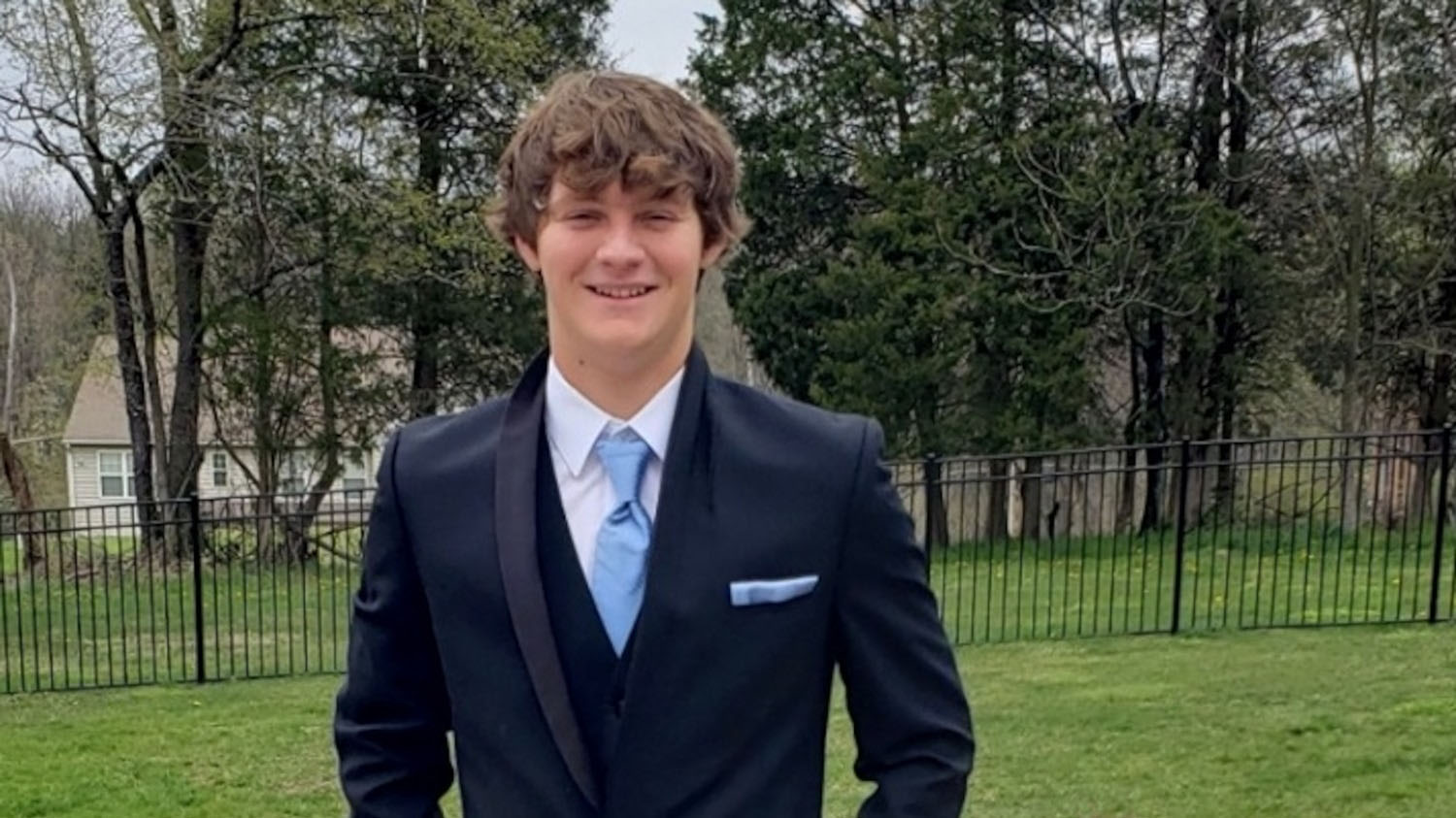
Glenwood “Bubba” Pysher, 22, pictured in this undated photo, was fatally shot by a police officer in Upper Pottsgrove, Pennsylvania, Aug. 23, 2026. (Courtesy the Pysher family)
(NEW YORK) — A Pennsylvania police officer has been charged with voluntary manslaughter stemming from the fatal shooting this month of a college student whose parents said he was mistaken for a burglar after knocking on the door of a residence he wrongly thought was a friend’s house, authorities said.
Cpl. Sean Farrell, a veteran member of the Upper Pottsgrove Township Police Department, was charged in the Aug. 23 death of Glenwood “Bubba” Pysher, Montgomery County District Attorney Kevin R. Steele announced at a news conference Tuesday.
Steele said he is “obligated under the law” to charge Farrell, who allegedly shot Pysher twice after responding to a 911 call from a homeowner reporting a break-in in progress.
“At the time these two fatal shots were fired, Mr. Pysher had his hands up,” Steele said, citing footage from Farrell’s body-worn camera. “He had no weapon. He did not charge the officer or act aggressively in any way. He was not a threat to the homeowners who were inside their residence.”
Steele further said that the body-worn camera video, which he did not play but from which he released a still image, showed Farrell claim to a colleague after the shooting that Pysher “charged” him while “screaming and yelling.”
“The body-worn camera video does not depict Pysher charging and does not depict yelling or screaming prior to the shooting,” Steele said.
Pysher’s parents told ABC News last week that before the shooting, their son had been out bar-hopping with a group celebrating a friend’s 21st birthday.
Pysher’s mother, Erin Pysher, said that when the group decided to move the celebration to a friend’s house, her son walked to what he wrongly thought was the correct address.
“He was walking down the road to what he thought was his friend’s house. And after some drinks, he ended up walking in the dark at night. I guess he got mixed up, and he made a wrong turn and went to the wrong house,” Erin Pysher said in a phone interview with ABC News.
Pysher said her son was a student at Saint Elizabeth University in Morris Township, New Jersey, and was expected to begin the new school year last week.
Steele said on Tuesday that while Pysher was apparently inebriated, he was complying with Farrell’s orders to put his hands up when he was shot.
“He was not trying to escape and he did not commit a forcible felony. This is not a legal use of lethal force under Pennsylvania law,” Steele said.
Farrell is being arraigned on the voluntary manslaughter charge Tuesday, according to Steele.
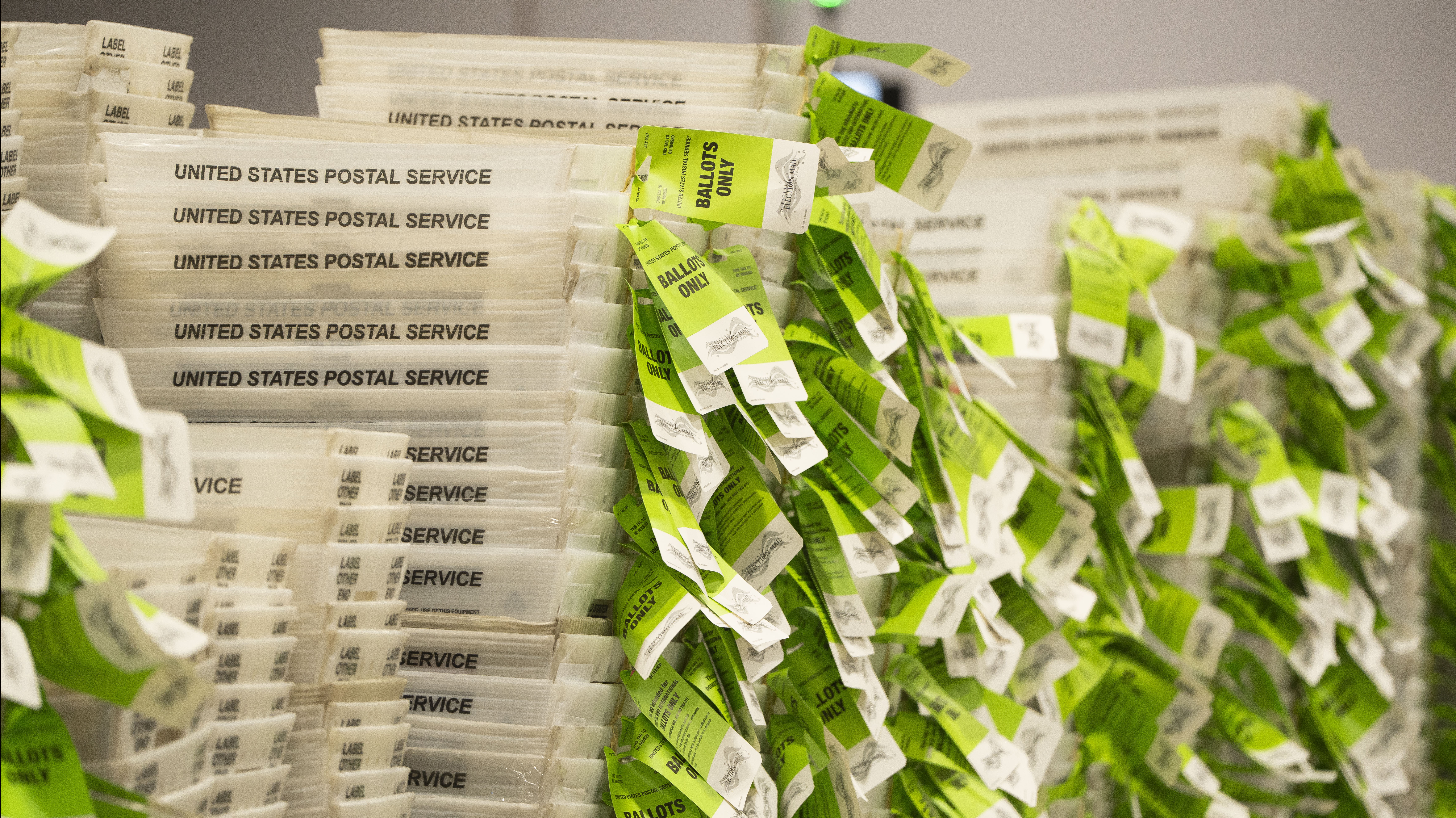
United States Postal Service containers are marked “BALLOTS ONLY” at Runbeck Election Services on Sept. 25, 2024, in Phoenix, Arizona. T (Rebecca Noble/Getty Images)
(WASHINGTON) — An anonymous government employee whistleblower has come forward to Democratic Sen. Richard Blumenthal, warning that a “rushed, chaotic and fundamentally flawed” effort by the U.S. Postal Service to implement President Donald Trump’s mail-in ballot executive order risks a “catastrophic failure” of the election system that could “derail the midterm elections.”
The whistleblower’s concerns were made public in a report released by Blumenthal, who said in a release Tuesday morning that the allegations show that the system USPS is creating to track mail-in balloting is “set up to fail — and risk the right to vote for millions of Americans who cast their ballots by mail.”
The whistleblower is described in the report as someone with direct knowledge of potentially “catastrophic problems” in the development of the USPS’ new electronic federal mail ballot portal.
Under the new proposed system, states would be required to report basic voter information, such as a voter’s name and home address, attached to a unique barcode on every mail-in ballot distributed. Postal workers would then only deliver ballots addressed to voters who appear on the state-provided list.
The new USPS system, published formally last week, was temporarily put on hold by a federal judge as she considers whether it is likely unlawful and should be blocked during an ongoing legal battle. It’s unclear what parts, if any, will be allowed to take effect in time for the November election.
The USPS rules fall short of Trump’s expectations in his executive order.
The first mail-in ballots go out to overseas military voters from North Carolina this Friday. Given the length of the legal battle ahead, it’s unlikely Trump’s proposed changes to mail-in voting will be implemented in time for the midterm elections.
Voter advocates and civil liberties groups worry the rules could prevent some legitimate, eligible voters from receiving ballots. They fear an added bureaucratic layer — such as having to submit lists to a federal portal to be administered by USPS — unduly introduces the risk of errors not to mention the potential for federal meddling.
The whistleblower report also alleges that officials may have defied a prior court-ordered pause, continuing work on the USPS system despite a judge’s instructions.
Blumenthal wrote a letter to Postmaster General and CEO David Steiner on Monday demanding further answers to questions related to allegation raised by the whistleblower and to urge him to “abandon this ill-conceived, unconscionable plan and ensure that all Americans can exercise their constitutional right to vote, including by mail, without interference by USPS.”
ABC News reached out to USPS and the White House for comment on Blumenthal’s letter, but did not immediately receive a response.
‘Slapdash’ assembly of new portal could lead to major issues in November
The whistleblower described a “secretive, rushed, chaotic and fundamentally flawed process” creating and implementing an “untested” federal ballot mail portal that USPS will use to screen ballots.
The rushed effort to create the portal could cause “significant operating” problems and the failure to verify ballots this November, the whistleblower said. It could also mean, the report alleges, that “potentially millions of American voters may not receive their mail-in ballot this election cycle in a timely manner or at all.”
The report details a “slapdash” production process for the new IT software, which the whistleblower alleges hasn’t been sufficiently tested or debugged. At the time of report, the whistleblower said there was insufficient time to test the system before a Sept. 1 deadline to deliver it.
“According to the whistleblower, USPS’s effort to develop and deploy the Portal has been ‘rushed,’ ‘risky and haphazard’ because leadership has demanded a impossible timeframe. In an effort to meet impossible deadlines, USPS has eliminated standard and needed testing, thereby creating substantial risk of a ‘catastrophic failure’ of the system that could ‘derail the midterm elections,'” Blumenthal wrote in his letter to Steiner.
Blumenthal also raised concerns about a new so-called “zero percent failure rate” which, according to the whistleblower, could see whole batches of ballots being rejected if a barcode on even one ballot fails to scan.
“Voters intending to cast ballots by mail may not even be aware that their ballots have been rejected, or were part of a rejected batch, until it is too late to secure an alternative ballot or vote in person,” Blumenthal wrote.
Whistleblower alleges that work on USPS portal potentially violated court orders
The whistleblower also alleges that — after a one-month pause on work that began in June — employees were told to continue working on the mail-in-ballot portal in July despite an active temporary restraining order from a federal judge ordering a pause on work related to Trump’s mail-in-ballot executive order.
“The project was suddenly resumed without explanation of what authority permitted USPS to ignore the court order,” according to the whistleblower report.
The USPS is currently under a 14-day Temporary Restraining Order issued by Judge Indira Talwani prohibiting it from implementing its new rules for mail ballots ahead of the November election. The judge is hearing arguments on Thursday as to whether to extend the TRO to a preliminary injunction during litigation.
The same judge has already accused the administration of flouting a previous order that had blocked any finalization of the rules while she was considering the matter.
“Based on this timeline, USPS should have ceased all work on the Portal on June 25, 2026, with the earliest conceivable date to resume being August 26, 2026. The whistleblower allegations demonstrate that was not the case, with USPS directing work to continue on the Portal after the first court order to cease work and prior to the recent court decisions allowing USPS to proceed,” Blumenthal wrote to Steiner.
For most voters, nothing is likely to change how they cast ballots by mail in the midterm elections. But the longer the court hold remains in place — and the longer the court fight takes — the less likely it is that any of the rules will practically impact November.
Still, the battle over these rules and any additional ones Trump may seek to impose will continue well into 2028, where the effects could most significantly be felt.
(WASHINGTON) — The House, in a bipartisan vote on Tuesday, passed a continuing resolution that funds the government through Dec. 11 — avoiding a shutdown ahead of the midterm elections in November.
This is a developing story. Please check back for updates.
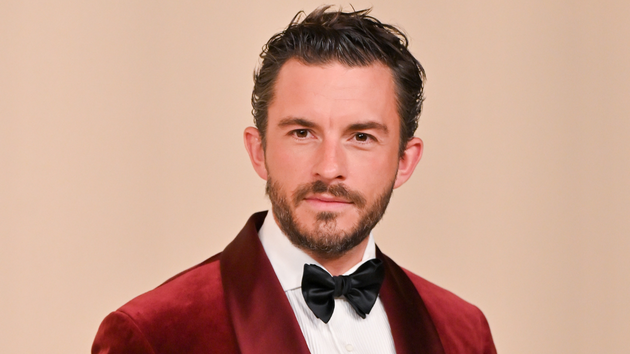
Jonathan Bailey on the red carpet of the world premiere of the film ‘Brunello, Il Visionario Garbato’ at the Cinecitta studios in Rome on Dec. 4, 2025. (Massimo Insabato/Archivio Massimo Insabato/Mondadori Portfolio via Getty Images)
Jonathan Bailey has dropped out of the upcoming West End revival of Sunday in the Park with George.
The announcement comes almost a month after Bailey’s Wicked co-star Ariana Grande announced she was exiting the same production.
Bailey took to his Instagram Story on Tuesday to announce his decision to depart the musical revival.
“Ari is one of my dearest friends, and my support for her is unwavering. … After much consideration, I have decided to also step back from Sunday in the Park with George,” Bailey wrote.
The actor continued, “This brilliant, introspective musical has been a real passion project for me, and I feel incredibly lucky to have shared in its journey with this team. Among many things, the story explores the deep connection between George and Dot, a beautiful, devoted pairing, and I so look forward to seeing what the team, and the two actors who will now take on these roles, will create with it.”
Bailey ended his statement by sending well-wishes to the musical’s company.
“I wish the very best to the entire company. I will be cheering them on as they continue with this production,” Bailey wrote.
It is currently not known who will take over the production’s leading roles after Bailey and Grande’s departures. The production took to its Instagram Story to share a statement of its own after Bailey announced his exit.
“Following Ariana Grande’s withdrawal, Jonathan Bailey has informed the producers that he has also decided to withdraw from Sunday in the Park with George. Work on the production continues,” the statement reads. “Casting decisions are actively under way, and the creative team is reshaping the production around a new company while preserving the ambition and artistic integrity of Stephen Sondheim and James Lapine’s musical.”
The statement concludes with, “Further casting and production details will be announced in due course.”
Sunday in the Park with George is scheduled to begin performances at the Barbican Centre in London in 2027.
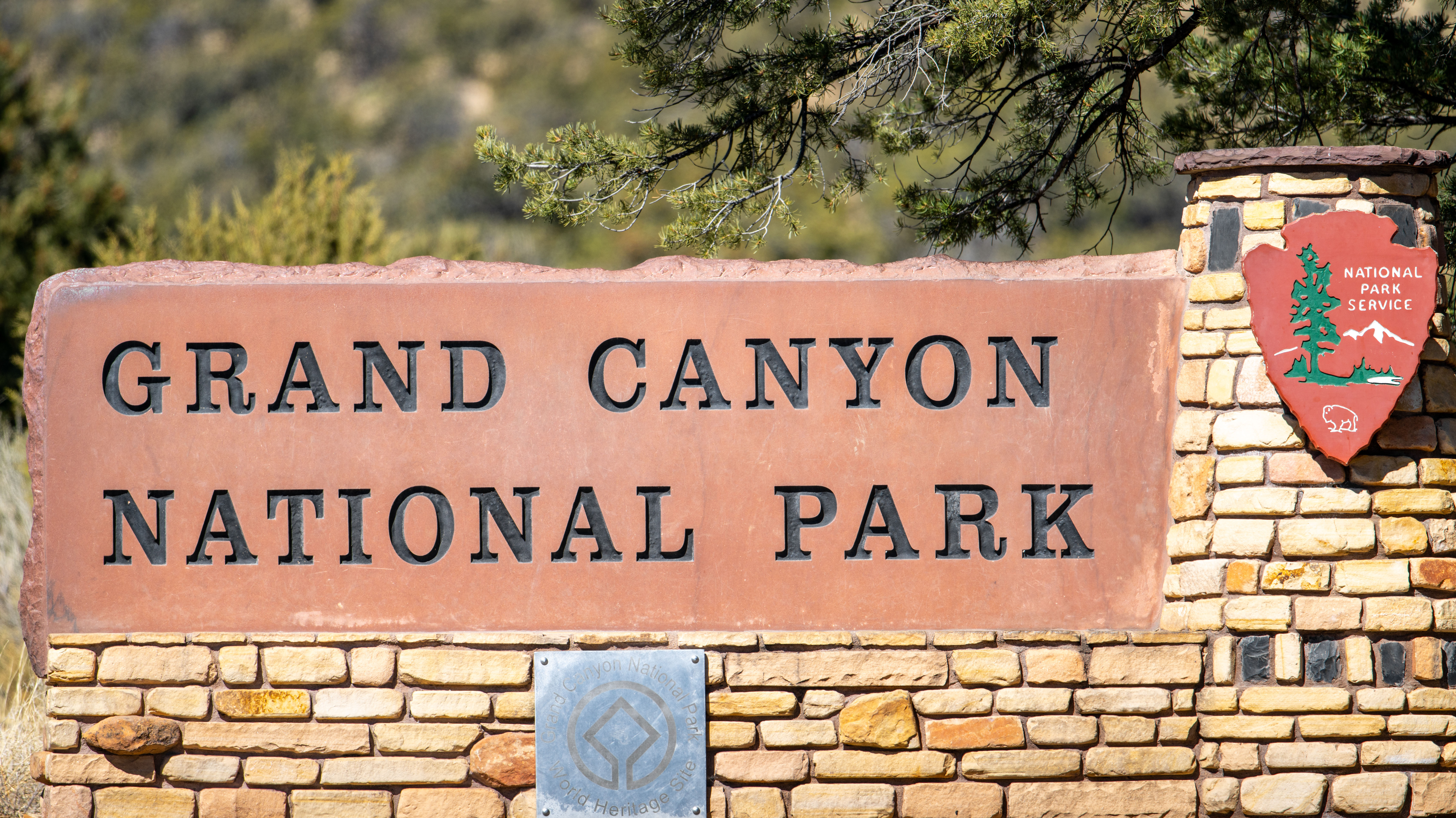
The entrance to Grand Canyon National Park on Feb. 23, 2025, in Grand Canyon, Arizona. (Brandon Bell/Getty Images)
(LOS ANGELES) — Two people are dead and at least one person remains missing following a major flash-flooding event at the Grand Canyon over the weekend, as cadaver dogs are expected to be used in the ongoing search of the devastated areas, authorities said.
The current missing-person count is based on overnight camping permits issued by the park, officials said, while acknowledging that additional day hikers who did not have permits could also be missing.
“There are day hikers that come in the canyon that we don’t know about,” Dave Black, the Grand Canyon National Park Service’s incident commander, said at a news conference Monday evening.
Black said that the weather is expected to be clear Tuesday for the first time since Saturday afternoon’s flash flood, allowing ground crews to be sent to the hard-hit areas. Four teams with cadaver dogs are planning to search the Bright Angel Creek and Phantom Ranch areas Tuesday, he added.
Authorities said hundreds of tips have been received but so far, there is no reason to believe anyone else is missing other than the one person already being sought.
A Border Patrol technical search team will search for the remaining confirmed missing person, Black said. Authorities said they will also use Bluetooth technology and a drone to search the area.
“We are absolutely holding out hope that that person is still alive,” Black said.
The National Park Service confirmed that two people have been killed in the deadly flash flooding.
On Sunday evening, officials said the body of a 46-year-old man, whose name has not been released, was recovered near Crystal Rapids along the Colorado River. The family of the other recovered victim identified him as Dr. John Giusti, a Texas chiropractor and married father of three daughters.
Flash flooding unfolded about 2:30 p.m. local time Saturday in the Bright Angel Canyon and Phantom Ranch area, both popular destinations for hikers. Authorities said 82 people were rescued from the canyon, most by helicopter. A couple of people were able to hike out, they said.
Meanwhile, new details have emerged about the response to the flash flood emergency.
Deputy Superintendent Brian Drapeaux of the Grand Canyon National Park Service said at Monday’s news conference that water-level gauges installed in Bright Angel Creek following last year’s Dragon Bravo Fire on the North Rim of the Grand Canyon stopped working during the flood.
“That system started to alert us of rising waters, and then shortly after, that system went offline as water progressed down the creek and picked up speed and destructive force,” Drapeaux said.
It’s unclear why the water-level gauge system stopped working, Drapeaux said, adding that debris that filled the creek could have knocked it offline.
Flood survivors told ABC News that they ran for their lives when a flood swept through the floor of the Grand Canyon on Saturday afternoon, wiping out campgrounds, structures, hiking trails and vital infrastructure, according to officials.
“The National Park Service is asking anyone who knows of hikers or backpackers who were in the inner canyon along the Bright Angel Creek corridor on August 29, as well as anyone who had a campground reservation in the affected corridor, to provide information to the National Park Service Investigative Services Branch (ISB),” the National Park Service said in a statement.
On Sunday, NPS officials said more than 20 people had initially been reported missing and that 62 individuals were air evacuated from Grand Canyon’s Phantom Ranch and the lower North Kaibab Trail, “which was affected by a significant flash-flood event Saturday afternoon.”
“The flash flood resulted in significant impacts to infrastructure throughout Bright Angel Canyon. Nearly all footbridges spanning Bright Angel Creek were destroyed, eliminating hiker access across the creek,” the Grand Canyon NPS said.
Saturday’s flash-flood event occurred after four rounds of rain swept across parts of the Grand Canyon over a span of about six hours, according to the National Weather Service. The initial three rounds were not very heavy but saturated the soil and left the area much more prone to dangerous flash flooding once the fourth round of torrential rain moved through.
The steepness of the canyon and the burn scar from last year’s Dragon Bravo Fire on the North Rim were likely major contributors, the NWS said.
Videos of the flooding obtained by ABC News show a roaring Colorado River as mudflows and debris from metal structures are seen floating down the river.
On Aug. 28, 2026, Everything Sprouts, LLC expanded its recall to include certain lots of Robust Radish Sprout Mix because it has the potential for cross-contamination with Shiga toxin-producing E. coli (STEC) or Salmonella from the recalled alfalfa sprouts. (FDA)
(NEW YORK) — Everything Sprouts, the company linked to a salmonella and E. coli outbreak from alfalfa sprouts, has voluntarily expanded its recall to include radish sprout mix due to contamination concerns.
The Food and Drug Administration (FDA) shared in an update on Monday that the radish sprout mix had the potential for “cross-contamination” with bacteria from the alfalfa sprouts.
No illnesses have been traced back to the radish mix, and no new illnesses have been reported in the outbreak overall.
The recalled Robust Radish Sprout Mix was sold in 5-ounce cups with LOT numbers 223, 226, 230 and 233. The mix was distributed from Aug. 13, 2026 to Aug. 26, 2026 to wholesale distributors and to grocery stores located in Minnesota and Wisconsin.
Last week, the Minneapolis-based company issued a voluntary recall of its 5-ounce containers of alfalfa sprouts distributed since May 27 due to potential E. coli and salmonella contamination.
At least 55 illnesses involving salmonella or E. coli have been reported across 15 states as of Aug. 24, according to the Centers for Disease Control and Prevention (CDC).
Of those sickened, two individuals had both salmonella and E. coli and at least four people have been hospitalized, according to an official outbreak notice posted by the FDA and CDC. No deaths have been reported.
Everything Sprouts said at the time that it is coordinating with the FDA and CDC on the recall.
“Everything Sprouts became aware of reports of illnesses from federal and state agencies,” the company said in its notice. “During this outbreak we have tested our products daily and have not received any positive lab results. We continue to work closely with public health officials to investigate the source of this potential issue and will provide updates as they become available.”
The FDA shared on Monday that its traceback investigation found at least one additional sprout grower that received and used the same lot of alfalfa sprout seeds under investigation in the current outbreak from a common seed supplier.
“The common seed supplier has instructed its customers not to use, grow, sell, transfer, or redistribute the implicated seed lot, and to return or dispose of any remaining seed,” the FDA said.
The FDA had warned Everything Sprouts last year of “serious violations” following an inspection the agency had conducted at its facility. Inspectors determined the company had “insanitary conditions whereby [produce] may have become contaminated with filth, or whereby they may have been rendered injurious to heath.”
FDA inspectors said they had found multiple problems, including roof leaks with water dripping onto produce and clean employee smocks. There was also “build-up of black organic matter” on a hose of the overhead irrigation system for produce, inspectors said.
The agency’s letter acknowledged that the company responded to say it was going to take corrective action, but noted that it wouldn’t evaluate the adequacy of its actions until its next inspection. It didn’t say when that inspection would happen.
The company didn’t immediately respond to ABC News’ request for further comment.
The cover art for Miley Cyrus’ 10th studio album, ‘Bass Persuades.’ (MERT ALAS)
Miley Cyrus is entering a new era with a new album and a return to the stage.
The singer announced Tuesday that she’s releasing her 10th studio album on Sept. 18, titled Bass Persuades.
“Music takes hold of us. We feel it, sing it, sometimes dance to it, let it out and carry on,” Cyrus wrote in an Instagram post.
“It is powerful, vulnerable, sweet and strong. Heart full, heartache, every part of life in between. That’s what the title means to me,” she added. “Thank you for being a part of making my wildest dreams come true. I sincerely hope you love this album.”
The artist also shared a video of her playing electric guitar, teasing what the new music will sound like.
Along with the new album, Cyrus is heading to the Hollywood Bowl in October for a special two-night performance.
“It’s been a while. The Hollywood Bowl is my favorite place to experience music and see my favorite artists,” she wrote in a separate Instagram post. “I’ve sat in those seats many times, but I’ve never taken the stage. LA is my heart and I’m bringing it home. See you there.”
Bass Persuades follows Cyrus’ 2025 studio album, Something Beautiful, and her 2023 album, Endless Summer Vacation. Her song “Flowers,” which appeared on the 2023 album, earned her the Grammys for record of the year and best pop solo performance.
Earlier this year, Cyrus celebrated the 20th anniversary of Hannah Montana, the TV show that made her a star, with the Hannah Montana 20th Anniversary Special.
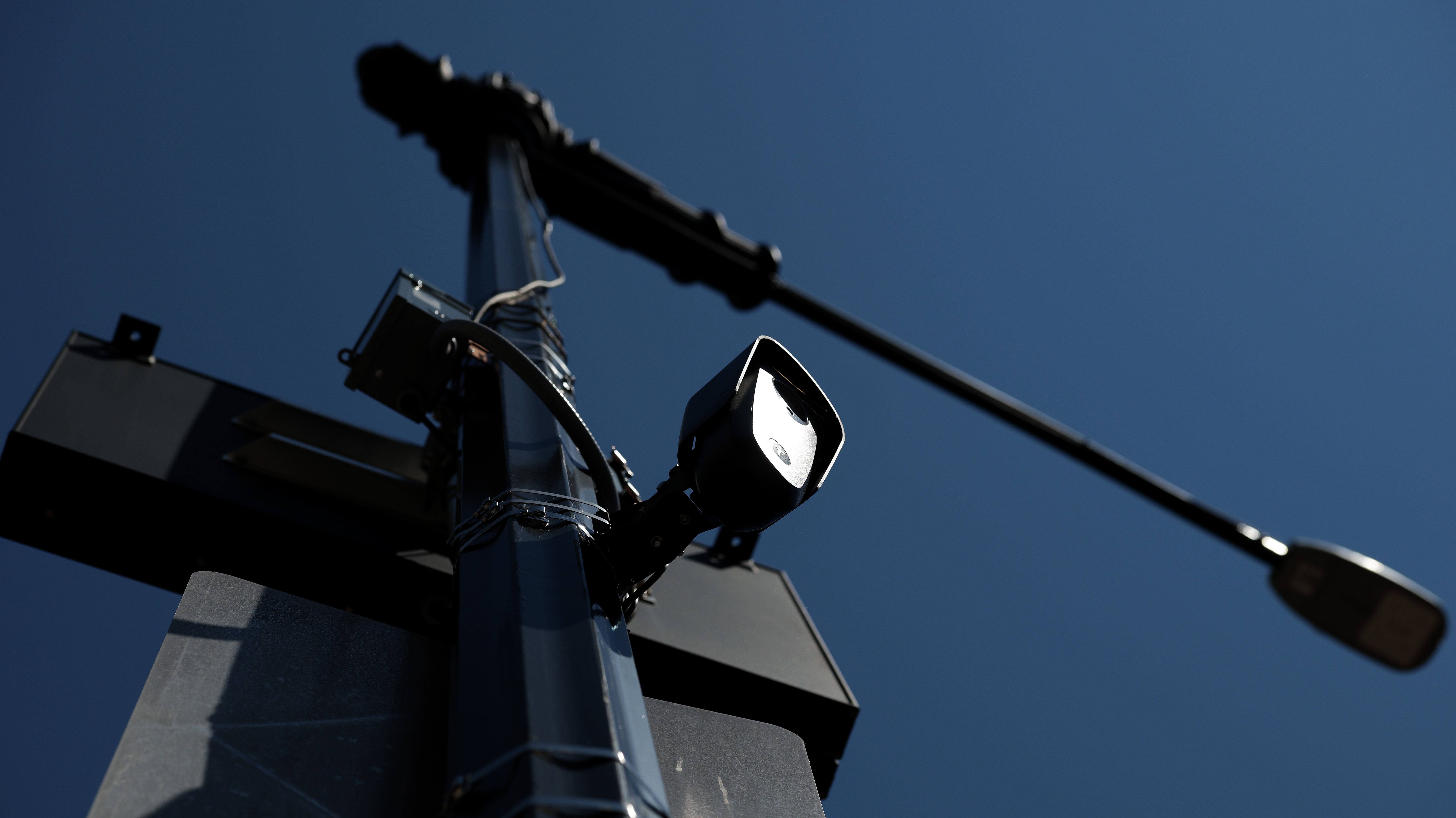
A Flock brand automatic license plate reader camera is attached to a utility pole on Aug. 19, 2026, in Washington, D.C. (Chip Somodevilla/Getty Images)
(NEW YORK) — A nationwide wave of protesters and vandals targeting surveillance cameras made by Flock Safety did not deter a man in a Darth Vader costume from praising the devices at a recent city council meeting in San Diego, California. His “Star Wars”-themed acclaim, as it turned out, was anything but.
“The Emperor is a fan of Flock,” the man told elected officials in a mocking tone last week. “We must continue utilizing Flock technologies so that we can follow and surveil the rebel scum.”
So far this year, more than 50 cities and counties have canceled or deactivated automated license plate-recognition (ALPR) cameras of the type manufactured by Flock Safety and other firms, also known as Flock cameras, Politico found.
On Monday, Florida’s state transportation office revoked the ability of local law enforcement to put license plate readers on state highways.
Flock cameras have been vandalized in at least 36 states, including incidents in which individuals sawed down the devices and shot at them with guns, NPR reported last month.
The neighborhood cameras have prompted pushback in localities big and small, dotting red and blue states. Privacy concerns have been stoked in part by instances of police officers tracking ex-partners or other relations, some analysts and advocates told ABC News.
Wariness about the role of artificial intelligence in the technology has deepened public unease, tapping into discontent about the possibility of AI acting beyond human oversight, they added.
“This is the biggest, most grassroots privacy backlash that I’ve ever seen in more than 20 years working on these issues,” Jay Stanley, a senior policy analyst at the American Civil Liberties Union’s Speech, Privacy, and Technology Project, told ABC News.
“It just shows people don’t like mass surveillance,” Stanley added.
Surveillance technology firms and a law enforcement expert, however, touted the cameras as a valuable tool for police departments, leaving officers better equipped to protect public safety.
“You can see in some cases unsolved crimes may have been solved if there were a Flock camera in the area at the time,” Kenneth Gray, a lecturer in the Criminal Justice Department at the University of New Haven, told ABC News. “They can be useful.”
More than 135,000 automated license plate-recognition cameras have been identified nationwide, and four of every five of those are made by Flock Safety, according to crowdsourced data from DeFlock.org. The company says its cameras operate in 49 states.
Flock cameras, which sit atop metal roadside poles resembling streetlights, capture a vehicle’s license plate number and characteristics as it passes, Flock Safety says on its website. The devices do not identify individuals in a given car, nor do they record continuously, the company adds.
Earlier this month, the firm bolstered safeguards for its cameras, including a default data-retention period of seven days instead of 30, as well as an “Evidence Mode” for preserving data related to an active investigation.
“Flock is designed to help authorized users find relevant evidence for investigations without compromising safety and compliance,” the Flock Safety website says. “Clear safeguards define how information is stored, accessed, shared, and reviewed.”
Flock Safety did not immediately respond to ABC News’ request for comment.
The technology has triggered some police abuse involving its recordings. A police officer in Kentucky was arrested last week after authorities alleged he used Flock cameras to track his ex-girlfriend more than 2,000 times. In Savannah, Georgia, six police department employees were fired in August over alleged abuse of Flock cameras, according to local ABC affiliate WJCL.
The nonprofit Institute for Justice, a libertarian law firm, says it has identified more than 100 incidents of ALPR abuse, among them stalking and wrongful stops.
“People have a sense, ‘I wouldn’t want someone following me around in a car; and I wouldn’t want them doing it with a camera,'” Evan Greer, director of Fight for the Future, an advocacy group organizing against Flock cameras, told ABC News.
“Then when these stories come out about law enforcement officers using it to stalk their exes, it reminds people once you build a surveillance apparatus like this, it can and will be abused,” Greer added.
The use of AI in Flock cameras has exacerbated concern among some critics, analysts said, since they fear data could be compiled and examined by the technology with limited oversight.
“These companies are not just recording that you were on this street at this time on this day; they’re also allowing law enforcement to run algorithms to decide whether your movement patterns are ‘suspicious,'” said Stanley, of the ACLU.
Surveillance companies and a law enforcement expert promoted the crime-fighting benefits of Flock cameras. They pointed to the unique information provided by a network of devices that can identify and track vehicle movements.
Flock Safety says it helped authorities locate more than 10,000 missing people last year, amounting to more than 27 per day. Roughly 1 million criminal investigations were supported by Flock in 2025, the company says.
Flock Safety cameras helped law enforcement identify the car belonging to a suspect in the murder of a Brown University professor last year, aiding efforts to track down the individual, Providence Police Chief Oscar Perez said in December. The suspect died by suicide before he was located.
The surveillance capability that unnerves some critics can be vital to a police investigation, according to Gray, of the University of New Haven.
“Because there’s a series of Flock cameras, you can put together a pattern of where a particular car goes at a certain time of day along a particular route,” he said. “That can be useful in putting together details that can be analyzed to try to fill in gaps for an investigation.”
Still, Gray acknowledged, the camera system collects information on many innocent people, vacuuming up data of no utility for law enforcement.
“The Flock system is building a database without any allegation of criminal activity. It’s useful to law enforcement after the fact, but it’s also gathering up information on many people that have committed no crime,” Gray said.
Critics of Flock cameras lauded local efforts to cancel or alter contracts with surveillance companies. They said they hoped additional restrictions would be implemented on a wider scale.
Greer, of Fight for the Future, advocated for a nationwide ban of the technology, saying “there are certain types of weapons we’ve decided as a society are too dangerous to sit in the basement of your local police department.”
Torin Monahan, a professor at the University of North Carolina at Chapel Hill who specializes in surveillance, said law enforcement should be required to possess a judicial warrant in order to access Flock camera data.
“If they have to prove probable cause and protect people’s 4th Amendment rights, as they do with other evidence, I think that would be reasonable,” Monahan told ABC News.
Gray, the law enforcement expert, agreed.
“A warrant for the information from the database would protect the public from misuse,” he said.
The backlash has prompted action from state and national elected officials belonging to both major parties.
Republican Texas Gov. Greg Abbot last week paused state funding of Flock cameras. Meanwhile, Democratic Pennsylvania Gov. Josh Shapiro said in recent days he would welcome a bipartisan bill to ban Flock cameras in the state.
Sen. Josh Hawley, a Missouri Republican, on Friday announced an investigation into Flock Safety, penning an open letter to the company that included a request for internal documents.
“I want law enforcement to have tools to catch offenders and keep the public safe. But Americans do not surrender their privacy rights when they drive to work, drop their kids off at school, or go to church,” Hawley wrote.
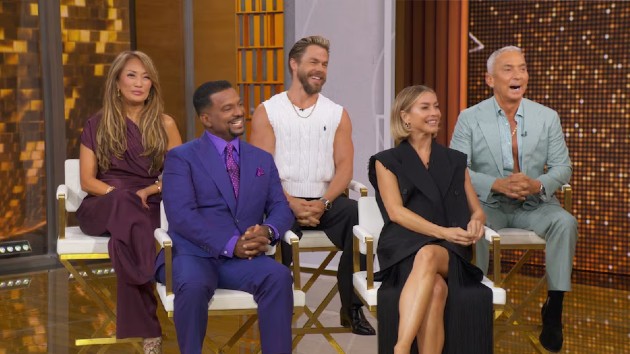
‘Dancing with the Stars’ hosts and judges Carrie Ann Inaba, Bruno Tonioli, Derek Hough, Julianne Hough and Alfonso Ribeiro appear on Good Morning America, September 1, 2026. (ABC News)
The judges’ panel is set for season 35 of Dancing with the Stars, with Carrie Ann Inaba, Derek Hough and Bruno Tonioli ready to face a new cast of celebrity and pro dancers.
Inaba and Tonioli have been on the judges’ panel together for each of the show’s 35 seasons, while Hough started on the show two decades ago as a pro dancer before becoming a judge in season 29.
Hough said this upcoming season of DWTS feels different than others.
“You can expect what you know and love about Dancing With the Stars but also an energized show,” Hough said Tuesday on Good Morning America. “We have so much momentum. The cast is incredible. The pros are energized.”
He continued, “It’s going to be an incredible season. I cannot wait.”
Season 35 of Dancing with the Stars will premiere with back-to-back episodes on Tuesday, Sept. 15, and Wednesday, Sept. 16, airing at 8 p.m. ET on ABC and Disney+ and streaming the next day on Hulu.
This season’s celebrity cast members announced so far include Savannah Bananas second baseman Jackson Olson, as well as The Traitors star Maura Higgins and Summer House star Ciara Miller.
The full cast will be announced Wednesday on GMA.
This season will also see Alfonso Ribeiro and Julianne Hough returning as hosts.
Ribeiro said on GMA that the “magic” of the show is the thoughtful pairings of celebrity and pro dancers, while Julianne Hough teased a special theme night she’s looking forward to this season.
“The fashion is going to be really fun with one specific theme night,” she said. “For me at least, I’m very excited.”
Tune in to Good Morning America on ABC on Wednesday, Sept. 2, from 7 a.m. to 9 a.m. ET to see the full cast of season 35 of “Dancing with the Stars.”
The Walt Disney Co. is the parent company of ABC News, Disney+ and Hulu.