
Military funding, AI and more: Congress returns for short stint before bolting again

Military funding, AI and more: Congress returns for short stint before bolting again
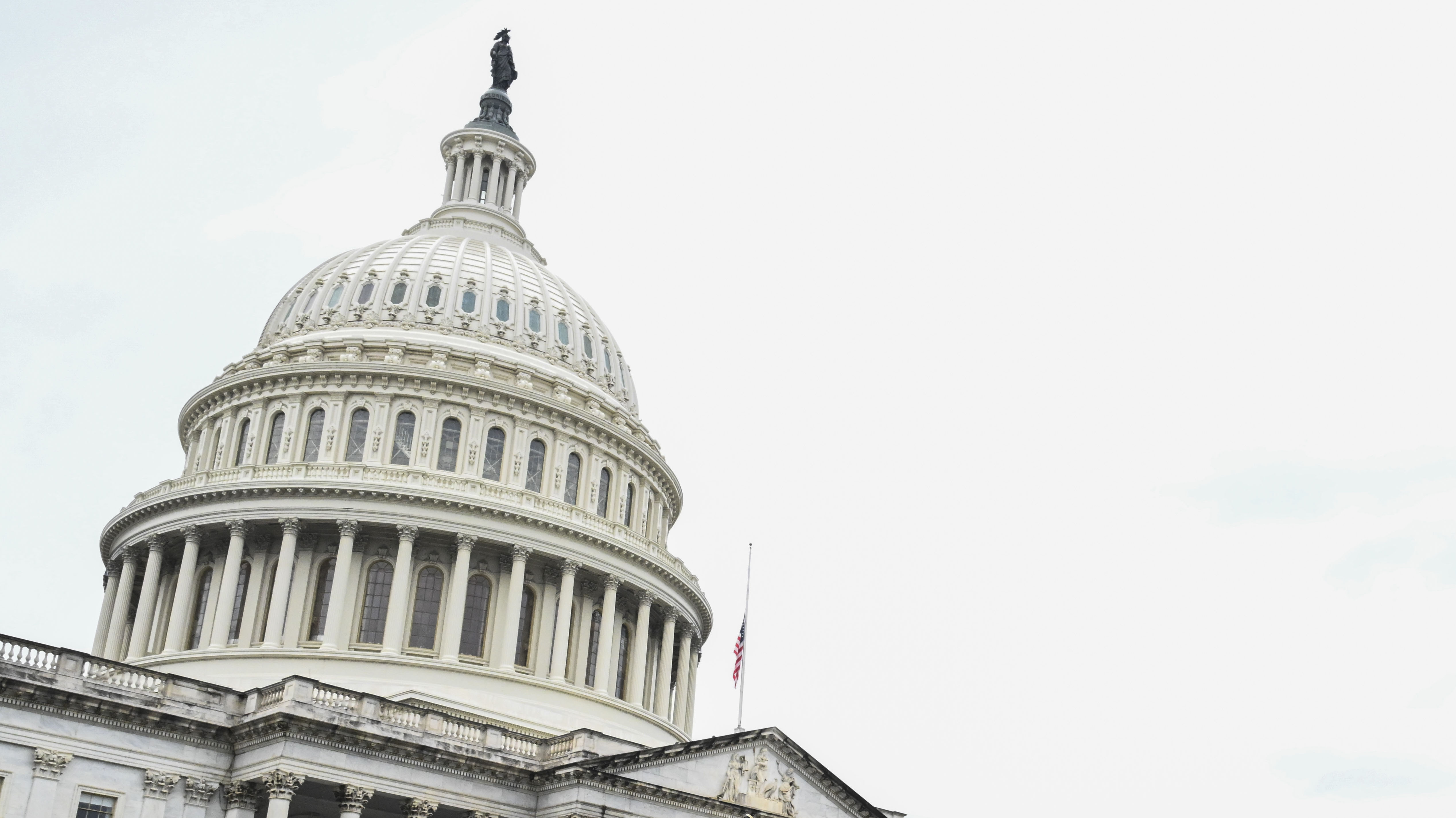
Capitol Hill dome on Sept. 11, 2026, in Washington, D.C. (Roberto Schmidt/Getty Images)

(WASHINGTON) — Lawmakers from both chambers return to Washington this week for the final legislative push before the November midterm elections, the first time since July 23 that both chambers will be in Washington.

The House is in session for its final week of legislative business before the election after Speaker Mike Johnson scrapped two previously scheduled weeks of votes. The Senate has three weeks of business ahead of it — as no changes to the Senate schedule have been announced — though it’s possible Majority Leader John Thune could decide to dispatch his members to the campaign trail earlier than planned as well.

The September session is often plagued by a looming government funding deadline. But lawmakers have already passed a stopgap funding bill that President Donald Trump has signed to keep the lights on until Dec. 11, alleviating any immediate deadline pressure this month. Senate Republicans are also increasingly unlikely to take up a massive budget bill before the midterms.

The move to kick the can on government funding and delay a potential budget reconciliation bill means both items could be at the top of a large pile of priorities facing lawmakers in the lame duck session. 

But freedom from a fiscal showdown doesn’t mean lawmakers won’t feel the pressure — both now and in the lame duck — to produce.

Here’s what the House and Senate have ahead of them:

Funding the military: Over the summer recess, new concerns were stoked about leadership at the top of the military following Dan Driscoll’s resignation as Army secretary. Larger concerns about strained military resources and funding for the war in Iran also became more pressing, as the conflict stretches into its seventh month.

Legislators on both sides of the aisle will likely need to chart a path forward on military funding, especially as the must-pass National Defense Authorization Act continues to stall and the Senate has effectively thrown in the towel on Reconciliation 3.0 — the $95 billion GOP package that aimed at replenishing the military as the Iran war drags on, as well as billions in relief for American farmers and some aspects of the SAVE America Act.

The NDAA doesn’t need to be approved until the end of the year, but if lawmakers don’t find a bipartisan path for it soon, they’ll add to a potential lame duck pileup.

Russia sanctions: Next week, House Republicans will attempt to pass the Russia sanctions bill — despite objections from many Democrats — as GOP leaders will bring the bipartisan legislation to the floor under a rule, requiring only a simple majority for passage while also signaling that there isn’t sufficient bipartisan support in the House to suspend the rules and pass it via a two-thirds majority.

Though the House passed a budget resolution, it’s not clear whether Republicans in the Senate will attempt to take that up before they leave. Doing so would expose members to potentially challenging votes in a vote-a-rama, and it’s also not clear whether Thune even has the votes in his unruly majority to pass it.

Anti-fraud measures: The House will also aim to close out its pre-election legislative blitz by debating several fraud-related measures on the floor this week, including the Preventing Ripoffs and Obtaining Oversight of Funds Act, another bill to protect taxpayers from healthcare fraudsters, and a bill to establish a National Fraud Enforcement Division within the Department of Justice under the authority of the attorney general.

Regulating AI: A renewed focus on regulating artificial intelligence is also likely to come following reports this week that raise significant concerns about AI security. Lawmakers on both sides of the aisle have demanded information from OpenAI and launched investigations. 

Crypto and NIL could come up: Other major bills could also finally get their time in the sun during this stretch of session. The Senate is expected to take up a Name, Image and Likeness [NIL] bill as soon as this week. A controversial bill aimed at regulating cryptocurrency could also find its way to the Senate floor, though that bipartisan legislation is currently plagued by concerns from Democrats that the bill includes ethics carve-outs that may be favorable to Trump.

McConnell’s still absent: It’s also not yet clear whether Sen. Mitch McConnell, who has not been on Capitol Hill since a June 14 fall put him in the hospital, will be present this week. A spokesperson for McConnell did not provide an update when reached by ABC News on Friday.

Trump officials on the Hill: Several high-level Trump officials are also slated to appear on the Hill this week. Senators on the Judiciary Committee will hear from FBI Director Kash Patel on Tuesday. Treasury Secretary Scott Bessent is slated to appear before the House Financial Services Committee on the same day.

Copyright © 2026, ABC Audio. All rights reserved.

‘Sunday in the Park with George’ revival canceled after Ariana Grande, Jonathan Bailey exit

‘Sunday in the Park with George’ revival canceled after Ariana Grande, Jonathan Bailey exit
Jonathan Bailey and Ariana Grande speak onstage as Universal Pictures presents a special ‘Wicked: For Good’ Q&A at Saban Media Center on Nov. 15, 2025, in North Hollywood, California. (Unique Nicole/Getty Images for Universal Pictures)

The West End revival of Sunday in the Park with George is no more.

Producers on the upcoming production made the announcement of the show’s cancellation to Instagram on Monday.

“The planned 2027 production of Sunday in the Park with George at the Barbican will no longer proceed as scheduled,” the post reads. “Empire Street Productions will retain the rights with a view to presenting the production in 2028. Further details will be announced in due course.”

This announcement comes two weeks after Jonathan Bailey dropped out of the show. He left almost a month after his Wicked co-star Ariana Grande announced she was exiting the same production.

“Ari is one of my dearest friends, and my support for her is unwavering. … After much consideration, I have decided to also step back from Sunday in the Park with George,” Bailey wrote on his Instagram Story at the time.

At the time of Bailey’s departure on Sept. 1, the production said it was continuing on and casting new actors to play the lead characters of George and Dot.

“Following Ariana Grande’s withdrawal, Jonathan Bailey has informed the producers that he has also decided to withdraw from Sunday in the Park with George. Work on the production continues,” the statement read. “Casting decisions are actively under way, and the creative team is reshaping the production around a new company while preserving the ambition and artistic integrity of Stephen Sondheim and James Lapine’s musical.”

The statement concluded with, “Further casting and production details will be announced in due course.”

Grande left the production in August, when she announced plans to take a break from public-facing work following the end of her Eternal Sunshine Tour.

“Ariana will be taking a step back from visibility after she completes the Eternal Sunshine Tour,” her representative said in a statement to ABC News at the time.

“She looks forward to finishing the tour and ending it on a high note, both healthily and happily, and then taking a much-deserved break from public-facing work and appearances, which has led to endless, ongoing public scrutiny,” the statement continued.

Copyright © 2026, ABC Audio. All rights reserved.

OpenAI CEO calls for AI pacing as Trump insists he’s not downplaying risk

OpenAI CEO calls for AI pacing as Trump insists he’s not downplaying risk
OpenAi founder Sam Altman during the G20 Innovation Ministerial on Sept. 2, 2026, in Chapel Hill, North Carolina. (Sean Rayford/Getty Images)

(WASHINGTON) — Sam Altman, the chief executive of OpenAI, joined others in the artificial intelligence industry in saying that his company would welcome a slower development pace for AI to ensure that the technology’s capabilities don’t “get ahead of alignment and monitoring,” as President Donald Trump said there would be “more good than bad” from the technology.

The president, who spoke with reporters on Sunday as he traveled back to Washington from Ireland, said he wouldn’t downplay concerns about AI advancements. He also sought to position the AI race as a competition between the United States and other countries — including China.

“I’ve said it from the beginning,” Trump said. “Whoever wins AI — and we’re leading by a lot. Whoever wins AI wins.”

In a social media post on Monday, Trump reiterated the message, saying “The only control or ‘guardrails’ that AI needs is a STRONG AND SMART (High IQ!) PRESIDENT, and the U.S.A. has that, in spades!”

He added that there is a “SICK conspiracy going on against AI and Data Centers, and the only one that is happy about it is China,” and that the U.S. is “leading China” as well as other countries in the technology.

Vice President JD Vance said Monday that the the administration is “concerned” about the technology, but any regulations that may occur need to be done “smartly” — with the current situation feeling like a “Trojan horse.”

“It’s something that we’re concerned by, but we want to make sure that we actually regulate smartly, and we’re thoughtful about the risk here. So, there are obviously risks to AI. There are some benefits to AI. I have to say, just personally, I feel a little bit weird about the fact that you have so many Frontier AI tech companies kind of coming to the government and begging the government to regulate them — it feels a little bit to me like a bit of a Trojan horse,” Vance said.

The comments from Altman, Trump and Vance followed a warning issued last week by Jacob Coxon, a former safety researcher for Anthropic and OpenAI, two prominent tech companies, who said that he was resigning from Anthropic.

Coxon said in a social media post that neither Anthropic nor OpenAI “is acting responsibly. They are racing straight to self-improving superintelligence and gambling with our lives.” He also highlighted the fear within the industry about the potential for an AI takeover.

“The people building AI earnestly believe that it could kill us all by the end of the decade,” Coxon wrote.

Altman said late on Sunday that his company would welcome a federal framework “that sets consistent safety requirements for frontier AI.”

“But we do not believe we need to wait for an anti-trust exemption or legislation to begin the work of providing this confidence,” Altman said on social media. “Consistent rules to manage frontier risk so that we can maximize the benefits are a good idea (and we are excited by ideas like independent auditors).”

That statement came after House Democratic Leader Hakeem Jeffries said Sunday that lawmakers need to take urgent action on the growing threat of AI.

“We certainly need to begin to act urgently to address the challenges that exist,” Jeffries said on ABC News’ “This Week with George Stephanopoulos.”

“We should take decisive action now so that we can slow down, as the CEOs have recently acknowledged, slow down the pace of development in order to protect the American people and ensure that AI is proceeding safely,” Jeffries added. 

Lawmakers from both chambers return to Washington this week for the final legislative push before the November midterm elections, a renewed focus on regulating artificial intelligence is also likely to come following reports this week that raise significant concerns about AI security. Lawmakers on both sides of the aisle have demanded information from OpenAI and launched investigations.

Altman on Sunday detailed “two ways AI progress could go very badly and that we must avoid.”

The first, he said, would be an “unacceptable” loss of control over AI. The second, Altman said, would be to “end up in a world with too much concentration of power.”

“If an extraordinarily powerful AI is used by one person or company to impress their worldview onto everyone else, the results could be extremely dystopian,” he said. “Avoiding these two threats requires walking a narrow middle path; for example, one country could gain too much power. Another example is one lab ending up with too much power.”

Anthropic’s CEO, Dario Amodei, published a blog post last week, in which he said that “we must pace the frontier,” as in slow the pace of AI development.

“We must slow the pace at which we improve the capabilities of AI models,” he wrote. “Progress will still seem fast, and we must make wise use of the time we gain.”

Altman on Sunday said, “When we talk about ‘pacing,’ we do not mean ‘stopping.'”

“Progress has been rapid and will continue to be. But it should be slower than it otherwise could be; interventions like safety cases and monitoring have significant costs,” he wrote. “Pacing will be well worth this cost; no amount of American competitive pressure should justify recklessness, or let capabilities get ahead of alignment and monitoring.”

“Where we will need the help of our government is for international coordination,” he added. “But first we should do what we can ourselves.”

The president on Sunday also confirmed that he personally uses AI, but did not say which systems or for what purposes he uses it for.

ABC News’ Zunaira Zaki and Ahmad Hemingway contributed to this report.

Copyright © 2026, ABC Audio. All rights reserved.
Celine Dion returns to the stage amid stiff-person syndrome battle

Celine Dion returns to the stage amid stiff-person syndrome battle
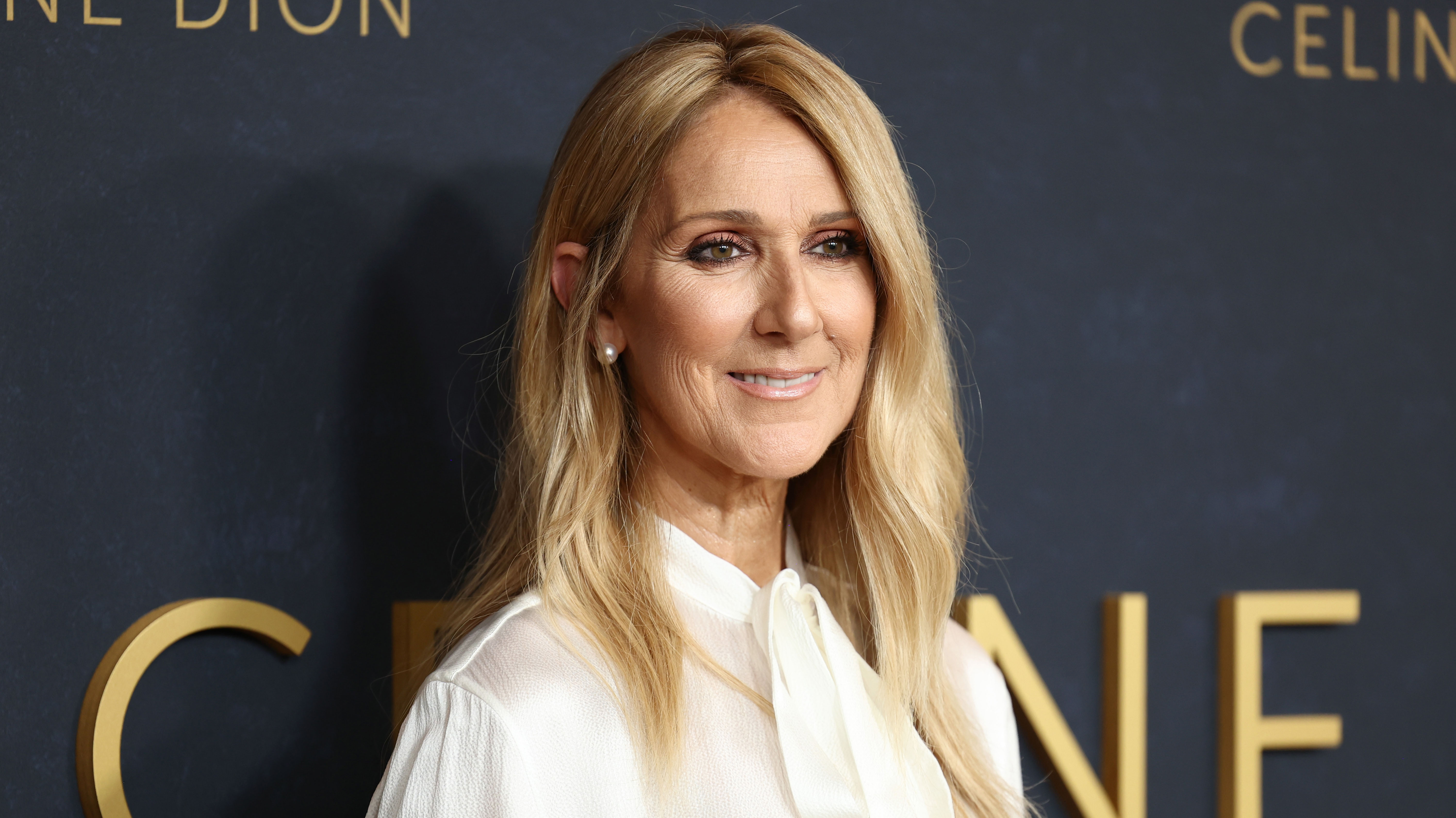
Céline Dion attends the ‘I Am: Celine Dion’ New York special screening at Alice Tully Hall on June 17, 2024, in New York City. (Cindy Ord/Getty Images)

Celine Dion’s comeback is in full swing.

The iconic singer returned to the stage and kicked off a 26-show run in Paris over the weekend, marking six years since her last live performance and four years since she publicly announced she has stiff-person syndrome.

Dion performed to sold-out crowds on Saturday at Plenitude Arena, previously Paris La Défense Arena, in Nanterre, France, belting out both French and English songs from her extensive catalog.

“What an incredible opening night! Still taking it all in,” Dion said in an Instagram post afterward.

Footage from the concert shows Celine telling the cheering crowd, “I made a promise to come back, to be back onstage. Here I am.”

The 58-year-old singer will perform until mid-October and then take a break before resuming performances in May 2027.

In December 2022, Dion announced publicly that she had been diagnosed with stiff-person syndrome, a rare neurological disease. She gave fans an inside look at what she was going through in her documentary, I Am: Celine Dion.

Copyright © 2026, ABC Audio. All rights reserved.

Another measles-related death reported in Pennsylvania as outbreak grows

Another measles-related death reported in Pennsylvania as outbreak grows
Illustration of measles virus particle. (Getty Images/Kateryna Kon/Science Photo Library)

(NEW YORK) — A coroner’s office in Pennsylvania reported a measles-related death of a 40-year-old unvaccinated woman on Sunday, which comes amid a growing outbreak in the state.

“A 40-year-old female resident of Jefferson County died on Saturday, September 12, 2026, from complications associated with measles. Out of respect for the privacy of the deceased and her family, no additional identifying information will be released,” the Jefferson County Coroner’s Office said in a post on Facebook.

“This is a heartbreaking loss for the family and an unfortunate reminder that measles can be a serious and potentially life-threatening disease,” Coroner Greg Furlong said.

The person was unvaccinated against measles, Furlong confirmed to ABC News. 

The Pennsylvania Department of Health said they are investigating this death reported by the Jefferson County coroner in a statement provided to ABC News. 

As of Friday, the Pennsylvania Department of Health has reported 676 measles cases in the state, with over 100 new cases reported over the last week. Of the cases, 124 have been hospitalized, and nearly all cases are among those unvaccinated against the virus, according to data from the health department. 

The number of measles-associated deaths reported by Pennsylvania officials has been disputed by Secretary of Health and Human Services Robert F. Kennedy Jr. in recent weeks. 

The Centers for Disease Control and Prevention has not reported any measles deaths in 2026 on its website, last updated on Friday, while the PA Department of Health has previously reported two measles-associated deaths linked to this outbreak.

CDC Director Dr. Erica Schwartz said in a statement that the agency has not yet been notified of this most recent death reported in Jefferson County. 

“CDC was not notified by Pennsylvania officials of this death,” Schwartz said. “Despite repeated offers of assistance, Pennsylvania has not requested a CDC Epi-Aid, which would deploy epidemiologists and provide on-the-ground measles outbreak support.”

In late August, Pennsylvania’s top health official, Dr Debra Bogen, had said her staff was having “regular meetings with professional staff at the CDC” in a post on X responding to health secretary Robert F. Kennedy Jr. saying her department had “refused to share information” with the CDC after the first two measles-associated deaths in the state were announced.

Copyright © 2026, ABC Audio. All rights reserved.

Hayden Panettiere investigation now cross-country and focused on drugs, sources say

Hayden Panettiere investigation now cross-country and focused on drugs, sources say
Hayden Panettiere attends the world premiere of Paramount’s “Scream VI” at AMC Lincoln Square Theater on March 06, 2023 in New York City. (Dimitrios Kambouris/Getty Images)

The investigation into the death of actress Hayden Panettiere is now a cross-country investigation in both Los Angeles and South Carolina, sources told ABC News.

While toxicology reports are still pending, sources say investigators are focusing on what drugs may have played a role in her death, and where the drugs came from.

Panettiere, known for her roles in Heroes, Nashville and Ice Princess, died on Aug. 16 after she was found unresponsive and in cardiac arrest at a residence in Greenville, South Carolina.

First responders attempted to resuscitate her, but she was pronounced dead at the scene.

Panettiere’s official cause and manner of death have not yet been announced.

The actress flew from Los Angeles to South Carolina the day before her death, sources say.

The Greenville City Police Department is leading the investigation into Panettiere’s death, with the U.S. Drug Enforcement Administration assisting, sources familiar with the matter told ABC News last month.

In response to DEA joining the investigation into her death, a representative for Panettiere told ABC News in an Aug. 20 statement, “There’s nothing to be shared at this time as the investigation is ongoing but we are hopeful that justice will be served.”

Sources told ABC News the investigation into Panettiere’s death could be looking into street-level drug dealers who may have provided drugs to the late actress.

Brian Hickerson, Panettiere’s on-again, off-again boyfriend, and his brother Zach Hickerson were present at the scene of her death, according to a police report previously obtained by ABC News. The responding police officer added in the report that Brian Hickerson showed them “the bag of medication Hayden is currently on.”

The report noted that Panettiere had been “temporarily staying” at the residence where she was found.

Brian Hickerson’s attorney shared a statement with ABC News on Aug. 20, in response to the police report, writing, “Hayden’s death remains under investigation and it is important to allow that investigation to proceed. As has been publicly reported, police confirmed there were no signs of foul play.”

“Out of respect for Hayden’s loved ones and the ongoing investigation, there will be no further comment at this time,” the statement added.

Prior to her death, Panettiere opened up about her substance abuse issues, which she said ran concurrent with her successful acting career. The actress wrote about her struggles in her memoir This Is Me: A Reckoning, released in May, and spoke about them in press interviews.

“When I got to the point of looking in the mirror and seeing my eyes had turned yellow, and that I didn’t recognize my body anymore … I went into that doctor’s office and got a blood test, and he told me, ‘If you don’t stop, you’re going to be looking at a liver transplant,'” Panettiere said on the Tamron Hall Show earlier this year about her decision to enter a rehabilitation center in 2020.


Copyright © 2026, ABC Audio. All rights reserved.
Millions dropped from SNAP food assistance as funding faces September uncertainty

Millions dropped from SNAP food assistance as funding faces September uncertainty
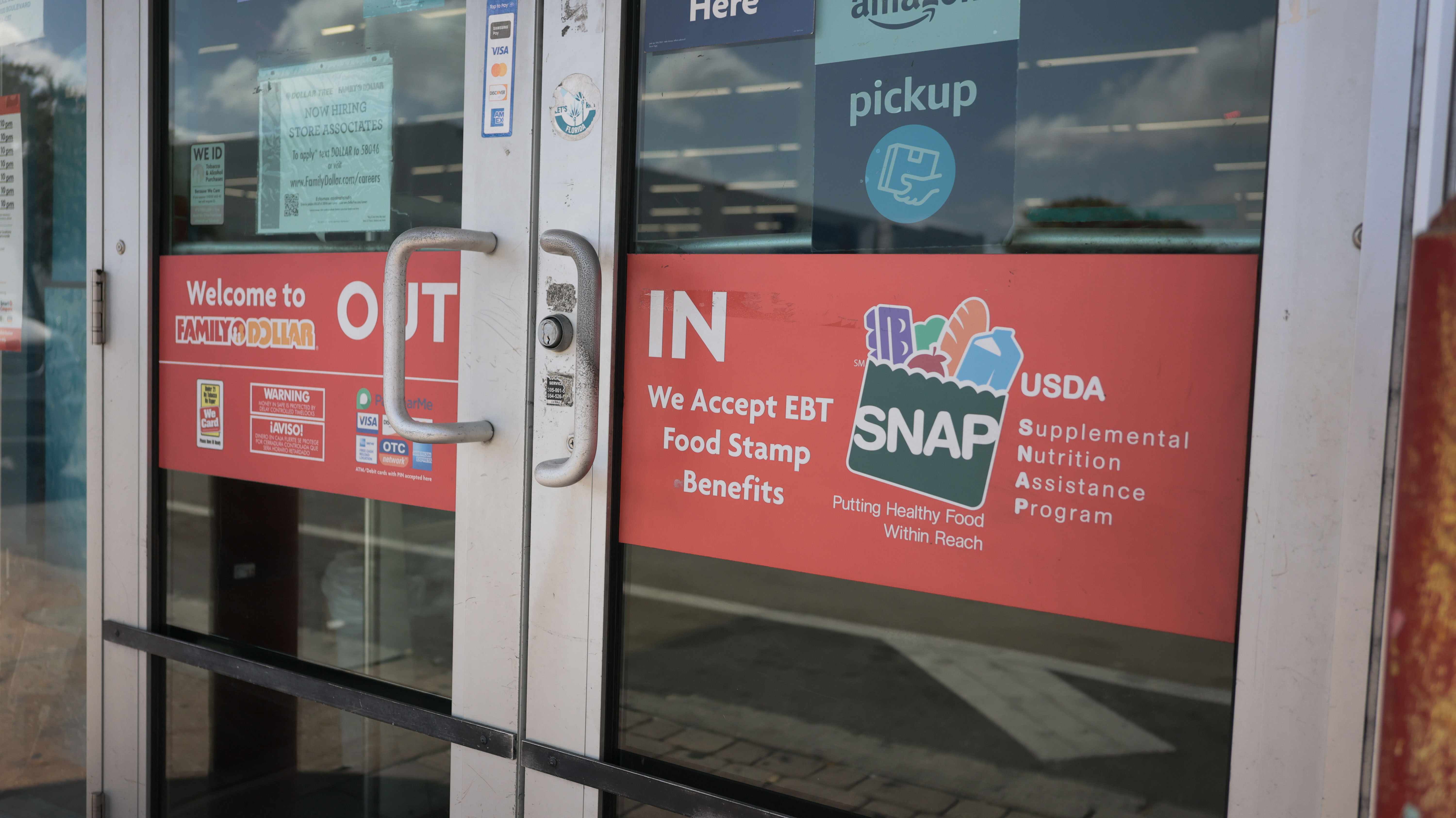
 A sign indicates the store accepts SNAP benefits on April 21, 2026, in Miami, Florida. (Joe Raedle/Getty Images)

(WASHINGTON) — Supplemental Nutrition Assistance Program (SNAP) funding could face a major shake-up at the end of September unless Congress passes a resolution to delay major changes included in H.R. 1, commonly known as the GOP’s One Big Beautiful Bill.

Starting Oct. 1, states will have to pick up 75% of the administrative costs of running the program, with the funding burden of providing benefits to participants set to shift from the federal to state level over the next few years.

State and national food assistance groups are calling on Congress to pass a resolution delaying the implementation of this cost shift, to give states more time to prepare for the bigger bill.

The federal food assistance program faced a funding lapse last fall, and experts are now warning of an uncertain future.

Nationwide, roughly 5 million Americans have lost access to SNAP since the Republican-backed budget bill became law, including more than 1.5 million children, according to the Center on Budget and Policy Priorities.

Much of the decline can be attributed to changes in work requirements and administrative hurdles in applying, coupled with a major cost shift that states will have to bear if they want SNAP to remain fully funded, Dottie Rosenbaum, director of federal SNAP policy at the CBPP, told ABC News.

Under the law, the upper age limit for able-bodied adults without dependents who must meet work requirements was raised from 54 to 64.

Additionally, exemptions were changed for parents and other family members responsible for a dependent, lowering the qualifying age from 18 to 14.

“The declines we’re seeing in SNAP participation so far are far deeper and far faster than the Congressional Budget Office predicted at the time the law was enacted, and it’s especially alarming that more than one and a half million children have been cut,” Rosenbaum said.

“We’re hearing increasing reports … of people struggling to put food on the table, of people facing untenable choices between, you know, paying their rent and buying groceries and other essentials, putting gas in their cars,” Rosenbaum added.

The White House did not respond to a request for comment on the impact of the new work requirements. The administration has publicly supported the idea in the past.

“The American dream is not being on [a] food stamp program. … The American dream is not being on all these programs. That should be a hand up, not a handout,” Agriculture Secretary Brooke Rollins said in an interview on Fox Business in January.

Alongside the new work requirements, the budget outlined a major shift in costs from the federal government to the states.

Beyond each state’s responsibility to pay 75% of SNAP’s administrative costs starting in October, states are set to pay a percentage of the benefit costs tied to its error rate in the coming years.

The error rate measures underpayments and overpayments, resulting in mandatory additional payments ranging from 5% to 15% for most states.

Impacts already seen

In Arizona, the state “took immediate action on error reduction efforts after H.R. 1 became law,” the Arizona Dept. of Economic Security said. This included expanding documentation requirements, establishing a preauthorization review process and continuous income monitoring. More than 400,000 SNAP recipients lost access to the program thereafter, according to the CBPP.

“Which meant that the number of people visiting food banks increased by about the same amount,” Terri Shoemaker, executive vice president of the Arizona Food Bank Network, said, crediting the state’s changes in SNAP for the substantial drop in participation.

“We know that [the Arizona Department of Economic Security] is trying to get its arms around accuracy and reporting, but at the same time, we also know that there are people who were impacted by those changes who shouldn’t have been,” Shoemaker said.

When the changes began in Arizona, Shoemaker said, communities rallied to donate food to people who had lost access to SNAP. Still, she added, the response is not sustainable.

“For every one meal that Arizona food banks provide for families, SNAP usually provides about five,” Shoemaker said. “Nationally, that statistic is more like one [meal from food banks] for every nine [meals from SNAP]. But if you think about that and food banks trying to fill that gap, it’s just a scale and scope that is so vast that food banks are going to have a hard time keeping up.”

In neighboring New Mexico, the impact can also be seen.

“Find out where your food bank distributes food and check out the length of a line,” said Jill Dixon, the executive director of the Food Depot — a collection of food banks covering northern New Mexico. “We have one in front of our building on the first and third Thursday of every month. That line usually extends over a mile and a half by the time it opens at 7 a.m.”

The Food Depot distributed more than 8 million meals across much of New Mexico in 2025.

“These are people. They’re not lines. It’s not boxes of food. It’s not anonymous. It’s deeply personal, and it’s right at the center of our community,” Dixon said.

“We’re going to see some hard times ahead,” she added. “Long term, we really have a reckoning of how we’re going to go about making sure that people are fed in a moment when it is incredibly hard to make ends meet.”

Predominantly Republican states hit

In predominantly Republican states, the impact is similar. Louisiana has seen the second largest per-capita decline, with 21% of the state’s SNAP recipients no longer having access to SNAP according to the CBPP.

Food Bank of North Central Arkansas CEO Jeff Quick said his state is facing a burden too large to bear without major changes. “We will never be able to food bank our way out of food insecurity,” Quick said.

“At best, I think we may be unprepared or unable to cover the cost to continue SNAP in Arkansas, and again, if that worst-case scenario were to happen, it could have an estimated $1.2 billion negative economic impact on our state,” he added.

Quick also said work requirements have hit harder in Arkansas, adding that a worker earning the state’s $11-an-hour minimum wage may still be ineligible for SNAP benefits.

“We don’t want to see anyone go hungry, and regardless of who you are or how you vote or how you legislate, we’re all on the same path,” Quick said. “We got to put great minds together around common causes to find solutions to hunger.”

The White House did not comment on whether the administration supports delaying the cost shift.

What’s next?

Food bank organizations at the state and national levels are asking Congress to pass a resolution delaying the cost shift and allowing states more time to lower their error rates before taking on the additional costs.

“States need more time,” Rosenbaum said. “They need more time to work to lower their error rate and improve their payment accuracy in a way that doesn’t limit access to benefits.”

Senate Agriculture Committee Chairman John Boozman released a version of the farm bill that would delay the cost shift of SNAP, though it has not advanced through the opposite chamber.

Lawmakers return to Washington from August recess on Sept. 14.

Copyright © 2026, ABC Audio. All rights reserved.

In brief: ‘Ransom Canyon’ canceled at Netflix and more

In brief: ‘Ransom Canyon’ canceled at Netflix and more

Ransom Canyon is no more. Variety reports that Netflix has canceled the romantic drama series after two seasons. The show starred Josh Duhamel and Minka Kelly and was set in the Texas Hill Country. According to its logline, the series followed “the intersecting lives of deep-rooted families in a town where your neighbors know everyone’s business.” …

Heated Rivalry star François Arnaud has found his next gig. The actor has joined the cast of Mike Birbiglia’s upcoming comedy Old Friends New Friends. According to The Hollywood Reporter, Arnaud joins the cast of the summer camp comedy that also includes Kathryn Newton, Lucas Hedges, Patrick Schwarzenegger, Geraldine Viswanathan and Dylan Gelula …

Noah Reid is set to join the Sheriff County universe. Deadline reports the Schitt’s Creek star will appear in an upcoming episode of CBS’ Sheriff Country as the character Dr. Hudson “Hud” Henshaw. The network hopes Reid will headline a medical drama spinoff of the series that is currently in development …

Copyright © 2026, ABC Audio. All rights reserved.

Scoreboard roundup — 9/13/26

Scoreboard roundup — 9/13/26

(NEW YORK) — Here are the scores from Sunday’s sports events:

MAJOR LEAGUE BASEBALL
Rockies 1, Tigers 8
Angels 5, Nationals 6
Mets 0, Yankees 2
Phillies 9, Braves 4
Orioles 1, Blue Jays 8
Astros 4, Rays 14
Dodgers 4, Marlins 6
Reds 4, Brewers 3
Guardians 9, Twins 2
White Sox 1, Cardinals 3
Pirates 4, Cubs 3
Royals 1, Red Sox 4
Mariners 7, Athletics 8
Rangers 7, Diamondbacks 6
Padres 6, Giants 4

NATIONAL FOOTBALL LEAGUE
Buccaneers 27, Bengals 33
Saints 30, Lions 31
Jets 23, Titans 10
Ravens 41, Colts 23
Falcons 13, Steelers 20
Bears 59, Panthers 37
Browns 10, Jaguars 34
Bills 36, Texans 31
Dolphins 13, Raiders 27
Packers 22, Vikings 39
Commanders 22, Eagles 24
Cardinals 26, Chargers 14
Cowboys 20, Giants 28

Copyright © 2026, ABC Audio. All rights reserved.

US health officials say cyclospora outbreak has ended as number of reported cases declines

US health officials say cyclospora outbreak has ended as number of reported cases declines
Packages of Taylor Farms salad greens are displayed at a Safeway store on July 16, 2026, in Kings Beach, California. (Justin Sullivan/Getty Images)

(WASHINGTON) — The Centers for Disease Control and Prevention announced Friday that the cyclospora outbreak that plagued thousands of people across the country during the summer months has ended.

The outbreak, which was eventually tied to iceberg lettuce distributed by Taylor Farms, sickened almost 13,000 people in 21 states. Two people died and at least 570 people were hospitalized due to cyclospora illness.

The FDA announced in July that it was investigating cyclospora illnesses linked to shredded iceberg lettuce served at Taco Bell locations in Indiana, Kentucky, Michigan, Ohio and West Virginia after several cases of cyclospora had been reported in late June.

The CDC said Friday more than 1,000 cases were reported in a single day at the height of the outbreak, before the contaminated lettuce was recalled by Taylor Farms on July 17. The illness notably made headlines for causing “explosive diarrhea.”

Citing a decline in infections linked to the outbreak — fewer than two per day in August — and all contaminated Taylor Farms products being taken out of circulation, the CDC said it considers this specific outbreak over. It notes the best-by dates for all products linked to the outbreak have passed and are no longer available in stores or restaurants.

The FDA will continue to investigate the cause of the contamination, which has not yet been identified.


Copyright © 2026, ABC Audio. All rights reserved.