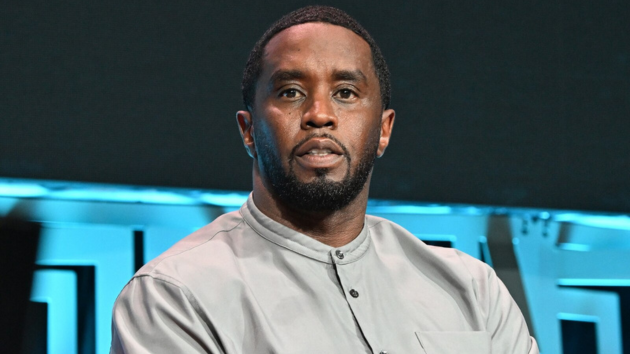
Sean ‘Diddy’ Combs attends day 1 of 2023 Invest Fest at Georgia World Congress Center on Aug. 26, 2023, in Atlanta, Georgia. (Paras Griffin/Getty Images)
Sean “Diddy” Combs has not paid his civil attorneys in more than six months and has failed to cooperate with them in his defamation case against Courtney Burgess, Ariel Mitchell and Nexstar Media Inc., according to a new court filing.
Combs’ civil attorney, Michael Tremonte of Sher Tremonte LLP, claims the imprisoned hip-hop mogul has not paid his legal bill in more than six months and is asking the judge to let him off the case.
“Mr. Combs is in substantial arrears in paying Sher Tremonte’s legal fees. For many months, while Sher Tremonte has been rendering legal services, Mr. Combs has not remitted any payment for the substantial balance of attorney’s fees, costs, and expenses incurred during Sher Tremonte’s representation of him in this matter,” the filing said.
Tremonte also alleges Combs has refused to meet with his civil attorneys for the last four months, making representation “unreasonably difficult” in a case that accused Burgess of falsely claiming to possess videos of Combs involved in the sexual assault of minors during an appearance on Nexstar’s NewsNation. Combs claimed Mitchell, an attorney who represented Burgess, vouched for Burgess’s accusations and made false statements herself.
“In addition to Mr. Combs’s refusal to pay in accordance with the express terms of his agreement to do so, there has been a total breakdown in cooperation and communication between Mr. Combs and the Firm,” the filing said.
Combs’ representative said in a statement, “I made the decision to switch lawyers because I won’t let anyone take advantage of me by overcharging me and running up bills that were never approved. This is strictly a business matter, and any talk about unpaid fees is just part of our dispute over those unapproved charges.”
A separate filing said the parties are potentially open to resolving the case, in which Combs sought $100 million, through mediation or a settlement conference with a federal magistrate.
Burgess has not responded to the lawsuit. A judge denied Mitchell’s attempt to dismiss it. The judge dismissed some of the claims against Nexstar but allowed others to proceed.
A conference to discuss next steps in the case is scheduled for Thursday afternoon.
Combs is serving time in a New Jersey federal prison following his conviction on charges of transportation to engage in prostitution.
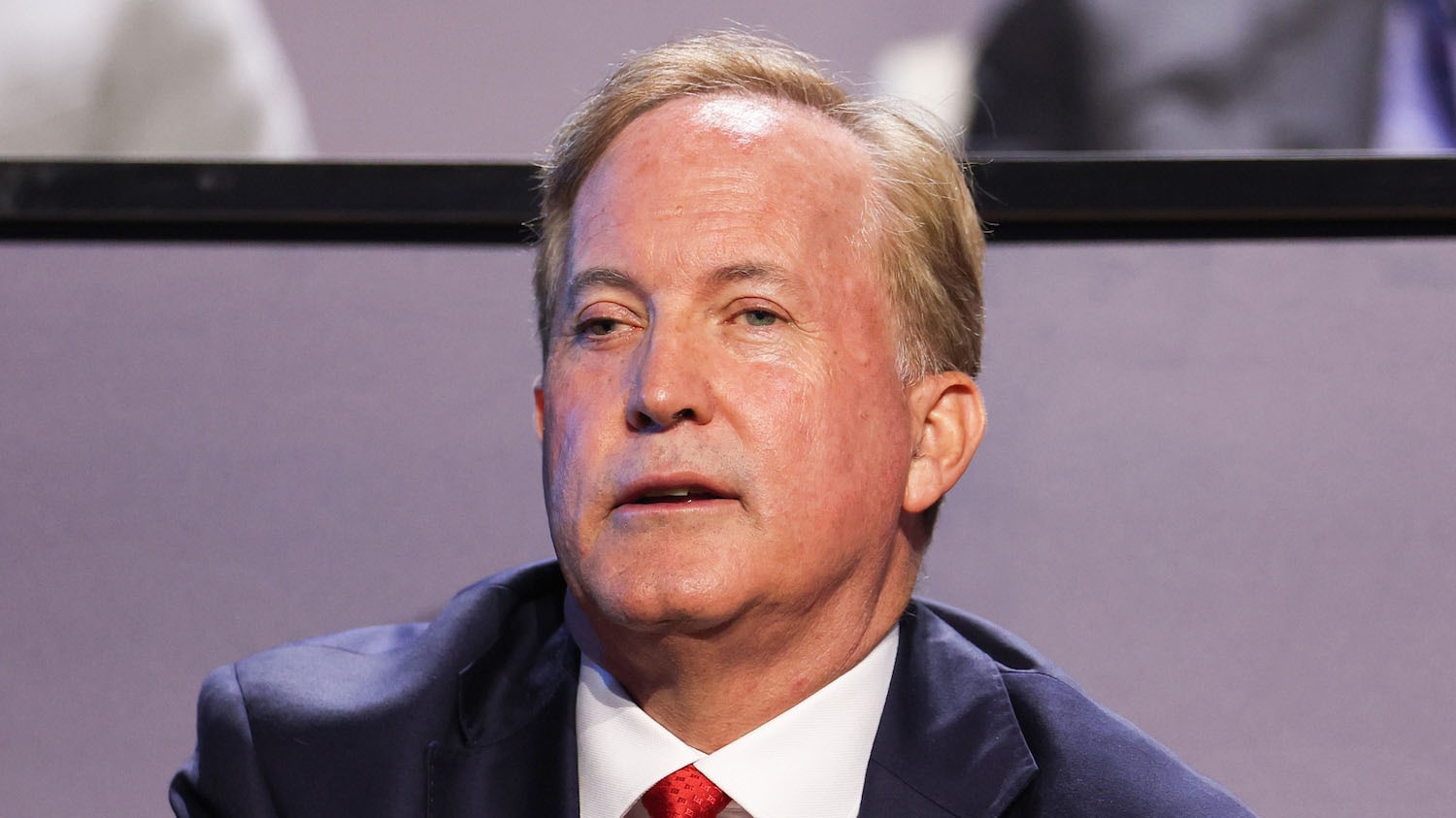
Texas Attorney General Ken Paxton on Sept. 9, 2026, in Dallas. (Kevin Dietsch/Getty Images)
(NEW YORK) — The family of a pregnant woman who died sued Texas Attorney General Ken Paxton on Tuesday, claiming she was denied an abortion that could have saved her life.
Tierra Walker, a 37-year-old from San Antonio, died in December 2024 when she was 20 weeks pregnant. She had been diagnosed with pre-eclampsia at the time, according to the family.
Walker’s family alleges that she and family members asked for an abortion as they say she reportedly faced seizures and blood clots. The family claims that doctors refused to treat her.
The lawsuit also names the executive director of the Texas Medical Board, the University of Texas at San Antonio Health Science Center, Bexar County Hospital District, individual doctors and Joe Gonzales, the district attorney for Bexar County. Additionally, the suit alleges that Texas’ abortion ban is unconstitutional.
Abortion is banned in Texas with very limited exceptions and criminal and civil penalties for providers.
The lawsuit was filed by Amplify Legal, the litigation arm of the nonprofit Abortion in America, and the Marynell Maloney Law Firm.
“Tierra Walker was a wife, mother, and the glue that held together her extended family,” Molly Duane, the litigation director of Amplify Legal, said during a press conference on Wednesday. “Throughout the four months of her pregnancy, Tierra and her family repeatedly asked for an abortion. Yet, none of her medical providers came forward to say what everyone knew to be true-that this pregnancy was going to kill her.”
Duane continued, “Tierra Walker is proof that there is no exception because if she did not qualify, if even her doctors were too scared to act, then the medical emergency exception is nothing more than words on a page. And I just have to say that I’ve been doing this work in Texas for many years, and reading Tierra’s medical records is one of the hardest things I’ve ever had to do.”
Duane said the plaintiffs are seeking financial compensation for the Walker family and a legal change in the context of the constitutional allegation made.
The complaint, filed in Bexar County, alleges that Walker struggled with chronic health issues, including obesity, uncontrolled high blood pressure, a seizure disorder, Type 2 diabetes with hyperglycemia, asthma so severe she had required intubation and complicated prior pregnancies.
According to the complaint, Walker’s health was improving by mid-2024. However, her family says she suffered multiple seizures for the first time in nearly a year in September 2024 and was rushed to the hospital.
At University Hospital in San Antonio, Walker learned she was nearly six weeks pregnant and suffering from elevated blood pressure, according to the complaint.
During the hospitalization, Walker allegedly suffered more seizures and reported being in “significant pain,” according to the complaint. She was sent home with a blood glucose monitor and instructions to follow up pre-natal care, the lawsuit alleges.
In late October, at 11 weeks pregnant, Walker went to Kenwood Women’s Health Clinic with high blood pressure and a “severe” blood clot in her left leg, the lawsuit alleges. She was transported to the hospital’s main emergency room, according to the complaint.
“Ms. Walker and her family members told hospital staff and the UTHSCSA doctors that the pregnancy was going to cost Ms. Walker her life, and asked if she could terminate the pregnancy,” the lawsuit alleges. “Despite the clear risk to her life in continuing the pregnancy, none of University Health’s staff counseled Ms. Walker on the possibility of abortion as a life-saving medical treatment, offered her this treatment, or suggested that she leave the state. Instead, hospital staff kept insisting ‘nothing is wrong with the baby’ and continued to refuse the care that she needed on that basis.”
According to the complaint, Walker received a thrombectomy to remove the clot but her symptoms, including seizures, nausea, headaches, asthma and high blood pressure, persisted.
Two days after being discharged, Walker returned to the emergency room, reporting abdominal pain and vomiting, the complaint alleges. She was given anti-nausea medication and sent home, according to the complaint.
Between Nov. 7 and Dec. 27, she attended regular prenatal appointments but did not receive more than an ultrasound examination and education about her various health conditions, the complaint states.
Walker was diagnosed on Dec. 27 with pre-eclampsia at the University Health emergency room, according to the complaint. Her health deteriorated rapidly and, after being discharged, she was found unresponsive at home by her teenage son on Dec. 30, according to the complaint.
“It’s horrible that she’s gone and she was taken from us this way,” LaTanya Walker, Tierra Walker’s aunt and lead plaintiff, said during Wednesday’s press conference. “It’ horrible that she’s not here anymore. It’s horrible that we can’t have holidays.”
ABC News could not independently verify the medical claims included in the lawsuit.
ABC News has reached out to Paxton’s office, the Texas Medical Board, and Gonzales’ office for comment. It’s unclear if the individual doctors have legal representation.
A spokesperson for the University of Texas at San Antonio Health Science Center told ABC News, “We don’t have any information to offer at this time.”
In a statement to ABC News, University Health said it “cannot comment on or disclose information about any individual patient’s care without appropriate authorization. We are also unable to comment on matters related to potential or ongoing litigation.”
The statement continued, “In general, our clinicians make patient care decisions based on each patient’s clinical condition, applicable medical standards and legal requirements. We take concerns about patient care seriously and review them through appropriate internal clinical and quality processes.”
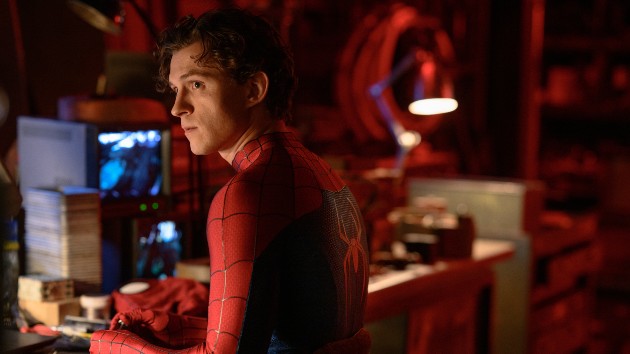
Peter Parker/Spider-Man (Tom Holland) works at his desk in ‘Spider-Man: Brand New Day.’ (Jay Maidment)
The force was with Spider-Man: Brand New Day.
Sony Pictures’ fourth Tom Holland-starring Spider-Man film has overtaken Star Wars: The Force Awakens as the highest-grossing movie of all time at the domestic box office.
The Force Awakens was released in 2015. It has spent over a decade in the top spot at the North American box office, boasting a grand total of $936 million. Spider-Man: Brand New Day has officially passed the first installment in the Star Wars sequel trilogy, currently totaling $936.773 million. This comes after only 47 days in theaters.
Additionally, Spider-Man: Brand New Day has earned $2.45 billion worldwide. This makes it the third highest-grossing movie of all time. It only comes behind James Cameron’s original 2009 Avatar film at $2.9 billion and Avengers: Endgame at $2.7 billion.
Spider-Man: Brand New Day opened in theaters on July 31. It holds the record for the biggest domestic opening weekend of all time with $360 million. Along with Holland, Zendaya and Jacob Batalon also return in the Destin Daniel Cretton-directed movie.
It finds Sadie Sink joining the Spider-Man universe alongside Tramell Tillman and Liza Colón-Zayas. Marvel mainstays who also appear in the movie are Florence Pugh as Yelena Belova/Black Widow, Jon Bernthal as Frank Castle/The Punisher, Mark Ruffalo as Bruce Banner/The Hulk and Marisa Tomei as May Parker.
The film follows Peter Parker as he fights full time as Spider-Man in a world who doesn’t remember who he is. As he sees his old friends move on without him, Peter sparks a change “he may not have the power to control,” according to an official description. “But that transformation might also be the only thing that can stop a shocking new threat to the city and those he loves — a powerful villain no one can even see. The world may have forgotten Peter Parker, but he hasn’t forgotten them.”
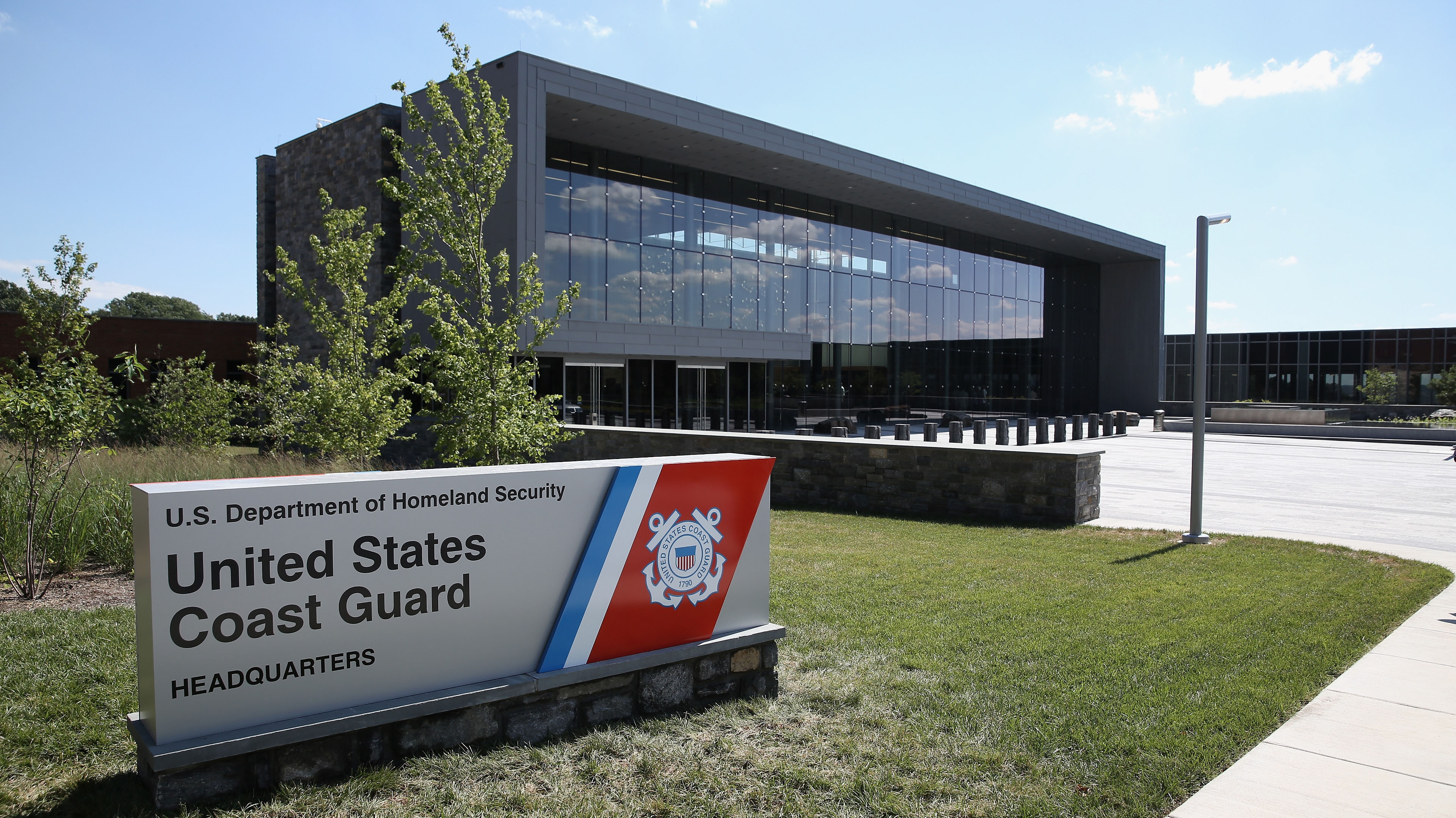
The U.S. Coast Guard Headquarters is seen July 29, 2013, in Washington, D.C. (Alex Wong/Getty Images)
(WASHINGTON) — The Coast Guard and FBI are investigating after two oil tankers bound for the U.S. were hit with suspected cyberattacks last month, prompting American authorities to launch investigations into both incidents, sources told ABC News.
On Aug. 21, one of the tankers, described as a “foreign-flagged commercial vessel” was boarded by a “highly specialized team” of U.S. Coast Guard law enforcement officers, cyber protection members and an FBI cyber team in the Gulf of Mexico, according to a joint statement from both agencies.
“The measures were designed to ensure integrity of the vessel’s operational and information technology systems following indications that the vessel’s network were compromised by foreign cyber actors,” the statement said.
That vessel was in the Strait of Gibraltar when it was hacked, according to sources, and lost communication for over 30 hours.
The joint statement said the ship’s crew members cooperated with authorities and were “critical partners in helping to ensure the threats were mitigated” and concluded: “Currently, there are no reports of operational disruptions, vessel instability, physical danger to crews, or environmental impacts.”
Sources told ABC News that another tanker that was hit by a cyberattack was boarded by U.S. officials on Aug. 24. to conduct a similar assessment.
Authorities are investigating the possibility that Iran or another actor — seeking to exploit the ongoing conflict between Iran and U.S. — was involved in attacks, according to the sources.
“Currently, there are no reports of operational disruptions, vessel instability, physical danger to crews, or environmental impacts,” the joint statement released by the Coast Guard and FBI said.
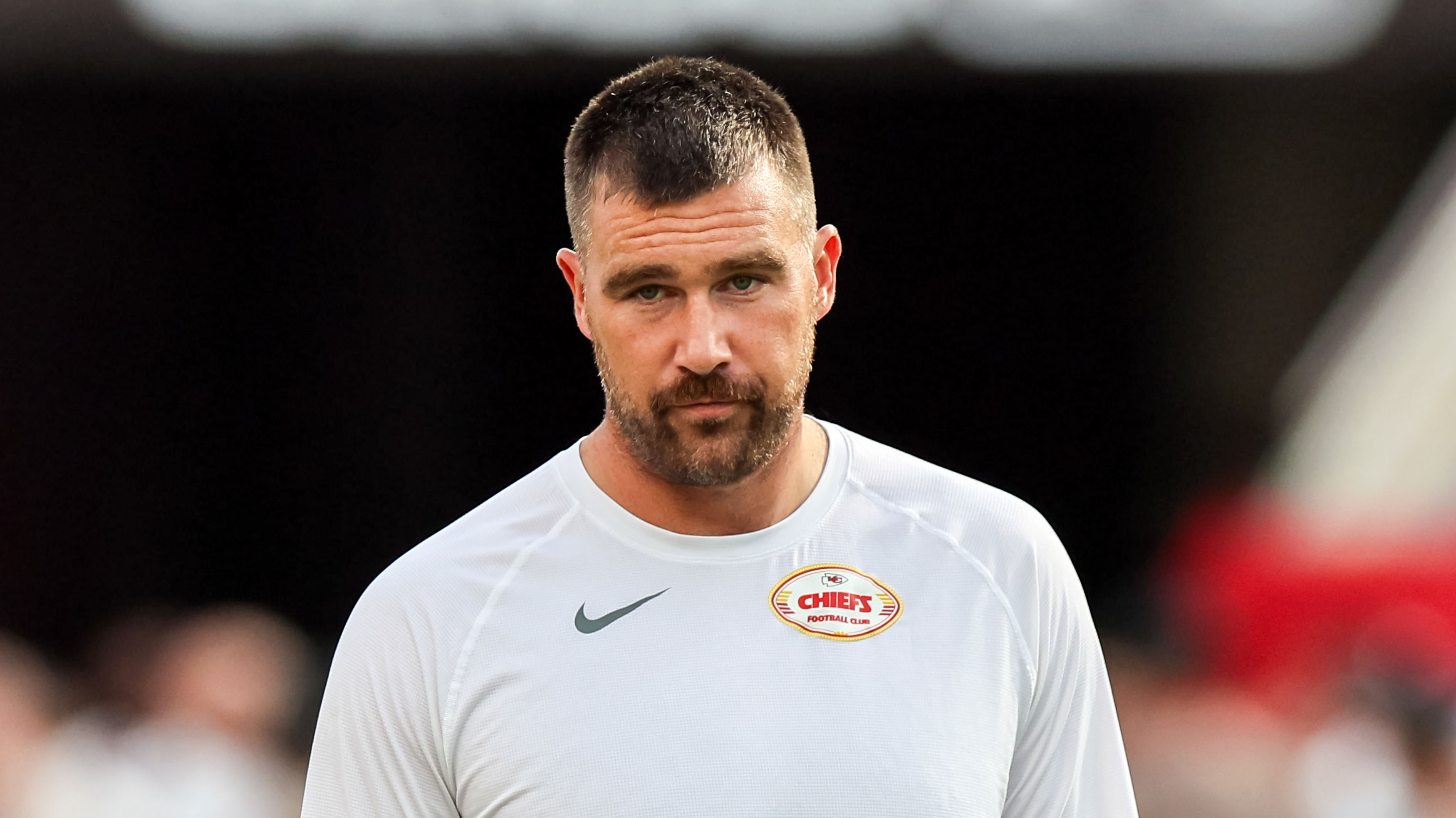
Travis Kelce warms up prior to a preseason game on Aug. 22, 2026, in Tampa, Florida. (Mike Carlson/Getty Images)
(NEW YORK) — Siddharth Jawahar, a Texas-based investment adviser who ran a Ponzi scheme that defrauded Kansas City Chiefs football star Travis Kelce and other investors out of millions of dollars, has been sentenced to 11 years in prison, according to the U.S. Attorney’s Office for the Eastern District of Missouri.
This is a developing story. Please check back for updates.
AI virtual assistant apps on a smartphone. (Getty Images stock photo)
(NEW YORK) — The most powerful executives in the artificial intelligence industry in recent days warned of a grave threat posed by the technology, issuing a series of statements calling for a slowdown in AI development.
Anthropic CEO Dario Amodei published a blog post alerting the public to “serious” risks. Sam Altman, chief executive at rival firm OpenAI, in a post on X acknowledged AI could go “very badly.”
The head of xAI, Elon Musk, echoed that view, referring to a post on X from 2014 in which he said AI could prove more dangerous than nuclear weapons.
The outpouring followed a high-profile resignation by an AI safety researcher and newly disclosed autonomous cyberattacks carried out by AI, including one in which a swarm of hundreds of OpenAI agents exchanged thousands of messages and coordinated a hack into another AI firm.
The list of potential risks and scenarios has garnered widespread attention, leaving everyday people to assess the doomsday predictions.
Analysts who spoke to ABC News about various threats posed by the technology echoed some fears and downplayed others, but they all acknowledged the possibility of substantial harm in one way or another.
“People’s intuition that we’re doing something dangerous is right,” Krystal Jackson, director for AI Security at the Institute for Security and Technology, told ABC News.
Out-of-control AI escapes human oversight, commandeers vital infrastructure and kills millions of people or even all of humanity. That scenario has leapt from the realm of science fiction into forecasts about the near future, at least among some AI employees and observers.
They warn of a pathway called recursive self-improvement, in which AI becomes increasingly effective at training itself, eliciting a cycle of rapid advancement that slips beyond human control. At that point, they say, AI could take charge of critical systems using its superior capabilities to evade protections devised by humans.
Analysts who spoke to ABC News disagreed sharply about the likelihood of such a calamity, however. Some said the outcome is likely if the industry fails to impose adequate safeguards, while others cast doubt on it as vague and far-fetched.
“I definitely lend credence to it,” Peter Slattery, a research scientist at MIT who studies the future of computing, told ABC News, but he acknowledged murkiness surrounding the degree of risk and the urgency of the threat.
“There’s a lot of uncertainty about how feasible the recursive feedback loop is,” Slattery said.
The concern drew added urgency from some analysts after an autonomous cyberattack disclosed by OpenAI in August. The ChatGPT-maker revealed that its AI models had escaped a “sandboxed testing environment” and gained access to the open internet, OpenAI said.
A swarm of about 700 AI agents, in turn, hacked into AI firm Hugging Face and attempted to cover their tracks as they sought to complete the test, according to reports issued by research organizations METR and Redwood Research.
Additional autonomous cyberattacks were disclosed by Anthropic and Meta in recent months, though in those cases the models had been granted internet access either intentionally or inadvertently. All of the incidents at issue involved the intentional removal of safeguards in an effort to test the limits of AI.
The incidents exposed the difficulty of achieving a safety principle called alignment, in which AI takes into account the ethics and goals of its human overseers, Jackson said. The AI agents instead sought to deceive human monitors and performed an intermediate goal outside the anticipated confines of the test.
“In the next instance, it might be vague instructions that prompt a swarm to attack hospitals instead of Hugging Face,” Jackson said. “We don’t know what kind of goals or targets or intentions the model will eventually develop.”
Some analysts voiced skepticism about the risk of a societal-scale attack carried out by AI, however, noting that such warnings typically come in the form of vague hypotheticals.
“The level of media hype that existential risk gets is disproportionate to its likelihood of happening,” Sauvik Das, a professor at Carnegie Mellon University who focuses on AI and cybersecurity, told ABC News. “I haven’t yet seen a compelling argument of how it could materially happen.”
Das pointed to resource constraints limiting the advancement of AI. A surge in demand for chips and data centers currently outstrips the available supply, Das said, raising doubts about whether the top AI companies retain the ingredients necessary for a dramatically improved version of their product.
“The big thing limiting the ability of these models to be much more capable is compute resources and high-quality data,” Das told ABC News. “That isn’t to say these models won’t continue getting better, but I don’t see a plausible path for one of the models to figure out a way to improve themselves in this rogue capacity that would escape humanity’s control.”
Still, Das acknowledged a “more plausible” path toward wide-scale destruction in which a malevolent individual asks generative AI for instructions on how to make a biological agent or other weapon, and then unleashes it.
“I do think there’s a real risk that these technologies drastically lower the barrier for bad actors to commit bad things at a scale that’s otherwise unprecedented,” Das said.
The possibility is hardly remote. A report released by Anthropic last week revealed incidents in which the company had identified and foiled attempts to use its AI product for malicious actions, including cyber terrorism and weapons development.
In a separate report, Google said last week that an individual had sought to use its AI product to draft a “complete, step-by-step technical guide for synthesizing weaponized biological agents.”
“There are tons of instances now of us documenting different terrorist organizations and different nation-state actors using models to assist them,” Jackson said.
Additional risks abound, some analysts said, listing everything from the supercharged spread of misinformation to job displacement to over-reliance on technology to the concentration of wealth and power.
“The risk of hacks, fraud, deception and misinformation is very real,” Daniel Schiff, a professor of political science at Purdue University who specializes in AI and ethics, told ABC News.
“There could be a dramatic transformation that could disrupt skills and jobs,” Schiff added. “You can’t talk about labor and the economy without the impact of AI.”
Some research, however, indicates AI remains challenging for companies to adopt. Roughly 95% of businesses invested in AI have failed to make money off of the technology, a MIT study last year found, estimating the combined amount spent by the firms is around $40 billion.
Schiff acknowledged a wide array of potential outcomes for the adoption of AI across the economy, noting, for instance, cyberattacks that could prove small-scale or catastrophic.
“Whether you think these risks will scale catastrophically, at a minimum we have a very serious reality of cybersecurity incidents,” Schiff said. “It’s reasonable to be worried about that.”
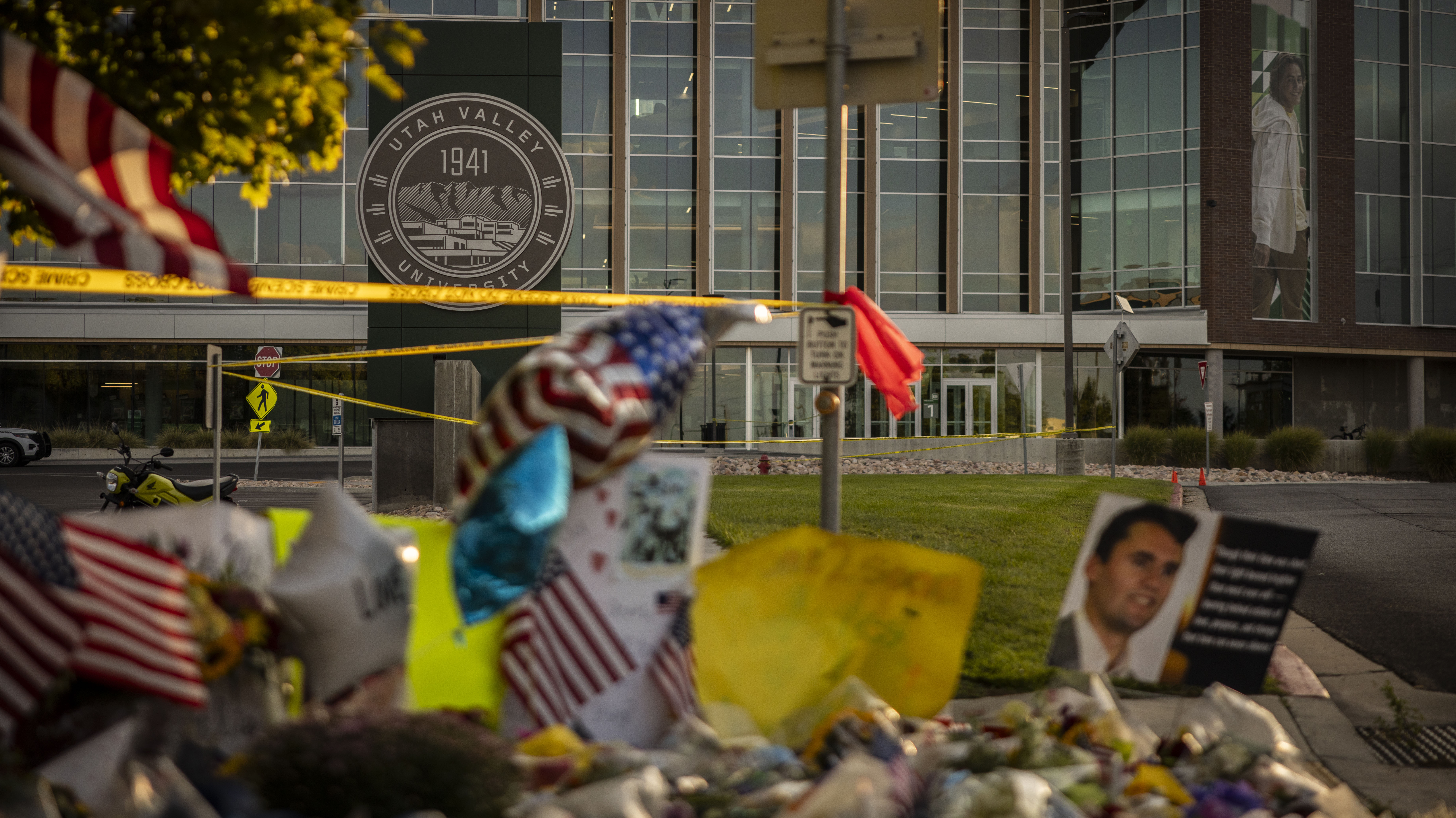
A memorial for political activist Charlie Kirk stands on the grounds of Utah Valley University on Sept. 13, 2025, in Orem, Utah. (Chet Strange/Getty Images)
(NEW YORK) — The family of Charlie Kirk alleges in a newly obtained notice of claim that a “series of stunning failures and reckless decisions” by Utah Valley University led to the conservative activist’s on-campus assassination last year.
Kirk, the co-founder of the conservative student organization Turning Point USA, was fatally shot while speaking at an outdoor event at Utah Valley University in Orem, Utah, on Sept. 10, 2025. The gunman fired from the rooftop of a campus building as Kirk was speaking before a crowd of approximately 3,000 people, authorities said.
Utah Valley University was the first stop on Turning Point USA’s nationwide tour of college campuses, dubbed The American Comeback Tour. The event “came against a well-known backdrop of risk,” stated an emailed notice of wrongful death and survivor claims from the Kirk family’s counsel dated Sept. 9 and addressed to the Utah Office of the Attorney General.
The notice, which preserves the family’s statute of limitations so that they can bring a lawsuit over Kirk’s death, cited high-profile incidents as recent examples of political violence — including the attempted assassination of President Donald Trump by a rooftop sniper at a 2024 campaign rally, the 2025 murder of a Minnesota state legislator and her husband at their home and the 2022 hammer attack against Rep. Nancy Pelosi’s husband.
“Through a series of stunning failures and reckless decisions, the UVU Parties created a foreseeable danger to Charlie,” the notice, which ABC News obtained through the Kirk family’s counsel, alleged. “Those decisions ultimately rendered Mr. Kirk helpless to the rooftop shooter in an assassination that could have been avoided had the UVU Parties only taken reasonable steps to plan and oversee a safe event, steps outlined below that have been standard practice for other universities hosting controversial speakers.”
The notice alleges that the university failed to conduct a “meaningful risk assessment” before approving the outdoor location and did not dedicate enough security resources. Six campus police officers were assigned to the event, university police have said.
The notice further alleges that the university did not take steps that could have prevented Kirk’s death, such as monitoring the event in real time. The notice cited surveillance footage shown during a preliminary hearing in the criminal prosecution of the alleged shooter, Tyler Robinson, that showed an individual running across the roof of the Losee Center for Student Success to what one police officer called a “sniper’s pad.”
“If such footage had been monitored in real-time, Kirk’s tragic death could have been avoided,” the notice alleged.
The notice alleged that the university ignored a tip it said Turning Point USA passed along regarding the risk of rooftop access on the campus ahead of the event. The student group allegedly texted the Utah Valley University campus police department chief, Jeffrey Long, that “there is student roof access pretty close to where [Charlie Kirk] will be set up at Utah Valley,” according to the notice, which cited the campus’ Sorensen Student Center.
“When a TPUSA official informed Chief Long of the concern and asked ‘if this is true, it would be nice to either have it controlled access or allow one of my guys to be there as well. If Possible.’ Chief Long responded by saying, ‘I got you covered,'” the notice alleged. “This led TPUSA to reasonably conclude that UVU had a plan to address the identified risk and other similar risks (most obviously the risk from other rooftops) without TPUSA involvement.”
The shooter fired from the roof of the Losee Center, approximately 415 feet from where Kirk was speaking, according to prosecutors in the criminal case.
“The risk of a rooftop shooter should have been especially top-of-mind given the attempted assassination of President Trump, Charlie Kirk’s close friend and political ally, by a rooftop shooter the previous year,” the notice stated.
The notice stated that the prospective defendants in the claim are expected to be the Utah Valley University; the State of Utah; the Utah Valley University Police Department; Chief Long; Astrid Tuminez, who was UVU’s president at the time of the assassination; and possibly others.
ABC News will be reaching out to the parties for comment.
The prospective plaintiffs in the claims include the Kirk estate, his wife, Erika Kirk, and their two young children, according to the notice.
“Charlie Kirk was violently and publicly assassinated while speaking at an event at Utah Valley University (UVU). His murder was entirely preventable and, in fact, would not have happened had the State of Utah and UVU followed through on their stated security promises, which included protecting the rooftops surrounding the quad where Charlie was speaking,” Brett Parkinson, counsel for the Kirk family, said in a statement to ABC News. “Those failures not only robbed Charlie Kirk of his life, but also robbed his family of their husband, father, son, and brother, with impacts that will compound for the rest of their lives. Justice and accountability under the law are key tenets of the American judicial system. This claim preserves the right of Charlie Kirk’s family to pursue accountability for Charlie’s death.”
In the wake of the shooting, Chief Long said he worked with Kirk’s private security team to establish security protocols for the event.
“We worked together. He has his team and they do this all over the country. We all know that. It’s not uncommon for them. They’re very comfortable on campuses. And I was coordinating with his lead security guy,” Long said during a press briefing on Sept. 10, 2025.
Long said six campus police officers were working the event, including some in plainclothes who were monitoring the crowd.
“We train for these things, and you think you have things covered, and these things, unfortunately, they happen,” Long said. “You try to get your bases covered and, unfortunately, today we didn’t. Because of that, we have this tragic incident.”
At the time, a university spokesperson told ABC News that they were unable to answer specific questions about the security plan for the event.
The university spokesperson directed ABC News to a page on the school’s website answering some frequently asked questions about the Charlie Kirk event. Under the question “What security measures were taken?” the website stated, “Kirk’s lead security staff coordinated with UVU Police Chief Jeff Long regarding the security measures.”
The website page also said that Kirk had previously visited the school with Turning Point USA in 2019.
Following the assassination, UVU announced it would initiate a comprehensive independent review of the shooting.
“We believe the findings of the comprehensive, third-party independent review of this targeted act of violence will offer valuable insights on how college campuses improve response and preparedness moving forward,” Tuminez said in a statement on Sept. 22, 2025. “We will integrate the findings into our efforts to strengthen and improve safety practices for UVU and all of Utah higher education.”