

2025 ‘Doomsday Clock’: This is how close we are to self-annihilation, scientists say

2025 ‘Doomsday Clock’: This is how close we are to self-annihilation, scientists say
Pallava Bagla/Corbis via Getty Images

(WASHINGTON) — Scientists and global leaders revealed on Tuesday that the “Doomsday Clock” has been reset to the closest humanity has ever come to self-annihilation.

For the first time in three years, the Bulletin of the Atomic Scientists moved the metaphorical clock up one second to 89 seconds before midnight, the theoretical doomsday mark.

“It is the determination of the science and security board of the Bulletin of Atomic Scientists that the world has not made sufficient progress on existential risks threatening all of humanity. We thus move the clock forward,” Daniel Holz, chair of the organization’s science and security board, said during a livestreamed unveiling of the clock’s ominous new time.

“In setting the clock closer to midnight, we send a stark signal,” Holz said. “Because the world is already perilously closer to the precipice, any move towards midnight should be taken as an indication of extreme danger and an unmistakable warning. Every second of delay in reversing course increases the probability of global disaster.”

For the last two years, the clock has stayed at 90 seconds to midnight, with scientists citing the ongoing war in Ukraine and an increase in the risk of nuclear escalation as the reason.

Among the reasons for moving the clock one second closer to midnight, Holz said, were the further increase in nuclear risk, climate change, biological threats, and advances in disruptive technologies like artificial intelligence.

“Meanwhile, arms control treaties are in tatters and there are active conflicts involving nuclear powers. The world’s attempt to deal with climate change remain inadequate as most governments fail to enact financing and policy initiatives necessary to halt global warming,” Holz said, noting that 2024 was the hottest year ever recorded on the planet.

“Advances in an array of disruptive technology, including biotechnology, artificial intelligence and in space have far outpaced policy, regulation and a thorough understanding of their consequences,” Holz said.

Holtz said all of the dangers that went into the organization’s decision to recalibrate the clock were exacerbated by what he described as a “potent threat multiplier”: The spread of misinformation, disinformation and conspiracy theories “that degrade the communication ecosystem and increasingly blur the line between truth and falsehood.”

What is the Doomsday Clock?

The Doomsday Clock was designed to be a graphic warning to the public about how close humanity has come to destroying the world with potentially dangerous technologies.

The clock was established in 1947 by Albert Einstein, Manhattan Project director J. Robert Oppenheimer, and University of Chicago scientists who helped develop the first atomic weapons as part of the Manhattan Project. Created less than two years after the United States dropped atomic bombs on Hiroshima and Nagasaki, Japan, during World War II, the clock was initially set at seven minutes before midnight.

Over the past seven decades, the clock has been adjusted forward and backward multiple times. The farthest the minute hand has been pushed back from the cataclysmic midnight hour was 17 minutes in 1991, after the Strategic Arms Limitation Treaty was revived and then-President George H.W. Bush and Soviet President Mikhail Gorbachev announced reductions in the nuclear arsenals of their respective countries.

For the past 77 years, the Bulletin of the Atomic Scientists, a nonprofit media organization comprised of world leaders and Nobel laureates, has announced how close it believes the world is to collapse due to nuclear war, climate change and, most recently, the COVID-19 pandemic.


Copyright © 2025, ABC Audio. All rights reserved.
2025 ‘Doomsday Clock’: This is how close we are to self-annihilation, scientists say

2025 ‘Doomsday Clock’: This is how close we are to self-annihilation, scientists say
Pallava Bagla/Corbis via Getty Images

(WASHINGTON) — Scientists and global leaders revealed on Tuesday that the “Doomsday Clock” has been reset to the closest humanity has ever come to self-annihilation.

For the first time in three years, the Bulletin of the Atomic Scientists moved the metaphorical clock up one second to 89 seconds before midnight, the theoretical doomsday mark.

“It is the determination of the science and security board of the Bulletin of Atomic Scientists that the world has not made sufficient progress on existential risks threatening all of humanity. We thus move the clock forward,” Daniel Holz, chair of the organization’s science and security board, said during a livestreamed unveiling of the clock’s ominous new time.

“In setting the clock closer to midnight, we send a stark signal,” Holz said. “Because the world is already perilously closer to the precipice, any move towards midnight should be taken as an indication of extreme danger and an unmistakable warning. Every second of delay in reversing course increases the probability of global disaster.”

For the last two years, the clock has stayed at 90 seconds to midnight, with scientists citing the ongoing war in Ukraine and an increase in the risk of nuclear escalation as the reason.

Among the reasons for moving the clock one second closer to midnight, Holz said, were the further increase in nuclear risk, climate change, biological threats, and advances in disruptive technologies like artificial intelligence.

“Meanwhile, arms control treaties are in tatters and there are active conflicts involving nuclear powers. The world’s attempt to deal with climate change remain inadequate as most governments fail to enact financing and policy initiatives necessary to halt global warming,” Holz said, noting that 2024 was the hottest year ever recorded on the planet.

“Advances in an array of disruptive technology, including biotechnology, artificial intelligence and in space have far outpaced policy, regulation and a thorough understanding of their consequences,” Holz said.

Holtz said all of the dangers that went into the organization’s decision to recalibrate the clock were exacerbated by what he described as a “potent threat multiplier”: The spread of misinformation, disinformation and conspiracy theories “that degrade the communication ecosystem and increasingly blur the line between truth and falsehood.”

What is the Doomsday Clock?

The Doomsday Clock was designed to be a graphic warning to the public about how close humanity has come to destroying the world with potentially dangerous technologies.

The clock was established in 1947 by Albert Einstein, Manhattan Project director J. Robert Oppenheimer, and University of Chicago scientists who helped develop the first atomic weapons as part of the Manhattan Project. Created less than two years after the United States dropped atomic bombs on Hiroshima and Nagasaki, Japan, during World War II, the clock was initially set at seven minutes before midnight.

Over the past seven decades, the clock has been adjusted forward and backward multiple times. The farthest the minute hand has been pushed back from the cataclysmic midnight hour was 17 minutes in 1991, after the Strategic Arms Limitation Treaty was revived and then-President George H.W. Bush and Soviet President Mikhail Gorbachev announced reductions in the nuclear arsenals of their respective countries.

For the past 77 years, the Bulletin of the Atomic Scientists, a nonprofit media organization comprised of world leaders and Nobel laureates, has announced how close it believes the world is to collapse due to nuclear war, climate change and, most recently, the COVID-19 pandemic.


Copyright © 2025, ABC Audio. All rights reserved.

Middle East live updates: 8 dead hostages among 33 being released, Israel says

Middle East live updates: 8 dead hostages among 33 being released, Israel says
Stringer/Anadolu via Getty Images

(LONDON) — Many residents of northern Gaza and southern Lebanon are expected to return to their homes in the coming days and weeks, with most of the fighting in both areas paused under Israeli ceasefire agreements with Hamas and Hezbollah.

Under Israel’s multi-phased deal with Hamas, some hostages held in the Gaza Strip and Palestinian prisoners in Israeli jails have started to be released. Negotiations between Israel and Hamas are expected to continue amid the first phase of the deal, which was slated to last about six weeks.

Israeli troops to remain in Syria for ‘unlimited period of time’

The IDF will remain on the summit of Hermon and in the security zone for an indefinite period, Israeli Defense Minister Israel Katz said on Tuesday.

“The IDF will remain on the summit of Mount Hermon and in the security zone for an unlimited period of time to ensure the security of the residents of the State of Israel. We will not allow hostile forces to establish themselves in the security zone in southern Syria — from here to the Sweida-Damascus axis, and we will not be dependent on others for our defense,” Katz said.

Israel warns Lebanese residents to avoid areas near border

Israel issued a warning to Lebanese residents on Tuesday, telling them to avoid multiple areas near the Israeli border as it redeploys in various locations in southern Lebanon.

At least 22 were killed over the weekend.

“The deployment process is taking place gradually and in some sectors it is being postponed and requires more time in order to ensure that Hezbollah is not able to re-establish its strength in the field,” the Israel Defense Forces said in a statement.

‎”Hezbollah, as usual, puts its narrow interests above the interests of the Lebanese state and tries through its mouthpieces to heat up the situation, despite being the main reason for the destruction of the south,” the IDF said.

Palestinians on returning home: ‘It feels like we’re reborn!’

Emotional scenes played out all over the Gaza Strip on Monday as families and friends reunited for the first time in over 15 months after the Israeli military allowed movement between northern and southern Gaza.

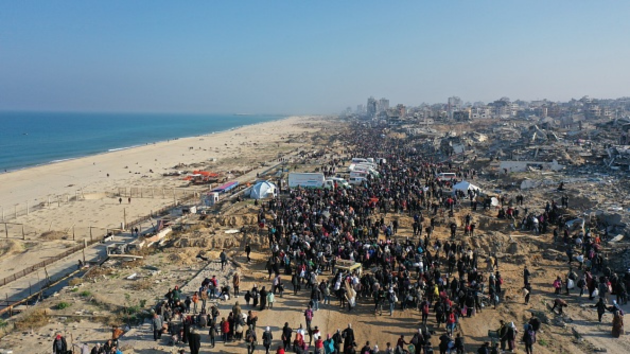
A sea of people swept the shoreline heading north along the sandy remains of the coastal highway. Many traveled on foot trudging through sand, a Palestinian flag flickering in the wind above them.

“It feels like we’re reborn!” Om Wael, a grandmother from Gaza City, told ABC News as she carried her granddaughter in her arms, with a look of joyful determination on her face.

“Even if our home is flattened, we’re so happy to return to our city, to our homes, unharmed. Thank God,” she said.

Mirvat Ajur, 29, from the Daraj neighborhood in central Gaza City, told ABC News that she walked for about five hours until she reached central Gaza.

“It was a difficult journey, but the people were very happy, singing, clapping and dancing in joy at returning to their homes,” she said.

Approximately 300,000 people made the journey home, according to figures released by Gazan authorities. Samira Halas, 55, was among them.

“I know that my home is damaged and burned, but I want to return to it,” Halas, from Gaza City’s Shuja’iyya neighborhood, told ABC News, describing the destruction she saw upon her return “like an earthquake had hit it.”

“I want to live in those burned and destroyed rooms,” she continued. “I am like a fish dying far from the sea.”

-ABC News’ Ruwaida Amer and Zoe Magee

At least 300,000 return to northern Gaza

At least 300,000 Palestinians returned home to northern Gaza on Monday, according to the Gaza government office, after Israel allowed them to cross into the north for the first time in over a year.

135,000 tents needed in Gaza

As people return to northern Gaza on Monday, the Gaza government said it “immediately and urgently” needs at least 135,000 tents because 90% of the buildings have been destroyed.

The government called on the international community to help provide “basic supplies” for Palestinians.

8 dead hostages among 33 being released in 1st phase: Israel

Of the 33 Israeli hostages set to be released during the first phase of the ceasefire, eight have been killed by Hamas, according to Israeli government spokesperson David Mencer.

Seven hostages have already been released since the start of the ceasefire, meaning 18 more living hostages will be released by Hamas in the coming weeks.

More hostages are set to be released on Thursday and Saturday, Mencer said.

Threats to ceasefire will ‘bear the full cost,’ Israeli minister says

Katz Israel, the Israeli defense minister, said on Monday that his country would “firmly” enforce the ceasefires that have paused fighting in Gaza.

“Anyone who violates the rules or threatens IDF forces will bear the full cost,” he said in Hebrew on social media. “We will not allow a return to the reality of Oct. 7.”

Tens of thousands trek into northern Gaza

Tens of thousands of people were marching and driving on Monday back to northern Gaza, after Israel allowed them to cross into the north for the first time in over a year.

Long lines of Palestinians — some singing, others smiling and some kneeling to kiss the soil as they stepped into the northern part of the strip — were seen making their way home.

Those returning home were moving along two main routes.

Many of those who were were walking home were moving along al-Rashid Street, a path expected to be taken by about 300,000 people.

Many of those who were driving north were doing so along Salah al-Din Road.

A line of cars could be seen stretching for about 8 miles on Monday morning, as they waited for permission to cross into the northern part of Gaza.

-ABC News’ Sami Zyara, Diaa Ostaz, Jordana Miller, Nasser Atta and Samayeh Malekian

1 dead, 4 injured after IDF fired at ‘dozens of suspects’ in central Gaza

The Palestinian Red Crescent Society said its team evacuated one person who was killed, and four people who were injured, after an attack by Israeli snipers near the Wadi Gaza Bridge on Sunday.

Israel Defense Forces said in a statement that troops fired “warning shots” at “several gatherings of dozens of suspects” who the IDF said posed a threat to them.

Additionally, a rocket was destroyed by Israeli troops in southern Gaza, according to the IDF’s statement.

Secretary of Defense Pete Hegseth had introductory call with Israel’s Netanyahu

Newly confirmed Secretary of Defense Pete Hegseth had an introductory call on Sunday with Israeli Prime Minister Benjamin Netanyahu, according to a statement from a U.S. senior defense official.

“Both leaders discussed the importance of advancing mutual security interests and priorities, especially in the face of persistent threats,” according to the statement.

Hegseth, who won Senate confirmation after being selected by President Donald Trump for the role, stressed to Netanyahu that the U.S. is “fully committed” to ensuring that Israel “has the capabilities it needs to defend itself,” according to the statement.

Additionally, the defense official said that “both leaders agreed to remain in close contact.”

Israel-Lebanon ceasefire extended to Feb. 18

The White House announced Sunday that the ceasefire between Israel and Lebanon will be extended until Feb.18.

Lebanon, Israel and the U.S. will also begin negotiations for the return of Lebanese prisoners captured after Oct. 7, 2023.

-ABC News’ Hannah Demissie

Copyright © 2025, ABC Audio. All rights reserved.
Middle East live updates: 8 dead hostages among 33 being released, Israel says

Middle East live updates: 8 dead hostages among 33 being released, Israel says
Stringer/Anadolu via Getty Images

(LONDON) — Many residents of northern Gaza and southern Lebanon are expected to return to their homes in the coming days and weeks, with most of the fighting in both areas paused under Israeli ceasefire agreements with Hamas and Hezbollah.

Under Israel’s multi-phased deal with Hamas, some hostages held in the Gaza Strip and Palestinian prisoners in Israeli jails have started to be released. Negotiations between Israel and Hamas are expected to continue amid the first phase of the deal, which was slated to last about six weeks.

Israeli troops to remain in Syria for ‘unlimited period of time’

The IDF will remain on the summit of Hermon and in the security zone for an indefinite period, Israeli Defense Minister Israel Katz said on Tuesday.

“The IDF will remain on the summit of Mount Hermon and in the security zone for an unlimited period of time to ensure the security of the residents of the State of Israel. We will not allow hostile forces to establish themselves in the security zone in southern Syria — from here to the Sweida-Damascus axis, and we will not be dependent on others for our defense,” Katz said.

Israel warns Lebanese residents to avoid areas near border

Israel issued a warning to Lebanese residents on Tuesday, telling them to avoid multiple areas near the Israeli border as it redeploys in various locations in southern Lebanon.

At least 22 were killed over the weekend.

“The deployment process is taking place gradually and in some sectors it is being postponed and requires more time in order to ensure that Hezbollah is not able to re-establish its strength in the field,” the Israel Defense Forces said in a statement.

‎”Hezbollah, as usual, puts its narrow interests above the interests of the Lebanese state and tries through its mouthpieces to heat up the situation, despite being the main reason for the destruction of the south,” the IDF said.

Palestinians on returning home: ‘It feels like we’re reborn!’

Emotional scenes played out all over the Gaza Strip on Monday as families and friends reunited for the first time in over 15 months after the Israeli military allowed movement between northern and southern Gaza.

A sea of people swept the shoreline heading north along the sandy remains of the coastal highway. Many traveled on foot trudging through sand, a Palestinian flag flickering in the wind above them.

“It feels like we’re reborn!” Om Wael, a grandmother from Gaza City, told ABC News as she carried her granddaughter in her arms, with a look of joyful determination on her face.

“Even if our home is flattened, we’re so happy to return to our city, to our homes, unharmed. Thank God,” she said.

Mirvat Ajur, 29, from the Daraj neighborhood in central Gaza City, told ABC News that she walked for about five hours until she reached central Gaza.

“It was a difficult journey, but the people were very happy, singing, clapping and dancing in joy at returning to their homes,” she said.

Approximately 300,000 people made the journey home, according to figures released by Gazan authorities. Samira Halas, 55, was among them.

“I know that my home is damaged and burned, but I want to return to it,” Halas, from Gaza City’s Shuja’iyya neighborhood, told ABC News, describing the destruction she saw upon her return “like an earthquake had hit it.”

“I want to live in those burned and destroyed rooms,” she continued. “I am like a fish dying far from the sea.”

-ABC News’ Ruwaida Amer and Zoe Magee

At least 300,000 return to northern Gaza

At least 300,000 Palestinians returned home to northern Gaza on Monday, according to the Gaza government office, after Israel allowed them to cross into the north for the first time in over a year.

135,000 tents needed in Gaza

As people return to northern Gaza on Monday, the Gaza government said it “immediately and urgently” needs at least 135,000 tents because 90% of the buildings have been destroyed.

The government called on the international community to help provide “basic supplies” for Palestinians.

8 dead hostages among 33 being released in 1st phase: Israel

Of the 33 Israeli hostages set to be released during the first phase of the ceasefire, eight have been killed by Hamas, according to Israeli government spokesperson David Mencer.

Seven hostages have already been released since the start of the ceasefire, meaning 18 more living hostages will be released by Hamas in the coming weeks.

More hostages are set to be released on Thursday and Saturday, Mencer said.

Threats to ceasefire will ‘bear the full cost,’ Israeli minister says

Katz Israel, the Israeli defense minister, said on Monday that his country would “firmly” enforce the ceasefires that have paused fighting in Gaza.

“Anyone who violates the rules or threatens IDF forces will bear the full cost,” he said in Hebrew on social media. “We will not allow a return to the reality of Oct. 7.”

Tens of thousands trek into northern Gaza

Tens of thousands of people were marching and driving on Monday back to northern Gaza, after Israel allowed them to cross into the north for the first time in over a year.

Long lines of Palestinians — some singing, others smiling and some kneeling to kiss the soil as they stepped into the northern part of the strip — were seen making their way home.

Those returning home were moving along two main routes.

Many of those who were were walking home were moving along al-Rashid Street, a path expected to be taken by about 300,000 people.

Many of those who were driving north were doing so along Salah al-Din Road.

A line of cars could be seen stretching for about 8 miles on Monday morning, as they waited for permission to cross into the northern part of Gaza.

-ABC News’ Sami Zyara, Diaa Ostaz, Jordana Miller, Nasser Atta and Samayeh Malekian

1 dead, 4 injured after IDF fired at ‘dozens of suspects’ in central Gaza

The Palestinian Red Crescent Society said its team evacuated one person who was killed, and four people who were injured, after an attack by Israeli snipers near the Wadi Gaza Bridge on Sunday.

Israel Defense Forces said in a statement that troops fired “warning shots” at “several gatherings of dozens of suspects” who the IDF said posed a threat to them.

Additionally, a rocket was destroyed by Israeli troops in southern Gaza, according to the IDF’s statement.

Secretary of Defense Pete Hegseth had introductory call with Israel’s Netanyahu

Newly confirmed Secretary of Defense Pete Hegseth had an introductory call on Sunday with Israeli Prime Minister Benjamin Netanyahu, according to a statement from a U.S. senior defense official.

“Both leaders discussed the importance of advancing mutual security interests and priorities, especially in the face of persistent threats,” according to the statement.

Hegseth, who won Senate confirmation after being selected by President Donald Trump for the role, stressed to Netanyahu that the U.S. is “fully committed” to ensuring that Israel “has the capabilities it needs to defend itself,” according to the statement.

Additionally, the defense official said that “both leaders agreed to remain in close contact.”

Israel-Lebanon ceasefire extended to Feb. 18

The White House announced Sunday that the ceasefire between Israel and Lebanon will be extended until Feb.18.

Lebanon, Israel and the U.S. will also begin negotiations for the return of Lebanese prisoners captured after Oct. 7, 2023.

-ABC News’ Hannah Demissie

Copyright © 2025, ABC Audio. All rights reserved.

Elephant tramples tourist to death at famous national park

Elephant tramples tourist to death at famous national park
Zhang Yudong/Xinhua via Getty Images

(LONDON) — An elephant trampled a tourist on safari to death in South Africa’s Kruger National Park, officials said.

In what park officials are calling a “tragic accident,” the tourist was charged and trampled by an elephant near Crocodile River at Malelane Gate which “regrettably resulted in the loss of life,” according to a statement from South African National Parks released on Saturday.

“South African National Parks (SANParks) officials are at the scene to attend to the matter and support the family,” park officials said.

Authorities are currently investigating the events that led up to the incident as well as the circumstances surrounding the death of the tourist.

“Due to the sensitivity of this matter, we appeal to the public to refrain from posting any pictures or videos of the incident and the victim,” officials said.

Authorities have not yet released any information about the tourist who was killed in the incident.

“SANParks Board and Management extend their heartfelt condolences to the family and friends of the deceased for the loss of their loved one,” officials said.

The investigation remains open.

Copyright © 2025, ABC Audio. All rights reserved.
Sinkhole swallows truck in Japan, trapping driver inside

Sinkhole swallows truck in Japan, trapping driver inside
JIJI Press/AFP via Getty Images

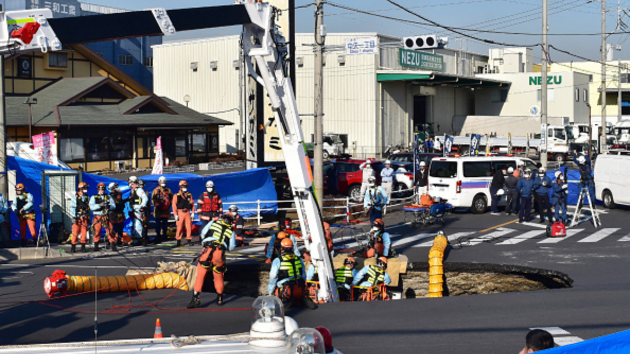
(TOKYO) — The oval-shaped pit suddenly formed on a busy road in Yashio, Japan, taking down a truck and trapping the driver inside. Emergency crews battled unstable ground and debris.

The crater is about 30 feet wide and 16 feet deep. It formed in a well-traveled area of Saitama Prefecture, just outside Tokyo, Japan’s capital. While Tokyo is a global economic hub, Saitama is more residential.

Authorities say the driver, a man, is inside the cab and is in communication with firefighters. However, his truck’s front end appeared lodged in dirt, making the rescue difficult.

Locals appeared stunned. One woman described hearing a thunderous boom, running outside and seeing a hole where the road had been: “I could still see part of the truck at first, but then it kept sinking … and sinking … and then it was just gone.”

Another man, on his way to grab lunch, said he was just as shocked: “I drive this road all the time. Now I don’t know if it’s even safe to use anymore.”

Firefighters have deployed a crane and ropes. The walls of the hole are fragile, making the operation dangerous. Police have shut down roads in the area, fearing more collapses. Status of the driver is unclear.

The cause of the sinkhole is also not clear, but officials are investigating whether underground pipes, recent weather, or construction may have contributed.

Copyright © 2025, ABC Audio. All rights reserved.

Middle East live updates: Thousands walk and drive into northern Gaza

Middle East live updates: 8 dead hostages among 33 being released, Israel says
Stringer/Anadolu via Getty Images

(LONDON) — Many residents of northern Gaza and southern Lebanon are expected to return to their homes in the coming days and weeks, with most of the fighting in both areas paused under Israeli ceasefire agreements with Hamas and Hezbollah.

Under Israel’s multi-phased deal with Hamas, some hostages held in the Gaza Strip and Palestinian prisoners in Israeli jails have started to be released. Negotiations between Israel and Hamas are expected to continue amid the first phase of the deal, which was slated to last about six weeks.

135,000 tents needed in Gaza

As people return to northern Gaza on Monday, the Gaza government said it “immediately and urgently” needs at least 135,000 tents because 90% of the buildings have been destroyed.

The government called on the international community to help provide “basic supplies” for Palestinians.

8 dead hostages among 33 being released in 1st phase: Israel

Of the 33 Israeli hostages set to be released during the first phase of the ceasefire, eight have been killed by Hamas, according to Israeli government spokesperson David Mencer.

Seven hostages have already been released since the start of the ceasefire, meaning 18 more living hostages will be released by Hamas in the coming weeks.

More hostages are set to be released on Thursday and Saturday, Mencer said.

Threats to ceasefire will ‘bear the full cost,’ Israeli minister says

Katz Israel, the Israeli defense minister, said on Monday that his country would “firmly” enforce the ceasefires that have paused fighting in Gaza.

“Anyone who violates the rules or threatens IDF forces will bear the full cost,” he said in Hebrew on social media. “We will not allow a return to the reality of Oct. 7.”

Tens of thousands trek into northern Gaza

Tens of thousands of people were marching and driving on Monday back to northern Gaza, after Israel allowed them to cross into the north for the first time in over a year.

Long lines of Palestinians — some singing, others smiling and some kneeling to kiss the soil as they stepped into the northern part of the strip — were seen making their way home.

Those returning home were moving along two main routes.

Many of those who were were walking home were moving along al-Rashid Street, a path expected to be taken by about 300,000 people.

Many of those who were driving north were doing so along Salah al-Din Road.

A line of cars could be seen stretching for about 8 miles on Monday morning, as they waited for permission to cross into the northern part of Gaza.

-ABC News’ Sami Zyara, Diaa Ostaz, Jordana Miller, Nasser Atta and Samayeh Malekian

1 dead, 4 injured after IDF fired at ‘dozens of suspects’ in central Gaza

The Palestinian Red Crescent Society said its team evacuated one person who was killed, and four people who were injured, after an attack by Israeli snipers near the Wadi Gaza Bridge on Sunday.

Israel Defense Forces said in a statement that troops fired “warning shots” at “several gatherings of dozens of suspects” who the IDF said posed a threat to them.

Additionally, a rocket was destroyed by Israeli troops in southern Gaza, according to the IDF’s statement.

Secretary of Defense Pete Hegseth had introductory call with Israel’s Netanyahu

Newly confirmed Secretary of Defense Pete Hegseth had an introductory call on Sunday with Israeli Prime Minister Benjamin Netanyahu, according to a statement from a U.S. senior defense official.

“Both leaders discussed the importance of advancing mutual security interests and priorities, especially in the face of persistent threats,” according to the statement.

Hegseth, who won Senate confirmation after being selected by President Donald Trump for the role, stressed to Netanyahu that the U.S. is “fully committed” to ensuring that Israel “has the capabilities it needs to defend itself,” according to the statement.

Additionally, the defense official said that “both leaders agreed to remain in close contact.”

Israel-Lebanon ceasefire extended to Feb. 18

The White House announced Sunday that the ceasefire between Israel and Lebanon will be extended until Feb.18.

Lebanon, Israel and the U.S. will also begin negotiations for the return of Lebanese prisoners captured after Oct. 7, 2023.

-ABC News’ Hannah Demissie

Copyright © 2025, ABC Audio. All rights reserved.

After Trump’s tariff threats, Colombia agrees to accept repatriates from US

After Trump’s tariff threats, Colombia agrees to accept repatriates from US
Mandel Ngan via Getty Images

(WASHINGTON) — Following a tense standoff between the nations’ respective presidents, an agreement was reached on Sunday night regarding the return of repatriating citizens to Colombia from the United States.

Conflict ensued earlier in the day after Colombian President Gustavo Petro blocked two U.S. military flights carrying undocumented immigrants from entering the country.

In a retaliatory response, U.S. President Donald Trump posted threats against Colombia on his social media platform, alleging that Petro’s decision “has jeopardized the National Security and Public Safety of the United States.”

Trump said in the post that he ordered his administration to place an emergency 25% tariff on goods coming into the United States from Colombia, and he threatened to raise it in a week to 50%. Additionally, he said that his administration would issue a travel ban and immediately revoke the visas of Colombian government officials — and those of all of the country’s allies and supporters. Trump further threatened to issue visa sanctions on all party members, family members and supporters of the Colombian government. Finally, he said that he would also enhance Customs and Border Protection Inspections of all Colombian nationals and Colombian cargo.

Trump said he would use the International Emergency Economic Powers Act to fully impose the aforementioned treasury, banking and financial sanctions.

“These measures are just the beginning,” Trump said in his post. “We will not allow the Colombian Government to violate its legal obligations with regard to the acceptance and return of the Criminals they forced into the United States!” No evidence has been produced to show that Colombia forced anyone into the U.S.

The Colombia Foreign Ministry confirmed to ABC News that two U.S. military aircraft had been blocked from landing in Colombia on Sunday. It was not immediately clear if all 160 passengers aboard the flights were Colombian citizens.

“A migrant is not a criminal and must be treated with the dignity that every human being deserves,” Petro said in a statement posted on X on Sunday. It included a video of Brazilian deportees handcuffed after landing in Brazil.

The Foreign Ministry of Brazil also issued a statement Sunday asking the United States to clarify the “degrading treatment” of the deportees.

Petro had issued an early-morning statement on X saying that he objected to U.S. military repatriation planes landing in Colombia — although, the country would accept civilian planes repatriating citizens, he added.

But a U.S. defense official told ABC News that the two U.S. Air Force C-17 transport aircraft had been granted diplomatic clearances. Then, when the planes were already heading south, Colombia notified the U.S. that they would not be allowed to land, the defense official said.

In a statement posted on X on Sunday afternoon, Petro offered to send his presidential plane to bring deportees to Colombia in a “dignified” manner.

Mexico has also denied U.S. military repatriation flights from landing there, a U.S. official familiar with the situation told ABC News, while explaining that such flights are not being prepared until after all diplomatic clearances have been finalized.

Like Colombia, Mexico does not have a problem with contracted civilian aircraft carrying out the flights, the official said, and those are what the Department of Homeland Security typically uses.

Discussions are ongoing, the official added.

In an interview on Sunday with Martha Raddatz — ABC News’ chief global affairs correspondent and a co-anchor of “This Week” — Trump’s “border czar,” Tom Homan, discussed what would happen to countries that won’t take the undocumented immigrants back.

“Oh, they’ll take them back,” Homan said. “We got President Trump coming to power. President Trump puts America first. Mexico didn’t want the ‘Remain in Mexico’ program under the first administration. They did it. They didn’t want to put military on the southern border. They did it.”

But if countries didn’t comply, “then we’ll place them in a third safe country,” he added.

Secretary of State Marco Rubio posted a statement on X on Sunday afternoon, saying, “President Trump has made it clear that under his administration, America will no longer be lied to nor taken advantage of.”

“It is the responsibility of each nation to take back their citizens who are illegally present in the United States in a serious and expeditious manner,” Rubio wrote. “Colombian President Petro had authorized flights and provided all needed authorizations and then canceled his authorization when the planes were in the air. As demonstrated by today’s actions, we are unwavering in our commitment to end illegal immigration and bolster America’s border security.”

Later in the evening, the U.S. Department of State added a post saying that Rubio “immediately ordered a suspension of visa issuance at the U.S. Embassy Bogota consular section” and is now “authorizing travel sanctions on individuals and their families, who were responsible for the interference of U.S. repatriation flight operations.”

Tariffs are a tax on imports that U.S. companies pay to import their goods, and the higher costs are largely passed on to consumers.

Trump leveraging a tariff of 25% to 50% could have a serious impact on Colombia’s economy because the U.S. is Colombia’s largest trading partner. According to the U.S. State Department, the United States accounts for 34% of Colombia’s total trade.

But that could also hurt American consumers: The U.S. imported $17.5 billion dollars’ worth of goods from Colombia in 2024, according to Moody’s Analytics.

Notably, Colombia is a top supplier of crude oil to the U.S.

Petro responded to Trump’s threatened sanctions late Sunday, saying in a post on X that Colombia will impose reciprocal 50% tariffs on U.S. goods.

“I’m told that you impose a 50% tariff on the fruits of our human labor to enter the United States, and I do the same,” Petro said in the impassioned post.

Later that evening, U.S. House Speaker Mike Johnson threatened in a post on X that Congress is “fully prepared” to pass sanctions and “other measures” against Colombia.

The White House issued a statement shortly after 10 p.m. on Sunday saying that Colombia had agreed to all of Trump’s terms, “including the unrestricted acceptance of all illegal aliens from Colombia returned from the United States, including on U.S. military aircraft, without limitation or delay.”

The statement also said that the International Emergency Economic Powers Act that Trump had drafted would not go into effect unless Colombia failed to honor the agreement with the U.S.

“The visa sanctions issued by the State Department and enhanced inspections from Customs and Border Protection will remain in effect until the first planeload of Colombian deportees is successfully returned,” it said.

Colombian Minister of Foreign Affairs Luis Gilberto Murillo Urrutia acknowledged the statement shortly afterward in a video posted to X, stating that Colombia would accept repatriates who are transported back with dignity. He also confirmed that Petro would be sending his presidential plane to retrieve those citizens who had been on the rebuffed military planes, but didn’t specify when that would occur.

The foreign affairs minister said that a high-level diplomatic meeting between the U.S. and Colombia would take place in a matter of days.

“Colombia ratifies that it will maintain diplomatic channels of dialogue to guarantee the rights, national interest and dignity of our citizens,” he said in the video.

ABC News’ Luis Martinez, Selina Wang, Hannah Demissie and Nate Luna contributed to this report.

Copyright © 2025, ABC Audio. All rights reserved.

Middle East live updates: Crowds trek into northern Gaza amid fragile ceasefire

Middle East live updates: 8 dead hostages among 33 being released, Israel says
Stringer/Anadolu via Getty Images

(LONDON) — Many residents of northern Gaza and southern Lebanon are expected to return to their homes in the coming days and weeks, with most of the fighting in both areas paused under Israeli ceasefire agreements with Hamas and Hezbollah.

Under Israel’s multi-phased deal with Hamas, some hostages held in the Gaza Strip and Palestinian prisoners in Israeli jails have started to be released. Negotiations between Israel and Hamas are expected to continue amid the first phase of the deal, which was slated to last about six weeks.

Threats to ceasefire will ‘bear the full cost,’ Israeli minister says

Katz Israel, the Israeli defense minister, said on Monday that his country would “firmly” enforce the ceasefires that have paused fighting in Gaza.

“Anyone who violates the rules or threatens IDF forces will bear the full cost,” he said in Hebrew on social media. “We will not allow a return to the reality of Oct. 7.”

Tens of thousands trek into northern Gaza

Tens of thousands of people were marching and driving on Monday back to northern Gaza, after Israel allowed them to cross into the north for the first time in over a year.

Long lines of Palestinians — some singing, others smiling and some kneeling to kiss the soil as they stepped into the northern part of the strip — were seen making their way home.

Those returning home were moving along two main routes.

Many of those who were were walking home were moving along al-Rashid Street, a path expected to be taken by about 300,000 people.

Many of those who were driving north were doing so along Salah al-Din Road.

A line of cars could be seen stretching for about 8 miles on Monday morning, as they waited for permission to cross into the northern part of Gaza.

-ABC News’ Sami Zyara, Diaa Ostaz, Jordana Miller, Nasser Atta and Samayeh Malekian

1 dead, 4 injured after IDF fired at ‘dozens of suspects’ in central Gaza

The Palestinian Red Crescent Society said its team evacuated one person who was killed, and four people who were injured, after an attack by Israeli snipers near the Wadi Gaza Bridge on Sunday.

Israel Defense Forces said in a statement that troops fired “warning shots” at “several gatherings of dozens of suspects” who the IDF said posed a threat to them.

Additionally, a rocket was destroyed by Israeli troops in southern Gaza, according to the IDF’s statement.

Secretary of Defense Pete Hegseth had introductory call with Israel’s Netanyahu

Newly confirmed Secretary of Defense Pete Hegseth had an introductory call on Sunday with Israeli Prime Minister Benjamin Netanyahu, according to a statement from a U.S. senior defense official.

“Both leaders discussed the importance of advancing mutual security interests and priorities, especially in the face of persistent threats,” according to the statement.

Hegseth, who won Senate confirmation after being selected by President Donald Trump for the role, stressed to Netanyahu that the U.S. is “fully committed” to ensuring that Israel “has the capabilities it needs to defend itself,” according to the statement.

Additionally, the defense official said that “both leaders agreed to remain in close contact.”

Israel-Lebanon ceasefire extended to Feb. 18

The White House announced Sunday that the ceasefire between Israel and Lebanon will be extended until Feb.18.

Lebanon, Israel and the U.S. will also begin negotiations for the return of Lebanese prisoners captured after Oct. 7, 2023.

-ABC News’ Hannah Demissie

Copyright © 2025, ABC Audio. All rights reserved.

Final 4 minutes of recordings on Jeju Air flight missing, preliminary report says

Final 4 minutes of recordings on Jeju Air flight missing, preliminary report says
Chung Sung-Jun/Getty Images

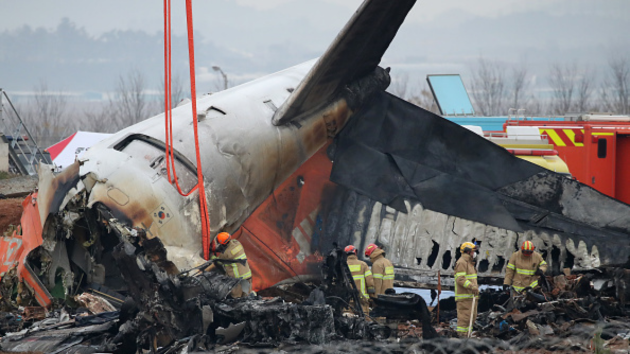
(SEOUL) — The final four minutes of flight recordings before a Jeju Air flight crashed into an embankment at the end of a runway in South Korea are missing, a preliminary report into the investigation of the crash that left 179 people dead said.

Recordings from both the cockpit voice recorder and the flight data recorder are missing, according to the report released Monday.

The crash occurred at Muan International Airport on Dec. 29, 2024. There were a total of 175 passengers and six crew members aboard the Boeing 737, which had taken off from Bangkok, Thailand.

There were two survivors of the crash, both crew members, one man and one woman, according to officials at the time.

The preliminary report into the deadly crash was released on Monday by the Aviation and Railway Accident Investigation Board.

Both the flight data recorder and the cockpit voice recorder recordings from the flight stopped minutes before the airplane hit the concrete structure, or embankment, at the end of the runway at the Muan International Airport, according to the report.

The last four minutes and seven seconds of the recordings before the plane crashed are missing, the preliminary report stated.

Right before the end of the recording, the air traffic control tower advised the airplane to be “cautious of bird activity” at 08:57:50, the preliminary report says.

The CVR and FDR recordings stopped at 08:58:50. The airplane hit the embankment at 09:02:57, the report says.

The pilots of the Jeju Air flight identified a group of birds while approaching the runway and “during a go-around” and feathers and bird blood stains were found on both of the engines of the plane, the preliminary report said.

“Aviation and Railway Accident Investigation Board (ARAIB) will tear down the engines, examine components in depth, analyze CVR/FDR and ATC data, and investigate the embankment, localizers, and bird strike evidence. These all-out investigation activities aim to determine the accurate cause of the accident,” the preliminary report said.

ABC News’ Ellie Kaufman contributed to this report.

Copyright © 2025, ABC Audio. All rights reserved.