

Earth Day 2026: The planet has experienced several environmental wins in recent months

Earth Day 2026: The planet has experienced several environmental wins in recent months
A Przewalski’s horse stands with a foal at the Dunhuang West Lake National Nature Reserve in Dunhuang, northwest China’s Gansu Province, on Feb. 5, 2026. (Lang Bingbing/Xinhua News Agency via Getty Images)

(NEW YORK) — There is evidence that the planet is healing amid massive efforts to mitigate climate change and fight biodiversity loss.

Once-threatened species are rebounding, lawmakers are making policy changes that increase protections against harmful practices and preservation of ecosystems has come to the forefront, according to recent events.

The wins, however, don’t cancel out the realities that the planet continues to be on a tipping point. The world is currently off track to meet the goal outlined in the 2015 Paris Agreement to limit global warming to 1.5 degrees Celsius, according to the United Nations.

The planet has entered an era of “water bankruptcy,” due to irreversible damage to water systems, according to the U.N.’s University Institute for Water, Environment and Health. Deforestation is continuing to occur at a rapid rate, including 16.6 million acres of tropical primary forests lost in 2024 – equivalent to 18 soccer fields per minute, according to the World Wildlife Fund.

Despite the losses, recent environmental wins prove that efforts to protect the planet and its inhabitants are working.

Threatened species are recovering

Most sea turtles are rebounding worldwide as a result of conservation, according to the National Oceanic and Atmospheric Administration.

Green turtles made an especially notable recovery. Once hunted to near-extinction for their eggs – used to make turtle soup – green turtle populations have risen significantly since the 1970s, according to the International Union for Conservation of Nature’s 2025 update to its Red List of Threatened Species. Their status was downgraded from endangered to least concern.

Global conservation efforts included protecting eggs, releasing hatchlings on beaches and reducing capture in fishing nets, according to the IUCN.

Endangered Central California coast coho salmon are returning to Central California’s Russian River after decades of absence – an indicator of river restoration. During the 2024 to 2025 spawning season, more than 30,000 adult coho salmon migrated to the rivers along the Mendocino Coasts – double the record-breaking number of 15,000 seen in the previous season, according to NOAA Fisheries.

A group of wild horses known as Przewalski’s horses has returned to Central Asia after being driven to near-extinction in the 1960s.

In 2024, several zoos took part in the first stages of the reintroduction of the horses to their native Kazakhstan.

Subsequent efforts brought the Przewalski’s horses to neighboring Mongolia.

Przewalski’s horses are known as the last surviving lineage of true wild horses. Their populations declined as a result of habitat loss, overhunting and hybridization with domestic horses, according to the WWF’s Natural Habitat Adventures.

Countries taking action to protect natural resources

In the U.S., the federal government under the Trump administration has taken several actions that could potentially harm the environment, including granting fossil fuel operations in the Gulf exemption from Endangered Species Act protections; the Senate voted to overturn Biden-era Arctic protections; and the U.S. Department of the Interior reached a nearly $1 billion deal with French energy company, TotalEnergies, to end the company’s offshore wind development.

But other countries are making strides in protecting vast amounts of land and water.

Earlier this year, the High Seas Biodiversity Treaty – aimed to protect 60% of the global ocean that is beyond national jurisdiction – entered into force globally.

Adopted under the United Nations Convention on the Law of the Sea (UNCLOS), the treaty opened for signature in September 2023 and could safeguard marine ecosystems beyond national borders.

In July 2026, Ethiopia launched a national campaign to plant 700 million trees a day, aiming to plant 50 billion trees by the end of 2026.

The I-25 Greenland wildlife overpass near Larkspur in Colorado opened in December 2025. The overpass is the largest in the U.S. and will allow elk, pronghorn, mule deer, black bears, mountain lions and a variety of other species to cross, according to the Colorado Department of Transportation.

Italy will ban the killing of male chicks starting in 2027, ending the deaths of 34 million birds every year. Male chicks are often killed because they cannot produce eggs.

Poland, once the largest fur-producing country in Europe with mink, fox, chinchilla and raccoon dog farms housing around 3.4 million animals, has banned fur farming. The European Union is considering a union-wide ban on fur production.

Copyright © 2026, ABC Audio. All rights reserved.
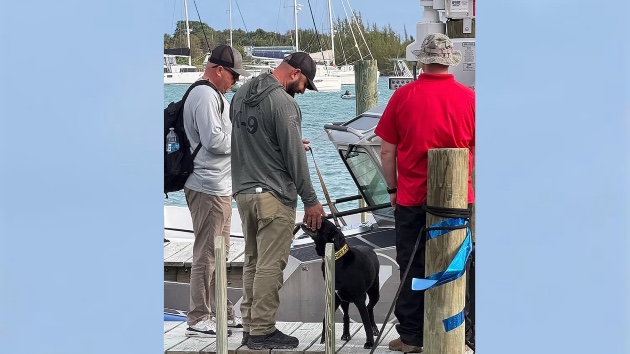
Brian Hooker’s attorney speaks out on wife’s disappearance in Bahamas

Brian Hooker’s attorney speaks out on wife’s disappearance in Bahamas
Cadaver dogs in the Bahamas to help search for missing American Lynette Hooker, April 16, 2026. (ABC News)

(NEW YORK) — Nearly three weeks after American Lynette Hooker went overboard and disappeared in the Bahamas, an attorney for her husband Brian Hooker is asking the public “to give him the benefit of the doubt.”

Michigan-based attorney Crystal Marie Hauser told ABC News that Brian Hooker never would have harmed his wife of 25 years.

Lynette Hooker has been missing since April 4. That evening, after the couple departed Hope Town for their yacht, Soulmate, in Elbow Cay, bad weather caused Lynette Hooker to fall off their dinghy and go overboard, Brian Hooker told authorities.

Brian Hooker was arrested on April 8 and questioned by police. He was released on April 13 without charges.

On April 14, Brian Hooker told ABC News that he was staying in the Bahamas with a “sole focus” of finding his wife, “no matter how likely or unlikely that is.”

“My only focus is to go back to the boat and then hire or beg people to help me go find some areas to search,” he said.

But hours after that interview, Brian Hooker left the Bahamas, with his Bahamian attorney saying he wanted to be with his terminally ill mother.

Asked if Brian Hooker plans to return to the Bahamas to help with the search, Hauser said, “I imagine that is where his heart is, but I can’t speak on whether or not that’s what he would be doing.”

Karli Aylesworth, Lynette Hooker’s daughter and Brian Hooker’s stepdaughter, has traveled to the Bahamas and told ABC News she doubted Brian Hooker’s story.

“I don’t understand how she drowned or got floated away,” Aylesworth said. “It just made me be more, ‘Why didn’t he do this? Why didn’t you do that? Why did that happen?'”

Lynette Hooker’s mother, Darlene Hamlett, told ABC News the couple had a volatile relationship.

“We all handle things in different ways,” Hauser said. “Be open-minded to the fact that just because Karli and Darlene are making these claims, there’s absolutely no evidence to support any of the allegations — absolutely none.”

Copyright © 2026, ABC Audio. All rights reserved.
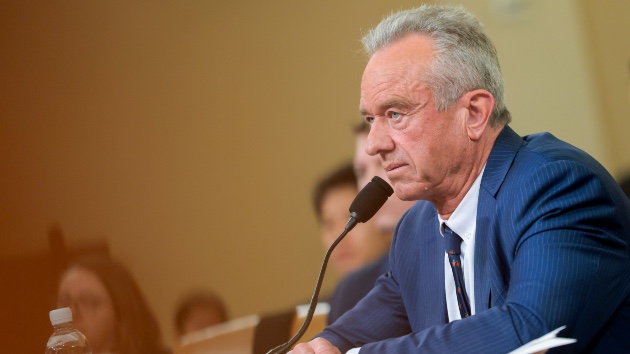
RFK Jr. says NIH cuts are ‘painful,’ won’t commit to backing CDC director’s vaccine guidance

RFK Jr. says NIH cuts are ‘painful,’ won’t commit to backing CDC director’s vaccine guidance
U.S. Health and Human Services Secretary Robert F. Kennedy Jr. testifies during a hearing of the House Committee on Ways and Means on Capitol Hill on April 16, 2026 in Washington, DC. (Photo by Heather Diehl/Getty Images)

(WASHINGTON) — Health and Human Services Secretary Robert F. Kennedy Jr. was pressed on cuts to the National Institutes of Health (NIH), vaccine messaging and the firing of the former director of the Centers for Disease Control and Prevention (CDC) during a hearing on Tuesday.

The hearing before the House Committee on Energy and Commerce Subcommittee on Health marked the final session of four budget hearings before House lawmakers.

Research cuts

Rep. Lizzie Fletcher, D-Tex., said she was concerned about the loss of federal aid for health research in the Trump administration’s budget request for fiscal year 2027.

“Secretary Kennedy, do you understand that cutting federally funded research as this budget does, will cede U.S. leadership on biomedical research to China and create national security and global competitiveness challenges for the United States?” Fletcher asked Kennedy.

Kennedy acknowledged that he shared Fletcher’s concerns, as the biggest proposed cuts are to NIH and Administration for a Healthy America (AHA) programs.

“I don’t want to cut NIH programs, [Office of Management and Budget Director] Russ Vought doesn’t want to cut NIH programs, but we have a $35 trillion debt,” Kennedy said.

“We have been asked to cut across the board at HHS, 12% of our $100 million budget and so we’re making cuts that are painful,” he told Fletcher.

Vaccine messaging

Rep. Marc Veasey, D-Tex., described Kennedy as the most “anti-vax” figure in his lifetime. He suggested that Kennedy’s history of rhetoric denouncing vaccines is correlated with an uptick in measles cases.

Two unvaccinated school-aged children died last year from measles — the first U.S. deaths from measles in a decade.

Kennedy has long sown doubt in the safety and effectiveness of the measles, mumps, rubella (MMR) vaccine. Despite being a required vaccine in all states to attend public school, rates have been steadily decreasing over the last decade, CDC data shows.

It comes as vaccine exemptions have risen sharply, with at least 138,000 kindergarteners exempt from one or more vaccines during the most recent school year, CDC data shows.

However, in recent weeks, some reports have suggested Kennedy is staying away from vaccine-skeptic rhetoric ahead of the midterm elections.

Veasey and others pressed Kennedy on whether the alleged messaging strategy was directed by the White House. Kennedy denied that it was.

“Is Susie Wiles or anyone in the White House instructing you or suggesting that you stop talking about your controversial vaccine skepticism?” Veasey asked.

“No,” Kennedy replied.

CDC leadership

Kennedy defended firing former CDC director Susan Monarez in a lengthy exchange with Rep. Raul Ruiz, D-Calif.

Ruiz criticized Kennedy for ousting Monarez because she allegedly “refused” to approve what Ruiz called the dismantling of the childhood vaccination schedule.

Kennedy aggressively pushed back on the congressman’s characterization.

“That’s not true,” Kennedy said. “What she testified to wasn’t true.”

Kennedy and Monarez both appeared in front of Senate committees last year to address the ousting.

At a Senate hearing in September 2025, Monarez said she was fired by Trump and Kennedy for “holding the line on scientific integrity.”

Kennedy, in a hearing before a different Senate panel earlier that month, disputed Monarez’s version of events. He denied telling Monarez to accept vaccine recommendations without scientific evidence, and claimed she was fired in part because she told him she was untrustworthy.

During Monday’s hearing, Kennedy claimed that his reasoning for the firing had nothing to do with vaccines and that his department is committing $1 billion to vaccine research through the National Institutes of Health and the National Cancer Institute.

Ruiz claimed Kennedy’s vaccine-skeptic views run contrary to the view of President Donald Trump’s new CDC director nominee, Dr. Erica Schwartz.

During her time with the Coast Guard, Schwartz instituted a disease surveillance program and vaccination programs and wrote the first health protection policies for the force, including anthrax and smallpox vaccination policies.

Kennedy said he vetted ​Schwartz’s position ⁠on vaccines ​before she was ​nominated by Trump to lead the CDC. However, Kennedy said he did not speak “to the president directly” before Trump made the nomination.

Kennedy rejected the claim that his and Schwartz’s views were not aligned, but would not commit to following all recommendations of the new CDC director nominee.

“Mr. Secretary, if Dr. Schwartz is confirmed, will you commit on the record today to implement whatever vaccine guidance she issues without interference?” Ruiz asked.

“I’m not going to make that kind of commitment,” Kennedy replied.

Kennedy later repeated, as he has in his previous budget hearings, that he had a “good reason” for firing Monarez.

“I fired Susan Monarez because I asked her an outright question, ‘Are you trustworthy?’ and she said, ‘No,’ and I said, ‘Can I trust you?’ and she said, ‘No,'” Kennedy said. “That’s why she got fired, not because of her vaccine issues.”

ABC News’ Mary Kekatos contributed to this report.

Copyright © 2026, ABC Audio. All rights reserved.

Seafarer talks being trapped on the Strait of Hormuz: ‘There is no safe place here’

Seafarer talks being trapped on the Strait of Hormuz: ‘There is no safe place here’
A view of the vessels heading towards the Strait of Hormuz following the two-week temporary ceasefire reached between the United States and Iran on the condition that the strait be reopened, seen in Oman on April 08, 2026. (Photo by Shady Alassar/Anadolu via Getty Images)

(LONDON) — As the world awaits a resolution on the fate of the Strait of Hormuz — one of the most vital global trade routes — the seafarers who have been stranded for weeks aboard ships and tankers on either side of the waterway are desperate for answers.

Nearly 20,000 people on some 2,000 vessels are currently trapped in the Persian Gulf, waiting for a passage that may not come anytime soon, according to the International Maritime Organization.

“It’s been almost 50 days since the war started, and uncertainty is our biggest fear,” one seafarer told ABC News, speaking anonymously for their safety. “Not knowing if we are going to get out of this situation alive is our main concern — because it doesn’t matter where you are in the Gulf, there is no safe place here.”

The seafarer said they have been waiting to cross since Feb. 28, the day the U.S.-Israeli war on Iran started and the moment vessel owners effectively halted traffic through the strait. Insurance companies stopped covering ships in the region almost immediately, bringing maritime traffic to a standstill on a waterway that normally carries as much as 20% of the world’s crude oil and refined petroleum products.

“There are several different dangers here,” the seafarer explained. “This is a very narrow, enclosed strait. There are reports of sea mines — we don’t know if they’re real or not, but it doesn’t really matter. Once the idea takes hold that mines might be there, no ship wants to pass. That’s the first issue. The second is that in such a confined space, we’re talking about the possibility of drones, unmanned vehicles, ballistic missiles — there are so many ways we could be attacked that I don’t think the U.S. military or any other military can realistically protect us.”

The fallout on global markets has been severe. The longer the strait remains closed, the deeper the energy crisis will cut, particularly across Asia, which depends heavily on Gulf oil exports.

High-stakes negotiations between Iran and the United States continue, with both sides debating the waterway’s reopening, but the only fact that matters to those waiting is that the Strait of Hormuz is still closed, and the threat of attack is likely to keep it that way.

“I’ve seen missiles passing over our heads,” the seafarer said. “I’ve seen drones and planes fly by every day, and we never know their intentions. I’ve watched vessels get hit with my own eyes.”

The seafarer’s experience has been echoed by others in the shipping industry.

“I gave my notice exactly one month ago,” another seafarer recently told The Guardian. “I’ve informed the master, I’m not willing to sail through the strait. It’s about safety, it’s all about safety.”

“I think a vessel owner or operator is going to feel extremely vulnerable considering the disconnect between diplomatic communication and military actions,” Joshua Hutchinson, chief commercial officer at maritime risk agency Ambrey, told ABC News.

He said the industry expects the strait to remain under the control of Iranian authorities while the United States intensifies operations against Iranian vessels. “This will put continued strains on new ceasefire and peace talks,” Hutchinson said.

Hutchinson said the industry needs “clear communication” in order for vessels to safely leave the Persian Gulf and clear the backlog. He forecasts it could take three weeks for all vessels to clear the strait.

The seafarer who spoke to ABC News described a grim scene currently of ships drifting with little direction, and listening on the ship-to-ship communication systems called the VHF line — accounts of crews growing desperate for basic provisions, and some begging to go home.

“There are vessels in this area right now rationing food and water. Crews aren’t getting paid properly, and crew changes are still extremely difficult to arrange,” the seafarer said. “You can hear other crew members talking about their situations — people saying they haven’t been paid, that food is running out. The worst part, for me, is hearing someone say they have no water.”

Since the conflict began, the International Transport Workers’ Federation (ITF) said it has received roughly 1,900 inquiries from seafarers across hundreds of vessels. About 20% were requests for repatriation; others raised concerns about dwindling supplies of fuel, food, and water.

“Civilian seafarers have already lost their lives, and tens of thousands more trapped near the Strait of Hormuz are spending every waking moment consumed by anxiety about how — or whether — they will make it home,” ITF Maritime Operations Coordinator John Canias said. “While many watching from afar see this through the lens of an energy or economic crisis, make no mistake: this is also a humanitarian crisis. Seafarers transport 90% of everything we rely on in our daily lives — food, medicine, fuel. They deserve far better than this.”

So far, the ITF says it has helped repatriate 450 seafarers from the region. For the thousands still waiting, relief has not come.

“We feel trapped — like we’re in a prison,” the seafarer who spoke to ABC News said. “The only way out is through the Strait of Hormuz, and right now, that’s not possible.”

Copyright © 2026, ABC Audio. All rights reserved.

Stepbrother pleads not guilty to murder, sex abuse charges in teen’s cruise ship death

Stepbrother pleads not guilty to murder, sex abuse charges in teen’s cruise ship death
The Carnival Horizon cruise ship sits docked in the Caribbean Sea at the Aruba Cruise Terminal, November 11, 2025, in Oranjestad, Aruba. Gary Hershorn/Getty Images

(MIAMI) — A 16-year-old boy charged as an adult with first-degree murder and aggravated sexual abuse in the death of his stepsister during a family cruise has pleaded not guilty, court records show.

The teenager was due in court in Miami on Wednesday morning for his arraignment, though he waived his appearance, according to a filing from his attorney.

The Department of Justice announced the charges last week, months after 18-year-old Anna Kepner died in November on the Carnival Cruise ship Horizon while the ship was en route to Miami.

Prosecutors alleged that the stepbrother “sexually assaulted and intentionally killed” Kepner. The Florida high school senior died from mechanical asphyxiation, officials said. 

Anna Kepner’s father, Chris Kepner, is married to the suspect’s mother, Shauntel Kepner.

Chris and Shauntel Kepner said in a statement last week, “Our family is devastated by the loss of Anna and continues to grieve this unimaginable tragedy.”

“This situation is deeply painful and complex for our entire family,” the Kepners said. “Anna was deeply loved, and we remain committed to honoring her life and memory every day.” 

ABC News’ Sasha Pezenik contributed to this report.

Copyright © 2026, ABC Audio. All rights reserved.
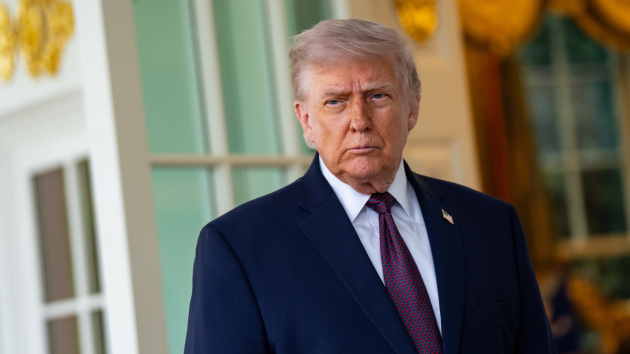
Trump to host gala for top $TRUMP meme coin investors — again

Trump to host gala for top $TRUMP meme coin investors — again
US President Donald Trump speaks to members of the media outside the Oval Office of the White House in Washington, DC, US, on Monday, April 13, 2026. Trump is highlighting the “No Tax on Tips” policy, which allows eligible workers to deduct qualified tips from their federal income taxes as part of the One Big Beautiful Bill Act. (Photographer: Salwan Georges/Bloomberg via Getty Images)

(PALM BEACH, Fla.) — Mike Tyson, Tony Robbins, and President Donald Trump walk into Mar-a-Lago. 

It’s not the setup to a joke — it’s a pitch to investors.

On Saturday, all three men and 297 of the top holders of Trump’s meme coin, called $TRUMP, are expected to convene for what organizers call “the most exclusive crypto & business conference in the world” at Trump’s Florida estate — the second such bid to boost interest in Trump’s digital asset since his return to office. 

The event website warns that “no gifts will be accepted,” but some attendees, by virtue of their investment in the coin, will have already spent millions of dollars — much of which flows directly to the Trump family — for the privilege of potentially lunching with the president.

Critics have panned the event as a brazen pay-for-play opportunity, accusing Trump of attempting to personally profit by selling access to the presidency. 

In a letter transmitted earlier this month to the event organizer, longtime Trump friend Bill Zanker, a group of Senate Democrats sought records tied to the event, stating that “it is essential that Congress fully understand the extent to which President Trump and his family are profiting off of his cryptocurrency ventures.”

Zanker did not respond to a request for comment from ABC News. 

President Trump launched his meme coin — a type of digital currency that’s often based on an internet meme — in January 2025, just days before his inauguration. The coin’s value initially soared to more than $44 before plummeting almost immediately. 

Last May, in a bid to reinvigorate interest in the coin, Trump announced plans for an “intimate private dinner” at his golf club in Virginia. Hundreds of investors attended the event, where Trump spoke briefly and handed out gold watches to a subset of attendees, many of whom traveled from overseas and remained anonymous until arriving in person at the event. 

The 2025 event in Virginia helped bolster the coin’s value for a time, but interest in the currency again tapered off. By early March 2026, its value dipped below $3, meaning that an investor who purchased $10,000 worth of Trump coins at its peak would have been left with assets worth less than $700. 

Last month, when Trump announced plans for the Mar-a-Lago gala, the coin’s value climbed above $4 before settling back below $3, according to CoinGecko data.

On-chain trading activity analyzed by the cryptocurrency data firm Nansen shows that the coin generated roughly $1.35 billion in trading volume on decentralized platforms across 2.74 million transactions ahead of the gala. The Trump family earns a fee from each of those transactions, according to its website, but the structure of those transaction fees remains opaque. 

Notably, the volume of tokens bought and sold ahead of the Mar-a-Lago gala remained almost entirely flat, “suggesting wallets may be flipping for leaderboard points rather than building long term positions,” said Jake Kennis, an analyst at Nansen. 

At the upcoming event, top investors will receive Trump-branded watches, colognes, posters and a VIP reception with the president, according to the event website. Like the event last May, the identities of these investors are hidden behind pseudonyms or a series of letters and numbers. Attendees will hear keynote addresses from Tyson, Robbins and other business executives.

Buried in the event fine print, organizers say that “President Trump may not be able to attend” — and in fact the White House has said the president plans to attend the White House Correspondents Association Dinner in Washington later that evening.

Critics say these events are just one way in which the president has used the office of the presidency to line his own pockets. His family business has struck several real estate licensing deals around the world over the past year, most notably in the Persian Gulf region, and he has lent his name and likeness to myriad merchandise, including watches, spirits, sneakers, Bibles, guitars and fragrances.

One year into his second administration, Trump’s personal wealth has ballooned to more than $6 billion, according to Forbes. Despite the fact that his meme coin has lost more than 94% of its value since its all-time high early last year, the transaction fees on trades for the currency has generated nearly $400 million for the president, Forbes reported.

Trump and the White House have repeatedly and forcefully denied that his private business interests create a conflict of interest.

“The President is working to secure GOOD deals for the American people, not for himself,” a White House spokesperson said when Trump held his earlier meme coin event. “President Trump only acts in the best interests of the American public — which is why they overwhelmingly reelected him to this office, despite years of lies and false accusations against him and his businesses from the fake news media.”

Copyright © 2026, ABC Audio. All rights reserved.

Embattled Democratic Rep. Sheila Cherfilus-McCormick resigns from Congress

Embattled Democratic Rep. Sheila Cherfilus-McCormick resigns from Congress
U.S. Rep. Sheila Cherfilus-McCormick (D-FLA) appears for a hearing of the House Ethics Committee on Capitol Hill on March 26, 2026 in Washington, DC. (Andrew Harnik/Getty Images)

(WASHINGTON) — Florida Democrat Rep. Sheila Cherfilus-McCormick resigned from Congress on Tuesday afternoon, just before she was to face a House Ethics Committee sanction hearing.

The committee was set to hold a rare public hearing to determine what sanction would be appropriate for it to recommend to the full House against Cherfilus-McCormick.

Last month, Cherfilus-McCormick was found guilty of 25 House ethics violations, including acceptance of improper campaign contributions and commingling of campaign and personal funds. The congresswoman was indicted in November 2025 by a federal grand jury on charges of stealing $5 million in Federal Emergency Management Agency funds, which she is accused of laundering to support her successful 2021 congressional campaign.

Cherfilus-McCormick has denied wrongdoing, excusing the allegations as an accounting error.

In her resignation announcement, the congresswoman called the process a “witch hunt.”

“By going forward with this process while a criminal indictment is pending, the Committee prevented me from defending myself,” she said. “I simply cannot stand by and allow my due process rights to be trampled on, and my good name to be tarnished.”

Ethics Committee Chairman Michael Guest read out loud the congresswoman’s resignation letter after the committee briefly convened and said the committee had lost jurisdiction over Cherfilus-McCormick with her resignation.

“I will tell you that the committee has worked diligently to investigate this matter, that this was not a rush to judgment, as some would claim, that this was a very deliberate process to gather information into allegations that were extremely serious and extremely complicated,” Guest said.

Ranking Democrat Mark DeSaulnier told the committee, “Nobody’s happy. I don’t think any of us are happy at what we’ve gone through, but I am extremely proud of being associated with all of you.”

She is the third member of the House to resign in a week, following Republican Rep. Tony Gonzales of Texas and Democratic Rep. Eric Swalwell, who were accused of sexual misconduct and were about to face efforts by their colleagues to have them expelled.

Expelling a member of the House is a rare occurrence. A two-thirds majority is required to remove a member.

Only six House members in U.S. history have been expelled from the lower chamber. Former New York Republican Rep. George Santos was the most recent lawmaker expelled from the House in 2023.

The committee could have recommended a range of sanctions, including expulsion, censure, reprimand, fine — and even denial or limitation of any right, according to House rules. The House may punish its members and may expel its members by a two-thirds vote, according to Article 1, Section 5 of the Constitution.

The sanction recommendation against Cherfilus-McCormick was expected to be announced in writing after the hearing. Afterward, the panel was to break into executive session to conclude its deliberations and reach a judgment.

Before Cherfilus-McCormick announced her resignation, Florida Republican Rep. Greg Steube said he would move to force a vote to try to expel the congresswoman following the sanction hearing. Steube was expected to make the expulsion resolution privileged, which required Speaker Mike Johnson to hold a vote on the matter within two legislative days.

The speaker signaled last week that expelling Cherfilus-McCormick over her alleged crimes would be “appropriate.”

Though he initially insisted that Democrats would not help Republicans expel Cherfilus-McCormick, House Minority Leader Hakeem Jeffries said on Monday that Democrats would convene a caucus meeting to determine how they’ll handle the the bipartisan Ethics panel’s recommendations.

After her resignation, Steube called on the Department of Justice to put Cherfilus-McCormick in prison.

“This is a victory for our institution and the great state of Florida,” Steube wrote on X. “Thank you to everyone who stayed involved and kept the pressure on. Now it’s on the DOJ to put her in prison.”

Copyright © 2026, ABC Audio. All rights reserved.
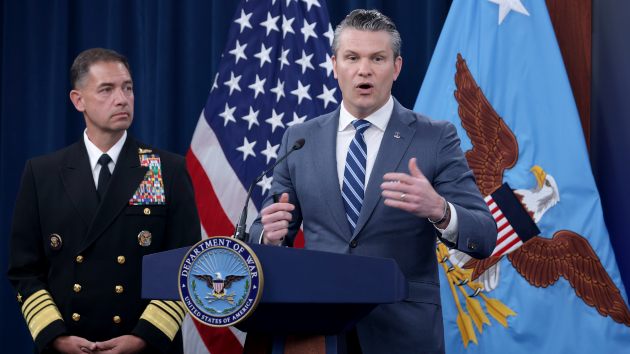
Hegseth ends mandatory flu vaccine for US military, says shot is now optional

Hegseth ends mandatory flu vaccine for US military, says shot is now optional
U.S. Secretary of War Pete Hegseth speaks as Adm. Brad Cooper, Commander of U.S. Central Command, listens during a press briefing at the Pentagon on April 16, 2026 in Arlington, Virginia. (Alex Wong/Getty Images)

(WASHINGTON) — Defense Secretary Pete Hegseth announced on Tuesday that the annual flu vaccine will now be optional for all U.S. military personnel, both active and reserve.  

Previously, the flu vaccine had been mandatory. The new policy is in line with a previous change, making the COVID-19 vaccine optional.

Hegseth announced the change in a video posted on social media.  

“The notion that a flu vaccine must be mandatory for every service member, everywhere, in every circumstance, at all times, is just overly broad and not rational,” Hegseth said.

“Our new policy is simple: If you, an American warrior entrusted to defend this nation, believe that the flu vaccine is in your best interest, then you are free to take it; you should. But we will not force you,” Hegseth added.

Referring to the COVID-19 vaccine that led to the dismissal of 8,000 service members who refused to take it, Hegseth said, “Our men and women in uniform were forced to choose between their conscience and their country, even when those decisions posed no threat to our military readiness.”

“That era of betrayal is over,” said Hegseth.

This is a developing story. Please check back for updates.

Copyright © 2026, ABC Audio. All rights reserved.

Gunman in deadly Mexican tourist site shooting was influenced by violent acts in US: Officials

Gunman in deadly Mexican tourist site shooting was influenced by violent acts in US: Officials
An aerial view of the Pyramid of the Moon following a shooting that left at least one person dead, at the Teotihuacan archaeological site, in Teotihuacan, Mexico on April 20, 2026. (Daniel Cardenas/Anadolu via Getty Images)

(NEW YORK) — The man who opened fire at one of Mexico’s busiest tourist sites was allegedly influenced by violent acts in the United States, Mexican officials said Tuesday.

The deadly mass shooting occurred during the late morning Monday at the Teotihuacan pyramids, an archaeological site outside of Mexico City. The shooter fired upon tourists from atop one of the pyramids while armed with a revolver that he reloaded at least twice before dying by suicide, according to José Luis Cervantes Martínez, the attorney general of the state of Mexico.

One person was killed and seven others wounded by gunfire, officials said. Several people also suffered injuries in the ensuing panic.

“We all know that we had not seen anything like this in Mexico before,” Mexican President Claudia Sheinbaum told reporters at a press briefing on Tuesday. “Based on information from the authorities, the individual showed signs of psychological issues and was influenced by incidents that occurred abroad.”

The gunman held a plastic bag containing 52 rounds of ammunition during the attack, according to Cervantes Martínez. The shooter also had a bladed weapon on him and handwritten materials reportedly related to violent incidents believed to have occurred in the U.S. in April 1999, the attorney general said.

The shooting occurred on the same day as the 1999 Columbine High School massacre.

“Evidence collected so far suggests a psychopathic profile of the attacker, characterized by a tendency to imitate violent acts that occurred in other places and at other times,” Cervantes Martínez said at Tuesday’s press briefing. “This phenomenon, known as a ‘copycat’ effect, is one of the lines of investigation in this case, as materials referencing violent acts and figures associated with such behavior were found.”

The gunman, identified as Julio César Jaso Ramírez, is not linked to organized crime and appears to have acted alone in a premeditated act, officials said.

“Investigative findings indicate that the attack was not spontaneous. The attacker had previously visited the archaeological site on several occasions, stayed in nearby hotels, and from there planned and carried out his actions,” Cervantes Martinez said.

The first report of an armed individual at the tourist site came at 11:20 a.m., officials said. State police and the Mexican National Guard responded and were also attacked. While returning fire, the gunman was shot in the leg by the National Guard, officials said. He shot himself while being subdued and died from a self-inflicted gunshot wound, officials said.

One person — a Canadian woman — was fatally shot and seven others suffered gunshot wounds during the attack, authorities said. Six others were also injured, such as from falls, in the incident, authorities said. Those injured were from Brazil, Canada, Colombia, the Netherlands, Russia and the U.S., officials said.

Sheinbaum said authorities are investigating how the attacker was able to enter the site with a weapon.

In the wake of the deadly shooting, Mexico will be increasing security at archaeological sites and other public locations across the country by increasing the presence of the Mexican National Guard and installing screening equipment, the president said.

“In light of this event, it is necessary to strengthen inspections to prevent anyone from entering an archaeological site or public space with a firearm,” Sheinbaum said.

Copyright © 2026, ABC Audio. All rights reserved.
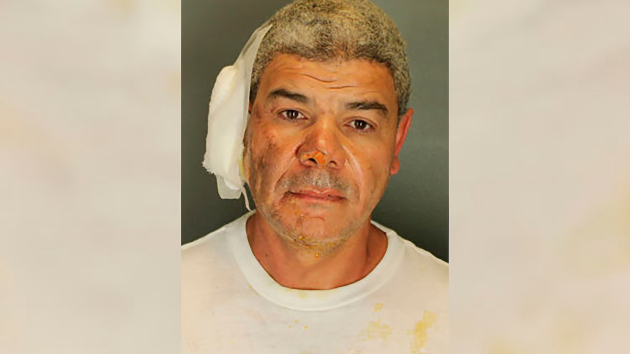
Family of Boulder attack suspect ordered released from ICE custody

Family of Boulder attack suspect ordered released from ICE custody
Booking photo of Mohamed Soliman. (Boulder Police Department)

(DILLEY, Texas) — The wife and five children of the man suspected of throwing Molotov cocktails at a crowd of pro-Israel demonstrators last June were ordered released from federal custody by a judge on Monday.

The family of the suspect, Mohamed Sabry Soliman, has been detained in immigration custody for more than 10 months at the family detention facility in Dilley, Texas.

Eric Lee, an attorney representing Hayam El Gamal and her children, told ABC News the family has not been released despite the federal judge’s order. There is a hearing in their case on Thursday.

“Although the court has ruled that the El Gamal family is detained in violation of the Constitution, the government continues to keep them locked up,” Lee told ABC News. “We demand their immediate release.”

A federal judge blocked the family’s deportation in June after the Department of Homeland Security announced they were being processed for removal shortly after the attack.

Soliman, 45, is facing more than 100 charges including first-degree murder, attempted first-degree murder, and assault. He has pleaded not guilty.

In court documents, Soliman’s family — which includes five children aged 18, 16, 9, and 5-year-old twins — have claimed authorities are continuing to detain them despite a lack of evidence that they played any role in the attack.

“The facts of this case have not changed: Mohammed Soliman is a terrorist responsible for an anti-Semitic firebombing in Boulder,” DHS Acting Assistant Secretary Lauren Bis said in a statement Tuesday.

“The judge wants to release this terrorist’s family onto American streets,” she added. “Under President Trump, DHS will continue to fight for the removal of those who have no right to be in our country, especially national security threats.”

Lee, the family’s lawyer, said on X that El Gamal was rushed to the ER last week after she was denied proper medical care for persistent chest pain.

“We do not know if the lump is cancerous, all we know is that the pain is increasing, the incidents are becoming worse and worse, and she is not receiving a proper diagnosis that could lead to proper treatment,” Lee said. “After 10 months in detention, Ms. El Gamal remains in pain.”

While DHS did not respond to questions about El Gamal’s medical care, the agency in previous statements has denied allegations about the lack of medical care at Dilley.

“These allegations of illegal aliens being denied proper medical care in ICE custody are FALSE,” said Dr. Sean Conley, DHS’ chief medical officer, in a statement posted on the agency website. “It is both policy and longstanding practice for aliens to receive timely and appropriate medical care from the moment they enter ICE custody. This includes medical, dental, women’s health, mental health services, any needed follow up medical appointments, as well as 24-hour emergency care. This is better, more responsive healthcare than many aliens have ever received in their entire lives.”

Copyright © 2026, ABC Audio. All rights reserved.