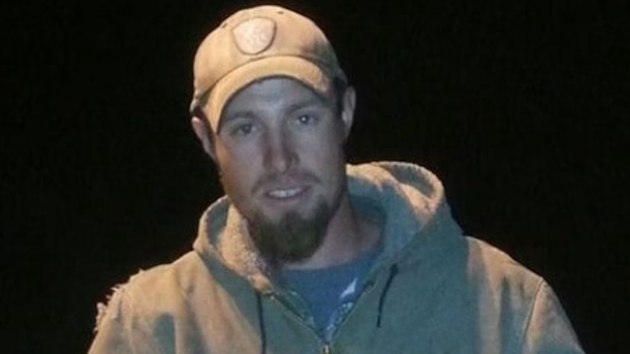
(LOS ANGELES) — Lyle and Erik Menendez are currently serving life behind bars for the murders of their parents in the family’s Beverly Hills home. But after more than three decades in prison, a renewed interest in the headline-grabbing trial has the brothers pursuing two tracks to potential freedom.
The Menendez case dates back to August 1989, when Lyle Menendez, then 21, and Erik Menendez, then 18, shot and killed their parents, Jose and Kitty Menendez.
Prosecutors alleged Lyle and Erik Menendez killed their wealthy parents for financial gain, while the defense argued the brothers acted in self-defense after enduring years of sexual abuse by their father.
Their first trials — which captured the nation’s attention with cameras in the courtroom — ended in mistrials.
In 1996, at the end of a second trial — in which the judge barred much of the sex abuse evidence — Lyle and Erik Menendez were convicted of first-degree murder and sentenced to two consecutive life prison terms without the possibility of parole.
The sensational case gained new attention this fall with the release of the Netflix drama “Monsters: The Lyle and Erik Menendez Story” and the Netflix documentary “The Menendez Brothers.”
The brothers currently have two potential paths to their release before the Los Angeles County District Attorney’s Office.
Resentencing
One track involves a review of their sentence based on factors including rehabilitation, which Los Angeles County District Attorney George Gascón is evaluating.
Gascón said he plans to make his resentencing decision this month. If Gascón recommends resentencing, his recommendation will go to a judge to decide whether the brothers will be released, receive a lesser sentence or get a new trial.
Gascón told ABC News in October any recommendation for resentencing would take into account the decades the brothers already served and their behavior in prison.
Mark Geragos, the Menendez brothers’ lawyer, called Erik and Lyle model prisoners who worked tirelessly to reform themselves with no expectation they’d be released.
“Given the totality of the circumstances, I don’t think that they deserve to be in prison until they die,” Gascón told ABC News.
Gascón said since he’s been in office, they have resentenced over 300 people, of which four have reoffended.
The other track concerns the brothers’ petition filed last year for a review of new evidence not presented at the original trial. Through the habeas corpus petition, the court could reverse the conviction or reopen proceedings.
Gascón said his office is evaluating allegations from a member of the boy band Menudo who said he was molested by Jose Menendez, and a letter Erik Menendez wrote to a cousin eight months before the murders detailing his alleged abuse.
Erik Menendez’s cousin testified about the alleged abuse at trial, but Erik Menendez’s letter — which would have corroborated the cousin’s testimony — wasn’t unearthed until several years ago, according to Geragos.
“The combination of those two we believe provide more than ample basis to set aside the result of the second trial,” Geragos said at a press briefing earlier this month.
Geragos said the district attorney could either oppose the habeas and decide to litigate it, or “they could concede the habeas and say, give them a new trial.”
“I’m hoping that sometime before Thanksgiving, which is when the next response is due, that the DA will either concede the habeas or join us in asking for resentencing,” Geragos said.
The next court date in the case is scheduled for Nov. 26, Gascón said.
Family calls for release
Nearly two dozen relatives have urged the district attorney to recommend the brothers be resentenced and released.
Lyle and Erik Menendez “were failed by the very people who should have protected them — by their parents, by the system, by society at large,” Kitty Menendez’s sister, Joan Andersen VanderMolen, said at a news conference on Wednesday.
“Their actions, while tragic, were the desperate response of two boys trying to survive the unspeakable cruelty of their father,” she said of the murders. “As their aunt, I had no idea of the extent of the abuse they suffered.”
Behind bars, the siblings “persevered,” Anamaria Baralt, niece of Jose Menendez, said. “They have sought to better themselves and serve as a support and inspiration for survivors all over the world. Their continued incarceration serves no rehabilitative purpose.”
(LONDON) — The Israel Defense Forces continued intense air and ground campaigns against Hezbollah in Lebanon and against Hamas in the Gaza Strip.
The uptick in offensive operations came after Israel marked the anniversary of Hamas’ Oct. 7 assault, and as Israeli leaders planned their response to Iran’s latest ballistic missile attack.
White House says Sinwar’s death is ‘inflection point’ for cease-fire negotiations
National security communications adviser John Kirby called Hamas leader Yahya Sinwar’s death an “inflection point” in this war, providing a new opportunity to reach a cease-fire deal.
“So Hamas is in a much, much, much weakened position than it ever was before,” Kirby told reporters in Berlin, where he is visiting alongside Joe Biden. “The president believes that certainly with Sinwar’s killing yesterday, that there’s a unique opportunity here for us all to kind of grab hold of to see what we can do to end the war and to get a cease-fire. And we still believe that a cease-fire, actually in the north too, but we still believe a cease-fire is important for Gaza to get those hostages home.”
When pressed by reporters on what makes the White House so confident that Sinwar’s death truly does open the door to achieve a deal that had not been possible for months, Kirby said that it’s a “unique opportunity” to take the intensive diplomacy to the next level. Kirby also explained why it was difficult to negotiate with Sinwar.
“Every time his political advisers would — we would negotiate with and through them to come up with a proposal, it would have to get to him,” Kirby said. “Of course, that took time because of the communications challenges, and then he would just, he would just refute it and refuse to move forward.”
-ABC News’ Michelle Stoddart
White House says Sinwar’s death is ‘inflection point’ for cease-fire negotiations
National security communications adviser John Kirby called Hamas leader Yahya Sinwar’s death an “inflection point” in this war, providing a new opportunity to reach a cease-fire deal.
“So Hamas is in a much, much, much weakened position than it ever was before,” Kirby told reporters in Berlin, where he is visiting alongside Joe Biden. “The president believes that certainly with Sinwar’s killing yesterday, that there’s a unique opportunity here for us all to kind of grab hold of to see what we can do to end the war and to get a cease-fire. And we still believe that a cease-fire, actually in the north too, but we still believe a cease-fire is important for Gaza to get those hostages home.”
Biden says Sinwar killing is ‘a moment of justice’
President Joe Biden met with German Chancellor Olaf Scholz on Friday afternoon to discuss the war in Ukraine and security threats in the Middle East.
Ahead of that meeting, Biden called Israel’s killing of Yahya Sinwar “a moment of justice.”
“He had the blood of Americans, and Israelis, Palestinians and Germans, and so many others, on his hands,” Biden said. “I told the prime minister of Israel yesterday, let’s also make this moment an opportunity to seek a path to peace, a better future in Gaza without Hamas.”
-ABC News’ Justin Ryan Gomez
US Central Command congratulates Israel on Sinwar killing
U.S. Central Command (CENTCOM) chief Gen. Michael Erik Kurilla issued a statement Thursday congratulating the Israel Defense Forces on the killing of Hamas leader Yahya Sinwar.
“U.S. Central Command’s support to the Israel Defense Forces remains ironclad,” said Kurilla. “Our commitment to countering terrorists throughout the Middle East, with allies and partners, continues to be a top priority. Those who choose the path of terrorism should expect the same fate as Sinwar.”
CENTCOM is the combatant command that oversees U.S. missions in the Middle East.
An earlier statement from U.S. Defense Secretary Lloyd Austin called Sinwar’s killing a “major achievement in counterterrorism” and said it provides an opportunity for a lasting cease-fire in the war between Israel and Hamas.
“Our top and most urgent priority is to secure the release of each and every hostage, including our own American citizens,” Austin said in a statement. “The hostages should not have to suffer for another hour in the clutches of Hamas and other terrorists. Those who are holding them should release them now.”
Hezbollah announces ‘escalated’ phase in conflict with Israel after Sinwar’s death
Hezbollah said Thursday they are transitioning into a “new, escalated phase” in the “confrontation with the Israeli enemy,” after Israeli forces and officials announced the death of Hamas leader Yahya Sinwar.
This new phase in the conflict “will be revealed by the developments and events in the coming days,” Hezbollah said in the statement.
-ABC News’ Josiane Hajj Moussa
IDF releases drone footage they say shows Sinwar before his death
The Israel Defense Forces released drone footage they say shows Hamas leader Yahya Sinwar on Wednesday before he was killed.
A damaged building and a man sitting in a chair with his face covered can be seen in the footage.
IDF spokesperson Rear Adm. Daniel said Sinwar was wounded in a shooting and is shown in the footage throwing a wooden plank at the drone.
Netanyahu says Israel will continue ‘with all our strength’
Israel Prime Minister Benjamin Netanyahu celebrated the killing of Hamas leader Yahya Sinwar by Israeli forces on Thursday, but vowed to continue the war “with all our strength” until the hostages being held by Hamas in Gaza are returned.
“I would like to say again, in the clearest way: Hamas will no longer rule Gaza. This is the beginning of the day after Hamas, and this is an opportunity for you, the residents of Gaza, to finally break free from its tyranny,” Netanyahu said in a recorded message.
“The war, my dears, is not over yet. And it is difficult, and it exacts heavy prices from us,” Netanyahu said.
Netanyahu said Sinwar was killed when he fled IDF soldiers in a panic on Thursday.
“Now it is clear to everyone, in Israel and in the world, why we insisted on not ending the war. Why did we insist, in the face of all the pressures, to enter Rafah, the fortified stronghold of Hamas where Sinwar and many of the murderers hid,” Netanyahu said.
“We are in a war for our existence. Big challenges are still ahead,” Netanyahu said.
Israeli President Herzog, Israeli Defense Minister comment on Sinwar’s death
Israeli leaders celebrated the killing of Hamas leader Yahya Sinwar, who was assassinated by Israeli forces on Thursday.
Israel President Isaac Herzog commended the Israel Defense Forces for the killing and said Israel must act in every way possible to bring back the remaining 101 hostages being held by Hamas in Gaza.
“Sinwar, the mastermind behind the deadly October 7th attack, has for years been responsible for heinous acts of terrorism against Israeli civilians, citizens of other countries, and the murder of thousands of innocent people. His evil endeavors were dedicated to terror, bloodshed, and destabilizing the Middle East,” Herzog said in a statement.
Israeli Minister of Defense Yoav Gallant also saluted IDF soldiers.
“The elimination of Sinwar joins a long series of eliminations — from Nasrallah to Muhammad Deif and many more. We will pursue and eliminate our enemies. Sinwar died while beaten, persecuted and on the run — he didn’t die as a commander, but as someone who only cared for himself,” Gallant said in a statement.
“This is a clear message to all of our enemies — the IDF will reach anyone who attempts to harm the citizens of Israel or our security forces, and we will bring you to justice,” Gallant said.
Benny Gantz, the former IDF chief of staff and former minister of defense, applauded the killing, but said “the mission is not over.”
“The IDF will continue to operate in the Gaza Strip for years to come, and now the series of achievements and the elimination of Sinwar must be taken advantage of to bring about the return of the abductees and the replacement of Hamas’ rule. On this day, we will also remember the painful price of the war, all the murdered and martyrs, and we will strengthen all our heroic soldiers who have been working for over a year in all arenas to ensure that never again,” Gantz said.
-ABC News’ Jordana Miller
Yahya Sinwar killed in Israeli attack
Hamas political leader Yahya Sinwar was killed by Israeli forces on Thursday, Israel Foreign Minister Israel Katz confirmed in a statement.
“The master murderer Yahya Sinwar, who is responsible for the massacre and atrocities of October 7, was killed today by IDF soldiers,” Katz said.
-ABC News’ Guy Davies
Egypt replaces head of general intelligence agency
Egypt replaced the head of its general intelligence agency — who played an instrumental role in brokering a Gaza cease-fire deal — amid stalled negotiations. Deputy Hassan Rashad was named as new head of the agency.
Abbas Kamel, a longtime confidant and close aide to President Abdel Fattah al-Sisi, had headed the general intelligence agency since 2018 and was seen as the country’s second-most powerful figure.
Sisi relied heavily on Kamel for managing foreign policy affairs, including conflicts in Gaza and Sudan, as well as domestic security issues such as a wide-scale crackdown on dissent.
The change comes amid stalled negotiations for a cease-fire in the ongoing war in Gaza, which has spread into Lebanon. Kamel was a lead negotiator in the mediation efforts by Egypt, the U.S. and Qatar to end to the yearlong conflict. He played a key role in the diplomacy that led to a weeklong truce in November 2023.
Kamel will now take up a post of presidential adviser and envoy, as well as general coordinator of security services, according to a presidency statement.
-ABC News’ Ayat Al-Tawy
Israel ‘checking the possibility’ that Hamas leader Yahya Sinwar was killed in Gaza
The Israel Defense Forces are “checking the possibility” that Hamas leader Yahya Sinwar is one of the three militants it killed in Gaza on Thursday.
“At this stage, the identity of the terrorists cannot be confirmed,” the IDF wrote in a post to X. “In the building where the terrorists were eliminated, there were no signs of the presence of hostages in the area. The forces that are operating in the area are continuing to operate with the required caution.”
The 62-year-old has served as Hamas’ leader in Gaza since 2017 and assumed leadership of the group’s political bureau after the Israeli assassination of Ismail Haniyeh in Iran this July.
-ABC News’ Guy Davies
28 killed, 160 wounded in Israeli strike on school in northern Gaza
At least 28 people were killed and 160 others were wounded in an Israeli strike on the Abu Hussein School in northern Gaza where displaced people were sheltering, according to the Hamas-run Government Media Office.
In a statement, Hamas said Israel’s claims “that Abu Hussein School is being used for resistance purposes are mere lies, and it is a systematic policy of the enemy to justify its crime.”
-ABC News’ Samy Zyara
German warship downs drone off Lebanon
The German Ludwigshafen am Rhein corvette — which is operating as part of the United Nations Interim Force in Lebanon — downed an unidentified drone off the Lebanese coast on Thursday, a spokesperson at the German Ministry of Defense told ABC News.
The spokesperson did not describe how the aircraft was shot down, but said the ship acted in self defense.
There are approximately 60 crew members on board the vessel.
UNIFIL spokesperson Andrea Tenenti said that “electronic countermeasures were used and the UAV fell and exploded on its own.”
-ABC News’ Dragana Jovanovic and Guy Davies
Hezbollah fires projectiles towards Israel
Hezbollah said it launched a missile salvo towards Israel on Thursday morning.
The Israel Defense Forces said sirens sounded in northern Israel and “two projectiles were identified crossing from Lebanon into Israeli territory.” One was intercepted and the other fell in an open area, the IDF said.
Fighting continues in southern Lebanon. There, Hezbollah claimed to have attacked two Israeli tanks near the border village of Labbouneh.
The IDF, meanwhile, said it killed a commander of Hezbollah’s Kana sector.
-ABC News’ Guy Davies
WHO warns of cholera risk in Lebanon
The World Health Organization has warned of a “very high” risk of cholera in Lebanon following the wave of mass displacement caused by Israel’s nationwide airstrike campaign and southern ground offensive.
The WHO warning came after Lebanon’s Health Ministry confirmed the first cholera case in the north of the country on Wednesday.
WHO “has activated a preparedness and response plan to strengthen surveillance and contact tracing,” Director-General Tedros Adhanom Ghebreyesus said.
–ABC News’ Dragana Jovanovic and Guy Davies
IDF claims destruction of 150 Hezbollah targets in 24 hours
The Israel Defense Forces said Thursday that its troops and warplanes “eliminated more than 45 terrorists and destroyed more than 150 targets” in Lebanon in the previous 24 hours
Among the Hezbollah targets were “weapons warehouses, launchers and military buildings of the organization,” the IDF said in a post on X.
US bombs Houthi weapons storage sites
U.S. Central Command said it conducted “precision airstrikes on numerous Iran-backed Houthi weapons storage facilities” on Wednesday.
The sites “contained various advanced conventional weapons used to target U.S. and international military and civilian vessels navigating international waters throughout the Red Sea and Gulf of Aden,” CENTCOM said in a statement.
CENTCOM said the strike was intended to degrade the Houthis’ ability to launch “reckless and unlawful attacks on international commercial shipping and on U.S., coalition, and merchant personnel and vessels” in the region.
B-2 stealth bomber aircraft were among the assets involved in the mission, CENTCOM said. “The employment of the B-2 bomber demonstrates U.S. global strike capabilities to reach these targets, when necessary, anytime, anywhere,” it added.
CENTCOM said its analyses of the strikes “are underway and do not indicate civilian casualties.”
-ABC News’ Matthew Seyler
Defense Secretary Austin speaks with Israeli counterpart about Lebanon The Pentagon released a readout Wednesday evening following a phone call between Secretary of Defense Lloyd J. Austin and Israeli Minister of Defense Yoav Gallant.
The two discussed “Israel’s operations in Lebanon and broader regional security matters,” according to the readout.
“Secretary Austin and Minister Gallant discussed the deployment of a Terminal High-Altitude Area Defense (THAAD) battery as an operational example of the United States’ ironclad support to the defense of Israel. The Secretary encouraged the Government of Israel to continue taking steps to address the dire humanitarian situation, noting the recent action by Israel to increase the amount of humanitarian assistance entering Gaza,” the Pentagon said in a statement.
Austin also “raised the need to pursue a diplomatic pathway to provide security for civilians on both sides of the Israel-Lebanon border as soon as feasible,” the Pentagon said.
-ABC News’ Matt Seyler
Israeli forces targeting UNIFIL position ‘under examination,’ IDF says The Israel Defense Forces said an incident of an Israeli tank firing at a UNIFIL position in southern Lebanon is “under examination” when asked by ABC News.
“The Hezbollah terrorist organization has been devising and taking forward attacks against the State of Israel and IDF soldiers from terror infrastructure sites that have been built within and adjacent to UNIFIL posts for many years,” the IDF said in a statement when asked about the incident.
This is the first time the IDF has said Hezbollah infrastructure has been built “within and adjacent” to UNIFIL posts. In the same statement, the IDF said UNIFIL “infrastructure sites and forces are not a target.”
Israel’s attacks on UNIFIL sites in southern Lebanon have been widely condemned by the international community.
-ABC News’ Dorit Long
Netanyahu approves set of targets for Israel’s reprisal strike on Iran, Israeli source says
Israel Prime Minister Benjamin Netanyahu has approved a set of targets for the planned Israeli reprisal strike on Iran, an Israeli source told ABC News.
Israel is planning to respond after Iran attacked Israel with more than 200 missiles on Oct. 1.
The source would not give more details on specific targets and would not comment on whether they are strictly Iranian military targets.
No timeline has been given for the strikes to be carried out.
-ABC News’ Jordana Miller
Risk of cholera outbreak ‘very high’ in Lebanon after confirmed case: WHO
The risk of spread of cholera in Lebanon is “very high” after a case of the acute and potentially deadly diarrheal infection was detected in the country, the World Health Organization said Wednesday.
“If the cholera outbreak … spreads to the new displaced people, it might spread very fast,” Abdinasir Abubakar, the WHO representative in Lebanon, said in a press conference.
-ABC News’ Will Gretsky
Netanyahu says Israel won’t accept ‘unilateral cease-fire’ in Lebanon
Israel Prime Minister Benjamin Netanyahu said he is opposed to a “unilateral cease-fire” in Lebanon during a call with French President Emmanuel Macron, according to a statement from Netanyahu’s office.
“The Prime Minister said in the conversation that he is opposed to a unilateral cease-fire, which does not change the security situation in Lebanon, and which will only return it to the way it was,” the statement said.
Netanyahu “made it clear” that Israel won’t accept a cease-fire deal in Lebanon “that would not prevent Hezbollah from reorganizing and rearming,” the statement said.
-ABC News’ Jordana Miller
Israel says it killed Hezbollah commander in strike on southern Lebanon
Israel said it killed Hezbollah commander Jalal Mustafa Hariri in a strike on southern Lebanon Wednesday. Hezbollah has not confirmed the death of the commander.
Three people were killed and 54 others were injured in a strike in the Qana and Nabatieh areas, according to the Lebanese Ministry of Public Health.
-ABC News’ Dorit Long and Josiane Hajj Moussa
US announces more sanctions against Hezbollah, Syrian regime
The U.S. has announced another round of sanctions targeting several individuals and companies it accuses of generating funds for Hezbollah’s operations by helping the terror group evade existing financial restrictions.
The Biden administration also announced sanctions against three individuals allegedly involved in the production and trafficking of captagon, a synthetic amphetamine-type stimulant that it says “harms communities and countries across the region and beyond and is a source of funding for the Syrian regime and its backers,” which include Hezbollah.
“The United States is steadfast in our commitment to disrupt Hizballah’s access to the international financial system and its various methods of generating revenue, which the Iran-backed group uses to fund its violence. We will also continue to target the illicit captagon trade in the region, which has become an illicit billion-dollar enterprise operated in part by senior members of the Syrian regime,” the administration said in a statement.
-ABC News’ Shannon K. Kingston
At least 6 killed in strike on Lebanese town headquarters
At least six people were killed and 43 injured in an Israeli strike on Nabatieh, Lebanon, which hit the town’s municipal headquarters during a meeting, according to Lebanese Minister of the Interior Bassam Mawlawi. The city’s mayor was among those killed.
“The targeting of the municipality building in Nabatieh occurred during the coordination of relief work and the preparation of aid for distribution to the residents in the cities and villages of the region who are steadfast in the face of the war they are being subjected to and against Lebanon,” Mawlawi said in a statement.
Local mayor killed in Israeli airstrike in south Lebanon
At least six people were killed and 43 injured in an Israeli strike on the southern Lebanese city of Nabatieh on Wednesday — including the city’s mayor — according to Lebanese health officials.
The strike hit the town’s municipal headquarters and came as officials met to coordinate relief efforts, Interior Minister Bassam Mawlawi said.
“The targeting of the municipality building in Nabatieh occurred during the coordination of relief work and the preparation of aid for distribution to the residents in the cities and villages of the region who are steadfast in the face of the war they are being subjected to and against Lebanon,” Mawlawi said in a statement.
Search and rescue teams are continuing to search for survivors under the rubble of the two buildings targeted in the strike.
-ABC News’ Nasser Atta and Guy Davies
Aid trucks enter Gaza, Israeli authorities say
Israel’s Coordinator of Government Activities in the Territories organization said more than 145 aid trucks entered Gaza on Tuesday and 50 on Wednesday, amid allegations that Israel has failed to facilitate humanitarian relief in the northern part of the strip.
COGAT said that four bakeries are operational in northern Gaza, though it is unclear whether humanitarian organizations have been able to distribute any aid into the north.
Dozens of aid organizations published a joint statement Wednesday saying no aid has been allowed into northern Gaza since Oct. 1.
-ABC News’ Nasser Atta, Diaa Ostaz, Jordana Miller and Guy Davies
Aid organizations condemn ‘horrifying level of atrocity’ in Gaza
Thirty-eight NGOs signed a new appeal to the international community to stop Israel’s latest military operation in northern Gaza, which they said has “escalated to a horrifying level of atrocity.”
“Northern Gaza is being wiped off the map,” the organizations said, describing the Israel Defense Forces’ order for civilians to leave the northern part of the territory as “forced displacement under gunfire.”
Around 400,000 people are estimated to be subject to the north Gaza evacuation order. Hospitals — already “overwhelmed” according to the NGOs — and their staff are also being ordered to evacuate, with the IDF declaring the area a dangerous combat zone.
Israeli officials have denied they are implementing the so-called “Generals’ Plan,” a proposal by retired Israeli military leaders to put north Gaza under siege and declare anyone who does not evacuate to be a valid military target.
“The world cannot continue to stand by as the Israeli government commits these atrocities,” the NGOs wrote. “We demand an immediate ceasefire and an end to Israel’s illegal occupation.”
-ABC News’ Guy Davies
IDF claims killing of Hamas drone commander in Gaza
The Israel Defense Forces said Wednesday it killed a Hamas drone commander in an airstrike in the northern Gaza Strip.
The IDF said Mahmoud al-Mabhouh was Hamas’ UAV commander in the northern part of the territory.
The IDF said on social media that Mabhouh was responsible for launching unmanned aircraft towards Israel and against Israeli forces.
Israel resumes Beirut airstrikes
Israel launched its first airstrike on Beirut in nearly a week early on Wednesday.
The Israel Defense Forces claimed a strike “on strategic weapons belonging to the Hezbollah terrorist organization” in the capital’s southern Dahiya suburb. It was the first such attack in the capital since a strike killed 22 people on Oct. 10.
“These weapons were stockpiled by Hezbollah in an underground storage facility in the area of Dahiya, a key Hezbollah terrorist stronghold in Beirut,” the IDF wrote on X.
The strike came shortly after a new evacuation order issued online by IDF spokesperson Avichay Adraee for residents of the Haret Hreik area of southern Beirut.
-ABC News’ Jordana Miller
Hezbollah has the right to ‘target any point’ within Israel, acting leader says
Hezbollah’s acting leader Deputy Secretary General Sheikh Naim Qassem said Hezbollah has the “right to target any point within the enemy’s entity” in a prerecorded video address released Tuesday.
“The occupation seeks to destroy and eliminate everything that stands in its way, but the resistance is prepared to confront it and establish a new equation based on inflicting pain on the enemy,” Qassem said. “We have the right to target any point within the enemy’s entity, and we will choose the appropriate time and place to do so.”
Delta pauses JFK-Tel Aviv flights through March 31
Delta will pause flights between New York’s JFK International Airport and Tel Aviv through March 31 due to “ongoing conflict in the region,” the airline said Tuesday.
Travel waivers will be issued to customers impacted by the change, the airline said.
“As always, the safety of customers and crew remains paramount,” Delta said. “Customers should be prepared for possible adjustments to Delta’s TLV flight schedule, including additional cancellations on a rolling basis.”
UK issues sanctions in response to continued violence in the West Bank
The United Kingdom announced sanctions against Israeli settler outposts and four organizations in response to “continued violence by extremist Israeli settlers in the occupied West Bank,” Tuesday, according to a release from the U.K. Foreign, Commonwealth and Development Office.
The sanctions target outposts and organizations “that have supported, incited and promoted violence against Palestinian communities in the West Bank,” the U.K. said in a statement.
“When I went to the West Bank earlier this year, on one of my first trips as Foreign Secretary, I met with Palestinians whose communities have suffered horrific violence at the hands of Israeli settlers. The inaction of the Israeli government has allowed an environment of impunity to flourish where settler violence has been allowed to increase unchecked. Settlers have shockingly even targeted schools and families with young children,” U.K. Foreign Secretary David Lammy said in a statement.
“Today’s measures will help bring accountability to those who have supported and perpetrated such heinous abuses of human rights. The Israeli government must crack down on settler violence and stop settler expansion on Palestinian land. As long as violent extremists remain unaccountable, the UK and the international community will continue to act,” Lammy said.
Gazan soccer player killed alongside 9 family members
Emad Abu Tai’ma, a 20-year-old Gazan soccer player, was killed alongside nine members of his family, after a strike hit a house in Bani Sahalia where the family was sheltering early Tuesday morning, according to local health officials.
It took rescuers over two hours to free Abu Tai’ma’s body from the rubble, a Gaza Ministry of Health spokesperson told ABC News.
Abu Tai’ma was a soccer player for the Khan Yunis-Tokyo Union for about a year before he was killed, his friend, 19-year-old Mohammed Ibrahim Al-Muzain, told ABC News.
“We studied together in one of the Bani Suhaila schools east of Khan Younis. Imad was a smart student, and he was a famous player even in school. I have not seen him for eight months due to the repeated and continuous displacement. I feel very sad for his loss. He was displaced in a house belonging to the Baraka family, and he is a civilian,” Al-Muzain said.
The Palestinian Football Association confirmed Emad’s death and reflected on his soccer career playing for Ittihad Khan Yunis Club and the Palestinian national soccer team.
“With the passing of Abu Taima, the number of martyrs of the Palestinian sports and scouting movement, as a result of the ongoing Israeli aggression since October 7, has risen to 455 martyrs, including 314 in football (87 children, 227 young men), in addition to 90 martyrs from the Olympic sports federations, and 50 martyrs from the scouting movement. The occupation forces also destroyed 57 sports facilities in the West Bank and Gaza Strip,” the association said in a statement.
-ABC News’ Dia Ostaaz
At least 29 killed in northern Israel amid fighting with Hezbollah
At least 29 civilians were killed in northern Israel amid fighting with Hezbollah, according to the Israeli prime minister’s office.
Twenty-nine Israeli soldiers were also killed in the north, according to the prime minister’s office.
Attacks on hospitals, health workers jeopardize health care in Lebanon, WHO warns
Nearly half of the health care centers and dispensaries in conflict-affected areas in Lebanon are now closed, jeopardizing access to health care, according to the World Health Organization
“Increasing conflict, intense bombardment and insecurity are forcing a growing number of health facilities to shut down, particularly in the south,” the WHO said in a statement Tuesday. “Hospitals have had to close or evacuate due to structural damage or their proximity to areas of intense bombardment.”
The World Health Organization said it has verified 23 attacks on health care in Lebanon, killing 72 and injuring 43 health workers and patients since the escalation of hostilities on Sept. 17.
Fifteen incidents impacted health facilities and 14 impacted health transport, according to WHO.
Northern Gaza cut off from food aid, health systems have ‘all but collapsed,’ aid groups warn
Escalating violence in northern Gaza is having “a disastrous impact on food security for thousands of Palestinian families,” the United Nations World Food Programme warned on Tuesday as aid groups issue sharp warnings.
“The north is basically cut off and we’re not able to operate there,” Antoine Renard, WFP country director for Palestine, said in the release. “WFP has been on the ground since the onset of the crisis. We are committed to delivering life-saving food every day despite the mounting challenges, but without safe and sustained access, it is virtually impossible to reach the people in need.”
Over 90,000 children in Gaza vaccinated in second round of polio vaccine campaign
Over 92,800 children in Gaza were vaccinated on Monday, the first day of the second phase of the polio vaccine campaign, the United Nations Children’s Fund said Tuesday.
“Despite the incredibly complex situation in Gaza, the second phase of Gaza’s polio vaccination campaign began smoothly yesterday, reaching over 92,800 children with polio vaccines and administering Vitamin A to more than 76,000 children between the ages of 2 and 10,” UNICEF said in a statement Tuesday.
“This campaign is crucial not only for preventing the resurgence of polio but also for safeguarding the long-term health of Gaza’s children, who are already facing huge vulnerability due to ongoing conflict, restricted access to healthcare, and malnutrition. Each dose of the vaccine is a lifeline, in an environment where every safeguard counts,” UNICEF said.
The health systems in northern Gaza have “all but collapsed,” United Nations Relief and Works Agency for Palestine Refugees in the Near East Commissioner-General Philippe Lazzarini said.
Lazzarini said they are “unable to reach” UNRWA teams in northern Gaza “due to telecommunications cuts.”
The Israel Defense Forces said they are assisting patients, personnel and hospital staff from Kamal Adwan Hospital in northern Gaza “to other functioning hospitals in Gaza,” in a statement Tuesday. An Israeli agency that manages logistics inside of Gaza, including the flow of aid into Gaza, is leading the transfer of patients and staff, the IDF said.
Three hospitals in northern Gaza are inside of the zone where Israeli forces have asked people to evacuate.
The IDF also acknowledged they have been operating “in the Jabalia area” in northern Gaza for “over a week,” in a statement Tuesday. The IDF claims they conducted “targeted raids on dozens of terrorist infrastructure sites in the area, eliminated dozens of terrorists, and confiscated numerous weapons,” in the Jabaliya area during operations there, the statement said.
-ABC News’ Sami Zyara, Diaa Ostaz and Jordana Miller
US sends letter to Israel demanding it improve humanitarian situation in Gaza
U.S. officials sent a letter to Israeli officials demanding that Israel take steps within 30 days to improve the humanitarian situation in Gaza, or Israel will face consequences with a potential change in U.S. policy, two Israeli sources confirmed to ABC News.
U.S. Secretary of State Antony Blinken and Secretary of Defense Lloyd Austin sent a letter to Israeli Minister of Strategic Affairs Ron Dermer and Israeli Minister of Defense Yoav Gallant Monday focusing on increasing the supply of humanitarian aid into Gaza by the beginning of winter, facilitating the aid delivery route through Jordan and ending the “isolation” of northern Gaza.
“Failure to demonstrate a sustained commitment to implementing and maintaining these measures may have implications for US policy under NSM-20 and relevant US law,” the letter stated.
The National Security Memorandum, or NSM-20, states the secretaries of State and Defense are “responsible for ensuring that all transfers of defense articles and defense services” by the departments under “any security cooperation or security assistance authorities are conducted in a manner consistent with all applicable international and domestic law and policy, including international humanitarian law and international human rights law,” according to the law.
Deputy Pentagon press secretary Sabrina Singh confirmed Austin and Blinken sent a letter to their Israeli counterparts over humanitarian conditions in Gaza, but refused to give additional details.
“I can confirm that Secretary Austin with Secretary Blinken, they co-signed a letter that went to their Israeli counterparts. This was personal, private correspondence, so I’m not going to get into more specifics of it, other than it was expressing concern about the humanitarian conditions in Gaza,” Singh said on Tuesday.
The letter was first reported by Israeli media and Axios reporter Barak Ravid.
-ABC News’ Jordana Miller, Dorit Long and Matt Seyler
25% of Lebanon under Israeli evacuation orders, UN says
Over 25% of Lebanon is now under Israeli evacuation orders as Israeli airstrikes continue to increase the number of areas impacted, according to the United Nations refugee agency.
“We have over 25% of the country under a direct Israeli military evacuation order. Just yesterday, we had another 20 villages issued with an evacuation order in the south of the country,” Rema Imseis, U.N. High Commissioner for Refugees director for the Middle East, said Tuesday.
“In a country of that size, which is relatively small, and a population that’s estimated around 5 million people, you can imagine how dramatic it is that over 1 million people are now without shelter and on the move … being forced to flee their homes in search of safety,” Imseis said.
-ABC News’ Guy Davies
‘Impossible’ to separate conflicts in Lebanon and Gaza, Hezbollah leader says
Hezbollah Deputy Secretary-General Sheikh Naim Qassem said it is “impossible to separate Lebanon’s front from Palestine,” in a recorded video address released on Tuesday.
There had been speculation over whether Hezbollah would be open to a cease-fire agreement that didn’t include Gaza.
Israeli officials have asserted that the aim in Lebanon is to return Israelis home to the north and separate the war in the north from the war in Gaza.
-ABC News’ Guy Davies
US troops arrive in Israel to support THAAD deployment
Pentagon Press Secretary Maj. Gen. Pat Ryder said in a statement Tuesday that American troops are already in Israel to support the deployment of a Terminal High-Altitude Area Defense (THAAD) battery to the country.
“An advance team of U.S. military personnel and initial components” required to operate the system arrived in Israel on Monday, Ryder said.
“Over the coming days, additional U.S. military personnel and THAAD battery components will continue to arrive in Israel,” he added.
“The battery will be fully operational capable in the near future, but for operations security reasons we will not discuss timelines,” Ryder said.
-ABC News’ Luis Martinez
10 members of 1 family killed in Khan Younis strike
Ten members of the same family were killed in an airstrike in southern Gaza early on Tuesday, a health ministry official told ABC News.
The strike hit a house in Bani Suhaila, east of Khan Younis, at 12:30 a.m. local time Tuesday morning, local health officials said.
Ten members of the Abu Tai’ma family were killed, including three children aged 7, 8 and 11, a spokesperson for the Hamas-run Gaza Health Ministry told ABC News.
The Israel Defense Forces is yet to comment on the strike.
-ABC News’ Dia Ostaaz and Guy Davies
Israeli police officer killed in shooting attack
The Israel Police said in a statement Tuesday that an officer was killed in a shooting attack near the southern city of Ashdod.
The attacker shot the officer and then “continued on a shooting spree and wounded four more civilians,” police said. The attacker was then “neutralized by a civilian,” police said.
-ABC News’ Jordana Miller
Netanyahu listening to US ‘opinions’ in Iran attack planning
Prime Minister Benjamin Netanyahu said Tuesday “our national interests” will be the prime consideration in Israel’s response to Iran’s Oct. 1 ballistic missile attack.
Netanyahu was responding to a Washington Post report suggesting he had assured the U.S. that Israel would target Iranian military — and not nuclear or oil infrastructure — targets in its planned retaliation for Tehran’s recent missile barrage.
“We listen to the opinions of the United States, but we will make our final decisions based on our national interests,” the prime minister’s office said in a post on X.
Iran accuses Israel, US of ‘psychological operation’
Iran’s mission to the United Nations has denied “any role in the planning, decision-making, or execution” of Hamas’ Oct. 7 attack against Israel, as Tehran braces for an expected Israeli response to its Oct. 1 ballistic missile attack.
In a statement posted to social media, the mission said Iran’s assistance to the “Resistance Front” — which includes forces like Hamas, Hezbollah and the Houthis in Yemen — is “a matter of common knowledge and an obvious fact.”
“However, dragging Iran or Hezbollah into the Oct. 7 operation represents a fabricated conclusion and a cynical attempt to mislead public opinion — all aimed at covering up the Israeli regime’s major intelligence failure in relation to Hamas,” the mission said.
The mission accused “certain American media outlets” of having “morphed into tools for disseminating this psychological operation.”
Hezbollah began firing into Israel on Oct. 8 in support of Hamas. The group has vowed to continue its attacks until Israeli forces conclude a cease-fire in Gaza and withdraw from the devastated Palestinian territory.
Israel targeting civilian infrastructure in north Gaza, UNRWA chief says
Philippe Lazzarini, the commissioner-general of the United Nations Relief and Works Agency for Palestine Refugees in the Near East, said Tuesday that “two long weeks” of Israeli military operations have “all but collapsed” the health system in northern Gaza.
“Hundreds of Palestinians are reported killed, among them children,” Lazzarini wrote on X. “More than 400,000 people continue to be trapped in the area.”
“We are not able to reach our teams due to telecommunications cuts,” he added. “The U.N. has not been allowed to provide any assistance, including food” since Sept. 30, he said. “The two crossing points into northern Gaza have been closed since.”
The Israel Defense Forces is pressing its operation in north Gaza around the Jabalia refugee camp, which the Palestinian Civil Defense said has been put under “complete siege.” The IDF said Tuesday it had “eliminated dozens of terrorists over the past day” there with the assistance of airstrikes.
Lazzarini said the camp is the worst affected part of northern Gaza. Around 50,000 people have fled, while basic UNRWA services have been interrupted or forced to halt, he added.
“Such attacks, the sabotage of civilian infrastructure and the deliberate denial of critical assistance continue to be used as a tactic by the Israeli authorities to force people to flee,” he said.
“Civilians are given no choice but to either leave or starve.”
“In Gaza, too many red lines have been crossed,” Lazzarini said. “What might constitute war crimes can still be prevented.”
-ABC News’ Jordana Miller
IDF claims 230 strikes in Lebanon, Gaza in 24 hours
The Israel Defense Forces said in a Tuesday statement it struck “over 230 terrorist targets throughout the past day” as it continues its operations in Lebanon and Gaza.
The force claimed to have “eliminated dozens of terrorists in close-quarters combat” and airstrikes in southern Lebanon, along with the dismantling of “Hezbollah terrorist infrastructure” and the discovery of “vast quantities of weaponry.”
In north Gaza, the IDF continued its intense operation around the Jabalia refugee camp. The Palestinian Civil Defense said the area has been put under “complete siege.”
The IDF said its forces “have eliminated dozens of terrorists over the past day” with the assistance of airstrikes.
Fighting is also ongoing in the south of the strip. There, “troops eliminated multiple terrorists and dismantled terrorist infrastructure,” the IDF said.
-ABC News’ Jordana Miller
100 US soldiers will go to Israel with THAAD deployment
On Monday, U.S. Army leaders said the deployment of a Terminal High Altitude Area Defense (THAAD) battery to Israel will include approximately 100 soldiers to operate it.
“The THAAD deployment is going to have about 100 soldiers who will go over to Israel,” Christine Wormuth, the secretary of the U.S. Army said at the Army’s annual AUSA conference.
Wormuth did not provide operational or timing details about the deployment of the THAAD system or its deployment for security and force protection reasons.
“I think we should view this THAAD deployment as for what it is, which is another visible statement of our commitment to the security of Israel as it deals with everything that’s coming at it from Hamas and Hezbollah in Lebanon,” said Wormuth.
A U.S. official told ABC News that discussions about deploying the THADD system to Israel in order to shore up its defenses against ballistic missile barrages have been underway for months.
-ABC News’ Luis Martinez and Shannon Kingston
Northern Gaza still waiting for food supplies, group says
Thirty trucks carrying flour and food entered Gaza on Monday, according to Coordinator of Government Activities in the Territories (COGAT), the Israeli agency that oversees logistical coordination within the Gaza Strip.
This aid was meant for northern Gaza, COGAT said. However, a spokesperson for the World Food Programme told ABC News it has not yet reached the people there.
“Israel is not denying the entry of humanitarian aid, with an emphasis on food, into the Gaza Strip,” COGAT said in response to an inquiry from ABC News.
-ABC News’ Jordana Miller and Guy Davies
IDF claims it killed head of Hamas Aerial unit
Samer Abu Daqqa, the head of Hamas’ Aerial Unit, has been killed, the Israel Defense Forces claimed in a statement Monday.
Abu Daqqa was killed during an Israeli airstrike in September, the IDF said, but did not say where the attack took place.
— ABC News’ David Brenna and Julia Reinstein
54 killed, 258 wounded in Lebanon in past 24 hours
In the past 24 hours, 54 people have been killed and 258 have been wounded in Lebanon, according to the Lebanese Ministry of Public Health.
The total number of casualties since Israel’s increased attacks on Lebanon in mid-September is now 2,309 people killed and 10,782 people injured, the ministry said.
A situational report from the Lebanese Prime Minister’s Office on Monday said 200 airstrikes and shellings were recorded in various parts of Lebanon over the past 48 hours.
The Israel Defense Forces said in a release Monday that they found an underground compound in southern Lebanon stocked with “weapons, ammunition and motorcycles ready to be used in an invasion into Israel.”
-ABC News’ Ghazi Balkiz and Jordana Miller
Netanyahu: ‘We will continue to hit Hezbollah mercilessly in all parts of Lebanon’
Israeli Prime Minister Benjamin Netanyahu said Israel “will continue to hit Hezbollah mercilessly in all parts of Lebanon” while visiting the Golani camp, which was hit by a Hezbollah drone Sunday evening, killing four IDF soldiers and injuring dozens.
“I want to make it clear: We will continue to hit Hezbollah mercilessly in all parts of Lebanon — also in Beirut, all according to operational considerations. We have proven this in recent times, and we will continue to prove it in the coming days as well,” Netanyahu said.
Netanyahu extended his condolences to the families of the fallen soldiers and said he would visit the injured later on Monday.
-ABC News’ Jordana Miller
Doctors Without Borders staffer killed in northern Gaza
A Doctors Without Borders staffer has been killed in northern Gaza, the organization announced Monday.
Nasser Hamdi Abdelatif Al Shalfouh, 31, was struck by shrapnel Tuesday and died of injuries to his legs and chest two days later, according to the organization.
He is survived by his wife and two children.
In a statement, Doctors Without Borders condemned Israeli forces for having “systematically dismantled the health system in Gaza, impeding access to life-saving care for people.”
“He was unable to receive the necessary level of care due to the hospital’s lack of capacity and an overwhelming number of patients in the facility,” the organization said of Al Shalfouh.
Al Shalfouh joined Doctors Without Borders as a driver in March 2023, but had not been able to work for them recently as operations have been impacted by the war, the group said.
He is the seventh Doctors Without Borders staffer to be killed in Gaza since the war began, the organization added.
“We are horrified by the killing of our colleague which we strongly condemn and call yet again for the respect and protection of civilians,” the NGO said. “In this tragic moment, our thoughts are with his family and all colleagues mourning his death.”
Americans in Lebanon should ‘depart now,’ embassy says
American citizens in Lebanon “are strongly encouraged to depart now,” the U.S. Embassy in Beirut said in a new alert Monday.
The embassy has been urging Americans to depart Lebanon via commercial flights in recent weeks. Monday’s warning was the starkest yet.
The embassy noted it had helped add thousands of extra seats to commercial flights to help Americans leave amid the escalating conflict between Israel and Hezbollah.
“Much of this capacity has gone unused,” Monday’s alert said. “Please understand that these additional flights will not continue indefinitely.”
“U.S. citizens who choose not to depart at this time should prepare contingency plans should the situation deteriorate further,” the embassy said.
“These alternative plans should not rely on the U.S. government for assisted departure or evacuation,” the notice read.
The embassy has been warning citizens not to travel to Lebanon since July.
Airstrike kills 18 in north Lebanon, Red Cross says
Eighteen people were killed and four wounded in an airstrike in the town of Aitou in northern Lebanon on Monday, the Lebanese Red Cross wrote on X.Seven Red Cross teams were dispatched to the area in the Zgharta district, the organization said. “Our teams are working to provide first aid and evacuate the wounded,” it added.
-ABC News’ Ghazi Balkiz and Guy Davies
Hezbollah launches dozens of cross-border attacks, marking daily record
Hezbollah issued 38 statements claiming cross-border attacks into Israel on Sunday — the highest tally since renewed fighting began on Oct. 8, 2023, per ABC News’ count.
The attacks included the drone strike on an Israel Defense Forces training base in northern Israel, which killed four soldiers and injured 55.
Hezbollah has expanded its attacks into Israel despite the IDF’s monthslong campaign of targeted killings of top commanders and airstrikes on Hezbollah military facilities and weapons caches.
-ABC News’ Ghazi Balkiz and Guy Davies
IDF claims killing of Hezbollah anti-tank commander
The Israel Defense Forces said Monday it killed a Hezbollah commander responsible for anti-tank missile forces.
The IDF said in a statement posted to social media that Muhammad Kamal Naim was killed in an airstrike in the Nabatieh region of southern Lebanon.
Naim, it said, was responsible for the elite Radwan Force’s anti-tank weapons.
Naim “was responsible for planning and carrying out many terrorist plots, including firing anti-tank missiles at the Israeli rear,” the IDF wrote.
Israel kills 20 in strike on UNRWA school, health ministry says
At least 20 people were killed in an Israeli airstrike on a United Nations Relief and Works Agency for Palestine Refugees in the Near East school-turned-shelter in central Gaza, the Hamas-run Health Ministry in Gaza said.
The school was being used to shelter displaced people in Nuseirat camp, health authorities said. It was bombed on Sunday.
The school was earmarked for use in the planned second round of the Gaza polio vaccination campaign, which was due to begin on Monday.
-ABC News Diaa Ostaz and Guy Davies
10 killed amid ‘total siege’ in northern Gaza
Ten people were killed in shelling at an aid distribution center in the Jabalia camp in northern Gaza on Monday morning, according to the Hamas-run Health Ministry in the strip.
The area has been the focus of intense recent Israeli military activity, with the Israel Defense Forces reporting fierce fighting with Hamas militants there.
The IDF has ordered residents of northern Gaza — of whom there are an estimated 200,000 to 400,000 — to leave the region, which it has classified as a military zone.
Hamas is urging residents to stay, suggesting Israel will not allow those who leave to return.
Gaza’s Civil Defense said there was a “complete siege” of Jabalia. Aid agencies have said that no food has been allowed to enter the north of Gaza since Oct. 1.
-ABC News’ Nasser Atta and Guy Davies
Israel to probe deadly drone attack on troops, Gallant says
Israeli Defense Minister Yoav Gallant visited the scene of a deadly Hezbollah drone strike in northern Israel on Monday, telling soldiers there the incident “was a difficult event with painful results.”
Four troops were killed and 55 wounded in Sunday’s attack on the Golani Training Base close to the town of Binyamina, some 20 miles south of Haifa.
“We must investigate it, study the details and implement lessons in a swift and professional manner,” Gallant said, according to a Defense Ministry readout.
“We are concentrating significant efforts in developing solutions to address the threat of UAV attacks,” he added
-ABC News’ Jordana Miller
IDF claims 200 strikes on Hezbollah targets in Lebanon
The Israel Defense Forces said Monday its warplanes targeted around 200 “Hezbollah terror targets” in its continuing operation against the Iranian-backed group in southern Lebanon.
The targets included “launchers, anti-tank missile launch posts, terrorist infrastructure and weapons storage facilities containing launchers, anti-tank missiles, RPG launchers and munitions,” the IDF wrote on X.
Ground forces, meanwhile, “eliminated dozens of terrorists in close-quarters encounters and aerial strikes” in their ongoing cross-border incursion, the force reported.
The IDF is still describing its ground operation as consisting of “limited, localized, targeted raids” in southern areas close to the border.
Airstrikes, though, continue across southern Lebanon. Around a quarter of all Lebanese territory is under IDF evacuation orders and some 1.2 million civilians are displaced, according to the government in Beirut.
-ABC News’ Jordana Miller
Hezbollah drone attack on IDF base ‘painful,’ commander says
The Israel Defense Forces identified the four soldiers killed in a Hezbollah drone attack on a training base in the north of the country on Sunday.
Sgt. Omri Tamari, Sgt. Yosef Hieb, Sgt. Yoav Agmon and Sgt. Amitay Alon were killed, an IDF press release said. The strike occurred at the Golani Training Base close to the town of Binyamina, some 20 miles south of Haifa.
Around 55 more are reported to have been injured.
IDF Chief of Staff Maj. Gen. Herzi Halevi addressed Golani Brigade troops on Sunday night following the attack.
“We are at war, and an attack on a training base in the rear is difficult and the results are painful,” the commander said according to a post on the IDF’s official Telegram channel.
-ABC News’ Jordana Miller
Israel strike on Gaza hospital kills 4, wounds dozens
At least four people were killed and 40 others wounded Monday in an Israeli airstrike on tents housing displaced Palestinians inside the Al-Aqsa Hospital in the central Gaza’s city of Deir al-Balah, health officials said.
The Israeli military said it targeted militants operating from a command center inside the compound. Israel accuses Hamas of routine use of civilian facilities such as hospitals for military purposes — a charge Hamas denies.
-ABC News’ Will Gretsky
Defense Secretary Austin discusses safety of UNIFIL forces with Israel’s Gallant
U.S. Defense Secretary Lloyd Austin spoke with Israeli Minister of Defense Yoav Gallant by phone on Sunday to express his condolences for the IDF soldiers killed in a Hezbollah drone attack and discuss the IDF’s military operations in Lebanon.
According to a readout of the call from the Pentagon, Austin, “reinforced the importance of Israel taking all necessary measures to ensure the safety and security of UNIFIL forces and Lebanese Armed Forces, and the need to pivot from military operations in Lebanon to a diplomatic pathway to provide security for civilians on both sides of the border as soon as feasible.”
The United Nations Interim Force in Lebanon (UNIFIL) is a peacekeeping mission in Lebanon established by the U.N. Security Council.
The conversation comes after the IDF has repeatedly fired on the UNIFIL headquarters in southern Lebanon.
Additionally, Secretary Austin “reaffirmed the deep U.S. commitment to Israel’s security,” which he says is demonstrated by the deployment of the U.S. Terminal High Altitude Area Defense (THAAD).
According to the Department of Defense, THAAD employs interceptor missiles, using “hit-to-kill” technology, to destroy threat missiles.
During the call, Austin “again raised concern for the dire humanitarian situation in Gaza and stressed that steps must be taken soon to address it,” the Pentagon said.
At least 3 killed in IDF strike on Gaza hospital
At least three people were killed and dozens more were injured after Israel Defense Forces struck Al Aqsa Hospital in Gaza on Sunday.
(NEW YORK) — Shares of Netflix climbed about 9% in early trading on Friday after a strong earnings report propelled by hit shows like “Nobody Wants This” and “The Perfect Couple.”
The company added about 5 million subscribers over a three-month period ending in September, which marked a roughly 40% decline from the same period one year prior.
Even so, the subscriber gains contributed to revenue totaling nearly $10 billion, in part due to the growth in popularity a subscription tier that includes advertisements, the earnings report on Thursday said. That sales figure marked 15% jump when compared with the same period one year prior.
In all, Netflix boasts about 282 million subscribers worldwide, making it the most popular streaming service by a wide margin. By comparison, Warner Bros. Discovery counts roughly 103 million subscribers across its services HBO, HBO Max and Discovery +, an earnings report in August showed.
“We’re feeling really good about the business,” Ted Sarandos, the company’s co-CEO, said on a conference call with Wall Street analysts.
Notable programs from the most recent quarter included the latest season of “Emily in Paris,” as well as movies like “Monster High 2” and “Rebel Ridge.” The company also expanded its live broadcasts, featuring a face-off between hot dog-eating rivals Takeru Kobayashi and Choey Chestnut in September.
On the earnings call, Netflix touted viewership of about two hours per user each day, which the company said indicated an increase so far this year when compared to last year.
The company expects continued growth next year due to a slate of programming that includes new seasons of top shows like “Wednesday” and “Squid Game,” as well as an additional installment in the “Knives Out” film series, Netflix said.
Netflix forecasted as much as $44 billion in revenue next year, which would amount to about a 13% increase over current performance.
Even after expanding its audience, Netflix still captures less than 10% of television viewership in the countries where the platform is most popular, Netflix said.
“There’s a huge opportunity to grow,” Gregory Peters, a co-CEO at Netflix, said on Thursday.
(WASHINGTON) — Former President Donald Trump has proposed tariffs as the solution for a host of perceived ills: the decline of U.S. manufacturing, the arrival of undocumented immigrants and the costs of childcare, among others.
“To me, the most beautiful word in the dictionary is ‘tariff,'” Trump said this week during an appearance at the Economic Club of Chicago.
On the campaign trail, Trump has rarely mentioned the threat of a potential trade war, in which foreign nations could respond to tariffs by slapping U.S. imports with taxes of their own.
Economists who spoke to ABC News said Trump’s tariff proposals would all but certainly trigger a global trade war, diminishing sales for U.S. exporters, which account for about 10% of the nation’s economy. The disruption would likely trigger job cuts and slow the nation’s economic performance, economists added.
On the other hand, the move would bring more of the supply chain back to U.S. soil, economists said, and it would likely spur growth and hiring at some firms by protecting them from foreign competition. But the same experts cautioned that such benefits would be far outweighed by the consequences.
“The essence of a trade war is you impose tariffs and other countries respond by putting high tariffs on your exports. It’s tit for tat,” Douglas Irwin, a professor of economics at Dartmouth College who specializes in the history of U.S. trade policy, told ABC News.
“Tariffs are easy to impose but hard to remove,” Irwin added.
In response to ABC News’ request for comment, the Trump campaign pointed to a series of statements about tariffs made by Trump and his allies, including remarks from Trump Campaign Senior Advisor Brian Hughes.
“Time warp alert! Just like 2016, Wall Street and so-called expert forecasts said that Trump policies would result in lower growth and higher inflation, the media took these forecasts at face value, and the record was never corrected when actual growth and job gains widely outperformed these opinions,” Hughes said.
“These Wall Street elites would be wise to review the record and acknowledge the shortcomings of their past work if they’d like their new forecasts to be seen as credible,” he added.
On the campaign trail, Trump has promised a sharp escalation of tariffs during his first term. He has proposed tariffs of between 60% and 100% on Chinese goods.
Envisioning a far-reaching policy, Trump has proposed a tax of between 10% and 20% on all imported products. On Tuesday, he told the audience at the Economic Club of Chicago that such a tariff could reach as high as 50%.
Economists widely expect that tariffs of this magnitude would increase prices paid by U.S. shoppers, since importers typically pass along the cost of higher taxes to consumers. Trump’s tariffs would cost the typical U.S. household about $2,600 per year, according to an estimate from the Peterson Institute for International Economics.
Meanwhile, there could be a second wave of consequences if foreign countries were to impose retaliatory tariffs, economists said.
“You might see a dramatic decrease in U.S. exports, which could then have employment effects for people working in those sectors,” Kara Reynolds, an economist at American University, told ABC News. She pointed to the manufacturing and farming as industries especially vulnerable to a trade war.
For evidence of such an outcome, one need look no further than Trump’s first term, during which a slew of tariffs often induced a retaliatory response.
Tariffs imposed during Trump’s first term often induced retaliatory tariffs. The European Union and Canada responded to tariffs on steel and aluminum with tariffs of their own. Trump slapped tariffs on about $360 billion worth of Chinese goods, but China responded with tariffs on tens of billions of dollars worth of U.S exports.
Chinese tariffs on U.S. soybean exports caused a steep decline in sales to Chinese customers, dropping exports from $12.3 billion in 2017 to $3.1 billion in 2018, according to the Georgetown University Journal of International Affairs. In response, the Trump administration paid billions of dollars in direct aid to farmers to make up for the losses.
“He felt obligated to bail out the farmers,” Robert Lawrence, a professor of trade and investment at Harvard University’s Kennedy School of Government, told ABC News. “Now, we’re talking about potential actions on a much grander scale.”
Alongside retaliatory tariffs, many countries would seek suppliers in places where such tariffs are not on the books, Lawrence added.
“Trump is likely to isolate the U.S. and drive other countries to do business with each other,” Lawrence said. “This would have a very adverse effect.”
On the campaign trail, Trump has sharply disagreed with such fears, saying large-scale tariffs would rejuvenate U.S. manufacturing and propel economic growth.
At the Chicago Economic Club on Tuesday, Trump said tariffs would force companies to locate factories in the U.S. as a way of circumventing the tariffs, which in turn would boost domestic production and employment.
“We’re going to have thousands of companies coming into this country,” Trump said. “We’re going to grow it like it’s never grown before, and we’re going to protect them when they come in because we’re not going to have somebody undercut them.”
Economists said higher tariffs could expand certain areas of U.S. manufacturing that face stiff competition from abroad, but the policy also risks raising input costs and slowing output at U.S. producers that import their raw materials.
Trump’s tariffs decreased U.S. employment by 166,000 jobs, according to a study from the nonprofit Tax Foundation, which cited an increase in import costs for U.S. employers. A separate study from the U.S.-China Business Council estimated up to nearly 250,000 lost jobs as a result of the tariffs.
“It certainly would make the U.S. more self-reliant, but it would come with far greater costs,” Lawrence said.
Everoak Farms volunteers harvest sugar cane that could be salvaged after heavy winds and water from Hurricane Milton wrecked and flooded crops on the Orlando, Florida, farm. (Rich Pope/Orlando Sentinel/Tribune News Service via Getty Images)
(TALLAHASSEE, Fla. ) — Florida’s agricultural fields — including the state’s iconic orange groves and berry farms — are routinely damaged by strong storms that roll through the state.
Some of the Sunshine State’s most important farms are now recovering from two of the 2024 season’s most powerful hurricanes, which struck one after the other.
On Sept. 27, Hurricane Helene became the strongest hurricane to strike Florida’s Big Bend. Less than two weeks later, on Oct. 10, Hurricane Milton made landfall near Siesta Key. After both Category 4 storms brought life-threatening storm surge to the Gulf Coast, they turned toward the heart of the state, destroying farmland with strong winds and heavy rains, experts told ABC News.
While the state is no stranger to hurricanes, its agriculture industry is threatened every time a strong hurricane rolls in, Angela Lindsay, associate professor and disaster specialist at the University of Florida’s Institute of Food and Agricultural Sciences (IFAS), told ABC News.
Florida’s groves were heavily impacted by the recent hurricanes, which tore through regions with some of the most productive citrus acreage in the state, Matt Joyner, executive vice president and CEO of Florida Citrus Mutual, the state’s largest citrus trade association, told ABC News.
Hurricane-force winds caused defoliation — or the leaves to fall off — damaged limbs and branches and even downed entire trees, snapping them at the roots, Lindsay said. While oranges are not yet ready for harvest, they are currently near maturity and heavier, making it easier for high winds to pull the fruit from their branches, Joyner said.
“We know that we have a lot of fruit on the ground for this year’s crop,” Joyner said.
At Showcase of Citrus, an orange grove in Clermont, Florida, near Orlando, the gusts from Milton bent some trees at a 45-degree angle, owner John Arnold told ABC News.
Floods often kill the citrus groves, especially young orange trees planted in low-lying areas, Arnold said, adding that several of his young orange trees were lost to flooding.
Mitigation is difficult, the farmers said. Complicating matters even further is the uncertainty of the forecast up until just a few days before landfall, making it difficult to tend to hundreds and thousands of acres in a short amount of time, Michael Hill, co-founder and CEO of H&A Farms in Mount Dora, Florida, told ABC News.
Citrus trees can be staked in order to provide support from the hurricane-force winds, Lindsay said. Some farmers have tried wrapping the trees in tarp-like material, but that technique is not commonly used, Lindsay added.
“I’ve seen storms that tipped over entire groves of mature trees,” Arnold said.
There’s not much that can be done to protect crops in the ground, said Hill, who grows strawberries and blueberries — two of the most vulnerable crops in the state, after citrus, experts say.
A tree fell on Hill’s home in Eustis, Florida, but once the storm passed, all he cared about was the state of his fields.
“That’s the least of my worries,” he said of the downed tree.
About 60% of the plastic mulch the strawberries were planted in on Hill’s farm were torn up by Milton, he said. Hill and his workers are attempting to re-lay the plastic while keeping the plants alive in a cooler.
For the dairy industry, the cows still need to be milked, but the stressed cows likely produce much less, Jeb Smith, president of the Florida Farm Bureau Federation, told ABC News.
“It may be a month before they’re able to get back to where production should be,” Smith said.
Structural damage often includes buildings and fences that require re-building, Smith said. Showcase of Citrus sustained some damage to its screen buildings for growing grapefruit, Arnold said. A barn at H&A Farm was destroyed by Milton’s hurricane-force winds, and the entire facility lost power for days, Hill said.
Once the storm rolls through, farmers try to save whatever fruit fell to the ground and attempt to stake damaged trees in an attempt to support what’s remaining, Lindsay said.
Milton was the fourth named storm to hit many of the farms in Central Florida in 14 months, following Hurricane Irma in September 2023 and Debby in early September 2024, Smith said.
“It leads to more impact, when you have blow after blow,” Smith said.
In 2022, Florida’s agriculture industry generated $182.6 billion in revenue and supported more than 2.5 million jobs, according to the Florida Department of Agriculture & Consumer Services. While citrus is Florida’s signature crop, the state is an important producer of many other agricultural products. Florida is the second-largest producer of all oranges, strawberries, sweet corn and non-Valencia oranges in the country. More than 40 vegetables are grown commercially in the state, which ranks in the top three on production value of tomato, bell pepper, snap bean, squash, cabbage and cucumber, according to the University of Florida.
Sugarcane, timber, cattle and dairy are also major commodities for the state, according to the U.S. Department of Agriculture.
Other storms in the recent past have been just as devastating, the experts said.
Farmers were in disbelief over the amount of fruit that had been blown to the ground after Hurricane Irma in 2017 and Hurricane Ian in 2022, Lindsay said. The citrus industry saw a 1,000% loss as a result of Ian, Smith said.
In 2018, after Hurricane Michael struck the panhandle, researchers and officials couldn’t even get to some of the fields — many of which contain row crops of tomatoes and cotton — to assess the damage because of the damaged roadways, Lindsay said.
“We were using drones to look at them,” she said. “There wasn’t a lot there.”
Hurricane Ian in 2022 led to an estimated $7.9 billion in agricultural losses and impacted nearly 5 million acres, a report by the university found. Hurricane Irma in 2018 caused about $1.3 billion in losses, impacting about 1.9 million acres, according to an IFAS report.
Milton resulted in losses between $1.5 billion and $2.5 billion, in addition to the estimated $1.5 billion in damage caused by Idalia, Debby and Helene in the 13 months prior, according to a preliminary assessment by the Florida Department of Agriculture and Consumer Services released Thursday.
Every named storm in recent memory that has passed through central Florida has caused damage to Arnold’s farmland, he said.
“Just as we replant trees and rehabilitate groves and look to recover and move into better seasons, we’re getting hit with these storms,” Joyner said. “It’s really been difficult for growers to kind of regain their footing and move forward.”
In addition to crop insurance, there are several programs in place for farmers, including loan and recovery programs by the USDA’s Farm Service Agency, Lindsay said. The data collected by IFAS is sent to federal officials, who then determine the amount of aid to be distributed to farmers.
Once the damage is assessed, farmers then must make long-term decisions on how to move forward, Smith said.
“Some of these producers will have impacts years down the road,” Smith said, adding that the adverse impacts on the citrus industry can even last for decades.
Hurricanes are just one of the hazards Florida farmers face regularly. The last few years have been tough on the industry, with citrus farmers experiencing widespread greening, a disease that impacts citrus trees, Arnold said.
Combined with freezes, market prices, other diseases, labor challenges and inflation, farmers in the state have left many farms struggling to keep afloat, Hill said.
“When you see Florida strawberries in your stores this year, know that it came from a farmer that chose not to give up,” Hill said.
State election officials who will oversee voting for the November general election prepare for disruptions from artificial intelligence during a training session in Phoenix, Ariz.. Via ABC News
(PHOENIX) — In the final weeks of a divisive, high-stakes campaign season, state election officials in political battleground states say they are bracing for the unpredictable and emergent threat posed by artificial intelligence, or AI.
“The number one concern we have on Election Day are some of the challenges that we have yet to face,” Arizona Secretary of State Adrian Fontes said. “There are some uncertainties, particularly with generative artificial intelligence and the ways that those might be used.”
Fontes, a Democrat, said his office is aware that some campaigns are already using AI as a tool in his hotly contested state and that election administrators urgently need to familiarize themselves with what is real and what is not.
“We’re training all of our election officials, to make sure that they’re familiar with some of the weapons that might be deployed against them,” he said.
During a series of tabletop exercises conducted over the past six months, Arizona officials for the first time confronted hypothetical scenarios involving disruptions on Election Day on Nov. 5 created or facilitated by AI.
Some involved deepfake video and voice-cloning technology deployed by bad actors across social media in an attempt to dissuade people from voting, disrupt polling places, or confuse poll workers as they handle ballots.
In one fictional case, an AI-generated fake news headline published on Election Day said there had been shootings at polling places and that election officials had rescheduled the vote for Nov. 6.
“They walk us through those worst case scenarios so that we can be critically thinking, thinking on our toes,” said Gina Roberts, voter education director for the nonpartisan Arizona Citizens Clean Elections Commission and one of the participants in the exercise.
The tabletop exercise also studied recent real-world examples of AI being deployed to try to influence elections.
In January, an AI-generated robocall mimicking President Joe Biden’s voice was used to dissuade New Hampshire Democrats from voting in the primary. The Federal Communications Commission assessed a $6 million fine against the political consultant who made it.
In September, Taylor Swift revealed on Instagram that she went public to endorse Vice President Kamala Harris to, in part, refute an AI-generated deepfake image that falsely showed her endorsing Donald Trump.
There have also been high profile cases of foreign adversaries using AI to influence the campaign. OpenAI, the company behind ChatGPT, says it shut down a secret Iranian effort to use its tools to manipulate U.S. voter opinion.
The Justice Department has also said that Russia is actively using AI to feed political disinformation on to social media platforms.
“The primary targets of interest are going to be in swing states, and they’re going to be swing voters,” said Lucas Hanson, co-founder of CivAI, a nonprofit group tracking the use of A.I. in politics in order to educate the public.
“An even bigger [threat] potentially is trying to manipulate voter turnout, which in some ways is easier than trying to get people to actually change their mind,” Hanson said. “Whether or not that shows up in this particular election it’s hard to know for sure, but the technology is there.”
Federal authorities say that while the risks aren’t entirely new, AI is amplifying attacks on U.S. elections with “greater speed and sophistication” at lower costs.
“Those threats being supercharged by advanced technologies — the most disruptive of which is artificial intelligence,” Deputy Attorney General Lisa Monaco said last month.
In a bulletin to state election officials, the Department of Homeland Security warns that AI voice and video tools could be used to create fake election records; impersonate election staff to gain access to sensitive information; generate fake voter calls to overwhelm call centers; and more convincingly spread false information online.
Hanson says voters need to educate themselves on spotting AI attempts to influence their views.
“In images, at least for now, oftentimes if you look at the hands, then there’ll be the wrong number of fingers or there will be not enough appendages. For audio, a lot of times it still sounds relatively robotic. In particular, sometimes there will be these little stutters,” he said.
Social media companies and U.S. intelligence agencies say they are also tracking nefarious AI-driven influence campaigns and are prepared to alert voters about malicious deepfakes and disinformation.
But they can’t catch them all.
More than 3 in 4 Americans believe it’s likely AI will be used to affect the election outcome, according to an Elon University poll conducted in April 2024. Many voters in the same poll also said they’re worried they are not prepared to detect fake photos, video and audio on their own.
“In the long term, if you can see something that seems impossible and it also makes you really, really mad, then there’s a pretty good chance that that’s not real,” Hanson said. “So part of it is you have to learn to listen to your gut.”
In states like Arizona, which could decide a razor tight presidential race, the stakes are higher than ever.
“AI is just the new kid on the block,” Fontes said. “What exactly is going to happen? We’re not sure. We are doing our best preparing for everything except Godzilla. We’re preparing for about everything, because if Godzilla shows up, all bets are off.”
Ilana Panich-linsman/Innocence Project/AFP via Getty Images
(AUSTIN, Texas) — In an 11th-hour turn of events, Robert Roberson, the first person set to be executed in the U.S. based on the largely discredited “shaken baby syndrome” hypothesis, was granted a temporary hold on his death sentence.
Late Thursday evening, the Texas Supreme Court issued a temporary stay in the case, delaying the looming execution and capping, for now, a back-and-forth series of legal maneuvers, including an earlier decision by the U.S. Supreme Court not to intervene in the case.
When he learned of the last-minute delay of his execution, Roberson, who was convicted of murder in the death of his 2-year-old daughter, was “shocked,” and then “praised God, thanked his supporters and proclaimed his innocence,” said Amanda Hernandez, director of communications for the Texas Department of Criminal Justice, during a news conference Thursday evening.
The Texas high court’s ruling came after Travis County District Court Judge Jessica Mangrum initially put a temporary hold on Roberson’s execution to allow him to testify in a legislative hearing next week — something sought by a bipartisan group of state lawmakers who had subpoenaed Roberson to appear in a bid to delay the execution.
The temporary hold came through less than two hours before Roberson was scheduled to be executed. Shortly thereafter, however, the Texas Court of Criminal Appeals reversed it, putting the execution back on track.
In response, state lawmakers quickly sought a temporary stay by the state’s Supreme Court, which ultimately granted the request.
Notably, Roberson’s execution warrant was only valid through Oct. 17.
A legislative hearing at which Roberson is set to testify is scheduled for noon on Monday in the Texas State Capitol.
“For 22 years, this man has been held in prison — on death row — and we’re hoping that with this ruling today we’ll be able to bring light and get to truth,” Texas State Rep. John Bucy told reporters after the Texas Supreme Court issued its order halting the execution.
Monday’s hearing, in part, will examine laws in Texas targeting “junk science” or unreliable forensic science evidence.
“We needed Robert to be there as a first-hand account, to be able to testify to how it’s been used in his case,” Bucy said.
Roberson was found guilty of the murder of his 2-year-old daughter, Nikki, based on the testimony from a pediatrician who described swelling and hemorrhages in her brain to support a “shaken baby syndrome” diagnosis, even though there is limited evidence that this is a credible diagnosis.
The hypothesis has come under serious scrutiny in biomechanical studies, as well as a growing body of medical and legal literature. The medical examiner at the time also suspected that Nikki sustained multiple head injuries and considered the death a homicide in the official autopsy.
Roberson is autistic, according to his legal team, which affects how he expresses emotions — a concern that also arose during the trial.
Since his conviction, newly presented evidence found that Nikki had pneumonia at the time of her death and had been prescribed respiratory-suppressing drugs by doctors in the days leading up to her death.
A medical expert who performed post-mortem toxicology reports and reexamined her lung tissue said they found that chronic interstitial viral pneumonia and acute bacterial pneumonia were damaging her lungs, causing sepsis and then septic shock, likely leading to vital organ failure.
Over 30 medical and scientific experts have written to the Texas Board of Pardons and Paroles, asking it to reconsider Roberson’s sentence because it hinged on the “shaken baby syndrome.”
A bipartisan group of 86 Texas House of Representatives members have also spoken in support of Roberson’s clemency request, arguing that a state law enables reviews of wrongful convictions based on changes in scientific evidence. In Roberson’s case, they believe that the new evidence should have led to a new trial.
In his plea to halt the execution to the Supreme Court, Roberson argued that his federal due process rights were violated when Texas’ highest court refused to consider his bid to reopen the case based on “substantial new scientific and medical evidence.”
The plea itself followed two previous efforts: to have his sentence commuted to life in prison and to have his execution delayed. Both requests were denied by the Texas Board of Pardons and Paroles.
In its statement of opposition to the Supreme Court on Wednesday, the state of Texas claimed that there has been no violation of Roberson’s constitutional rights that would warrant intervention from the higher court.
It said that its own courts have adequately considered and rejected Roberson’s requests to review the evidence, writing: “As noted by the [Criminal Court of Appeal’s] opinion on direct review and Judge [Kevin] Yeary’s recent concurrence, ‘the tiny victim suffered multiple traumas’ that are inconsistent with a short fall from a bed or complications from a virus.”
Before the flurry of back-and-forth decisions in Texas on Thursday, the U.S. Supreme Court denied Roberson’s request for a stay and his petition that the justices take up the case.
(PHOENIX) — All charges were dropped Thursday against Tyron McAlpin, a disabled Black man in Arizona who had been facing charges of felony assault and resisting arrest after a pair of Phoenix police officers punched him and shocked him with a stun gun. McAlpin is deaf and has cerebral palsy.
The incident, which took place on Aug. 19, was captured on both surveillance video and police body-worn camera. The officers said they were investigating an assault at a nearby Circle K, and McAlpin fit the description of the suspect given by a bystander. However, the original description of the suspect was for a white man who had been creating a disturbance in the store. They also claimed that McAlpin became combative and tried to run when they approached him.
McAlpin’s lawyers said the video shows otherwise.
In the video, police are seen pulling up to McAlpin and ordering him down to the ground. He doesn’t appear to immediately comply. The video then shows the officers punching him 10 times in the head and shocking him with a stun gun four times while yelling: “Get your hands behind your back.” McAlpin’s attorney said he didn’t know what was going on and could not hear the commands.
A union for the department’s officers argued that people should know what to do if a police car comes up and uniformed officers approach and that the officers had to force McAlpin to comply, not knowing he was deaf at the time. The union also said McAlpin took a fighting stance and bit the officers.
“After reviewing all evidence presented, Maricopa County Superior Court Commissioner Nick Saccone determined there was sufficient evidence for the felony charges against the suspect due to his actions against the officers,” Phoenix Law Enforcement Association President Darrell Kriplean said in the weeks after the incident. A Maricopa County judge ruled that there was probable cause for the arrest and that there was cause for the charges.
The Phoenix Police Department said it stood behind its officers and suggested people avoid making judgments about the incident until all the evidence was reviewed. The police department also said that it is investigating the arrest.
On Thursday, Maricopa County Attorney Rachel Mitchell made an announcement that all charges against McAlpin had been dismissed.
“I promised I would personally review the case including a large volume of video recordings, police reports, and other materials that have been forwarded to my office,” she said.
With the support of senior attorneys and after hearing from members of the community, Mitchell said, “I have now completed my review and have made the decision to dismiss all remaining charges against Mr. McAlpin.”
The incident came after the Department of Justice in June released a report concluding that the Phoenix Police Department engaged in civil rights violations including racial discrimination and bias against the disabled. Their investigation found “systemic problems” within the department’s policies, training, supervision and accountability systems that were “perpetuated” for years.
The DOJ opened its investigation in August 2021 after complaints about use of excessive force among Phoenix police. The department said it welcomed this inquiry to help them understand how they can better serve the community.
(NEW YORK) — The second suspect who was arrested earlier this week in connection to the deadly Michigan home invasion on Oct. 11 that left 72-year-old Rochester Hills businessman Hussein Murray dead has been formally charged with multiple counts, including felony murder, police said.
“Joshua Zuazo, 39, of Dearborn, is charged in a three-count warrant issued today by prosecutors with felony murder – a life offense if convicted – and two counts of unlawful imprisonment – 15-year felonies,” said the Oakland County Sheriff’s Office in a statement announcing the charges. “The warrant was signed late [Thursday] afternoon by 52-3 District Judge Laura Polizzi.”
Zuazo is now being held in the Oakland County Jail and is expected to be arraigned on the charges on Friday at 1:15 p.m. ET.
Murray was found dead Friday last Friday in the basement of his Rochester Hills home, according to the sheriff’s office. His wife, who called 911, had been tied up with her hands duct-taped.
The woman told law enforcement officials that the night before the attack, the two suspects had also shown up to the home claiming to be responding to a gas leak, but they were not allowed inside.
When they showed up again on Friday, they were let into the home, and her husband went with them into the basement, “ostensibly to look for the leak,” according to the sheriff’s department.
When they came back upstairs without her husband, they tied her up and taped her hands, the woman said. She did not see him come out afterward and “assumed he had been kidnapped.”
In home security camera footage released by the sheriff’s department, the since-arrested suspect can be seen wearing a utility worker’s uniform and a mask while holding a clipboard.
“We’re DTE. We’re checking for gas leaks,” the man can be heard saying in the video, naming the Michigan-based energy company.
The other suspect, Carlos Jose Hernandez, 37, was arrested last Saturday, according to the Oakland County Sheriff’s Office. He has been charged with murder, and law enforcement officials are seeking his extradition from Louisiana.
“I want to reiterate how proud I am of our whole team and what they did to quickly move this case forward, not only taking our suspects off the street, but bringing evidence to the prosecutor to move this into her court for the next phase,” Oakland County Sheriff Michael Bouchard said in a statement Thursday.
ABC News’ Julia Reinstein contributed to this report.
(GALLATIN COUNTY, MT) — Investigators are asking for help solving a “vicious” murder that was so brutal a 911 caller had reported it as a possible bear attack, according to the Gallatin County Sheriff’s Office.
A friend found 35-year-old Dustin Kjersem dead in a tent on Saturday morning about 2.5 miles up Moose Creek Road, in a fairly remote camping area in Montana, according to Gallatin County Sheriff Dan Springer.
Kjersem was last heard from on Oct. 10 as he was leaving to go camping for the weekend. He had plans to meet with a friend on Friday afternoon, according to the sheriff’s office.
After he did not make it to the meetup location, Kjersem’s friend went looking for him and ultimately found him dead.
When investigators responded to the scene of the crime, a Montana Fish, Wildlife and Parks agent with expertise in bear attacks did not find any signs of bear activity at the scene, prompting investigators to treat the incident as a murder, according to the sheriff’s office.
This was further confirmed through evidence gathered during an autopsy which determined multiple wounds led to his death.
Investigators are not sure what the murder weapon was, but the weapon was something “hard enough to cause significant damage to the skull as well as some flesh areas of the body,” Springer said at a press conference Wednesday.
“This incident was a vicious attack, and detectives are working hard to develop and track down leads. A suspect has not been arrested at this time,” the sheriff’s department said in a statement.
It has not yet been determined what time he was killed and investigators have not identified any suspects in the murder.
Kjersem had lots of equipment at the campsite with him and it was “very well kept,” according to Springer.
The remote location of the murder makes it difficult for the investigation due to limited cellphone services, which typically can be very helpful to investigators, Springer said.
“If you are out in the woods, I need you to be paying attention, you need to remain vigilant. Please, just call us,” Sheriff Dan Springer said at a press conference Wednesday.
The sheriff’s office said people have reached out to them already, giving them multiple leads that they will explore as the investigation into what happened continues.
“If you were in the Moose Creek area, or anywhere in Gallatin Canyon, between Thursday afternoon and early Saturday morning and noticed anything unusual — whether you saw Dustin, Dustin’s truck, noticed suspicious activity, have footage from game cameras or in-vehicle cameras from the area or observed something out of place — please come forward. Even the smallest detail could be crucial to the investigation,” the Gallatin County Sheriff’s Office said in a statement on Facebook.