(NEW YORK) — Shares of Netflix climbed about 9% in early trading on Friday after a strong earnings report propelled by hit shows like “Nobody Wants This” and “The Perfect Couple.”
The company added about 5 million subscribers over a three-month period ending in September, which marked a roughly 40% decline from the same period one year prior.
Even so, the subscriber gains contributed to revenue totaling nearly $10 billion, in part due to the growth in popularity a subscription tier that includes advertisements, the earnings report on Thursday said. That sales figure marked 15% jump when compared with the same period one year prior.
In all, Netflix boasts about 282 million subscribers worldwide, making it the most popular streaming service by a wide margin. By comparison, Warner Bros. Discovery counts roughly 103 million subscribers across its services HBO, HBO Max and Discovery +, an earnings report in August showed.
“We’re feeling really good about the business,” Ted Sarandos, the company’s co-CEO, said on a conference call with Wall Street analysts.
Notable programs from the most recent quarter included the latest season of “Emily in Paris,” as well as movies like “Monster High 2” and “Rebel Ridge.” The company also expanded its live broadcasts, featuring a face-off between hot dog-eating rivals Takeru Kobayashi and Choey Chestnut in September.
On the earnings call, Netflix touted viewership of about two hours per user each day, which the company said indicated an increase so far this year when compared to last year.
The company expects continued growth next year due to a slate of programming that includes new seasons of top shows like “Wednesday” and “Squid Game,” as well as an additional installment in the “Knives Out” film series, Netflix said.
Netflix forecasted as much as $44 billion in revenue next year, which would amount to about a 13% increase over current performance.
Even after expanding its audience, Netflix still captures less than 10% of television viewership in the countries where the platform is most popular, Netflix said.
“There’s a huge opportunity to grow,” Gregory Peters, a co-CEO at Netflix, said on Thursday.
(WASHINGTON) — Former President Donald Trump has proposed tariffs as the solution for a host of perceived ills: the decline of U.S. manufacturing, the arrival of undocumented immigrants and the costs of childcare, among others.
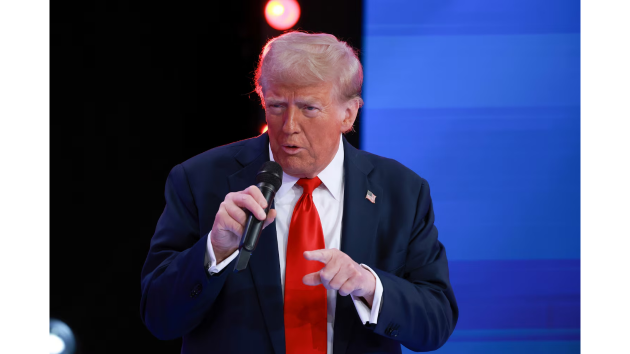
“To me, the most beautiful word in the dictionary is ‘tariff,'” Trump said this week during an appearance at the Economic Club of Chicago.
On the campaign trail, Trump has rarely mentioned the threat of a potential trade war, in which foreign nations could respond to tariffs by slapping U.S. imports with taxes of their own.
Economists who spoke to ABC News said Trump’s tariff proposals would all but certainly trigger a global trade war, diminishing sales for U.S. exporters, which account for about 10% of the nation’s economy. The disruption would likely trigger job cuts and slow the nation’s economic performance, economists added.
On the other hand, the move would bring more of the supply chain back to U.S. soil, economists said, and it would likely spur growth and hiring at some firms by protecting them from foreign competition. But the same experts cautioned that such benefits would be far outweighed by the consequences.
“The essence of a trade war is you impose tariffs and other countries respond by putting high tariffs on your exports. It’s tit for tat,” Douglas Irwin, a professor of economics at Dartmouth College who specializes in the history of U.S. trade policy, told ABC News.
“Tariffs are easy to impose but hard to remove,” Irwin added.
In response to ABC News’ request for comment, the Trump campaign pointed to a series of statements about tariffs made by Trump and his allies, including remarks from Trump Campaign Senior Advisor Brian Hughes.
“Time warp alert! Just like 2016, Wall Street and so-called expert forecasts said that Trump policies would result in lower growth and higher inflation, the media took these forecasts at face value, and the record was never corrected when actual growth and job gains widely outperformed these opinions,” Hughes said.
“These Wall Street elites would be wise to review the record and acknowledge the shortcomings of their past work if they’d like their new forecasts to be seen as credible,” he added.
On the campaign trail, Trump has promised a sharp escalation of tariffs during his first term. He has proposed tariffs of between 60% and 100% on Chinese goods.
Envisioning a far-reaching policy, Trump has proposed a tax of between 10% and 20% on all imported products. On Tuesday, he told the audience at the Economic Club of Chicago that such a tariff could reach as high as 50%.
Economists widely expect that tariffs of this magnitude would increase prices paid by U.S. shoppers, since importers typically pass along the cost of higher taxes to consumers. Trump’s tariffs would cost the typical U.S. household about $2,600 per year, according to an estimate from the Peterson Institute for International Economics.
Meanwhile, there could be a second wave of consequences if foreign countries were to impose retaliatory tariffs, economists said.
“You might see a dramatic decrease in U.S. exports, which could then have employment effects for people working in those sectors,” Kara Reynolds, an economist at American University, told ABC News. She pointed to the manufacturing and farming as industries especially vulnerable to a trade war.
For evidence of such an outcome, one need look no further than Trump’s first term, during which a slew of tariffs often induced a retaliatory response.
Tariffs imposed during Trump’s first term often induced retaliatory tariffs. The European Union and Canada responded to tariffs on steel and aluminum with tariffs of their own. Trump slapped tariffs on about $360 billion worth of Chinese goods, but China responded with tariffs on tens of billions of dollars worth of U.S exports.
Chinese tariffs on U.S. soybean exports caused a steep decline in sales to Chinese customers, dropping exports from $12.3 billion in 2017 to $3.1 billion in 2018, according to the Georgetown University Journal of International Affairs. In response, the Trump administration paid billions of dollars in direct aid to farmers to make up for the losses.
“He felt obligated to bail out the farmers,” Robert Lawrence, a professor of trade and investment at Harvard University’s Kennedy School of Government, told ABC News. “Now, we’re talking about potential actions on a much grander scale.”
Alongside retaliatory tariffs, many countries would seek suppliers in places where such tariffs are not on the books, Lawrence added.
“Trump is likely to isolate the U.S. and drive other countries to do business with each other,” Lawrence said. “This would have a very adverse effect.”
On the campaign trail, Trump has sharply disagreed with such fears, saying large-scale tariffs would rejuvenate U.S. manufacturing and propel economic growth.
At the Chicago Economic Club on Tuesday, Trump said tariffs would force companies to locate factories in the U.S. as a way of circumventing the tariffs, which in turn would boost domestic production and employment.
“We’re going to have thousands of companies coming into this country,” Trump said. “We’re going to grow it like it’s never grown before, and we’re going to protect them when they come in because we’re not going to have somebody undercut them.”
Economists said higher tariffs could expand certain areas of U.S. manufacturing that face stiff competition from abroad, but the policy also risks raising input costs and slowing output at U.S. producers that import their raw materials.
Trump’s tariffs decreased U.S. employment by 166,000 jobs, according to a study from the nonprofit Tax Foundation, which cited an increase in import costs for U.S. employers. A separate study from the U.S.-China Business Council estimated up to nearly 250,000 lost jobs as a result of the tariffs.
“It certainly would make the U.S. more self-reliant, but it would come with far greater costs,” Lawrence said.
Everoak Farms volunteers harvest sugar cane that could be salvaged after heavy winds and water from Hurricane Milton wrecked and flooded crops on the Orlando, Florida, farm. (Rich Pope/Orlando Sentinel/Tribune News Service via Getty Images)
(TALLAHASSEE, Fla. ) — Florida’s agricultural fields — including the state’s iconic orange groves and berry farms — are routinely damaged by strong storms that roll through the state.
Some of the Sunshine State’s most important farms are now recovering from two of the 2024 season’s most powerful hurricanes, which struck one after the other.
On Sept. 27, Hurricane Helene became the strongest hurricane to strike Florida’s Big Bend. Less than two weeks later, on Oct. 10, Hurricane Milton made landfall near Siesta Key. After both Category 4 storms brought life-threatening storm surge to the Gulf Coast, they turned toward the heart of the state, destroying farmland with strong winds and heavy rains, experts told ABC News.
While the state is no stranger to hurricanes, its agriculture industry is threatened every time a strong hurricane rolls in, Angela Lindsay, associate professor and disaster specialist at the University of Florida’s Institute of Food and Agricultural Sciences (IFAS), told ABC News.
Florida’s groves were heavily impacted by the recent hurricanes, which tore through regions with some of the most productive citrus acreage in the state, Matt Joyner, executive vice president and CEO of Florida Citrus Mutual, the state’s largest citrus trade association, told ABC News.
Hurricane-force winds caused defoliation — or the leaves to fall off — damaged limbs and branches and even downed entire trees, snapping them at the roots, Lindsay said. While oranges are not yet ready for harvest, they are currently near maturity and heavier, making it easier for high winds to pull the fruit from their branches, Joyner said.
“We know that we have a lot of fruit on the ground for this year’s crop,” Joyner said.
At Showcase of Citrus, an orange grove in Clermont, Florida, near Orlando, the gusts from Milton bent some trees at a 45-degree angle, owner John Arnold told ABC News.
Floods often kill the citrus groves, especially young orange trees planted in low-lying areas, Arnold said, adding that several of his young orange trees were lost to flooding.
Mitigation is difficult, the farmers said. Complicating matters even further is the uncertainty of the forecast up until just a few days before landfall, making it difficult to tend to hundreds and thousands of acres in a short amount of time, Michael Hill, co-founder and CEO of H&A Farms in Mount Dora, Florida, told ABC News.
Citrus trees can be staked in order to provide support from the hurricane-force winds, Lindsay said. Some farmers have tried wrapping the trees in tarp-like material, but that technique is not commonly used, Lindsay added.
“I’ve seen storms that tipped over entire groves of mature trees,” Arnold said.
There’s not much that can be done to protect crops in the ground, said Hill, who grows strawberries and blueberries — two of the most vulnerable crops in the state, after citrus, experts say.
A tree fell on Hill’s home in Eustis, Florida, but once the storm passed, all he cared about was the state of his fields.
“That’s the least of my worries,” he said of the downed tree.
About 60% of the plastic mulch the strawberries were planted in on Hill’s farm were torn up by Milton, he said. Hill and his workers are attempting to re-lay the plastic while keeping the plants alive in a cooler.
For the dairy industry, the cows still need to be milked, but the stressed cows likely produce much less, Jeb Smith, president of the Florida Farm Bureau Federation, told ABC News.
“It may be a month before they’re able to get back to where production should be,” Smith said.
Structural damage often includes buildings and fences that require re-building, Smith said. Showcase of Citrus sustained some damage to its screen buildings for growing grapefruit, Arnold said. A barn at H&A Farm was destroyed by Milton’s hurricane-force winds, and the entire facility lost power for days, Hill said.
Once the storm rolls through, farmers try to save whatever fruit fell to the ground and attempt to stake damaged trees in an attempt to support what’s remaining, Lindsay said.
Milton was the fourth named storm to hit many of the farms in Central Florida in 14 months, following Hurricane Irma in September 2023 and Debby in early September 2024, Smith said.
“It leads to more impact, when you have blow after blow,” Smith said.
In 2022, Florida’s agriculture industry generated $182.6 billion in revenue and supported more than 2.5 million jobs, according to the Florida Department of Agriculture & Consumer Services. While citrus is Florida’s signature crop, the state is an important producer of many other agricultural products. Florida is the second-largest producer of all oranges, strawberries, sweet corn and non-Valencia oranges in the country. More than 40 vegetables are grown commercially in the state, which ranks in the top three on production value of tomato, bell pepper, snap bean, squash, cabbage and cucumber, according to the University of Florida.
Sugarcane, timber, cattle and dairy are also major commodities for the state, according to the U.S. Department of Agriculture.
Other storms in the recent past have been just as devastating, the experts said.
Farmers were in disbelief over the amount of fruit that had been blown to the ground after Hurricane Irma in 2017 and Hurricane Ian in 2022, Lindsay said. The citrus industry saw a 1,000% loss as a result of Ian, Smith said.
In 2018, after Hurricane Michael struck the panhandle, researchers and officials couldn’t even get to some of the fields — many of which contain row crops of tomatoes and cotton — to assess the damage because of the damaged roadways, Lindsay said.
“We were using drones to look at them,” she said. “There wasn’t a lot there.”
Hurricane Ian in 2022 led to an estimated $7.9 billion in agricultural losses and impacted nearly 5 million acres, a report by the university found. Hurricane Irma in 2018 caused about $1.3 billion in losses, impacting about 1.9 million acres, according to an IFAS report.
Milton resulted in losses between $1.5 billion and $2.5 billion, in addition to the estimated $1.5 billion in damage caused by Idalia, Debby and Helene in the 13 months prior, according to a preliminary assessment by the Florida Department of Agriculture and Consumer Services released Thursday.
Every named storm in recent memory that has passed through central Florida has caused damage to Arnold’s farmland, he said.
“Just as we replant trees and rehabilitate groves and look to recover and move into better seasons, we’re getting hit with these storms,” Joyner said. “It’s really been difficult for growers to kind of regain their footing and move forward.”
In addition to crop insurance, there are several programs in place for farmers, including loan and recovery programs by the USDA’s Farm Service Agency, Lindsay said. The data collected by IFAS is sent to federal officials, who then determine the amount of aid to be distributed to farmers.
Once the damage is assessed, farmers then must make long-term decisions on how to move forward, Smith said.
“Some of these producers will have impacts years down the road,” Smith said, adding that the adverse impacts on the citrus industry can even last for decades.
Hurricanes are just one of the hazards Florida farmers face regularly. The last few years have been tough on the industry, with citrus farmers experiencing widespread greening, a disease that impacts citrus trees, Arnold said.
Combined with freezes, market prices, other diseases, labor challenges and inflation, farmers in the state have left many farms struggling to keep afloat, Hill said.
“When you see Florida strawberries in your stores this year, know that it came from a farmer that chose not to give up,” Hill said.
State election officials who will oversee voting for the November general election prepare for disruptions from artificial intelligence during a training session in Phoenix, Ariz.. Via ABC News
(PHOENIX) — In the final weeks of a divisive, high-stakes campaign season, state election officials in political battleground states say they are bracing for the unpredictable and emergent threat posed by artificial intelligence, or AI.
“The number one concern we have on Election Day are some of the challenges that we have yet to face,” Arizona Secretary of State Adrian Fontes said. “There are some uncertainties, particularly with generative artificial intelligence and the ways that those might be used.”
Fontes, a Democrat, said his office is aware that some campaigns are already using AI as a tool in his hotly contested state and that election administrators urgently need to familiarize themselves with what is real and what is not.
“We’re training all of our election officials, to make sure that they’re familiar with some of the weapons that might be deployed against them,” he said.
During a series of tabletop exercises conducted over the past six months, Arizona officials for the first time confronted hypothetical scenarios involving disruptions on Election Day on Nov. 5 created or facilitated by AI.
Some involved deepfake video and voice-cloning technology deployed by bad actors across social media in an attempt to dissuade people from voting, disrupt polling places, or confuse poll workers as they handle ballots.
In one fictional case, an AI-generated fake news headline published on Election Day said there had been shootings at polling places and that election officials had rescheduled the vote for Nov. 6.
“They walk us through those worst case scenarios so that we can be critically thinking, thinking on our toes,” said Gina Roberts, voter education director for the nonpartisan Arizona Citizens Clean Elections Commission and one of the participants in the exercise.
The tabletop exercise also studied recent real-world examples of AI being deployed to try to influence elections.
In January, an AI-generated robocall mimicking President Joe Biden’s voice was used to dissuade New Hampshire Democrats from voting in the primary. The Federal Communications Commission assessed a $6 million fine against the political consultant who made it.
In September, Taylor Swift revealed on Instagram that she went public to endorse Vice President Kamala Harris to, in part, refute an AI-generated deepfake image that falsely showed her endorsing Donald Trump.
There have also been high profile cases of foreign adversaries using AI to influence the campaign. OpenAI, the company behind ChatGPT, says it shut down a secret Iranian effort to use its tools to manipulate U.S. voter opinion.
The Justice Department has also said that Russia is actively using AI to feed political disinformation on to social media platforms.
“The primary targets of interest are going to be in swing states, and they’re going to be swing voters,” said Lucas Hanson, co-founder of CivAI, a nonprofit group tracking the use of A.I. in politics in order to educate the public.
“An even bigger [threat] potentially is trying to manipulate voter turnout, which in some ways is easier than trying to get people to actually change their mind,” Hanson said. “Whether or not that shows up in this particular election it’s hard to know for sure, but the technology is there.”
Federal authorities say that while the risks aren’t entirely new, AI is amplifying attacks on U.S. elections with “greater speed and sophistication” at lower costs.
“Those threats being supercharged by advanced technologies — the most disruptive of which is artificial intelligence,” Deputy Attorney General Lisa Monaco said last month.
In a bulletin to state election officials, the Department of Homeland Security warns that AI voice and video tools could be used to create fake election records; impersonate election staff to gain access to sensitive information; generate fake voter calls to overwhelm call centers; and more convincingly spread false information online.
Hanson says voters need to educate themselves on spotting AI attempts to influence their views.
“In images, at least for now, oftentimes if you look at the hands, then there’ll be the wrong number of fingers or there will be not enough appendages. For audio, a lot of times it still sounds relatively robotic. In particular, sometimes there will be these little stutters,” he said.
Social media companies and U.S. intelligence agencies say they are also tracking nefarious AI-driven influence campaigns and are prepared to alert voters about malicious deepfakes and disinformation.
But they can’t catch them all.
More than 3 in 4 Americans believe it’s likely AI will be used to affect the election outcome, according to an Elon University poll conducted in April 2024. Many voters in the same poll also said they’re worried they are not prepared to detect fake photos, video and audio on their own.
“In the long term, if you can see something that seems impossible and it also makes you really, really mad, then there’s a pretty good chance that that’s not real,” Hanson said. “So part of it is you have to learn to listen to your gut.”
In states like Arizona, which could decide a razor tight presidential race, the stakes are higher than ever.
“AI is just the new kid on the block,” Fontes said. “What exactly is going to happen? We’re not sure. We are doing our best preparing for everything except Godzilla. We’re preparing for about everything, because if Godzilla shows up, all bets are off.”
Ilana Panich-linsman/Innocence Project/AFP via Getty Images
(AUSTIN, Texas) — In an 11th-hour turn of events, Robert Roberson, the first person set to be executed in the U.S. based on the largely discredited “shaken baby syndrome” hypothesis, was granted a temporary hold on his death sentence.
Late Thursday evening, the Texas Supreme Court issued a temporary stay in the case, delaying the looming execution and capping, for now, a back-and-forth series of legal maneuvers, including an earlier decision by the U.S. Supreme Court not to intervene in the case.
When he learned of the last-minute delay of his execution, Roberson, who was convicted of murder in the death of his 2-year-old daughter, was “shocked,” and then “praised God, thanked his supporters and proclaimed his innocence,” said Amanda Hernandez, director of communications for the Texas Department of Criminal Justice, during a news conference Thursday evening.
The Texas high court’s ruling came after Travis County District Court Judge Jessica Mangrum initially put a temporary hold on Roberson’s execution to allow him to testify in a legislative hearing next week — something sought by a bipartisan group of state lawmakers who had subpoenaed Roberson to appear in a bid to delay the execution.
The temporary hold came through less than two hours before Roberson was scheduled to be executed. Shortly thereafter, however, the Texas Court of Criminal Appeals reversed it, putting the execution back on track.
In response, state lawmakers quickly sought a temporary stay by the state’s Supreme Court, which ultimately granted the request.
Notably, Roberson’s execution warrant was only valid through Oct. 17.
A legislative hearing at which Roberson is set to testify is scheduled for noon on Monday in the Texas State Capitol.
“For 22 years, this man has been held in prison — on death row — and we’re hoping that with this ruling today we’ll be able to bring light and get to truth,” Texas State Rep. John Bucy told reporters after the Texas Supreme Court issued its order halting the execution.
Monday’s hearing, in part, will examine laws in Texas targeting “junk science” or unreliable forensic science evidence.
“We needed Robert to be there as a first-hand account, to be able to testify to how it’s been used in his case,” Bucy said.
Roberson was found guilty of the murder of his 2-year-old daughter, Nikki, based on the testimony from a pediatrician who described swelling and hemorrhages in her brain to support a “shaken baby syndrome” diagnosis, even though there is limited evidence that this is a credible diagnosis.
The hypothesis has come under serious scrutiny in biomechanical studies, as well as a growing body of medical and legal literature. The medical examiner at the time also suspected that Nikki sustained multiple head injuries and considered the death a homicide in the official autopsy.
Roberson is autistic, according to his legal team, which affects how he expresses emotions — a concern that also arose during the trial.
Since his conviction, newly presented evidence found that Nikki had pneumonia at the time of her death and had been prescribed respiratory-suppressing drugs by doctors in the days leading up to her death.
A medical expert who performed post-mortem toxicology reports and reexamined her lung tissue said they found that chronic interstitial viral pneumonia and acute bacterial pneumonia were damaging her lungs, causing sepsis and then septic shock, likely leading to vital organ failure.
Over 30 medical and scientific experts have written to the Texas Board of Pardons and Paroles, asking it to reconsider Roberson’s sentence because it hinged on the “shaken baby syndrome.”
A bipartisan group of 86 Texas House of Representatives members have also spoken in support of Roberson’s clemency request, arguing that a state law enables reviews of wrongful convictions based on changes in scientific evidence. In Roberson’s case, they believe that the new evidence should have led to a new trial.
In his plea to halt the execution to the Supreme Court, Roberson argued that his federal due process rights were violated when Texas’ highest court refused to consider his bid to reopen the case based on “substantial new scientific and medical evidence.”
The plea itself followed two previous efforts: to have his sentence commuted to life in prison and to have his execution delayed. Both requests were denied by the Texas Board of Pardons and Paroles.
In its statement of opposition to the Supreme Court on Wednesday, the state of Texas claimed that there has been no violation of Roberson’s constitutional rights that would warrant intervention from the higher court.
It said that its own courts have adequately considered and rejected Roberson’s requests to review the evidence, writing: “As noted by the [Criminal Court of Appeal’s] opinion on direct review and Judge [Kevin] Yeary’s recent concurrence, ‘the tiny victim suffered multiple traumas’ that are inconsistent with a short fall from a bed or complications from a virus.”
Before the flurry of back-and-forth decisions in Texas on Thursday, the U.S. Supreme Court denied Roberson’s request for a stay and his petition that the justices take up the case.
(PHOENIX) — All charges were dropped Thursday against Tyron McAlpin, a disabled Black man in Arizona who had been facing charges of felony assault and resisting arrest after a pair of Phoenix police officers punched him and shocked him with a stun gun. McAlpin is deaf and has cerebral palsy.
The incident, which took place on Aug. 19, was captured on both surveillance video and police body-worn camera. The officers said they were investigating an assault at a nearby Circle K, and McAlpin fit the description of the suspect given by a bystander. However, the original description of the suspect was for a white man who had been creating a disturbance in the store. They also claimed that McAlpin became combative and tried to run when they approached him.
McAlpin’s lawyers said the video shows otherwise.
In the video, police are seen pulling up to McAlpin and ordering him down to the ground. He doesn’t appear to immediately comply. The video then shows the officers punching him 10 times in the head and shocking him with a stun gun four times while yelling: “Get your hands behind your back.” McAlpin’s attorney said he didn’t know what was going on and could not hear the commands.
A union for the department’s officers argued that people should know what to do if a police car comes up and uniformed officers approach and that the officers had to force McAlpin to comply, not knowing he was deaf at the time. The union also said McAlpin took a fighting stance and bit the officers.
“After reviewing all evidence presented, Maricopa County Superior Court Commissioner Nick Saccone determined there was sufficient evidence for the felony charges against the suspect due to his actions against the officers,” Phoenix Law Enforcement Association President Darrell Kriplean said in the weeks after the incident. A Maricopa County judge ruled that there was probable cause for the arrest and that there was cause for the charges.
The Phoenix Police Department said it stood behind its officers and suggested people avoid making judgments about the incident until all the evidence was reviewed. The police department also said that it is investigating the arrest.
On Thursday, Maricopa County Attorney Rachel Mitchell made an announcement that all charges against McAlpin had been dismissed.
“I promised I would personally review the case including a large volume of video recordings, police reports, and other materials that have been forwarded to my office,” she said.
With the support of senior attorneys and after hearing from members of the community, Mitchell said, “I have now completed my review and have made the decision to dismiss all remaining charges against Mr. McAlpin.”
The incident came after the Department of Justice in June released a report concluding that the Phoenix Police Department engaged in civil rights violations including racial discrimination and bias against the disabled. Their investigation found “systemic problems” within the department’s policies, training, supervision and accountability systems that were “perpetuated” for years.
The DOJ opened its investigation in August 2021 after complaints about use of excessive force among Phoenix police. The department said it welcomed this inquiry to help them understand how they can better serve the community.
(NEW YORK) — The second suspect who was arrested earlier this week in connection to the deadly Michigan home invasion on Oct. 11 that left 72-year-old Rochester Hills businessman Hussein Murray dead has been formally charged with multiple counts, including felony murder, police said.
“Joshua Zuazo, 39, of Dearborn, is charged in a three-count warrant issued today by prosecutors with felony murder – a life offense if convicted – and two counts of unlawful imprisonment – 15-year felonies,” said the Oakland County Sheriff’s Office in a statement announcing the charges. “The warrant was signed late [Thursday] afternoon by 52-3 District Judge Laura Polizzi.”
Zuazo is now being held in the Oakland County Jail and is expected to be arraigned on the charges on Friday at 1:15 p.m. ET.
Murray was found dead Friday last Friday in the basement of his Rochester Hills home, according to the sheriff’s office. His wife, who called 911, had been tied up with her hands duct-taped.
The woman told law enforcement officials that the night before the attack, the two suspects had also shown up to the home claiming to be responding to a gas leak, but they were not allowed inside.
When they showed up again on Friday, they were let into the home, and her husband went with them into the basement, “ostensibly to look for the leak,” according to the sheriff’s department.
When they came back upstairs without her husband, they tied her up and taped her hands, the woman said. She did not see him come out afterward and “assumed he had been kidnapped.”
In home security camera footage released by the sheriff’s department, the since-arrested suspect can be seen wearing a utility worker’s uniform and a mask while holding a clipboard.
“We’re DTE. We’re checking for gas leaks,” the man can be heard saying in the video, naming the Michigan-based energy company.
The other suspect, Carlos Jose Hernandez, 37, was arrested last Saturday, according to the Oakland County Sheriff’s Office. He has been charged with murder, and law enforcement officials are seeking his extradition from Louisiana.
“I want to reiterate how proud I am of our whole team and what they did to quickly move this case forward, not only taking our suspects off the street, but bringing evidence to the prosecutor to move this into her court for the next phase,” Oakland County Sheriff Michael Bouchard said in a statement Thursday.
ABC News’ Julia Reinstein contributed to this report.
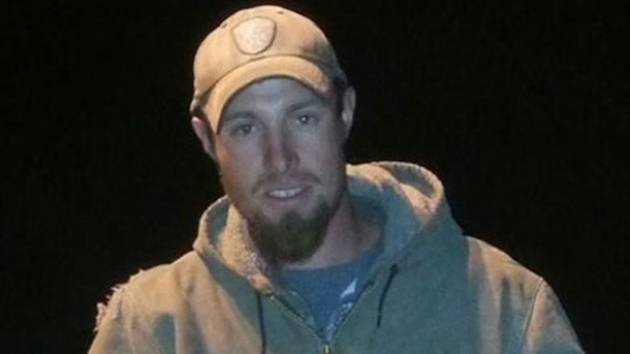
(GALLATIN COUNTY, MT) — Investigators are asking for help solving a “vicious” murder that was so brutal a 911 caller had reported it as a possible bear attack, according to the Gallatin County Sheriff’s Office.
A friend found 35-year-old Dustin Kjersem dead in a tent on Saturday morning about 2.5 miles up Moose Creek Road, in a fairly remote camping area in Montana, according to Gallatin County Sheriff Dan Springer.
Kjersem was last heard from on Oct. 10 as he was leaving to go camping for the weekend. He had plans to meet with a friend on Friday afternoon, according to the sheriff’s office.
After he did not make it to the meetup location, Kjersem’s friend went looking for him and ultimately found him dead.
When investigators responded to the scene of the crime, a Montana Fish, Wildlife and Parks agent with expertise in bear attacks did not find any signs of bear activity at the scene, prompting investigators to treat the incident as a murder, according to the sheriff’s office.
This was further confirmed through evidence gathered during an autopsy which determined multiple wounds led to his death.
Investigators are not sure what the murder weapon was, but the weapon was something “hard enough to cause significant damage to the skull as well as some flesh areas of the body,” Springer said at a press conference Wednesday.
“This incident was a vicious attack, and detectives are working hard to develop and track down leads. A suspect has not been arrested at this time,” the sheriff’s department said in a statement.
It has not yet been determined what time he was killed and investigators have not identified any suspects in the murder.
Kjersem had lots of equipment at the campsite with him and it was “very well kept,” according to Springer.
The remote location of the murder makes it difficult for the investigation due to limited cellphone services, which typically can be very helpful to investigators, Springer said.
“If you are out in the woods, I need you to be paying attention, you need to remain vigilant. Please, just call us,” Sheriff Dan Springer said at a press conference Wednesday.
The sheriff’s office said people have reached out to them already, giving them multiple leads that they will explore as the investigation into what happened continues.
“If you were in the Moose Creek area, or anywhere in Gallatin Canyon, between Thursday afternoon and early Saturday morning and noticed anything unusual — whether you saw Dustin, Dustin’s truck, noticed suspicious activity, have footage from game cameras or in-vehicle cameras from the area or observed something out of place — please come forward. Even the smallest detail could be crucial to the investigation,” the Gallatin County Sheriff’s Office said in a statement on Facebook.
Mohammed Talatene/picture alliance via Getty Images
(LONDON) — Yahya Sinwar, one of the key architects of the Oct. 7, 2023, attack on Israel, emerged over the summer as the de facto leader of the terrorist organization.
Israeli officials confirmed Thursday that Sinwar’s reign, however, was short-lived. The 61-year-old leader of Hamas was one of three militants killed in an Israeli military strike in the Gaza Strip, Israel Foreign Minister Israel Katz said in a personal message to dozens of foreign ministers around the world.
“The master murderer Yahya Sinwar, who is responsible for the massacre and atrocities of October 7, was killed today by IDF soldiers,” Katz said.
Sinwar had been among the top targets sought by Israel, which placed a $400,000 bounty on his head following the Oct. 7 surprise attack on Israel that left more than 1,200 people dead and 240 taken hostage.
Israeli officials announced on Aug. 1 that they killed Mohammed Deif, commander of Hamas’ military wing, in a “precise, targeted strike” on July 13 in the southern Gaza town of Khan Younis. Deif and Sinwar were allegedly the masterminds of the Oct. 7, 2023, attack on Israel.
Sinwar was elevated to political leader of Hamas in Gaza in August after Iranian officials confirmed that the previous Hamas political leader, Ismail Haniyeh, was killed in a bombing at a guest house in Tehran, where he was staying while attending the inauguration of Iran’s president-elect, Masoud Pezeshkian.
Haniyeh’s death left Sinwar calling the shots for Hamas at a time when negotiations involving the White House have been underway for a cease-fire in Gaza and the release of the remaining Israeli hostages.
Sinwar had not been publicly heard from since late 2023, when Hamas and affiliated groups launched the surprise attack in Israel. It was believed that he was hiding in the vast network of Hamas tunnels under the Gaza Strip.
Sinwar helped establish Hamas in the late 1980s. In 1989, an Israeli court sentenced him to four life sentences for his role in killing suspected Palestinian informers and plotting to murder two Israeli soldiers. He spent 22 years in prison and was one of more than 1,000 Palestinian detainees who were released in 2011 in exchange for Israeli soldier Gilad Shalit, who had been held hostage by Hamas for five years.
At the time of his imprisonment, Sinwar was head of Hamas’ infamous internal security arm, Al-Majd. Israeli and Palestinian sources told ABC News that his job was to investigate members of Hamas who were potentially working with the Israelis.
In an interview with ABC News in December, Michael Koubi, a former officer in Shin Bet, Israel’s internal security organization, said he interrogated Sinwar, while he was a prisoner, for more than 150 hours.
Koubi described Sinwar as “tough” and devoid of emotions but “not a psychopath.”
Koubi told ABC News that Sinwar — dubbed “the butcher of Khan Younis,” for the town in Gaza that he was from — boasted during his interrogations about killing suspected Palestinian informants with “a razor blade” and “a machete.”
In 2017, six years after his release from an Israeli prison, Sinwar was elected the overall chief of Hamas in the Gaza Strip.
Sinwar’s ideology and long-term hatred toward Israel were what motivated him to attack the country on Oct. 7, according to Koubi.
Following the attack on Israel, Israeli Prime Minister Benjamin Netanyahu said on Dec. 6 that it was “only a matter of time” before Sinwar was located. Israeli military leaders had described him as “a dead man walking.”
Koubi told ABC News in December that he expected Sinwar would eventually go down fighting, saying Sinwar wanted to “die a hero of the slum, as a hero of Hamas, as a hero of the Gaza people.”
(MIAMI, FLORIDA) — As Election Day nears, Donald Trump is continuing his long-standing effort to recast the violent events of Jan. 6, 2021, now calling it a “day of love” even as he tries to distance himself from what happened.
A Republican audience member, during a Univision town hall on Wednesday, pressed Trump on his actions that day as thousands of his supporters stormed the U.S. Capitol, temporarily disrupting the congressional certification of President Joe Biden’s victory.
“I want to give you an opportunity to win back my vote,” the participant said, adding he found Trump’s actions and alleged inaction on Jan. 6 a “little disturbing” and wanted to know why some of Trump’s former top administration officials are no longer supporting him — some even calling him a danger to national security and democracy.
Trump quickly went on defense and in the process repeated some false or misleading claims that have been long disproved or debunked.
The former president said he “totally disagreed” with then-Vice President Mike Pence’s adamance to his constitutional duty to uphold the certification process and not unilaterally reject the election results. Pence has said he is not endorsing Trump this cycle.
Trump then claimed thousands of his supporters who traveled to Washington “didn’t come because of me,” despite his posting on social media in mid-December 2020 that there would be a “big protest” on Jan. 6.
“Be there, will be wild!” Trump famously wrote on Twitter, where he’d amassed some 88 million followers.
One man who admitted to illegally entering the Capitol that day, Stephen Ayres, testified in court documents and before the House Jan. 6 committee that he was influenced heavily by Trump’s activity on social media to come to Washington for the rally at the Ellipse.
“They came because of the election,” Trump said on Wednesday. “They thought the election was a rigged election, and that’s why they came. Some of those people went down to the Capitol but I said peacefully and patriotically. Nothing done wrong at all.”
Trump went on to say, “Ashli Babbitt was killed. Nobody was killed. There were no guns down there.”
Babbitt, a 35-year-old Trump supporter and Air Force veteran, was fatally shot by a U.S. Capitol Police officer as one of a group of rioters who tried to break into the House floor through barricaded entrances near the Speaker’s Lobby.
She was one of several people who died during or after the riot of various causes. Four officers who responded to the Capitol attack later died by suicide. Capitol Police Officer Brian Sicknick, who was pepper sprayed by rioters, suffered strokes and died the next day. A Washington medical examiner determined he died of natural causes but said his experience that day played a role.
The Justice Department has noted that in court it has been proven that “weapons used and carried on Capitol grounds include firearms; OC spray; tasers; edged weapons, including a sword, axes, hatchets, and knives; and makeshift weapons, such as destroyed office furniture, fencing, bike racks, stolen riot shields, baseball bats, hockey sticks, flagpoles, PVC piping, and reinforced knuckle gloves.”
More than 1,500 people have been federally charged with crimes associated with the Capitol attack, the Justice Department said earlier this year. That includes 571 charged with assaulting, resisting, or impeding law enforcement agents and 171 defendants charged with entering a restricted area with a dangerous or deadly weapon.
At least 943 individuals have pleaded guilty — including 161 who pleaded guilty to assaulting law enforcement and 67 who pleaded guilty to assaulting law enforcement with a dangerous or deadly weapon — and an additional 195 people have been found guilty at trial.
Approximately 140 law enforcement officers were injured during the riot, the DOJ has said.
Jan. 6 began with Trump’s speech at the Ellipse, in which he did tell supporters to march “peacefully and patriotically” to the Capitol, as he now likes to note, but also stoked tensions by saying they have to “fight like hell” or they wouldn’t have a country.
“But that was a day of love,” Trump said at the Univision town hall. “From the standpoint of the millions, it’s like hundreds of thousands. It could have been the largest group I’ve ever spoken to before. They asked me to speak. I went and I spoke, and I used the term ‘peacefully and patriotically.'”
The comments come as Trump and his running mate Ohio Sen. JD Vance continue to deny the 2020 election outcome and downplay what transpired on Jan. 6.
Vance on Wednesday when asked if Trump lost the election replied, “No, I think there are serious problems in 2020 so did Donald Trump lose the election? Not by the words that I would use.”
Vance has also said he wouldn’t have certified the election were he in Pence’s shoes in 2021.
The election denialism and Jan. 6 comments have prompted swift push back from Democrats and Vice President Kamala Harris. Harris has cast Trump as a threat to democracy as the 2024 campaign enters its final weeks.
ABC News’ Jack Date, Soorin Kim, Lalee Ibssa and Kelsey Walsh contributed to this report.