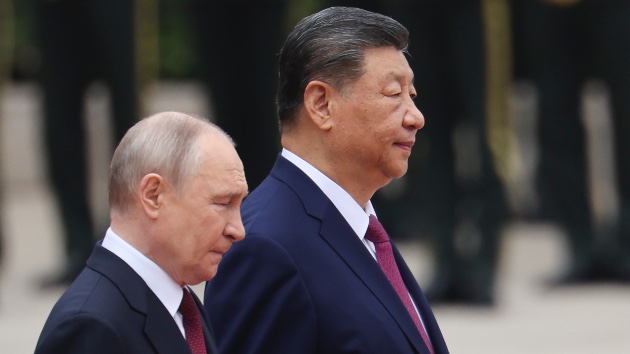
Russian President Vladimir Putin walks with Chinese President Xi Jinping during a welcoming ceremony at the Great Hall of the People on May 20, 2026 in Beijing, China. (Photo by Maxim Shemetov – China Pool/Getty Images)
(LONDON) — Chinese President Xi Jinping hosted Russian President Vladimir Putin in Beijing on Wednesday, with the two leaders releasing a joint statement urging an end to the U.S.-Israeli war with Iran as a matter of “utmost urgency.”
“The sides agree that military strikes by the United States and Israel on Iran breach international law and fundamental norms of international relations and seriously undermine stability in the Middle East,” the joint statement published on the Kremlin website said.
The statement stressed “the need for a return as soon as possible of the conflicting parties to dialogue and negotiations aimed to prevent the conflict zone from spreading and urged the international community to maintain an objective and impartial position, to assist de-escalation, and to defend the fundamental norms of international relations together.”
The two leaders also condemned what they called “treacherous military strikes against other countries, the hypocritical use of negotiations as cover for preparing such strikes, the assassination of leaders of sovereign states, the destabilization of the domestic political situation in these states and the provocation of regime change, and the brazen kidnapping of national leaders for trial.”
Moscow and Beijing have both been key partners for Tehran in recent years, as the U.S. and its European allies have sought to weaken the Islamic Republic through international sanctions and diplomatic isolation.
Russia’s full-scale invasion of Ukraine since 2022 prompted the fostering of deeper military and economic ties between Moscow and Tehran, with Iranian munitions — in particular Iranian-designed Shahed strike drones — playing a key role in Russia’s ongoing campaign.
China, meanwhile, remains a key customer of Iranian oil, with some analysts estimating that Beijing accounts for up to 90% of Tehran’s crude exports.
China has been pushing for a diplomatic resolution to the conflict in Iran, which began with joint U.S.-Israeli strikes all across the country on Feb. 28. Beijing says it has been coordinating closely with Pakistan, which has emerged as a key mediator in as-yet unsuccessful peace talks between Washington and Tehran.
Following the meeting between Xi and Putin, both sides expressed support for the other’s “territorial integrity.”
Russia, Putin said — according to the Kremlin readout — “reaffirms its commitment to the One China principle and recognizes the existence of only one China. Taiwan is its integral part, and the government of the People’s Republic of China is the only legitimate government representing all of China.”
China, the readout said, “supports Russia’s efforts towards the provision of security, stability, national development, prosperity, sovereignty and territorial integrity and ‘opposes external interference in Russian internal affairs.'”
ABC News’ Joe Simonetti contributed to this report.
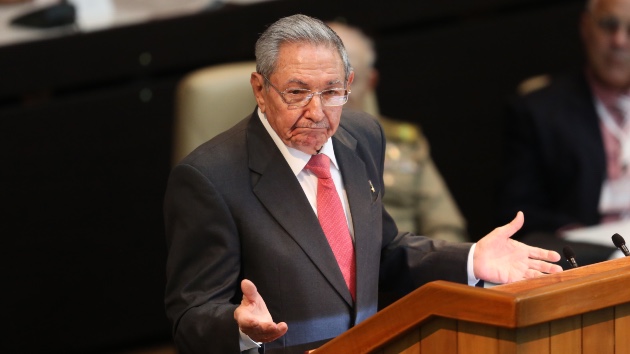
Former Cuban President Raul Castro speaks during the National Assembly at Convention Palace on April 19, 2018 in Havana, Cuba. (Photo by Alexandre Meneghini-Pool/Getty Images)
(WASHINGTON) — The Justice Department is expected to announce charges against Raul Castro, sources familiar with the matter tell ABC News.
The charges are expected to include allegations of murder for shooting down two planes carrying humanitarian aid to desperate migrants in the 1990s that resulted in the deaths of three American pilots.
The charges will be announced in a press conference this afternoon.
This is a developing story. Please back for updates.
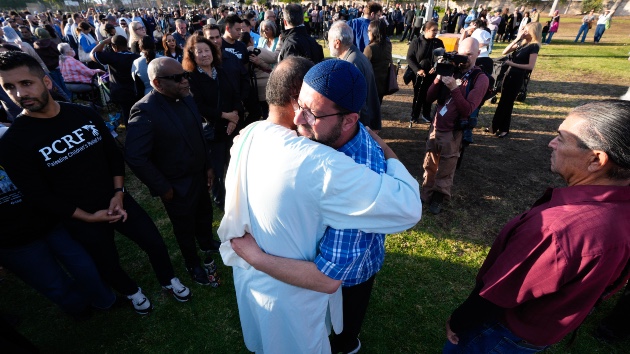
Hundreds gathered to hold a vigil at Lindbergh Park, down the street from the Islamic Center of San Diego, to mourn the loss of three people from the Islamic Center of San Diego. (Photo by Nelvin C. Cepeda / The San Diego Union-Tribune via Getty Images)
(SAN DIEGO) — Investigators are continuing to build a picture of the two suspects in the deadly Monday shooting at the Islamic Center of San Diego which killed three people, and which law enforcement officials say may have been driven by nihilistic and accelerationist extremism.
Three men, one of whom was a security guard, were killed in the shooting on Monday, authorities said, with investigators saying they are currently considering the incident as a hate crime.
Two suspects, aged 17 and 18, were found dead in a vehicle nearby, police said. Authorities are investigating two teenagers, Cain Clark and Caleb Vazquez, as the suspected attackers in the shooting, several sources told ABC News.
Authorities are reviewing a video apparently posted online by one of the suspects in Monday’s shooting that appeared to capture a livestream of the attack and its aftermath, sources told ABC News.
Sources said a video posted to an online gore site allegedly shows the suspects approaching the center and then opening fire, with a person believed to be suspect Clark wearing camouflage fatigues and a plate carrier.
In a later portion of the video, sources said the person believed to be Clark can be seen reaching into the backseat of the vehicle and then shooting Vazquez, before chambering a second round and taking his own life.
The video and items found with the suspects’ bodies appeared to indicate associations with extremist ideology, law enforcement officials said.
A Sonnenrad patch, depicting a neo-Nazi symbol, and what analysts assess is likely a patch for a militant accelerationist group, are both visible on the plate carrier being worn by the person believed to be Clark, according to sources. Additionally, writings are visible on a gun, including drawings of SS bolts and neo-Nazi insignias, sources said.
Further symbols associated with neo-Nazism and militant accelerationism were found at the scene of the shooting, including a flag with a Sonnenrad on it and a gas can with SS bolts drawn on it, according to sources.
Investigators are examining a lengthy document circulating online that is comprised of two hate-filled essays totaling 75 pages allegedly written by the suspected shooters, sources told ABC News.
Both essays promote white nationalism and express a hatred for immigrants, racial minorities and others, as well as anger toward women who prefer taller men, according to sources. Vazquez allegedly writes he is an “accelerationist” in his essay, echoing nihilistic rhetoric, sources said.
It’s unclear when the essays were actually written — a section intended to identify the “targets” is left blank, sources said.
Social media accounts believed to be tied to Clark reflect possible associations with nihilistic violent extremist ideology, sources also told ABC News.
Early last year, police in Chula Vista, California, spoke with Vazquez after someone who knew him expressed concerns that he was interested in extremist ideology and mass-casualty attacks, though the concerns at that point didn’t meet the threshold for making an arrest, sources told ABC News.
A spokesperson for the Chula Vista Police Department told ABC News on Tuesday that the department “extends its deepest condolences to all those affected by this tragedy” but declined to answer questions about the prior contact.
The suspects met online and discovered they both lived in the San Diego area, according to Mark Remily, the special agent in charge of the FBI’s San Diego Field Office. They appear to have been radicalized online and had a “broad hatred” toward a wide array of races and religions, Remily said during a press briefing Tuesday.
“They didn’t discriminate on who they hated,” Remily said.
Investigators have recovered writings that outline “religious and racial beliefs of how the world they envision should look,” Remily said. Authorities are in the process of analyzing their writings to learn what led to the attack and how to prevent future ones, as well as looking into “how the radicalization occurred,” he said.
It’s too early in the investigation to tell if the mosque was the specific target, authorities said.
“We’re still looking through electronics to give us the answers, but again, what I can say is they definitely had a broad hatred towards a lot of folks,” Remily said.
San Diego Police Chief Scott Wahl said law enforcement is still working to determine the scope of the “threat picture,” when asked if the Islamic center’s schools were the intended target.
Police are investigating how the suspects obtained firearms in the shooting, Wahl said Tuesday. The guns belonged to the parents of one of the suspects, he said.
During searches of two residences associated with the suspects, authorities seized “numerous pistols, rifles, shotguns, ammunition, tactical gear, as well as electronics,” Remily said.
“So far in this investigation, we’ve seized over 30 guns and a crossbow,” he said.
The shooting was reported shortly before noon Monday, police said.
A video review shows that the suspects got into a “gun battle” with the security guard, who was killed outside the mosque, according to Wahl.
The security guard had managed to put out a “lockdown protocol,” which along with the sound of gunfire, allowed those in the main common areas of the mosque to go into hiding, he said. There were some 140 children inside at the time, he said.
The suspects moved room by room once inside, but did not run into anyone, the police chief said. At one point, they are seen looking out a window, with one pointing to the window, before running out a nearby door, at which point they “immediately engage” the two other victims outside in the parking lot, he said.
Amin Abdullah, the security guard killed, has been hailed as a hero.
“His actions, without a doubt, delayed, distracted and ultimately deterred these two individuals from gaining access to the greater areas of the mosque where as many as 140 kids were within 15 feet of these suspects,” Wahl said Tuesday.
The two other victims killed in the shooting — identified by authorities as Mansour Kaziha and Nadir Awad — “drew the attention” of the suspects into a parking lot “where they were unfortunately unable to flee,” Wahl said. They were cornered by the suspects and killed, Wahl said.
Police are investigating a potential motive but said the shooting is currently being considered as a hate crime.
“There was definitely hate rhetoric that was involved,” Wahl said during a Monday press briefing.
Anti-Islamic writings were found in the vehicle with the two teens, sources told ABC News.
About two hours before the shooting at the mosque, San Diego police received a call involving the 17-year-old suspect, about a runaway juvenile, according to Wahl. The teen’s mother reported that “several of her weapons” and her vehicle were missing, he said. The mother also found a note, Wahl said, the contents of which the police chief did not share.
The mother told police that her son was with another individual and that they were both “dressed in camo,” Wahl said.
Officers were attempting to track down the vehicle and dispatched police to a mall and to a school with which one of the teens was associated, when the shooting at the mosque was reported, he said.
The Islamic Center of San Diego says it is the largest mosque in San Diego County.
“We have never experienced a tragedy like this before,” Taha Hassan, Imam and Director of Islamic Center of San Diego, said of the center at a news conference.
“It is extremely outrageous to target a place of worship. Our Islamic center is a place of worship. People come to the Islamic center to pray, to celebrate, to learn, not only Muslims, but we have people from all walks of life,” Hassan added.
“The religious intolerance and the hate, unfortunately, that exists in our nation is unprecedented,” Hassan said.
“We strongly condemn this horrifying act of violence,” Tazheen Nizam, the executive director of the San Diego chapter of the Council on American-Islamic Relations, said in a statement. “Our thoughts are with everyone impacted by this attack. No one should ever fear for their safety while attending prayers or studying at an elementary school.”
San Diego Mayor Todd Gloria told ABC News that “we immediately have increased patrols around religious sites, both our Muslim, Jewish and other faith communities across the city. And I imagine we’ll maintain that posture for some time.”
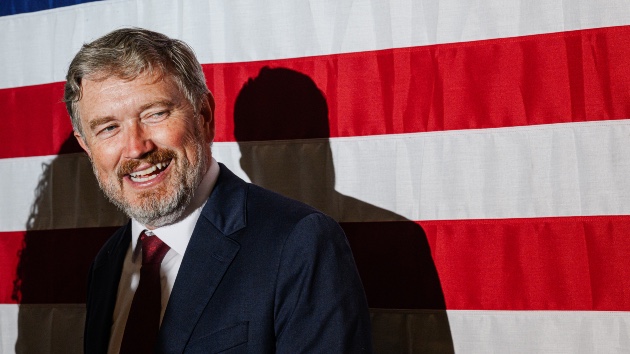
Rep. Thomas Massie speaks with supporters after his concession speech on May 19, 2026 in Hebron, Kentucky. Massie, who has served Kentucky’s 4th Congressional District since 2012, conceded his loss after the most expensive US House Primary in US history against Trump-endorsed candidate Ed Gallrein. (Photo by Jon Cherry/Getty Images)
(WASHINGTON) — A batch of closely watched primaries in six states on Tuesday both set up some key midterm election matchups and gestured to major forces shaping the Democratic and Republican parties — from the strength of President Donald Trump’s endorsement to the road to the White House in 2028.
Here are some of takeaways from Tuesday night’s results.
The strength of Trump’s endorsement, again?
President Donald Trump had turned his ire on Rep. Thomas Massie, the maverick Republican representing Kentucky’s 4th Congressional District, given Massie’s push to release the Jeffrey Epstein files, his vote against the president’s sweeping domestic tax policy legislation and his vocal opposition to the Iran war.
Trump constantly excoriated Massie and endorsed his primary opponent Ed Gallrein and Defense Secretary Pete Hegseth even campaigned with Gallrein on Monday. The primary also became the most expensive House primary on record, with more than $32 million in ad spending.
Massie had held firm — adamant that his constituents would pull through for him. But the power of Trump’s endorsement was more firm, just as it had been in the Louisiana Senate primary last Saturday, where Trump-endorsed Rep. Julia Letlow and state Treasurer John Fleming advanced to a runoff after Trump had turned against incumbent Republican Sen. Bill Cassidy.
“We weren’t really running against Ed Gallrein, we weren’t running against Donald Trump. We were running for what we believe in,” Massie told supporters on Tuesday night.
Mixed results for Trump in Georgia
But it seems Trump’s endorsement could not carry his candidate of choice, Lt. Gov. Burt Jones, over the finish line outright in the Georgia Republican gubernatorial primary. Jones now heads towards a June 16 runoff against billionaire businessman Rick Jackson.
In remarks Tuesday evening, Jackson, who entered the race just three months before the primary, said his campaign sent an “earthquake” through the political establishment and called Jones a political insider.
“We have 28 days to finish it, and the choice could not be more clear or more important. Burt Jones is a political insider. I’m the opposite. I don’t owe the lobbyists anything. I don’t need the establishment’s permission. I cannot be bought, and I will not back down,” Jones said Tuesday evening.
What Tuesday meant for potential 2028 presidential candidates
Tuesday was a good night for Pennsylvania’s Democratic Gov. Josh Shapiro, a rumored 2028 presidential candidate, as all four of the primary candidates he endorsed in Pennsylvania’s battleground U.S. House districts — where Democrats hope to flip seats held by GOP incumbents — were projected by ABC News to win, although one of the four, Paige Cognetti, was unopposed.
Shapiro’s success on Tuesday could bolster his standing among Democrats both in the state and nationally — possibly helpful if he does launch a bid for the presidency — although he still faces the general election campaign for governor against state Treasurer Stacy Garrity, and Democrats still face an uphill battle trying to flip all four seats they are targeting.
And down south in Georgia, Gov. Brian Kemp, who has not ruled out a presidential run in 2028, also played a hand in shaping the state’s GOP Senate primary. Kemp backed Derek Dooley, a former football coach who is projected by ABC News to face a runoff against Rep. Mike Collins in a race that Trump did not endorse in.
Kemp, who opted out of running for Georgia’s Senate seat after being recruited by Republicans, threw the full force of his political weight behind elevating Dooley from a political unknown to a candidate for one of the most-watched Senate races in the country.
Working behind the scenes, Kemp made calls to donors to build support for Dooley, and Kemp’s PAC, Hardworking Americans Inc., has also invested millions in the race to support Dooley, the son of legendary former University of Georgia football coach Vince Dooley.
Kemp also campaigned heavily with Dooley in the lead-up to Georgia’s primary.
Kemp has had a rocky relationship with Trump since refusing his pressure to overturn Georgia’s election results in 2020. But Kemp remains popular among Georgians, winning reelection against a Trump-endorsed primary challenger in 2022.
ABC News’ Emily Chang and Halle Troadec contributed to this report.
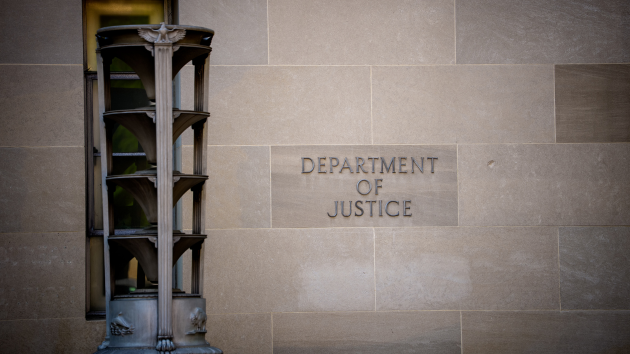
The Robert F. Kennedy Department of Justice Building on May 18, 2026 in Washington, DC. The Justice Department has announced the creation of a nearly $1.8 billion compensation fund for allies of U.S. President Donald Trump who allege they were unfairly targeted by the federal government under the previous administration. (Photo by Andrew Harnik/Getty Images)
(WASHINGTON) — The Justice Department on Tuesday issued an addendum to its sweeping settlement to end President Donald Trump’s lawsuit against the IRS that would bar the government from conducting audits of tax returns filed by Trump, his family and their companies.
The filing, signed by acting Attorney General Todd Blanche and posted to the Justice Department’s website Tuesday, states that the IRS is “forever barred and precluded” from “prosecuting or pursuing” examinations or reviews of Trump or “related or affiliated individuals” and businesses.
The addendum expands the unprecedented settlement agreement announced by the DOJ Monday that establishes a $1.776 billion “Anti-Weaponization Fund” to compensate those who allege they were wrongly targeted under the Biden administration, in exchange for Trump dropping his $10 billion lawsuit against the IRS as well as two civil claims for $230 million related to the Russia collusion investigation he faced during his first term in office and the 2022 search of his Mar-a-Lago estate.
This is a developing story. Please check back for updates.
Water bungalows on Kanuhura island resort at Indian Ocean in Maldives – stock photo (westend61/Getty)
(MALDIVES) – -Two investigations, including a culpable homicide probe, have been launched into the deep-water expedition in the Maldives that claimed the lives of five Italian scuba divers, and authorities said they didn’t know the group would be exploring a cave.
Both the Maldives government and prosecutors in Rome announced the investigations as the remains of two more divers were recovered from an underwater cave in the Indian Ocean.
In addition to the probe by the Maldives government, prosecutors in Rome have opened a culpable homicide investigation into the tragedy, sources told the Italian news agency ANSA.
It’s not immediately clear if any specific person or persons are the target of that probe.
Mohamed Hussain Shareef, a spokesperson for the Maldives president’s office, said the investigation by the Maldives government will focus on whether those in charge of the fatal expedition “took the correct precautions” and underwent the necessary planning.
“We believe that the retrieval of the bodies will itself reveal a lot, as far as that part of the investigation is concerned,” said Shareef, according to The Associated Press. “But that doesn’t take from the fact that cave diving in itself is very, very dangerous.”
Shareef said the scuba-diving group — which was led by Monica Montefalcone, a marine researcher and an associate professor of ecology at the University of Genoa — had been issued a permit for the diving expedition.
“While they had a permit, there are certain gaps in the research proposal,” Shareef said.
He said the Maldives government was not informed that the group would be exploring an underwater cave.
“We didn’t know the exact location they were diving,” Shareef said.
He said two of the divers who died were not on the list of researchers that organizers had submitted.
“So we didn’t know they were part of the expedition as well. So, all these factors are being reviewed,” Shareef said.
Shareef said the scuba diving group was on an excursion he described as “very, very challenging” due to the depth, terrain, powerful current and strong draft in the area of the dive.
“The visibility, for example, once you enter the cave, would be almost zero; that’s what we are being told,” Shareef said.
The divers went missing on Thursday while exploring a cave in Vaavu Atoll, according to the Maldives National Defense Force.
A Maldives military diver died on Saturday while working to recover the bodies of victims, according to the Maldives National Defense Force.
Officials called the recovery effort a “very dangerous, high-risk operation.” The search was suspended at one point on Friday due to bad weather, the AP reported.
The Italian National Institute of Geophysics and Volcanology and the University of Genoa identified the deceased divers as Montefalcone; her daughter, Giorgia Sommacal, a University of Genoa biomedical engineering student; Muriel Oddenino, a University of Genoa research fellow; and marine biologist Federico Gualtieri, a recent University of Genoa graduate in marine biology and ecology.
The institute also identified one of the victims as diving instructor Gianluca Benedetti.
The Maldives government said three of the bodies have been recovered. On Tuesday, a Finnish diving team retrieved two bodies from the third chamber of a deep-water cave, Shareef said.
Shareef said the identities of the two recovered divers are pending autopsies. But Antonello Riccio, an attorney for Gualtieri’s family, confirmed that the remains of Montefalcone and Gualtieri were recovered on Tuesday.
Ahmed Shaam, another spokesperson for the Maldives government, said the bodies were found lying at a depth of around 200 feet. The legal depth for recreational diving in the Maldives is nearly 100 feet, officials said.
The Maldives government said on Monday that four bodies were spotted in the innermost part of the cave by the Finnish diving team. Divers are expected to return to the cave on Wednesday to recover the two remaining bodies.
“As was previously thought, the four bodies were found inside the cave, not only inside the cave, but well inside the cave into the third segment of the cave, which is the largest part,” Shaam said.
He said that the four bodies were found “pretty much together.”
Earlier in the recovery operation, the body of the diving instructor who was part of the lost group was recovered outside the cave, Maldives government officials said.
ABC News’ Othon Leyva, Phoebe Natanson and Clark Bentson contributed to this report.
Gavel on wooden desk with books as background (sean zheng lim/Getty)
(VIRGINIA) — A former assistant principal at a Virginia elementary school is standing trial on criminal charges more than three years after a then-6-year-old student shot his first grade teacher in their classroom.
Ebony Parker has been charged with eight counts of felony child abuse with disregard for life in connection with the January 2023 shooting at Richneck Elementary School in Newport News — one count for each bullet that was unspent in the gun, according to the Newport News Commonwealth’s Attorney’s Office. She has pleaded not guilty.
The criminal trial comes months after a separate jury in a civil trial found that Parker acted with gross negligence in the shooting and awarded the injured teacher, Abby Zwerner, $10 million in damages.
Prosecutors in the ongoing criminal trial allege that Parker failed to respond after several staffers raised concerns that the student, identified in the trial as JT, had a gun.
“For over an hour, multiple people went to Dr. Parker and told her there was an armed child at an elementary school,” Deputy Commonwealth Attorney Josh Jenkins said during opening statements on Tuesday. “Multiple warnings brought directly to her.”
Jenkins said the evidence will show that Parker did not say to search the child, did not call police and did not remove the child from the classroom.
“She didn’t even get up from her desk,” he said. “Warning after warning after warning — nothing.”
Jenkins said there were 19 children in the classroom at the time of the shooting who are the alleged victims in this case.
“A slight movement of the gun could have hit a child instead of Miss Zwerner,” he said. “All of them, you’ll learn, watched as their teacher clutched her chest and bled before these children, screaming in horror, ran across the hallway to another classroom.”
Jenkins claimed that Parker was the only person in the building at the time who had the authority and knowledge to respond to the crisis.
Defense attorney Curtis Rogers pushed back against that claim, arguing in his opening statement that other school staffers, including Zwerner, could have acted.
“The Commonwealth talks about, a lot, this ongoing crisis and that Dr. Parker was the only person that had knowledge of the crisis and the authority to act. I will submit that that’s not accurate. It’s not true,” Rogers said.
“Think about it — who was the one person that was there from the beginning to the end? And that was the teacher, Miss Zwerner,” he said.
Zwerner, the first witness in the trial, testified that she had told Parker prior to the shooting that JT “seemed to be off” that day and “in a violent mood.” She said another staffer, reading specialist Amy Kovac, alerted her that JT told other students he had brought a gun to school, and that Kovac reported that to the administration.
Zwerner said that in hindsight she could have separated JT from the other students and confirmed that she was responsible for the safety of her students. Though she said her understanding that a crisis or emergency needed to be brought to the attention of the administration, and that she trusted her colleagues.
Kovac testified that she told Parker that two students reported to her that JT had a gun in his bag, and that Parker nodded in acknowledgment when she said she would search the bag at recess. Kovac said she did not find a gun when she searched the bag and then told Parker that she believed the gun was in his jacket pocket.
Pressed by the defense on why she didn’t do more, such as by separating students from JT, Kovac said, “I did not know what his next actions would have been at that moment.”
“A weapon had been reported and no administrator did actions,” she said.
The criminal trial is scheduled to run through at least Thursday.
Zwerner also testified about the shooting during the civil trial, saying she “thought I had died.”
The bullet went through Zwerner’s left hand, which she had lifted, and then into her chest. She was initially hospitalized with life-threatening injuries, police said.
Parker did not testify during the civil trial.
Zwerner and Parker both resigned following the shooting.
The student brought the gun from home, police said. His mother, Deja Taylor, was sentenced to two years in state prison after pleading guilty to child neglect in connection with the shooting. She also pleaded guilty to using marijuana while in possession of a firearm and making a false statement about her drug use during the purchase of the firearm used in the shooting and was sentenced to 21 months in federal prison.
She was released from state custody on May 13 and transitioned to community supervision, according to online Virginia Department of Corrections records.
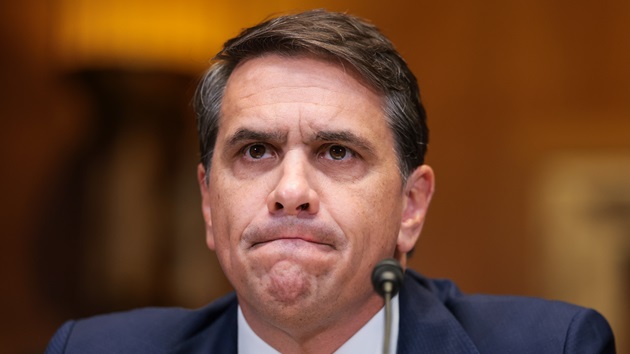
cting U.S. Attorney General Todd Blanche testifies during a Senate Committee on Appropriations, Subcommittee on Commerce, Justice, Science, and Related Agencies hearing in the Dirksen Senate Office Building on Capitol Hill on May 19, 2026 in Washington, DC. (Anna Moneymaker/Getty Images)
(WASHINGTON) — Vice President JD Vance and acting Attorney General Todd Blanche faced questions Tuesday on the $1.776 billion “Anti-Weaponization Fund” to compensate those who allege they were wrongly targeted under the Biden administration.
Both notably declined to rule out potential payouts for individuals who assaulted law enforcement, including the rioters who stormed the U.S. Capitol on Jan. 6, 2021.
Vance insisted that requests would be analyzed on a “case-by-case” basis and that “anybody can apply.”
It has already drawn condemnation from lawmakers on both sides of the aisle amid growing questions over how the funds will be distributed and whether they could be awarded to political backers of the president.
Senate Majority Leader John Thune said Tuesday that he is “not a big fan” of the fund.
“And I am not sure exactly how they intend to use it. But my understanding is that was just announced. I don’t see a purpose for that,” Thune told reporters at the Capitol.
Vance, Blanche pressed on who will be eligible for payouts
ABC News Chief Washington Correspondent Jonathan Karl, during a press briefing on Tuesday, asked Vance about the fund.
“Why should taxpayers be paying to settle a $10 billion lawsuit that was brought by the president of the United States, and should people that attacked the Capitol building and assaulted police officers, should they be eligible, should they receive money? Should they receive money from this fund?” Karl asked.
Vance didn’t directly answer, instead claiming that none of the money would go to Trump personally, his administration or his family, but that “anybody can apply for it.” Vance added that even Hunter Biden, former President Joe Biden’s son, would be eligible to ask for funds.
“I understand that everybody is eligible to apply for this one. I mean, you’re eligible, but I assume you’re not going to apply, and you don’t think you should get money out of this fund. So, isn’t it just as easy to say that people that attacked police officers should not get taxpayer money from this fund?” Karl followed up.
“Well, look, Jon, we’re not trying to give money to anybody who attacked a police officer. We’re trying to give money — not give money — we’re trying to compensate people where the book was thrown at them, they were mistreated by the legal system,” Vance said.
In a hearing on Capitol Hill earlier Tuesday, when pressed whether individuals who assaulted Capitol Police officers would be eligible for payments, Blanche similarly said, “Anybody in this country is eligible to apply if they believe they’re a victim of weaponization.”
Blanche wouldn’t commit to setting a policy that bans funds being distributed to anyone who assaulted police, saying the commissioners overseeing the fund will be tasked with deciding who is eligible.
“But why not this specific issue of violent acts, convicted of violent acts against police officers? Do you feel they should get compensation after being convicted of violent acts?” Democratic Sen. Jeff Merkley asked the acting attorney general.
Blanche was also questioned on whether he would rule out certain individuals from being eligible for payments, specifically Oath Keepers and Proud Boys. The acting attorney general reiterated that anyone can apply.
“The commissioners will set rules, I’m sure. That’s not for me to set, that’s for the commissioners. … And whether an individual Oath Keeper, as you just mentioned, applies for compensation is — anybody in this country can apply,” Blanche said.
Blanche won’t say who will be commissioners, claims there will be ‘full transparency’
The acting attorney general sought to compare it to an Obama-era initiative that set up ways to settle claims brought by Native Americans who had alleged they had been subject to widespread mistreatment by the government
He also argued that the fund won’t solely be used to compensate supporters of the administration.
“It’s not limited to — to Republicans, … it’s not limited to Biden weaponization, it’s not limited to in any way, scope or form to Jan. 6 or to Jack Smith,” Blanche said at a Senate Appropriations subcommittee hearing. “There’s no limitation on the — on the claims.”
Democratic Sen. Chris Van Hollen lambasted Blanche for seeking to compare the $1.776 billion fund to the Obama-era initiative for Native Americans.
Van Hollen noted that specific fund received sign off from a federal judge, whereas Monday’s announcement had no judicial involvement or approval.
Facing questions about who would be eligible for possible payouts, Blanche told lawmakers he will “commit” to “making sure that the commissioners are effectively doing their job.”
Blanche, though, did not name who will be on the five-person commission — nor did he say who he would appoint.
He also said he has “no idea” if Trump will make suggestions.
Blanche also claimed there will be “full transparency” on the fund, but with caveats.
In an exchange with Democratic Sen. Chris Coons, Blanche was questioned over whether disbursements from the $1.776 billion will be subject to public disclosure.
Blanche said he wanted to be “careful” in his answer given privacy laws that might restrict the Justice Department from disclosing certain information, but otherwise said there would be “full transparency” via regularly quarterly reports that will be released by the department regarding the commission’s actions.
“The reason why I want to be careful of my answer is because there’s obviously laws that exist around privacy that would — may prevent some of the information that commission takes in from being fully public,” Blanche said. “Beyond that, there will be full transparency, and I commit to you that beyond the … laws that exist around privacy and privileges and whatnot.”
Female Aedes mosquitoes, including the Asian tiger mosquito (Aedes albopictus) and the yellow fever mosquito (Aedes aegypti), are observed feeding on human blood in Tehatta, West Bengal, India, on May 01, 2026. These mosquitoes are known to transmit diseases such as dengue, chikungunya, Zika, yellow fever, and West Nile virus. Rising temperatures are contributing to their survival. (Photo by Soumyabrata Roy/NurPhoto via Getty Images)
(TEXAS) — Texas health officials on Tuesday confirmed the state’s first human West Nile virus case this year, an indication that mosquito season is beginning in the United States.
Public health officials have been warning that rising temperatures have allowed mosquitoes to thrive, increasing the risk of the diseases that they spread, including West Nile.
Last year, the U.S. reported 2,076 cases of West Nile across 47 states, according to data from the Centers for Disease Control and Prevention. Colorado had the highest number of cases (285), followed by Illinois, Texas, Minnesota and California.
The Texas Department of State Health Services said the patient was a resident of Harris County, which includes Houston, but no other information about the patient was made available.
“West Nile and other mosquito-borne illnesses are a fact of life in Texas in the warmer months, and all Texans should take precautions against mosquito bites to stay safe and healthy,” Texas DSHS Commissioner Dr. Jennifer A. Shuford said in a press release. “By removing standing water around the home, people can eliminate mosquito breeding grounds and reduce insect populations in their area.”
Since 1999, West Nile virus has killed about 2,900 Americans, according to the CDC. Cases are typically reported between June and October, historically peaking in August.
The virus is spread through the bite of an infected mosquito. Risk increases with older age, certain medical conditions — such as cancer, high blood pressure and kidney disease — and a weakened immune system.
Symptoms include fever, headache, body aches, vomiting, diarrhea and a rash. Severe illness can affect the central nervous system and result in hospitalization or death, according to the CDC.
There is currently no vaccine that protects against West Nile virus, and preventing mosquito bites is the best way to protect yourself, the CDC says.
No specific treatments are available. Doctors recommend patients rest, drink fluids and take pain medication to help relieve some symptoms. People with severe illness may need to be hospitalized for supportive treatment, according to the CDC.
The CDC says most people infected with West Nile virus are believed to have lifelong immunity. However, some with weakened immune systems or certain conditions may have their immunity wane over time.
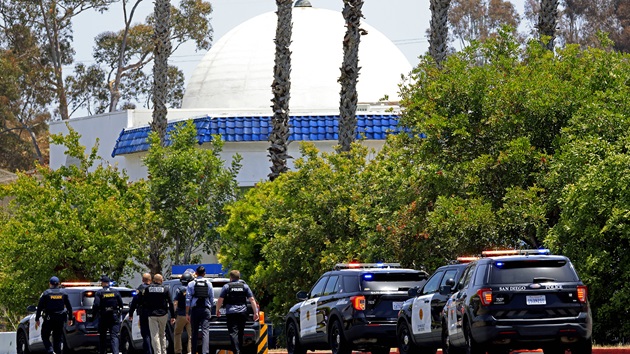
Law enforcement officers surround the Islamic Center of San Diego after reports of a shooting on May 18, 2026 in San Diego, CA. (K.C. Alfred / The San Diego Union-Tribune via Getty Images)
(SAN DIEGO) — Three men, one of whom was a security guard, were killed in a shooting at the Islamic Center of San Diego on Monday, authorities said, with investigators saying they are currently considering the incident as a hate crime.
Two suspects, aged 17 and 18, were reported dead from apparent self-inflicted gunshot wounds, police said.
Authorities are investigating two teenagers, Cain Clark and Caleb Vazquez, as the suspected attackers in the shooting, a number of sources told ABC News.
The shooting was reported shortly before noon Monday, police said.
Police are investigating a potential motive but said the shooting is currently being considered as a hate crime.
“There was definitely hate rhetoric that was involved,” San Diego Police Chief Scott Wahl said during a Monday press briefing.
Anti-Islamic writings were found in the vehicle with the two teens, sources told ABC News.
About two hours before the shooting at the mosque, San Diego police received a call involving one of the suspects, about a runaway juvenile, according to Wahl. The teen’s mother reported that “several of her weapons” and her vehicle were missing, he said. The mother also found a note, Wahl said, the contents of which the police chief did not share.
The mother told police that her son was with another individual and that they were both “dressed in camo,” Wahl said.
Officers were attempting to track down the vehicle and dispatched police to a mall and to a school with which one of the teens was associated, when the shooting at the mosque was reported, he said.
The Islamic Center of San Diego says it is the largest mosque in San Diego County.
“We have never experienced a tragedy like this before,” Taha Hassan, Imam and Director of Islamic Center of San Diego, said of the center at a news conference.
Hassan said he’s sending “prayers and standing in solidarity with all the families in our community here, and also the other mosques, and all the places of worship in our beautiful city.”
“It is extremely outrageous to target a place of worship. Our Islamic center is a place of worship. People come to the Islamic center to pray, to celebrate, to learn, not only Muslims, but we have people from all walks of life,” Hassan added.
“The religious intolerance and the hate, unfortunately, that exists in our nation is unprecedented,” Hassan said.
“We strongly condemn this horrifying act of violence,” Tazheen Nizam, the executive director of the San Diego chapter of the Council on American-Islamic Relations, said in a statement. “Our thoughts are with everyone impacted by this attack. No one should ever fear for their safety while attending prayers or studying at an elementary school.”
San Diego Mayor Todd Gloria told ABC News that “we immediately have increased patrols around religious sites, both our Muslim, Jewish and other faith communities across the city. And I imagine we’ll maintain that posture for some time.”
“[I] believe that once the investigation is complete that that security guard will be credited with a tremendous saving of many, many lives, including many children, an absolute hero who sadly lost his life, but for whom we’re all grateful,” Gloria said.
“Hate has no home in San Diego. Islamophobia has no home in San Diego,” the mayor said during a press conference.
ABC News’ Meg Christie, Luke Barr, Mike Levine and Alex Stone contributed to this report.