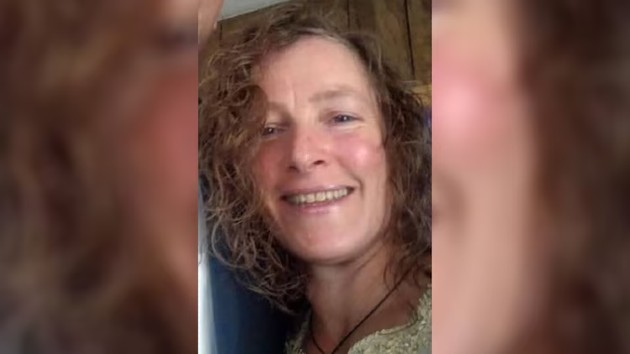
(WELCHES, Ore.) — A search continued Tuesday for a missing hiker and her two large Malinois-mix dogs believed to be in the Green Canyon Way Trail area of Welches in Oregon, according to officials.
Susan Lane-Fournier, 61, was reported missing after failing to show up at work, according to the Clackamas County Sheriff’s Office.
Searchers looked for Lane-Fournier on Monday in the Salmon-Huckleberry Wilderness, covering over 100 miles of trail.
Deputies did not find Lane-Fournier at her residence after she was reported missing by her employer. A community member saw her white 1992 Ford F-250 parked along a road near the trail a day later.
Lane-Fournier, who also goes by the name “Phoenix,” is 5-foot-2-inch, weighs 150 pounds, and has reddish-brown hair.
“Although she is familiar with the area, it is not known if Ms. Lane-Fournier was prepared to stay out overnight. Temperatures in the area have dropped into the 30s with light rain,” the sheriff’s office said in a statement.
Anyone who has seen Lane-Fournier or her dogs is asked to contact the sheriff’s office.
(NEW YORK) — In a letter to shareholders, Warren Buffett revealed that he would be donating more than $1.1 billion of Berkshire Hathaway stock to four of his family’s foundations. In addition, he detailed plans for distributing his wealth after his death.
Buffett, the CEO and Chairman of Berkshire Hathaway, reflected in the letter released Monday on his life and how long he has lived.
“Father time always wins. But he can be fickle – indeed unfair and even cruel – sometimes ending life at birth or soon thereafter while, at other times, waiting a century or so before paying a visit,” Buffett said. “To date, I’ve been very lucky, but, before long, he will get around to me.”
Buffet, 94, said he and his late wife, Susan Buffett, always expected she would outlive him and be the one to distribute his fortune.
But when Susan died in 2004, with a fortune of $3 billion and 96% of that going to the foundation, she left $10 million to each of their three children.
That was the largest gift they had given them, Buffet said.
Buffett believes that parents should support their children but do so in a meaningful way.
“Our belief that hugely wealthy parents should leave their children enough so they can do anything but not enough that they can do nothing,” Buffett wrote in his letter to shareholders.
Buffett explains that he “never wished to create a dynasty or pursue any plan that extended beyond the children.” He also admits that while he and Susan encouraged the children to get involved in philanthropy, that the children weren’t ready to handle the wealth Berkshire stocks had generated in light of their mother’s death.
Since the 2006 lifetime pledge Buffett made and later expanded, the children have dramatically increased their philanthropic activities, Buffet said. And now Buffett is entrusting them fully.
“The children have now more than justified our hopes and, upon my death, will have full responsibility for gradually distributing all of my Berkshire holdings,” Buffet said. “These now account for 99 1⁄2% of my wealth.”
Buffett has described his wealth and age as “lucky” but he also sees a downside to it, he said.
“There is, however, a downside to my good fortune in avoiding his notice. The expected life span of my children has materially diminished since the 2006 pledge. They are now 71, 69 and 66.”
With his children getting older, the family has also designated three potential successors, Buffett said.
“Each is well known to my children and makes sense to all of us. They are also somewhat younger than my children,” Buffett said.
Buffett also reflects on his “lucky streak” dating back to 1930 when he was born as white male in the United States. He mentions his two sisters being promised by the 19th Amendment to be treated equally with males. And he admits to growing in a country that has not yet fulfilled its promises elsewhere.
“In 1930, however, I emerged in a country that hadn’t yet gotten around to fulfilling its earlier aspirations,” Buffett said. “Aided by Billie Jean King, Sandra Day O’Connor, Ruth Bader Ginsberg, and countless others, things began changing in the 1970s.”
Favored by male status, Buffet said he had confidence he would become rich one day. But he never expected it to be the way it is, he said.
“But in no way did I, or anyone else, dream of the fortunes that have become attainable in America during the last few decades,” Buffett said. “Billions became the new millions.”
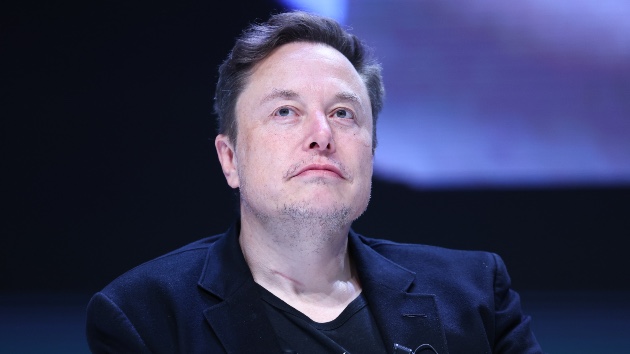
(NEW YORK) — Tech billionaire Elon Musk, who has vowed to dismantle thousands of federal regulations as the co-head of a new Department of Government Efficiency, or DOGE, says the nation’s financial security depends on it.
The U.S. risks “strangulation by regulation” as it hurtles toward “bankruptcy super fast,” Musk said in a pair of posts on X this month.
Musk’s general concern about the nation’s multi-trillion dollar debt reflects worry among many economists, and his slash-and-burn rhetoric mirrors that of close ally President-elect Donald Trump.
The ambitious cuts championed by Musk, however, could imperil an array of federal protections that safeguard against harm in just about every corner of American life, regulatory experts told ABC News.
Regulations ensure air and water remain free of toxic pollution, workers receive safety gear and overtime pay, drugs undergo rigorous testing and corporations steer clear of ripping off customers.
“Revoking regulations or refusing to endorse them will endanger people’s lives,” Michael Gerrard, a law professor at Columbia University who specializes in environmental regulation, told ABC News. “I’m very worried.”
In response to ABC News’ request for comment, the Trump transition team touted the involvement of Musk and his plans for streamlining U.S. government.
“Elon Musk and President Trump are great friends and brilliant leaders working together to Make America Great Again. Elon Musk is a once in a generation business leader and our federal bureaucracy will certainly benefit from his ideas and efficiency,” Brian Hughes, a transition spokesperson, told ABC News.
DOGE, the commission co-led by Musk and entrepreneur Vivek Ramaswamy, plans to recommend a “vast reduction” of federal regulations, the two leaders said in a joint op-ed in The Wall Street Journal last week.
Such regulatory cuts would diminish the workload of government agencies, allowing for a significant reduction of federal workers and department budgets, the DOGE leaders said. They recommended a mandate that all federal workers come to the office five days a week, which they claimed would trigger a wave of resignations.
“Now is the moment for decisive action,” Musk and Ramaswamy said, but the pair did not identify specific regulations that they would like to cut.
Musk did not immediately respond to ABC News’ request for comment. Neither did Ramaswamy.
The promise of regulatory cuts may prove more compelling as a declaration of war against the status quo than a nitty-gritty elimination of individual rules, experts said. They pointed to significant legal hurdles faced in unwinding government regulations, as well as the lack of direct authority available to DOGE, a non-governmental entity.
Plus, the experts added, many government regulations involve direct protections of importance to a swath of Americans.
Some experts pointed for instance to an air-quality standard put in place by the Biden administration in February. The regulation lowered the amount of particulate matter air pollution — commonly known as soot — allowable in the nation’s air.
The rule would prevent as many as 4,500 premature deaths and 800,000 cases of asthma symptoms, an Environmental Protection Agency study found. Those health benefits could translate into as much as $46 billion in savings by 2032, the agency said.
The Trump administration may seek to undo the rule as part of wider regulatory cuts, Gerrard said. On the campaign trail, Trump vowed to cut environmental regulations in an effort to ease the burden on businesses, but he did not mention this specific rule. Trump rolled back nearly 100 environmental regulations during his first term, including rules governing clean air, a New York Times analysis found.
Darren Riley, co-founder of an air-quality data startup called JustAir, who was diagnosed with asthma six years ago, said air safety should transcend party politics.
“We should take whatever precautions and procedures necessary to protect the air we breathe and the water we drink as a right to life,” Riley told ABC News.
Workplace safety marks another focus of federal regulation that could draw scrutiny from the Trump administration.
In July, the Biden administration formally proposed a heat-safety rule that would require workplaces with elevated heat risks to provide adequate water, rest breaks and control of indoor temperature.
Shae Parker suffered from dizziness and nausea during bouts of heat exhaustion while working this summer at a Speedway gas station in Columbia, South Carolina, she told ABC News. One year prior, record heat in the area caused similar symptoms during Parker’s shifts at Waffle House, but management failed to provide adequate air conditioning, she said.
Parker has traveled to Washington, D.C., to advocate for the heat safety rule, and she worries that the Trump administration may set aside the regulation.
“Trump really needs to set the heat standard, and if he doesn’t, it’s like he doesn’t care about the country,” Parker said. “He needs to take our lives seriously.”
Waffle House did not immediately respond to ABC News’ request for comment. Neither did 7-11, the parent company of Speedway.
Over three decades ending in the early 2020s, nearly 1,000 workers in the U.S. died from excessive heat exposure, amounting to about 34 deaths per year, an EPA study in June found.
The proposed regulation is in the midst of a public comment period as part of the rule-making process. That phase ends in December, leaving little time for finalization and implementation of the measure before Trump takes office. The Trump administration may very well abandon the rule, experts told ABC News.
“Workers will be on their own when it comes to heat,” Debbie Berkowitz, a former official in the U.S. Occupational Safety and Health Administration under then-President Barack Obama, told ABC News.
For his part, Musk previously said DOGE would incorporate feedback from everyday people about which regulations it would recommend cutting. “Anytime the public thinks we are cutting something important or not cutting something wasteful, just let us know!” Musk said in a post on X earlier this month.
Musk has also said that the nation’s worsening debt will force an increased portion of U.S. tax payments to go to interest payments on such borrowing, rather than to government services.
William Buzbee, a professor of administrative law at Georgetown University who focuses on environmental regulation, said the outcome of Musk’s efforts remains highly unclear. But he will likely face legal pushback as well as backlash from people who would be impacted by the potential rollback of a given regulation.
“The bottom line is, yes, the Trump administration is quite clearly planning to go in a deregulatory direction,” Buzbee said. “It won’t be easy.”
(NEW YORK) — When the weather turns cold, meteorologists and climate scientists almost always get a variation of the same question, “If we had global warming, I don’t think I’d have a jacket on.”
That’s because climate and weather are two terms that go hand in hand but are not the same thing.
ABC News Chief Meteorologist and Chief Climate Correspondent Managing Editor of the ABC News Climate Unit Ginger Zee has heard questions like this for years.
“How can we have sweatshirt weather, or even the first snow, when the whole globe is getting warmer and warmer?”
It’s the same for Marshall Shepherd, director of the Atmospheric Sciences Program at the University of Georgia and former president of the American Meteorological Society, who will get questions like, “What are you all talking about — that the climate is changing? It’s snowing right now!”
Weather is the temperature and conditions on one particular day, Zee said — the short-term state of the atmosphere and what it brings.
“If you walk outside and almost every day it’s hot, or almost every day it’s dry, that’s called climate,” Zee said.
People also often refer to climate as “average weather,” which is another misnomer, Shepherd said.
“That’s actually not correct,” he said. “Climate is really more the full statistics of weather, not just average. It’s the highs and lows. It’s frequency. It’s max and min. It’s a lot of things.”
The seasons are governed by the Earth’s tilted axis and its path of orbit around the sun, Shepherd said. The tilted axis means there are times when some parts of the planet are getting less energy from the sun — the main distinction between summer and winter.
Just because the climate is warming overall doesn’t mean there won’t be big swings in either direction, including cold fronts and snow storms in typically warm places or drought conditions in typically wet places and torrential downpours in normally dry climates, the experts said.
“As the globe warms, we are going to have cold and, of course, snow,” Zee said. “Because if that all abruptly stopped, it would be really scary.”
Scientists love their metaphors, especially when it comes to comparing the two terms.
Weather is your mood, and climate is your personality, according to Shepherd and Zee.
Weather and climate can be looked at as the dog and the dog walker, Yarrow Axford, a professor in geological sciences at Northwestern University, told ABC News. The dog can sniff around and tug at its leash, but the dog walker is the one setting the pace and direction.
But that old adage often no longer applies because the climate is changing so quickly, Axford said.
On a long-term scale, the number of overall cold events is declining. The likelihood of extremely cold days has decreased due to human-caused global warming, a 2016 paper published in The National Academies of Sciences, Engineering, and Medicine authored by Shepherd found. The same paper also found an increase in the number of extremely hot days.
The lack of cold events could cause people to pay more attention when they happen, the experts said.
Geography also makes a difference, Zee said. When scientists say the climate is warming, they mean for the entire planet — not in a particular city, state or county, Zee said.
“The point is that climate — all weather days all over the world — on average, is getting warmer,” Zee said.
Shepherd continued, “We’ve got to really expand the average person’s understanding of what climate actually is.”
(DENVER) — Incoming border czar Tom Homan says he’s willing to throw Denver Mayor Mike Johnston in jail over his protests about mass deportation.
“But look, me and the Denver mayor, we agree on one thing — he’s willing to go to jail, I’m willing to put him in jail because there there’s a statute. It’s Title 8 United States Code 1324 (iii). And what it says is it’s a felony if you knowingly harbor and conceal an illegal alien from immigration authorities. It’s also a felony to impede a federal law enforcement officer,” Homan told Hannity during an interview on Fox News last night.
Homan’s comments come after Mayor Johnston said he was willing to go to jail to stop possible mass deportation efforts under the incoming Trump administration.
“I’m not afraid of that and I’m also not seeking that,” he said during an interview with a local NBC affiliate.
Johnston did walk back comments he made about stationing police officers at the county line to stop federal forces from coming in to deport undocumented immigrants. In an interview with local news outlet Denverite he likened those efforts to the 1989 Tiananmen Square protests in China.
Homan and Texas Gov. Greg Abbott, who were both interviewed by Hannity on Monday night, said they plan to make two stops along the border to feed National Guard troops and DPS troopers who have been vital to Texas’ mission to stop immigrants from coming to the border.
(NEW YORK) — Snow and rain are in the forecast for some parts of the U.S. as travelers hit the road and head to the airport for Thanksgiving.
Here’s your weather forecast for the holiday week:
Tuesday
Rain is sweeping across the East Coast from New York to Alabama on Tuesday morning.
There’s a slight chance for freezing rain in southern Vermont and the southern Adirondack Mountains in upstate New York before it warms enough to change to rain mid-day.
The rain will end in New York City and the Mid-Atlantic by mid-afternoon. Boston will be dry by 7 p.m.
In the West, 3 to 6 inches of rain is possible for the foothills of the southern Sierra Nevada mountain range through Tuesday morning.
Heavy rain is also hitting California’s San Joaquin Valley.
Snow is falling at higher elevations from California to Colorado, with winter storm warnings in effect.
California’s snow will end Tuesday night; totals could reach 3 to 5 feet in the southern Sierra Nevada mountains.
Treacherous travel is expected in Colorado’s Rocky Mountains as snowfall there continues through Wednesday. Up to 3 feet of snow is possible and avalanche warnings are in place.
Wednesday
The East Coast and West Coast will be dry on Wednesday, setting up a good holiday travel day for both coasts.
Interstate 70 will be the hardest-hit by rough weather, with snow in the Colorado Rockies and rain in Kansas, Missouri, Illinois, Indiana, Tennessee, Kentucky and Ohio.
In the South, temperatures will be well above average, with highs in the 70s and 80s. Houston may reach a record high for the second time this week.
Thanksgiving
Spectators heading to the Macy’s Thanksgiving Day parade in New York City should bring umbrellas and raincoats, as the parade will be rainy with temperatures in the 40s. The breeze could reach 10 to 15 mph.
Rain will be falling across most of the East Coast Thursday morning, while snow hits northern Pennsylvania and upstate New York.
Much of the Interstate 95 corridor will be soggy throughout the day, especially north of Philadelphia where the rain will continue through the afternoon.
Meanwhile, temperatures will reach the 70s in Arizona and the 80s in Florida. But highs will only be in the 30s and 40s in the Midwest.
Friday
On Friday, snow will be falling from West Virginia to Pennsylvania to western New York.
Rain will move through north and central Florida, but it won’t reach Miami until Saturday morning.
Low temperatures may plunge to the single digits in Minneapolis for the first time this season Friday or Saturday morning.
High temperatures will only reach near freezing in Cincinnati, Ohio, and Omaha, Nebraska. The highs will only be in the 20s in Chicago.
(LONDON) — Israeli Prime Minister Benjamin Netanyahu will convene his security cabinet on Tuesday and hold a vote on a cease-fire deal that could end more than a year of fighting across the Israeli-Lebanese border, an Israeli official told ABC News. The cabinet is expected to approve the U.S.-brokered deal.
Israeli airstrikes and Hezbollah launches continued regardless. Airstrikes again rocked the southern Beirut suburb of Dahiya on Tuesday, with the Israel Defense Forces reporting “large scale” attacks on the area shortly after issuing multiple evacuation orders. Another IDF strike hit a building in the central Basta neighborhood, which was also subject to an massive airstrike on Saturday.
The IDF reported at least 250 projectiles fired into Israel on Monday, with Hezbollah claiming multiple cross-border attacks on Israeli targets on Tuesday morning.
An Israeli source with knowledge of the deal’s details told ABC News that the 60-day cease-fire would see all Israeli forces withdraw from Lebanon in phases, with Hezbollah retreating beyond the Litani River around 18 miles north of the Israeli border.
Lebanese Armed Forces troops — with assistance from the United Nations Interim Force in Lebanon — will deploy to the south of the country to ensure that Hezbollah does not re-enter the area between the Israeli border and the Litani, the source said.
The U.S. will provide oversight on Hezbollah’s withdrawal and will also head a committee — joined by French and Arab partners — to monitor and verify the implementation of the cease-fire, the Israeli source added.
The cease-fire would be expected to come into force shortly after the agreement is announced — as early as Wednesday morning. The two Israeli sources involved in the talks who spoke with ABC News said the proposal has near-unanimous agreement from the security cabinet, though far-right National Security Minister Itamar Ben-Gvir is expected to vote against it. His opposition will not torpedo the deal.
A parallel U.S.-Israeli agreement, though, suggests that any deal will not necessarily mean an end to all fighting.
The Israeli source with knowledge of the deal said the U.S. has pledged support for Israel’s right to strike anywhere in Lebanon against “critical” or “immediate” threats from Hezbollah or other militant groups.
Still, the possible cease-fire deal would be a major diplomatic achievement after nearly 14 months of war and almost 4,000 total deaths — the vast majority Lebanese — on both sides of the shared border.
Tens of thousands of Israelis have fled their homes in the north of the country, while a quarter of Lebanon’s population — around 1.2 million people — have been put under IDF evacuation orders.
U.S. officials have hinted at progress but refused to confirm details of any deal.
State Department spokesperson Matthew Miller told journalists at a Monday briefing that the outcome of the talks is “up to the parties, not to us.”
“We don’t believe we have an agreement yet,” Miller said. “We believe we’re close to an agreement. We believe that we have narrowed the gap significantly, but there are still steps that we need to see taken, but we hope — we hope that we can get there.”
White House National Security spokesperson John Kirby was similarly cautious. “We believe that the trajectory of this is going in a very positive direction,” he told reporters Monday.
“But again, nothing is done until everything is done. Nothing’s all negotiated till everything is negotiated. And you know, we need to keep at the work to see it through so that we can actually get the ceasefire for which we’ve been working for for so long and so hard.”
ABC News’ Jordana Miller, Joe Simonetti, Ghazi Balkiz, Joe Simonetti, Chris Boccia and Cheyenne Haslett contributed to this report.
(CAIRO) — Three additional people — two Belgian nationals and an Egyptian — were rescued after a tourist boat sank Monday off the Egyptian coast, bringing the total number of survivors to 31, Amr Hanafy, the regional governor, said on Tuesday.
Four bodies, whose identities were not publicly released, were also recovered from the sea, he added.
The Sea Story sank off the southeastern Egyptian town of Marsa Alam, near the Shaab Satayah area, which is popular for its coral reefs, the Red Sea Governorate said. Forty-four people were onboard when it sank, officials said.
Rescue teams were still searching for nine missing people, Hanafy said Tuesday. Those missing include two British nationals, a diplomatic source who requested anonymity told ABC News on Tuesday.
Egyptian authorities were working with embassies and consulates to provide necessary assistance and documentation, according to a statement from the governorate. The U.S. Embassy in Cairo told ABC News it was not aware of any U.S. citizen fatalities in the incident.
Hanafi said strong waves caused the boat to capsize and sink within minutes. He said the 34-meter boat, privately owned by an Egyptian national, had no technical issues and had passed its last safety inspection in March.
The Sea Story set sail from the port of Ghalib in Marsa Alam on Sunday for a diving trip and was scheduled to arrive at Hurghada Marina on Friday. A crew member sent a distress signal at 5.30 a.m. on Monday before the ship dropped off the radar, officials said.
Egypt’s Red Sea resorts are popular with tourists for their beaches and diving spots.
ABC News’ Joe Simonetti contributed to this report.
(BETHESDA, MD) — An FBI special agent has been arrested in Montgomery County, Maryland, and stands accused of sexually assaulting two women, according to police.
Special Agent Eduardo Valdivia, 40, is charged with 10 counts, including two counts of second-degree rape.
According to court records, the alleged attacks took place in May 2024 and September 2024.
Valdivia is in custody in the Montgomery County Correctional Facility and is scheduled to appear for a bond hearing in district court on Tuesday.
“The FBI takes allegations of criminal violations and misconduct very seriously. We are aware of the matter involving the recent arrest of an FBI employee and are fully cooperating with the Montgomery County Police Department,” the FBI’s Washington Field Office said in a statement to ABC News.
“Regarding the employment of Eduardo Valdivia, he is currently suspended pending the conclusion of the Montgomery County Police Department investigation,” the statement said.
Valdivia was previously charged with attempted murder in a 2020 off-duty shooting after a verbal exchange on a Metro train car. The incident was captured by security cameras.
A jury in Montgomery County found Valdivia not guilty in that case after a trial in 2022.
(WASHINGTON) — President-elect Donald Trump is making good on his tariff promises, saying Monday he plans to impose them on Mexico, Canada and China in an effort to stop the flow of drugs entering the country and illegal border crossings.
Trump posted on his Truth Social platform that one of the first executive orders he will sign when he takes office on Jan. 20, 2025, will be to charge Mexico and Canada with a 25% tariff on all products coming into the United States.
“This Tariff will remain in effect until such time as Drugs, in particular Fentanyl, and all Illegal Aliens stop this Invasion of our Country! Both Mexico and Canada have the absolute right and power to easily solve this long simmering problem. We hereby demand that they use this power, and until such time that they do, it is time for them to pay a very big price.” Trump posted.
Canada’s deputy prime minister, Chrystia Freeland, and public safety minister, Dominic LeBlanc, released a joint statement on the proposed tariffs Monday, saying, “Canada and the United States have one of the strongest and closest relationships – particularly when it comes to trade and border security. Canada places the highest priority on border security and the integrity of our shared border.”
The officials noted that Canada buys more from the U.S than China, Japan, France and the U.K. combined.
“Canada is essential to US domestic energy supply, and last year 60 percent of US crude oil imports originated in Canada,” Freeland and LeBlanc said in the statement on X.
In another post, Trump said that he will be charging China with an additional 10% tariff on top of any additional tariffs on products coming into the U.S., arguing the country wasn’t doing enough to stop the flow of illicit drugs.
“Representatives of China told me that they would institute their maximum penalty, that of death, for any drug dealers caught doing this but, unfortunately, they never followed through, and drugs are pouring into our Country, mostly through Mexico, at levels never seen before,” Trump claimed.
During the presidential campaign, Trump proposed tariffs of between 60% and 100% on Chinese goods, and a tax of between 10% and 20% on every product imported from all U.S. trading partners.
The day before the election, Trump told a rally in Pittsburgh, “I’m putting tariffs on Mexico. Every damn thing that they sell into the United States has got to have like a 25% tariff until they stop drugs from coming in.”
Economists widely forecast that tariffs of this magnitude would increase prices paid by U.S. shoppers, since importers typically pass along a share of the cost of those higher taxes to consumers.
Trump’s tariffs would cost the average U.S. household about $2,600 per year, according to an estimate from the Peterson Institute for International Economics.
Raymond Robertson, professor for trade, economics and public policy at Texas A&M University, told ABC News Trump’s plan will not be as effective because countries know what’s coming.
“This is more likely a play designed to put pressure on our closest trading partners,” Robertson said. “But this is the same playbook done the second time around. If you’re on the football field and you call the same play twice, it’s not going to be as effective the second time.”
Robertson added that countries know this would be “disruptive” and a “disaster,” but they’ve “seen how this game works.” Robertson says our trading partners could seek closer ties to Europe and other countries and rely less on the U.S., “which means higher prices for us.”
-ABC News’ Max Zahn and Selina Wang contributed to this report.