
Daniel Penny’s subway chokehold trial: The key takeaways

Daniel Penny’s subway chokehold trial: The key takeaways
Michael M. Santiago/Getty Images

(NEW YORK) — The prosecution and defense are preparing for Monday’s closing arguments in the Daniel Penny trial as it comes to a close after a break for the Thanksgiving holiday.

Penny put Jordan Neely, 30, a homeless man, in a fatal 6 minute-long chokehold after Neely boarded a subway car acting erratically.

Penny, 25, is charged with manslaughter and negligent homicide in the May 2023 choking death of Neely on the New York City subway. He pleaded not guilty.

Here are the key takeaways from the trial so far:

The prosecution’s argument

Prosecutors argue that Penny, a former Marine trained in martial arts, should have known that his chokehold maneuver was turning fatal, arguing that Penny held onto Neely “for far too long” — more than 5 minutes after the train pulled into the station and passengers were able to exit.

Neely entered a moderately crowded subway car on an uptown F train at the Second Avenue stop and began yelling and moving erratically, when Penny put Neely in a chokehold. Thirty seconds later, the train arrived at the next station and essentially all the passengers left the train car.

Footage of the interaction between Penny and Neely, which began about 2 minutes after the incident started, captures Penny holding Neely for about 4 minutes and 57 seconds on a relatively empty train with a couple of passengers nearby.

“He was aware of the risk his actions would kill Mr. Neely and did it anyway,” Assistant District Attorney Dafna Yoran said in her opening statements. “Jordan Neely took his last breaths on the dirty floor of an uptown F train.”

Prosecutors further argued that while Penny may be an “honorable veteran” and “nice young man,” he used too much force for too long and was reckless with Neely’s life because “he didn’t recognize his humanity.”

She later continued, “Under the law, deadly physical force such as a chokehold is permitted only when it is absolutely necessary and for only as long as is absolutely necessary. And here, the defendant went way too far.”

The second-degree manslaughter charge only requires prosecutors to prove Penny acted recklessly, not intentionally, according to prosecutors.

The defense’s argument

Defense attorney Thomas Kenniff countered that Penny sought to protect passengers, claiming he was responding to Neely’s “unhinged rage.”

“This is a case about a young man who did for others what we would want someone to do for us,” Kenniff said. “It doesn’t make him a hero, but it doesn’t make him a killer.”

Penny claims to have heard Neely say “I will kill,” said Kenniff, who has said there was no opportunity for his client to de-escalate or stop Neely from the harm he was threatening.

Borrowing from “a bit” of martial arts training he received in the Marine Corps, Penny put Neely into a chokehold without intending to kill him, the defense said, but to hold him until police arrived.

“His conduct was consistent with someone who values human life and that’s why he was trying to protect it so fiercely,” the defense attorney said.

Kenniff insisted his client “does not want to use any more force than is necessary,” but Neely “aggressively resisted” while in Penny’s grip. He said Penny thought Neely, who police say was unarmed, might have a weapon as he waited for police.

Daniel Penny’s interview with police

Jurors saw body camera video that had not yet been publicly released of Penny’s initial encounter with police, more than 4 minutes after he let go of Neely.

On the first day of the trial, the jury saw the officer’s body-worn camera footage that captured the attempts to save Neely and showed his lifeless body on the subway floor.

When searched for weapons, the only thing officers found in Neely’s pockets was a muffin. Nothing else was found in the jacket, Officer Teodoro Tejada confirmed.

Penny is heard saying, “I put him out,” when the officer asked what happened. To prosecutors, the footage — which had not been seen publicly until the trial — is evidence Penny disregarded Neely’s basic humanity.

The defense used Tejada’s testimony to suggest to the jury Penny did not behave like a criminal by fleeing the scene.

“Did he appear cooperative?” the lawyer asked.

“Yes,” the officer replied.

“It didn’t appear that he had anything to hide?” Kenniff asked.

“No,” Tejada said.

Video of Jordan Neely’s subway chokehold death

In a video taken by then-17-year-old high school student bystander Ivette Rosario, a witness can be heard calling out to Penny, “He’s dying…you need to let him go.” Others are heard yelling on the clip to “get the cops!”

Rosario testified that she did not hear anyone say that Neely is “dying” at the time and it’s not clear whether Penny heard it either.

Man who helped restrain Neely testifies
A Bronx man who helped Penny restrain Neely ”jumped in and tried to help” so Penny could release his chokehold, according to the man’s testimony.

Eric Gonzalez, who is seen in video footage holding Neely by the wrist, boarded the subway and noticed Penny holding down Neely “with his legs around his waist and his arm around his neck.” Gonzalez testified he did not know why Penny was restraining Neely but he heard people yelling to call for the police.

Gonzalez said he waved his hands in front of Penny’s face to get his attention.

“I said, ‘I will grab his hands so you can let go,’” Gonzalez told the jury. “Just giving him a different option to hold his arm — well, to restrain him until the police came.”

Prosecutors asked Gonzalez to clarify: “If I held his arm down, he could let go of his neck,” he said.

Gonzalez said he watched Neely’s body go limp and let go of him before Penny did the same.

“I tried to shake Jordan Neely to get a response out of him, feel for a pulse, and then I walked away,” Gonzalez said.

Conflicting testimony about the cause of death

Dr. Cynthia Harris of the city’s Chief Medical Examiner’s Office conducted Neely’s autopsy in 2023 and ruled Neely’s death a homicide, with the cause of death as “Compression of neck (chokehold).”

She testified at the trial that “the consensus was unanimous” in the medical examiner’s office that Neely had died from the chokehold, according to Associated Press reporting: “There are no alternative reasonable explanations,” she said.

Forensic pathologist Satish Chundru disputed that determination in his testimony in defense of Penny, according to the AP, arguing that Neely died from “combined effects” of his schizophrenia, synthetic marijuana, a blood condition and his efforts to struggle against Penny.

“In your opinion, did Mr. Penny choke Mr. Neely to death?” defense lawyer Steven Raiser asked, according to AP.

“No,” replied Chundru.

Prosecutors argued that Chundru’s testimony departed from medical literature and his own opinion in similar cases, but Chundru testified that the cases were not comparable to this one, according to the AP.

Marine Corps instructor who trained Penny testifies

According to the AP, Joseph Caballer, the combat instructor who trained Penny, said that Penny was taught how to knock a person unconscious — but that the technique could kill someone if held too long. He argued that someone performing the technique is supposed to let go when the person is rendered unconscious, and testified that Penny used the chokehold in an “improper” manner when asked by prosecutors.

However, the defense claims Penny did not use a strong enough hold to kill Penny, the AP reports.

Copyright © 2024, ABC Audio. All rights reserved.

Harris, Walz join campaign finance calls, declare the ‘fight’s not over’

Harris, Walz join campaign finance calls, declare the ‘fight’s not over’
Michael M. Santiago/Getty Images

(WASHINGTON) — Vice President Kamala Harris on Tuesday thanked supporters during a virtual call and vowed that the “fight’s not over” in her first remarks since conceding defeat to President-elect Donald Trump three weeks ago.

“The fight that fueled our campaign, a fight for freedom and opportunity, that did not end on Nov. 5. A fight for the dignity of all people? That did not end on Nov. 5,” Harris said. “A fight for the future, a future in which all people receive the promise of America? No. A fight that is about a fight for the ideals of our nation, the ideals that reflect the promise of America? That fight’s not over.”

“That fight’s still in us, and it burns strong,” Harris later added. “And I know this is an uncertain time. I’m clear-eyed about that. I know you’re clear-eyed about it, and it feels heavy. And I just have to remind you: Don’t you ever let anybody take your power from you. You have the same power that you did before Nov. 5 and you have the same purpose that you did and you have the same ability to engage and inspire. So don’t ever let anybody or any circumstance take your power from you.”

The grassroots call came immediately after Harris held a call with her campaign’s finance committee. The finance call was attended by more than 400 donors, according to a source familiar.

On the grassroots call, Harris also briefly discussed the historic sum of money that ran her campaign, though she did not address what went wrong as she and her campaign face intense scrutiny over how they could raise that money and lose to Trump so resolutely.

​​”The outcome of this election, obviously, is not what we wanted. It is not what we work so hard for,” Harris said. “But I am proud of the race we ran. And your role in this was critical. What we did in 107 days was unprecedented.”

Harris said that over the course of those 100-plus days, her campaign raised $1.4 billion, much of which was from grassroot donors: “Nearly 8 million donors contributed an average donation of about $56.”

“You gave all that you could to support our campaign. Because of your efforts — get this — we raised an historic $1.4 billion, almost $1.5 billion from grassroots supporters alone, the most in presidential campaign history,” she said.

“Being involved can make a difference, and that remains true. And that’s one of the pieces that I just want us to please take away — that our fight for freedom and for opportunity and for the promise of America, it included, for example, nearly almost 4 million first-time contributors to our campaign because of the work you did, of helping people know that they can be engaged and that they’re not outside, that they’re inside, that we’re all in this together,” she added.

Harris was joined by her former running mate, Minnesota Gov. Tim Walz, on both calls — a rare appearance from the two, though Harris joined the call from San Francisco and Walz from Minnesota.

Walz on the grassroot donor call also spoke to supporters’ feeling of loss following the election and repeated Harris’ claims that she is not finished with fighting.

“I think all of us saw the possibility, and I know there’s a bit of a feeling of loss because we saw what a real leader looks like,” Walz said.

“She did deliver the best of our better angels,” he added. “She delivered a vision where all of us mattered. She did it with grace and dignity and continues to do that every single day. She is still in this fight. She is doing it every single day. She is not done with her current job. She’s not done being part of it with all of you.”

Harris’ and Walz’s remarks follow some postelection analysis from Harris campaign senior officials during an episode of “Pod Save America” that aired on Tuesday, including some reaction to finances.

Harris campaign Chairwoman Jennifer O’Malley Dillon said that during the cycle, the bulk of the campaign’s spending was used to reach out to “very-hard-to-find voters,” including low-propensity and young voters, while investing across all swing states because polling reflected that each was in play.

“We were trying to, yes, spend more resources on digital … because we’re trying to find young people, we’re trying to find these lower-propensity voters that were tuned out to politics,” O’Malley Dillon said.

“We had some unique things that we had to do in this race that I think were really critical to do early and spent a lot of resources at an earlier stage than we would have to,” she added, noting those resources were spent on both advertising and field programming. “We saw, up until the very end, that … every single state was in such a margin of error. There was nothing that told us we couldn’t play in one of these states.”

During the podcast, O’Malley Dillon and senior campaign adviser David Plouffe accused the Trump campaign of coordinating with its super PACs, a practice that is not legal, but noted the Democrats need to take note and do the same.

“We have to stop playing a different game as it relates to super PACs and the Republicans. Love our Democratic lawyers. I’m tired of it, OK? They coordinate more than we do. I think amongst themselves, I think with the presidential campaign, like I’m just sick and tired, OK? So, we cannot be at a disadvantage,” Plouffe said.

“I think our side was completely mismatched when it came to the ecosystem of Trump and his super PACs and ours,” O’Malley Dillon said.

“We had a super PAC that was helpful, very important and necessary for the work that they did because they were the kind of central recipients of a lot of the funding on our side and they staked a strategy and a plan, and we clearly could see it, and we knew what it was [going] to spend, but we did not have the ability to have people come in with us early. And so every ounce of advertising, every ounce of carrying these strategic imperatives, of defining the vice president and trying to bring down Trump’s numbers, all sat with us as a campaign,” O’Malley Dillon added.

Harris has rarely been seen since she delivered her concession speech at Howard University the day after the election. She attended the Veterans Day ceremony at Arlington National Cemetery a week later and was seen making her first return to the White House a day after that. The vice president also spent the last week on vacation in Hawaii.

Walz, in the month since the election, has remained almost entirely out of the national spotlight, resuming his duties as the governor of Minnesota.

He delivered his final speech of the 2024 campaign cycle on Nov. 8 from suburban Minneapolis, joining a chorus of fellow Democratic governors who said they would protect their states from threats to reproductive freedoms, citizenship and other things under the Trump administration. The former vice presidential nominee also said he’d work to find common ground with swaths of people who voted “for the other side” on Nov. 5.

Harris and Walz remained mostly separate on the campaign trail in the roughly 15 weeks she had him as her running mate. The governor was present at Harris’ concession speech at Howard University the night after the election but did not speak or publicly interact with her. Before that, the two held a joint rally on Oct. 28 in Ann Arbor, Michigan, their first event together since late August, when they were seen together in Savannah, Georgia, on a bus tour.

Prior to that, their last time at a rally together was in Milwaukee for programming linked to the Democratic National Convention in August.

Copyright © 2024, ABC Audio. All rights reserved.

Feds arrest Arizona man who allegedly threatened to kill Trump, visited campaign rally in August

Feds arrest Arizona man who allegedly threatened to kill Trump, visited campaign rally in August
Brandon Bell/Getty Images

(WASHINGTON) — Federal authorities have arrested an Arizona man after he allegedly posted videos online threatening to kill President-elect Donald Trump and his family.

In the videos, posted on Facebook in recent months, Manuel Tamayo-Torres issued an array of bizarre and outlandish claims about Trump, but he also apparently brandished an AR 15-style rifle and other weapons in the videos, and in August he recorded his trip to an arena in Glendale, Arizona, as Trump was holding a campaign rally there, according to charging documents filed in the case.

While the charging documents only refer to Trump as “Individual 1,” they say Tamayo-Torres made “vague yet direct threats” against “the president-elect,” and sources familiar with the investigation separately confirmed Tamayo-Torres’ alleged threats targeted Trump.

“[Y]ou’re gonna die,” Tamayo-Torres allegedly said in a video he posted on Thursday. “[Y]our son’s gonna die. Your whole family is going to die. … I’m going to put a hole in your face.”

The clip was one of “numerous” rambling and curse-laden videos he’s posted “on a near-daily basis” in recent months claiming that “Individual 1” kidnapped and sex-trafficked his children, according to the charging documents.

It’s unclear if Tamayo-Torres actually has children.

Earlier in November, Tamayo-Torres allegedly posted a video threatening “Individual 1” while holding up “what appears to be a white AR 15-style rifle with a 30-round magazine inserted into it,” charging documents said.

In another video, according to the charging documents, Tamayo-Torres said he witnessed “Individual 1” and the Secret Service kidnap his daughter. The video was posted Aug. 23 from Desert Diamond Arena in Glendale, Arizona, where Trump was holding a campaign rally that day.

During the rally, Trump noted that he was “nearly assassinated” a month earlier, when a Pennsylvania man, Thomas Crooks, opened fire on him with an AR 15-style rifle during a rally in Butler, Pennsylvania. Authorities have yet to identify a clear motive in that attack.

Trump told rallygoers there are “risks incurred by leaders who stand up to the corrupt political establishment.”

“When you stand up, you bring on some trouble for yourself, but you have to do what’s right,” Trump said.

While investigating the more recent alleged threats from Tamayo-Torres, an officer from a Bureau of Alcohol, Tobacco, Firearms and Explosives task force found photos on Facebook that showed Tamayo-Torres holding a bullpup-style shotgun, a rifle, and the AR15-style rifle seen in one of his videos, according to charging documents.

Tamayo-Torres was arrested Monday near San Diego, where he anticipated moving soon, court records indicate.

Though he was arrested in California, the charges against him were filed in Arizona. He was charged with one count of making threats against a president or president’s successor.

He was also charged with four counts of making false statements during the purchase of a firearm, after he allegedly lied on federal forms a year ago while trying to buy a pistol from a Phoenix gun store.

He swore on those forms that he had not been previously convicted of a felony, but he had been convicted of assault in 2003 in San Diego, so he was legally prohibited from possessing firearms, the charging documents said.

As of Tuesday evening, court records did not list an attorney representing Tamayo-Torres.

Copyright © 2024, ABC Audio. All rights reserved.

Why did a blue Texas border county vote red for the first time in 100 years?

Why did a blue Texas border county vote red for the first time in 100 years?
Participants in the annual Christmas Parade march down Main Street, December 1, 2023, in Rio Grande City, Starr County, Texas. The vast majority of rural Starr County, which follows the Rio Grande River border with Mexico, is Mexican American, and Spanish is the most commonly spoken first language. The area is a center for migrants crossing into the United States, but many residents have family on both sides of the border and cross legally on a regular basis. (Andrew Lichtenstein/ Getty Images)

(RIO GRANDE CITY, TX) — Starr County, Texas, voted predominantly Republican this month — for the first time in 100 years.

Home to some 75,000 residents across about 1,200 square miles, it has a relatively small footprint, in a state where everything is glorified for its bigness.

But it’s been making an outsized impression in national politics. Even after its historic flip from blue to red, a century in the making, it’s continued to garner headlines.

Last week, Texas Land Commissioner Dawn Buckingham offered up 1,402 acres of Starr County to facilitate President-elect Donald Trump’s mass deportation plans.

In a letter to Trump dated Nov. 19, Buckingham said she’s offering the land, located along the border of Mexico, “to be used to construct deportation facilities.”

She has also proposed alternative uses for it, including as a site for detention centers.

“Now it’s essentially farmland, so it’s flat, it’s easy to build on. We can very easily put a detention center on there — a holding place as we get these criminals out of our country,” Buckingham said in a recent interview with Fox News.

The land, which Buckingham declared property of the state in 2023, adds to another parcel previously owned by the Texas General Land Office, bringing the southern border acreage that it controls in Starr County up to 4,000.

ABC News’ Mireya Villarreal visited Starr County to ask residents what issues and values most influenced them to vote for Republican candidates this year, instead of upholding their century-long blue streak.

“The economy is just driving, I think, everybody crazy,” said Becky Garza, the owner of Texas Cafe in Rio Grande City, the largest city in Starr County.

She explained that she used to complain about buying a box of eggs for $10, and now they’re $20.

“If things don’t get better, I might have to either cut staff, cut hours, or I’m going to start with cutting hours and then from there work it, maybe cut down, maybe cut the menu, you know, to keep the place open, you know, because I don’t want to lose my my customers,” Garza said.

And she doesn’t think she’s the only one who’s making those kinds of hard decisions, she told ABC News.

Jaime Escobar, the mayor of neighboring Roma, another city of Starr County, agrees. He suggested that residents are more influenced by the local economy than what’s being said in Washington, D.C.

“We no longer want to be considered just a poor community because we’re rich culturally,” he told ABC News. “We’re proud of our Mexican-American heritage, but we don’t — no longer want to be dependent just on the government.”

But with D.C. being invited into their backyard, it’s bound to bring the topic of migration and deportation to the forefront — even for those who may not have prioritized the issue during the election cycle.

Asked about how people might respond to a detention facility in nearby Starr County, Escobar said, “People don’t want families to be torn apart. That’s the last thing we want.”

“But at the same time,” he added, “we hope that Trump and his administration do the right thing and focus on the criminal element first, and then see how in the meantime, we’ll see how the policies can be implemented in a better way.”

Buckingham, on the other hand, believes that “folks who live down on the border feel really abandoned by those open border policies.”

She told ABC News, “They feel like it’s directly harming their communities, both their safety and their prosperity.”

In the same interview this week with ABC News, Buckingham also said that she would “absolutely” offer up even more of Texas, the way that she did Starr County.

“I have 13 million acres. If any of them can be of help in this process, we’re happy to have that discussion,” Buckingham said.

Trump has said he would carry out his mass deportation plans — a top campaign promise — by declaring a national emergency and using “military assets” to deport migrants currently living in the U.S. without legal permission.

He backed up his commitment with the choice of several immigration hard-liners to join his administration, including South Dakota Gov. Kristi Noem for secretary of homeland security and former director of Immigration and Customs Enforcement Tom Homan as “border czar.” Both picks require Senate confirmation.

But with an estimated 11 million people presumed to be living in the U.S. without legal immigration status, the promises have raised questions of both feasibility and cost.

Removing them could cost billions of dollars per year, according to estimates from the American Immigration Council.

And while Republican-friendly areas of Texas might feel compelled to support the effort, other southern border states, like Arizona and California, have already expressed their disinterest.

Arizona Gov. Katie Hobbs told ABC News Live last week that she would not use state police or the National Guard to help with mass deportation.

“We will not be participating in misguided efforts that harm our communities,” she said.

Copyright © 2024, ABC Audio. All rights reserved.

Weinstein sues NYC Department of Corrections for ‘medical negligence’

Weinstein sues NYC Department of Corrections for ‘medical negligence’
Spencer Platt via Getty Images

(NEW YORK) — Harvey Weinstein is suing New York City and its Department of Correction, alleging negligence and failure to provide adequate care.

Weinstein is being held at Rikers Island while he awaits a new trial on sexual assault charges.

Weinstein has been diagnosed with bone cancer, according to his associates.

His lawsuit seeks monetary damages.

In a statement, his attorney, Imran H. Ansari, claimed the prison was failing to provide Weinstein with adequate medical care.

“When I last visited him, I found him with blood spatter on his prison garb, possibly from IV’s, clothes that had not been washed for weeks, and he had not even been provided clean underwear — hardly sanitary conditions for someone with severe medical conditions and susceptibility to illness,” Ansari said. “I questioned whether I was in a prison facility that is supposed to be managed in accordance with our constitution, or a gulag where the prisoners are treated like animals.”

Ansari accused the prison of “medical negligence” and claimed “it amounts to cruel and unusual punishment.”

“The disregard to Mr. Weinstein’s medical needs is an example as to why Rikers Island has been under the intense scrutiny by officials and the public, and is the subject of federal oversight,” Ansari said. “But, we don’t live in a country where a prisoner such as Mr. Weinstein must endure such harsh and draconian treatment, and disregard to his medical needs, without recourse under the law.”

Copyright © 2024, ABC Audio. All rights reserved.

Ukraine drones attack Crimea, Moscow says, as Zelenskyy urges strikes inside Russia

Ukraine drones attack Crimea, Moscow says, as Zelenskyy urges strikes inside Russia
DONETSK OBLAST, UKRAINE – NOVEMBER 24: Ukrainian soldiers repair drones in a laboratory at an undetermined location in Donetsk Oblast, Ukraine, on November 24, 2024. (Photo by Diego Herrera Carcedo/Anadolu via Getty Images)

(LONDON) — Ukrainian drones attacked Crimea overnight into Wednesday, the Russian Defense Ministry said, during another night of UAV exchanges between the two warring nations.

“Air defense systems on duty destroyed and intercepted 25 Ukrainian unmanned aerial vehicles over the Black Sea and the territory of the Republic of Crimea,” the ministry wrote on Telegram, using Moscow’s name for the peninsula annexed from Ukraine in 2014.

The Kremlin-installed governor of Sevastopol, Mikhail Razvozhaev, wrote on Telegram that air defenses were activated to repulse the combined air attack on the city, which is home to Russia’s Black Sea Fleet and the nucleus of Moscow’s power projection over the occupied peninsula.

Razvozhaev said several drones were shot down over the Black Sea in the areas of Orlovka and Kacha, as well as over Victory Park in the outskirts of the city. Two missiles were also downed over the Black Sea, the governor said.

Rescue services reported falling fragments near the Kachinsky highway, Razvozhaev added.

In total, Russia’s Defense Ministry said it downed at least 54 drones over Russian-controlled regions on Tuesday night.

Ukraine’s air force reported 89 Russian drones launched into the country on Tuesday night, of which 36 were shot down and another 48 lost during flight. Five UAVs flew into Belarus, the air force said on Telegram.

It added that drone debris damaged buildings in the Kyiv region, though reported no casualties.

Ukrainian President Volodymyr Zelenskyy on Wednesday morning praised the country’s anti-drone defense teams, which he said are active every night.

Tuesday’s night drone attack was significantly smaller than the record-breaking 188-drone barrage launched into Ukraine on Monday night.

Zelenskyy said that attack caused “damage to our critical infrastructure” and urged foreign partners to do more to curtail Moscow’s use of foreign components in its drones and missiles.

On Tuesday evening, Zelenskyy said in a statement posted to X that continued attacks into Ukraine show the necessity for Kyiv to strike military targets inside Russia — a sensitive political issue that has caused tensions with Ukraine’s Western partners and prompted nuclear threats from Moscow.

Referring to a deadly rocket artillery attack in the eastern city of Sumy, the president said the “only effective way to protect ourselves from this is to eliminate Russian weapons and Russian launchers directly on Russian territory.”

“That is why the ability to strike Russian territory is so important to us,” Zelenskyy added.

“This is the only factor that can limit Russian terror and Russia’s capacity to wage war in general,” he said. “I am grateful to all the partners who understand this and convey it to other partners.”

Copyright © 2024, ABC Audio. All rights reserved.
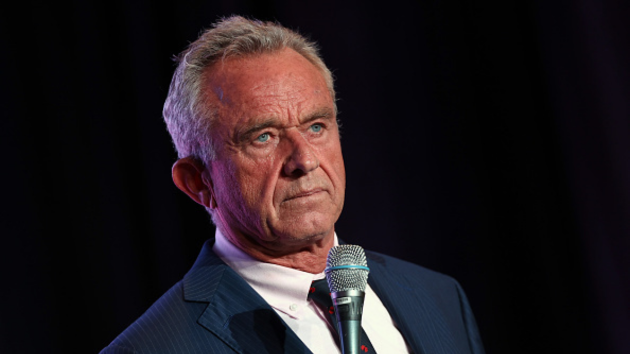
What policies could RFK Jr. actually change at HHS?

What policies could RFK Jr. actually change at HHS?
Kevin Dietsch/Getty Images

(WASHINGTON) — Named to lead the nation’s sprawling Department of Health and Human Services, Robert F. Kennedy Jr. has big ideas for busting public health policy norms.

His Senate confirmation hearings — should they happen — will come with lots of questions about what Kennedy’s ideas would look like in practice.

His new role would mean relinquishing his outsider critic status and working from within a massive government system, leading an agency of 80,000 employees and dealing with everything from drug approvals to food recalls to the pandemic response.

So, what happens when his motto “Make America Healthy Again” collides with one of Washington’s largest government bureaucracies?

“He seems very clear on what it is he wants to get done. I’m just not sure he has an understanding of what it will take to get that done,” said one former senior HHS official who worked in the Biden administration.

Vaccines

On vaccines, President-elect Donald Trump’s picks of Johns Hopkins University professor Marty Makary to lead the Food and Drug Administration, former GOP Rep. Dave Weldon to head the Centers for Disease Control and Prevention and Dr. Janette Nesheiwat as surgeon general certainly add to Kennedy’s ability to make changes — if they’re confirmed by the Senate.

Both Makary and Weldon have raised questions about vaccine side effects, although they’ve also at times been supportive overall of the role vaccines play in public health. Kennedy himself has falsely claimed that vaccines cause autism, which has been debunked by numerous studies.

In their new positions, Makary, Weldon and Kennedy would have the power to select the experts who sit on important FDA and CDC advisory panels. Those panels play a key role in vaccine recommendations and authorizations for the general public, ultimately creating public health guidance for years to come.

“I think massively, in large part, the health care community would continue to move forward on vaccines as they do now, as they are considered to be one of the massive successes of public health in the last 100 years. And I don’t think that would change,” said Tom Inglesby, a former senior adviser to HHS and the White House during COVID-19 during the Biden administration.

“But what could change is potentially the cost of vaccines, the access to vaccines, guidance around new vaccines that might come online, and also confusion around public messaging from the federal government about safety and effectiveness of vaccines,” Inglesby said.

Food and nutrition

When it comes to chemicals and the food Americans consume, it’s less clear how Kennedy could make changes at HHS, as opposed to the Environmental Protection Agency or the Department of Agriculture, which have more oversight of areas such as water fluoridation, which Kennedy opposes, or school lunches, which he says he wants to make healthier. He has said, however, that he would gut the entire nutrition department at the FDA.

Kennedy could also move around funding — he’s said he’d deprioritize infectious disease research in favor of chronic illness research, for example. As avian flu cases continue to rise — raising concerns about a new pandemic — public health experts and former government officials have pushed back strongly on that idea.

But he has also called for restrictions on food additives, dyes and ultra-processed foods, something he could have direct influence over through the FDA, which determines safe thresholds for the “Acceptable Daily Intake” on substances.

Kennedy has generally received a more cautious welcome from the public health community regarding his focus on healthy food.

“There are some things here that are worth working on. You know, if we’re looking at the school lunch program in America, 30 million children get more than half of their calories from that program. It would be a wonderful thing to make that the best school lunch program possible,” said Dr. Richard Besser, former CDC acting director.

But many public health experts are also wary of giving Kennedy credit, for fear it could lend credibility to other false information he promotes. He advocates drinking raw milk, for example, even though the pasteurization process kills off bacteria that can cause serious illness, including the fast-spreading avian flu.

“One of the dangerous things about RFK Jr. is that there are bits of things he says that are true, and they’re mixed in. And it makes it really hard to sort out what things you should follow because they’re based on fact, and which things are not,” Besser told ABC News, where he was former chief health and medical editor.

Experts also question Kennedy’s ability to counter powerful Washington lobbies — one of his stated main goals — in a Trump administration focused on working with big business on deregulating industries.

Abortion access

Another area where Kennedy could be out of line with the Trump administration is abortion access. Kennedy has said he supports legal abortion access until fetal viability (despite an earlier comment on the campaign trail that he later walked back about supporting a 15-week ban) and that such decisions should be up to women.

Many abortion rights advocates still expect the Trump administration to quickly move to rescind protections and halt legal fights the Biden administration initiated after the fall of Roe v. Wade — but are hopeful that Kennedy and the broader administration would not attempt sweeping bans.

“[Trump’s] obviously waffled on this and other issues a thousand times so I’m not going to trust every word he says, but I do think there’s the possibility that he and his administration has seen that actually, abortion access is very popular,” said Katie O’Connor, senior director of abortion policy at the National Women’s Law Center.

“We have seen that over the past three elections, and there could be pushback if this administration does something to further restrict abortion access.”

There are certainly members of Trump’s orbit who would support broader restrictions on abortion, but Trump himself has said he would not sign a federal ban if Congress passed one.

Some of the policies O’Connor expects to see rolled back would include the Pentagon paying for service members who need to cross state lines to get an abortion because of where they were stationed, as well as expanded access to abortion pills through telemedicine.

As HHS secretary, Kennedy could undo these rules and also build on the first Trump administration’s efforts. He could expand protections for health care providers who don’t want to perform abortion procedures, allowing more providers to deny care, and make it more difficult for private insurers to cover abortion, leaving it more expensive for patients, O’Connor said.

Large-scale bans, were they executed, would focus on removing access to the medication abortion pill called mifepristone, either by attempting to take medication abortion off the market by way of the FDA approval process, or employing a very old law called the Comstock Act to prohibit the pills from being mailed.

“I do hold out hope that this administration doesn’t want to expand political capital on abortion,” O’Connor said.

Copyright © 2024, ABC Audio. All rights reserved.

Alexander Smirnov, ex-FBI informant charged with lying about Biden family business, faces new tax charges

Alexander Smirnov, ex-FBI informant charged with lying about Biden family business, faces new tax charges
Alexander Smirnov, center, a confidential human source with the FBI, leaves the Lloyd George U.S. Courthouse, on Tuesday, Feb. 20, 2024, in Las Vegas. Smirnov is accused of falsely stating that executives with the Ukrainian energy company Burisma paid Hunter and Joe Biden $5 million each in 2015 or 2016. (Bizuayehu Tesfaye/Las Vegas Review-Journal/Tribune News Service via Getty Images)

(WASHINGTON) — The former FBI informant charged by special counsel David Weiss for allegedly lying about President Joe Biden and his son Hunter Biden’s business dealings is facing a separate new indictment on tax-related charges, court records show.

Alexander Smirnov is alleged to have evaded paying taxes on more than $2 million in income he received from multiple sources between 2020 and 2022, according to an indictment unsealed Tuesday in California federal court.

Smirnov was set to face trial beginning next week in Los Angeles on charges he concocted “fabrications” about President Biden and his son accepting $5 million in bribes from the Ukraine energy company Burisma, which Republicans repeatedly sought to seize on in their yearslong effort to impeach the president. He has pleaded not guilty to the charges.

That trial has since been pushed to January by the federal judge overseeing Smirnov’s case.

The newly unsealed indictment paints Smirnov as living a lavish lifestyle during the years he was allegedly also peddling lies to his FBI handler about the Biden family — detailing expenditures that include a $1.4 million Las Vegas condominium, a Bentley he allegedly leased for over $122,000, and hundreds of thousands of dollars of clothes, jewelry and accessories he allegedly purchased for himself and his domestic partner.

Despite receiving more than $2 million in revenue streams, prosecutors say that on a credit card application in June of 2022 he listed only $60,000 in total annual income and $250,000 in gross business income.

The indictment further alleges that when Smirnov sought the assistance of a professional tax return preparer who refused to sign his returns, Smirnov told the preparer that they “should not inquire about how he earned his income,” and further instructed them to delete any emails or messages sent by Smirnov.

“Mr. Smirnov intends to vigorously fight these allegations with the same intensity as he has fought the original indictment,” Smirnov’s attorneys, David Chesnoff and Richard Schonfeld, said in a statement.

As of Tuesday afternoon, Smirnov had not yet entered a plea to the newly filed indictment, according to court records.

Smirnov has remained detained since his arrest in February, on the belief that he poses a flight risk due to his extensive overseas contacts that allegedly include known senior intelligence agents in Russia.

Copyright © 2024, ABC Audio. All rights reserved.

Trump names COVID lockdown critic Dr. Jay Bhattacharya as pick for NIH director

Trump names COVID lockdown critic Dr. Jay Bhattacharya as pick for NIH director
Tom Williams/CQ-Roll Call, Inc via Getty Images

(WASHINGTON) — President-elect Donald Trump is nominating a critic of COVID-19 lockdown policies to serve as the head of the National Institutes of Health.

In a statement, Trump said he has picked Dr. Jay Bhattacharya to serve as NIH director to work in cooperation with Robert F. Kennedy Jr. — whom Trump named as his pick for secretary of the Department of Health and Human Services — to direct the nation’s medical research.

“Together, Jay and RFK Jr. will restore the NIH to a Gold Standard of Medical Research as they examine the underlying causes of, and solutions to, America’s biggest Health challenges, including our Crisis of Chronic Illness and Disease,” Trump said in the statement. “Together, they will work hard to Make America Healthy Again!

Bhattacharya is a professor of health policy at Stanford University who gained notoriety for openly opposing COVID-19 lockdown restrictions.

In addition to a medical degree, he has a doctorate in economics.

Trump also nominated Jim O’Neil to serve as the deputy secretary of the Department of Health and Human Services to “oversee all operations and improve Management, Transparency, and Accountability,” according to a statement.

Copyright © 2024, ABC Audio. All rights reserved.

Judge says Ralph Yarl shooting suspect is fit to stand trial after mental exam

Judge says Ralph Yarl shooting suspect is fit to stand trial after mental exam
ABC News

(KANSAS CITY, Mo.) — Andrew Lester, the Kansas City man charged in the April 2023 shooting of Ralph Yarl after the teenager mistakenly went to the wrong house, is fit to stand trial in February 2025, a judge said on Tuesday, according to Kansas City ABC affiliate KMBC.

The ruling came after the judge reviewed the findings of Lester’s mental exam, which he ordered last month after Lester’s attorney argued that the 86-year-old’s mental and physical capacity have diminished.

ABC News reached out to Lester’s attorney Steven Salmon for comment.

In October, a Clay County judge rescheduled Lester’s trial, which was initially set for Oct. 7, to begin on Feb. 18, 2025, pending the results of the mental evaluation. That exam was ordered by the judge after Salmon filed a motion requesting it, according to court documents obtained by ABC News.

In the motion, Salmon claimed that Lester, who is 86, is facing health conditions that could impair his ability to understand legal proceedings or assist in his defense at trial.

He said in the motion that Lester has lost more than 50 pounds, experienced issues with his memory and has exhibited confusion surrounding the details of the case. He also noted that Lester had also suffered a broken hip, heart issues and hospitalization since the case began.

Salmon also noted that Lester has faced “stress” due to “overwhelming media attention, as well as death threats and other unwanted attention, making it difficult for him to interact socially with anyone.”

Lester was charged with one count of felony assault in the first-degree and one count of armed criminal action, also a felony, in the shooting of Yarl, a Black teenager who mistakenly went to Lester’s Kansas City home after arriving at the wrong address to pick up his twin brothers from a play date on April 13, 2023.

Lester, who is white, pleaded not guilty later that month and was released on a $200,000 bond.

Yarl, who was 16 at the time, was shot in the head and in the right arm, by Lester, according to police. The now 18-year-old suffered a traumatic brain injury, his family previously told ABC News.

According to a probable cause statement obtained by ABC News, Lester told police that he “believed someone was attempting to break into the house” and grabbed a gun before going to the door because he was scared.

Yarl opened up about the shooting in an exclusive interview with Good Morning America co-anchor Robin Roberts in July 2023, where he reflected on his recovery and the harrowing experience.

“He points [the gun] at me … so I kinda, like, brace and I turn my head,” Yarl told Roberts. “Then it happened. And then I’m on the ground … and then I fall on the glass. The shattered glass. And then before I know it I’m running away shouting, ‘Help me, help me.'”

Copyright © 2024, ABC Audio. All rights reserved.