(WASHINGTON) — Robert F. Kennedy Jr.’s nomination to serve as secretary of Health and Human Services was narrowly confirmed by the Senate on Thursday.
The final vote was 52 to 48.
Sen. Mitch McConnell, who overcame polio at a young age, was the sole Republican to oppose Kennedy and vote no. Democrats were unanimous in their opposition to Kennedy.
In a statement outlining his decision, McConnell cited his childhood experience with the disease and said he will “not condone the re-litigation of proven cures.”
“Mr. Kennedy failed to prove he is the best possible person to lead America’s largest health agency,” McConnell said. “As he takes office, I sincerely hope Mr. Kennedy will choose not to sow further doubt and division but to restore trust in our public health institutions.”
Kennedy’s confirmation comes after months of controversy and debate, largely focused on his past comments casting doubt on the safety and efficacy of vaccines.
An environmental lawyer with no experience working in health administration or medicine, Kennedy will now oversee a sprawling network of agencies that provide health coverage to millions of Americans, regulate the food industry and respond to global health threats.
White House press secretary Karoline Leavitt, during an appearance on Fox News, said Kennedy is expected to be sworn in later Thursday at the White House. Leavitt also said Trump is expected to sign an executive order establishing a “Make America Healthy Again” commission.
President Donald Trump embraced Kennedy on the campaign trail after the scion of America’s most famous Democratic dynasty dropped his own independent bid for president and endorsed Trump.
Shortly after the election, Trump tapped Kennedy to lead HHS and promised to let him “go wild” on health.
During his confirmation hearings, Kennedy was grilled on his past claims about vaccinations, including his unfounded claims linking them to autism.
In a shift from previous statements, Kennedy voiced support for polio and measles immunizations. He told lawmakers he was not “anti-vaccine” but rather “pro-safety.” Though, he still refused to say that vaccines were not linked to autism or that COVID-19 vaccines saved lives.
But the comments appeared enough for some skeptical Republican senators to come to his side. Trump and Vice President JD Vance also called senators to rally support for Kennedy.
Republican Sen. Bill Cassidy, a longtime physician and vaccine advocate who openly struggled with Kennedy’s nomination, voted to report his nomination out of committee and to the Senate floor.
Cassidy said he received several commitments from Kennedy, including meetings several times a month and advance notice to Congress if HHS plans to seek any changes to vaccine programs.
Republican Sen. Susan Collins of Maine, considered another swing vote, earlier this week announced she’d vote for Kennedy after raising concerns about the Trump administration’s directive for the National Institutes of Health to cut support for health research at universities. (The policy has been temporarily blocked by a federal judge).
“He said he would re-examine them and seemed to understand,” Collins said of Kennedy.
Senate Minority Leader Chuck Schumer, D-N.Y., had made a final plea to his colleagues shortly before the vote to oppose Kennedy.
“A vote to confirm Mr. Kennedy is a vote to make America sicker,” Schumer said.
(WASHINGTON) — Months after she was announced to be President Donald Trump’s pick to lead the Department of Education, Linda McMahon is on the hot seat in Capitol Hill Thursday as she faces senators over the future of the agency, which the president has vowed to kill.
The Senate Health, Education, Labor, and Pensions Committee is scheduled to hold its hearing and grill McMahon, a businesswoman with close ties to Trump who has no teaching experience.
Trump has repeatedly claimed that the Department of Education has been mismanaged and has damaged education, calling it a “con job” during a news conference Wednesday. The president is expected to sign an executive order directing McMahon to submit a proposal for diminishing the department, and then the president said she should “put herself out of a job,” even though such an action would require an act of Congress.
Democratic senators have said they intend to scrutinize the nomination based on 76-year-old McMahon’s lack of experience in public education.
McMahon defended her nomination in posts on X, writing in part: “I am committed to working tirelessly to ensure every student has access to a quality education.”
McMahon’s journey from WWE matriarch to DOE nominee McMahon co-founded World Wrestling Entertainment (WWE) and is also the company’s former president and CEO.
Trump said he chose McMahon for being a “fierce advocate” for parental rights in education who will fight “tirelessly” to expand school choice and “spearhead” his effort to send education decisions back to the states, according to the president’s official nomination statement. The president also praised McMahon’s leadership and “deep understanding” of both education and business.
McMahon’s personal financial wealth is unclear but she reported owning assets that are worth hundreds of millions of dollars and which could potentially surpass $1 billion. The Trump loyalist was co-chair of his presidential transition team and is a long-time donor who has given tens of millions of dollars to support pro-Trump causes.
McMahon previously worked in the first Trump administration as head of the Small Business Administration (SBA). She had previously made two unsuccessful bids for U.S. Senate when she ran against current Senate Democrats Richard Blumenthal and Chris Murphy in 2010 and 2012, respectively. She is also Chair of the America First Policy Institute (AFPI) board but will leave that position if confirmed as U.S. Secretary of Education.
McMahon has advocated for apprenticeship and workforce training programs, school choice and parental rights. Although she is not currently an educator she received her teaching certification from East Carolina University and sat on the Connecticut state board of education before her first unsuccessful senate bid. She has also served two stints on the Board of Trustees at Connecticut’s Sacred Heart University, where she is currently the treasurer.
Trump’s education agenda, McMahon’s scandals cast shadow over nomination At an executive order signing event last week, President Trump said, “I told Linda, ‘Linda, I hope you do a great job and put yourself out of a job.’”
“I want her to put herself out of a job,” Trump added.
However, abolishing the agency can only be done if Congress passes legislation to eliminate it. Experts say it is illegal to dismantle the department without congressional authorization, which would require 60 Senate votes in favor of doing so.
Meanwhile, McMahon’s years as a wrestling executive came with their share of alleged scandals, which has brought her experience with young people under scrutiny.
A 2024 lawsuit brought by five plaintiffs – John Does who served as the WWE ringside crew when they were teens – accused her and her husband, Vince McMahon, of turning a blind eye to sexual abuse by an announcer and executives at the company. If confirmed by the Senate, McMahon would be tasked with overseeing sexual misconduct investigations within education programs.
The McMahons have denied the claims.
Laura Brevetti, Linda McMahon’s attorney, told ABC News that the FBI investigated the decades-old allegations at the time and found no grounds to further investigate them, calling the lawsuit “baseless.”
McMahon’s allies believe she will be an agent of change, a disrupter, and the dismantler that the Department of Education needs. Skeptics also claimed that the federal agency spends too much on education without adequate academic results.
But many in the education community fear that if McMahon helps Trump abolish the agency, it could adversely impact the millions of students who rely on critical programs overseen by the department that are intended to help vulnerable students succeed, like Title I funding for students from low-income communities.
(NEW YORK) — The human remains found in a suitcase floating in the East River last week have been identified as Edwin Echevarria, a 65-year-old Manhattan man, who was allegedly murdered by 23-year-old Christian Miller, who lived at the same address on Columbia Street, police said.
The grisly discovery was made on Feb. 5 at approximately 5:30 p.m. when the NYPD Harbor Unit discovered the remains near Governor’s Island, police said.
The suitcase contained a man’s torso, which was taken to the medical examiner’s office for investigation, police said.
The torso was zipped into a sleeping bag that was stuffed into the suitcase, according to police sources.
The suitcase also contained what appears to be a reusable grocery store-style bag, the sources said.
Police did not immediately say how long the remains were there or how they ended up in the suitcase but have now confirmed that Miller has been arrested and charged with murder.
The two were roommates, according to police, and no other body parts have been recovered, sources said.
No further details regarding the case have been provided and the investigation into the death is currently ongoing.
(LONDON) — Germany’s defense minister criticized President Donald Trump for what he called “regrettable” concessions to Moscow, after the president unilaterally announced an immediate start to direct peace talks with President Vladimir Putin to end the Kremlin’s war on Ukraine.
Trump said in a post to social media on Wednesday that he spoke with Putin by phone, adding the two leaders “agreed to have our respective teams start negotiations immediately” to end the fighting in Ukraine after nearly three years of Russia’s full-scale invasion.
Trump’s announcement came shortly after Defense Secretary Pete Hegseth told allies that Ukraine cannot liberate all territory occupied by Russian forces and will not be given NATO security protection as part of any peace deal.
NATO ministers quickly pushed back. German Defense Minister Boris Pistorius said it was “regrettable” that “the Trump administration has already made public concessions to Putin before negotiations have even begun.”
Estonian Defense Minister Hanno Pevkur concurred. “We must not hand Russia any advantage before negotiations even begin,” Pevkur said in a statement.
Moscow launched its attack in February 2022 with the aim of toppling Zelenskyy’s government in Kyiv and annexing swaths of the country. The “special military operation” — as the Kremlin termed the invasion — expanded on Moscow’s annexation of Crimea and its fomentation of, and active military support for, separatist rebellion in parts of eastern Ukraine in 2014.
“I think we’re on the way to getting peace,” Trump said. The president did not clarify whether Ukraine and its President Volodymyr Zelenskyy would be directly involved in any peace talks. Excluding Kyiv would align with Putin’s repeated demand that Ukraine be sidelined, the Russian leader having dismissed Zelenskyy as “illegitimate.”
Kyiv’s omission from negotiations would represent a striking break from years of U.S. and allied policy, which under former President Joe Biden was guided by the “nothing about Ukraine without Ukraine” principle, with the former president also refusing to speak directly with Putin while the war continued.
Trump spoke with Zelenskyy after his phone call with Putin. The Ukrainian leader said in a post to social media that the two discussed “opportunities to achieve peace, discussed our readiness to work together at the team level, and Ukraine’s technological capabilities — including drones and other advanced industries.”
Trump also said he would meet with Putin in Saudi Arabia, though did not set a date. Addressing the conversation, Trump said on Truth Social that Zelensky,”like President Putin, wants to make PEACE.”
Trump separately hinted at the expiry of Zelenskyy’s presidential term. Ukraine was due to hold presidential elections last year, but the vote was delayed as the country is still under martial law as a result of Russia’s invasion. At “some point you’re going to have an election,” Trump said.
Ukraine and American allies in Europe called for a unified negotiating front.
“We are looking forward to discussing the way ahead together with our American allies,” said a joint statement from the foreign ministers of France, Germany, Poland, Italy, Spain, the U.K., Ukraine, the European Union’s European External Action Service and the European Commission.
“Our shared objectives should be to put Ukraine in a position of strength,” the statement added. “Ukraine and Europe must be part of any negotiations.”
Kaja Kallas, the EU’s foreign affairs chief, said on X, “Ukraine’s independence and territorial integrity are unconditional.”
Trump said a meeting between Zelenskyy, Vice President JD Vance and Secretary of State Marco Rubio was scheduled during the weekend Munich Security Conference event in Germany.
The State Department said that Ukraine-Russia envoy Keith Kellogg will begin a 10-day visit to Germany, Belgium and Ukraine on Thursday.
Hegseth preceded Trump’s latest remarks by telling allies in Belgium on Wednesday that Ukraine cannot liberate all territory from Russian occupation, and that Kyiv will not be given NATO security protection as part of any peace deal.
“The bloodshed must stop and this war must end,” Hegseth said. His address was the most detailed delineation of the Trump administration’s desired peace deal since the president returned to the Oval Office. Pro-talk signals from the U.S. raised concerns in Ukraine and abroad that Kyiv will be forced into territorial and political concessions in exchange for an end to the fighting.
John Bolton — Trump’s former national security adviser — for example, said on X that the president’s approach is tantamount to a “sell out” of Ukraine. “Trump has effectively surrendered to Putin on Ukraine.”
The latest remarks from Trump and Hegseth also stoked concerns inside Ukraine. “It’s a bad sign that he has talked first to Putin, not to Zelenskyy,” Oleksandr Merezhko — a member of the Ukrainian parliament and the chair of the body’s foreign affairs committee — told ABC News.
“Such a phone call is in itself a reward for Putin,” he added. “It’s sort of a break in his political isolation.” Still, Merezhko said Trump’s approach does “not quite” mean a total exclusion of Ukraine. “The principle ‘nothing about Ukraine without Ukraine’ is more about not taking decisions without Ukraine which have influence upon Ukraine,” he said.
Pressure for peace is building within and without. A Gallup poll published in November indicated that most Ukrainians favored a rapid end to the devastating war. Zelenskyy’s public rhetoric largely reflects this sentiment, though the president has warned that no peace deal is sustainable without concrete U.S. security guarantees.
“This war of attrition is only going to make us weaker,” Iuliia Mendel — Zelenskyy’s former press secretary — told ABC News. “For a long time, Ukraine has been at the stage when negotiations are urgent to save the nation.”
The Kremlin confirmed that Trump had spoken with Putin.
“The topic of a settlement in Ukraine was discussed,” spokesperson Dmitry Peskov told reporters after the call on Wednesday.
“President Trump spoke in favor of an early end to hostilities and a peaceful solution to the problem,” he added. “President Putin, for his part, mentioned the need to eliminate the root causes of the conflict and agreed with Trump that a long-term settlement can be achieved through peaceful negotiations.”
On Thursday, Peskov told reporters that Moscow had begun preparing a negotiating group to organize a meeting between Trump and Putin. “Definitely started. And as the president makes the appropriate decisions, we will inform you,” Peskov said.
When asked if a visit by U.S. representatives to Moscow is expected in the near future, Peskov said: “Not yet. So far, there are no specific agreements in this regard.”
Both Moscow and Kyiv are maneuvering for leverage in preparation for revived talks. This week, Russia and the U.S. concluded a prisoner swap described by Trump as a goodwill gesture that could help advance peace talks.
Zelenskyy, meanwhile, met with Treasury Secretary Scott Bessent in Kyiv to discuss a potential deal to secure U.S. access to hundreds of billions of dollars worth of Ukrainian minerals.
Russian and Ukrainian leaders have both expressed readiness to resume negotiations, though neither side has indicated willingness to make significant concessions.
This week, Zelenskyy suggested Ukraine would be ready to give up territory it seized in Russia’s western Kursk region in exchange for the liberation of some Ukrainian territory occupied by Moscow’s troops.
Peskov dismissed the idea as “impossible” at a Wednesday briefing with journalists. “Russia has never discussed an exchange of its territories and never will,” Peskov said.
“Naturally, Ukrainian units will be ousted from this territory. Everyone who is not eliminated will be ousted,” Peskov added.
ABC News’ Will Gretsky, Anastasia Bagaeva, Nataliia Popova, Zoe Magee, Tanya Stukalova and Tom Soufi Burridge contributed to this report.
(WASHINGTON) — During his confirmation hearings two weeks ago to lead the Department of Health & Human Services (HHS), Robert F. Kennedy Jr. repeated several unfounded claims about autism.
Kennedy, an environmental lawyer who has made money through books, speeches and lawsuits while sharing vaccine skepticism, refused to say that vaccines don’t cause autism despite many high-quality studies finding no such link.
He stated during the hearing that autism rates have “have gone from 1 in 10,000 … and today in our children, it’s one in 34.” His claims have been repeated by President Donald Trump on Truth Social.
It’s unclear where Kennedy got his 1 in 10,000 statistic. In 2000, approximately 1 in 150 children in the U.S. born in 1992 were diagnosed with autism compared with 2020, during which one in 36 children born in 2012 were diagnosed, according to data from the Centers for Disease Control and Prevention.
Some psychiatrists and autism experts told ABC News it’s important to highlight the rising rates of autism, and that at least Kennedy is putting a spotlight on it.
“On the bright side, I think it is really important to place an emphasis on these very high rates, it’s kind of great putting a spotlight on autism, these increased rates,” Dr. Karen Pierce, a professor in the department of neurosciences at the University of California, San Diego and co-director of the UCSD Autism Center of Excellence, told ABC News. “We need more funding. We need more infrastructure to support everybody who is now recognized as on the spectrum. So, I think that that’s actually a really good thing.”
However, the experts said Kennedy and others are missing important context about why autism rates are increasing. They say reasons may include a combination of widening of the definition of the spectrum and of types of symptoms associated with autism spectrum disorder (ASD) as well as people having children at older ages, better awareness and access to diagnostic testing.
“With the rates increasing, there certainly are valid reasons for that,” Pierce said. “There’s better awareness, and doctors can find autism a lot easier than they could before in the past…. and I think a very big reason is just better record keeping nowadays and easier access to reviewing records.”
What is autism?
ASD is a developmental disability caused by differences in the brain, according to the CDC.
People with ASD often communicate, interact, behave and learn differently, the CDC says. ASD symptoms typically begin before age 3 and can last a lifetime, although symptoms may change over time.
“There can be differences in how one is reading social cues and interpreting them, and then there’s also certain behaviors that we see,” Dr. Anna Krasno, clinical director of the Koegel Autism Center at the University of California, Santa Barbara, told ABC News.
“So those include a preference for sameness, a difficulty with transitioning, some cognitive and behavioral rigidity,” she continued. “We also see intense interests, so topics that people are super, super into and want to research, repetitive speech and motor movements. And then we also see really significant sensory differences as well.”
ASD is a spectrum, which means symptoms vary by person — some need little support in their daily lives and some may need a great deal of support in performing day-to-day activities. Some may have advanced conversation skills and others may be nonverbal.
Wider recognition, better understanding
Experts told ABC News there is a wider recognition and a better understanding of what is now understood as autism/ASD.
Traits of what is now known as ASD are built on early observations in the 1940s from Austrian-American psychiatrist Dr. Leo Kanner and Austrian physician Dr. Hans Asperger.
A 1943 paper from Kanner described 11 children who presented with “inborn autistic disturbances of affective contact” while Asperger’s 1944 report focused on boys who had marked social difficulties; unusual, circumscribed interests; and good verbal skills.
It was not until 1978 that autism was recognized as a developmental disorder distinct from schizophrenia by the World Health Organization. It was also in the 1970s that psychologists and psychiatrists first came to describe autism as a spectrum.
“When autism was first described, it was new to people understanding that there was a condition that included social communication difficulties and restricted and repetitive behavior, and people primarily only recognized it when it was at its most extreme,” Dr. Jeremy Veenstra-VanderWeele, division director in child and adolescent psychiatry at Columbia University, told ABC News.
“And so, if you go back and read the initial descriptions today, those are kids who we would recognize in the waiting room, recognize in the grocery store, in whom autism would be very obvious and would not require much assessment in order to diagnose,” he continued.
Better diagnostic tools
Experts say another reason for the increase in rates is having better diagnostic tools than what was available decades ago.
There is no single tool used as the basis of an ASD diagnosis. Typically, tools rely on descriptions from parents or caregivers of a child’s development and a professional’s observation of a child’s behavior, according to the CDC.
Currently, the Autism Society encourages all children to be screened for signs of autism by their family pediatrician three times by the age of three — at nine, 18, and 24 or 30 months. If a child shows symptoms of ASD, more rigorous diagnostic testing can be carried out by a specialist including a full neuropsychological exam.
Additionally, the American Psychiatric Association’s Diagnostic and Statistical Manual of Mental Disorders, Fifth Edition (DSM-5) provides standard criteria for helping diagnose autism.
Under DSM-5, a child meets the criteria if they have deficits in three areas of social communication and interaction and at least two of four types of restricted, repetitive behaviors.
While the first edition of DSM came out in 1952, it was not until the third edition, DSM-3, in which autism was listed under an entirely new “class” of conditions — the Pervasive Developmental Disorders.
Veenstra-VanderWeele said the change in the criteria is another reason why the number of those diagnosed with autism rose. He likened it to changing the definition of what it means to be tall.
“To just use a crude example, if you would define somebody as tall if they were over six-foot-six, and then 30 years later, say that somebody is tall if they’re over five-foot-10, you’d get very, very different numbers, and that’s part of what’s happened here,” he said.
Pierce added that because of limited knowledge and awareness in the past, there may have been many children who were underdiagnosed and misdiagnosed.
“It’s understandable that people wouldn’t even necessarily think that somebody has autism, because nobody knew what really autism was,” she said. “So, you know, large numbers of people were just put in the books as just having special education needs, maybe as a language delay or of having a cognitive impairment.”
Older reproductive age
Some studies have suggested that people who become pregnant at an older age have an increased risk of giving birth to a child with autism.
A 2012 review and meta-analysis of 16 papers from researchers in New York, London, Israel and Sweden found an association between advanced maternal age and the risk of autism.
Advanced paternal age may also be a risk factor. A 2006 study conducted jointly by researchers in New York, London and Israel found that men who were above age 40 were 5.75 times more likely to have a child with ASD compared to men younger than age 30 after controlling for other factors.
However, questions still swirl about whether or not there is a risk from the age of parents, and not all researchers are convinced.
“I know that there is some research looking at maternal and paternal age with regard to autism, and there’s research around environmental causes,” Krasno said. “I think where I always firmly land is that it is inherited, and it is genetic. So, I don’t know the exact correlation between age and diagnostic rate, but we do know that genetics are highly associated with diagnosis.”
Environmental risk factors
Researchers are also divided over whether or not environmental risk factors play a role in causing autism.
The National Institute of Environmental Health Sciences says the “clearest evidence” involves events before and during birth, including prenatal exposure to air pollution or pesticides; maternal obesity or diabetes; extreme prematurity; and periods of oxygen deprivation to the brain during birth.
“But these factors alone are unlikely to cause autism. Rather, they appear to increase a child’s likelihood for developing autism when combined with genetic factors,” NIEHS states on its website.
Pierce said from the studies she’s read, evidence suggests autism is a genetic condition. She added the environmental factors may play a role but “to a small degree.”
Myth that vaccines cause autism
The myth that vaccines cause autism was born out of a fraudulent 1998 study, hypothesizing that the measles, mumps, rubella vaccine caused intestinal inflammation, which, in turn, led to the development of autism.
The paper has since been discredited by health experts, retracted from the journal in which it was published, and its primary author, Andrew Wakefield, lost his medical license after an investigation found he had acted “dishonestly and irresponsibly” in conducting his research.
More than a dozen high-quality studies have since found no evidence of a link between childhood vaccines and autism.
However, Kennedy has held fast to this claim, saying during a 2023 interview on Fox News that he believes autism comes from vaccines.
During the HHS confirmation hearings, Kennedy said he was not “anti-vaccine” but “pro-safety.” At the same time, Kennedy repeatedly refused throughout the hearings to say that vaccines were not linked to autism, while still insisting he supports vaccination in general.
Experts told ABC News there is no evidence to suggest a link between vaccines and autism, and perpetuating the myth can be dangerous.
“Once there’s a lie and it’s spread, it doesn’t matter that it’s a lie. Once people hear it, then they believe that it’s true despite all of the Herculean efforts to disprove it and debunk it,” Pierce said. “There’s no evidence for it whatsoever, and there’s actually extremely, as far as scientific evidence is concerned, there’s extremely strong evidence to suggest absolutely not.”
Christopher Banks, president and CEO of the Autism Society of America, said the false claim that vaccines cause autism can divert financial resources from much-needed research.
“Instead of advancing support and therapies, time and funding are wasted disproving a debunked theory,” he said. “This misinformation also fuels stigma, implying that autism is something to be feared rather than understood and supported, leading to discrimination against autistic individuals.”
ABC News’ Dr. Jade Cobern, Cheyenne Haslett and Will McDuffie contributed to this report.
(LONDON) — Munich police said at least 28 people were injured after a “vehicle drove into a group of people” in the center of the city on Thursday morning.
“The driver was able to be secured on site and currently poses no further danger,” police said in a post in German on social media.
Police said in an update that at least two of those injured were in a serious condition and that one child required resuscitation.
Bavarian state premier Markus Söder told journalists that at least 28 people were injured. The incident is being treated as a “suspected attack,” Söder said.
Police said the suspect is believed to be a 24-year-old Afghan asylum seeker. Authorities have not yet suggested a motive or named the suspect.
Munich police said at least 28 people were injured after a “vehicle drove into a group of people” in the center of the city on Thursday morning.
“The driver was able to be secured on site and currently poses no further danger,” police said in a post in German on social media.
Police said in an update that at least two of those injured were in a serious condition and that one child required resuscitation.
Bavarian state premier Markus Söder told journalists that at least 28 people were injured. The incident is being treated as a “suspected attack,” Söder said.
Police said the suspect is believed to be a 24-year-old Afghan asylum seeker. Authorities have not yet suggested a motive or named the suspect.
Police said the incident occurred in the area of Dachauer Street and Seidle Street in the heart of Munich, close to the city’s central train station.
The incident occurred at Stilgmaierplatz, where a rally organized by the Verdi trade union was taking place from 10:30 a.m. local time, police said. The event was accompanied by police and therefore officers were already on site.
A Munich Police spokesperson told ABC News that the suspect overtook a police vehicle with his car before accelerating and plowing into the back of the demonstration. Police believe he acted alone.
Munich Mayor Dieter Reiter told reporters that “many people have been injured, including children. I am deeply shocked. My thoughts are with the injured.”
“The police have arrested the driver of the vehicle, but the exact circumstances are still unclear,” Reiter added.
Police said a “major operation” was underway, urging residents to avoid the area in order to assist emergency responders.
Images from the scene showed police and medical responders working near a damaged vehicle surrounded by belongings and debris. Police cordoned off the area of the incident as helicopters circled above. Police have not identified the suspect or the vehicle involved.
Thursday’s vehicle crash came less than two months after a car plowed through a Christmas market in Magdeburg, Germany, killing two people and injuring nearly 70 others, local officials said at the time.
This is a developing story. Please check back for updates.
ABC News’ Helena Skinner, Felix Franz and Dada Jovanovic contributed to this report.
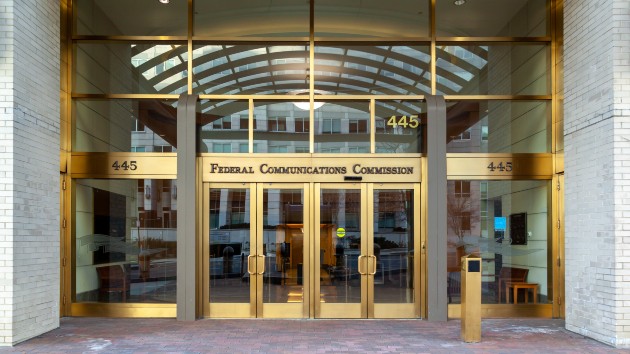
(WASHINGTON) — The head of the Federal Communications Commission said he is seeking an investigation of NBCUniversal and its parent company Comcast over the firm’s corporate diversity initiatives.
In a post on X, FCC Chairman Brendan Carr said he is concerned the companies “may be promoting invidious forms of DEI that do not comply with FCC regulations & civil rights laws.”
Carr — who, since President Donald Trump’s inauguration, has been wielding his agency’s power over broadcasters to a degree that has no modern precedent — said diversity, equity and inclusion (DEI) policies are “by their very definition, odious to a free people whose institutions are founded on a commitment to equality.”
In a Feb. 11 letter to Comcast CEO Brian Roberts, posted online by Carr, the FCC chairman points to Comcast’s corporate website, which lists diversity, equity and inclusion as “a core value of our business.” Carr also cites public reports of DEI days and DEI training as part of what the letter calls “an entire ‘DEI infrastructure'” in the entertainment company.
Carr said the inclusion efforts amount to discrimination, which, he says, “cannot be squared with any reasonable interpretation of federal law” and “can only deprive Americans of their rights to fair and equal treatment under the law.”
The FCC has long held radio and television stations to a robust set of Equal Employment Opportunity rules, which Carr says he is now using as the basis for his investigation. Last year, over Carr’s objection, then-President Joe Biden’s administration FCC moved to reinstate regulations that would force broadcasters to publicly disclose data on the race, gender and ethnicity of their employees. Those rules are now being challenged in court.
In addition to the NBC-owned television stations, Carr’s letter notes a wide range of Comcast’s businesses fall under his agency’s jurisdiction, ranging from cable and internet to wireless service. Carr says that’s one reason he’s targeting Comcast first — to serve as a shot across the bow of the entire communications industry.
“I expect that every entity the FCC regulates will be complying with our civil rights laws,” Carr said in his X post.
Democratic FCC commissioner Geoffrey Starks — one of two Democrats on the panel — said he is not on board with the investigation.
“Then-Commissioner Carr blasted the prior administration for acting in a way that ‘gives the FCC a nearly limitless power to veto private sector decisions,'” Starks said in a statement. “From what I know, this enforcement action is out of our lane and out of our reach. I have asked for a briefing to understand the Enforcement Bureau’s theory of the case, the authority relied upon, and any prior precedent. This action gives me grave concern.”
In a statement provided to ABC News, a Comcast spokesperson said, “We have received an inquiry from the Federal Communications Commission and will be cooperating with the FCC to answer their questions. For decades, our company has been built on a foundation of integrity and respect for all of our employees and customers.”
Since taking office, Trump has taken aim at DEI efforts, signing an executive order to disband such programs in the federal government and cracking down on DEI initiatives in programs that receive federal funding.
Carr confirmed last week that his agency was investigating a local radio news report in San Francisco that included depictions of ICE raids in Northern California. And in what he depicted as an effort to enhance transparency in an ongoing complaint against CBS alleging “news distortion,” Carr opened the matter to public comment and directed the posting of raw outtakes from an interview Kamala Harris gave to CBS News’ “60 Minutes.”
That controversy was sparked last October by CBS’s use of two different answers by Harris to the same question from Whitaker — in a preview clip that aired on “Face the Nation” and the interview as it aired in full on “60 Minutes” that night. A right-wing group known as the Center for American Rights filed a complaint, alleging violations of the FCC’s news distortion policy, a rarely-enforced doctrine that dates to the late 1960s and was designed to prohibit hoaxes and the staging of news events.
(NEW YORK) — While Elon Musk has vaulted into a powerful role overhauling government agencies and upending Washington, the world’s richest person has suffered a $106 billion drop in wealth due to steep decline in shares of his Tesla electric car company.
Tesla’s stock price has plummeted 30% from its all-time high in December, including a 21% selloff since Inauguration Day. The losses have sent Musk’s net worth tumbling from a peak of $486 billion on Dec. 17 to its current level of about $380 billion, according to Bloomberg.
The stock woes have divided current and former Tesla shareholders. Critics of Musk fault his new role and polarizing reputation, blaming recent reports showing lackluster sales in some regions on his foray into politics. They say Musk must step away from the Trump administration for the company to thrive.
Supporters, on the other hand, say Musk’s role in the White House has little to do with the selloff, noting that Tesla shares remain higher than where they stood on Election Day. Instead, some say, the company is suffering growing pains as it weathers stiff competition in electric vehicles and pursues new ventures like self-driving taxis.
“I don’t have a problem if Elon wants to save a bunch of money for America. I say, ‘Where’s the good part in this for Tesla?'” Ross Gerber, a prominent Tesla investor, told ABC News, referring to cost-cutting efforts undertaken by Musk’s Department of Government Efficiency.
Tesla representatives did not respond to ABC News’ request for comment.
Despite disagreement over the effect of Musk’s government role, both current and former Tesla shareholders who spoke to ABC News broadly acknowledged the company’s recent business hiccups.
Tesla sold fewer cars in 2024 than it did the year prior, marking the company’s first year-over-year sales decline in more than a decade, earnings released in January showed.
As rivals have challenged Tesla’s dominance over the electric vehicle market, the company has promised a future revenue stream from autonomous taxis, also known as robotaxis.
Musk announced in late January that the company would roll out its robotaxi test program in Austin, Texas, in June. But within days, China-based competitor BYD unveiled advances in self-driving technology, which the company said was set to be included in models costing as little as $9,600.
Gary Black, managing partner of The Future Fund, which manages $100 million in assets, including Tesla shares, said the recent selloff of Tesla is primarily the result of investor jitters about whether the company can dominate self-driving technology the way it did electric vehicles.
“Over time, you will see Teslas and other cars self-drive. But Tesla is not going to be the only one,” Black told ABC News’ Elizabeth Schulze.
The stock also faced downward pressure this week when a Musk-led group of investors offered to buy OpenAI for $97.4 billion, making possible a scenario in which Musk would sell some of his Tesla shares to finance the deal, Black said.
Black said that, in his opinion, the downturn has nothing to do with Musk’s government role.
“It’s always good to know the president of the United States — to be able to pick up your phone and say, you know, ‘I need this favor, that favor,'” Black said.
A jump in Tesla shares after Trump’s victory suggests many investors viewed the relationship that way. The stock price soared about 85% over a six-week period following Election Day.
But some investors lay the blame for the downturn squarely at Musk’s feet.
Nell Minow, Vice Chair of ValueEdge Advisors and a longtime critic of Musk, said Musk has been “absent” from the company.
“I think that he is a huge drag on the stock right now,” Minow told Schulze. “No question, he’s a problem.”
“Elon Musk is to the Tesla brand what the Green Giant is to corn,” Minow said. “He has made himself the brand and that is always very risky.”
Minow, who said she donated nearly all of her Tesla shares to charity last year, also criticized the Tesla board for what she said was a failure to hold Musk to account, or update shareholders and the public about a leadership plan while Musk runs DOGE.
“We don’t know what the board is thinking. They have not spoken out in any way,” Minow said. “They have not made a filing with the SEC about what the impact of this side hustle is, and the employees and the shareholders need some kind of certainty.”
New York City Comptroller Brad Lander echoed concerns about the board’s ability to reign in Musk. Lander, who oversees $1.25 billion in Tesla stock through the city’s five pension systems, said the lack of oversight was a “long-standing problem.”
“Independent governance is designed to provide a voice for shareholders at the table,” Lander, who is running for New York City mayor and has publicly sparred with Musk, said in a statement to ABC News. “When companies are controlled by a set of directors with either family or aligned interests, they lose this.”
For his part, Musk has looked to hype up Tesla’s prospects, saying on an earnings call last month that he believes there is an opportunity for it to be “the most valuable company in the world.”
During the call, AllianceBernstein Research analyst Daniel Roska questioned Musk on how Tesla plans to meet its ambitious projections given its high valuation.
Musk emphasized Tesla’s focus on real-world AI, claiming the company is making significant strides.
“We’re working on perfecting real-world AI and making rapid progress week over week, if not month over month,” Musk said. “I go where the problem is, essentially … I focus where the challenges are the greatest.”
Some Tesla shareholders remain bullish on the company despite its short-term drop. Angel investor Larry Goldberg, known as “Tesla Larry,” posted on X that he supports Musk’s political efforts, even if they impact the company’s stock price.
“If the Trump administration (and DOGE) does not fix the deficit, my Tesla shares — and everyone’s US stocks and bonds will be worthless,” Goldberg wrote.
One of the suspects is seen with a watch that prosecutors say was stolen from Joe Burrow’s home in a photo released by the Hamilton County Prosecutor’s Office. Image via Hamilton County Prosecutor’s Office
(CINCINNATI) — Three men now face state charges in connection with last year’s burglary at the Ohio home of Cincinnati Bengals quarterback Joe Burrow, prosecutors announced Wednesday.
The suspects were indicted on charges of first-degree felony engaging in a pattern of corrupt activity and second-degree felony burglary, Hamilton County Prosecutor Connie Pillich said.
The prosecutor’s office released photos of the stolen items — including jewelry, cash and commemorative memorabilia — including some showing the suspects posing with the NFL star’s jewelry, Pillich said.
The defendants — Jordan Francisco Quiroga Sanchez, Bastian Alejandro Orellana Morales and Sergio Andres Ortega Cabello — already faced federal charges in connection with the burglary at Burrow’s home: interstate transportation of stolen property and falsification of records.
The three men are believed to be citizens of Chile who arrived in the United States legally under a visa-free program, according to Pillich.
“They appear to be involved in multiple thefts and burglaries in many jurisdictions, and they are far from the only individuals who do this sort of work,” she said during a press briefing Wednesday.
Pillich suggested that other members of the alleged crime ring may still be at large.
“I think it’s very possible they have connections,” she warned. “People should be concerned.”
A fourth man seen in a photo posing with the burglary suspects and the stolen items was not present at Burrow’s home at the time of the burglary and was not charged in the indictment, Pillich said.
Burrow was playing in a Monday Night Football game in Dallas when his Anderson Township home was burglarized on Dec. 9, 2024.
Burrow had security personnel at the home, but the men avoided them by entering through the woods, according to federal prosecutors.
Approximately $300,000 worth of designer luggage, glasses, wristwatches and jewelry were stolen from the residence, according to federal prosecutors.
Authorities had tracked a cellphone number and license plate believed to be tied to the burglary to a hotel in Fairborn, Ohio. They surveilled the rented vehicle linked to the license plate before pulling it over for a traffic violation on Jan. 10 in Clark County, Ohio, according to federal prosecutors.
An old LSU shirt and Bengals hat believed to have been stolen from Burrow’s home were also found in the vehicle, federal prosecutors said.
An analysis of one of the suspect’s phone “revealed multiple photographs that had been taken of items believed to be stolen” from Burrow’s residence, according to the federal complaint. Many of these photographs were deleted during the traffic stop, according to the federal complaint.
It is unclear if the suspects have attorneys at this time.
Pillich said there is a. U.S. Immigration and Customs Enforcement detainer on the suspects, “so even if they post bail they’re not going anywhere.”
(LONDON) — Ukraine and key European nations demanded a role in any negotiations to end Russia’s war on the country, after President Donald Trump unilaterally announced an immediate start to direct peace talks with President Vladimir Putin after speaking with the Russian leader by phone.
Trump said in a post to social media on Wednesday that he spoke with Putin, adding the two leaders “agreed to have our respective teams start negotiations immediately” to end the fighting in Ukraine after nearly three years of Russia’s full-scale invasion.
Moscow launched its attack in February 2022 with the aim of toppling Zelenskyy’s government in Kyiv and annexing swaths of the country. The “special military operation” — as the Kremlin termed the invasion — expanded on Moscow’s annexation of Crimea and its fomentation of, and active military support for, separatist rebellion in parts of eastern Ukraine in 2014.
“I think we’re on the way to getting peace,” Trump said. The president did not clarify whether Ukraine and its President Volodymyr Zelenskyy would be directly involved in any peace talks. Excluding Kyiv would align with Putin’s repeated demand that Ukraine be sidelined, the Russian leader having dismissed Zelenskyy as “illegitimate.”
Kyiv’s omission from negotiations would represent a striking break from years of U.S. and allied policy, which under former President Joe Biden was guided by the “nothing about Ukraine without Ukraine” principle, with the former president also refusing to speak directly with Putin while the war continued.
Trump spoke with Zelenskyy after his phone call with Putin. The Ukrainian leader said in a post to social media that the two discussed “opportunities to achieve peace, discussed our readiness to work together at the team level, and Ukraine’s technological capabilities — including drones and other advanced industries.”
Trump also said he would meet with Putin in Saudi Arabia, though did not set a date.
Addressing the conversation, Trump said on Truth Social that Zelensky,”like President Putin, wants to make PEACE.”
Trump separately hinted at the expiry of Zelenskyy’s presidential term. Ukraine was due to hold presidential elections last year, but the vote was delayed as the country is still under martial law as a result of Russia’s invasion. At “some point you’re going to have an election,” Trump said.
Ukraine and American allies in Europe were quick to call for a unified negotiating front.
“We are looking forward to discussing the way ahead together with our American allies,” said a joint statement from the foreign ministers of France, Germany, Poland, Italy, Spain, the U.K., Ukraine, the European Union’s European External Action Service and the European Commission.
“Our shared objectives should be to put Ukraine in a position of strength,” the statement added. “Ukraine and Europe must be part of any negotiations.”
Kaja Kallas, the EU’s foreign affairs chief, said on X, “Ukraine’s independence and territorial integrity are unconditional.”
Trump said a meeting between Zelenskyy, Vice President JD Vance and Secretary of State Marco Rubio was scheduled during the weekend Munich Security Conference event in Germany.
The State Department said that Ukraine-Russia envoy Keith Kellogg will begin a 10-day visit to Germany, Belgium and Ukraine on Thursday.
Trump’s announcement of direct D.C.-Moscow talks came shortly after Defense Secretary Pete Hegseth told allies in Belgium that Ukraine cannot liberate all territory occupied by Russian forces and will not be given NATO security protection as part of any peace deal.
“The bloodshed must stop and this war must end,” Hegseth said. His address was the most detailed delineation of the Trump administration’s desired peace deal since the president returned to the Oval Office.
Pro-talk signals from the U.S. raised concerns in Ukraine and abroad that Kyiv will be forced into territorial and political concessions in exchange for an end to the fighting.
John Bolton — Trump’s former national security adviser — for example, said on X that the president’s approach is tantamount to a “sell out” of Ukraine. “Trump has effectively surrendered to Putin on Ukraine.”
“It’s a bad sign that he has talked first to Putin, not to Zelenskyy,” Oleksandr Merezhko — a member of the Ukrainian parliament and the chair of the body’s foreign affairs committee — told ABC News.
“Such a phone call is in itself a reward for Putin,” he added. “It’s sort of a break in his political isolation.”
Still, Merezhko said Trump’s approach does “not quite” mean a total exclusion of Ukraine. “The principle ‘nothing about Ukraine without Ukraine’ is more about not taking decisions without Ukraine which have influence upon Ukraine,” he said.
Pressure for peace is building within and without. A Gallup poll published in November indicated that most Ukrainians favored a rapid end to the devastating war. Zelenskyy’s public rhetoric largely reflects this sentiment, though the president has warned that no peace deal is sustainable without concrete U.S. security guarantees.
“This war of attrition is only going to make us weaker,” Iuliia Mendel — Zelenskyy’s former press secretary — told ABC News. “For a long time, Ukraine has been at the stage when negotiations are urgent to save the nation.”
The Kremlin confirmed that Trump had spoken with Putin.
“The topic of a settlement in Ukraine was discussed,” spokesperson Dmitry Peskov told reporters after the call on Wednesday.
“President Trump spoke in favor of an early end to hostilities and a peaceful solution to the problem,” he added. “President Putin, for his part, mentioned the need to eliminate the root causes of the conflict and agreed with Trump that a long-term settlement can be achieved through peaceful negotiations.”
On Thursday, Peskov told reporters that Moscow had begun preparing a negotiating group to organize a meeting between Trump and Putin. “Definitely started. And as the president makes the appropriate decisions, we will inform you,” Peskov said.
When asked if a visit by U.S. representatives to Moscow is expected in the near future, Peskov said: “Not yet. So far, there are no specific agreements in this regard.”
Both Moscow and Kyiv are maneuvering for leverage in preparation for revived talks. This week, Russia and the U.S. concluded a prisoner swap described by Trump as a goodwill gesture that could help advance peace talks.
Zelenskyy, meanwhile, met with Treasury Secretary Scott Bessent in Kyiv to discuss a potential deal to secure U.S. access to hundreds of billions of dollars worth of Ukrainian minerals.
Russian and Ukrainian leaders have both expressed readiness to resume negotiations, though neither side has indicated willingness to make significant concessions.
This week, Zelenskyy suggested Ukraine would be ready to give up territory it seized in Russia’s western Kursk region in exchange for the liberation of some Ukrainian territory occupied by Moscow’s troops.
Peskov dismissed the idea as “impossible” at a Wednesday briefing with journalists. “Russia has never discussed an exchange of its territories and never will,” Peskov said.
“Naturally, Ukrainian units will be ousted from this territory. Everyone who is not eliminated will be ousted,” Peskov added.
ABC News’ Will Gretsky, Anastasia Bagaeva, Nataliia Popova, Zoe Magee and Tanya Stukalova contributed to this report.