
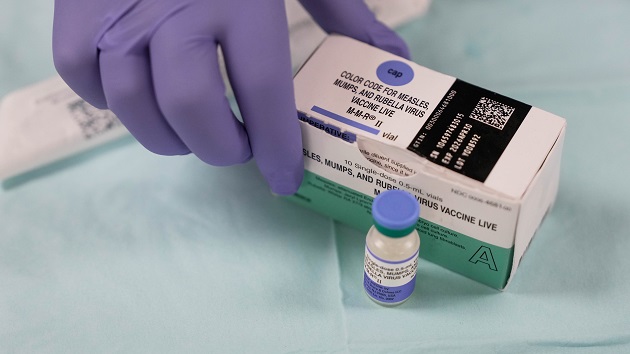
Measles cases reach 1,046 in US as infections confirmed in 30 states: CDC

Measles cases reach 1,046 in US as infections confirmed in 30 states: CDC
Raquel Natalicchio/Houston Chronicle via Getty Images

(NEW YORK) — Measles cases have reached 1,046 as the virus continues spreading across the United States, according to data updated Friday from the Centers for Disease Control and Prevention (CDC).

Cases have been confirmed in 30 states including Alaska, Arkansas, California, Colorado, Florida, Georgia, Hawaii, Illinois, Indiana, Kansas, Kentucky, Louisiana, Maryland, Michigan, Minnesota, Missouri, Montana, New Jersey, New Mexico, New York, North Dakota, Ohio, Oklahoma, Pennsylvania, Rhode Island, Tennessee, Texas, Vermont, Virginia and Washington.

Infectious disease experts have previously said the U.S. is likely on track to surpass the 2019 total of 1,274 cases, which were confirmed over the course of a year. This year’s total also marks the second highest case count in 25 years, CDC data shows.

The CDC says 12% of measles patients in the U.S. this year have been hospitalized, the majority of whom are under age 19.

About 96% of measles cases are among those who are unvaccinated or whose vaccination status is unknown, according to CDC data.

Meanwhile, 1% of cases are among those who have received just one dose of the measles, mumps, rubella (MMR) vaccine and 2% of cases are among those who received the recommended two doses, according to the CDC.

At least three deaths have been confirmed this year, two among children and one among an adult, all of whom were unvaccinated.

It comes as an unvaccinated traveler with measles may have exposed people at Denver International Airport and a nearby hotel, health officials said on Thursday.

The patient was in the international terminal on Tuesday, May 13, and then took a shuttle to stay at the nearby Quality Inn and Suites that night. The next day, the patient took a shuttle back to the airport and boarded a domestic flight.

The Colorado Department of Public Health and Environment and the Denver Department of Public Health and Environment said anybody who may have been exposed on either flight will be directly notified by health officials.

Similarly, a resident of King County in Washington state traveled through Seattle-Tacoma International Airport and a medical center while infectious, Public Health – Seattle & King County said on Tuesday. The individual was likely exposed to measles while recently traveling internationally.

Additionally, the New Jersey Department of Health sent out an alert that a non-resident with measles attended the Shakira concert at MetLife stadium last week, potentially exposing people.

Although the concert occurred on May 16, officials warned that people may develop symptoms as late as June 6. So far, no associated cases have been identified.

The CDC currently recommends that people receive two doses of the MMR vaccine, the first at ages 12 to 15 months and the second between 4 and 6 years old. One dose is 93% effective, and two doses are 97% effective against measles, the CDC says.

Measles was declared eliminated from the U.S. in 2000 due to a highly effective vaccination program, according to the CDC. But vaccination rates have been lagging in recent years.

“I think the overall and overarching worry we have is that, as vaccination rates decline, we’re starting to now see very contagious diseases such as measles come back and, generally, you need a 95% immunity wall of the population to stop an outbreak,” Dr. Scott Roberts, an assistant professor at the Yale School of Medicine and medical director of infection prevention at New Haven Hospital, told ABC News.

“There are now many areas of the U.S. where we don’t hit that 95% and it’s much lower than that, and I think we’re seeing the consequences,” he continued.

Roberts say he’s worried about misinformation that has arisen around the MMR vaccine such as a link between the vaccine and autism, which has been debunked by several high-quality studies.

“I worry that we are seeing this misinformation and parents are reading these things on the Internet, which is not based in truth,” he said. “What we try to do as health care providers and public health professionals is really just to give the right information out there that the measles vaccine is safe. It is effective and measles itself is not a run-of-the-mill cold; it can lead to these really devastating consequences if somebody’s vulnerable and gets infected.”

Dr. Karen Tachi Udoh is an internal medicine resident at Johns Hopkins Hospital and a member of the ABC News Medical Unit.

Copyright © 2025, ABC Audio. All rights reserved.

Accused neo-Nazi cult leader extradited to US, as DOJ alleges ties to deadly Nashville school shooting

Accused neo-Nazi cult leader extradited to US, as DOJ alleges ties to deadly Nashville school shooting
Witthaya Prasongsin/Getty Images

(NEW YORK) — The alleged leader of a neo-Nazi cult based overseas has been extradited to the United States and accused of inspiring “multiple senseless killings” around the world, including the shooting at Antioch High School in Nashville, Tennessee, that four months ago left one student dead and another injured, according to the Justice Department.

In a letter to a federal judge filed Friday morning, the Justice Department said that Michail Chkhikvishvili, a Georgian national arrested in Moldova last year, is scheduled to be arraigned later in the day in U.S. federal court in Brooklyn.

Chkhikvishvili was indicted last year on several federal charges, including two counts of soliciting hate crimes and other violent attacks. According to the Justice Department, he was a leader of the “Manian Murder Cult,” a Russian and Ukrainian-based extremist group also known as “MKY” that promotes violence against racial minorities, the Jewish community, and others it deems “undesirables.”

In announcing his indictment last year, the Justice Department said Chkhikvishvili – who allegedly also goes by the moniker “Commander Butcher” – distributed a self-authored “Hater’s Handbook” encouraging readers to commit school shootings and other mass “terror attacks,” providing suggested methods and strategies.

The Justice Department also said he planned and solicited help for a mass casualty attack targeting Jews and other minorities in New York City on New Year’s Eve, but the person he solicited was actually an undercover FBI agent.

Since his arrest in July of last year, Chkhikvishvili had been held in Moldova. But he is now expected to appear is a U.S. federal court on Friday, and federal prosecutors hope a federal judge will agree to keep him detained pending trial, according to the Justice Department’s filing.

“The defendant’s repeated solicitations of violence have had the intended effect. They have directly resulted in real violence, including multiple senseless killings, in the United States and around the world,” the Justice Department said in its filing.

As an example, the Justice Department wrote: “In January 2025, a 17-year-old student killed one individual and injured another before committing suicide inside Antioch High School in Nashville, Tennessee. The attacker livestreamed part of the attack. Prior to the attack, in an audio recording posted online and attributed to him, the attacker claimed he was taking action on behalf of MKY and at least one other group. The attacker’s [writings] explicitly mentioned the defendant by name and included numerous references to MKY’s founder, Yegor Krasnov. The attacker stated that he would write Krasnov’s name on his gun.”

The Justice Department also said an August 2024 knife attack in Turkey and the April 2022 murder of an elderly woman in Romania were connected to Chkhikvishvili’s actions.

“The defendant has consistently demonstrated that he is capable of orchestrating deadly attacks from behind a computer screen at home,” the Justice Department added. “Moreover, the defendant has repeatedly stated that he has committed acts of violence and that he intends to commit more. The Court should take the defendant at his word and detain him in the interest of public safety.”

In a statement issued Friday, Attorney General Pam Bondi said the case against Chkhikvishvili “is a stark reminder of the kind of terrorism we face today: online networks plotting unspeakable acts of violence against children, families, and the Jewish community in pursuit of a depraved, extremist ideology.”

This is a developing story. Check back for updates.

Copyright © 2025, ABC Audio. All rights reserved.

Russia, Ukraine begin large prisoner exchange, expected to continue in coming days

Russia, Ukraine begin large prisoner exchange, expected to continue in coming days
Yan Dobronosov/Global Images Ukraine via Getty Images

(LONDON) — Russia and Ukraine have begun a large exchange of prisoners of war on Friday, the Russian Defense Ministry said, with around 1,000 soldiers from each side expected to be swapped at the Ukraine-Belarus border when completed.

There have been 270 Russian soldiers and 120 Russian civilians swapped for 270 Ukrainian soldiers and 120 Ukrainian civilians on Friday, according to the defense ministry. The exchange is expected to continue “in the coming days,” Russia said.

“We are bringing our people home,” Ukrainian President Volodymyr Zelenskyy said. “The first stage of the ‘1000-for-1000’ exchange agreement has been carried out.”

“Thank you to everyone who is helping and working 24/7 to bring Ukrainian men and women back home,” he continued. “It is very important to return everyone who remains in captivity. We are verifying every surname, every detail about each person. We will continue our diplomatic efforts to make such steps possible.”

The exchange was prepared following bilateral peace talks in Istanbul last week.

Though the meeting — the first direct talks between the combatants since the spring of 2022 — failed to agree a ceasefire, the two sides did agree to Friday’s prisoner swap.

Such exchanges have taken place throughout Russia’s 3-year-old invasion, though the swap — once completed — will be by far the largest to date. Prisoner exchanges are one of the few areas in which Moscow and Kyiv have been able to reach an accord during the conflict.

Fierce fighting and long-range drone exchanges continued regardless — and despite continued U.S.-led efforts to produce a ceasefire agreement.

Russia carried out a “large-scale aerial attack” on Ukraine overnight Friday using 175 drones and one ballistic missile, the Ukrainian air force said.

Ukrainian air defenses neutralized 150 of those Russian drones, but damage was reported in the Sumy, Dnipropetrovsk, Donetsk, Kharkiv, Kyiv, Zhytomyr, Odesa, Chernivtsi, and Ivano-Frankivsk regions, according to the Ukrainian air force.

Ukraine’s air force on Wednesday reported 76 Russian drones launched into the country overnight, of which 63 were shot down or lost in flight without causing damage. The air force reported damage in four Ukrainian regions.

Russia’s Defense Ministry said its forces downed at least 162 Ukrainian drones overnight.

ABC News’ Natalia Popova and Tanya Stukalova contributed to this report.

This is a developing story. Please check back for updates.

Copyright © 2025, ABC Audio. All rights reserved.
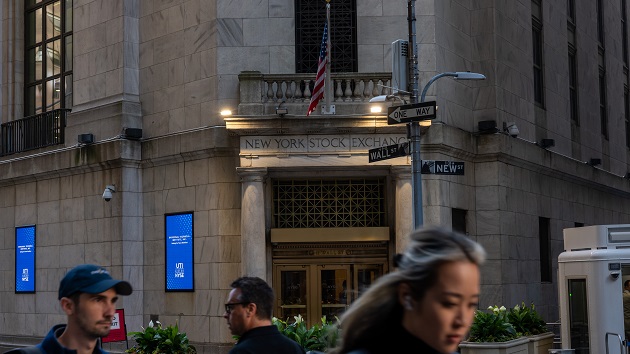
Stocks slide as Trump threatens tariffs on Apple and European Union

Stocks slide as Trump threatens tariffs on Apple and European Union
Spencer Platt/Getty Images

(NEW YORK) — Stocks tumbled in early trading on Friday after President Donald Trump threatened new tariffs targeting tech giant Apple and the European Union.

The Dow Jones Industrial Average dropped 458 points, or 1.1%, while the S&P 500 declined 1.2%. The tech-heavy Nasdaq dropped 1.6%.

Shares of Apple fell nearly 3% at the open of trading. European stocks also declined on Friday, as the STOXX Europe 600 index fell nearly 2%.

In a social media post, Trump urged Apple to manufacture iPhones in the U.S., criticizing the company for plans to shift some production to India in an effort to avoid tariffs slapped on China. If Apple fails to shift iPhone manufacturing to the U.S., Trump said, the company would face a 25% tariff.

Minutes later, Trump issued a social media post slamming the European Union over a trade posture that he described as “very difficult to deal with.” In response,Trump said he is “recommending” a 50% tariff on goods from the European Union to begin on June 1.

The market dip erased some gains made in recent weeks as Trump rolled back levies.

Trump last month exempted phones, computers and chips from so-called “reciprocal tariffs” imposed on China-made goods, which at that time amounted to a 125% levy. The move also excluded such products from a 10% across-the-board tariff imposed on nearly all imports.

Last week, Trump temporarily slashed the reciprocal tariffs on China from 125% to 10% as the U.S. and China hold trade negotiations. China still faces 20% tariffs over its role in the fentanyl trade, bringing total levies on Chinese goods to 30%.

The U.S.-China agreement marked the latest softening of Trump’s levies, coming weeks after the White House paused far-reaching “reciprocal tariffs” on dozens of countries. Trump also eased sector-specific tariffs targeting autos, and rolled back duties on some goods from Mexico and Canada.

An array of tariffs remain in place, however, including an across-the-board 10% levy that applies to imports from nearly all countries. Additional tariffs have hit auto parts, as well as steel and aluminum.

Consumers face the highest overall average effective tariff rate since 1934, the Yale Budget Lab found earlier this month.

A growing set of major retailers have warned of possible tariff-driven price hikes, including Nike, Target, Walmart and Best Buy.

Copyright © 2025, ABC Audio. All rights reserved.

Harvard sues Trump admin for its ban on school enrolling international students

Harvard sues Trump admin for its ban on school enrolling international students
Kyle Mazza/Anadolu via Getty Images

(CAMBRIDGE, Mass.) — Harvard University sued the Trump administration Friday, alleging that the decision to revoke the school’s ability to enroll international students “is a blatant violation of the First Amendment, the Due Process Clause, and the Administrative Procedure Act.”

The Trump administration said on Thursday the school lost its ability to use the Student and Exchange Visitor Program (which allows for noncitizens to study at the university under a specific visa) because it had not complied with demands sent last month to supply information on student visa holders.

“As a result of your refusal to comply with multiple requests to provide the Department of Homeland Security pertinent information while perpetuating an unsafe campus environment that is hostile to Jewish students, promotes pro-Hamas sympathies, and employs racist ‘diversity, equity, and inclusion’ policies, you have lost this privilege,” Department of Homeland Security Secretary Kristi Noem wrote in a letter to the university.

Harvard President Alan Gerber pushed back in a message to the university on Friday.

“The government has claimed that its destructive action is based on Harvard’s failure to comply with requests for information from the US Department of Homeland Security. In fact, Harvard did respond to the Department’s requests as required by law,” Gerber said.

In its complaint, Harvard said there is “no lawful justification” for canceling the status.

The school accused the administration of waging an “unprecedented and retaliatory attack” because the university supports policies the administration doesn’t like.

“The government has casually discarded core First Amendment protections, the protections of procedural due process, and DHS’s own regulations to immediate and devastating effect for Harvard and its community. Harvard’s more than 7,000 F-1 and J-1 visa holders — and their dependents — have become pawns in the government’s escalating campaign of retaliation,” the complaint reads.

The dispute over international students is the latest development in the administration’s standoff with one of the country’s most prestigious universities.

Trump has threatened the school’s tax-exempt status and is withholding billions in federal funding after the school’s refusal to comply with the administration’s demands regarding campus policies and governance, including actions on antisemitism and the use of DEI on campus.

Noem wrote to Harvard in April requesting a tranche of information be given to DHS in order for the school to retain its SEVP status.

According to the letter, she asked Harvard to give information over on student visa holder’s “known” illegally activity; violent activity; threats to students or faculty; disciplinary actions taken as a result of being involved in a protest; information on whether the student obstructed the school’s learning environment; and the coursework that the student is taking to maintain the visa status.

Noem said the school did not provide adequate information in response, and that it is a “privilege, not a right” for students to study at American universities.

The latest poll by ABC News/Washington Post found most Americans (66%) took Harvard’s side in the conflict. Thirty-two percent of respondents sided with the Trump administration.

This is a developing story. Please check back for updates.

Copyright © 2025, ABC Audio. All rights reserved.

3rd woman arrested for allegedly assisting New Orleans inmate escapee still at large

3rd woman arrested for allegedly assisting New Orleans inmate escapee still at large
Douglas Sacha/Getty Images

(NEW ORLEANS) — A Slidell woman was arrested and accused of helping a fugitive who is still at large from the massive New Orleans jailbreak elude capture, Louisiana State Police said.

Connie Weeden, 59, was taken into custody in Slidell and booked into the St. Tammany Parish Correctional Center on Thursday. In addition to jail employees, she is the third person arrested for assisting the Orleans Justice Center’s escaped inmates.

Weeden faces a felony charge of accessory after the fact for allegedly assisting Jermaine Donald, one of the five escapees still on the run.

“Weeden was in contact via phone both before and after the escape,” said LSP officials in a statement. “Investigators determined that after the escape, she provided Donald with cash through a cell phone app.”

Donald remains at large, along with four others who broke out of the Orleans Justice Center on May 16. Authorities have recaptured five of the original 10 who escaped.

Law enforcement officials warned that helping fugitives will carry serious consequences. “Those who choose to assist or conceal these individuals are violating the law and will be held accountable,” said state police. “Harboring fugitives threatens the safety of our communities and will not be tolerated.”

Under Louisiana law, a conviction for accessory after the fact carries a penalty of up to five years in prison, a fine of up to $500, or both.

The LSP announced on Wednesday that 32-year-old Cortnie Harris and 38-year-old Corvanntay Baptiste were arrested and charged with felony counts of being accessories after the fact. They were both booked at the Plaquemines Parish Detention Center, officials said.

Earlier on Thursday, the Orleans Parish District Attorney issued subpoenas to the Orleans Parish Sheriff Susan Hutson, and other OPSO staff members as part of an ongoing investigation into the escape of inmates.

The order demanded access to emails, text messages, internal messages, from or to Hutson and other OPSO staff and contractors, including those to Sterling Williams, the jail maintenance worker who was arrested in connection with the jailbreak.

Williams, a 33-year-old maintenance worker at the Orleans Parish Justice Center, was arrested and booked into jail Tuesday morning, according to Louisiana Attorney General Liz Murrill.

Williams allegedly shut off the water to a toilet to help clear the way for the inmates to escape, sources said. The prisoners, including three who are charged with second-degree murder and remain on the run, were able to get out after ripping the toilet off its hinges.

Four other jail employees have been suspended in this investigation.

Copyright © 2025, ABC Audio. All rights reserved.
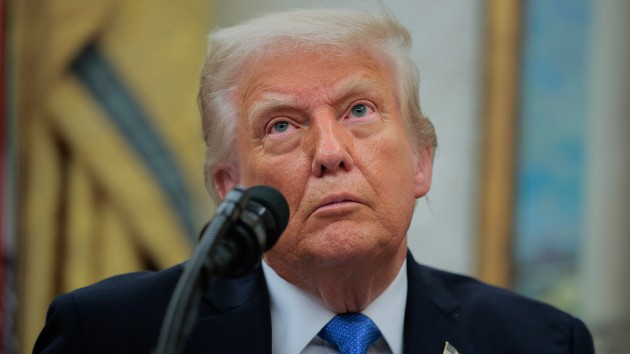
Judge says Trump has power to impose tariffs, but punts lawsuit to different court

Judge says Trump has power to impose tariffs, but punts lawsuit to different court
Chip Somodevilla/Getty Images

(WASHINGTON) — Donald Trump’s sweeping tariffs may be able to survive a legal challenge, thanks in part to a Japanese zipper company that sued the Nixon administration 50 years ago.

Earlier this week, a federal judge in Florida nominated by Donald Trump suggested the president has the authority to unilaterally impose tariffs — basing his ruling on the precedent from a 1970s court case — but stopped short of issuing an order affirming the president’s right to impose sweeping tariffs.

In a largely technical ruling issued on Tuesday, U.S. Judge T. Kent Wetherell II transferred one of the first lawsuits challenging Trump’s tariffs to a different federal court while also weighing in on the legality of the controversial tariffs. Florida-based planner company Emily Ley Paper sued over the tariffs in April, asking Wetherell to invalidate them because Trump lacks the power to impose tariffs himself.

According to the judge, the International Emergency Economic Powers Act of 1977 gives Trump the authority to set tariffs for reasons other than raising revenue. Wetherell wrote that Trump’s justification for the tariffs — both stemming the flow of illicit drugs into the country and resolving a trade imbalance — is sufficient to satisfy the terms set by Congress.

“This is a civil action commenced against the United States and it ‘arises out of’ a federal law—IEEPA—so the dispositive question framed by the parties’ filings is whether IEEPA ‘provid[es] for … tariffs,'” he wrote. “Defendants contend that it does; Plaintiffs contend that it doesn’t. The Court agrees with Defendants …”

The decision is at best a symbolic victory for the Trump administration, which is fending off a half dozen lawsuits challenging the legality of the recent “Liberation Day” tariffs.

Judge Wetherell ultimately decided to transfer the case from a federal court in Florida to the Court of International Trade in New York, meaning that, despite his favorable view of the tariffs, he won’t be the one deciding the case.

But the decision marks the first time a federal judge has suggested Trump’s imposition of tariffs falls within his authority as president, offering a positive sign that the Trump administration may find a receptive audience at the Court of International Trade. During two hearings over the last week, judges at the Court of International Trade have wrestled with the same question about Trump’s authority.

The question comes down to the interpretation of the 1970s law that Trump used to impose his tariffs. The IEEPA gives the president the right to “regulate” imports but does not explicitly mention tariffs. Lawyers challenging the tariffs have argued that Trump’s interpretation of the law oversteps his authority by treading into an issue controlled by Congress, but the Trump administration has pointed judges to a court decision related to the IEEPA’s legal predecessor — the Trading with the Enemy Act of 1917 — to guide the way.

Back when President Richard Nixon confronted the country’s 1971 economic crisis with steep tariffs on Japanese goods, a zipper company based in Japan called Yoshida sued Nixon over the tariffs.

The Court of Customs and Patent Appeals, the predecessor to the Court of International Trade, sided with the government and held that the TWAE gives the president the power to impose tariffs.

According to Wetherell, the same reasoning would apply 50 years later to the IEEPA, meaning Trump has the power to impose tariffs without the help of Congress. “The reasoning in Yoshida is persuasive, and the Court sees no reason why it would not apply to IEEPA because the operative language of IEEPA is identical to the operative language in TWEA,” the judge wrote.

Despite losing its legal battle, Yoshida remains in business today. Now operating under the name YKK, it produces more zippers than any other company in the world.

Copyright © 2025, ABC Audio. All rights reserved.

New head of Social Security, hired from Wall Street, tells staff he had to Google the job when he was offered it

New head of Social Security, hired from Wall Street, tells staff he had to Google the job when he was offered it
Kevin Dietsch/Getty Images

(WASHINGTON) — The newly sworn-in head of the Social Security Administration told agency staff this week that when he was first offered the job in the Trump administration, he wasn’t familiar with the position and had to look it up online.

Frank Bisignano, a former Wall Street executive, said during a town hall with Social Security managers from around the country on Wednesday that he wasn’t seeking a position in the Trump administration when he received a call about leading the SSA.

“So, I get a phone call and it’s about Social Security. And I’m really, I’m really not, I swear I’m not looking for a job,” Bisignano said, according to an audio recording of the meeting obtained by ABC News. “And I’m like, ‘Well, what am I going to do?’ So, I’m Googling Social Security. You know, one of my great skills, I’m one of the great Googlers on the East Coast.”

“I’m like, ‘What the heck’s the commissioner of Social Security?'” said Bisignano, who now oversees one of the largest federal agencies that’s responsible for distributing retirement, disability, and survivor benefits to more than 70 million Americans.

“Put that as the headline for the Post: ‘Great Googler in Chief. Chief in Googler’ or whatever,” said Bisignano, who throughout the meeting repeatedly bemoaned media leaks from within the agency.

While Bisignano, who previously served as chairman and CEO of financial technology company Fiserv Inc., brings experience managing large organizations and overseeing complex payment systems to his new role, he has no prior history working in government or with the Social Security system.

A spokesperson for the Social Security Administration did not respond to a request for comment from ABC News.

In Wednesday’s 90-minute call, Bisignano sought to calm concerns about the future of the agency amid recent leadership turnover and scrutiny from Elon Musk’s government-slashing Department of Government Efficiency, known as DOGE.

He told the managers in the meeting that Social Security was “not going away,” adding that President Trump also agrees with that.

“This is America’s, you know, safety net — it’s not going away. And hopefully you hear me say this every day,” he said. “You know who wants me to tell people that? Guess. The president.”

“I’ve gotten notes about, ‘Will the turmoil of the last five months end? Are you here to cause more turmoil?'” he said. “I don’t think it’s the turmoil of the past five months, although I will be the fifth since, you know, November, right?” Bisignano said, referring to being the fifth person put in charge of the critical agency since Trump was reelected in November.

“Are we having fun yet? Are we OK?” he asked those on the call.

Bisignano told the managers that they needed to believe that DOGE was “helping to make things better” even if “it may not feel that way.”

“Who’s heard of DOGE? Raise your hand, right? Your bias has to be, because mine is, DOGE is helping make things better. It may not feel that way, but don’t believe everything you read.”

He said DOGE would be involved in rebuilding the Social Security website and integrating artificial intelligence into the agency’s phone support systems.

The head of the agency also told managers that the SSA must adopt a “digital-first” mindset to meet the expectations of the American public, comparing the agency to how consumers interact with tech giants like Amazon.

“You’re competing with experiences that people have with Amazon, right? So if I could get something done at Amazon, why can’t I get something done the same way with Social Security? That’s how people think.”

Bisignano’s officially joins the agency following months of upheaval at the SSA, which has seen a revolving door of leadership amid DOGE’s sweeping efforts to overhaul the agency by modernizing its operations and cutting costs. Among the changes DOGE is pushing are staff reassignments, digital infrastructure overhauls, and the controversial outsourcing of certain administrative functions, according to sources.

Bisignano also said he does not intend to implement reductions in force, or RIFs, at the agency, at least for now. “I have no intent to RIF people, OK? Because that’s the big question,” he said.

When the Wall Street veteran was named Trump’s pick to lead the agency, he faced backlash from Democrats and activists who claimed his selection threatened the future of the Social Security program. In early May, lawmakers, union leaders, and activists protested his selection outside the U.S. Capitol ahead of the Senate vote on his nomination.

On Wednesday’s call, Bisignano appeared to revel in the news.

“Did you guys know there was a protest against me? Who knows there was a protest against me?” he said. “I like that protest — I want to prove them so wrong, man, this is going to be most fun I ever had.”

“I mean, think of that — a poor boy from Brooklyn, from a multi-generational household with a dad who worked in the federal government, and senators picketing that I’m going to ruin it,” he said. “No way — make it great, right?”

Bisignano, during the call, returned several times to his concerns about leaks to the press, suggesting that he would sniff them out.

“My father was a DA and I’m a detective at heart, so I can figure stuff out,” he said.

Copyright © 2025, ABC Audio. All rights reserved.
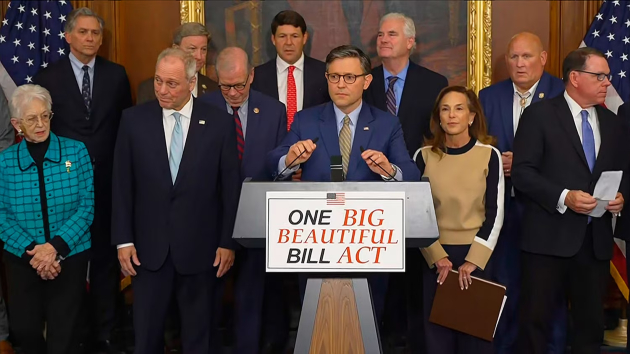
Senate likely to change House-passed megabill advancing Trump’s agenda

Senate likely to change House-passed megabill advancing Trump’s agenda
ABC News

(WASHINGTON) –House Republicans approved the “One Big Beautiful Bill Act” encompassing President Donald Trump’s legislative agenda early Thursday. But clearing the House is just the first hurdle for the bill, which will also have to pass muster with a Senate Republican conference that is already telegraphing that changes to it are coming.

Trump is pushing for swift action on his megabill, urging senators in a post on X to act “as soon as possible” after the narrow victory in the House.

“We can celebrate this pass in the House for a couple of hours, but now it’s time for the Senate to get to work,” White House press secretary Karoline Leavitt said during Thursday’s White House press briefing. “The president has great relationship with … Senate Majority Leader [John] Thune, and of course, so many friends on the Senate side of the Hill. And he’s expecting them to get busy on this bill and send it to his desk as soon as possible.”

Senate Republicans say they’re clear-eyed about wanting to pass Trump’s legislative agenda into law as swiftly as they can, but have every intention of modifying the bill to leave their own distinct mark on the package and working to change things they object to.

Majority Leader Thune said Wednesday that “there are things that we need to adjust or modify or change,” adding that Speaker Mike Johnson “fully understands and accepts that.”

Chief among the issues GOP senators have raised about the bill is that it adds trillions of dollars to the national debt.

“[The] House bill is going to add about $4 trillion to the debt ceiling. The Senate bill adds $5 trillion. There’s nothing fiscally conservative about expanding the debt ceiling more than we’ve ever done it before,” Republican Sen. Rand Paul said Thursday. “This will be the greatest increase in the debt ceiling ever, and the GOP owns this now … the deficit this year will be $2.2 trillion the GOP owns that now too.”

Some Senate Republicans are calling for steeper spending cuts so that raising the debt limit would not be part of this bill.

Republican Sen. Ron Johnson, a notable fiscal hawk, has also signaled strongly that he would not support the bill in its current form, given that it raises the deficit.

“It’s so far off the mark. It’s so bad. I’ve been trying to interject reality. I’ve been trying to interject facts and figures,” Ron Johnson told reporters on Wednesday afternoon at the Capitol, as the House was still advancing the bill through the Rules Committee.

“Currently the fiscal situation is not even in the conversation in the House debate. We’re missing the forest talking about twigs and leaves. Medicaid, that’s, that’s a tree. That’s a big enough issue. But all this, all this, all these little tweaks they’re trying to make to get the deal completely ignores the elf in the room.. which says, on average, I mean, current [Congressional Budget Office] estimate, on average, we’ll have a $2.2 trillion deficit, per year,” Sen. Johnson added.

A few GOP Senators seemed more supportive of the bill, but noted there was significant work needed to be done in order to pass through the upper chamber.

Republican Sen. Thom Tillis said “a lot of it looks pretty good,” adding that it’s a “good start.”

“Still, I think there’s some opportunities for more efficiency, some more savings, and we have to look at the specifics of some of the renewable investment tax credits and production tax credits, and I think that even if we’re going to revise them, we’ve got to make sure that businesses who believe the government was setting this as a priority don’t have a lot of stranded costs,” he added.

If the bill is retooled by the Senate, it risks a complicated path for the speaker down the road when the bill goes back to the House. Republicans have set a Fourth of July deadline for both chambers to pass the bill and get it to Trump’s desk.

Passing this massive package through the Senate is also no cakewalk for Thune, who will only be able to afford to lose three of his members if it comes up for a vote on the Senate floor.

The House-passed bill includes new tax cuts, cuts to social safety net programs and changes to the food assistance program, SNAP — all of which have led Democrats to lambaste the legislation for creating benefits for some of the richest Americans and cuts for some of the poorest.

Minority Leader Chuck Schumer slammed the bill in a post on X Thursday morning.

“This is not one big, beautiful bill. It’s ugly,” Schumer said. “There’s nothing beautiful about stripping away people’s healthcare, forcing kids to go hungry, denying communities the resources they need, and increasing poverty.”

Democratic Sen. Patty Murray called the bill a “scam” in a post on X, urging all Republicans to vote no.

“House Republicans don’t want you to know they just passed a bill that makes health care MORE expensive and kicks MILLIONS off Medicaid, all to pass tax cuts for billionaires & giant corporations,” Murray wrote. “We need to make sure America knows. And we need to kill this bill in the Senate.”

Leavitt criticized Democrats as being “out of touch” with Americans.

“Every single Democrat in the House of Representatives who voted against all of these common sense and massively popular policies,” Leavitt said during Thursday’s White House press briefing. “The Democrat Party has never been more radical and out of touch with the needs of the American people.”

The Senate will also have to contend with the rules governing what can be included in such a package. Making sure that the bill passes muster with the Senate parliamentarian could lead to additional changes to the bill that Mike Johnson will eventually have to sell to his conference in the House.

As Trump now prepares to negotiate with Senators, Leavitt told ABC News Chief White House Correspondent Mary Bruce that she was not aware if those conversations had started already.

What did GOP holdouts get?

Speaker Johnson had to work with his right flank to get the megabill passed in the House, which he managed to do by one vote. So what changed to get those more than a dozen holdouts on board?

Not much, several hard-liners told ABC News.

After laboring for days to push for steeper spending cuts and repeatedly railing against the spending that added to the bloated national deficit, many of the holdouts caved.

“The Freedom Caucus was instrumental, and we held it out as long as we could to get the cuts, as long as we could. We couldn’t do it any longer. We live to fight another day,” Republican Rep. Ralph Norman, a key holdout, told reporters.

Norman says there was no specific deal struck between Trump, the speaker and the hard-line holdouts — even after a high-stakes, last-ditch meeting at the White House Wednesday.

Chair of the House Freedom Caucus, Andy Harris, wouldn’t give the bill his vote. He voted “present.”

Republican Rep. Keith Self, another hard-liner, told ABC News that he waited until the last minute to vote yes on the bill. He didn’t fully support the bill, but didn’t want to be the one to tank it.

“We got something … I would have preferred to go further too, to be honest with you, but we did what we could, and we fought the good fight,” Self said.

That number of “more than a dozen” holdouts also included Republicans from states like New York and California, pushing for a higher cap on the state and local tax deduction. Speaker Johnson raised that cap from its proposed $30,000 to $40,000, and increasing 1% a year thereafter. That was enough to get their support.

But, for the spending hawks, it’s unclear how they can characterize this as a win.

Leavitt said Thursday that she believes that Trump would want to see the two Republican representatives who voted no on the bill — Reps. Thomas Massie and Warren Davidson — should be primaried.

“I don’t think he likes to see grandstanders in Congress. What’s the alternative? I would ask those members of Congress. Did they want to see a tax hike? Did they want to see our country go bankrupt? That’s the alternative by them trying to vote no,” Leavitt said.

ABC News’ Sarah Beth Hensley contributed to this report.

Copyright © 2025, ABC Audio. All rights reserved.
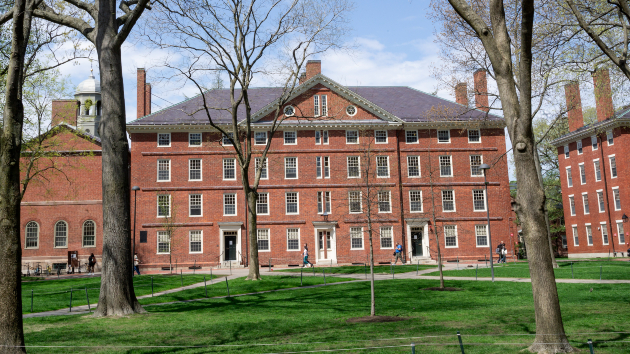
Trump administration bars Harvard from enrolling international students

Trump administration bars Harvard from enrolling international students
Andrew Lichtenstein/Corbis via Getty Images

(WASHINGTON) — The Trump administration has barred Harvard from allowing international students to enroll at the university, after the school lost its ability to use the Student and Exchange Visitor Program.

The SEVP program allows for noncitizens to study at the university under a specific visa.

“As a result of your refusal to comply with multiple requests to provide the Department of Homeland Security pertinent information while perpetuating an unsafe campus environment that is hostile to Jewish students, promotes pro-Hamas sympathies, and employs racist ‘diversity, equity, and inclusion’ policies, you have lost this privilege,” Department of Homeland Security Secretary Kristi Noem wrote in a letter to the university.

Harvard said the move by the Trump administration is not legal.

“The government’s action is unlawful. We are fully committed to maintaining Harvard’s ability to host our international students and scholars, who hail from more than 140 countries and enrich the University – and this nation – immeasurably. We are working quickly to provide guidance and support to members of our community,” the school said in a statement on Thursday. “This retaliatory action threatens serious harm to the Harvard community and our country, and undermines Harvard’s academic and research mission.”

Noem wrote to Harvard in April requesting a tranche of information be given to DHS in order for the school to retain its SEVP status.

According to the letter, she asked Harvard to give information over on student visa holder’s “known” illegally activity; violent activity; threats to students or faculty; disciplinary actions taken as a result of being involved in a protest; information on whether the student obstructed the school’s learning environment; and the coursework that the student is taking to maintain the visa status.

Noem said the school did not provide adequate information in response, and that it is a “privilege, not a right” for students to study at American universities.

“The revocation of your Student and Exchange Visitor Program certification means that Harvard is prohibited from having any aliens on F- or J- nonimmigrant status for the 2025-2026 academic school year.,” she writes. “This decertification also means that existing aliens on F- or J- nonimmigrant status must transfer to another university in order to maintain their nonimmigrant status.”

Noem said that “consequences must follow to send a clear signal to Harvard and all universities that want to enjoy the privilege of enrolling foreign students, that the Trump Administration will enforce the law and root out the evils of anti-Americanism and antisemitism in society and campuses.”

This is a developing story. Please check back for updates.

Copyright © 2025, ABC Audio. All rights reserved.