(WASHINGTON) — The Venezuelan 2-year-old who was kept in U.S. government custody after her parents were deported has been returned to Venezuela.
In a video posted to Venezuelan President Nicolas Maduro’s YouTube page, Maduro is seen greeting the toddler upon the toddler’s return.
The toddler, Maikelys Antonella Espinoza, is seen in the video being carried by Venezuelan first lady Cilia Flores before being handed over to the toddler’s mother, Yorley Inciarte, who had been deported two weeks ago from the United States.
Espinoza’s return comes after Maduro and other Venezuelan government officials accused the Trump administration of kidnapping the 2-year old.
Last month, the Department of Homeland Security labeled Inciarte and her partner Maiker Espinoza Escalona as “Tren de Aragua parents,” alleging the two are members of the Venezuelan criminal gang.
Escalona was sent to the CECOT mega-prison in El Salvador on March 30 under Title 8 authorities. Inciarte was deported two weeks ago to Venezuela without her daughter.
“The child’s father, Maiker Espinoza-Escalona is a lieutenant of Tren De Aragua who oversees homicides, drug sales, kidnappings, extortion, sex trafficking and operates a torture house,” DHS said in a statement. “The child’s mother, Yorely Escarleth Bernal Inciarte oversees recruitment of young women for drug smuggling and prostitution.”
“Everything is false,” Inciarte told ABC News in an interview last week. “Here I am waiting for the evidence they have because if they are accusing me, it’s because they have proof of what they are saying — but here I am waiting.”
“When my partner and my daughter arrive here, the only thing I think about is staying here in my country, because the only one who supported me and fought alongside me was my country, no one else,” Inciarte said. “And I will never, ever abandon my homeland. I won’t even mention the United States, it will never come up. Because what I experienced in that country was so horrible, I don’t even want to talk about how bad it is.”
(NEW YORK) — Recession alarms blared across Wall Street in the aftermath of President Donald Trump’s “Liberation Day” tariff announcement last month, but a recent trade agreement between the U.S. and China has dialed back many of those warnings.
JPMorgan on Tuesday lowered its odds of a recession this year from 60% to below 50%, meaning the U.S. is more likely to grow in 2025 than enter a downturn. Similarly, Goldman Sachs reduced its chances of a recession this year from 45% to 35%.
Stock market gains reflected such optimism. The S&P 500 soared in the immediate aftermath of the U.S.-China agreement, shrugging off previous tariff-induced losses and bringing the index into positive territory for 2025.
The accord between the world’s two largest economies slashed U.S. tariffs on Chinese goods from 145% to 30%, while cutting Chinese levies on U.S. products from 125% to 10%.
The previous set of sky-high tariffs had threatened a surge in prices, a disruption of global trade and a possible U.S. recession.
“The risk of a recession over the next 12 months looks substantially lower following the tariff cuts,” Bill Adams, chief economist for Comerica Bank, told ABC News in a statement.
The drawdown of U.S.-China tariffs marks the latest softening of Trump’s levies.
The White House last month paused far-reaching “reciprocal tariffs” on dozens of countries, just hours after the measures took effect. Trump has also eased sector-specific tariffs targeting autos, and rolled back duties on some goods from Mexico and Canada.
“These massive tariff reductions at this time likely take a recession off the table for now,” Dan Ives, a managing director of equity research at the investment firm Wedbush, told ABC News in a statement on Monday.
Still, an array of tariffs remain in place. An across-the-board 10% levy applies to imports from nearly all countries. Additional tariffs have hit auto parts, as well as steel and aluminum.
Even after the pullback, a 30% tariff on China far exceeds the level before Trump took office, posing a risk of price increases for a large swathe of products that includes apparel, toys and some electronics.
The rollback of levies on Chinese goods is expected to reduce the average cost of tariffs per household nearly by half but the cost burden will still reach $2,800 in 2025, the Yale Budget Lab found.
Federal Reserve Chair Jerome Powell warned last week of a possible tariff-induced bout of “stagflation,” a term that describes a rise of inflation alongside a slowdown of the economy.
Under such a scenario, the central bank could face difficulty as it weighs a choice between lower rates intended to boost the economy or higher rates aimed at easing inflation.
“If the large increase in tariffs that have been announced are sustained, they’re likely to generate a rise in inflation and a slowdown of economic growth,” Powell said. “All of these policies are evolving, however, and their effects on the economy remain highly uncertain.”
For now, the economy has defied inflation fears. Inflation eased in the aftermath of the tariff escalation last month, reaching its lowest level since 2021, government data on Tuesday showed.
The path forward for tariffs remains uncertain, however, clouding the economic outlook, some analysts told ABC News.
The lowered U.S.-China tariffs will remain in place for 90 days while the two sides negotiate a wider trade deal. The White House says it has launched trade discussions with dozens of countries in an effort to strike trade agreements before a pause of the “reciprocal tariffs” lifts in July.
“Will the unpredictable nature of U.S. policy continue or are we now on a more conventional path?” Jim Reid, a strategist at Deutsche Bank Research, said in a note to clients this week, just hours after the U.S. and China announced the trade agreement. “Not sure I have the answers.”
(LONDON) — The Israel Defense Forces issued evacuation warnings for three ports in Houthi-controlled Yemen after intercepting two of three ballistic missiles fired by the Iran-backed group in the past 24 hours. The IDF said one Houthi missile misfired on Tuesday.
The IDF said in a post to X that the third missile launched toward Israel on Wednesday was intercepted just before 8 a.m. local time. Air raid sirens rang out from Jerusalem to Tel Aviv, sending several million Israelis rushing for cover. About two hours later, IDF spokesperson Avichay Adraee ordered those present at the Red Sea ports of Ras Isa, al-Hudaydah and al-Salif to evacuate the area.
“Due to the terrorist Houthi regime’s use of seaports for its terrorist activities, we urge all those present at these ports to evacuate and stay away from them for your own safety until further notice,” Adraee wrote in a post to X.
The IDF routinely issues such evacuation orders ahead of planned airstrikes. The IDF’s first such warning for Yemen was issued on May 6, before Israeli strikes on the Sanaa International Airport in the Yemeni capital.
The spate of Houthi missile attacks came as Israeli Prime Minister Benjamin Netanyahu said Israeli forces would enter Gaza with “full force” in the coming days. Last week, Netanyahu’s security cabinet approved plans to expand the IDF’s war against Hamas in Gaza.
Netanyahu said Wednesday that intensified military action is required “to accomplish all of Israel’s war goals, including the release of all our hostages, destroy Hamas’s military and governance capabilities and ensure that Gaza will never again pose a threat to Israel.”
The Houthis have been attacking U.S. military and global commercial shipping and launching drones and missiles toward Israel since Hamas’ deadly surprise attack on Israel in October 2023. The Houthis say their attacks are a protest of Israel’s war against Hamas in Gaza.
Last week, the Houthis agreed to end attacks on American commercial shipping in the region in exchange for an end to the intense U.S. airstrikes against them, a campaign President Donald Trump began in March. The Houthis have clarified that this agreement struck with the U.S. does not include stopping its attacks on Israel.
Trump announced the agreement on May 6. Over the next two days, the Houthis launched an attack drone and a ballistic missile toward Israel, both of which the IDF said were intercepted.
While traveling to Saudi Arabia to begin a tour of Gulf nations on Monday, Trump told Fox News host Sean Hannity of the Houthis, “You know, they’re tough fighters. They can take a lot of punishment.” Asked if the ceasefire would hold, he responded, “With respect to America, they say it’s true. We’ll see.”
The Houthis have vowed to continue attacks on Israel until it ends its operation in Gaza and the blockade of humanitarian aid into the strip. The Israeli war on Hamas began after the terror group’s Oct. 7, 2023, attack on southern Israel.
The attack killed nearly 1,200 people in Israel with 253 others abducted as hostages, the Israeli government said. Fifty-seven hostages remain in Gaza, including 20 who are believed to be alive.
IDF soldier Edan Alexander — the last living U.S. citizen being held hostage in Gaza — was freed on Monday after direct talks between Hamas and the Trump administration. U.S. officials told ABC News that Alexander’s release was viewed as a goodwill gesture toward the Trump administration and a potential opening to jumpstart talks on a Gaza ceasefire.
After Netanyahu met top U.S. officials in Israel Monday ahead of Alexander’s release, the Israeli leader announced he would send an Israeli negotiating team to Doha, Qatar, for ceasefire talks. Indirect talks with Hamas entered their second day on Wednesday.
But Netanyahu said Tuesday that any new ceasefire deal reached — for example to facilitate the release of more living hostages — would be temporary. “There will be no way we will stop the war,” Netanyahu said. “We can make a ceasefire for a certain period of time, but we’re going to the end.” Netanyahu has repeatedly said that Hamas cannot remain in power in the Mediterranean exclave.
Also on Tuesday, a series of airstrikes targeted the European Hospital near Khan Younis in the southern Gaza Strip. Mohammad Sinwar — the leader of Hamas in Gaza and the brother of former leader Yahya Sinwar, who was killed by the IDF in October — was the target, an Israeli source familiar with the matter told ABC News.
The IDF has not confirmed Mohammed Sinwar was the target and it is not yet clear whether he was killed in the attack. Gaza’s Hamas-run Ministry of Health said that at least six people were killed and 40 others were wounded in the strike.
The IDF claimed its “precise strike” targeted “Hamas terrorists in a command and control center located in an underground terrorist infrastructure site beneath the European hospital.”
The IDF routinely alleges that Hamas uses civilian infrastructure, including hospitals, for military activities — allegations Hamas denies.
The Hamas-run Ministry of Health in Gaza said Wednesday that at least 70 people were killed and dozens injured in overnight Israelis strikes on various targets across the strip.
At least 50 people — including 22 children — were killed by Israeli attacks on houses in the Jabalia refugee camp in the northern part of the strip, the ministry said, citing local hospital officials.
The total death toll in Gaza since Oct. 7, 2023, now stands at 52,928 people, according to the Ministry of Health, with another 119,846 people injured. The ministry does not differentiate between civilian and combatant dead.
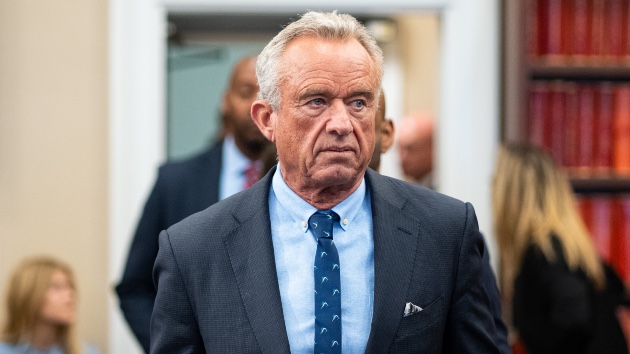
(WASHINGTON) — Health and Human Services Secretary Robert F. Kennedy Jr., before a House committee Wednesday morning, defended the massive cuts to the department’s workforce and laid out his priorities for the Trump administration’s proposed budget — all while he is expected to field questions about his history of promoting conspiracy theories and controversial comments about vaccines.
Kennedy is appearing before the House Appropriations Committee Wednesday morning. He will then head to the Senate Health, Education, Labor, and Pensions (HELP) Committee in the afternoon. The appearances mark the first time Kennedy has testified before Congress since his confirmation hearings in late January, and he may be forced to confront statements he made that critics say are evidence of promises broken.
In his opening statement before the House committee, Kennedy said his goal at HHS is to focus on the chronic disease epidemic and deliver effective services for those who rely on Medicare, Medicaid and other services by cutting costs to taxpayers.
“We intend to do more, a lot more with less. The budget I’m presenting today supports these goals and reflects two enduring American values, compassion and responsibility,” Kennedy said in his opening statement.
Kennedy said the new budget addresses priorities including tackling mental health and addiction; addressing nutrition, physical activity and healthy lifestyles; equipping the FDA to expand food safety experts; eliminating diversity, equity and inclusion funding; strengthening cybersecurity and rebuilding.
Democratic Rep. Rosa DeLauro, ranking Member of the House Appropriations Committee, slammed Kennedy and the Trump’s administration for the cuts to HHS, including the elimination of entire divisions.
In April, HHS began laying off about 10,000 workers and consolidating 28 institutes and centers into 15 new divisions.
Including the roughly 10,000 people who have left over the last few months through early retirement or deferred resignation programs, the overall staff at HHS is expected to fall from 82,000 to around 62,000 — or about a quarter of its workforce.
“Mr. Secretary, you are gutting the life-saving work of the Department of Health and Human Services and its key agencies while the Republicans in this Congress say and do nothing,” DeLauro said. “Because of these cuts people will die.”
In a video statement posted on X prior to the layoffs, Kennedy said that he plans to bring to the agency a “clear sense of mission to radically improve the health of Americans and to improve agency morale.”
Kennedy has defended the cuts as necessary to weed out wasteful spending at one of America’s largest departments, but he has drawn criticism for laying off people who are responsible for regulating tobacco usage, monitoring lead exposure in children and diagnosing black lung disease in miners.
The secretary himself has appeared not to know about some of the cuts, telling CBS News last month he was “not familiar” with several cuts cited by the outlet.
Before the House committee, Kennedy also rebuked criticism of his agency’s response to the measles outbreak.
“We are doing a better job at CDC today than any nation in the world controlling this measles outbreak. I’m happy to elaborate on that afterward,” Kennedy said.
DeLauro replied that Kennedy’s comparison of the U.S. response to measles to the response of other countries was unfair.
“Mr. Secretary, you keep comparing the U.S. to other countries compare us to Europe, but the Europe you are referring to is the WHO European region has 53 countries in Europe and in Asia, including those with low vaccine vaccination rates like Romania and that has never eliminated measles,” she said. “If you compare us to western Europe countries that we often compare ourselves to, like Great Britain, they have seen no measles death.”
Kennedy argued that the U.S. is doing better than other countries in the Americas with smaller populations, including Canada and Mexico.
Kennedy said several times during his hearing in January that he supports vaccines, although he refused to unequivocally say that vaccines don’t cause autism, despite numerous existing studies already showing there is no link.
“I support the measles vaccine. I support the polio vaccine. I will do nothing as HHS secretary that makes it difficult or discourages people from taking either of those vaccines,” Kennedy said.
However, in March, the HHS confirmed that the Centers for Disease Control and Prevention will study whether vaccines cause autism.
Democratic Rep. Mark Pocan asked Kennedy if he would vaccinate his own children today with the measles vaccine, chickenpox vaccine or polio vaccine, and Kennedy refused to say he would.
“My opinions about vaccines are irrelevant,” Kennedy said. “That question directly, it will seem like I’m giving advice to other people, and I don’t want to be doing that.”
“But that’s kind of your jurisdiction, because CDC does give advice, right?” Pocan replied.
DeLauro scolded Kennedy for promoting vaccine skepticism in the wake of a measles outbreak spreading across the U.S.
In the wake of several ongoing measles outbreaks across the U.S. and over 1,000 cases so far this year, Kennedy has shared contradicting views about vaccines.
In a post on X on April 6, Kennedy said that the “most effective way to prevent the spread of measles” is to receive the measles, mumps, rubella (MMR) vaccine. However, in a post later that evening, he said more than 300 children have been treated with an antibiotic and a steroid, neither of which are recognized treatments or cures for measles.
Kennedy’s embrace of anti-vaccine ideas nearly put his confirmation in jeopardy, as he faced resistance from Louisiana Republican Sen. Bill Cassidy, a physician who heads the HELP committee. Cassidy expressed concerns about Kennedy’s views on vaccines before ultimately voting to move him through the confirmation process in February.
Cassidy said, at the time, that Kennedy assured him he would not alter vaccine policy without “ironclad” scientific evidence. The senator added that Kennedy and Trump officials promised him an “unprecedentedly close collaborate working relationship” with the secretary.
Kennedy’s controversial moves on fluoride came up with Republican Rep. Mike Simpson, a dentist, telling Kennedy he was concerned about the secretary’s comments on it.
Last month, Kennedy said he plans to assemble a task force and ultimately change the Centers for Disease Control and Prevention’s guidance to stop recommending adding fluoride to drinking water and other products. He has claimed that fluoride in drinking water affects children’s neurological development.
The Food and Drug Administration said it will conduct a scientific review of fluoride-containing supplements sometimes used to strengthen children’s teeth by late October with the aim of removing them from the market.
“I’ve seen the benefits having been a practicing dentist for 22 years. … You don’t prevent cavities by fluoride killing the bacteria in the mouth,” Simpson said. “What it does is make the enamel more resistant to decay. So, I want to see the studies on this and where we’re headed with this.”
Previous reviews by public health experts and dental professionals have not shown any serious health risks with the addition of fluoride.
ABC News’ Cheyenne Haslett and Anne Flaherty contributed to this report.
(WASHINGTON) — Health and Human Services Secretary Robert F. Kennedy Jr., before a House committee Wednesday morning, defended the massive cuts to the department’s workforce and laid out his priorities for the Trump administration’s proposed budget — all while he is expected to field questions about his history of promoting conspiracy theories and controversial comments about vaccines.
Kennedy is appearing before the House Appropriations Committee Wednesday morning. He will then head to the Senate Health, Education, Labor, and Pensions (HELP) Committee in the afternoon. The appearances mark the first time Kennedy has testified before Congress since his confirmation hearings in late January, and he may be forced to confront statements he made that critics say are evidence of promises broken.
In his opening statement before the House committee, Kennedy said his goal at HHS is to focus on the chronic disease epidemic and deliver effective services for those who rely on Medicare, Medicaid and other services by cutting costs to taxpayers.
“We intend to do more, a lot more with less. The budget I’m presenting today supports these goals and reflects two enduring American values, compassion and responsibility,” Kennedy said in his opening statement.
Kennedy said the new budget addresses priorities including tackling mental health and addiction; addressing nutrition, physical activity and healthy lifestyles; equipping the FDA to expand food safety experts; eliminating diversity, equity and inclusion funding; strengthening cybersecurity and rebuilding.
Democratic Rep. Rosa DeLauro, ranking Member of the House Appropriations Committee, slammed Kennedy and the Trump’s administration for the cuts to HHS, including the elimination of entire divisions.
In April, HHS began laying off about 10,000 workers and consolidating 28 institutes and centers into 15 new divisions.
Including the roughly 10,000 people who have left over the last few months through early retirement or deferred resignation programs, the overall staff at HHS is expected to fall from 82,000 to around 62,000 — or about a quarter of its workforce.
“Mr. Secretary, you are gutting the life-saving work of the Department of Health and Human Services and its key agencies while the Republicans in this Congress say and do nothing,” DeLauro said. “Because of these cuts people will die.”
In a video statement posted on X prior to the layoffs, Kennedy said that he plans to bring to the agency a “clear sense of mission to radically improve the health of Americans and to improve agency morale.”
Kennedy has defended the cuts as necessary to weed out wasteful spending at one of America’s largest departments, but he has drawn criticism for laying off people who are responsible for regulating tobacco usage, monitoring lead exposure in children and diagnosing black lung disease in miners.
The secretary himself has appeared not to know about some of the cuts, telling CBS News last month he was “not familiar” with several cuts cited by the outlet.
Before the House committee, Kennedy also rebuked criticism of his agency’s response to the measles outbreak.
“We are doing a better job at CDC today than any nation in the world controlling this measles outbreak. I’m happy to elaborate on that afterward,” Kennedy said.
DeLauro replied that Kennedy’s comparison of the U.S. response to measles to the response of other countries was unfair.
“Mr. Secretary, you keep comparing the U.S. to other countries compare us to Europe, but the Europe you are referring to is the WHO European region has 53 countries in Europe and in Asia, including those with low vaccine vaccination rates like Romania and that has never eliminated measles,” she said. “If you compare us to western Europe countries that we often compare ourselves to, like Great Britain, they have seen no measles death.”
Kennedy argued that the U.S. is doing better than other countries in the Americas with smaller populations, including Canada and Mexico.
Kennedy said several times during his hearing in January that he supports vaccines, although he refused to unequivocally say that vaccines don’t cause autism, despite numerous existing studies already showing there is no link.
“I support the measles vaccine. I support the polio vaccine. I will do nothing as HHS secretary that makes it difficult or discourages people from taking either of those vaccines,” Kennedy said.
However, in March, the HHS confirmed that the Centers for Disease Control and Prevention will study whether vaccines cause autism.
Democratic Rep. Mark Pocan asked Kennedy if he would vaccinate his own children today with the measles vaccine, chickenpox vaccine or polio vaccine, and Kennedy refused to say he would.
“My opinions about vaccines are irrelevant,” Kennedy said. “That question directly, it will seem like I’m giving advice to other people, and I don’t want to be doing that.”
“But that’s kind of your jurisdiction, because CDC does give advice, right?” Pocan replied.
DeLauro scolded Kennedy for promoting vaccine skepticism in the wake of a measles outbreak spreading across the U.S.
In the wake of several ongoing measles outbreaks across the U.S. and over 1,000 cases so far this year, Kennedy has shared contradicting views about vaccines.
In a post on X on April 6, Kennedy said that the “most effective way to prevent the spread of measles” is to receive the measles, mumps, rubella (MMR) vaccine. However, in a post later that evening, he said more than 300 children have been treated with an antibiotic and a steroid, neither of which are recognized treatments or cures for measles.
Kennedy’s embrace of anti-vaccine ideas nearly put his confirmation in jeopardy, as he faced resistance from Louisiana Republican Sen. Bill Cassidy, a physician who heads the HELP committee. Cassidy expressed concerns about Kennedy’s views on vaccines before ultimately voting to move him through the confirmation process in February.
Cassidy said, at the time, that Kennedy assured him he would not alter vaccine policy without “ironclad” scientific evidence. The senator added that Kennedy and Trump officials promised him an “unprecedentedly close collaborate working relationship” with the secretary.
Kennedy’s controversial moves on fluoride came up with Republican Rep. Mike Simpson, a dentist, telling Kennedy he was concerned about the secretary’s comments on it.
Last month, Kennedy said he plans to assemble a task force and ultimately change the Centers for Disease Control and Prevention’s guidance to stop recommending adding fluoride to drinking water and other products. He has claimed that fluoride in drinking water affects children’s neurological development.
The Food and Drug Administration said it will conduct a scientific review of fluoride-containing supplements sometimes used to strengthen children’s teeth by late October with the aim of removing them from the market.
“I’ve seen the benefits having been a practicing dentist for 22 years. … You don’t prevent cavities by fluoride killing the bacteria in the mouth,” Simpson said. “What it does is make the enamel more resistant to decay. So, I want to see the studies on this and where we’re headed with this.”
Previous reviews by public health experts and dental professionals have not shown any serious health risks with the addition of fluoride.
ABC News’ Cheyenne Haslett and Anne Flaherty contributed to this report.
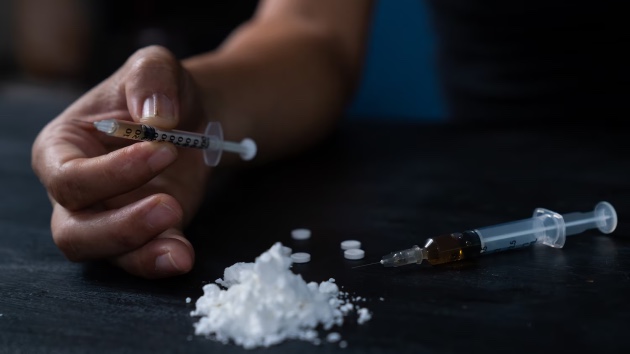
(NEW YORK) — Drug overdose deaths dropped in the United States last year to the lowest levels seen in five years, according to a new federal report published Wednesday morning.
The provisional report from the Centers for Disease Control and Prevention’s National Center for Health Statistics found nationwide drug overdose deaths fell from 110,037 in 2023 to 80,391 in 2024.
This represents a decline of 26.9% and the lowest figure of annual drug overdose deaths since 2019, according to the report.
This is the second year in a row that drug overdose deaths have dropped after year-over-year increases were seen during the COVID-19 pandemic, and researchers say they’re cautiously optimistic about the declines.
“We should have a guarded enthusiasm here because what we’re seeing is almost the return to the overdose death rates that we had before the pandemic,” Dr. Petros Levounis, a professor and chair of the department of psychiatry and associate decant of Rutgers New Jersey Medical School, who was not involved in the report, told ABC News.
“So essentially, we have corrected the bump and the increase in overdose deaths we experienced with the pandemic,” he added.
The report found the biggest drop in deaths by drug type was seen in fatalities linked to synthetic opioids, including fentanyl, which fell from 76,282 to 48,422 between 2023 and 2024.
Declines were also seen in overdose deaths from psychostimulants, such as methamphetamine; cocaine; and natural or semi-synthetic drugs such as morphine.
Additionally, nearly every state across the country saw decreases in drug overdose deaths. Louisiana, Michigan, New Hampshire, Ohio, Virginia, West Virginia and Wisconsin, as well as Washington, D.C., saw declines of 35% or more from 2023 to 2024, according to the report.
By comparison, South Dakota and Nevada each saw slight increases in 2024 compared to 2023, the report found.
Lavounis, who is also the director of Rutgers’ Northern New Jersey Medications for Addiction Treatment Center of Excellence, said public health officials should also pay attention to Alaska, where opioid overdoses have steadily been increasing since at least 2018.
Overdose rates in Alaska have reached historic levels, according to CDC data, due to a proliferation of fentanyl
Fentanyl is up to 50 times more potent than heroin and 100 times more potent than morphine and can be deadly even in small doses, according to the CDC. Other drugs may be laced with deadly levels of fentanyl, and a user is not able to see it, taste it, or smell it. Experts told ABC News they believe there a few reasons behind the drop in overdose deaths. One reason is the more widespread use of naloxone, the overdose reversal drug.
The U.S. Food and Drug Administration approved Narcan for over-the-counter use in March 2023.
Narcan, made by the company Emergent BioSolutions, is given as a nasal spray and naloxone — the active ingredient in the medication — can quickly restore one’s breathing if an individual is experiencing an opioid overdose, though its effect is temporary and some people may need additional doses.
Harm reduction groups and other experts have been pushing for easier access to naloxone as one strategy to help prevent some of the tens of thousands of overdose deaths that occur each year in the U.S.
Dr. Allison Lin, an addiction psychiatrist at University of Michigan Medical School, who was not involved in the report, said there has also been wider use of medications to treat opioid use disorder as well as an increase of public awareness of the dangers of opioid use.
“These are the things that we know, at least from a research perspective, to be lifesaving,” she told ABC News. “We’ve been battling this overdose epidemic for now over a decade, and so there’s been tremendous efforts invested by communities, by the federal government, by our state governments, anything from prevention to overdose education.”
Lin said although the data is encouraging, it’s too soon to say the overdose crisis in the U.S. is over and that public health officials should continue their efforts to drive down overdose death rates.
“It’s nice to celebrate all the hard work that people have been putting in; we’re starting to see some rewards from that,” she said. “But it’s not time to like move from the gas pedal, I would say.”
(LONDON) — Iranian Foreign Minister Abbas Araghchi reacted to President Donald Trump’s remarks about Iran, calling them “pure deception.”
Trump described Tehran as the “most destructive force” in the region during a speech on Tuesday in Riyadh, Saudi Arabia, and accused Iranian leaders of being “focused on stealing their people’s wealth” to fund regional proxies.
“It is America that has prevented the progress of the Iranian nation through its sanctions over the past forty-odd years, with its own pressures and military and civilian threats; the one responsible for the economic problems is America,” Araghchi said to the press on the sidelines of the government board meeting, as the semi-official Fars News Agency reported.
Trump’s criticisms of the Islamic Republic came a few days after the fourth round of Iran-U.S. nuclear talks in Muscat, which Tehran described as “difficult but useful.” Washington said was “encouraged” by its outcome.
“The fact that Trump is applying maximum pressure in this very meeting and then addressing Iran’s economic problems is not entirely correct,” the Iranian foreign minister said.
Addressing Trump’s comments on Iran’s regional presence, Araghchi reiterated Tehran’s position that Israel is the source of threat in the region with the strikes and killing in the Gaza Strip, where the Israel Defense Forces say that they are fighting Hamas militants.
America presenting “Iran as a threat is pure deception and a substitution of threats,” Araghchi said.
Iranian foreign minister said that Iran is waiting for Omani authorities to announce the time and place of the next round of negotiations, saying Tehran’s approach is to pursue dialogue.
(NEW YORK) — Carbon dioxide may be a naturally occurring substance on Earth, but too much of its presence has contributed to global warming, climate scientists say.
Carbon dioxide, known by the chemical formula CO2, is a gas produced by various natural processes, including respiration in animals and plants, volcanic eruptions, wildfires and the decay of organic matter.
But human activity since the 1800s, namely the use of fossil fuels for energy, is overwhelming the planet’s natural carbon sinks, such as oceans and forests. Therefore, the heat-trapping gas causes global temperatures to rise as more of it accumulates in the Earth’s atmosphere.
“CO2 is rising right now because of the emissions that we’re putting into the atmosphere, and it’s rising very rapidly,” Bärbel Hönisch, professor of earth and environmental sciences at the Columbia Climate School’s Lamont-Doherty Earth Observatory, told ABC News. “And carbon dioxide is a greenhouse gas, and so it heats the atmosphere.”
But the invisible gas is also critical for life on Earth. Plants breathe it in, and humans breathe it out.
The goal of climate mitigation isn’t to remove CO2 from the atmosphere completely, but to even out the unnatural surplus instead, said ABC News Chief Meteorologist and Chief Climate Correspondent Ginger Zee.
“We want to get back to the natural amount of CO2,” Zee said.
The consequences of extra CO2 in the atmosphere extends beyond the climate itself. As excess greenhouse gases heat the planet, the ocean becomes more acidic, impacting marine life, Hönisch said. In addition, climate change is fueling rapid growth of certain types of algae, further collapsing ecosystems, Hönisch added.
“Climate is a combination of different components that must be just right for life to exist on our planet,” she said.
Humans have injected more than 1.5 trillion tons of CO2 into the atmosphere since the Industrial Revolution, when the use of fossils fuels began to skyrocket, according to the Global Carbon Budget.
Historical levels of climate change are determined by a number of processes. Samples of ice, lake and seafloor cores indicate how much carbon dioxide existed at different periods on the planet. In addition, more than six decades of CO2 measurements have been taken at the Mau Loa Observatory on Hawaii’s Big Island, home to the largest active volcano in the world.
The Keeling Curve, a graph that plots concentrations of CO2 in the atmosphere over time, uses measurements taken at Mau Loa Observatory, starting in 1958.
In 2024, CO2 levels in Earth’s atmosphere reached the highest ever recorded, according to the National Oceanic and Atmospheric Administration.
Curbing the emissions of greenhouse gases from fossil fuel use is key for limiting the impacts of a warming world, such as more frequent and intense extreme weather events and rising sea levels, climate scientists say.
(WASHINGTON TOWNSHIP, NJ) — A massive fire on Sunday that leveled a New Jersey home, where first responders later recovered the bodies of a man and a woman, has been ruled a murder-suicide, authorities said Tuesday.
Neighbors reported hearing a blast around the time of the fire early Sunday in the Gloucester County community of Washington Township and said it sounded like a bomb going off.
In a statement released on Tuesday, the Gloucester County Prosecutor’s Office said the woman found dead in a bed at the destroyed residence had suffered a fatal bullet wound to the head before the house became engulfed in flames. Her death was ruled a homicide by the Gloucester County Medical Examiner’s Office.
The man was discovered dead in the living room of the destroyed home with a handgun lying near his body, the prosecutor’s office said. His death was ruled a suicide by fire, according to the statement from the prosecutor’s office.
The identities of the two people were being withheld pending official confirmation by the medical examiner, according to the prosecutor’s office.
“The investigation conducted in the aftermath of the fire revealed the presence of an accelerant and that the home’s gas line had been tampered with, enabling unrestricted flow of natural gas into the home’s interior,” the statement said.
A motive for the murder-suicide remains under investigation by the prosecutor’s office, the Washington Township Police Department and the Gloucester County Fire Marshal’s Office.
News of the medical examiner’s findings came a day after the Washington Township Police Department said the explosion had prompted a “criminal investigation” and that the incident was “not accidental.”
The fire occurred at 2:02 a.m. on Sunday and prompted multiple 911 calls from neighbors reporting a loud explosion and fire in the area of Tranquility Court and Orion Way, according to a statement released by the Washington Township Police.
“Responding officers arrived at 13 Tranquility Court and observed that the residence was fully engulfed in flames and appeared to have been heavily damaged by an apparent explosion,” according to the police statement.
Washington Township Fire Department firefighters arrived shortly after the police and extinguished the flames, according to the statement.
Video taken by ABC Philadelphia station WPVI showed damage to at least one home near the destroyed house. The footage also showed a car that had apparently been damaged.
Neighbors who live blocks away reported being rattled awake.
Investigators said the fire was likely not caused by an explosion and that the blasts neighbors heard may have happened after the fire had already ignited, according to WPVI.
(ALLEGANY COUNTY, MD) — A flash flood emergency has been issued for parts of northwestern Maryland on Tuesday, where severe flooding led to the evacuation of two elementary schools.
A flash flood emergency was issued for Westernport, Luke and Barton in Allegany County, where up to 5 inches of rain had fallen as of Tuesday afternoon. Rainfall rates were up to 1 to 2 inches an hour.
Numerous water rescues have occurred, including at two elementary schools in Allegany County, officials said.
About 200 students and teachers were evacuated from Westernport Elementary School in Westernport by motorized boats to a nearby church, Allegany County officials confirmed to ABC News.
All students and staff were safely evacuated, according to the Allegany County Department of Emergency Services. The Allegany County Sheriff’s Office led the evacuation efforts and the Maryland State Police were assisting with the reunification of students.
Students at Georges Creek Elementary in Lonaconing were also being evacuated to a nearby high school, the Allegany County Department of Emergency Services said Tuesday afternoon.
Students at Westmar Middle School in Lonaconing were sheltering in place, the department said. Family reunifications have been delayed due to ongoing road closures caused by flooding, a government source told ABC News. No injuries at been reported at this time.
State police were helping with additional road closures due to high water.
County officials urged drivers to avoid all flooded roadways and not attempt to drive through standing water.
“Severe flooding is currently impacting Georges Creek and surrounding areas in Allegany County due to rising water levels,” the Allegany County Department of Emergency Services said in a social media post Tuesday afternoon. “Multiple areas have already been evacuated.”
More than 15 million Americans across the Mid-Atlantic remain on alert for flooding and heavy rain on Tuesday into Wednesday.
A flood watch remains in effect for portions of east-central North Carolina, east-central Virginia, eastern West Virginia, west-central Maryland and central Pennsylvania until Wednesday morning. That includes the cities of Raleigh, North Carolina; Richmond, Virginia; and Hagerstown, Maryland.
Pockets of heavy rain and showers are expected to continue from North Carolina up to Pennsylvania on Tuesday into Wednesday. Some of these heavier pockets could feature strong to severe storms capable of producing some hail, isolated damaging wind gusts, and an isolated tornado, especially for east-central North Carolina and east-central Virginia.
The heavier pockets of rain will be focused more over Maryland, Delaware, and Pennsylvania, with lighter rain in the surrounding areas.