
Body found near Grand Teton confirmed to be Gabby Petito, death ruled a homicide

Body found near Grand Teton confirmed to be Gabby Petito, death ruled a homicide
carlballou/iStock

(NEW YORK ) — Officials have confirmed the body found over the weekend near Grand Teton National Park belongs to Gabby Petito, the 22-year-old woman who went missing while on a cross-country road trip with her boyfriend, the Teton County coroner said in a statement.

The initial determination is that she died by homicide, but the cause of death is pending final autopsy results, Teton County Coroner Dr. Brent Blue said.

Authorities had said a body “consistent with the description of” Petito was discovered in the Bridger-Teton National Forest in Wyoming on Sunday. At the time, a full forensic identification hadn’t been completed and a cause of death was undetermined.

Petito’s parents reported her missing on Sept. 11 after not speaking with her for two weeks. Her boyfriend, Brian Laundrie, was named a person of interest by police last week.

Petito, originally from New York, had left from Florida with Laundrie in a van in July for their trip, which they documented on social media.

On Aug. 12, police in Moab, Utah, responded to an “incident” involving the couple, but “insufficient evidence existed to justify criminal charges,” Moab Police Department Chief Bret Edge said in a statement last week.

Petito was last seen leaving a hotel in Utah with Laundrie on Aug. 24. The next day, she spoke to her mother, Nichole Schmidt, informing her that their next stops would be Grand Teton and Yellowstone, Schmidt told ABC News, and that was the last time Schmidt talked to her.

On Friday, it was announced that Laundrie’s whereabouts were unknown. His family told police they had last seen him last Tuesday. They said he had a backpack and told them he was going to the Carlton Reserve north of Laundrie’s home in North Port, Florida, where he had gone for hikes before.

A search for Laundrie in Florida was paused Monday, with police saying they “currently believe we have exhausted all avenues in searching of the grounds there.” He has yet to be found.

FBI Denver Special Agent in Charge Michael Schneider said in a statement that Laundrie has been named a person of interest.

“The FBI and our partners remain dedicated to ensuring anyone responsible for or complicit in Ms. Petito’s death is held accountable for their actions,” he said in a statement.

Copyright © 2021, ABC Audio. All rights reserved.

Boston Marathon bombing survivor reunites with nurse through birth of daughter

Boston Marathon bombing survivor reunites with nurse through birth of daughter
Kalanchoe/iStock

(NEW YORK) — After Jacqui Webb was injured in the Boston Marathon bombing in 2013, she spent three weeks being treated for her injuries at Tufts Medical Center in Boston.

One of the nurses who treated Webb there was Nichole Casper, a registered nurse who at the time was working in the hospital’s trauma unit.

“It was a very anxiety-inducing situation, obviously,” Casper told “Good Morning America” of the days and weeks following the bombing near the finish line of the Boston Marathon, which killed three people and injured more than 200. “Then you meet all these people [being treated at the hospital], and even though they were so traumatized, they were so amazing.”

“Jacqui was always very gracious and very appreciative of all the care,” Casper said of Webb, with whom she lost touch once Webb was discharged from Tufts.

Both Webb, now 33, and her fiance, Paul Norden, were injured near the finish line of the marathon, which they’d attended as spectators to cheer on a friend running the race.

Norden lost his right leg in the bombing and, like Webb, suffered second- and third-degree burns and shrapnel injuries.

The couple, of Stoneham, Massachusetts, had long-term plans to have children together, but put those dreams on hold after the bombing, according to Webb.

“For the first year, pretty much all we did was recover,” she said. “And over the years we’ve both had additional surgeries for different marathon-related injuries, so that delayed it more.”

Copyright © 2021, ABC Audio. All rights reserved.
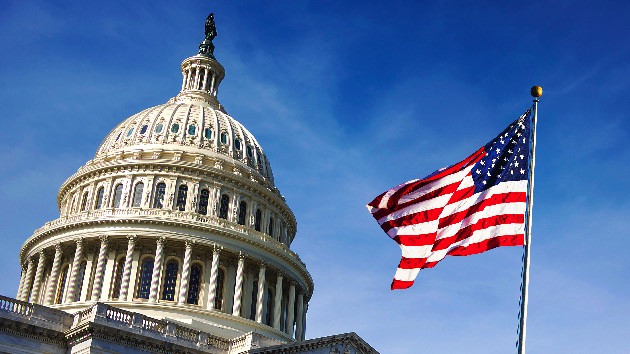
FBI more than doubles domestic terrorism investigations: Christopher Wray

FBI more than doubles domestic terrorism investigations: Christopher Wray
Nes/iStock

(WASHINGTON) — FBI Director Christopher Wray told a U.S. Senate panel Tuesday morning that the bureau has been forced to surge resources toward its domestic terrorism investigations in the past 18 months — increasing personnel by 260% to help handle a caseload that has more than doubled from roughly 1,000 ongoing investigations to 2,700.

“Terrorism moves at the speed of social media,” Wray told the Senate Homeland Security Committee. “You have the ability of lone actors, disgruntled in one part of the country to spin up similar like-minded individuals in other parts of the country and urge them into action.”

Secretary of Homeland Security Alejandro Mayorkas, who appeared alongside Wray, agreed with him that social media is a “terrain that can so easily propagate misinformation, false information and allow communications to occur among loosely affiliated individuals.”

Wray offered more detail during questioning with Sen. Mitt Romney, R-Utah.

“The first bucket, the homegrown violent extremists, has been humming along fairly consistently at about 1,000 investigations — sometimes a little more sometimes a little less — over the last few years,” Wray explained. “The domestic violent extremists bucket, had been going up quite significantly over the last few years, which is why we’re now at 2,700 domestic terrorism investigations when if you went back two and a half years ago we’re probably more about 1,000 So it’s been a really significant jump there.”

Wray added that officials are “concerned that with developments in Afghanistan, among other things… I think we anticipate, unfortunately, growth in both categories as we look ahead, over the next couple years.”

Those numbers appear to be impacted significantly by the FBI’s hundreds of ongoing investigations into the attack on the U.S. Capitol.

“Overall, the FBI assesses that the January 6th siege of the Capitol Complex demonstrates a willingness by some to use violence against the government in furtherance of their political and social goals,” Wray said in written testimony provided to the Senate Homeland Security Committee. “This ideologically motivated violence — domestic terrorism — underscores the symbolic nature of the National Capital Region and the willingness of some Domestic Violent Extremists to travel to events in this area and violently engage law enforcement and their perceived adversaries.”

Wray said that even with the surge of resources to tackle domestic terrorism cases, the FBI has not been forced to divert attention away from investigations into threats posed by foreign terrorist organizations like al-Qaida and ISIS, and added the bureau is “certainly watching the evolving situation in Afghanistan.”

In the past several years, Wray said the FBI has thwarted potential terrorist attacks in at least seven cities, including Las Vegas, Tampa, New York, Cleveland, Kansas City, Miami and Pittsburgh.

Wray also flagged what he described as “a sharp and deeply disturbing uptick in violence against the law enforcement community.” He said thatin just the past eight months, 52 law enforcement officers have been killed feloniously in the line of duty, already lapsing the total number killed in all of 2020.

Copyright © 2021, ABC Audio. All rights reserved.

Teen pleads guilty in murder of Barnard student Tessa Majors

Teen pleads guilty in murder of Barnard student Tessa Majors
Zolnierek/iStock

(NEW YORK) — A 16-year-old boy charged in connection with the 2019 stabbing death of Barnard College student Tessa Majors pleaded guilty to second-degree murder Tuesday in Manhattan Criminal Court.

Luchiano Lewis, who was charged as an adult, was 14 when he and two other teenagers were accused in the fatal stabbing of 18-year-old Majors during a mugging gone wrong on Dec. 11, 2019, in Manhattan’s Morningside Park, near Barnard College.

Majors, a freshman at the school, was stabbed several times before she staggered up a flight of stairs and uttered, “Help me, I’m being robbed,” authorities said.

Lewis also pleaded guilty to first-degree robbery Tuesday.

Lewis appeared in court in a dark suit and tie and raced through an allocution in which he said he saw feathers emerge from Majors’ winter coat but did not realize she had been stabbed, let alone killed, until the next morning when he recognized her on the news as the young woman he and the others tried to rob.

The family of Majors sat in the front row and listened to Lewis explain how the trio of middle school friends plotted to rob people in the park. He pinned the idea on 16-year-old Rashaun Weaver, who has pleaded not guilty. A 13-year-old juvenile has pleaded guilty and is serving his sentence.

“He wanted the three of us to do robberies in Morningside Park,” Lewis said of Weaver. “I assumed Rashaun had a knife on him, but using a knife was not part of our plan.”

Lewis will be sentenced Oct. 14, at which point Majors’ family plans to make a statement in court, prosecutors said.

“Are you pleading guilty because you are in fact guilty?” asked Judge Robert Mandelbaum.

“Yes,” Lewis replied.

Police and prosecutors have said Weaver wielded the knife and Lewis guessed he “threw it in the sewer” after the murder.

“This was not a premeditated murder as we heard inside,” Jeffrey Lichtman, the noted criminal defense attorney who is representing Weaver, said outside court. “These were 14- and a 13-year-old boys and we should remember that.”

Copyright © 2021, ABC Audio. All rights reserved.

‘We grieve together,’ Pelosi says at COVID-19 flags memorial

‘We grieve together,’ Pelosi says at COVID-19 flags memorial
RealPeopleGroup/iStock

(WASHINGTON) — House Speaker Nancy Pelosi and other lawmakers paid tribute Tuesday to the more than 676,000 Americans who have died from COVID-19, visiting a memorial on the National Mall that displays hundreds of thousands of small, white flags, one for each life lost.

“As we look at this work of art and see it fluttering in the breeze,” Pelosi said, “it really is an interpretation of the lives of these people waving to us to remember.”

The installation, called “In America: Remember,” is the second iteration of the art project. In fall 2020, Pelosi visited the first exhibit, which at that time consisted of more than 200,000 lives lost to the pandemic.

Since then, the death toll has more than tripled, and so has the number of flags. The death toll from COVID-19 has surpassed the estimated number of Americans who died in the 1918 influenza pandemic, topping 675,000 deaths on Monday.

The lawmakers walked silently among the rows of flags, trails that stretch more than 3.8 miles.

At times, Pelosi bent down to read the messages families and friends had written on the white rectangles.

“We look at these flags and we think of the family someone missing from the table at dinner, missing from the conversation,” she said, recalling one flag that stuck her which was dedicated to a grandfather that said, “We miss you.”

Pelosi, who is Catholic, said that she hopes faith and prayer can help not only grief, but also to bring an end to the pandemic.

“I know that many of these people are people of faith and they believe that their message is being received and that by receiving that message — that not only our prayers but the prayers of the departed — will also bring solution to all of this,” she said.

She said the flags installation reminded her of the AIDS Quilt, which was displayed on the National Mall in 1987, and how such tributes can be so important.

“Nothing could be as eloquent as a manifestation of sadness that art,” Pelosi said. “We all see it as we do, but all of us grieve together, are inspired together and renew our pledge to remember … and in remembering to make sure that the number doesn’t grow.”

Copyright © 2021, ABC Audio. All rights reserved.

Democrats introduce post-Trump ethics bill to enforce subpoenas, limit conflicts

Democrats introduce post-Trump ethics bill to enforce subpoenas, limit conflicts
uschools/iStock

“Donald Trump made this legislation a necessity, but this is bigger than any one president,” Rep. Adam Schiff, D-Calif., said in a news conference. “It’s about our values, our ideals and our future.”

The Protecting Our Democracy Act would speed up the enforcement of congressional subpoenas — which were routinely ignored by the Trump administration — and require administration officials to pay any court fines and legal fees.

After Trump refused to acknowledge Joe Biden’s election victory and disrupted the transition, the bill proposes starting the transition process within five days of the election and would allow both campaigns to receive government briefings and make other preparations.

It would also require presidents and candidates to submit years of income tax returns to the Federal Election Commission for public release — after Trump refused to release his returns as a candidate and as commander-in-chief, arguing that an ongoing Internal Revenue Service audit prevented him from doing so.

Rep. Jerry Nadler, D-N.Y., the chairman of the House Judiciary Committee, said the proposal would prevent presidents from using their office as a “get-out-of-jail-free card,” by suspending the statute of limitations for crimes committed by a president or vice president while they are in office.

Schiff said the House could vote on the package later this fall. But it’s unclear if it has the support of at least 10 Republicans in the Senate to clear the filibuster and 60-vote threshold for legislation.

“I realize many of the Republican members live in fear of angry statements from the former president,” Schiff said.

Many of the underlying bills in the package, including proposals to beef up protections for whistleblowers and independent inspectors general at government agencies, have bipartisan support — suggesting that Democrats could have more success in the Senate if they take it up piecemeal.

The Biden administration has worked “very constructively” with Democrats for months on the package, Schiff said.

The White House asked lawmakers to exempt administration officials from court fines if they are instructed to ignore subpoenas by the president. The version of the bill unveiled Tuesday also did not include earlier language requiring the White House to turn over presidential communications to Congress.

Copyright © 2021, ABC Audio. All rights reserved.

Democrats dare GOP to vote against government funding bill

House votes to approve bill to avert government shutdown
rarrarorro/iStock

(NEW YORK) — House Democrats are plowing ahead to vote on a bill Tuesday that will fund the government through Dec. 3, provide billions in emergency disaster relief and billions more to support Afghan evacuees — but it is expected to be blocked by Senate Republicans.

The federal government faces a looming shutdown at the end of the fiscal year on Sept. 30, leaving lawmakers with little time to finagle a compromise over a suspension of the debt limit, which Democrats have attached to the must-pass spending bill.

Senate Republicans say they oppose suspending the debt limit because of additional spending measures Democrats are crafting — even though doing so would pay for previous expenditures. But Senate Democrats worked with Republicans under the Trump administration to raise the debt limit on multiple occasions and say it’s a bipartisan responsibility.

Treasury Secretary Janet Yellen has said if Congress does not act to raise the debt limit, the U.S. could default on its debt sometime in October, potentially triggering an “economic catastrophe.”

Republicans, led by Senate Minority Leader Mitch McConnell, have said for weeks they will oppose any measure that raises the debt ceiling, insisting that Democrats can do it alone given their control over all three branches of government.

“Since Democrats decided to go it alone, they will not get Senate Republicans’ help with raising the debt limit. I’ve explained this clearly and consistently for over two months,” McConnell said Monday on the Senate floor.

But Democrats are pressing ahead and remain optimistic about the bill’s prospects, knowing full well the challenge they face in getting Republicans on board.

“It is our hope that Senate Republicans will also do the right thing and stop playing politics around the debt limit,” House Democratic caucus chair Hakeem Jeffries said at a press conference Tuesday.

Jeffries indicated that at least a handful of Republicans have publicly expressed they will end up voting for the bill. Democrats need at least 10 Republicans in the Senate to back the bill.

“Three times – during the administration of the former president – three times House Democrats cooperated in raising the debt ceiling,” Jeffries said.

“Now all of a sudden, they want to jam up the American people and the American economy and our full faith and credit, because they’re playing politics?” Jeffries said of Republicans in the Senate.

“Senate Republicans should be hearing from their friends in the big banks and big business, as to how catastrophic a default on our debt would be for industry, for commerce, for the economy and most importantly for the American people,” Jeffries added.

Without GOP support, it’s unclear how Democrats will plan to tackle the issue of raising or suspending the debt limit alone.

“The debt limit is a shared responsibility, and I urge Congress to come together, in that spirit, on a bipartisan basis as it has in the past to protect the full faith and credit of the United States,” House Speaker Nancy Pelosi wrote in a letter to members over the weekend.

The short-term funding bill unveiled on Tuesday extends funding through Dec. 3 for all vital federal agencies, including health, housing, education and public safety programs.

“It is critical that Congress swiftly pass this legislation to support critical education, health, housing and public safety programs and provide emergency help for disaster survivors and Afghan evacuees,” House Appropriations Chairwoman Rosa DeLauro said in a statement Tuesday.

The bill also includes $28.6 billion in emergency disaster relief to address recent natural disasters, including multiple hurricanes and wildfires, severe droughts and winter storms in 2021 and prior years.

The legislation suspends the debt limit through December 2022.

Copyright © 2021, ABC Audio. All rights reserved.

Gabby Petito case becomes point of interest for internet sleuths on social media

Gabby Petito case becomes point of interest for internet sleuths on social media
Vladimir Vladimirov/iStock

(NEW YORK) — The extensive reach of social media has become a focal point in the disappearance of travel blogger Gabby Petito.

Petito had been traveling cross-country with her boyfriend, Brian Laundrie, in a white van and had frequently documented their adventures on YouTube and Instagram.

Since she was reported missing nine days ago, Petito’s case has captured the nation’s attention — particularly young people online who are sharing their reactions and actively trying to solve the case themselves.

ABC News’ Trevor Ault, who is reporting on the case from Florida, spoke with ABC News podcast “Start Here” about the influence of social media and the blurry line between solving a tragic situation and getting entertainment from it.

“It’s like you’re taking part in the true crime podcast before there’s a true crime podcast,” Ault told “Start Here” on Monday. “[Infatuation with a case] isn’t a new experience in America, but it is definitely a new look at how it is evolving … and how it impacts law enforcement too.”

TikTok user Miranda Bajer claimed that she and her boyfriend gave Laundrie a ride on Aug. 29 in Grand Teton National Park a couple days after Petito was last seen.

“In the past, if a person thought that they had a tip and they wanted to share it, they could share it to law enforcement and it would be that until law enforcement investigated it,” Ault said. “Now a person can post about it or whatever their theories are and it can catch on.”

Baker’s video has since gained 8 million views on TikTok.

Police in Florida confirmed to ABC News on Sunday that they have spoken to Baker, but federal authorities have not yet confirmed her statement.

While on one hand, the extra tips and leads are helpful, law enforcement said that they have run into trouble corroborating facts and disproving false narratives about the case before they are published widely online.

“In every instance, law enforcement has expressed gratitude to the people who are opening up about what they’re seeing or what they think they might know or have experienced,” said Ault. “[But] It can clog the machine.”

Copyright © 2021, ABC Audio. All rights reserved.

Students on cusp of COVID-19 vaccine age requirement wait patiently as 12th birthday approaches

Students on cusp of COVID-19 vaccine age requirement wait patiently as 12th birthday approaches
Prostock-Studio/iStock

(LOS ANGELES) — Karen Notzon’s daughter, Callie, began her first year of middle school this fall by opting out of in-person learning after initially deciding to return to the classroom.

The Huntington Beach, California, mother told ABC News there were many reasons why her daughter changed her decision — including the rising number of COVID-19 cases across the U.S. linked to the delta variant — but one of the biggest ones was that a particular circumstance left Callie ineligible for vaccination in time for classes.

The pre-teen turns 12 in November, and is not eligible for the Pfizer COVID-19 vaccine like some of her other classmates who had birthdays before her this year, Notzon said.

Many students like Callie, who are entering sixth or seventh grade this year, are anxiously waiting to get their shots.

Anderson, a former public school administrator and parent of a teenager, said the situation is very frustrating for those waiting for their child to age into the eligibility threshold, and could be harmful to students’ emotional and mental wellbeing.

“This is a tough time for schools. We’ve never been in a situation like this,” she said. “You are building the plane as you’re flying it.”

Notzon said she is more comfortable keeping Callie at home until she is fully vaccinated for that very reason and because they have an elderly member of the family living in the house.

“We’ve had high anxiety putting our daughter in a position like that. It seems like a risk,” she said.

Dr. Jessica Justman, an associate professor of medicine in at the Columbia University’s Mailman School of Public Health, told ABC News that parents with children on the cusp of vaccine eligibility that choose in-person classes will have a better chance of staying safe if the school sticks to strict measures, especially with masking.

Until more students receive their shots, indoor masking is the only line of defense from catching the virus, she said.

“It won’t be perfect, but whatever amount of time they spend wearing a mask is more time protected,” Justman said.

Katie Berkaw of Austin, Texas, told ABC News that her family is taking those same precautions seriously for her son, Connor, who turns 12 in October.

Although the hospitalizations and COVID-19 cases in Texas have been skyrocketing over the last few weeks, Berkaw said her family ultimately decided that it was best for her to attend classes in person during that wait.

“Being back on campus is important for his social engagement,” she said.

In the meantime, Connor has been wearing a mask, as is required by his school district, washing his hands and avoiding big indoor events until he gets his shot, according to Berkaw.

“There is always a little bit of nervousness that he could get it,” she said. “But he understands the level of cleanliness that is needed for himself.”

Sharon Gucker, a single mom from Nassau County, New York, told ABC News that her 11-year-old son, Owen, has also been cautious at school, wearing a mask and avoiding big crowds, but he is near the end of the tunnel.

The seventh-grader, who is the youngest of Gucker’s three sons, turns 12 this Saturday and has already scheduled an appointment to get his vaccine at a New York state vaccination center, she said.

This has been a moment the entire family has been waiting for, as they’ve been putting off many big activities due to the wait, including visiting family members on the West Coast.

“We’re still going to still wear our masks, but I think after that we will feel like a great weight off our shoulders,” Gucker said.

Justman and the other experts said practicing patience is the best things parents with kids who turn 12 later in the school year can do.

While it is certainly a question of when the vaccines will be made eligible for people under 12 and not if, Justman said parents can have some relief knowing that their seventh- or sixth-grader is in a classroom with some classmates who have some protection against the virus.

“You can look at this from a glass half full perspective,” she said. “It’s more fortunate for these 11-year-olds to be in a classroom with so many people who are vaccinated.”

Anyone who needs help scheduling a free vaccine appointment can log onto vaccines.gov.

Copyright © 2021, ABC Audio. All rights reserved.

Elizabeth Holmes criminal trial dominated by allegations of deception and intimidation from those who worked for her

Elizabeth Holmes criminal trial dominated by allegations of deception and intimidation from those who worked for her
Chris Ryan/iStock

(NEW YORK) — Just three weeks into the criminal trial of Elizabeth Holmes, jurors have already heard allegations of lies, deception and alleged intimidation from those who worked directly under her — and the trial is expected to continue into December.

“I was scared that things would not go well,” one former Theranos scientist, Surekha Gangakhedkar, told prosecutors when asked why she made copies of internal communications and documents before resigning from the company. “I was also worried that I would be blamed.”

A full recap of last week’s proceedings is available on today’s episode of “The Dropout: Elizabeth Holmes on Trial” free on Apple Podcasts, Spotify, Amazon Music, or wherever you listen to podcasts.

Theranos was founded by Holmes in 2003. The company claimed to be developing blood testing technology that used only small droplets of blood.

Nearly two decades later, Holmes is defending herself against charges of wire fraud and conspiracy to commit wire fraud stemming from a “multi-million-dollar scheme to defraud investors, and a separate scheme to defraud doctors and patients,” according to prosecutors.

Gangakhedkar and Erika Cheung, two former Theranos scientists, testified under oath last week. They both conveyed the same information to the jury: Theranos’ Edison devices — their blood testing machines — rarely functioned properly.

Cheung told the court that Theranos would frequently cherry-pick data, deleting “any two data points that would not hit the metrics we needed.” She added that in March of 2014, about one in every four Theranos tests failed.

Cheung was one of the whistleblowers who first leaked information about Theranos to the Wall Street Journal in 2015. ABC News interviewed Cheung in the first season of “The Dropout.”

“Our quality controls were failing at one point … what seemed [like] almost every day,” Cheung told ABC News in 2019.

Gangakhedkar was the former manager of assay systems at Theranos and reported directly to Holmes. She told the jury that she didn’t think Theranos’ devices “were ready to be used for patient samples.”

Prosecutors presented several emails from 2013, in which Gangakhedkar reported the results of numerous failed tests on the Edison devices to Holmes directly. At the time, Theranos testing centers had already gone live in some Walgreens stores.

When prosecutors asked Gangakhedkar where this pressure to move forward before Theranos was ready came from, she swiftly responded “from Ms. Holmes.” Holmes’ defense has only just begun to question Gangakhedkar and will continue Tuesday.

The court granted Gangakhedkar full criminal immunity before she took the witness stand. She told the court she took documents with her upon her departure from the company, despite her non-disclosure agreement, “to protect myself and to have as a record in the event issues came up in the future.”

At the time Cheung was speaking with an investigative reporter in 2015, she believed she was being followed by people hired by Theranos. Soon after she started another job, she told jurors she was served a letter by an unknown individual at an address not many in her circle were aware of.

The jury was shown the letter, addressed from the firm Boies Schiller Flexner, and claimed she had disclosed Theranos’ “trade secrets and other confidential information without authorization.”

Recent Theranos financial documents made public via Holmes’ trial show the company paid $150,000 to private investigators for a project titled “E. Cheung & T. Schultz project.” Tyler Schultz was another Theranos whistleblower speaking with an investigative journalist at the time.

This week, Gangakhedkar will conclude her testimony.​​ Dan Edlin was once Theranos’ senior project manager and one of many friends recruited to the company by Holmes’ brother, Christian.

Holmes and her counsel did not respond to ABC News’ repeated requests for comment.

Copyright © 2021, ABC Audio. All rights reserved.