(NEW YORK) — A security assessment issued Thursday said there is no “credible” threat at this time ahead of next week’s New Year’s Eve celebration in New York City’s Times Square, which will bring back a limited crowd after last year’s virtual event.
Law enforcement agencies “have no information to indicate a credible, specific threat to, or associated with, the 2021-2022 Times Square New Year’s Eve Celebration,” according to the assessment, which was obtained by ABC News.
The threat assessment does indicate a general concern about “the sustained interest of homegrown violent extremists and domestic violent extremists in targeting mass gatherings despite the lack of information indicating a credible, specific threat.”
The city will allow 15,000 people at this year’s scaled-back ball drop, which was closed to crowds last year due to the pandemic. With spectators returning, law enforcement officials are concerned about lone offenders or small groups potentially targeting the event.
“[Homegrown violent extremists] are of particular concern due to their ability to remain undetected until operational, their willingness to attack civilians and soft targets, and their ability to inflict significant casualties with simple tactics,” the assessment stated.
Domestic terrorists could also be inspired to target the celebration, the assessment stated, citing “likely non-credible online posts mentioning the event as a potential opportunity to launch attacks.”
The FBI, Department of Homeland Security’s Office of Intelligence and Analysis, New York City Police Department, AMTRAK Police Department and Port Authority Police Department issued the threat assessment.
The city typically allows 58,000 people in viewing areas at the Times Square celebration. The smaller attendance at this year’s event will allow for social distancing, according to the mayor’s office, which announced the capacity limits Thursday as COVID-19 cases spike in the city.
Those who attend will be required to show proof of vaccination and wear masks, the office also announced. Guest entry will also begin at 3 p.m., which is “much later” than past years, it said.
(NEW YORK) — Weather alerts are in effect from California to the Texas Panhandle, and rounds of heavy mountain snow, rain and strong winds are expected to impact much of the western U.S. in the coming days.
As of Thursday afternoon, mountain snow is falling at higher elevations in the Cascades down into the northern Sierra Nevada. Also, heavy rain is moving through parts of California, particularly through Southern California.
Officials are warning that torrential rain could trigger flash flooding, mudslides and debris flows, especially across regions burned by wildfires. A flood watch has been issued from Orange County, California, to San Diego.
Several feet of heavy mountain snow is expected to fall across much of the Sierra Nevada in California though Sunday. Some of the highest peaks in the Sierra Nevada could see up to 10 feet of snow by the end of the weekend.
Strong winds could increase avalanche risk in parts of the region, officials warn. An avalanche warning is in effect through at least Friday morning for parts of the region, including the greater Lake Tahoe area.
Also, the Rockies will eventually see at least a foot of snow heading into the weekend. Winter weather alerts are in effect across much of the mountain west with wind alerts in some areas as well.
(WASHINGTON) — The White House on Thursday defended President Joe Biden’s handling of coronavirus testing after the president said in an exclusive interview with ABC “World News Tonight” anchor David Muir that he wished he would have ordered hundreds of millions of tests for Americans sooner and that “nobody” predicted the emergence of the omicron variant.
The president this week announced new plans to slow the spread of the omicron variant of the coronavirus, including purchasing 500 million at-home rapid tests and, starting next month, distributing them to Americans, free of charge.
“I wish I had thought about ordering” 500 million at-home tests “two months ago,” he told Muir on Wednesday during a sit-down interview at the White House.
ABC News’ Alex Presha asked Psaki why Biden’s administration couldn’t have at least foreseen a spike in demand for tests prior to holiday gatherings, regardless of the variants – since Americnas scrambled to get tested last year, too.
The rapid, at-home tests have been hard to find ahead of the Christmas holiday.
“I don’t think last Christmas people were rushing to get tests,” Psaki said, noting that over-the-counter tests were not available like they are this year. But last year, Americans did face long lines at testing centers and other locations.
Psaki pointed out that vaccinations have transformed the country this year compared to last year, when only a small number of Americans could receive vaccinations.
She also defended Biden’s remark to Muir that “nobody” predicted the omicron variant’s emergence, when in fact, infectious disease experts had warned of new variants.
“Nobody saw it coming,” Biden told Muir Wednesday. “Nobody in the whole world. Who saw it coming? “
Muir pressed Biden: “Scientists have long said that when you’re dealing with the coronavirus, COVID-19, that there are going to be mutations, that most likely over time it is going to become very transmissible because this virus is trying to stay alive, trying to survive. So did the administration not expect that there could be moments like this one where you’d have a highly transmissible variant possible around the corner?”
“It was possible,” Biden replied. “And it’s possible there could be other variants that come along. That’s possible. But what do you plan for? You plan for what you think is available, that is the most likely threat that exists at the time, and you respond to it. And I think that that’s exactly what we’ve done.”
Psaki similarly told reporters that “we of course knew that there would be additional variants at some point coming we didn’t know what they would look like.”
“I would say that nobody saw – knew that there would be the number of different variants, nobody knew exactly how transmissible they would be,” she said.
Psaki was on defense, too, about Biden’s comment that he wished he thought of ordering 500 million tests two months ago.
“June was a long time ago, but before that delta variant was on the rise, there was not a demand for testing in this country,” she said. “There really wasn’t. Then delta obviously increased the demand.”
She argued that Biden did, in fact, work to increase testing capacity by using a law known as the Defense Production Act to expand the supply of at-home tests.
“Without that, we wouldn’t have the supply in the market,” she said.
Biden also told Muir that when it came to the availability of at-home coronavirus tests in the United States, “nothing’s been good enough.”
Psaki said what Biden “was acknowledging, which he said in his speech a couple of days ago as well, is that we’re not where we need to be on testing.
(BOSTON) — A former Boston College student charged with involuntary manslaughter in connection with her boyfriend’s suicide pleaded guilty Thursday as part of a plea deal.
Inyoung You, 23, changed her plea two years after initially pleading not guilty in Suffolk Superior Court in Boston in the death of her then-boyfriend, Alexander Urtula.
Urtula died by suicide at the age of 22 on May 20, 2019, the day of his graduation from Boston College. Prosecutors argued that You “directly contributed” to Urtula’s suicide through “escalating and unrelenting verbal, physical and psychological abuse that she admitted in court,” the Suffolk County District Attorney’s Office said in a statement following Thursday’s hearing.
Prosecutors said You sent Urtula more than 47,000 text messages over the course of their 18-month-long relationship, in which she “repeatedly told the victim that he should kill himself or die and waged a campaign of abuse that stripped the victim of his free will,” the statement said.
“The abuse became more frequent, more overwhelming, and debilitating in the days and hours leading up to Mr. Urtula’s tragic death,” the district attorney’s office said.
As part of the plea deal, Judge Robert Ullmann sentenced You to 10 years probation, during which she is barred from profiting financially from the case. If she adheres to the terms of her probation, which also includes community service and mental health treatment, she can avoid a two-and-a-half-year jail sentence.
The sentence was recommended by prosecutors and You’s legal team and “made in close consultation with the Urtula family,” District Attorney Rachael Rollins said in a statement.
“It is consistent with their desire to seek accountability and closure and to protect the legacy of Alexander, a loving son, brother, and uncle,” Rollins continued. “They believe this is something Alexander would have wanted.”
The Urtula family read a victim impact statement during the hearing and shared a photo of him with his nephews.
“We bear no feelings of anger or reprisal. We believe that time will take us through in the moments we mourn and celebrate his life,” the family said, according to the Associated Press.
You declined the opportunity to speak in court and her lawyer, Steven Kim, said she was “very distraught,” the AP reported. You is a “wonderful young woman who has deep, deep remorse,” Kim said, according to the AP.
The case has drawn comparisons to that of Michelle Carter, who was convicted of involuntary manslaughter in 2017 three years after her then-boyfriend, Conrad Roy III, died by suicide. Carter, who had sent Roy texts urging him to kill himself, was sentenced to 15 months in jail. She was released about three months early in 2020.
(RICHMOND, Va.) — A time capsule estimated to be more than 130 years old, unearthed from the base of a statue of Confederate Gen. Robert E. Lee, was opened Wednesday in Richmond, Virginia, and the artifacts showed a snapshot of life in the Confederate capital.
Virginia Gov. Ralph Northam watched intently as historians used tools to painstakingly open the corroded box. After hours of working to unseal it, the team — wearing blue gloves — pulled out the first artifact: a thin maroon-colored book.
“It’s very wet,” Kate Ridgeway, a conservator with the Virginia Department of Historic Resources, said as she peered into the rusted time capsule.
“We are trying to preserve what we can of this book,” she said.
Conservators pulled out other items: what appeared to be a coin, a few books of varying size and color, what appeared to be an envelope. Some of the items were difficult to identify given their condition.
The Washington Post reported that one of the books appears to be an almanac from 1875, and a copy of “The Huguenot Lovers: A Tale of the Old Dominion.”
Teams quickly worked to “stabilize” the artifacts, Ridgeway told reporters in the room, so that they could be worked on. As for how long it takes to stabilize them, historians said it depends on how wet the items are.
The time capsule was found by construction crews in early December. Crews taking apart the removed statue’s base came across an area that looked “different,” according to a release from Northam’s office, and chiseled out a section of the 1,200-pound granite block to reveal it.
The capsule is estimated by experts to date back to 1887. According to the governor’s office, records show that, “37 Richmond residents, organizations, and businesses contributed about 60 objects to the capsule, many of which are believed to be related to the Confederacy.”
There was also speculation that there would be more very rare and valuable artifacts in the time capsule. ABC News-affiliate WJLA-TV reports that there were rumors of an incredibly rare photograph of the casket of former President Abraham Lincoln. Some have wondered if this is not the official time capsule, speculating that the dimensions and material differ from historical reports, according to the Washington Post.
The pedestal stood beneath a bronze statue of Lee on horseback that was removed in September 2021, following nationwide racial justice protests after George Floyd was killed by police in Minneapolis.
The statue’s removal was slowed by lawsuits from some residents who opposed it being taken down, but the state’s Supreme Court okayed it.
As the capsule was opened, the state was making plans to create a new time capsule to reflect present-day Virginia.
“This monument and its time capsule reflected Virginia in 1890 — and it’s time to remove both, so that our public spaces better reflect who we are as a people in 2021,” Northam said in a September press release. “The past 18 months have seen historic change, from the pandemic to protests for racial justice that led to the removal of these monuments to a lost cause. It is fitting that we replace the old time capsule with a new one that tells that story.”
The state has selected 39 individuals to add artifacts to the 2021 time capsule, which are expected to include nods to the 2020 racial justice protests, as well as items, including face masks and vaccination cards, related to the COVID-19 pandemic.
(NEW YORK) — As the COVID-19 pandemic has swept the globe, more than 5.3 million people have died from the disease worldwide, including over 812,000 Americans, according to real-time data compiled by Johns Hopkins University’s Center for Systems Science and Engineering.
About 61.7% of the population in the United States is fully vaccinated against COVID-19, according to data from the Centers for Disease Control and Prevention.
Here’s how the news is developing. All times Eastern.
Dec 23, 11:47 am
Nearly 30,000 Americans have died of COVID since Thanksgiving
An ABC News analysis of federal data finds that nearly 30,000 Americans have died of COVID-19 since Thanksgiving as the omicron variant spreads across the country.
The U.S. is currently averaging more than 1,200 deaths per day, an increase of 23.3% in the last month with death rates up across almost all age groups.
Nationwide, about 161,000 new COVID cases are being reported every day, up nearly 75% in the last month.
This marks the highest daily case average since Labor Day, and means the U.S. will likely surpass the daily peaks seen during the delta-fueled wave over the summer.
Fourteen states, including New York, New Jersey, Illinois and Wisconsin, are reporting their highest daily case numbers in about a year.
ABC News’ Arielle Mitropoulos
Dec 23, 10:41 am
AstraZeneca monoclonal antibody works against omicron, studies show
New studies are offering additional reassurance that AstraZeneca’s monoclonal antibody drug works against omicron.
The company’s EVUSHELD retains neutralization activity against omicron, according to “live” virus neutralization data from both University College Oxford and Washington University School of Medicine.
AstraZeneca announced last week that its antibody drug would likely retain protection against omicron. These studies add to that growing evidence.
AstraZeneca’s monoclonal antibody was authorized on Dec. 8, but for a narrow group of people. It is authorized as a way to prevent COVID-19 among people who are immune compromised, or people who are allergic to vaccine components. It is not authorized as a way to treat COVID-19 among people who have already tested positive.
There are three monoclonal antibody treatments currently authorized to treat people who already have COVID-19. Two of those treatments — those made by Eli Lilly and Regeneron — appear to have very little activity against omicron. A third treatment, made by Vir and GlaxoSmithKline, appears to work against omicron but is currently in short supply. The companies are working to scale up production.
ABC News’ Sony Salzman
Dec 23, 10:39 am
Cruise ship can’t enter Curacao or Aruba after 55 people test positive for COVID
A Royal Caribbean ship has been blocked from entering Curacao and Aruba after 55 crew members and guests tested positive for COVID-19.
The ship, named Odyssey of the Sea, set sail from Florida on Dec. 18 and had planned to visit the Caribbean for eight nights.
According to the cruise line, 95% of all people onboard were fully vaccinated. The crew and guests who tested positive were all “fully vaccinated and mildly symptomatic or asymptomatic.”
Close contacts of the positive patients have been placed in quarantine and will be monitored for 24 hours prior to testing.
The ship will remain at sea and is scheduled to return to Florida on Dec. 26.
ABC News’ Mina Kaji
Dec 23, 9:56 am
FDA authorizes Merck pill for some
The Food and Drug Administration authorized Merck’s COVID-19 pill Thursday for certain patients.
The authorization is specifically for adults who are at high-risk for severe illness and don’t have access to other FDA-authorized treatments.
This is the second COVID-19 therapy available in pill form after Pfizer’s pill was authorized in patients aged 12 and older on Wednesday.
Children and teenagers are not eligible for Merck’s pill due to fears that the medication could negatively impact bone and cartilage growth.
COVID-19 patients seeking the pills must obtain a doctor’s prescription first.
ABC News’ Sony Salzman
Dec 23, 5:44 am
Rep. Jan Schakowsky tests positive for COVID
Rep. Jan Schakowsky, D-Ill., has tested positive for COVID-19.
Schakowsky said her husband, Bob, had tested positive last week. After several negative tests, the lawmaker also tested positive on Tuesday night, she said on Twitter.
Both Schakowskys were vaccinated and received boosters. They’re now quarantining, she said.
“We got tested when we felt something was off, and now we can prevent exposure to our family and loved ones,” Schakowsky said. “I implore you to do the same before holiday gatherings this week and next. Get tested if you feel sick or have been around someone who tests positive.”
(NEW YORK) — The World Health Organization is investigating a mysterious illness in South Sudan that has killed dozens of people.
So far, 97 people have died of the unknown disease in Fangak, Jonglei State, in the northern part of the country.
Fangak County Commissioner Biel Boutros Biel told ABC News on Thursday that the latest fatality occurred in an elderly woman.
Deaths have mostly been reported among the elderly and children ages 1 to 14, according to a statement from South Sudan’s Ministry of Health.
The symptoms of the mysterious illness include cough, diarrhea, fever, headache, chest pain, joint pain, loss of appetite and body weakness, officials said.
Biel said the WHO team that traveled to Fangak has since left, but did not communicate their findings to local officials.
In a statement to ABC News, Collins Boakye-Agyemang, a spokesperson for WHO Africa, said the agency began investigating the outbreak in November but did not provide further details.
According to BBC News, because the area has recently been hit with heavy floods, the WHO tested samples from patients for cholera, which is typically contracted from infected water supplies.
However, the samples returned negative for the infectious bacterial disease, the outlet reported.
Sheila Baya, a lecturer in the College of Medicine at University of Juba in South Sudan, told BBC News that WHO scientists had to reach Fangak by helicopter due to the flooding to conduct testing.
Biel told ABC News that some nongovernmental organizations have delivered medical supplies to Fangak and are in the process of setting up mobile clinics to help treat people.
In a statement last month, international humanitarian group Médecins Sans Frontières (Doctors Without Borders) called the floods a “perfect storm” for disease outbreaks.
“People do not have enough water or options for water storage, and there is no garbage collection, while dead goats and dogs are left rotting in the drainage systems,” the statement read. “With the conditions further worsened by the influx of new arrivals [at camps], people are at higher risk of outbreaks and waterborne diseases such as acute watery diarrhea, cholera and malaria.”
ABC News’ Morgan Winsor contributed to this report.
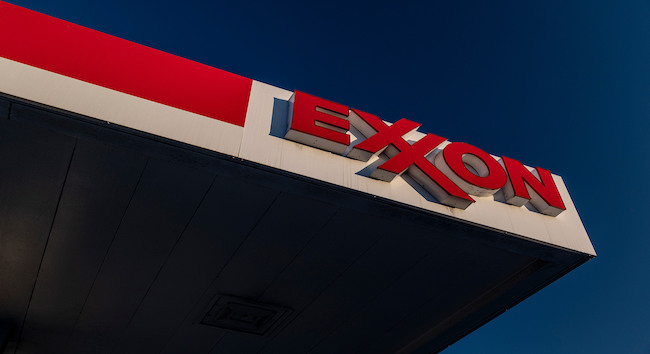
(HOUSTON) — Exxon Mobil emergency response teams have extinguished a fire at the Baytown Refinery in Baytown, Texas.
“Our first priority is people in the community and in our facilities,” Exxon Mobil Baytown Area said in a statement on Twitter.
The company said there has been no adverse air quality monitoring impacts to the community.
“Around 1 a.m. on 12/23/2021, a fire occurred at our facility,” the company said on social media. “At this time, emergency vehicles and smoke may be noticeable to the community. We are coordinating with local officials, and working to resolve the issue as soon as possible.”
The causes of the incident have not yet been determined, according to Exxon Mobil. The company is working with authorities.
“All findings will be incorporated in our continuing effort to enhance our safety performance,” the company stated.
An information line has been set up for anyone affected by this incident at 1-800-241-9010.
Authorities in Texas said they were investigating a “major industrial accident” at the Exxon Mobil plant on Thursday morning.
“Some injuries have been reported. Please avoid the area,” the Harris County Sheriff’s Office said on Twitter.
Initial reports indicated some type of explosion occurred inside the plant, Sheriff Ed Gonzalez said. Four people were injured, with three taken from the scene by Lifeflight and one by ambulance, he said.
Videos posted on social media showed dense smoke rising from the facility.
“My mom lives right behind the plant and around 1 a.m. I heard a loud ‘boom’ and the house shaking,” Kendall Merritt, who lives nearby, told ABC News. “The sound was as if someone had slammed a door right in my ear.”
Exxon Mobil’s Baytown complex covers 3,400 acres about 25 miles east of Houston, according to the company’s website. Its local refinery can process about 584,000 barrels of crude oil each day.
Gonzalez said there wasn’t an order for nearby residents to evacuate or shelter-in-place.
The Food and Drug Administration on Thursday authorized Merck’s COVID-19 pill for certain adults.
The authorization is limited to adults who have a high risk of severe illness and for whom alternative FDA-authorized treatment options are not accessible or medically appropriate.
This is the second COVID-19 treatment in pill form after Pfizer’s pills were authorized Wednesday.
This is a developing story. Please check back for updates.
ABC News’ Sony Salzman contributed to this report.
(MOSCOW) — Amid fears Russia might invade Ukraine, Russia’s president Vladimir Putin has again repeated demands for guarantees from Western countries that NATO will not expand in eastern Europe, but also expressed hope that negotiations with the Biden administration in January could allow the two sides to “move forward.”
Putin offered the mixed messages on Thursday during his marathon end-of-year press conference in Moscow, making menacing accusations against Ukraine but also sounding more hopeful notes around the possibility for negotiation.
Western countries are alarmed that Russia may be preparing a renewed invasion into Ukraine this winter, amid a build up of tens of thousands of Russian troops on its border. Putin has demanded the U.S. and NATO give legal guarantees the alliance will not expand further and withdraw NATO troop deployments from eastern Europe.
The Biden administration has called those demands non-starters but has agreed to hold talks with Russia over its concerns. Putin on Thursday said those talks would take place in Geneva in January and said Russia had seen a “positive reaction” from the U.S. to its demands to negotiate.
“I hope that the first positive reaction and the announced possible start of work in the near future, in the first days of January, will allow us to move forward,” Putin said.
Putin said Russia was forced to confront NATO and Ukraine now to prevent the country potentially becoming a base for NATO missiles in the future.
“And so we put the question directly: there must be no movement of NATO further to the east,” he said. “The ball is in their court. They must answer us something.”
The U.S. and NATO countries have rejected Russia’s demands for a veto on NATO expansion, seeing them as an attempt by the Kremlin to have formal recognition for a sphere of influence over Ukraine. Analysts and Western officials have been trying to understand whether the Russian build up is a negotiating tactic or signals a real readiness to invade.
Putin’s comments on Thursday did little to move the needle. He said Russia did not want conflict but alleged there Ukraine might be preparing a military operation to re-take the Russian-controlled separatist regions in its east, saying Kyiv had tried to do it twice before in the past.
“They keep telling us: war, war, war,” Putin said. “There is an impression that, maybe, they are preparing for the third military operation and are warning us in advance: do not intervene, do not protect these people. But if you do intervene and protect them, there will be new sanctions. Perhaps, we should prepare for that.”
Analysts fear Russia might use the accusation of a Ukrainian attack as pretext to launch its own invasion. There are no signs Ukraine’s government is preparing such an assault, which would risk an overwhelming Russian response.
Russia last week published two draft treaties listing its demands from the U.S. and NATO. The proposals would limit NATO troops and military infrastructure to the countries where they were based before 1997, when the key eastern European members joined.
The Biden administration immediately rejected Russia’s demands limiting which countries can join NATO. But it has said it is ready to hold talks with Moscow about some of the other proposals, which are linked to arms control for example.
Putin spoke at length and angrily about NATO’s expansion eastward since the end of the Cold War, a grievance he has long held.
Asked by a journalist from Britain’s Sky News on Thursday if he would guarantee Russia will not invade Ukraine, Putin said it was Russia that needed guarantees from Western countries over NATO.
“What guarantees must we give you? You must give us guarantees. Right here and right now!” Putin said.