
Texas man detained in Russia for months due to ‘political purposes’: Congressman

Texas man detained in Russia for months due to ‘political purposes’: Congressman
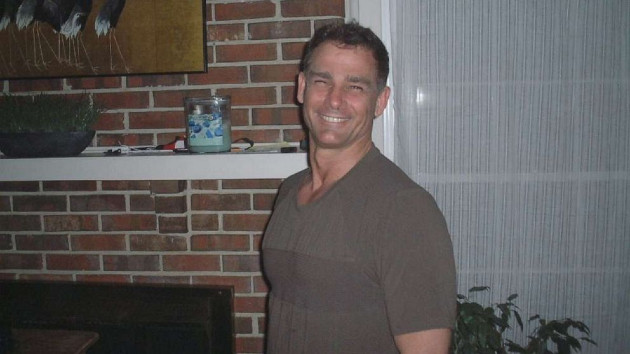
Courtesy Carol Barnes

(WASHINGTON) — More than six months after Texas father David Barnes was arrested by Russian authorities, his family is calling on officials in Washington to do more to try to facilitate his release.

“David’s a very caring and empathetic person,” his sister, Carol Barnes, told ABC News. “Every minute of every day, my mind is on what he’s going through, the hell that he’s living in, and how unjust it is.”

David Barnes has been held since January in a Moscow jail. He is one of several Americans being detained in Russia, but unlike Brittney Griner, Paul Whelan or Marc Fogel, law enforcement in Moscow has alleged that he engaged in criminal activity in the United States — an accusation that has bewildered members of his family, American prosecutors and now, his local congressman.

“Mr. Barnes has been arrested and detained for political purposes, and my office is working with the State Department to bring him back to Texas as soon as possible,” Rep. Kevin Brady told ABC News in a statement. “We continue to urge the Biden administration to do all it can to resolve this situation and free Mr. Barnes.”

David Barnes traveled from suburban Houston to Moscow in December 2021 in an effort to gain legal clearance to either see his children or bring them home, after his Russian ex-wife allegedly violated a court custody order and fled the United States with them, according to his family.

In August 2020, a judge in Montgomery County signed an order designating David Barnes as the sole managing conservator of his children, which gave him rights to decide the primary home for his children, make decisions regarding their education, represent them in legal actions, and possess their passports.

Barnes’ ex-wife is herself now wanted in the U.S. on a felony charge of interference with child custody, after she fled with the children in 2019.

“David Barnes traveled to Russia in an honest attempt to reunite with his children, who had been kidnapped by their mother and taken to Russia illegally,” Brady said. “This is a child custody dispute, not a criminal matter.”

On Jan. 13, Russian investigators apprehended Barnes in Moscow, accusing him of abusing his two children years earlier in Texas, according to translations of court documents.

Similar allegations against Barnes were brought to authorities in Texas by his now-ex-wife Svetlana Koptyaeva during their long and acrimonious divorce proceedings. The allegations were investigated in 2018 by the Department of Family and Protective Services, which found insufficient evidence to support them and closed the case without any findings of abuse or any charges against Barnes.

“At this time, there are no accusations out of Montgomery County that we are aware of that would allow Mr. Barnes to be held in custody,” Kelly Blackburn of the Montgomery County District Attorney’s Office told ABC News in May.

A spokesperson for the Harris County District Attorney’s Office said in May that David Barnes had not been charged in any child abuse cases there either.

Representatives from the U.S. Embassy in Moscow have met with David Barnes in the time since his arrest, according to emails between his family and the State Department. However, Brady’s comments mark the first time that an elected official has stated publicly that David Barnes’ detention in Russia is due to “political purposes.”

Carol Barnes is hoping the increased attention on her brother’s situation will motivate other officials to classify him as being wrongfully detained, push for his release or add him to a proposed prisoner exchange between Russia and the U.S.

“Washington should be able to get their own American citizens back home without so much red tape and us having to contact hundreds of people and getting 1% response,” Carol Barnes said. “I mean, somebody pay attention.”

In July, Secretary of State Antony Blinken announced a proposal that called on Russia to exchange Brittney Griner and Paul Whelan for Viktor Bout, a Russian citizen who was convicted of charges related to illegal arms trafficking. Carol Barnes said she has not heard anything about her brother being part of any potential prisoner exchange.

ABC News asked the White House in July whether it considers David Barnes to be wrongfully detained and if efforts have been made to secure his release, but it referred all questions to the State Department.

“It’s just so frustrating,” Carol Barnes said. “I realize we’re dealing with Russians and it’s not that easy, but I don’t think they’re paying enough attention to it.”

A spokesperson for the State Department wrote in a statement on July 26 that they are continuing to urge the Russian government to allow for regular consular access and services to be provided to Americans who remain detained in Russia.

“We take seriously our responsibility to assist U.S. citizens abroad and are monitoring Mr. Barnes’ situation closely,” the spokesperson said, in part. “The department routinely monitors cases of all U.S. nationals detained abroad for indications that it should be designated as a wrongful detention. Due to privacy considerations, we have no further comment at this time.”

David Barnes celebrated his 65th birthday in his Moscow detention center in July. His family does not know when they will get to see him again.

“I want him back. I love him. I miss him,” Carol Barnes said. “There’s no joy in my life right now at all.”

Copyright © 2022, ABC Audio. All rights reserved.

Highland Park shooting suspect to appear in court for arraignment

Highland Park shooting suspect to appear in court for arraignment
Lake County Sheriff’s Office via Getty Images

(HIGHLAND PARK, Ill.) — The man accused of carrying out a mass shooting in Highland Park, Illinois, on the Fourth of July is set to appear in court Wednesday for his arraignment.

The suspect, Robert Crimo III, is facing 117 charges for killing seven people and injuring more than 30 others.

The 21-year-old is charged with 21 counts of first-degree murder (three counts for each victim) as well as 48 counts of attempted murder and 48 counts of aggravated battery with a firearm (for each person hit by a bullet, bullet fragment or shrapnel). The suspect has not entered a plea.

Five of the victims killed in the shooting died at the scene, one died at a hospital the same day and the seventh victim succumbed to his injuries at a hospital on July 5, according to police.

The suspect allegedly fired more than 70 shots from a perch on top of a building overlooking the Chicago suburb’s July 4 parade route, according to police.

The suspect planned the shooting for several weeks, according to the Lake County Sheriff’s Office.

Crimo was dressed in women’s clothing, apparently to blend in with the crowds as he made his escape, according to police. A semi-automatic rifle was found at the scene after it fell out of the suspect’s bag while leaving the area, according to police.

Investigators said they found a second rifle, purchased legally, in the car the suspect was driving when he was arrested several hours later. The suspect also legally purchased three other weapons, including two pistols, which investigators seized from his father’s home.

Two troubling encounters with police did not surface when background checks were run on Crimo, a part of his application for a gun license.

Police had checked in on the suspect in April 2019 after he attempted suicide, but his parents assured police he was getting help from mental health professionals. The second encounter came when police were called to his home in September 2019 after a family member claimed Crimo was threatening to “kill everyone,” according to police records.

At the time, the Highland Park Police Department determined that the shooter posed a “clear and present danger,” according to police records.

This was just months before he passed four background checks as part of his application for a firearm owner identification card, at the age of 19.

Because he was under 21 at the time, his father sponsored his application and state police said there was an “insufficient basis to establish a clear and present danger and deny the FOID application.”

State police said they had reviewed the suspect’s criminal history before approving his application and only found a January 2016 ordinance violation for being a minor in possession of tobacco.

Copyright © 2022, ABC Audio. All rights reserved.

Scientists explain how the deadly flooding in Kentucky got so bad

Scientists explain how the deadly flooding in Kentucky got so bad
SETH HERALD/AFP via Getty Images

(NEW YORK) — A repetitive meteorological event combined with the landscape in eastern Kentucky was a recipe bound for disaster, which led to dozens of deaths as a result of devastating flooding, scientists told ABC News.

A stubborn stationary front draped across the region for several days in a row, resulting in the formation of “training thunderstorms,” storms that repeatedly move over the same region in a short period of time. These types of storms typically drop very heavy rain that leads to flash flooding, with rainfall rates reaching 4 inches per hour at times across the complex terrain of the Appalachia.

This system is exactly what occurred in Kentucky last week, creating the “perfect meteorological setup” for catastrophic flooding, Marshall Shepherd, director of the Atmospheric Sciences Program at the University of Georgia and former president of the American Meteorological Society, told ABC News.

The front and the copious amounts of moisture that it contained allowed the storm “to really warm and move and develop in the same locations” over a short period of time, Shepherd said.

Rainfall estimates so far show that 14 to 16 inches fell during a five-day period, beginning on July 27.

Most of the rainfall fell the next day — with the excessive amounts of rain leading to major flooding along the rivers in eastern Kentucky, shattering records along the North Fork of the Kentucky River.

Preliminary stream data from the U.S. Geological Service shows that the flow at the North Fork of the Kentucky River in Jackson, Kentucky, reached a peak that was the highest observed there in 95 years, Robert Mason, extreme hydrologic events coordinator and Delaware River master for the USGS, told ABC News via email. In addition, flood flow at the North Fork of the Kentucky River at Whitesburg, Kentucky, reached the highest flow observed there in 47 years.

The topography and geology of the land in eastern Kentucky also played a significant role in exacerbating the effects of the heavy rainfall, the experts said.

The rainfall last week resulted in the biggest 24-hour event seen in the past 50 years of recording in Kentucky’s Robinson Forest, Chris Barton, a professor of water hydrology and forest management at the University of Kentucky, told ABC News.

The land is steep, rugged and “very dissected,” with the only flatland in the area located right at the floodplain, where the majority of the houses are because it is the only suitable flatline where people can build, Barton said. The onslaught of rushing water then flows quickly into those mountainous and valley communities.

The Robinson Forest, an old and established forest with no impervious surfaces, still could not handle the streams with multiple watersheds flowing onto the land as a result of the downpour of precipitation, Barton said. The geology of the area allows the water to move through the soil and into these ephemeral channels very quickly, which then results in a “really flashy” stream.

When Barton went to sleep the night the flooding began, he knew he would wake up to a disaster, he said. As of Monday, Robinson Forest was still a “complete mess,” with no electricity or solar power, he added.

Another contributing factor to the flooding is that the engineering infrastructure for stormwater removal for many cities and towns around the country was engineered for the rainstorms of the 1970s and 1960s and prior, Shepherd said. But storms are now raining “with much more vigor and intensity” than 50 years ago, he added.

Climate change is expected to increase annual flooding costs in the U.S. by 26% to $40.6 billion, a study published earlier this year in Nature found. The cost of the additional damage will be borne disproportionately by disadvantaged communities, the study found.

At least 37 people have been confirmed dead in Kentucky, the majority of whom likely lived in impoverished communities, Shepherd said, citing research conducted at the University of Georgia that found that communities of color and poor communities tend to be disproportionately living in some of the most flood-prone areas in the country, whether in cities or in mountainous terrain.

The region in eastern Kentucky where some of the worst flooding occurred has historically served as a mining community, Barton said.

While the history of mining on the land likely did not contribute to the severity of the flood, many of the people who were displaced or suffered loss of life likely worked, at some level, either at the mines or supporting the mining industry in the area, Barton said.

The number of victims killed in the flooding is expected to grow, Kentucky Gov. Andy Beshear said on Tuesday, describing the event as the most “devastating and deadly” of his lifetime.

The flooding events are expected to increase at such a rate that what were once 1-in-100-year floods could soon be known as 1-in-30-year floods instead, Shepherd said.

“We have warned for decades now that as our climate warms, there’s more water vapor available to these storms,” Shepherd added.

Copyright © 2022, ABC Audio. All rights reserved.

Biden to sign executive order paving way for Medicaid to pay for out-of-state abortions

Biden to sign executive order paving way for Medicaid to pay for out-of-state abortions
Official White House Photo by Adam Schultz

(WASHINGTON) — President Joe Biden is expected to sign an executive order on Wednesday that will pave the way for Medicaid to pay for abortion services for people having to travel out of state, according to a senior Biden administration official.

The new directive will allow the secretary of health and human services to “invite states to apply for Medicaid waivers, so that states where abortion is legal could provide services to people traveling from a state where abortion may be illegal to seek services in their state,” the official said. Technically, these states would apply through what’s known as a “Medicaid 1115 waiver,” according to the official.

The official noted that when the White House looked into declaring a public health emergency for abortion and what that would allow the federal government to do, this change to Medicaid — an assistance program for low-income patients’ medical expenses — was one of the options. But the White House realized the president could also do it through an executive order instead, which he plans to do Wednesday, the official said.

Biden’s order will also direct the health and human services secretary to make sure “health care providers comply with federal non-discrimination laws so that women receive medically necessary care without delay,” according to the White House. That could include “providing technical assistance for health care providers who may be confused or unsure of their obligations in the aftermath of the Supreme Court decision in Dobbs,” or providing other info and guidance to providers about their obligations and consequences of not complying with non-discrimination laws.

The order also will direct the health and human services secretary to improve research and data collection on maternal health outcomes, according to the White House.

Biden is expected to sign the order during the first meeting of a reproductive rights task force that he established in July in the wake of the United States Supreme Court overturning the landmark Roe v. Wade case, which had legalized abortion nationwide nearly 50 years ago. The court’s historic ruling in June declared that there is no federal constitutional right to end a pregnancy, leading some states to ban abortions.

Copyright © 2022, ABC Audio. All rights reserved.

Jury selection continues in trial of former UCLA doctor accused of sexual abuse

Jury selection continues in trial of former UCLA doctor accused of sexual abuse
Mint Images/Getty Images

(LOS ANGELES) — Jury selection in the trial of former UCLA Health physician James Heaps, who is accused of sexual abuse, began on Monday and is expected to take place the rest of the week.

Heaps faces 21 charges in an ongoing criminal case brought against him in a Los Angeles County Superior Court, according to court records. He has pleaded not guilty.

The trial is expected to last throughout September, the Los Angeles Superior Court told ABC News.

In February, the University of California announced it had reached an agreement to pay $243.6 million to 203 women, settling lawsuits alleging sexual misconduct by Heaps.

Last year, the university agreed to pay $73 million in the settlement of a class-action lawsuit filed by seven women, on behalf of 5,500 women who were patients of the former UCLA gynecologist, court records show.

In a statement from 2019 following Heaps’ arrest, the school said it fired Heaps after sexual misconduct allegations emerged and removed him from clinical practice.

“Sexual abuse in any form is unacceptable and represents an inexcusable breach of the physician-patient relationship. We are deeply sorry that a former UCLA physician violated our policies and standards, our trust and the trust of his patients,” the school said at the time.

Heaps was an OB-GYN with ties to the school for more than three decades, the school said in its press release.

In a lawsuit filed in Los Angeles Superior Court last year, two women accused Heaps of fondling and groping their breasts without gloves during what were supposed to be breast examinations.

The women also accused him of touching both of their genitals in a sexual manner during a purported vaginal examination, according to the lawsuit.

“The conduct alleged to have been committed by Heaps is reprehensible and contrary to the university’s values. We express our gratitude to the brave individuals who came forward, and hope this settlement is one step toward providing healing and closure for the plaintiffs involved,” UCLA told ABC News in a statement in February.

More than 500 lawsuits were filed against Heaps and the school, accusing UCLA of not protecting patients after it found out about the alleged abuse, according to ABC News Los Angeles station KABC-TV.

An attorney for Heaps, Leonard B. Levine, told The Washington Post in May that Heaps is “adamant” about his innocence.

“He’s looking forward to a jury trial where he believes he’ll be totally exonerated,” Levine told the newspaper.

Copyright © 2022, ABC Audio. All rights reserved.

Ex-White House counsel subpoenaed by federal grand jury investigating Jan. 6 attack

Ex-White House counsel subpoenaed by federal grand jury investigating Jan. 6 attack
Tetra Images – Henryk Sadura/Getty Images

(WASHINGTON) — A federal grand jury has subpoenaed former Trump White House counsel Pat Cipollone in its investigation into the Jan. 6 assault on the U.S. Capitol and efforts to overturn the 2020 election, sources with direct knowledge of the matter told ABC News.

The sources told ABC News that attorneys for Cipollone — like they did with the House select committee investigating the Jan. 6 attack on the Capitol — are expected to engage in negotiations around any appearance, while weighing concerns regarding potential claims of executive privilege.

The move to subpoena Cipollone signals an even more dramatic escalation in the Justice Department’s investigation of the Jan. 6 attack than previously known, following appearances by senior members of former Vice President Mike Pence’s staff before the grand jury two weeks ago.

Officials with the Justice Department declined to comment when contacted by ABC News.

A representative for Cipollone could not be reached for comment.

Last month, Cipollone spoke to the House Jan. 6 select committee for a lengthy closed-door interview, portions of which have been shown during two of the committee’s most recent public hearings.

Cipollone spoke to the committee on a number of topics, including how he wanted then-President Donald Trump to do more to quell the riot on the day of the attack, and how Cabinet secretaries contemplated convening a meeting to discuss Trump’s decision-making in the wake of the insurrection.

In videotaped testimony before the Jan. 6 committee, Cipollone made it clear that he wanted Trump to intervene sooner while the attack was underway.

“I was pretty clear there needed to be an immediate and forceful response, statement, public statement, that people need to leave the Capitol now,” Cipollone said.

Committee members also questioned Cipollone regarding discussions among members of Trump’s Cabinet about invoking the 25th Amendment to possibly remove Trump from office in advance of President Joe Biden’s inauguration.

Copyright © 2022, ABC Audio. All rights reserved.

Pentagon deleted texts from key Trump officials after Jan. 6, watchdog group says

Pentagon deleted texts from key Trump officials after Jan. 6, watchdog group says
Digital Vision./Getty Images

(WASHINGTON) — A government watchdog group said Tuesday that the Pentagon “wiped” text messages from the cell phones of key Trump administration Defense Department officials after the Jan. 6 attack on the Capitol, and is now urging Attorney General Merrick Garland to launch a “cross-agency investigation into the possible destruction of federal records.”

American Oversight, which describes itself as a nonprofit watchdog that uses public records requests to fight corruption, filed several Freedom of Information Act requests within days of Jan. 6, 2021, seeking text messages and other communications among senior Pentagon officials including acting Defense Secretary Chris Miller, his chief of staff, Kash Patel, and Secretary of the Army Ryan McCarthy.

In March, the Pentagon filed court documents acknowledging that text messages belonging to those individuals had been deleted — but framed that action as standard operating procedure whenever an employee leaves the department.

“When an employee separates from DOD or Army he or she turns in the government-issued phone, and the phone is wiped,” the Pentagon wrote in response to American Oversight’s FOIA lawsuit. “For custodians no longer with the agency, the text messages were not preserved and therefore could not be searched.”

But in their letter to Garland on Tuesday, American Oversight accused the Pentagon of knowingly erasing records under active FOIA — and framed this deletion as another effort by these agencies to obscure the actions of administration officials.

“In short, DOD has apparently deleted messages from top DOD and Army officials responsive to pending FOIA requests that could have shed light on the actions of top Trump administration officials on the day of the failed insurrection,” American Oversight Executive Director Heather Sawyer wrote.

Sawyer urged Garland to probe not only the Pentagon’s conduct, but also the U.S. Secret Service’s apparent deletion of their agents’ text messages.

“American Oversight accordingly urges you to investigate DOD’s actions in allowing the destruction of records potentially relevant to this significant matter of national attention and historical importance,” the letter said.

Reached for comment, Army spokesperson Col. Cathy Wilkinson told ABC News, “It is our policy not to comment on ongoing litigation.”

Copyright © 2022, ABC Audio. All rights reserved.

Kansas 2022 primary election results: Anti-abortion amendment projected to fail

Kansas 2022 primary election results: Anti-abortion amendment projected to fail
adamkaz/Getty Images

(NEW YORK) — The ability to access abortions in Kansas is not changing.

ABC News projects that voters on Tuesday rejected an amendment to the state constitution that would have specified “Kansas does not require government funding of abortion and does not create or secure a right to abortion.”

It was the first popular vote on abortion rights in nearly 50 years — and the first since the demise of Roe v. Wade. In reversing Roe in June, the U.S. Supreme Court ruled that abortion should be left to individual states.

A “yes” vote to approve the Kansas amendment would have effectively overridden a 2019 state Supreme Court ruling and would have cleared the way for GOP super-majorities in the Kansas legislature to enact more stringent abortion restrictions.

A “no” vote keeps the status quo, preserving Kansas as what advocates describe as an abortion rights refuge in a region where bans on the procedure have proliferated.

Kansans on Tuesday also voted in primaries for governor, secretary of state, the House and Senate, state attorney general, state treasurer and the state legislature. Polls closed at 9 p.m. ET.

On Friday, Kansas Secretary of State Scott Schwab predicted that roughly 36% of Kansas voters would participate in the primary election — a higher number than past cycles.

Schwab’s office said the constitutional amendment about whether or not to bar abortion access had increased voter interest in the election.

Copyright © 2022, ABC Audio. All rights reserved.

2 new cases of monkeypox in kids reported in US: What parents should know

2 new cases of monkeypox in kids reported in US: What parents should know
ABC News

(NEW YORK) — As monkeypox continues to spread across the U.S., the number of children infected with the virus is growing as well.

Two children in Indiana recently tested positive for monkeypox, state officials announced late last week.

Last month, federal officials confirmed that two other children in the U.S had tested positive for monkeypox, a cousin of the smallpox virus. One of the confirmed cases was a toddler, who is a resident of California. The other was reported in an infant, a non-U.S. resident, who was tested while traveling through Washington, D.C.

Children under the age of 8 are among those whom the Centers for Disease Control and Prevention considers at “increased risk” for severe illness from monkeypox, along with pregnant people, people who are immunocompromised and those who have a history of atopic dermatitis or eczema.

Below, experts answer seven questions parents might have about monkeypox and how it may impact kids, as overall cases across the U.S. continue to climb.

1. As a parent, how concerned do I need to be about monkeypox?

At this time in the outbreak, parents “do not need to panic” about the virus, according to ABC News chief medical correspondent Dr. Jennifer Ashton, who is also a board-certified OB-GYN.

“They should be aware of what’s going on with this, as they are with any medical headline,” Ashton added. “They should know what’s going on in their community and they should take the appropriate steps after discussing any concerns they have with their pediatrician.”

2. How is monkeypox spread?

Monkeypox, also known as MPX, is spread primarily through direct, skin-to-skin contact between someone who has the virus and someone who does not, according to Dr. Richard Malley, senior physician in pediatrics, division of infectious diseases, at Boston Children’s Hospital and a professor of pediatrics at Harvard Medical School.

“That could be through intimate contact,” said Malley. “It could also be through just contact with somebody in the family who has an unsuspecting lesion and lesion unfortunately touches another individual.”

Shared items like towels, clothes or bed sheets could also possibly spread the virus if used by someone with a monkeypox lesion, according to Malley.

“If somebody is infected with MPX, they really need to be very careful with who they interact with and how they interact with those with other people to try to avoid spread as much as possible,” he said.

According to the CDC, monkeypox can also spread through contact with an infected person’s respiratory secretions and prolonged face-to-face contact.

“So far it does not seem to be the major mode of transmission for this virus in the current epidemic,” said Malley. “But that is of course one of the things that we need to monitor very closely.”

3. Does my family need to wipe down surfaces or avoid shared spaces like playgrounds?

Because monkeypox is spread primarily through skin-to-skin contact, parents at this point do not need to overly concerned with their child becoming infected by touching things like doorknobs in public spaces or shared toys, according to both Malley and Ashton.

“While that possibility remains, I think it does not mean that parents or anyone should be concerned about touching doorknobs or going to the grocery story or touching objects that are out on the street, for example,” said Malley. “That is not thought to be a very likely way for MPX to be spread, or for most viruses to be spread.”

Ashton said that people who live in high-transmission areas for monkeypox may want to wipe down surfaces as an extra precaution, noting, “It is possible that this virus can be left on gym equipment, just like it can be left on clothes.”

However, she added that hand washing is more important than wiping surfaces to prevent the spread of disease.

“Hand hygiene is the most important thing, not just for monkeypox but for any infectious disease,” Ashton said.

4. How can I tell if my child has monkeypox?

Unfortunately, the symptoms of monkeypox can look like other viruses — including flu and other rashes — so experts recommend seeking medical care as soon as symptoms show, especially if your child has been in contact with someone who has monkeypox.

Typically, the disease begins with a fever, headache, fatigue, chills and muscle aches. Unlike smallpox, however, monkeypox also causes swollen lymph nodes.

Within one to three days of initial symptoms, those infected will typically develop a rash either on their face or other parts of the body, according to the CDC.

Examples of rashes and lesions caused by the monkeypox virus are seen in this handout image obtained from official Centers for Disease Control and Prevention (CDC) website on July 1, 2022.
Per the World Health Organization, the lesions — or rash — start out as dark spots on the skin before progressing to bumps that fill with fluid.

Malley said parents should seek medical care for any type of rash on their child’s body that does not look like something they have had previously.

“The rash of MPX, as we are now learning, can look very different in different individuals for reasons that we don’t quite understand,” said Malley. “You really need to be cautious with anything that might look like a MPX rash.”

Monkeypox is diagnosed by testing the lesions to identify whether genetic material of the virus is present, according to Malley.

5. Why are children at increased risk with monkeypox?

Experts are not sure, Malley said.

It may be due to their immune systems and the fact that “younger children are sometimes more susceptible to some viral infections,” he explained.

In Africa, where monkeypox originated, the most severe but rare cases of the virus have typically involved inflammation of the brain, according to Malley.

Ashton said that while there have so far been no deaths associated with monkeypox in the U.S., it’s important to stay vigilant as the disease spreads.

“As the numbers grow, based on sheer math, it is not impossible that we will see a death here in the U.S.,” said Ashton, adding that monkeypox has a “spectrum of severity” when it comes to complications. “There have been deaths in Africa associated with monkeypox.”

6. Is there a monkeypox vaccine for kids?

The current vaccine for monkeypox is available to people ages 18 and older. However, the JYNNEOS vaccine can be offered on a case-by-case basis via a special permission process through the U.S. Food and Drug Administration to those with known monkeypox exposure.

Antiviral medications such as Tecovirimat are currently being used for treatment of monkeypox, which is available for children.

More common treatments may also be used to help treat patients who are experiencing pain due to monkeypox lesions, according to Malley.

7. How should I best protect my child from monkeypox?

The best thing parents can do for both themselves and their child, according to Malley, is to pay attention to the virus — but try not to panic.

“I think it would be very unlikely that daycare or a camp or school would be a major focus of transmission of this virus as we understand it currently,” he said. “But of course, it’s important for all of us to be vigilant.”

Malley said the key for parents concerned about monkeypox is to be aware of their child’s surroundings and not interact with people they know have been infected with monkeypox.

“The importance for parents is that if they know anybody in their surrounding, in their environment, in their family who has a suspicion of being infected with MPX, then of course that individual needs needs to isolate themself,” he said. “In general, people who have been diagnosed with MPX have been told and are being very careful because they do not want to be responsible for transmission.”

The CDC has released safety guidelines for people with monkeypox, urging those infected with the virus to “remain isolated at home or at another location for the duration of illness.”

According to Malley, monkeypox lesions are considered to be infectious until they are fully crusted over.

ABC News’ Arielle Mitropoulos and Cheyenne Haslett contributed to this report.

Copyright © 2022, ABC Audio. All rights reserved.

FBI request for info on Uvalde shooter raises questions about interagency sharing

FBI request for info on Uvalde shooter raises questions about interagency sharing
CHANDAN KHANNA/AFP via Getty Images, FILE

(UVALDE, Texas) — ABC News pieced together what happened the day Salvador Ramos allegedly killed 21 people at Robb Elementary School, using maps, video evidence and information from law enforcement.

In the days immediately following the massacre at Robb Elementary School in Uvalde, Texas, city leaders were bombarded with requests for information from journalists covering the attack. More than a hundred submissions were sent to city hall and the police department under the state’s public information law, to request documents and video that could help make sense of a mass shooting that left 19 children and two teachers dead.

But it wasn’t just members of the media who were seeking such records; the FBI was too, according to government emails newly obtained by ABC News.

In the wake of one of the deadliest school shootings in America’s history, the nation’s premier investigative agency used, among other means, the Texas Public Information Act to seek relevant information — the same method used by news reporters and TV producers.

The FBI would not comment on the record as to why it used a process geared toward public information requests as part of its official investigation. But state officials have noted that the aftermath of the shooting has been plagued by a lack of communication on the part of numerous agencies — much to the frustration of victims’ family members who still have unanswered questions about the attack.

Emails show the that the FBI ended up getting the information it was seeking — but not through the Public Information Act request.

The requests were made on May 26 and May 27 by personnel from the FBI’s field office in San Antonio, Texas, who submitted three separate public records requests with the city of Uvalde seeking, among other things, police reports associated with the shooter and any reports associated with the home where he was living with his grandmother, who he shot in the face before heading to Robb Elementary.

A law firm representing the city of Uvalde told the FBI that its requests should be directed to the Uvalde Police Department, rather than the city itself, and that public records requests from the FBI put the city in a “difficult legal position.”

“The state rules do not allow for an intergovernmental transfer of records with a federal agency,” a representative from the law firm Denton Navarro Rocha Bernal & Zech wrote to the FBI in an email.

“Additionally, the rules require that the requests from your agency be treated in the same manner as all other requestors,” the email said. “Unfortunately, compliance with the rules is counterproductive and does not make any sense in this situation. However, we cannot advise our client to ‘not follow the rules.'”

The law firm suggested that the Uvalde Police Department could provide the FBI with the records it requested without having to rely on the Texas Public Information Act.

“The provision of records would be under separate law that allows for cooperation with other agencies for law enforcement purposes,” the law firm said.

On June 16, the FBI emailed the law firm, saying, “We no longer need these records,” and withdrew its requests.

Uvalde:365 is a continuing ABC News series reported from Uvalde and focused on the Texas community and how it forges on in the shadow of tragedy.

A spokesperson for the city of Uvalde told ABC News that “initially, the FBI’s request was treated like open records because of the sheer volume the city received,” which the spokesperson said included 244 open records requests related to the shooting.

“But the city inevitably cooperated with the FBI and made sure they had what they needed,” said the spokesperson.

The information was provided by the Uvalde Police Department, the spokesperson confirmed.

“The city has processed all open records requests in accordance with the laws that guide us,” said the spokesperson.

The emails obtained by ABC News, which themselves were obtained through a public records request, also included requests from the Texas Department of Public Safety, the state’s top law-enforcement agency, that were made directly to Texas Attorney General Ken Paxton’s office for information related to the shooting and the suspect.

Similar to a request made by the City of Uvalde to the AG’s office, the Texas DPS initially asked that this information be withheld from the public. In an email to Paxton, DPS officials argued that the records needed to be kept confidential because the public “knowing the location where surveillance assets and Department employees focus during operations, knowing how many law enforcement personnel are participating and their response capabilities, will compromise law enforcement purposes by enabling criminals to anticipate weakness in law enforcement procedures.”

Meanwhile, DPS officials confirmed to ABC News that they received requests from the FBI relating to the case and shared evidence with them through intergovernmental transfers.

DPS officials also said recently that they had, themselves, shared some information with the public that had been requested though the Public Information Act.

“DPS has released some emails and text messages in response to specific public information requests,” a DPS spokesperson said, adding that the agency “is waiting for rulings” from the AG’s office on several requests.

“The first ruling should be issued sometime in the middle of August,” the spokesperson said. “The Texas Ranger investigation remains active and ongoing. We are also waiting for further instruction from the Uvalde County DA with regard to the release of additional information.”

The mystery and confusion surrounding the shooting cropped up almost immediately after the attack, as several law enforcement and elected officials shared misleading or contradictory information in the hours and days following the massacre.

“The fear of a coverup is palpable here, and while most see it as simply part of an intragovernmental ‘blame game,’ others have made wild accusations that authorities are sweeping some major scandal under the rug,” a Texas House of Representatives committee wrote in an extensive report on the shooting released two weeks ago.

“It does become harder to proclaim the truth when it is so opaque. Most fundamentally, there has been a loss of trust in government,” the report said.

In response to many media outlets’ requests for records and other information, the city of Uvalde has claimed that “any release of records” would “impede a thorough and complete investigation.” Several media outlets, including ABC News, are planning to mount a joint challenge to government agencies’ limited response to requests.

ABC News’ Mike Levine contributed to this report.

Copyright © 2022, ABC Audio. All rights reserved.