
Sensors, 4D imaging, flashing lights: How automakers are trying to prevent hot car deaths

Sensors, 4D imaging, flashing lights: How automakers are trying to prevent hot car deaths
Toyota

(NEW YORK) — An average of 38 children die every year in hot cars.

Tuesday marked the 14th hot car death in the U.S. this year, a number that is expected to rise as heat waves continue across the country.

These tragic deaths are 100% preventable “if we can use a little tech to help,” said Janette Fennell, the founder and president of Kids and Car Safety, a nonprofit dedicated to preventing injuries and death to children from vehicle-related incidents. Fennell has been ringing the alarm bell on hot car deaths for more than 15 years.

“We have begged the auto industry to do something,” she went on. “It’s an uphill battle. But we’re on the cusp of things that need to happen.”

To Fennell that means honking vehicles that flash lights and send text alerts to drivers — even nearby strangers — that a child has been accidentally forgotten in the back seat or has surreptitiously climbed inside a vehicle.

“Cars remind you to check your tire pressure, to shut off your lights, to take your key,” she argued. “To really end these terrible fatalities, we have to be able to detect when there’s a living being locked in a vehicle and alert anyone who can come to their aid.”

Automakers have been researching various technologies for decades. Ed Kim, president and chief analyst at automotive consulting firm AutoPacific, said General Motors deserves credit for being the first automaker to address the issue of rear seat warnings in 2001. The industry committed in 2019 to placing a back seat reminder in every new vehicle by 2025.

“Market research shows safety and security are some of the most important things for consumers when buying a vehicle,” Kim told ABC News.

Many vehicles now display safety alerts in the gauge cluster. Some of the tech can be manually disabled, prompting concerns that drivers may become indifferent to it.

Simon Roberts, a father of two small children and an engineer at Toyota Connected North America, said Toyota has been aggressively working toward a solution to the issue, one that’s becoming more perilous with each year as temperatures spike. In May, the Japanese automaker introduced its “Cabin Awareness” concept, which is currently undergoing real-world testing with May Mobility, an autonomous-vehicle company.

“We want to be an extra set of virtual eyes if you will,” Roberts told ABC News. “We don’t like the status quo and won’t accept it.”

The Cabin Awareness concept deploys millimeter-wave, high-resolution 4D imaging radar to determine if a person or pet has been left behind in a locked vehicle. The imaging radar sensor, located above the headliner, can detect a life form even after a driver exits, according to Toyota. If a child or pet is locked inside, warning signals will light up on the instrument cluster. The vehicle will make noise and the driver may get notifications via the Toyota app as well as text messages, the company said. Moreover, the technology can send alerts through smart home devices or send text messages to designated emergency contacts.

Roberts said the team is also currently exploring vehicle-to-vehicle (V2V) communications to get the attention of passersby. The engineering team took inspiration from a microwave radar technology created by NASA’s Jet Propulsion Laboratory that was able to detect human breathing and heartbeats under more than 30 feet of rubble after a 7.8-magnitude earthquake struck Nepal in 2015.

“Good people make mistakes and this can happen to any of us,” Roberts said. “This is a big issue we need to solve.”

Roberts pointed out that opening windows in a locked car can still cause heat stroke and death for occupants inside. More than 900 children have died of heatstroke since 1998, according to the National Highway Traffic Safety Administration. A child can die when his or her body temperature reaches 107 degrees and a child’s body temperature rises three to five times faster than an adult’s, NHTSA states on its website.

Korean automaker Hyundai first rolled out its Ultrasonic Rear Occupant Alert sensor in the Palisade SUV for model year 2020. The sophisticated sensing-based alert sets off blinking lights, honks the horn and sends a text message via Hyundai’s telematics Bluelink connected car system, directing the driver to immediately check the back seat. Though the Ultrasonic technology is only available in select models for now, a Hyundai spokesperson said a Rear Occupant Alert (ROA) system comes standard in 99% of the company’s vehicles. When the driver shut offs the vehicle, a reminder pops up on the instrument panel to check the rear seat.

“We’re trying to be pioneers in this space,” Brian Latouf, chief safety officer of Hyundai Motor North America, told ABC News. “We’re paying close attention to this issue and messaging and communication are important.”

Right now there are limitations to the Ultrasonic sensor, Latouf noted. The vehicle has to be locked for an alert to be sent via the Bluelink system and not all Hyundai drivers are connected to the Bluelink app. The ultrasonic sensor looks for motion so a sleeping child may not trigger the system, he added. The vehicle, however, will still honk and display the “check rear seat” message on the instrument panel dash.

“We’re learning from Ultrasonic to make it more accurate and we are considering finer-tuned systems like infrared technology,” Latouf said.

Electric carmaker Tesla launched its “Dog Mode” in 2019 so owners could keep their pets in an air-conditioned cabin while the vehicle was unattended. A message on the large screen says “My owner will be back soon” and displays the temperature inside.

Kim, like Fennell, said these alerts — while largely helpful — can cause drivers to become inured to the constant warnings. The current tech may also desensitize motorists to real emergencies and create liabilities for companies.

“Certainly there is a risk if a warning becomes such a part of the routine that you just start ignoring it. That’s definitely a concern,” Kim said. “There are people who will get so accustomed to the warning that it becomes meaningless and they don’t pay attention to it anymore.”

He added, “Having the alert is better than not having it and this feature doesn’t cost much for an automaker to implement.”

Brian Moody, executive editor of Kelley Blue Book, said these warning systems add an “extra level of sophistication” to the vehicle and are an important selling point. The larger debate may be whether automakers are liable if the alert technology fails in a car with children and pets inside, he said.

“At some level there has to be personal responsibility,” Moody told ABC News.

There are ways to prevent hot car deaths without technology: teaching children to honk the horn if they get stuck inside or placing an important item in the rear as a reminder. Fennell said she’ll keep pushing for more advancements until no child dies in a hot car. If Toyota’s Concept Cabin system becomes a reality, Roberts said the company would be open to sharing its technology with industry competitors.

“This is a social good initiative,” he said. “If we can help the industry move forward, why wouldn’t we do that?”

Copyright © 2022, ABC Audio. All rights reserved.

Hundreds stranded in Death Valley National Park amid flooding

Hundreds stranded in Death Valley National Park amid flooding
Death Valley National Park

(NEW YORK) — All roads in and out of Death Valley National Park are closed after unprecedented amounts of rainfall caused substantial flooding in the area, park officials said Friday.

Approximately 500 visitors and 500 staff are currently unable to exit the park, which straddles the California-Nevada border, the officials said in a statement. No injuries to staff or visitors have been reported.

The California Department of Transportation expects it will take several hours to open a road on Highway 190 east of the park to allow an exit, park officials said.

Dozens of cars belonging to visitors and staff are buried in several feet of debris and many facilities are flooded including hotel rooms and business offices.

Additionally, the Cow Creek Water system, which provides water to the Cow Creek area for park residents and offices, has failed, according to park officials. A major break in the line due to the flooding is being repaired, officials said.

The park received at least 1.46 inches of rain in the Furnace Creek area, almost an entire year’s worth of rain in one morning, as the park’s annual average is 1.9 inches of rainwater, the park reported.

This was the second-highest amount of rainfall in a day at Furnace Creek, just behind 1.47 inches recorded on April 15, 1988.

The park is working with the California Department of Transportation, and state and county emergency services on assessing the situation and damage.

Copyright © 2022, ABC Audio. All rights reserved.

Two dead, five missing after boat capsizes off Florida Keys, Coast Guard says

Two dead, five missing after boat capsizes off Florida Keys, Coast Guard says
holgs/Getty Images/Stock

(NEW YORK) — Two people are dead and five are missing after a boat capsized near the Florida Keys, the U.S. Coast Guard said Friday night.

The boat, which was determined to have been carrying migrants, had 15 people aboard before it capsized south of Sugarloaf Key, the Coast Guard said in a statement.

Local search crews and good Samaritans rescued 8 people. Six were taken for medical evaluation, the statement said.

“Our thoughts and prayers go out to the families of those who lost their lives off the Lower Keys,” Rear Admiral Brendan McPherson, commander of the Seventh Coast Guard District, said in the statement. “Our search continues for others that may have survived this tragic incident.”

U.S. Border Patrol reported more than 130 migrants had been apprehended along the island chain in the last two days, according to Miami ABC affiliate WPLG.

“This situation highlights the risks these migrants face as they attempt to enter the United States illegally by sea,” McPherson said.

Copyright © 2022, ABC Audio. All rights reserved.

What’s in the Senate Democrats’ landmark ‘Inflation Reduction Act’?

What’s in the Senate Democrats’ landmark ‘Inflation Reduction Act’?
Drew Angerer/Getty Images

(WASHINGTON) — With the Senate Democrats’ last remaining holdout — Arizona Sen. Kyrsten Sinema — tentatively signing onto a $739 billion modified reconciliation deal, her party leaders are looking forward to a first procedural vote on their historic tax, climate and drug-pricing bill as early as Saturday.

The Senate is expected to eventually pass The Inflation Reduction Act of 2022 through using a fast-track budget process known as reconciliation as early as this weekend. If all Democrats stick together, they’ll be able to clear the hefty legislative package by their razor-thin majority and avoid a Republican threat of a filibuster.

In a surprise move in late July, West Virginia Sen. Joe Manchin announced he had brokered a deal on a revised version of a Democrat-only spending bill with Majority Leader Chuck Schumer after it seemed the door was closed on negotiations.

After reviewing the legislation, Sinema on Thursday evening offered her essential but still conditional support for the bill. Her support was conditioned upon Democrats stripping from the bill a tax break favoring wealthy hedge-fund managers called the “carried interest loophole,” while adding instead a new excise tax on stock buybacks.

The current proposed text aims to increase job creation, raise taxes on large corporations and the mega-wealthy, allows the government to negotiate prices of prescription drugs to lower costs, expands the Affordable Care Act health care program and invests in addressing climate change with measure such as extending tax credits for clean energy initiatives.

Together, the climate and ACA provisions would cost the government roughly $433 billion, and Democrats plan to put at least $300 billion of that toward deficit reduction. The tax provisions, prescription drug-pricing reform and increased IRS tax enforcement would raise the estimated revenue the bill would produce to $739 billion.

Republicans have bashed the proposal, saying that any tax increases or spending package while the nation is falling into an economic recession is irresponsible.

“This is not about inflation reduction, this is all about Democrats spending on things they want to spend money on. I’m not going to support it. I don’t think any Republicans are going to support it. Why is that? Well, it’s another taxing and spending bill,” said Sen. Mitt Romney of Utah in response to the bill.

Tax analysts argue that the legislation would help American families who make less than $400,000. Democrats say it would reduce inflation at least in part by lowering the deficit, a key priority for Manchin.

The bill would reduce federal budget deficits by $102 billion over 10 years, according to the nonpartisan Congressional Budget Office.

“The legislation would either reduce or have no effect on the taxes due or paid by any family with income less than $400,000 and is fully consistent with the President’s pledge. In fact, the clean energy tax credits and the expanded premium tax credit will cut taxes for millions of Americans,” Treasury Secretary Janet Yellen wrote in a letter to congressional leadership.

Sinema said she is still waiting to see the results of a scrub by the Senate’s non-partisan rule keeper before signing off, but if Schumer can keep his caucus together and pass this bill, it will be a big win for democratic leaders ahead of a hotly-contested upcoming midterm cycle.

“We have agreed to remove the carried interest tax provision, protect advanced manufacturing, and boost our clean energy economy in the Senate’s budget reconciliation legislation,” the Arizona senator said in a statement. “Subject to the Parliamentarian’s review, I’ll move forward.”

Details of the reconciliation bill were highlighted further Thursday as lawmakers continued to comb through the 700-plus pages of legislation ahead of this weekend’s votes. Once the Senate votes to begin debate on the bill, lawmakers will have the opportunity to offer an unlimited number of amendments, a cumbersome and time-consuming process.

Here’s what’s in the bill from the Democrats’ top-line priorities: the economy, the environment and health care.

Economy

The new proposal will invest $300 billion in “deficit reduction,” backers say, by making the “biggest corporations and ultra-wealthy pay their fair share,” and by providing funds to enhance IRS tax enforcement.

But some of Democrats’ most ambitious efforts to tax the ultra wealthy were sidelined by Sinema’s insistence that so-called “carried interest” tax breaks for wealthy hedge fund managers and private equity executives be retained.

The original bill aimed to close this carried interest loophole by extending the holding period and therefore forcing investors to hold onto assets for longer — a move Wall Street has adamantly fought.

Sinema sought changes to the Inflation Reduction Act specifically for the removal of the “carried interest” loophole provision.

“Sen. Sinema said she would not vote for the bill, not even move to proceed, unless we took it out. So we had no choice,” Schumer said during a press conference on Friday.

In her statement Thursday evening, Sinema left the door open to future discussions on modifying the carried interest tax.

“Following this effort, I look forward to working with Senator [Mark] Warner to enact carried interest tax reforms, protecting investments in America’s economy and encouraging continued growth while closing the most egregious loopholes that some abuse to avoid paying taxes,” she said in a statement Thursday night.

Changes to secure Sinema’s backing also included the lessening of a proposed 15% corporate minimum tax by preserving the ability of manufacturers to quickly deduct capital purchases. Proposed changes to depreciation policies had some Republicans concerned that the IRA would disproportionately hit manufactures.

“We remain skeptical and will be reviewing the revised legislation carefully,” National Association of Manufacturers President and CEO Jay Timmons said in a statement. “We cannot afford to undermine manufacturing competitiveness.”

The proposed corporate minimum tax still apply only to large corporations.

But while Democrats took a loss in revenue to meet Sinema’s demands, they made up for it with the addition of a provision aimed at investors — a new 1% excise tax on stock buybacks that would make companies pay on the amount of stock that they repurchase.

Schumer has said that this excise tax would ensure that the package still reduces the federal deficit by as much as $300 billion, the same amount Democrats aimed for in the original deal and a key priority for Manchin.

“We’re adding in an excise tax on stock buy backs that will bring in $74 billion,” Schumer said.

Chuck Marr, the Vice President of Federal Tax Policy at the Center on Budget and Policy Priorities, in a Twitter thread called the tax an “excellent policy,” designed to correct tax policy inefficiency and “raises $125 billion over ten years.”

Climate

Most of the $369 billion the Inflation Reduction Act would spend on climate would go to renewable energy tax credits that would prop up clean energy technology such as carbon capture, hydrogen, renewables and energy storage. The climate provisions would also provide consumer tax credits for “home energy efficiency improvements” and for the purchase of clean vehicles.

Backers say the package would cut about 40% of the country’s carbon emissions by 2030.

The bill includes a methane emissions reduction program, an array of reforms that would have a dramatic impact on both the onshore and offshore federal oil and gas royalty rates and undo a 10-year moratorium on offshore wind leasing established by former President Donald Trump, among other provisions.

Democrats are also excited about the bill’s hefty funding initiative — $60 billion overall — for environmental justice projects.

Sinema sought a $5 billion boost to the bill’s spending on drought resiliency funding in addition to the $575 million already written in the bill that would go to the Bureau of Reclamation for drought response and preparedness and $13 million for drought relief for tribes.

On Friday, Sinema’s Arizona colleague Mark Kelly announced a deal to include $4 billion in resources to combat draught in the western U.S. in the bill.

Health care, prescription drug prices

Aside from climate spending, the reconciliation bill also would allocate $64 billion to extend expiring Affordable Care Act subsidies by three years, through 2025.

It also aims to chip away at a long-held Democratic goal of lowering prescription drug prices for seniors by allowing Medicare to negotiate drug prices directly.

“The new negotiation policy will ensure that patients with Medicare get the best deal possible on high-priced drugs and pay cost-sharing for those drugs based on the Medicare negotiated price,” according to the bill’s summary.

The bill would also cap out-of-pocket costs at $2,000 for those who use Medicare drug plans, with the option to break that amount into affordable monthly payments. Currently, no cap exists.

It would also impose penalties on drug companies if they increase their prices faster than inflation, which would incentivize them to keep prices down and expand premium and co-pay assistance on prescription drugs for low-income individuals.

“While we’re not there yet, we’re on the cusp of passing the most important step we can pass to take — help Congress to help us lower inflation, the Inflation Reduction Act,” Biden said in remarks at the White House on Friday, touting healthcare wins for Democrats, among the other climate and tax victories.

Copyright © 2022, ABC Audio. All rights reserved.

Alex Jones ordered to pay Sandy Hook parents more than $45M in punitive damages

Alex Jones ordered to pay Sandy Hook parents more than M in punitive damages
Drew Angerer/Getty Images)

(NEW YORK) — Alex Jones has been ordered to pay more than $45 million in punitive damages to Sandy Hook parents, a Texas jury found on Friday.

The development comes a day after the jury ordered Jones to pay them $4.1 million in compensatory damages.

The conspiracy theorist and Infowars founder was successfully sued by the parents of a 6-year-old boy who was killed in the 2012 Sandy Hook Elementary School massacre after he claimed that the shooting — where 20 children and six adults were killed — was a hoax, a claim he said he now thinks is “100% real.”

The parents sued Jones for $150 million.

The punitive damages total $45.2 million, with total damages awarded amounting to $49.3 million.

A lawyer representing the Sandy Hook families had said in court on Thursday that he intends to hand over two years’ worth of Jones’ text messages to the House committee investigating Jan. 6, after they were inadvertently provided to him by Jones’ lawyers.

“I’ve been asked to turn them over. I certainly intend to do that unless you tell me not to,” Mark Bankston told the judge, saying he’s been asked by the Jan. 6 committee to turn them over.

A source familiar with the matter also told ABC News that the committee and Bankston have been in touch about receiving the messages.

Bankston revealed Wednesday that Jones’ lawyers mistakenly sent him two years’ worth of text messages.

Bankston referenced “intimate messages with Roger Stone” that he said were not “confidential” or “trade secrets.” He said that “various federal agencies and law enforcement” contacted him about the information.

“There has been no protection ever asserted over these documents,” Bankston said.

Cases involving Jones will go before two different judges in Connecticut next week, as more Sandy Hook families seek to hold him accountable for the lies he told about the 2012 massacre being a hoax staged by actors.

A federal bankruptcy court judge in Bridgeport agreed to hold an expedited hearing on the plaintiffs’ motion to proceed against Jones while his company, Free Speech Systems, goes through bankruptcy.

The plaintiffs, immediate family members of children and educators killed in the 2012 massacre as well as one first responder, successfully sued Jones for defamation and are now seeking to hold him financially liable for his comments on the shooting.

The damages phase was scheduled to begin Sept. 6, when 15 plaintiffs have said they would testify about the extreme emotional distress they suffered as a result of Jones’ claims about them.

The presentation of evidence in the trial on damages is estimated to take three to four weeks. The families have not specified an amount they are seeking.

The hearing is scheduled for Aug. 10 at 2 p.m.

Earlier that same day, a Connecticut trial judge will also hold a hearing on the conduct of Jones’ lawyer, Norm Pattis, who has been accused of violating confidentiality rules by sharing the medical and psychiatric records of the Sandy Hook families with Jones’ Texas attorney.

ABC News’ Meredith Deliso and Matthew Fuhrman contributed to this report.

Copyright © 2022, ABC Audio. All rights reserved.

Adult at Illinois day care tests positive for monkeypox, children potentially exposed

Adult at Illinois day care tests positive for monkeypox, children potentially exposed
Mario Tama/Getty Images

(NEW YORK) — An adult at an Illinois day care center has tested positive for monkeypox, and a number of children may have been exposed to the virus, health officials in Illinois announced on Friday.

At this time, officials did not disclose the number of children that may have been exposed to the virus. Screening of children and staff from the day care, which is located in the Rantoul area of Illinois, near Champaign, is currently underway, and no additional cases have been discovered as of yet.

“All available state, local and federal resources are being deployed to assist families,” state officials said during a press conference on Friday afternoon. “Pediatricians are on site, as we speak, to screen children for cases and they’re mobile testing and vaccines for their families. Health officials will continue to stay in contact with families and provide information and resources in the coming days.”

The day care has been cleaned, and it is still open, officials said.

“The people who have been exposed, potentially, do not need to be in quarantine, so they are being screened and assessed. Anyone with even a tiny little suspicion, we will put them in isolation pending any type of results, but they have the guidance for cleaning and they have done that probably a lot more than is even necessary,” officials said.

The individual with monkeypox “also works in a home health care,” and health officials have been in contact with the one client who has been impacted.

“The person with monkeypox is in isolation, is being medically monitored, and is doing well,” officials added.

The disease is typically spread through prolonged skin-to-skin contact with infected people’s lesions or bodily fluids, according to the Centers for Disease Control and Prevention. In addition to lesions, which can appear like pimples or blisters, the most common symptoms associated with monkeypox are swollen lymph nodes, fever, headache, fatigue and muscle aches.

Officials reported that Illinois Gov. J.B. Pritzker had been in touch with the White House, and at the state’s request, “the Food and Drug Administration has authorized use of the vaccine for anyone under 18, without jumping through the normal hoops in this process.”

“That means that anyone with their guardian’s approval will be vaccinated today,” officials said.

ABC News has reached out to the FDA and the White House for clarity on whether a formal authorization has been made for children to receive the JYNNEOS vaccine.

On Tuesday, the FDA confirmed to ABC News that “numerous” children have been granted access through a special permission process that operates on a case-by-case basis.

If a doctor decides a person under 18 was exposed to monkeypox and the benefit of the vaccine is greater than any potential risk, they can submit a request to the FDA. In a statement, the FDA said numerous such requests have been granted, but did not say exactly how many.

At this time, the majority of monkeypox cases confirmed domestically and globally in the current outbreak have been detected in gay, bisexual or other men who have sex with men. However, health officials have repeatedly stressed that the virus does not discriminate, and anyone exposed to monkeypox can contract the virus.

At least five children in the U.S. have now positive for monkeypox, according to state and local officials from across the country.

On Thursday, the Biden administration declared the current monkeypox outbreak to be a public health emergency in the U.S.

Globally, more than 28,000 cases of monkeypox have been confirmed across 88 countries, including 7,500 cases reported domestically.

Copyright © 2022, ABC Audio. All rights reserved.

10 dead, including three children, after house fire in Pennsylvania, police say

10 dead, including three children, after house fire in Pennsylvania, police say
Richard Williams Photography/Getty Images/Stock

(NESCOPECK, Pa.) — Ten people are dead, including three children, after an intense fire tore through a home in central Pennsylvania on Friday, authorities said.

Crews responding to the early morning fire in Nescopeck could not initially get inside the two-story home due to the flames and heat, according to Pennsylvania State Police Lt. Derek Felsman.

Three bodies were initially recovered in the fire, which was reported shortly after 2:30 a.m., according to police.

State police confirmed Friday evening that 10 bodies have been found dead in the home. The victims ranged in age from 5 to 79, police said. They included a 7-year-old girl and two boys, ages 5 and 6. Their names were not released.

The adult victims were identified by state police as Dale Baker, 19; Star Baker, 22; David Daubert, Sr., 79; Brian Daubert, 42; Shannon Daubert, 45; Laura Daubert, 47; and Marian Slusser, 54.

Three men were able to make it out of the home safely, police said.

Nescopeck volunteer firefighter Harold Baker, one of the first on scene, said 14 people were in the home, many of them his family members. He said he had not heard from 10 of them and expected that he lost his son and daughter as well as several grandchildren and his father-in-law, sister-in-law and brother-in-law.

“When we came, pulled up, the whole place was fully involved,” Baker told Scranton ABC affiliate WNEP. “We tried to get into them; there wasn’t no way we could get into them.”

Mike Swank, who lives across the street from the home, told WNEP that he was watching TV when he heard a “pop” outside. When he looked out the window he saw the front porch of the house “almost totally engulfed.”

“There was a gentleman out here running around in the street and he was yelling, really upset, saying that not everybody made it out,” he told the station.

The Red Cross is on scene to provide grief counseling and other support.

The investigation into the cause of the fire is ongoing.

ABC News’ Leo Mayorga contributed to this report.

This is a developing story. Please check back for updates.

Copyright © 2022, ABC Audio. All rights reserved.
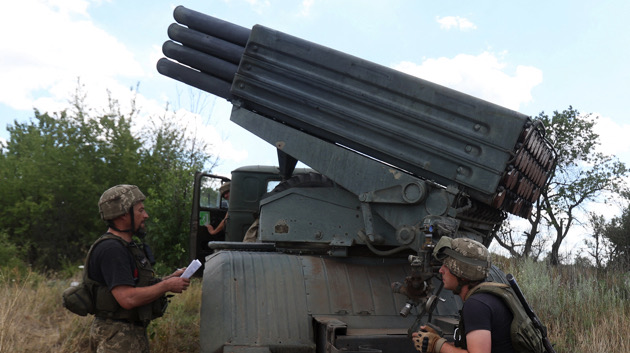
Russia-Ukraine live updates: Nuclear plant reportedly shelled

Russia-Ukraine live updates: Nuclear plant reportedly shelled
ANATOLII STEPANOV/AFP via Getty Images

(NEW YORK) — Russian President Vladimir Putin’s “special military operation” into neighboring Ukraine began on Feb. 24, with Russian forces invading from Belarus, to the north, and Russia, to the east. Ukrainian troops have offered “stiff resistance,” according to U.S. officials.

The Russian military has since launched a full-scale ground offensive in eastern Ukraine’s disputed Donbas region, capturing the strategic port city of Mariupol and securing a coastal corridor to the Moscow-annexed Crimean Peninsula.

Here’s how the news is developing. All times Eastern:

Aug 05, 4:05 PM EDT
Russia shelled nuclear plant, Zelenskyy says

Ukrainian President Volodymyr Zelenskyy said Russian forces shelled the Zaporizhzhia nuclear plant Friday.

Zelenskyy said forces twice struck the plant, which is in Russian-controlled territory in the southeast, and called the action “an act of terror,” in a statement released on Telegram.

“Russia should be responsible for the very fact of creating a threat to the nuclear power plant,” he said in the statement.

The facility is the largest nuclear power plant in Europe.

The Russian military, however, claimed it was a Ukrainian artillery strike that led to the reduction of activities of one power unit, and power falling at another.

They claimed 20 shells were fired at the city of Enerhodar and the power plant.

“Fortunately, the Ukrainian shells did not hit the oil and fuel facility and the oxygen plant nearby, thus avoiding a larger fire and a possible radiation accident,” Russia’s defense ministry said, according to Reuters.

Earlier this week, the International Atomic Energy Agency officials said the situation at Zaporizhzhia was “out of control” as routine safety checks had not been observed. IAEA officials have appealed for access to the Russian-controlled plant.

Aug 05, 6:33 AM EDT
3 more ships carrying Ukrainian grain leave Odesa-area ports

Another three commercial ships carrying Ukrainian grain have departed from Odesa-area ports under a wartime deal, the Turkish Ministry of National Defense said Friday.

The vessels are bound for Turkey, the United Kingdom and Ireland, with a combined total of 58,000 tons of Ukrainian corn onboard. All three ships will undergo inspection in Istanbul, as is required under the grain exports deal, according to the ministry.

The United Nations confirmed Thursday that three more grain ships — two from the port of Chornomorsk and one from Odesa — were cleared to depart through the designated “maritime humanitarian corridor.”

On Monday, the first commercial vessel carrying Ukrainian grain set sail from Odesa’s port under the so-called Black Sea Grain Initiative, bound for the Lebanese port of Tripoli. Last month, Russia and Ukraine signed separate agreements with Turkey and the U.N. to allow Ukraine to resume its shipment of grain from the Black Sea to world markets and for Russia to export grain and fertilizers.

Aug 04, 10:24 AM EDT
Ukrainian fighting tactics endanger civilians, Amnesty International says

Ukrainian forces attempting to repel the Russian invasion have put civilians in harm’s way by establishing bases and operating weapons systems in populated residential areas, including in schools and hospitals, Amnesty International said Thursday.

The London-based international human rights group published a new report detailing such tactics, saying they turn civilian objects into military targets.

“We have documented a pattern of Ukrainian forces putting civilians at risk and violating the laws of war when they operate in populated areas,” Amnesty International Secretary-General Agnès Callamard said in a statement. “Being in a defensive position does not exempt the Ukrainian military from respecting international humanitarian law.”

Between April and July, Amnesty International researchers spent several weeks investigating Russian airstrikes in the Kharkiv, Donbas and Mykolaiv regions of Ukraine. The organization inspected strike sites, interviewed survivors, witnesses and relatives of victims of attacks, as well as carried out remote-sensing and weapons analysis. Throughout the probe, researchers found evidence of Ukrainian forces launching strikes from within populated residential areas as well as basing themselves in civilian buildings in 19 towns and villages in the regions, according to Amnesty International.

The organization said most residential areas where Ukrainian soldiers located themselves were miles away from front lines, with viable alternatives that would not endanger civilians, such as nearby military bases or densely wooded areas, and other structures further away. In the cases documented, Amnesty International said it is not aware of the Ukrainian troops asking or assisting civilians to evacuate nearby buildings in the residential areas, which the organization called “a failure to take all feasible precautions to protect civilians.”

Amnesty International, however, noted that not every Russian attack it documented followed this pattern. In certain other locations in which the organization concluded that Russia had committed war crimes, including in some areas of the city of Kharkiv, the organization did not find evidence of Ukrainian forces located in the civilian areas unlawfully targeted by the Russian military.

Aug 03, 11:21 AM EDT
Inspectors in Turkey clear 1st grain ship from Ukraine, but no sign of more

The first commercial vessel carrying Ukrainian grain under a wartime deal has safely departed the Black Sea, the United Nations said Wednesday.

The Sierra Leone-flagged Razoni set sail from the Ukrainian port city of Odesa on Monday, with more than 26,000 tons of Ukrainian corn on board. The vessel docked off the coast of Istanbul late Tuesday, where it was required to be inspected before being allowed to proceed to its final destination, Lebanon.

A joint civilian inspection comprising officials from Russia, Turkey, Ukraine and the U.N. inspected the Razoni on Wednesday morning, checking on the cargo and crew. After three hours, the team cleared the ship to set sail for Lebanon, according to the U.N. said.

“This marks the conclusion of an initial ‘proof of concept’ operation to execute the agreement,” the U.N. said in a statement Wednesday.

It’s the first commercial vessel carrying Ukrainian grain to safely depart the Black Sea since the start of Russia’s ongoing offensive, and the first to do so under the so-called Black Sea Grain Initiative. Last month, Russia and Ukraine signed separate agreements with Turkey and the U.N. to allow Ukraine to resume its shipment of grain from the Black Sea to world markets and for Russia to export grain and fertilizers.

In a statement Wednesday, U.S. Secretary of State Antony Blinken called Razoni’s journey a “significant step” but noted that “this is only a first step.”

No other grain shipments have departed Ukraine in the last two days and officials on all sides have offered no explanation for that delay.

The U.N. said Wednesday that three Ukrainian ports “are due to resume the export of millions of tons of wheat, corn and other crops,” but didn’t provide further details.

Since Russian forces invaded neighboring Ukraine on Feb. 24, the cost of grain, fertilizer and fuel has skyrocketed worldwide. Russia and Ukraine — often referred to collectively as Europe’s breadbasket — produce a third of the global supply of wheat and barley, but a Russian blockade in the Black Sea combined with Ukrainian naval mines have made exporting siloed grain and other foodstuffs virtually impossible. As a result, millions of people around the world — particularly in Africa and the Middle East — are now on the brink of famine.

Aug 03, 9:58 AM EDT
Thousands flee ‘hell’ in Ukraine’s east

Two-thirds of residents have fled eastern Ukraine’s Donetsk Oblast since the start of Russia’s invasion in late February, according to the regional governor.

Speaking to Ukrainian media on Tuesday, Donetsk Oblast Gov. Pavlo Kyrylenko said some 350,000 residents remain in the war-torn region.

During his Tuesday evening address, Ukrainian President Volodymyr Zelenskyy called the hostilities in Ukraine’s east “hell.”

“It cannot be described with words,” Zelenskyy said.

Ukrainian forces cannot yet “completely break the Russian army’s advantage in artillery and manpower, and this is very noticeable in the fighting,” he added.

Last month, Ukrainian Deputy Prime Minister Iryna Vereshchuk said 200,000 civilians must be evacuated from the Donetsk Oblast before the weather gets colder, as there is no proper electricity or gas supply in the area for residents to heat their homes. Russian forces are also destroying heating equipment, according to Vereshchuk.

Zelenskyy has ordered the mandatory evacuation of Donetsk Oblast residents, urging them to leave as soon as possible. Those who comply will be compensated.

“The more people leave [the] Donetsk region now, the fewer people the Russian army will have time to kill,” he said.

Although many refuse to go, Zelenskyy stressed that “it still needs to be done.”

Mandatory evacuation from Donetsk Oblast began on Aug. 1. The first two trains evacuated 224 people to the central Ukrainian city of Kropyvnytskyi, according to local officials.

-ABC News’ Edward Szekeres, Yulia Drozd, Fidel Pavlenko and Yuriy Zaliznyak

Copyright © 2022, ABC Audio. All rights reserved.
Expert explains Russian law behind Brittney Griner sentencing

Expert explains Russian law behind Brittney Griner sentencing
ABC

(NEW YORK) — Brittney Griner is known for her game on the basketball court, but she’s now become embroiled in a much more dangerous game — a political gambit between Russia and the U.S.

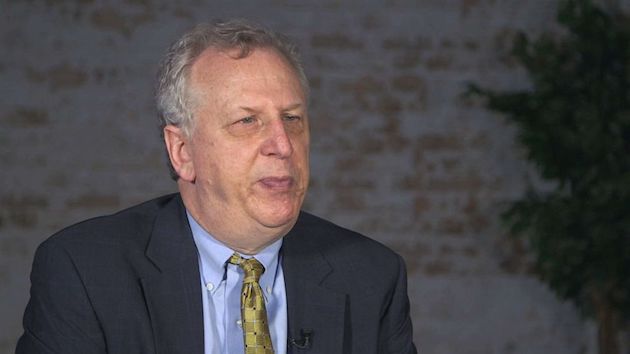
William Pomeranz, the director of the Wilson Center Kennan Institute, is an expert on Russian law and the political developments within the country. He spoke to ABC News Live about the message behind Russia’s sentencing of Griner and what may come next.

He said that Griner’s conviction and nine-year sentence for drug charges Thursday “did not come as a surprise.”

“Russian criminal law treats drug offenses very harshly and I was not surprised that she got basically the maximum sentence,” Pomeranz said.

Griner has been detained in Russia for over five months after she was stopped at an airport for possessing vape cartridges containing hashish oil, which is illegal in the country. She faced a maximum of 10 years in prison, though she will be credited with five months time served.

Calls to free the WNBA star have escalated in the months since her detainment and put a considerable amount of pressure on the Biden administration to act. Last week, Secretary of State Antony Blinken announced discussions of a potential prisoner exchange.

He said the proposal includes exchanging Griner and former Marine Paul Whelan, who has been detained in Russia since 2019, for convicted Russian arms dealer Viktor Bout.

President Joe Biden said in a brief comment on Friday that he was “hopeful” and his administration was “working hard” to bring Griner home.

Pomeranz said that whether Griner is a “political hostage” is “up for interpretation,” but the only way to get Griner out of Russia is through diplomacy.

“Diplomatic negotiations are ongoing, but, clearly, because the Biden administration has made the most overtures, the Russians are in the driver seat of when and how Brittney Griner gets home,” said Pomeranz.

Pomeranz added that Griner’s guilty conviction under Russian law may help.

“I think the Russians will be more inclined to negotiate. But how fast? I just don’t know,” said Pomeranz.

Copyright © 2022, ABC Audio. All rights reserved.

What Kansas’ abortion vote could mean for other states

What Kansas’ abortion vote could mean for other states
ABC News Photo Illustration

(NEW YORK) — After Kansas voters decisively rejected a bid to remove abortion protections from its state constitution earlier this week, researchers and activists say state lawmakers are likely to continue efforts to restrict access to abortion.

The Kansas vote was the first state-level test after the Supreme Court voted to overturn Roe v. Wade, leaving it up to states to regulate access to abortion. At least four other states will have abortion-related questions on the ballot this November, leaving voters to decide on access to abortion in some areas.

As of Thursday, ABC News reported that 59% of Kansas voters voted “No” to repealing the right to abortion access in the state’s constitution. Researchers told ABC News the margin by which the vote was won was surprising.

The vote came after the state’s Supreme Court decided in 2019 that the Kansas constitution establishes a fundamental right to abortion.

Not the end of the story in Kansas or elsewhere

Despite that ruling, a majority of lawmakers in the state Senate oppose abortion rights and have passed several laws that restrict access to abortion, which are being challenged in the courts, Elisabeth Smith, the director of state policy and advocacy at the Center for Reproductive Rights, told ABC News in an interview.

“We have seen lawmakers hostile to abortion rights in Kansas and other states, continuously enact unconstitutional abortion bans and restrictions,” Smith said.

She added, “It would not surprise me if anti-abortion legislators in Kansas continued to push the issue by passing unconstitutional bans that then the state has to pay to defend, by potentially continuing to attack the state Supreme Court or utilizing other tactics to try and enforce their — clearly unpopular — view.”

Elizabeth Nash, principal policy associate for state issues at the Guttmacher Institute, which researches reproductive rights, said this vote is not the end of the story.

“What we’d seen for the past decade are four other states that adopted similar measures — in Alabama, Louisiana, Tennessee and West Virginia — and all of them were approved by voters,” Nash said.

Nash said the margin with which the amendment was rejected was surprising because she said lawmakers had “stacked the deck” against the vote, putting it on a primary ballot and in somewhat confusing language. She said it is likely people started to get a better sense of the harm abortion bans can bring.

The Value Them Both coalition that supported the amendment blamed the results of the vote on “misinformation from radical left organizations.” The group vowed in their statement: “We will be back.”

Despite the vote, Kansas already has a number of restrictions in place with abortions currently banned after 22 weeks. According to Guttmacher, restrictions in place in Kansas include patients having to wait 24 hours after counseling before they can receive abortion, state Medicaid coverage of abortion care is banned except in very limited circumstances, and medication abortions must be given in person because of state bans on telehealth and mailing pills.

What does this vote mean for other states?

Voters in California and Vermont will vote on whether to add protections for abortion to their state constitutions. In Kentucky, voters will decide whether to amend their constitution to say abortion is not a constitutional right. Meanwhile, Montana voters will vote on a statute that says infants born alive at any stage of development are legal persons.

There is also an effort in Michigan to get a proactive constitutional amendment protecting abortion on the ballot. Michigan Gov. Gretchen Whitmer has filed a lawsuit blocking a 1931 abortion ban already on the books, asking a court to determine whether it is constitutional. A judge granted a temporary pause on enforcement of the law after state prosecutors had said they plan to use it to to bring charges against abortion providers.

While every state is different, Smith said it is very likely that other states that put abortion to a vote could have a similar result to Kansas, but it is unlikely more states will put abortion on the ballot this year. Nash also said elections will be key on abortion issues for years to come.

Kimberly McGuire, the executive director of pro-abortion rights group Unite for Reproductive and Gender Equity, which was on the executive committee for the campaign to vote no on the Kansas measure, hailed the vote as a victory.

She also highlighted efforts in other conservative states to enact protections despite bans, including that legislators in San Antonio, Texas, voted to enact protections for abortion Monday, and legislators in Atlanta, Georgia, enacted legislation to provide funds for abortions.

“This is a taste of what is to come. People across the country, in particular young people, are angry about the attacks on abortion rights, they’re angry about abortion bans, and they are fired up,” McGuire said.

McGuire said the results of the Kansas vote are in line with the popularity of abortion rights among Americans.

An ABC News poll released in May showed that 57% of Americans oppose a ban on abortions after 15 weeks and 58% say abortion should be legal in all or most cases.

Nash said a lot of political back and forth can be expected as abortion policy continues to be “in flux” across the country.

Hurdles to access in and around Kansas

An updated map from Guttmacher shows abortion is highly restricted in states surrounding Kansas.

“Most of the states touching Kansas are states that either have implemented abortion bans or are seeking to implement abortion bans. And so it’s really Colorado to the west that will maintain abortion access,” Nash said.

Nash said there is limited access to abortion in the western half of Kansas as well, so maintaining the limited access in the state is “incredibly important.”

She described abortion access in the region as “absolutely bleak.”

“Oklahoma, Arkansas, and Missouri, have total criminal abortion bans in effect right now, and other surrounding states are moving in that direction,” Nash said. “So Kansas has always been and will continue to be an incredibly important access point for abortion care.”
 

Copyright © 2022, ABC Audio. All rights reserved.