(MEMPHIS, Tenn.) — Six people, including four teenagers, were shot in related incidents in Memphis overnight, police said.
The first shooting was around midnight Tuesday, when officers heard multiple shots and saw a white SUV fleeing the scene, Memphis police said.
Officers responded to where the shots were fired and found an empty white Infiniti SUV in an apartment complex, police said. The SUV, which had been reported stolen, had bullet holes and part of a gas pump hanging from the tank, police said.
Police said they later learned that 19-year-old Reginald Felix, a 17-year-old boy and a 16-year-old boy had been in the stolen SUV when they were shot around midnight.
A 25-year-old was also shot at the scene, police said.
A 14-year-old boy and a 25-year-old man took Felix, the 17-year-old and the 16-year-old from the apartment complex to Methodist North Hospital, police said.
While en route to the hospital they were shot by unknown suspects in a dark car, according to police.
The five of them abandoned the SUV and ran to the hospital, police said.
Officers responded to the scene at Methodist North Hospital at 12:47 a.m., according to police.
It’s not clear if the suspects in the dark car and the victims are known to each other, police said. No one from the dark car has been arrested.
Felix and the 16-year-old have since been released from the hospital and are charged with theft, police said.
The 17-year-old remains in the hospital and is expected to be charged with theft, police said.
The 14-year-old and two 25-year-olds remain hospitalized, according to police.
ABC News’ Keith Harden contributed to this report.
(WASHINGTON) — Air travel fares may be starting to drop from their summer highs, but customers could pay the price to see family and take long-awaited vacations in the post-pandemic world, travel experts say.
Hopper predicts this upcoming winter holiday season will be the most expensive in the last five years.
Hopper anticipates 12.6 million people will fly over Labor Day weekend. Average ticket prices for the long weekend are up 20% from 2021 and 2019.
Domestic flights will cost $278 on average for a round-trip, according to Hopper data. For international flights, customers should expect to pay an average $850 for round-trip fares. International prices are up 34% from 2021 fares.
Nonetheless, Hopper said international travel is expected to make up 40% of the weekend’s air traffic, up 7% from 2021.
The most popular destinations for domestic and international bookings are Las Vegas, Denver, Atlanta, Puerto Rico and Mexico, according to Hopper.
Hotel and gas prices are expected to add further expenses compared to 2021 travel, the agency said.
This Thanksgiving, domestic flights are currently up 31% from 2019 prices and 44% from those in 2021. The average round-trip flight is sitting at $380, a Hopper spokesperson told ABC News.
For those going international, prices aren’t jumping quite as high. Hopper reported a 23% and 25% rise in prices from 2019 and 2021, respectively. The average round-trip price is listed at $788, according to Hopper.
Looking ahead to Christmas travel, Hopper said prices are up 25% and 42% from 2019 and 2021 for domestic bookings, and up 9% and 39% from those same years for international trips.
A Hopper spokesperson told ABC News that the best time to start booking your domestic holiday travel is by mid-September into mid-October. For international trips, start as soon as possible, Hopper said, to book by the first week of October.
Some of the most searched destinations for the holidays are facing these price raises, including New York City, Orlando, Atlanta and Los Angeles, according to Hopper.
London and Paris are the top searched international destinations for both Thanksgiving and Christmas, Hopper said.
The high-priced holiday season comes after a summer of airline disasters, as patrons experienced delays and cancellations at high rates throughout the season as severe weather and staff shortages have defined airports across the country.
(CHICAGO) — A suspect remains at large after three men were killed in a hit-and-run outside a Chicago gay bar, police said.
A fourth victim was struck and injured in the “horrific act” outside Jeffery Pub, which took place at about 5 a.m. Sunday, Chicago police said.
The attack “appears to be intentional” but is not being investigated as a hate crime, Chicago police said at a news conference Monday.
The incident began as an argument inside the bar, which then spilled into the street, police said. An “altercation” ensued, after which the suspect got in the car and drove into the pedestrians, police said.
The car involved was found abandoned four blocks from the scene, police said, but no one is in custody.
Police are looking to the public for help and asking anyone with information on the driver to come forward.
(NEW YORK) — The saga of WNBA star Brittney Griner continued Monday after her attorneys filed an appeal over her conviction and nine-year Russian prison sentence for drug possession.
The move comes as U.S. officials continue to seek a prisoner transfer for her and fellow captive American Paul Whelan.
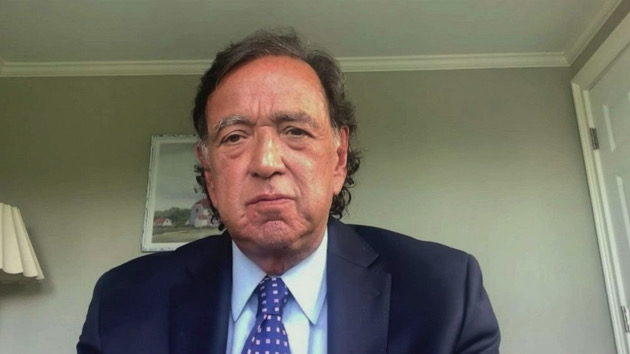
ABC News Live spoke with Bill Richardson, a former U.S. ambassador to the U.N., who has been a frequent emissary in hostage negotiations through the Richardson Center for Global Engagement, about the latest developments.
ABC NEWS LIVE: Let’s start with the news of Griner’s team filing an appeal. I’m curious, does that have any impact, you think, on diplomatic talks for a prisoner exchange to bring Griner and fellow detained American Paul Whelan home?
RICHARDSON: Well, indirectly, it basically says the legal process is over except for the appeal, and it’s reasonable to have this appeal [for a] nine-year sentence in a penal conflict. Now, there can be negotiations between the United States and Russia. Both seem disposed.
There’s been a prisoner exchange about two months ago, Trevor Reed, that I was indirectly involved in. I think the legal team of Brittney Griner has been effective [in] showing contrition, acknowledgment of the mistake and now the appeal. And I think…this potential return date from the American side is very important to [Russian President Vladimir] Putin. So I think both sides are moving in the right direction and I’m optimistic.
ABC NEWS LIVE: All right. You’ve just described yourself as a catalyst in these talks that are taking place at a government-to-government level between the U.S. and Russia. We know you traveled to Russia ahead of the release, as you mentioned, of American Trevor Reed earlier this spring. Have you or can you say or will you be traveling to Russia ahead of any release, potential release of Griner and Whelan?
RICHARDSON: Well, no, I can’t get into that information. But what I can tell you is that I talked to both sides. I talked to the White House. I talked to the Russians. I have contacts in the Russian government. When I was U.N. ambassador, for instance, the foreign minister [Sergey] Lavrov was my counterpart. I have others that I dealt with as secretary of energy. So I’m not a replacement for the negotiations, [or] some kind of an interlocutor indirectly.
So I don’t want to get into too many of these facets, but I’ve had experience. And I think…both sides are moving in the right direction because they’ve done it before, despite the fact that the relationship between the United States and Russia is toxic. Totally toxic.
ABC NEWS LIVE: Yeah, we understand that, and of course, appreciate it and would not want to jeopardize any future release. But I am curious about this. Russian officials have criticized the U.S. for openly discussing the offers on the table, but they did confirm this weekend that detained Russian arms dealer Viktor Bout is the name at the center of negotiations. You spoke to our George Stephanopoulos about this a little bit — a week or so ago. [Is there] any concern here that these talks could break down for any reason, including the U.S. being too public with that information? In other words, would you [have] preferred that America didn’t throw his name out there?
RICHARDSON: Well, I question that because I think private diplomacy is a lot better, but obviously the negotiations weren’t going too well. So what the U.S. did was when things aren’t going well, you kind of throw a little bit of a bomb. And so far, I think it’s moved in the right direction. Now, eventually, I think it’s not going to be a two-for-one deal. I think it’s going to be a two-for-two.
The Russians obviously probably will want more, but you never know. Again, humanitarian issues like prisoner exchanges, like this agreement on grain and fertilizer that the U.N. broke…are steps in the right direction on the humanitarian front that eventually might help in a very toxic relationship between us and the Russians.
ABC NEWS LIVE: So you just used the word optimistic. I’m going to see if I can push a little bit further. Are you confident that a deal can get done here? And if so, any idea about a timeline without giving anything away? Or are we talking weeks, months, [a] year?
RICHARDSON: Well, you don’t want to get into a timeline. I know the families are suffering. I think it was a great effort to combine them. An American Marine, a basketball star. We want both, but I think the Russians will want parity. So I’m optimistic because it was done before.
And I think Brittney Griner’s attorneys have handled this well. And lastly, I think both sides want it. Obviously, the president wants to get his prisoners back and Putin wants to get his prisoner back, especially Bout, who was politically very important. So there’s [a] political reality here. So I’m optimistic.
ABC NEWS LIVE: You mentioned the families. Let’s touch on that a little bit. I think when people talk about situations like this, they want to know what each government is doing. But I think sometimes lost in the translation are the families that have been dealing with this for however long they have been in each individual case. You’ve written books on it. Obviously, there’s an empathy there that you have. How do you tell the families to have patience in any kind of meaningful way during these negotiations?
RICHARDSON: Well, first, Mickey Bergman, who specializes in dealing with the families, handles that for our foundation.
We worked for the families, my foundation. We don’t work for the government. We don’t take orders from the government, either. The families work closely with us. We help them. We advise them. We don’t try to lift their spirits when there’s little, but then we move in directly into negotiation.
So that’s different from other groups that do very excellent in hostage diplomacy. But we get right in there and try to make things happen. We’re not replacing the government. Eventually, the U.S. government has to make the decision. The president, who I think [is] handling this well for a prisoner exchange. And as you know, prisoner exchanges have been criticized in the media and in the public.
ABC NEWS LIVE: You mentioned this a little earlier on that, of course, this is happening with the backdrop of this Russia-Ukraine war. How does that complicate negotiations? You’ve done this time and time again, but now there’s a war involved in this one, [and] Russia is not happy with America for supplying aid and weapons to Ukraine. So how does that complicate this?
RICHARDSON: Well, it complicates things a lot because the relationship between our leaders or secretary of states or presidents is almost nonexistent. But there are channels like our private channels, like our embassy in Moscow. So there are ways that we talk, but it complicates things. But usually, governments before, they better the relationship.
In this case [it’s] a very toxic relationship. Sometimes humanitarian efforts like a prisoner exchange, like the release of human rights prisoners, like the spring deal, the fertilizer deal between Russia [and] Ukraine brokered by the U.N., are steps that might lessen the tension and improve a very bad relationship.
(NEW YORK) — Communities on the East and Gulf coasts of the U.S. could soon be preparing for a longer hurricane season as the formation of tropical cyclones shifts to earlier in the year, according to a new study.
Researchers who analyzed changes in the onset of Atlantic tropical cyclone activity from 1979 to 2020 found that the first named storms of the North Atlantic hurricane season have been occurring five days earlier every decade since 1979, according to a study published in Nature Communications on Tuesday.
Currently, the North Atlantic hurricane season runs annually from June 1 to November 30 — a definition that was established in 1965.
Last year marked seven consecutive seasons that the National Hurricane Center issued watches or warnings for the continental U.S. before the start of the season on June 1, which prompted the researchers to study the phenomenon further, Ryan Truchelut, chief meteorologist at Weather Tiger, a consulting and risk management firm, and author of the study, told ABC News.
“The concern here is that this is, you know, historically very unusual,” Truchelut said.
This trend could soon change the current definition of the North Atlantic hurricane season, and a panel at the National Oceanic and Atmospheric Administration is currently weighing whether to adjust the current season to start earlier, Truchelut said.
“I think that that’s going to be an important signal to coastal residents and people living well inland who are at risk from tropical storm-driven flooding events,” Truchelut said of the potential change in season.
In addition, the findings also suggest that the first named storm to make landfall in the U.S. occurred earlier by about two days per decade since 1900, according to the study.
In 2021, climate factors such as La Niña, above-normal sea surface temperatures earlier in the season and above-normal West African monsoon rainfall were the primary contributors to the early start and the above-average season. But springtime warming in the western Atlantic Ocean, which has also shown an increasing trend during the same period, could be linked to the earlier onset of named storms, the authors said.
Additional increases in ocean temperatures may exacerbate the exposure of populated landmasses to tropical cyclones by shifting the onset of their formation earlier, according to the study.
While it does not appear that the timing of the peak or end of hurricane season has changed, information about the earlier onset of hurricanes will be important for communities to properly assess necessary risk management measures as hurricanes continue to intensify as a result of global warming, Truchelut said.
“Hopefully it’ll help people be more prepared to respond to those watches and warnings, and respond and react if they receive an emergency flash flood warning,” Truchelut said of the research.
ABC News’ Melissa Griffin contributed to this report.
(MEMPHIS, Tenn.) — Six people were shot outside a Memphis hospital early Tuesday and four of the victims remain in critical condition, police said.
The shooting was reported around 12:42 a.m. at Methodist North Hospital, Memphis police said.
Two victims were taken to Le Bonheur Children’s Hospital in critical condition, one of whom is now non-critical, while four were taken to Regional One Hospital. One of those taken to Regional One is also now out of critical condition, police said.
Three victims involved have been detained for allegedly possessing a stolen vehicle, police said.
All of the victims were reportedly shot by suspects in a black SUV, according to police. No arrests have been announced.
Methodist North Hospital said no hospital staffers were hurt during the gunfire.
“We appreciate the swift action from our employees to guide patients away … so our security team and Memphis Police Department could respond quickly,” hospital officials said in a statement. “We are working with local law enforcement who are continuing to investigate.”
ABC News’ Keith Harden contributed to this report.
(WASHINGTON) — First lady Jill Biden has tested positive for COVID-19, according to her office.
Jill Biden tested negative on Monday during her routine testing, and then developed “cold-like symptoms” Monday night, according to her communications director, Elizabeth Alexander.
“She tested negative again on a rapid antigen test, but a PCR test came back positive,” Alexander said in a statement.
She’s been prescribed the antiviral treatment Paxlovid, which President Joe Biden also took after testing positive last month.
This is a developing story. Please check back for updates.
Paul Bersebach/MediaNews Group/Orange County Register via Getty Images
(WASHINGTON) — Car buyers hoping to get a tax credit from the government for an electric vehicle after President Joe Biden signs the Inflation Reduction Act into law might find fewer vehicles that qualify.
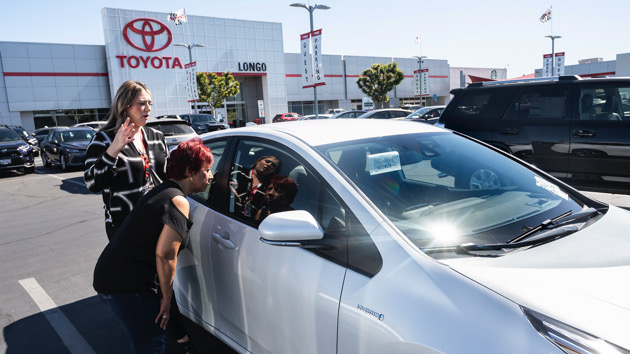
The Clean Vehicle Credit, a part of the Inflation Reduction Act that passed Congress last week, had a provision that added a credit of up to $4,000 for used EVs. The new law also removes the current 200,000 EV sales cap, which means vehicles made by Tesla, General Motors and Toyota are eligible again for a federal tax credit.
The law also tightens restrictions on which vehicles qualify for the credit. To receive the tax credit, vehicles must be manufactured in North America and made with batteries that have critical components sourced in either North America or supplied by the country’s free-trade agreement partners. The new law also means that high-income buyers and more expensive EVs will not be eligible for the credit.
Of the more than 70 EVs currently on the market, one insider says there’s a possibilitythat no EVs would qualify for a tax credit in the short term.
“When the Inflation Reduction Act is passed and signed by the president, those rules will change and become a lot more restrictive,” said John Boezella, president and CEO of Alliance for Automotive Innovation. “And that’s because the purpose of the credit has changed. It’s now focused on reducing our dependance on China for raw materials and battery components.”
But as manufacturing of EVs and batteries move to the U.S., far more vehicles will qualify for the federal tax credit. Boezella estimates that in five or seven years, there will be as many as 120 EVs on the market that could qualify for the new credit.
“It won’t happen overnight despite the fact that companies are investing billions of dollars right now to develop those supply chains,” Boezella said. “So what you’ll see is a reduction in the number of vehicles that will qualify, and then over time, we would expect that more vehicles will qualify in the future.”
The changes have caused confusion for industry experts, manufacturers and consumers.
“Consumer Reports did a survey and we found that half of car buyers are more likely to purchase an EV if there’s a tax credit that brings down the price, so those tax credits are obviously important to buyers,” said Keith Barry, an auto writer at Consumer Reports. “And if people can’t quite figure out which car qualifies, I imagine that will probably stall sales in the short term.”
Manufacturers, dealers and others in the auto industry are waiting to see what effect the bill will have on EVs.
“There’s a bit of a wait and see,” Barry said. “Different manufacturers are saying different things about what cars will qualify during this sort of transition period. And there’s no one size fits all answer here, unfortunately, until the regulations are fully written and the dust settles.”
(NEW YORK) — In an exclusive interview with Good Morning America, Amber Escudero-Kontostathis sits down to talk for the first time about being the sole survivor of a lightning strike near the White House earlier this month, on her 28th birthday, and her road to recovery.
“I don’t remember much of that day at all,” Escudero-Kontostathis told GMA in her first interview since the incident.
On Aug. 4, Escudero-Kontostathis, 28, was canvassing outside the White House for Threshold Giving, a nonprofit organization through the International Rescue Committee that helps refugees, when she and three others took cover underneath a tree at Lafayette Square after it began to rain.
Six bolts of lightning struck the group within half a second, killing three others, including 76-year-old James Mueller and 75-year-old Donna Mueller, a married couple celebrating their anniversary, and Brooks Lambertson, a 29-year-old Los Angeles man who was in D.C. for business.
Escudero-Kontostathis said the lightning struck her through the ground and traveled through her body, resulting in significant burns on her body.
“I don’t know why I survived,” she said. “I don’t feel good about being the only survivor, that’s for sure. I’m grateful, but I just don’t feel good about being the only one.”
She doesn’t recall much of her stay at the hospital, where she was placed in the Intensive Care Unit, but does remember the nurses trying to keep her calm and telling her things would be OK.
Escudero-Kontostathis praised the burn and ICU nurses for checking on her and providing constant care.
“You would hit the little things saying you were in pain and they’d be like ‘we’re coming,’ and they walk in and their name was always on the board,” she said. “I had more of a personal relationship and memory with the burn center nurses, but I’m excited to eventually get to meet the ICU nurses in person again now that I’m more conscious of that.”
She said her path to recovery has been frustrating both physically and mentally. “I forget that I can’t just get up and do stuff. I have to use a walker, for example,” she said.
“You wake up and you think that you can just get up and go and brush your teeth or get a cup of coffee yourself and I can’t, my whole left sides like pretty charred,” Escudero-Kontostathis said. “Mentally, also a little frustrated because I want to be working and doing things.”
Escudero, who’s the director of Threshold Giving’s canvassing team, said she enjoyed the work she did and that being unable to work while she recovers is one of the more painful parts of this experience.
“I get to help people find their inner activist and bridge them to the work they want to see in the world,” Escudero-Kontostathis said. “Not getting to do that every day is probably more painful than cleaning the burns, which is pretty painful.”
(UVALDE, Texas) — During Monday night’s school board meeting, Uvalde citizens demanded financial transparency regarding the millions of dollars in grants announced last week aimed at strengthening school security before children return to the classroom this September.
“We just saw lump sum $100,000 here, $500,000 here,” one community member said during the Uvalde Consolidated Independent School District meeting. “Now what I would like to see is further breakdown. OK, who is that money going to?”
The school board announced last week that it plans to spend more than $3.5 million on projects such as replacing locks, installing fences and hiring more counselors. The school district received grants from the state of Texas, the Department of Justice and the Las Vegas Raiders football team to fund these projects.
Uvalde:365 is a continuing ABC News series reported from Uvalde and focused on the Texas community and how it forges on in the shadow of tragedy.
The district also outlined its plan to offer remote classes this year in response to parents’ concerns that their children do not feel comfortable returning to school in person.
Becky Reinhardt, the administrator for virtual learning, said there would not be a limit on the number of students who can be virtual, and that students could switch back to in-person learning whenever they wanted.
For their part, the school board members did not speak much about the massacre that killed 21 people in May. They did not answer when asked about the progress of fence-building at the other schools, the likelihood they would conduct their own investigation or the timing of Police Chief Pete Arredondo’s termination hearing, which has been delayed twice.
The board will meet next Monday to hear community grievances.