
As railroad strike grows closer, congressional Dems hope for compromise — and not to have to act

As railroad strike grows closer, congressional Dems hope for compromise — and not to have to act
Tim Graham/Getty Images

(WASHINGTON) — As freight railroad carriers and a coalition of unions representing their workers move ever closer to a potential strike, a clash has erupted in Congress over whether and how to intervene in a labor dispute that could have devastating effects across an economy already buffeted by high inflation and recessionary pressures.

Republican Sens. Roger Wicker and Richard Burr on Monday introduced a resolution to stave off a strike by the industry’s unions, which represent more than 100,000 employees, by imposing what had been non-binding recommendations from the Presidential Emergency Board (PEB).

In a five-year plan presented in August, the board had recommended a 24% pay raise for rail workers retroactive to 2020, with $1,000 annual bonus. All but two of the major unions involved have come to an agreement with the railroad companies, but those two groups have said that unscheduled time off or sick leave continues to be a sticking point — and one that has dogged an industry beset with labor shortages.

The impasse presents a major problem for the unions’ political allies in Congress, largely Democrats, who defended workers against the railroads, which have made record profits through and heading out of the historic COVID-19 pandemic.

On Wednesday, in a sign of the potential conflict to come between lawmakers should Congress act to avert a strike, Sens. Wicker of Mississippi and Burr of North Carolina tried to force their resolution through — only to be blocked by Sen. Bernie Sanders, I-Vt, the self-described democratic socialist and prominent union supporter.

“If the trains stop running, our economy grinds to a halt,” Wicker warned. “The last thing we need is shutdown of the nation’s rail service, both passenger and freight, and yet that is what we are facing in less than a day and a half from this moment: a massive rail strike that will virtually shut down our economy.”

Burr noted one assessment that, in a strike, “the economic impact to the American people is $2 billion a day.”

“This is 160,000 trainloads of agriculture product at a time of harvest across this country … They haul coal. They haul gas. They haul petroleum. They haul gasses like helium that are required for manufacturing businesses,” Burr said. “They haul auto parts, which means you’re going to see auto assembly plants that shut down.”

Sanders shot back, “We’re talking about an industry that has seen its profit margins nearly tripled over the past 20 years. What Congress should be doing is not passing the Burr-Wicker resolution and forcing railroad workers back to work under horrendous working conditions. What we should be doing is telling the CEOs in the rail industry, ‘Treat your workers with dignity and respect, not contempt.'”

“It’s time for Congress to stand on the side of workers for a change and not just the head [sic] of large multinational corporations. Rail workers have a right to strike for reliable schedules. They have a right to strike for paid sick delays. They have a right to strike for safe working conditions,” Sanders said. “Rail workers have a right to strike for decent benefits. The Burr-Wicker resolution would take the fundamental rights away for workers.”

Indeed, in 2021, the nation’s largest railroad companies reported record profits coming out of the pandemic.

Burr, in a message to Senate Majority Leader Chuck Schumer, who must determine what bill to bring to the floor, said he could guarantee 48 Republicans would back his resolution with Wicker, suggesting only two GOP lawmakers did not support it in the 50-member conference.

Why Congress is involved

All labor disputes in the railway and airline industries — which are seen as critical to the U.S. economy, stretching across major industries from energy to agriculture — are governed by a 1920s-era federal law known as the Railway Labor Act (RLA).

Congress enacted that law after decades of sometimes violent worker strikes and when Americans had grown dependent on many industries, particularly farming and manufacturing.

The RLA is intended to protect employees’ right to unionize and collectively bargain — the first federal law to do this in the U.S. — and ensure timely settlement of any labor disagreements. It dictates the terms of such disputes, including when parties enter an “emergency” phase, as they have now and when a president must appoint a board to try to recommend solutions, though those are non-binding on all parties but are designed to help each side to reach a solution.

In this case, many of the unions accepted the PEB’s recommendations to avoid a strike, though Sanders has noted that the actual workers in the unions have yet to vote to approve the measures.

Under the RLA, if the parties in the rail labor dispute do not reach agreement on a new contract or extend the current cooling-off period by 12:01 a.m. on Friday, the railroads can either impose their own work rules or employees can strike — or both.

At that point, the RLA would no longer set the terms of behavior. Instead, only Congress and President Joe Biden would be empowered to act — as has happened in the past — if a longer-term labor crisis is to be averted.

But Democratic Whip Dick Durbin has urged workers not to lean on Congress to resolve the dispute, warning that, as the deadline looms, lawmakers may not be able to intervene fast enough.

“I think it is naive to believe that we could just quickly come up with an agreement on settling this strike, enacted in the Senate which requires 60 votes. It takes a lot more work than that,” Durbin said on Wednesday. “But I think the message to the railroads as well as the union is get the job done. Don’t count on Congress. Do it yourself. We think they are close, and they’ve got to understand the sense of urgency.”

Congress, acting with authority from the Constitution’s commerce clause, has not voted to end a railroad strike since April 1991 — less than 24 hours after a walkout. At the time, lawmakers approved a joint resolution — with President George H. W. Bush being roused from his bed in the middle of the night to sign the bill — that forced the parties in the dispute into a 65-day binding arbitration process. Had workers not approved the terms in arbitration, Congress mandated that less generous solutions from the Presidential Emergency Board be accepted.

Still, that last example was more than 30 years ago. In this bitterly partisan environment, and less than 60 days from a crucial midterm election when unions typically turn out in large numbers, Democrats — typically pro-union — are hoping that railway negotiations are successful and Congress is not needed.

“We’re all hoping that negotiations will continue so there is no strike, and we’re at the table with the secretary of labor. Secretary [Marty] Walsh has been very much hoping that we can get a resolution,” House Speaker Nancy Pelosi said Wednesday. “The main area of disagreement is there is no sick leave for the workers and that’s a problem.”

“I would rather see negotiations prevail so that there’s no need for any actions from Congress,” Pelosi told reporters.

ABC News’ Mariam Khan and Allison Pecorin contributed to this story.

Copyright © 2022, ABC Audio. All rights reserved.

Mother charged in drowning deaths of her 3 children

Mother charged in drowning deaths of her 3 children
RUNSTUDIO/Getty Images

(NEW YORK) — A New York City mother police said is suspected of drowning her three children while in the throes of a postpartum breakdown is now facing homicide charges.

The mother, 30-year-old Erin Merdy, was charged with three counts of second-degree murder, according to the New York Police Department. For each victim, she is charged with murder, murder with depraved indifference to human life and murder of a victim under 11 years old, officials said.

The charges were filed even as Merdy is undergoing psychiatric evaluation at a hospital and came a day after New York City’s chief medical examiner determined her three children — a 7-year-old boy, a 4-year-old girl and a 3-month-old daughter — died from drowning and that the manner of death was homicide.

Worried relatives and police found Merdy soaking wet, barefoot and alone early Monday on the Coney Island boardwalk after she called family members and allegedly threatened to harm her children, according to police. One official briefed on the probe told ABC News that the mother was “nearly catatonic” when police attempted to speak with her and are probing whether postpartum depression played a role in the alleged triple slaying.

The children were discovered by police unresponsive at 4:42 a.m. Monday at the water’s edge of Coney Island beach, about 2 miles from where the mother was located, authorities said.

Police said the deaths of the children appeared to be premeditated and not something that occurred at the spur of a moment.

The horrific incident began unfolding around 1:40 a.m. Monday, when a relative called 911 and said she was concerned that the mother was going to harm the children.

Officers went to the mother’s apartment in Coney Island, knocked on the door but got no answer, officials said. While at the address, a man showed up and identified himself as the father of one of the children, who also expressed concern for the well-being of the children and told officers he believed the mother had taken them to the boardwalk, according to authorities.

The mother was not able to communicate with police when they detained her for questioning on the boardwalk, officials said.

Police have obtained surveillance video of Merdy walking the children calmly to the ocean in the middle of the night, police sources told ABC New York station WABC.

Kenneth Corey, chief of department for the New York Police Department, said at a news conference on Monday that the children were found unresponsive at the water’s edge near the boardwalk at W. 35th Street. Officers immediately performed life-saving measures on the children, including cardiopulmonary resuscitation, but they were all pronounced dead at Coney Island Hospital.

The mother has no prior arrests or history of being emotionally disturbed, according to NYPD records. She has prior domestic incidents of harassment and aggravated harassment that did not result in charges, according to the records. Corey said investigators have found no indication of a prior history of abuse and neglect of the children.

The city Administration for Children’s Services declined to discuss Wednesday whether it should have been looking into Merdy before the children’s deaths, and if the family slipped through the cracks.

“Our top priority is protecting the safety and well-being of all children in New York City. We are investigating this tragedy with the NYPD,” an ACS spokesperson said.

While police said they are investigating whether postpartum depression played a role in the episode, Dr. Anna Yegiants, a resident physician and member of the ABC News Medical Unit, explained there is a difference between postpartum depression and postpartum psychosis.

Yegiants said that while it is possible for someone with postpartum depression to harm their children, it is not common. She said postpartum psychosis, however, presents essentially a break with reality and causes delusional thinking that could lead to such violence.

Up to 1 in 7 women experience postpartum depression, according to the American Psychological Association, and symptoms can occur during pregnancy and last for days or even months after delivering a baby.

“Postpartum depression is not your fault — it is a real, but treatable, psychological disorder,” the APA says on its website. “If you are having thoughts of hurting yourself or your baby, take action now: Put the baby in a safe place, like a crib. Call a friend or family member for help if you need to.”

ABC News’ Mark Crudele and Josh Margolin contributed to this report.

Copyright © 2022, ABC Audio. All rights reserved.
Recapping the 2022 primaries: The environment got better for Dems — but voters still have concerns

Recapping the 2022 primaries: The environment got better for Dems — but voters still have concerns
Al Drago/Bloomberg/Getty Images

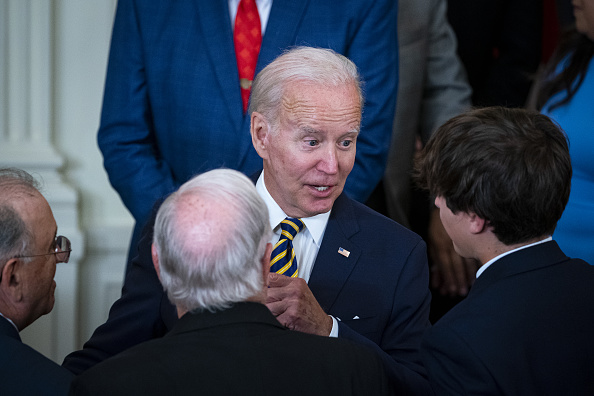
(WASHINGTON) — After Tuesday’s elections in Delaware, New Hampshire and Rhode Island, the six-month-long 2022 primary season has finally come to a close — and the party nominees now turn their attention to the eight weeks before November’s midterms.

A lot can change in the close of the campaign — just as a lot has changed throughout this year’s primaries.

Democrats braced at the beginning of the cycle for an expected wave of Republican success, given historical trends, President Joe Biden’s unpopularity and the drag of economic news, including gas prices and inflation.

At the beginning of June, FiveThirtyEight projected Democrats would lose an average of 20 House seats — more than enough to flip the chamber to the GOP.

Now, according to FiveThirtyEight’s forecast, Democrats are projected to lose an average of 13 seats. And FiveThirtyEight assesses that they are favorites to hold the Senate — albeit narrowly — in another reversal since June.

What shifted? Here’s a breakdown of key dynamics during the 2022 primary season and what it may mean ahead of the midterms.

The overturning Roe v. Wade in June gave a new focus for Democrats on the trail as they increasingly campaigned on abortion rights, which the Supreme Court had ruled should be left up to individual states. The first major litmus test of how Americans felt about abortion after the dismantling of Roe came in the historically red state of Kansas, where in August voters rejected a proposed state constitutional amendment that said there was no right to an abortion.

More than 900,000 Kansans went to the polls to vote, the biggest turnout for a primary election in the state’s history.

An ABC News/Ipsos poll released in August asked voters which candidate they would support if one favored keeping abortion legal and available and the other candidate supported limiting abortion except to protect the mother’s life. About half of Americans (49%) said they would be more likely to support the candidate who would keep access to abortion legal compared to the 27% of Americans who would be more likely to support the candidate who favored limiting abortion.

While anti-abortion voters are a core part of the Republican base, leading conservatives remain divided on the issue — some push for stricter restrictions nationwide while others argue for a more moderate position.

On Tuesday, South Carolina Sen. Lindsey Graham introduced legislation that would impose a federal ban on most abortions after 15 weeks, with exceptions for rape, incest and the life of the mother. But Minority Leader Mitch McConnell downplayed prospects for such legislation if his party retakes power, saying, “I think most of the members of my conference prefer this be dealt with at the state level.”

And some Republican candidates in tight races in swing states distanced themselves from a national ban. In Pennsylvania, Dr. Mehmet Oz’s campaign released a statement suggesting he would not support Graham’s legislation.

“Dr. Oz is pro-life with three exceptions: life of the mother, rape and incest. And as a senator, he’d want to make sure that the federal government is not involved in interfering with the state’s decisions on the topic,” spokeswoman Brittany Yanick told ABC News.

Former President Donald Trump continues to be an influential figure for Republican voters, even as others in his party suggested his endorsements were sometimes jeopardizing their general election prospects.

While Trump received mixed results with his endorsed candidates this primary cycle, one fact sticks out: In nearly every battleground Senate race, a candidate he endorsed or with whom he aligns won their primary, sometimes beating more moderate options.

Some exceptions prove that rule: In the Colorado Senate primary, where Trump did not make an endorsement, the candidate who won the primary, Joe O’Dea, has cast himself as a moderate Republican hoping to garner more voters in the purple state.

In August, McConnell predicted the House had a greater likelihood of flipping than the Senate, citing “candidate quality” in the Senate races — a veiled remark that many, including Trump himself, took to be about some of the GOP nominees backed by the former president. Heading into primary season, the party had also failed to recruit some popular names like Maryland Gov. Larry Hogan and New Hampshire Gov. Chris Sununu to target vulnerable Democratic incumbents.

Instead, Blake Masters in Arizona, Herschel Walker in Georgia and Oz in Pennsylvania are some of the first-time Senate candidates running in races that are either rated lean Democrat or toss-up by FiveThirtyEight. (McConnell has since publicly fundraised for Oz and Walker.)

In Maryland and New Hampshire, meanwhile, the Trump-aligned nominees Dan Cox and Don Bolduc triumphed over candidates backed by Hogan and Sununu, who won their blue states with more moderate coalitions. Cox and Bolduc energized their supporters in part by campaigning in Trump’s style, which included baseless attacks on the 2020 race.

President Biden’s approval rating consistently fell for much of the primary season, according to FiveThirtyEight — until gas prices began to fall in the summer and he notched a series of wins in Congress, which Democratic lawmakers have been happy to campaign on while on the trail.

Among the bills that were passed and signed — most of them by bipartisan majorities in Congress — were gun-safety reforms, veterans’ health care and domestic computer chip funding and, along party lines, the climate, health and tax package known as the Inflation Reduction Act.

In August, over Republican objections, Biden also announced he was fulfilling a campaign promise and would be forgiving up to $10,000 of federal student debt and an additional $10,000 in debt for those who received Pell grants.

His approval rating has rallied since a nadir in late July, according to FiveThirtyEight. As one example, according to a Quinnipiac University poll released in August, 40% of Americans approved of the job Biden has been doing compared to 52% who did not approve. This is up 9% from the last month.

The former president made clear that he would use his endorsements during the primaries to try and oust the House Republicans who voted to impeach him after Jan. 6 — and he largely succeeded. Of the 10 Republicans who voted for impeachment, four retired, four lost their primaries to Trump-backed challengers and only two will move onto the general election.

The two Republicans who survived their primarys are Reps. David Valadao of California and Dan Newhouse of Washington state.

Trump’s biggest target was Wyoming Rep. Liz Cheney, his biggest Republican critic and one of the lawmakers who has led the charge to prevent Trump from, in her words, ever holding office again. Cheney was handily defeated last month by Trump’s pick, attorney Harriet Hageman.

Even though Biden has seen notable improvement in his approval ratings, some Democratic candidates in battleground states still hesitated to campaign with the president.

In Ohio, Rep. Tim Ryan’s campaign told ABC News that they had not asked Biden or anyone from the White House to campaign with them.

In Wisconsin over the Labor Day weekend, Democratic Senate nominee and Lt. Gov. Mandela Barnes was absent as President Biden touted the power of union workers at a “Laborfest” in Milwaukee.

Pennsylvania Attorney General Josh Shapiro, the Democrat running for governor, did not join Biden when he visited Pittsburgh during his Labor Day stop after appearing with Biden at an official White House event in Wilkes-Barre the previous week.

In May, Shapiro told CNN that he would “welcome” Biden in Pennsylvania to campaign for him, adding that he was “focused on running a race here in the Commonwealth of Pennsylvania, listening to the people of Washington County, not Washington, D.C.”

Trouble continued to brew for Biden with the latest inflation report, which showed prices were 8.3% higher in August compared to a year ago — higher than expected. Food, shelter, medical care and education were among the categories that increased over the month. But the price of gasoline did fall, alleviating what voters have said is a major concern.

Republicans seized on the persistently high inflation as Biden released a statement that responded to the report, contending that “it will take more time and resolve to bring inflation down.”

The same day, Senate Republicans blasted the White House for celebrating the passage of the Inflation Reduction Act while inflation rates kept rising over last year.

“So they may be taking a victory lap at the White House but I can tell you one thing: The American people are not, because they are feeling the direct impact of this every single day,” Republican Whip John Thune said.

A recent ABC News/Ipsos poll showed that only 29% of Americans said they approved of the way Biden has been handling inflation — while 69% disapproved.

Heading into the general election, some firebrand Republicans who ran on Trump’s endorsement in swing states have started switching their tune on hot-button issues such as abortion.

In Pennsylvania, for example, state Sen. Doug Mastriano initially campaigned for the GOP nominee to be governor in part on a near-total ban on abortions — a portion of his platform he virtually stopped mentioning since winning the nomination.

Other Republican hopefuls downplayed their previous attacks on the 2020 race that Trump lost to Biden.

“If they want to be successful, they have to broaden their message,” Mike DuHaime, who helped former Republican Gov. Chris Christie twice get elected in New Jersey, previously told ABC News. “Yeah, you need the Republican base to be fired up — but you need to win over independents, and you need to win over some conservative, moderate Democrats. And you’re not going to do that by carrying Trump’s water about an election that happened two years ago. They need to move forward.”

In some key competitive races, candidates have rebranded their websites to appeal to more moderate voters, including removing their stances on abortion entirely. In North Carolina’s 13th Congressional District, GOP nominee Bo Hines, who proudly proclaimed that he was anti-abortion and touted his endorsement from Trump, has now removed both from the home page of his website.

“I think, many, many undecided voters won’t be tuning into this race until October,” DuHaime told ABC. “So, there’s certainly time. But you need to make that decision.”

Copyright © 2022, ABC Audio. All rights reserved.

‘Serial’ podcast subject’s conviction should be vacated, prosecutors say

‘Serial’ podcast subject’s conviction should be vacated, prosecutors say
Karl Merton Ferron/Baltimore Sun/Tribune News Service/Getty Images

(BALTIMORE) — The conviction of Adnan Syed should be vacated, prosecutors said in a new court filing Wednesday.

Syed was the subject of the popular podcast “Serial,” which profiles various murders around the country and shed light on the lack of DNA testing in his case.

At 17-years-old, he was convicted for the 1999 murder of 18-year-old Hae Min Lee and sentenced to life in prison plus 30 years. Prosecutors on Wednesday said that conviction should be vacated due to the lack of DNA evidence that “calls into question the integrity of the conviction.”

The Baltimore County, Maryland, State’s Attorney said in her filing the “evidence against the Defendant was not overwhelming and was largely circumstantial.”

Syed’s lawyer Erica Suter agreed.

In her response motion filed on Wednesday, she said his conviction rests on the word of a cooperating then 19-year-old who was “incentivized” to cooperate.

“Our criminal legal system serve us when we can have confidence in outcomes,” Suter wrote. “Mr. Seyed’s conviction rests on the evolving narrative of an incentivized cooperating, nineteen-year-old co-defendant, propped up by inaccurate and misleading cell phone location data.”

In November 2019, the U.S. Supreme Court denied Syed’s appeal for a new trial, upholding a Maryland appeals court’s decision that rejected claims his trial lawyer failed to interview an alibi witness, and therefore Syed’s constitutional right to effective legal representation was violated.

State’s Attorney Marylin Mosby said her office was set out to right the wrongs of previous convictions.

“For that reason, after a nearly year-long investigation reviewing the facts of this case, Syed deserves a new trial where he is adequately represented and the latest evidence can be presented. As stewards of the court, we are obligated to uphold confidence in the integrity of convictions and do our part to correct when this standard has been comprised,” she said. “We have spoken with the family of Ms. Hae Min Lee and fully understand that the person responsible for this heinous crime must be held accountable.”

In March, the office asked Baltimore City Police Chief Becky Feldman and the defense filed a Joint Petition for Post-Conviction DNA Testing of the victim’s clothing. Specifically, the motion requested the clothing tested for touch DNA, which was unavailable at the time of trial.

In 2018, the Baltimore City Police Lab tested various items for DNA through an agreement between the Office of the Attorney General and the defendant’s previous counsel. However, the items now being tested were not previously tested in 2018, with the exception of the victim’s fingernail clippings.

In 2018 the State’s Attorney’s office conducted a DNA test but noted that some items were not tested.

The new filing says the re-investigation of the case revealed evidence regarding the possible involvement of two alternative suspects other than Syed.

The two suspects may be involved individually or may be involved together, the filing said, noting these suspects were known persons at the time of the original investigation and were not properly ruled out nor disclosed to the defense. According to the trial file, the person said “He would make her [Ms. Lee] disappear. He would kill her.” The state said it cannot disclose names at this point.

The Serial podcast tweeted, “This is big news. For the first time, Baltimore prosecutors are saying they don’t have confidence in Adnan Syed’s conviction and are asking for his release.”

Prosecutors don’t make a determination whether he is innocent, just that the conviction should be vacated based on the evidence and Syed should be granted a new trial.

The court filing says that Syed’s case might have incurred a violation of what is known as the Brady rule — stemming from the Supreme Court precedent-setting case Brady v. Maryland that requires a remedy if the defense is not given all of the information at trial it could potentially foil the case.

“The State avers that considering the totality of evidence now available, the information about an alternative suspect would have been helpful to the defense because it would have helped substantiate an alternative suspect defense that was consistent with the defense at trial.”


Copyright © 2022, ABC Audio. All rights reserved.

Here’s why food prices are so high and what you can do about it

Here’s why food prices are so high and what you can do about it
APU GOMES/AFP/Getty Images

(WASHINGTON) — Americans may be getting some relief at the gas pump, but they are not finding that relief at the grocery store.

Gasoline prices nationwide are down 10.6% from their record high of $5 a gallon in June. According to the American Automobile Association, the national average is now $3.70 for a gallon of regular, but food prices continue to soar.

The August Consumer Price Index found inflation rose 8.3%, down slightly from July’s reading of 8.5%, but still near a 40-year high. Those falling gas prices were more than offset by higher prices for rent, food, healthcare, and electricity.

The Federal Reserve’s series of interest rate hikes designed to beat back high inflation has had little impact on food prices. Economists say that is because a number of factors influence the cost of food, including the geopolitical landscape and weather.

The war in Ukraine has sent prices of wheat and other commodities higher while severe floods and droughts in parts of the U.S. have impacted crops and food supply. An outbreak of the avian bird flu is also wreaking havoc on the U.S. chicken and turkey population, triggering a spike in egg prices and analysts are already warning that turkey for this year’s Thanksgiving dinner will be the most expensive yet.

Unlike discretionary spending on things like clothing and entertainment, demand for food is not flexible, and consumers are feeling the pinch down nearly every aisle of the supermarket. Overall, the cost of food is up 11.4% in the past year, that’s the highest annual increase in 23 years, according to the U.S. Bureau of Labor Statistics. Prices for groceries shot up 13.5% over the past year, while eating out is 8% more expensive, as restaurants hike prices to pay for their own rising food costs.

Sticker shock has hit some items worse than others. The price of eggs is up 39.8%, milk prices have risen 17%, while bread is up 16.2% from a year ago, according to the U.S. Bureau of Labor Statistics. Fruits and vegetables combined cost 9.4% more than they did a year ago, while meat is up 6.7% and chicken costs 16.6% more.

Fresh data shows skyrocketing food prices are starting to change consumer’s buying habits at the supermarket. Sales of frozen dinners and entrees fell 11.4% in August, while sales of cookies fell 8.9% and sales of frozen juices and drinks slid 8%, according to the data analytics and research firm IRi.

Experts say there are strategies you can implement to help you make money-saving decisions on your next trip to the grocery store.

First, plan your meals for the week and take inventory of your refrigerator and pantry so you know exactly what you need. Once you know what you need, make a list and stick to it. Experts say going to the grocery store without a plan leaves you open to impulse purchases, which could lead to poor money decisions.

Avoid those pricier pre-packaged lunches and dinners, as well as pre-cut vegetables and fruits. They may be a time-saver, but experts agree the higher cost for convenience can quickly drain your wallet. Whenever possible, buy store-brand products. They are nearly always cheaper than name brands, and in many cases, you won’t be sacrificing quality. According to Consumer Reports, 22% of shoppers choose which supermarkets to shop at based partly on the quality of their store brands.

You can also clip digital or paper coupons and join your store’s loyalty program where you can start taking advantage of store discounts immediately.

Perhaps the number one money-saving tip – never food shop when you’re hungry. It’s sure to be a budget buster.

Copyright © 2022, ABC Audio. All rights reserved.

Mother charged in drowning deaths of her 3 children

Mother charged in drowning deaths of her 3 children
Theodore Parisienne/New York Daily News/Tribune News Service/Getty Images

(NEW YORK) — A New York City mother police said is suspected of drowning her three children while in the throes of a postpartum breakdown is now facing homicide charges.

The mother, 30-year-old Erin Merdy, was charged with three counts of second-degree murder, according to the New York Police Department. For each victim, she is charged with murder, murder with depraved indifference to human life and murder of a victim under 11 years old, officials said.

The charges were filed even as Merdy is undergoing psychiatric evaluation at a hospital and came a day after New York City’s chief medical examiner determined her three children — a 7-year-old boy, a 4-year-old girl and a 3-month-old daughter — died from drowning and that the manner of death was homicide.

Worried relatives and police found Merdy soaking wet, barefoot and alone early Monday on the Coney Island boardwalk after she called family members and allegedly threatened to harm her children, according to police. One official briefed on the probe told ABC News that the mother was “nearly catatonic” when police attempted to speak with her and are probing whether postpartum depression played a role in the alleged triple slaying.

The children were discovered by police unresponsive at 4:42 a.m. Monday at the water’s edge of Coney Island beach, about 2 miles from where the mother was located, authorities said.

Police said the deaths of the children appeared to be premeditated and not something that occurred at the spur of a moment.

The horrific incident began unfolding around 1:40 a.m. Monday, when a relative called 911 and said she was concerned that the mother was going to harm the children.

Officers went to the mother’s apartment in Coney Island, knocked on the door but got no answer, officials said. While at the address, a man showed up and identified himself as the father of one of the children, who also expressed concern for the well-being of the children and told officers he believed the mother had taken them to the boardwalk, according to authorities.

The mother was not able to communicate with police when they detained her for questioning on the boardwalk, officials said.

Police have obtained surveillance video of Merdy walking the children calmly to the ocean in the middle of the night, police sources told ABC New York station WABC.

Kenneth Corey, chief of department for the New York Police Department, said at a news conference on Monday that the children were found unresponsive at the water’s edge near the boardwalk at W. 35th Street. Officers immediately performed life-saving measures on the children, including cardiopulmonary resuscitation, but they were all pronounced dead at Coney Island Hospital.

The mother has no prior arrests or history of being emotionally disturbed, according to NYPD records. She has prior domestic incidents of harassment and aggravated harassment that did not result in charges, according to the records. Corey said investigators have found no indication of a prior history of abuse and neglect of the children.

The city Administration for Children’s Services declined to discuss Wednesday whether it should have been looking into Merdy before the children’s deaths, and if the family slipped through the cracks.

“Our top priority is protecting the safety and well-being of all children in New York City. We are investigating this tragedy with the NYPD,” an ACS spokesperson said.

While police said they are investigating whether postpartum depression played a role in the episode, Dr. Anna Yegiants, a resident physician and member of the ABC News Medical Unit, explained there is a difference between postpartum depression and postpartum psychosis.

Yegiants said that while it is possible for someone with postpartum depression to harm their children, it is not common. She said postpartum psychosis, however, presents essentially a break with reality and causes delusional thinking that could lead to such violence.

Up to 1 in 7 women experience postpartum depression, according to the American Psychological Association, and symptoms can occur during pregnancy and last for days or even months after delivering a baby.

“Postpartum depression is not your fault — it is a real, but treatable, psychological disorder,” the APA says on its website. “If you are having thoughts of hurting yourself or your baby, take action now: Put the baby in a safe place, like a crib. Call a friend or family member for help if you need to.”

Copyright © 2022, ABC Audio. All rights reserved.
Biden touts electric vehicle investments at Detroit auto show

Biden touts electric vehicle investments at Detroit auto show
Emily Elconin/Bloomberg/Getty Images

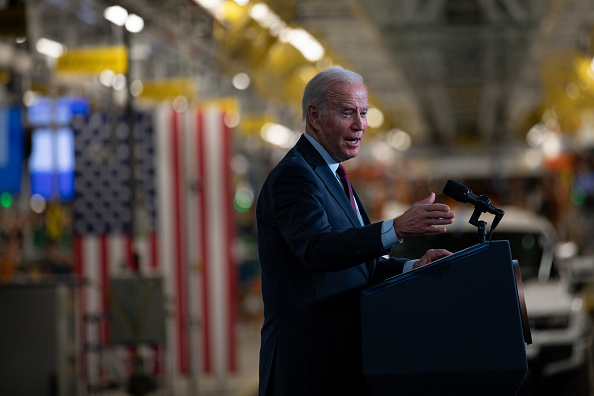
(DETROIT) — President Joe Biden on Wednesday touted his administration’s work on electric vehicles while touring the 2022 North American International Auto Show in Detroit, describing a future where charging stations are as easily available as gas stations.

“The great American road trip is going to be fully electrified,” Biden said as he announced the first round of federal funding for electric vehicle chargers from the Bipartisan Infrastructure Law he signed last year.

“We’re approving funding for the first 35 states, including Michigan, to build their own electric charging infrastructure throughout their state,” Biden said. “And you are gonna be part of a network of 500,000 charging stations.”

According to a White House official, the $900 million investment will help build chargers across 53,000 miles of the national highway system.

Biden also took a moment to promote the new EV tax credits included in the Inflation Reduction Act. The law, signed last month, includes a $7,500 credit for new vehicles and a $4,000 credit for purchases of used EVs.

The Inflation Reduction Act also requires that an electric vehicle and its batteries must be assembled in North America in order to qualify for the federal tax incentive.

“It used to be that to buy an electric car you had to make all sorts of compromises, but not now,” Biden said. “Thanks to American ingenuity, American engineers, American auto workers, that’s all changing. Today, if you want an electric vehicle with a long range, you can buy one made in America.”

Several states are beginning to phase-out gas-powered vehicles and shift to electric cars. California became the first state in the U.S. to implement regulations that ban the sale of new gas-engine vehicles by 2035. The Golden State will require all new cars to run on electricity or hydrogen.

Biden, a self-professed car enthusiast, toured the showroom alongside General Motors CEO Mary Barra and its president Mark Ruess. At one point, the president got inside a bright orange Chevrolet Corvette Z06 — which has gasoline-fueled V8 engine — and revved the engine.

“Move out of the way everybody, this thing flies,” the president said to the press. Biden has his own vintage 1967 Corvette.

After turning off the engine, Biden joked that he was going to tell his Secret Service detail he was driving home.

Biden also stopped to check out a bright blue Electric Chevy Silverado, a yellow-orange Mustang, and a group of new plug-in electric vehicle Jeeps before getting behind the wheel and driving an electric Cadillac Lyriq.

“Come on jump in, I’ll give you a ride back to Washington,” Biden quipped.

Copyright © 2022, ABC Audio. All rights reserved.

Potential rail strike could have ‘significant detrimental effects,’ supply chain expert says

Potential rail strike could have ‘significant detrimental effects,’ supply chain expert says
Brandon Bell/Getty Images

(NEW YORK) — As freight railroads and their unions continue to feel pressure from the White House, businesses and other stakeholders to reach an agreement before a potential strike, economic experts say the possible work stoppage will wreak havoc on businesses and consumers.

Two labor unions representing 57,000 engineers and conductors, who make up roughly half of all rail workers, are seeking a better time-off policy and contend that rail companies are trying to force a deal without meeting their requests. The National Carriers’ Conference Committee, which represents the nation’s freight railroads in national collective bargaining, said the rail companies offered a fair contract that includes a significant wage increase.

ABC News Live spoke with Abe Eshkenazi, the CEO of the Association for Supply Chain Management, or ASCM, about the potential ramifications of a strike on all aspects of the economy.

ABC NEWS LIVE: How vital are our railroad tracks to our supply chain?

ABE ESHKENAZI: Well, you’re talking about the most vital activities within logistics and transportation. By any measure, 30 to 40% of our goods are moved by rail. So we’re talking about a significant amount of movement of goods and services from raw materials to finished goods. In almost every aspect, the supply chain relies on the rails from the ports to our consumers, and the warehouses. This is a vital link in our logistics and warehousing system.

ABC NEWS LIVE: President Biden was briefed on the situation this morning. What do the railroad workers want in this case and can this strike be averted?

ESHKENAZI: I think the hope from every perspective is that we are able to reach an agreement. I think there has been some discussion about some legislative action, if it is not if we don’t see an agreement. I think the impact that it’s having [is] on the workers. There are significant issues that they have not only in terms of their hours of work, [and] away from all of their work conditions. There obviously are a number of issues that need to be addressed, but the criticality of the logistics and the rail system can’t be underestimated if we do have a work stoppage or any disruption.

ABC NEWS LIVE: Secretary of Labor Marty Walsh cut his Europe trip short to try and stave off this strike. What’s the worst-case scenario for our supply chain if this does go forward?

ESHKENAZI: Well, you’re talking significant detrimental effects. We’re already facing a number of shortages. We’ve got congestion at the ports. You’ve got trucking issues. We have warehouse capacity issues. Our demand and our supply are not balanced right now. So having a rail disruption is going to impact everything from the raw materials to the manufacturing and obviously to the consumer and the availability of goods down the stream here. This is a global supply chain. Any disruption, as we’ve seen in the past, is going to have a collateral effect. Whether we’re talking about weather-related issues or the conflict in Ukraine. We’re seeing collateral impact from these disruptions on almost every aspect of the supply chain. We’re seeing it in inflationary cost as well as labor issues, trying to find workers as well.

ABC NEWS LIVE: Amtrak has already canceled some long distance routes and companies have moved to suspend hazardous shipments in case they get stranded mid-route. Is our supply chain going to take a hit now regardless of whether or not there’s actually a strike?

ESHKENAZI: Well, we’re already seeing companies take some action and mitigate risk. There is a challenge that supply chain professionals need to address. And that’s a force coming, disruption from the rails so that, unfortunately, there are very few alternatives to the rail volume and the costs that are associated with it. So there really aren’t a whole lot of alternative transportation modes that we can rely on. That disruption on the rails is going to have a dramatic effect on almost every aspect of our economy.

ABC NEWS LIVE: And I understand that Congress has the ability to step in if a strike does happen. Do you think that the government ultimately will have to get involved?

ESHKENAZI: I don’t see how it doesn’t happen for a variety of reasons. No. 1, our economy depends on efficient rail and logistics. Secondly, we’re coming into the November elections. I don’t think that anybody in the legislature wants to address a rail stoppage or a work stoppage right now if we can avert it. Obviously, we’re already dealing with a lot of impact from the pandemic and a lot of the disruptions in our supply chain, whether from [the] China shutdown or weather-related issues. I’m not sure that we’re prepared for a significant disruption in our rail systems. Supply chain professionals need and work with accurate data and reliable systems. Removing this mode or modality of transportation would have significant and detrimental effects to almost every aspect of our supply chain.


Copyright © 2022, ABC Audio. All rights reserved.
Ex-Cuomo aide sues former governor, alleging gender discrimination, sexual harassment

Ex-Cuomo aide sues former governor, alleging gender discrimination, sexual harassment
Lev Radin/Pacific Press/LightRocket/Getty Images

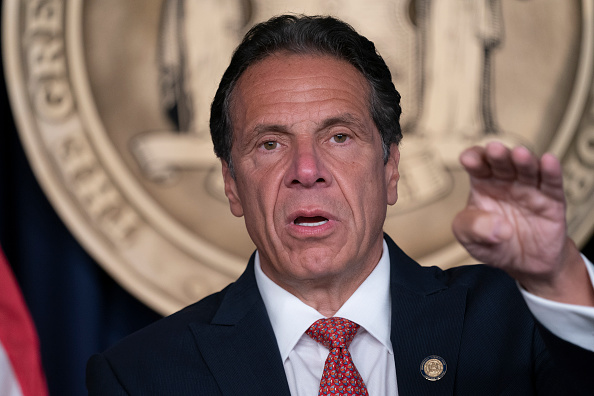
(ALBANY, NY) — Charlotte Bennett, a former aide who has accused ex-New York Gov. Andrew Cuomo of sexual harassment, sued him Wednesday in federal court, alleging gender discrimination, sexual harassment and retaliation.

In addition to Cuomo, the lawsuit, filed in Manhattan federal court, also named three of his top aides: Melissa DeRosa, Jill DesRosiers and Judith Mogul.

Bennett was among 11 women a New York Attorney General’s report found Cuomo harassed, which led to his resignation from office in August, 2021.

“Throughout her employment as Defendant Cuomo’s Executive Assistant, the then-Governor subjected her to sexualized comments about her appearance, assigned her humiliating and demeaning tasks, and beginning in early June 2020, subjected her to invasive and unwanted questions about her personal life, romantic and sexual relationships, and history as a survivor of sexual assault,” Bennett’s lawsuit said.

When Bennett reported her claims and her fear of retaliation to chief of staff DesRosiers Bennett, she was transferred “to an inferior position,” the lawsuit said.

“The Governor has always said he didn’t harass anyone and with each day that goes by more and more information is uncovered showing how evidence favorable to the Governor was suppressed and crucial facts ignored or omitted that undermined witness credibility. What else will come out during the discovery process? We’ll see them in court,” Cuomo attorney Rita Glavin said in a statement to ABC News on Wednesday.

Bennett went public with some her claims in a February 2021 article in The New York Times after another former Cuomo staff member, Lindsey Boylan, published her account. Cuomo claimed at the time that his actions involving Bennett were misunderstood.

The allegations in the lawsuit expand upon many of the public claims Bennett previously made, including an Oct. 4, 2019, phone call when she said Cuomo began singing the words, “Are you ready?” to the tune of “Do You Love Me?” by The Contours.

“When Plaintiff told Defendant Cuomo she did not recognize the song, Defendant Cuomo sang several lines from the song: ‘Do you love me, do you really love me? Do you love me, do you care?’ Defendant Cuomo’s singing to her made Plaintiff uncomfortable and she laughed awkwardly,” the lawsuit said.

A few weeks later, Cuomo asked Bennett a series of pointed questions about the size of his hands, the suit said.

“Given the common association between the size of a man’s hands and the size of his penis, Plaintiff understood Defendant Cuomo to be encouraging her to comment on the size of his genitals, which made her extremely uncomfortable,” the lawsuit said.

Bennett accused Cuomo of asking her uncomfortable questions about a time when she was sexually assaulted during college, the suit said.

“Defendant Cuomo’s questions made Plaintiff extremely uncomfortable, but she felt she could not decline to respond and briefly described an incident in which her then-boyfriend ejaculated on her clothing without her consent,” the lawsuit said. “Defendant Cuomo responded with something to the effect of, ‘Well, some people have it much worse.'”

Cuomo resigned last year after a five-month investigation by New York State Attorney General Letitia James. The 168-page report said “the governor engaged in conduct constituting sexual harassment under federal and New York State law.”

“Specifically, we find that the Governor sexually harassed a number of current and former New York State employees by, among other things, engaging in unwelcome and nonconsensual touching, as well as making numerous offensive comments of a suggestive and sexual nature that created a hostile work environment for women,” the report said.

In announcing his resignation, Cuomo said his first instinct was to fight the allegation, which he said were politically motivated. However, he said it would save the taxpayers millions of dollars for him to step down. “The best way I can help now is if I step aside,” he said last year.

However, he said, “Don’t get me wrong — this is not to say that there are not 11 women who I truly offended. There are. And for that, I deeply, deeply apologize.”


Copyright © 2022, ABC Audio. All rights reserved.

West Virginia lawmakers pass near-total ban on abortion

West Virginia lawmakers pass near-total ban on abortion
eyecrave productions/Getty Images

(CHARLESTON, W.Va.) — West Virginia legislators approved a bill that bans nearly all abortions in the state, sending it to Gov. Jim Justice’s desk for approval before it becomes law.

Known as HB 302, the bill approved by state legislators Tuesday prohibits the procedure at virtually every stage of pregnancy.

However, there are exceptions if the mother’s life is in danger, if the fetus is “non-medically viable” or for an ectopic pregnancy, which is when a fertilized egg implants and grows outside of the uterus. Psychological or emotional conditions are excluded, according to the bill.

Physicians who perform unlawful abortions could lose their license to practice medicine and face criminal charges.

Additionally, the bill states that miscarriages and stillbirths are not considered abortions.

The bill passed both chambers last week, but returned to the House for a vote after an amendment by the Senate stripped a section of the bill that would see doctors imprisoned for up to 10 years if they perform abortions outside of the exceptions.

The Senate also changed the bill’s exceptions for rape and incest. In the House-backed version, rape and incest were excluded from the ban until about 14 weeks’ gestation and as long as a report is filed with a “qualified law enforcement officer.” In the Senate, the exceptions are until eight weeks’ gestation.

The bill passed by legislators requires physicians to report any abortions they perform to the commissioner of the state’s Bureau for Public Health within 15 days, including a justification for why the care was provided.

On July 25, the state legislature was initially called into a special session to consider Justice’s proposal to reduce personal income tax rates.

But that morning, as lawmakers were gaveling in, Justice amended the call and said he would also be asking lawmakers “to clarify and modernize the abortion-related laws currently existing as part of the West Virginia Code.”

“From the moment the Supreme Court announced their decision in Dobbs, I said that I would not hesitate to call a Special Session once I heard from our Legislative leaders that they had done their due diligence and were ready to act,” Justice said in a statement. “As I have said many times, I very proudly stand for life, and I believe that every human life is a miracle worth protecting.”

Copyright © 2022, ABC Audio. All rights reserved.