(NEW YORK) — We’ve been taught to expect the unexpected, and when it comes to finances, the best way to do that is with an emergency fund.
An emergency fund contains cash for unforeseen moments “that throw your life into financial uncertainty and disarray,” said Rebecca Jarvis, ABC News’ chief business and economics correspondent. These could include a death in the family, a debilitating illness, a divorce or a job loss.
“Life is full of surprises and sometimes they have a giant price tag,” Jarvis said.
How much should you save in your emergency fund?
Jarvis points out that emergency funds should be for “hurricanes” as opposed to “rainy day” inconveniences such as car repairs or broken appliances or phones.
“You want to look at your weekly budget — how much are you spending on food and groceries? What is the cost of electricity and utilities? How much do you have to pay for rent or your mortgage? These are all necessities, things that you would have to make payments on in order to keep the status quo,” Jarvis said.
She recommends building up six months’ worth of these expenses for your emergency fund.
“But if you can’t get there right away, at least [try to] have three months worth of savings to cover all the necessities,” Jarvis said, noting that if you have children or job instability, you may eventually wish to save a larger padding.
If that total is a challenge, “it can be helpful to start with a smaller number, like $500, which can still be crucial in getting you through a difficult time,” said Kimberly Palmer, a personal finance expert at NerdWallet, who shared a calculator that can help determine an amount you can strive to reach.
“The goal here is to give yourself that cushion so that you’re not shouldering the financial burden, along with the emotional burden, of these major lifestyle changes,” Jarvis said.
“Knowing that the money is there if you need it creates a peace of mind and a freedom to live in the present and not be thinking constantly about what happens in the future if you don’t have this safety net,” she said.
Where to put your money and how to save
Even though your emergency fund is a last resort, that money should be ready to deploy at a moment’s notice, Jarvis said.
A savings account or a money market fund are options to contain your emergency fund, as are CDs, 401(k)s or even IRAs, but some of these can have fees associated with them for early withdrawals.
As far as contributing toward your emergency fund, Jarvis suggests making it a part of your budget.
“Give a little to that emergency fund every week, every month, until you get to the point where you have those six months of savings on hand,” she said, further suggesting tracking and celebrating your progress along the way.
And if you’re carrying a lot of debt, Jarvis recommends building your emergency savings, even if you have to scale back on debt payments.
“You should be building out that emergency fund before you build out anything else, because it is going to be the underpinnings of having some degree of security and knowing that if the unforeseen crops up, you have the ability to take care of yourself and your family,” she said.
“Having that emergency savings fund can help prevent you from accruing even more debt if you face an unexpected emergency,” Palmer added.
“If you don’t have an emergency savings fund or you’ve depleted your emergency savings fund, create that line item, that small amount in your budget where you are consistently setting a little bit of money aside so that when and if you need it again in the future, you have it,” Jarvis said.
Additionally, Palmer suggests taking a look at your spending on “wants” each month, which can include eating out, subscriptions, clothing, etc.
“If you can cut back on those categories and redirect the money into savings instead, it can be a great way to build up your emergency fund,” she said, noting the 50/30/20 budget plan to assess and reallocate your funds.
Protect your hard work
“In general, you should keep your emergency fund for true emergencies and have other [long-term and short-term] savings accounts for other goals, such as vacations or big purchases,” Palmer said. “Keeping it in a savings account designated for emergencies instead of your daily checking account can be one way to help keep it separate.”
And also make sure you’re assessing “emergencies” with a clear head.
“Here’s a good barometer: Consider whether you actually need something to survive. If you don’t, it’s not an emergency,” Jarvis said.
“Building an emergency savings takes work and the last thing you want is to undo all of that hard work with a decision on the fly,” Jarvis added. “Going on a cruise is not an emergency.”
(NEW YORK) — As the holiday season gets underway, confectioners are busily unveiling new festive sweets.
Hershey’s recently shared a peek at some brand new holiday candy, including its first-ever hot chocolate bombs, which are available with marshmallows or cinnamon chips. The chocolate balls will be available for a limited time and melt into a cup of hot cocoa with the addition of warm milk poured directly over top.
“These hot chocolate bombs are the perfect cozy companion to sip on as you wrap holiday gifts and a great stocking stuffer to boot,” The Hershey Company stated in a press release.
Another new confection this year is a Hershey’s Milk Chocolate Holiday bar, which is dressed up for the holidays from the inside out with 24 varieties of seasonal imprinted images such as stars, wreaths, trees, stockings and more.
Dr. Seuss’s The Grinch and The Hershey Company have also partnered once again to make Grinch-themed Hershey’s Kisses. In addition to the 9.5-ounce and 7.4-ounce bags, there is a new tree-shaped decorative gift box filled with the assorted Grinch foil wrapped Kisses.
“The holidays are a special time where we can take a moment to relish in the traditions and enjoy seasonal treats that make the season so cherished,” Katie Behrman, associate brand manager of seasons at The Hershey Company, said in a statement.
For fans of candy coated chocolate M&Ms, the company released a new array of personalized gift jars and dispensers that are perfect for Christmas, Hanukkah or Kwanzaa, priced from $29.99 to $49.99.
The limited time holiday boxes are an easy, ready-to-go gift, and are filled with the iconic candy.
Another item hitting shelves in time for seasonal celebrations are the new espresso and dark chocolate M&M’s, the latest flavor innovation with a bold burst of coffee flavor.
The new candy bowl must-have ranges from $3.75 to $4.49 per pack.
(NEW YORK) — Approximately 10 million adults have attention-deficit/hyperactivity disorder (ADHD), according to CHADD, a respected ADHD organization founded in 1987.
Now, some telemedicine services which advertise an easy path to get evaluated for a possible ADHD diagnosis and obtain a prescription, completely virtually, have entered the landscape and some experts and authorities are taking a closer look.
According to the Centers for Disease Control and Prevention, stimulants, a controlled substance, are the best-known and most widely used medications to treat ADHD.
When not used as prescribed, stimulants can also be misused — as they can be addictive, according to a report done by the Drug Enforcement Agency (DEA). Chronic misuse of amphetamines, a category of stimulants that are commonly prescribed for ADHD, and whose effects are similar to cocaine, can produce psychosis, which “is characterized by paranoia, picking at the skin, preoccupation with one’s own thoughts, and auditory and visual hallucinations,” according to the DEA.
Health experts, like Dr. Judith Joseph, a board-certified psychiatrist, say telemedicine can be used safely in many medical contexts, but patients should be cautious.
“Telemedicine is really important. It’s a game changer,” said Joseph. “However, when it comes to prescribing medications that are potentially harmful for your health, you really want to be careful.”
Getting a diagnosis and prescription through telemedicine
In order to understand how the online diagnosis and treatment of ADHD may work in some cases, Joseph and ABC News’ Good Morning America worked with two patients, initially, one with ADHD and one without. They used the platform Done, which describes itself as “a digital health company that is making high quality psychiatric chronic care management more accessible and affordable for patients.”
Emily has been diagnosed with ADHD and on medication for years, while Madeline has never been diagnosed with ADHD and said she doesn’t have the condition.
Both begin the process by taking a quick two-and-a-half-minute questionnaire, answered truthfully, before they set up their telemedicine evaluation.
With the guidance of Dr. Joseph, Emily is the first to meet online with the nurse practitioner, who accesses Emily’s prescription history in the state’s online prescription monitoring program, and offers to renew her same medication.
Madeline is referred to the same practitioner and mentions having some recent stressors that have occasionally affected her concentration, but Joseph said that does not constitute ADHD. After a series of questions, the practitioner offered Madeline a choice from eight medications, including five stimulants and three non-stimulants.
“It felt like I was at a candy store and just could pick whichever one that I wanted,” said Madeline.
Joseph said she’s never seen anything like it in her career.
“What’s interesting is that the actual questionnaire listed all of the criteria, and [Madeline] still did not meet criteria based on the questionnaire. So it’s really quite upsetting,” said Joseph.
As a follow-up, Joseph observes a third patient testing the online diagnosis process. Jamie has also never been diagnosed with ADHD and said she doesn’t have a problem concentrating. She sets up an online appointment and is matched with a different nurse practitioner than the first two patients.
Joseph said she watched the nurse practitioner prescribe medication to Jamie “based on her desire to obtain a prescription.”
“The prescriber literally told the patient that she did not meet criteria for any diagnosis,” said Joseph. “And that he would prescribe her medications if she wanted it and then asked her, ‘Do you want me to diagnose you so that you can get a medication or a prescription?’”
ABC News reached out to both nurse practitioners, but did not hear back from one and the other declined to comment.
Done Global Inc. (Done.) provided ABC News with a statement that said the company “…is not a healthcare provider.”
“Done. is an online membership-based platform that allows individuals to connect with qualified clinicians to treat ADHD patients… [Clinicians] evaluate patients and make their own clinical determination on treatment. Clinicians are not employees nor contractors with Done,” said part of the statement.
Done also tells ABC News they are committed to increasing access to ADHD care to help more patients.
When it comes to a proper evaluation, according to CHADD, who conducts the evaluation matters — look for a healthcare provider who is an expert in evaluating and treating ADHD. A proper evaluation takes time and is important to ensure a correct diagnosis prior to stimulant prescription, especially given the risks of stimulant misuse.
(NEW YORK) — Hailey Bieber, who suffered a mini-stroke earlier this year, is opening up about another health complication.
Bieber, 26, shared on Instagram Monday that she has a cyst the size of an apple on her ovary.
“It’s painful and achey [sic] and makes me feel nauseous and bloated and crampy and emotional,” Bieber wrote over a photo of herself, posted on her Instagram story.
Bieber also wrote that she has had a cyst on her ovary before, saying, “It’s never fun.”
She also said she does not have endometriosis or polycystic ovary syndrome (PCOS), two conditions that can cause ovarian cysts.
The Rhode Skin founder did not share any additional information about the cyst but said she thought other women could relate to what she’s going through, writing, “We got this,” alongside three peace sign emojis.
According to the U.S. Office on Women’s Health, women form at least one cyst every month as part of the normal ovulation cycle, while around 8% of premenopausal women develop cysts large enough to need treatment.
What to know about ovarian cysts
An ovarian cyst is a fluid-filled sac that forms in the ovaries.
Cysts are formed every single month in the ovulation process, according to the Office on Women’s Health. Most of the cysts are what gynecologists call “functional cysts” and do not cause specific symptoms.
Any cysts that develop after menopause are not normal and should be evaluated by a doctor, as they are more likely to be cancerous, according to the U.S. Office on Women’s Health.
Symptomatic ovarian cysts can be caused by hormonal problems, endometriosis, pregnancy and severe pelvic infections, according to the Office on Women’s Health.
If an ovarian cyst does cause symptoms, they may include bloating, pressure or pain near where the cyst is located.
Most functional ovarian cysts are about the size of a walnut. However, symptomatic ovarian cysts can grow to the size of a grapefruit, and in some cases, can grow to several pounds in weight.
Symptoms for a ruptured ovarian cyst may include dizziness, nausea, vomiting and intense pelvic or abdominal pain on the side of the body where the cyst is located. Ruptured ovarian cysts can mimics symptoms of appendicitis, ovarian torsion and ectopic pregnancies that are medical emergencies. The Office on Women’s Health recommend seeking immediate medical attention if a woman is having sharp, sudden abdominal pain especially if accompanied by vomiting, fever, dizziness, weakness or rapid breathing.
The majority of ovarian cysts resolve on their own and most are benign, according to Dr. Jennifer Ashton, ABC News’ chief medical correspondent and a board-certified OB-GYN.
If a cyst is small, the doctor will implement what Ashton calls “watchful waiting” to see if the cyst resolves itself on its own.
Treatment for a larger ovarian cyst typically begins with a sonogram or ultrasound so the doctor can look for features that would indicate the cyst is benign. If there is not suspicion, the doctor will likely have the patient come back in four to six weeks for another checkup, according to Ashton.
If there is a suspicion of cancer, a doctor will likely order further testing.
Problematic cysts can be removed through surgery. The National Institutes of Health estimates that 5% to 10% of women have surgery to remove an ovarian cyst.
Women with frequent or painful cysts may be advised by their doctor to take over-the-counter pain medication or hormonal birth control, according to the Office on Women’s Health.
(NEW YORK) — The owners of a nursing home in Western New York allegedly “wove a complicated web of fraud” that resulted in patient neglect and caused the conditions that led to deadly problems exposed during the COVID-19 pandemic, New York Attorney General Letitia James alleged Tuesday in a new lawsuit.
The lawsuit, filed against the owners, operators and related companies of The Villages of Orleans Health and Rehabilitation Center, said the defendants took advantage of the state’s Medicaid program to increase their personal profits, rather than use those funds for the intended purposes of staffing and patient care.
“Every individual deserves to live out their golden years in comfort and with dignity,” James said. “Yet the abject failure of The Villages and its owners to uphold their duty under the law caused residents to suffer inhumane treatment, neglect, and harm.”
Between 2015 and 2021, The Villages’ received more than $86 million in Medicare and Medicaid payments meant for resident health care. The lawsuit said the owners steered 20% of it into separate entities they formed to increase their personal profits. The result was insufficient staffing and low quality of care, the lawsuit said.
According to the lawsuit, residents were forced to sit in their own urine and feces for hours; suffered malnourishment and dehydration; developed sepsis, gangrene, and other infections due to gaping bed sores and inadequate wound care; endured medical toxicity and unexplained doping; and sustained falls and other physical injuries. Some of these abuses, including other unmonitored or undocumented circumstances, resulted in hospitalization and death.
During the COVID-19 pandemic, The Villages management tried to keep positive cases secret and either delayed or entirely neglected to enforce proper protocols for quarantining infected residents, the lawsuit said, resulting in preventable deaths. Staff members were forced to report to work even when they were sick and were provided little to no personal protective equipment.
The Villages was so short-staffed that employees were caring for residents who were both positive and negative for COVID-19 without following any quarantine protocols. As the pandemic progressed, COVID-19-positive employees, forced to report to work despite being sick, mixed with COVID-19-negative residents, and all residents intermingled regardless of infection status. Employees were told that if their temperature check indicated they had a fever, they were to go outside for an hour and come back to take their temperature again.
The lawsuit sought to compel the owners to return all funds fraudulently received, to appoint a receiver and financial monitor to stop the self-dealing and a healthcare monitor to improve care, and to require The Villages to stop admitting new patients until further notice.
“The owners of The Villages gave themselves millions while they let our most vulnerable suffer,” James said in a statement Tuesday. “Today, we’re taking action to hold them accountable and ensure no one is ever treated this way again.”
(NEW YORK) — Promising data shows that an Alzheimer’s drug can slow cognitive decline.
In a phase III clinical trial, with results published Tuesday in The New England Journal of Medicine, the drug, Lecanemab — developed by Eisai and Biogen Inc. — slowed the rate of cognitive decline by 27% in patients in the early stages of the disease, making it the first drug of its kind to produce such positive trial results, a study showed.
Researchers followed nearly 1,800 patients over the course of 18 months and found the drug “resulted in moderately less decline on measures of cognition and function,” compared to patients who received a placebo.
However, the companies noted that “longer trials are warranted to determine the efficacy and safety of Lecanemab in early Alzheimer’s disease.”
Patients who have Alzheimer’s disease have build-up of two proteins, amyloid-beta and tau, in the brain. They clump together and form plaques, disrupting cell function and causing symptoms such as memory loss and confusion.
Lecanemab is a monoclonal antibody that helps remove the amyloid-beta clumps.
Trial participants were split into two groups, both with a Clinical Dementia Rating Scale Sum of Boxes (CDR-SB) score of about 3.2 when the trial began. This score, which measures dementia impairment, has a scale from 0 indicating no impairment to 18.0 indicating severe impairment. A score of 3.2 indicates very mild impairment.
Over the course of 18 months, patients in the Lecanemab group saw their score go up by 1.21 points in comparison with patients in the placebo group, who saw their score go up by 1.66 points.
There were some adverse events in the trial, the companies said, including patients who experienced brain swelling or brain bleeding.
Following the 18-month study, two patients died after experiencing brain hemorrhaging. However, Easi said no deaths are considered linked to Lecanemab.
What’s more, the Alzheimer’s Association said it was “encouraged” by the news and called on the U.S. Food and Drug Administration to give accelerated approval of Lecanemab.
“These peer-reviewed, published results show Lecanemab will provide patients more time to participate in daily life and live independently,” the association said in a statement. “It could mean many months more of recognizing their spouse, children and grandchildren.”
The statement continued, “Treatments that deliver tangible benefits to those living with mild cognitive impairment (MCI) due to Alzheimer’s and early Alzheimer’s dementia are as valuable as treatments that extend the lives of those with other terminal diseases”
(WASHINGTON) — President Joe Biden on Monday asked Congress to intervene and avert a potential strike of the nation’s railway workers — which could upend huge parts of the economy that depend on freight to move goods — by forcing the workers’ unions to accept a deal negotiated earlier this year.
In a statement, Biden described himself as a “proud pro-labor” president and said his decision was a difficult one.
But he said the larger economic considerations outweighed those concerns.
As at least one of the unions involved express dismay at the move, trade groups applauded Biden’s request of Congress.
“I am reluctant to override the ratification procedures and the views of those who voted against the agreement. But in this case — where the economic impact of a shutdown would hurt millions of other working people and families — I believe Congress must use its powers to adopt this deal,” he said.
He asked Congress to quickly pass legislation to adopt the tentative deal between the rail companies and employees that was reached in September and brokered by the White House.
If a deal is not reached — or forced by Congress — then a strike could begin after the Dec. 9 deadline. Outgoing Speaker Nancy Pelosi said in a statement Monday night that the House will soon take up such legislation and won’t modify the agreed-upon terms from September.
Like Biden, she said, “We are reluctant to bypass the standard ratification process for the Tentative Agreement — but we must act to prevent a catastrophic nationwide rail strike, which would grind our economy to a halt.”
The tentative contract included a 24% compounded wage increase and $5,000 total in lump-sum payments.
Pelosi praised certain elements of that deal but said, “Democrats are continuing to fight for more of railroad workers’ priorities, including paid sick leave.” Sen. Bernie Sanders, I-Vt., a member of the Democratic caucus, has said his colleagues should do more for workers.
The two largest unions had initially highlighted how the tentative agreement included “wage increases, bonuses, with no increases to insurance copays and deductibles” and improved time-off policies, which had become a sticking point.
While eight of the 12 rail unions then went on to formally ratify the agreement, four rejected it — including the largest in the nation, with 50.8% of its workers voting against the deal.
Some of the workers’ groups who rejected the agreement cited frustration with compensation and working conditions, particularly a lack of paid sick days.
Because all of the rail workers have vowed not to cross the picket line in the event of a stoppage, the objections of four of the 12 unions ensures a strike unless there is a last-minute change in negotiations or congressional intervention.
Biden said Monday he was calling for Congress to act on advice of his secretaries of labor, agriculture transportation, who “believe that there is no path to resolve the dispute at the bargaining table and have recommended that we seek Congressional action,” according to his statement.
In urging Congress to ratify the deal between the rail companies and workers, however, Biden also warned lawmakers not to try and change the terms on their own. “Some in Congress want to modify the deal to either improve it for labor or for management. However well-intentioned, any changes would risk delay and a debilitating shutdown. The agreement was reached in good faith by both sides,” he said.
A strike would “devastate our economy,” he said, noting that “the holiday season” was no time for that outcome.
Why rail workers rejected the deal
Unions have said rail employees are seeking improvements to working conditions, since workers do not receive paid sick days. The unions have accused rail companies of penalizing workers for taking time off for medical reasons and holding the nation’s economy hostage to ensure a favorable deal.
The National Carriers’ Conference Committee, or NCCC, which represents the nation’s freight railroads in national collective bargaining, has said rail employees are provided “significant” time off and the companies have offered a fair contract that includes a considerable wage increase.
After the SMART Transportation Division, or SMART-TD, the nation’s largest rail union, rejected the contract in a record turnout vote last week, the group’s president urged further negotiations.
“SMART-TD members with their votes have spoken, it’s now back to the bargaining table for our operating craft members,” SMART-TD President Jeremy Ferguson said in a statement then.
“This can all be settled through negotiations and without a strike. A settlement would be in the best interests of the workers, the railroads, shippers and the American people,” he added.
Immediate reactions on Congress intervening
One of the unions whose membership turned down the new freight rail contract said it was “disappointed by and disagrees with” Biden’s call for Congress to pass legislation to end the labor dispute.
The Brotherhood of Maintenance of Way Employes Division of the International Brotherhood of Teamsters (BMWED) said in a news release Tuesday that congressional intervention “both denies Railroad Workers their right to strike while also denying them of the benefit they would likely otherwise obtain if they were not denied their right to strike.”
The union reiterated workers’ calls for better paid sick leave policies in a new contract, saying the president and Congress should “act swiftly by passing any sort of reforms and regulations that will provide paid sick leave for all Railroad Workers.”
The tentative deal, if enforced, would give rail workers an additional personal leave day.
Pelosi said on Tuesday that the House would take up legislation to avert a rail strike as soon as Wednesday morning.
“Tomorrow morning, we will have a bill on the floor,” she said outside the White House after meeting with Biden and the other top four congressional leaders: Democratic Sen. Chuck Schumer, Republican Sen. Mitch McConnell and Republican Rep. Kevin McCarthy.
“It’s not everything I would like to see,” Pelosi said, adding that she would’ve liked to see the rail workers get more paid sick leave.
Schumer confirmed that the Senate, too, would get the bill on the floor soon — and he said he had agreement from McConnell.
“Leader McConnell I agreed we’d try to get it done ASAP,” Schumer said.
Neither he nor Pelosi answered questions or said whether they thought they had the votes to pass the legislation. At least one senator, Florida Republican Marco Rubio, wrote on Twitter that he opposed it because it “doesn’t have the support of the rail workers.”
McCarthy said outside the White House that thought legislation would pass.
He didn’t miss an opportunity to blame Biden for the deal falling apart, though. He called it another example of the White House going back on its word, after calling the negotiation a “win” just a month ago.
“It’s unfortunate that this is how we’re running our economy today,” he said.
Biden told ABC News’ Mary Bruce at the White House on Tuesday that he was “confident” in avoiding a strike.
“Congress, I think, has to act to prevent it. It’s not an easy call, but I think we have to do it. The economy’s at risk,” he said.
What a railroad strike could mean for the economy
A potential strike could lead to $2 billion a day in lost economic output, according to the Association of American Railroads, which lobbies on behalf of railway companies.
“No one benefits from a rail work stoppage — not our customers, not rail employees and not the American economy,” AAR President and CEO Ian Jefferies said in a statement Monday night. “Now is the appropriate time for Congress to pass legislation to implement the agreements already ratified by eight of the twelve unions. A clear pattern of ratified agreements has been established and Congressional action to prevent a work stoppage in this manner is appropriate.”
“A national rail strike would severely impact the economy and the public,” the NCCC said last week.
Rail is critical to the entire goods side of the economy, including agriculture, manufacturing, retail and warehousing. Freight railroads are responsible for transporting 40% of the nation’s long-haul freight and a work stoppage could endanger those shipments.
Moody’s Analytics chief economist, Mark Zandi, said that a railroad strike would be “economically costly,” and that a freight shutdown would roil supply chains and put upward pressure on U.S. goods inflation, making price problems temporarily worse.
The main channel for a strike to boost inflation is through the higher cost of transportation, particularly for agriculture, Zandi said. Corn, wheat and soybeans are the primary agriculture commodities that use rail.
A strike would also affect shipments of ethanol, potentially leading to higher gas prices, according to Zandi.
Trucking freight rates, which are still elevated above pre-pandemic levels, could also be pushed higher. Zandi said that the American Trucking Association estimates that a rail work stoppage would require 500,000 more trucks and 80,000 more drivers to fill the gap — an untenable number.
More immediately, however, Zandi said a strike would not have a material impact on holiday sales. Inventories of Christmas goods are ample and the major shipping of goods from ports to warehouses for the season is long over.
“Getting goods from warehouses to homes is done by truck,” Zandi said. “Perhaps some trucks would be diverted to help move goods typically done by rail, but this should not be a significant factor for Christmas.”
Local rails, though, could see disruptions should a rail strike occur — leaving commuters in a lurch. Freight companies own and operate many of the tracks across the country and in the event of a strike, local trains that run on those tracks would be forced to cancel trips.
But some Amtrak trains and commuter rails that run along the Northeast Corridor wouldn’t be affected by this. Amtrak owns some of its tracks, and they are not involved in the ongoing negotiations. In addition, local rail that own and operate their own tracks would not be affected — such as Trinity Railway Express in Dallas and Bay Area Rapid Transit in San Francisco.
Why Congress is involved in potential rail strike
All labor disputes in the railway and airline industries — which are seen as critical to the U.S. economy, stretching across major industries from energy to agriculture — are governed by a 1920s-era federal law known as the Railway Labor Act, or RLA.
Congress enacted that law after decades of sometimes violent worker strikes and when Americans had grown dependent on many industries, particularly farming and manufacturing.
Under the RLA, if the parties in the rail labor dispute do not reach agreement on a new contract, the railroads can either impose their own work rules or employees can strike — or both.
At that point, the RLA would no longer set the terms of behavior.
Congress, acting with authority from the Constitution’s commerce clause, has not voted to end a railroad strike since April 1991 — less than 24 hours after a walkout. At the time, lawmakers approved a joint resolution — with President George H. W. Bush being roused from his bed in the middle of the night to sign the bill — that forced the parties in the dispute into a 65-day binding arbitration process.
Had those workers not approved of the terms in arbitration, Congress mandated that less generous solutions from the Presidential Emergency Board, acting as a third party, be accepted.
ABC News’ Adam Carlson, Cheyenne Haslett and Lauren Peller contributed to this report.
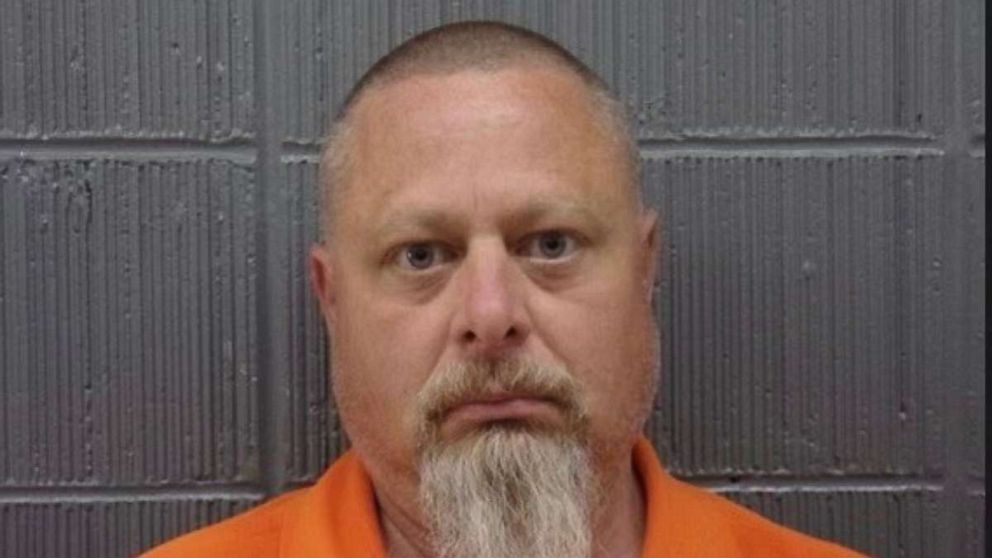
(DELPHI, Ind.) — A judge presiding over the Delphi, Indiana, double murder case issued an order on Tuesday unsealing the probable cause affidavit related to suspect Richard Allen’s arrest.
Judge Frances Gull found that “public interest is not served by prohibiting access” to the evidence in the murders of Abby Williams, 13, and Libby German, 14. The judge added that witness safety is ensured by redacting their names.
The newly released probable cause affidavit said one of the girls mentioned “gun” as a man approached, according to video recovered from one of the victim’s phones.
A man is seen and heard telling the girls, “Guys, down the hill,” and Abby and Libby go down the hill, according to the probable cause affidavit.
A .40-caliber unspent round was found less than 2 feet away from one of the bodies, and that unspent round went through a gun that Allen owns, according to the probable cause affidavit.
Clothes belonging to the girls were found in Deer Creek, south of where their bodies were discovered, the document revealed.
Police still have not released how Abby and Libby died.
Allen, a 50-year-old Delphi man, was arrested last month and charged with two counts of murder for the Feb. 2017 killings. Abby and Libby, best friends in the eighth grade, were on a hiking trail in rural Delphi when they were killed. Allen has entered a not guilty plea.
When interviewed by police in 2017, Allen said he was on the trail that afternoon, according to the affidavit.
On Oct. 13, 2022, Allen told police he saw juvenile girls on the trails east of Freedom Bridge and said he went onto the Monon High Bridge.
Allen confirmed to the police he owns guns, the document said.
A search warrant was executed at Allen’s home on Oct. 13, 2022, the document said. Officers found knives and guns, including a Sig Sauer, Model P226 and .40-caliber pistol, the document said.
Indiana State Police’s lab analysis of Allen’s gun “determined the unspent round located within two feet” of one of the girl’s bodies “had been cycled through Richard M. Allen’s Sig Sauer Model P226,” the probable cause affidavit said.
Allen voluntarily spoke to police on Oct. 26, 2022, and said he never allowed anyone to borrow that gun, the document said.
“When asked about the unspent bullet, he did not have an explanation of why the bullet was found between” the girls’ bodies, the probable cause affidavit said.
“He again admitted that he was on the trail but denied knowing Victim 1 or Victim 2 and denied any involvement in their murders,” according to the probable cause affidavit.
Video from one of the girl’s phones shows a man wearing dark jacket and jeans. Allen told investigators on Oct. 13, 2022, that he wore jeans and a blue or black Carhartt jacket that day, according to the probable cause affidavit. Allen’s wife confirmed to police that he owns a blue Carhartt jacket, the document said.
Investigators believe Allen is the man seen on the cellphone video. Investigators also claim he forced Abby and Libby down the hill to the spot where they were killed, according to the document.
Investigators believe Allen was seen walking back to his car with “clothes that were muddy and bloody,” according to the probable cause affidavit.
Prosecutors wanted to keep the probable cause affidavit sealed.
The document was released in response to a motion filed by news organizations, including ABC News.
Allen is set to return to court on Feb. 17 for a bond hearing and pretrial hearing.
The defense submitted a change of venue motion on Tuesday requesting that the trial take place at least 150 miles from Carroll County (where Delphi is located).
Police still ask anyone with information about the case to submit a tip at abbyandlibbytip@cacoshrf.com or 765-822-3535.
(NEW YORK) — Scientists have observed two new lava flows out of the Mauna Loa volcano on Hawaii’s Big Island — the largest active volcano in the world.
The lava is flowing north out of Fissure 3 in the northeast rift zone, crossing the road outside the National Oceanic and Atmospheric Administration’s observatory overnight, the U.S. Geological Survey announced Tuesday morning.
Ash and lava began spewing out of the volcano on Sunday around 11:30 p.m. and continued into Monday, is the first eruption from Mauna Loa in nearly 40 years.
The lava was contained to the summit, and there are currently no threats to populated areas, according to the USGS.
However, the eruption has migrated from the summit to the northeast rift zone, where fissures are feeding several lava flows, according to the USGS, which advised residents at possible risk from Mauna Loa lava flows to review preparedness and refer to Hawaii County Civil Defense information for further guidance.
Lava flows are significant enough to be visible from Kona, dozens of miles away.
Mauna Loa is so large it takes up more than half of the Big Island. The last time it erupted was in March and April 1984.
The volcano has erupted dozens of times since the 1880s, allowing volcanologists to get to know its “personality,” Michael Poland, research geophysicist for the USGS Cascades Volcano Observatory, told ABC News. This means that scientists are predicting that the flow will likely abate now because the initial eruptions are typically the heaviest.
Since the eruption is occurring to the northeast, where the peak’s slope seaward is more gentle, it would take weeks of a continuous eruption for it to reach Hilo, Poland said.
Gov. David Ige told ABC News Live that he was not yet worried about any impact on Hawaiians.
“I think right now we’re not that concerned,” Ige said. “The eruptions and the fissures are very high up. … In fact, there really is no communities or no structures anywhere close to the fissures that are erupting right now.”
“It will take weeks, if not longer, of eruptions occurring in order for the Northeast Rift Zone eruption to reach any kind of community or get close to any infrastructure,” the governor added.
Hawaii Volcanoes National Park has closed the Mauna Loa Summit Area to visitors as a precaution
Video posted to Twitter by the U.S. Geological Survey’s Hawaiian Volcano Observatory shows thermal footage of the lava flowing out of the volcano’s summit.
In conjunction with the lava flow, there were more than a dozen earthquakes in the region of more than 2.5 magnitude early Monday morning, according to the USGS.
Lava was still erupting from the summit and was overflowing from the caldera Monday, according to USGS Volcanoes. The National Weather Service issued an ashfall advisory for depositing ash and debris, as well as light accumulation of ash on vessels, until 6 a.m. along the Alenuihaha Channel, Big Island windward waters, Big Island leeward waters and Big Island southeast waters.
The NWS advised that vessels should remain at port or avoid advisory areas, and those with respiratory sensitivities should take extra precautions to minimize exposure.
Falling volcanic ash and debris can also render engines or electronics inoperative, according to the NWS.
Hawaii is home to several active volcanos, including the Kīlauea volcano on the Big Island, one of the most active in the world.
Volcano activity has been recorded all around the globe over the past year.
Major eruptions could be underway from two volcanoes on Russia’s Kamchatka Peninsula after clouds of ash and lava began spewing on Nov. 20.
In July, an eruption at the Sakurajima volcano in Japan prompted evacuation orders for residents nearby in the southwestern prefecture of Kagoshima.
And last week, marine geologists announced that the underwater volcano eruption that occurred on Jan. 15 in the Tongan archipelago in the South Pacific Ocean is the largest ever recorded.
ABC News’ Max Golembo, Matt Gutman and Bonnie Mclean contributed to this report.
(PHILADELPHIA) — Across the country, police forces are scrambling to keep their roll call numbers at full staff, but officials said they’ve been hit with challenges.
Burnout, low morale, and dejection have caused many cops, both long-time veterans and newcomers, to quit and change careers and recent public backlash against excessive police force has resulted in a drop in new applications, according to police officials.
In Philadelphia, the police force is facing a shortage of 600 officers, roughly 10% of its full force.
“It’s critical now,” Philadelphia Police Commissioner Danielle Outlaw told ABC News of her force’s staffing levels. “It’s already critical, was critical a year ago.”
Outlaw and other police chiefs said the nation’s officer turnover issue is coming at a crucial time with crime on the rise and they’re working hard to get officers on the streets.
Several other cities have also reported officer shortages during the last two years.
Los Angeles’ police force is down roughly 500 officers and New Orleans’ police department has 300 fewer officers this year compared to 2021, according to data from the departments and local media reports.
A survey released two weeks ago by the Police Executive Research Forum found that three out of every four police departments have warned that their number of new applicants have declined over the last five years.
Kevin Davis, the police chief for the Fairfax County Virginia police, told ABC News that exit interviews show officers are leaving because they’re not feeling valued and can find better opportunities elsewhere.
“They’re going into IT, they’re going into sales, they’re teaching,” he told ABC News. “We’ve even had a person leave to go be a farmer.”
Anthony Carapucci told ABC News that he turned in his badge and gun after about a decade with the Philadelphia police department this year because he felt burned out.
“Yes, it’s a good job. It’s an honorable job, but it’s almost not worth it,” Carapucci, the son of two police officers, said.
Outlaw acknowledged the increased toll that her officers are facing, especially since they’re needed to take on extra duties to fill the voids.
The retention issue has also created a grave safety concern, she said. While Philadelphia police still respond quickly to 911 calls for shootings, homicides, and other serious crimes, the commissioner said it may take longer for officers to respond to lower-priority calls.
Philadelphia saw a record-breaking 562 homicides last year, according to police statistics. More than 460 people have been murdered in the city so far this year, statistics show.
Some Philly residents have said they’ve seen a difference in the lower police presence.
Kanitra Scott, who runs Nuvo’s Glam and Glow Hair Salon in Germantown, told ABC News that there have been a number of shootings outside her store since a patrol car stopped coming to patrol.
“All the killings started from the summer until now,” she said.
Police officials said that some of their officers have been discouraged by the public criticism following instances of police brutality.
When asked to respond to critics who say law enforcement may have undermined its own credibility and discouraged some potential recruits from pursuing a career in law enforcement, Outlaw rejected that notion adding “the same people who raised their voices against misconduct were the same ones “that will call 911 and will file a complaint if we don’t get there quickly enough.”
Still the commissioner and other chiefs said that the best way to tackle this issue is to convince communities that policing is still a “trusted profession.”
“Examine your heart, do you want to serve? Do you want to make your community better and your family safer and your neighbor safer and your friends safer?” Fairfax County’s Davis said.