The logo and lettering of global online mail order company Amazon can be seen on the façade of Amazon Germany’s headquarters in Parkstadt Schwabing in Munich (Bavaria). Amazon.com, Inc. is a listed US-American, globally active online mail order company. In Germany, the group is one of the US companies with the highest turnover. Photo: Matthias Balk/dpa (Matthias Balk/picture alliance via Getty Images)
(NEW YORK) — Tech giant Amazon said on Wednesday it planned to cut about 16,000 employees as it seeks to “strengthen” its business by reducing “layers” and “bureaucracy” within its workforce.
“The reductions we are making today will impact approximately 16,000 roles across Amazon, and we’re again working hard to support everyone whose role is impacted,” Beth Galetti, a senior vice president, said in an email to staff, according to the company.
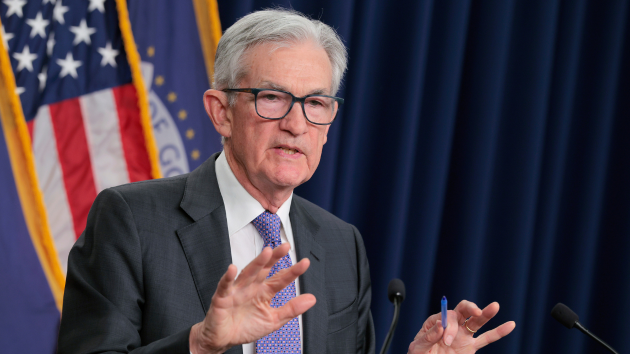
Federal Reserve Chair Jerome Powell speaks during a press conference following the Federal Open Markets Committee meeting at the Federal Reserve on December 10, 2025 in Washington, DC. (Chip Somodevilla/Getty Images)
(NEW YORK) — The Federal Reserve on Wednesday is set to announce its latest decision on the level of interest rates, marking its first rate move since news surfaced of a federal criminal investigation into Fed Chair Jerome Powell.
The investigation ratcheted up an extraordinary clash between the nation’s top central banker and the White House, which has urged the Fed to significantly reduce interest rates.
The central bank is widely expected to defy President Donald Trump’s wishes, opting instead to hold interest rates steady. The anticipated move would end a string of three consecutive quarter-point rate cuts, aligning with a cautious approach outlined by Powell last month, before reports of the investigation into his conduct.
“We’re well positioned to wait and see how the economy evolves,” Powell said at a press conference in Washington, D.C., on Dec. 10.
Futures markets expect two quarter-point interest rate cuts this year, forecasting the first in June and a second in the fall, according to CME FedWatch Tool, a measure of market sentiment.
The federal probe appears to center on Powell’s testimony to Congress last year about cost overruns in a multi-billion-dollar office renovation project. Powell, who was appointed by Trump in 2017, issued a rare video message earlier this month rebuking the investigation as a politically motivated effort to influence the Fed’s interest rate policy.
The investigation follows months of strident criticism leveled at the Fed by Trump. The president denied any involvement in the criminal investigation during a brief interview with NBC News hours after the Fed posted Powell’s video.
Over the past year, hiring has slowed dramatically while inflation has remained elevated, risking an economic double-whammy known as “stagflation.” Those conditions have put the Fed in a difficult position.
The central bank must balance a dual mandate to keep inflation under control and maximize employment. To address pressure on both of its goals, the Fed primarily holds a single tool: interest rates.
The strain on both sides of the Fed’s mandate presents a “challenging situation” for the central bank, Powell noted last month.
“There’s no risk-free path for policy as we navigate this tension between our employment and inflation goals,” Powell said.
If the Fed raises interest rates as a means of protecting against elevated inflation, it risks a deeper slowdown of the labor market. On the other hand, by lowering rates to stimulate hiring, the Fed threatens to boost spending and worsen inflation.
The criminal investigation into Powell raised concern among some analysts and former top Fed officials, who said it poses a threat to central bank independence.
In the event a central bank loses independence, policymakers tend to favor lower interest rates as a means of boosting short-term economic activity, analysts previously told ABC News. Such a posture could pose a major risk of yearslong inflation fueled by a rise in consumer demand, untethered by interest rates.
Federal law allows the president to remove the Fed chair for “cause” — though no precedent exists for such an ouster. Powell’s term as chair is set to expire in May, but he can remain on the Fed’s policymaking board until 2028. Powell has not indicated whether he intends to remain on the board.
In this photo illustration a girl looks at the screen of her smartphone on April 16, 2021 in Bonn, Germany. (Ute Grabowsky/Photothek via Getty Images)
(NEW YORK) — So-called “night owls” may face a higher risk for heart attack and stroke, a new study published Wednesday finds.
Researchers found that “evening type” people had poorer cardiovascular health scores than those who were neither “morning type” or “evening type” people and had an associated 16% higher risk of heart attack and stroke.
The study, published in the Journal of the American Heart Association, analyzed survey and biometric data from more than 320,000 British adults aged 39 to 74.
Participants were asked whether they considered themselves a “definite morning” person, a “definite evening” person or somewhere in between, termed “intermediate.”
Researchers then calculated each person’s heart health using the American Heart Association’s Life’s Essential 8 (LE8) score. These factors include four health behaviors — diet quality, physical activity, sleep duration and nicotine exposure — and four health factors, including blood pressure, body mass index, blood sugar and blood fat levels.
“These are the factors the American Heart Association has identified as cardiovascular disease risk factors,” Kristen Knutson, associate professor of neurology and peventive medicine at Northwestern University Feinberg School of Medicine specializing in sleep and circadian rhythm research and fellow at the American Heart Association, told ABC News.
“Different people will have them in different combinations, but they are all correlated with one another,” she added.
Evening people were 79% more likely to have poor overall heart health compared with those in the intermediate group, the study found. Morning people did slightly better than the intermediate group, with a 5% lower risk of having a poor LE8 score.
Researchers found the evening people had a 16% higher risk of both heart attack and stroke. Researchers estimated that about 75% of this higher risk was explained by other LE8 factors, rather than sleep timing alone.
“It isn’t being a night owl that’s a problem,” Knutson said. “I think being a night owl who’s trying to live in a morning lark’s world is a conflict between one’s internal clock and their social clock.”
The higher risk appeared to be due to certain lifestyle behaviors and other health factors, the study found.
Nicotine use had the strongest impact on heart health, explaining 34% of the link between late bedtime and heart disease. Shorter sleep duration accounted for 14% of the extra risk, high blood sugar for 12% and body weight and diet each accounted for about 11% of the increased risk.
Behavioral effects of being a night owl were stronger in women than in men — women were 96% more likely to have lower LE8 scores compared to 67% in men, though they did not have a higher risk of heart attack or stroke.
“Women are further stressed by that lifestyle because they’re having to still get up and be the primary caregiver for family members,” Dr. Sonia Tolani, preventative cardiologist, Associate Professor of Medicine, and co-director of the Columbia University Women’s Heart Center, told ABC News.
Heart disease remains the leading cause of death in the U.S., according to the Centers for Disease Control and Prevention. The researchers concluded prevention efforts should focus on improving lifestyle habits when spending more time awake at night.
“The most obvious way is to quit smoking and that’s not new advice,” Knutson says. “But sleep regularity, meaning trying to go to bed at about the same time every day and not jumping around the clock — particularly on days off — can really help lead to regular timing of other behaviors like light exposure, meals, exercise activity.”
“Prioritize the low-hanging fruit” recommended Tolani. If an hour at the gym is not doable, “maybe you can find a way to do a 10-minute walk or cut a little bit of salt from your diet. Just try to make small changes,” she said.
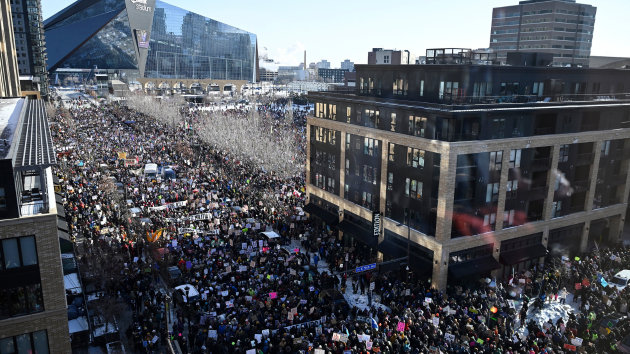
Demonstrators participate in a rally and march during an “ICE Out” day of protest on January 23, 2026 in Minneapolis, Minnesota. Community leaders, faith leaders and labor unions have urged Minnesotans to participate in what they are calling a “day of action” as hundreds of local businesses are expected to close during a statewide general strike held in protest against immigration enforcement operations in the region. (Stephen Maturen/Getty Images)
(NEW YORK) — Over the last several days, many Americans have seen upsetting, and often violent, images and videos of protests in Minneapolis amid a flood of ICE agents entering the city for a federal immigration enforcement operation.
Research has shown that images of extreme violence can impact mental health, increasing symptoms of anxiety and depression.
Among the videos and images that circulated widely in recent weeks have been the fatal shootings of two U.S. citizens involving federal agents just 17 days apart: Renee Good and Alex Pretti.
Psychologists and psychiatrists told ABC News that witnessing a death can add an extra level of distress for some people and lead to long-lasting consequences.
Symptoms of anxiety and depression Studies have shown the symptoms of depression and anxiety can increase when exposed to negative news.
One 2011 study from the University of Sussex in Brighton, U.K., found that people had worsened mood and anxiety symptoms after just 14 minutes of negative news consumption.
Another 2022 study from Rutgers University, focused on COVID-19 news, found that greater daily exposure to news about the virus was linked to higher same-day and next-day worry about the pandemic as well as feelings of hopelessness and general worry.
Dr. Pierluigi Mancini, a psychologist and interim president and CEO of the nonprofit Mental Health America, told ABC News that witnessing any kind of violence whether through news, on social media or in person can lead to psychological effects
“So, people will experience fear, they’ll experience hypervigilance, they’ll experience emotional exhaustion, and they will have effects on their mental health,” he said.
Mancini added that witnessing violent events can activate the body’s “fight-or-flight response” which can include symptoms such as rapid heart rate, shallow breathing, nausea, irritability and difficulty concentrating, especially when the events happen in one’s own community.
“So, the individuals that are on site where they are witnessing these effects in their neighborhoods get affected at a much higher level, but even those millions more that end up watching it on social media or traditional news sites also have those experiences,” he said.
Witnessing deaths may be especially traumatic Research has shown that mental health impacts are even more profound when someone’s unexpected death is witnessed and shared.
A May 2021 article looked at emotional and mental health impacts after the death of George Floyd, an unarmed Black man who was killed in Minneapolis in 2020 after a white police officer knelt on his neck.
The team analyzed Gallup poll data and found that in the week following Floyd’s death, more than one-third of respondents reported feelings of anger and sadness.
Researchers found a 1.5-fold increase in feelings of anger and a 1.3-fold increase in feelings of sadness compared to poll data for the four weeks preceding Floyd’s death. Increases were seen despite already elevated levels of anger and sadness due to the COVID-19 pandemic.
Johannes Eichstaedt, co-author of the study and an assistant professor in psychology at Stanford University, told ABC News he sees some similarities between the death of Floyd and the deaths of Good and Pretti, all of which occurred in Minneapolis.
He said there is scientific literature about linked fate, or the sensation someone has that a horrible event could have happened to them or someone they know.
“There is a very real fear response in the human body with lots of physiological consequences that are very real and when something like this happens and it’s recorded like this and then it traumatizes more or less everybody who watches this,” Eichstaedt said. “The problem is not that these things are getting captured in a video. The problem is that these things happen.”
Dr. Anthony Feinstein, a professor of psychiatry at the University of Toronto, told ABC News that witnessing a death can be distressing to anyone, but that it is important to determine when the stress becomes pathological.
“I think any individual with a moral compass would be distressed by seeing someone die like this on television,” he said. “It’s a very distressing thing to witness. And to feel momentary dismay and stress and sadness or anxiety in response to it strikes me as a normal human response to an abnormal event. Where it becomes problematic is when that stress and that distress doesn’t go away, when it lingers.”
Experts said witnessing deaths on the news, such as what occurred in Minneapolis, can elevate the level of potential mental health impacts, especially among those who are most vulnerable.
“It is extremely traumatic to see someone die,” Mancini said. “Once that sinks in that you witnessed someone lose their life, especially in a violent situation. It’s always traumatic even if you’re next to a loved one who’s passing and you’re expecting it, but when it’s unexpected and when it is violent, it is extremely difficult to watch and to process.”
Mancini said some people may be desensitized to violence, but others can be severely impacted. Witnessing violence can violate a person’s feeling of safety and stability, he said.
“In Minnesota, many people are experiencing that escalating stress,” he said. “They’re experiencing that fear, that violence and uncertainty in their communities. So, it’s gonna make you question everything that you were taught when you were growing up.”
How to protect mental health For those who are experiencing mental health impacts, experts say there are steps people can take to protect their mental health.
Rather than avoiding the news altogether, Mancini said people can purposely limit the time they spend watching news coverage.
He added that watching the news is important to remain informed, but that it is just as important to have intentional engagement.
“So, for example, it is as simple as maybe … I will watch the news two times a day, and when I’m watching this news, I’m going to set a timer,” he said. “I’m gonna limit the time that I’m to be watching this news. That is the healthy thing to do.”
To limit mental health impacts, people can also take action by getting involved with a group focused on the issues they are most passionate about or joining an affinity group, which are supportive communities of people who share a common identity, experts said.
Feinstein said having psychosocial supports can help people maintain mental well-being and allow them to be more vulnerable as well.
“Peer support is important and there is literature out there that peer support is comforting and it’s protective and it’s helpful when it comes to managing situations like this,” Feinstein said. “Obviously you want to keep your responses within the letter of the law … but being part of a support group is helpful.”
Feinstein added that, in stressful times, it’s important for people to devote sufficient time to things that are healthy and meaningful in their lives, whether it be friendships, hobbies or interests.
“And, by the way, don’t feel guilty by doing it,” he said. “That’s really important. People feel, ‘Well, I’ve got a good life, and I feel guilty that I can go to the cinema and theater with other people.’ No, it’s really important that you hold on to those good positive things, because that’s how you maintain your mental well-being.”
Representative Ilhan Omar, a Democrat from Minnesota, speaks during a town hall event in Minneapolis, Minnesota, US, on Tuesday, Jan. 27, 2026. A man was apprehended during a town hall event with Democratic Representative Ilhan Omar after spraying unknown substance, according the to Associated Press.(Angelina Katsanis/Bloomberg via Getty Images)
(MINNEAPOLIS) — During a town hall in Minneapolis on Tuesday, a man charged the podium where Rep. Ilhan Omar was giving remarks, appeared to squirt a liquid at her and was then tackled to the ground by a security guard after a brief struggle.
The man, identified as 55-year-old Anthony Kazmierczak was arrested and booked into Hennepin County Jail on suspicion of third-degree assault, Minneapolis police said.
The department said its officers were at the town hall for the event and observed a man use a syringe to spray an unknown liquid on to the congresswoman.
The incident sparked cries of alarm from those in attendance. The congresswoman did not appear to be injured.
“I’m going to finish my remarks. It is important for me to continue,” Omar said, using a profanity.
“We will continue,” she said. “These f—— a——- are not going to get away with it!”
The disturbance comes amid tensions in Minneapolis between local officials and the Trump administration over the immigration crackdown in the city that has seen two U.S. citizens killed in shootings involving federal agents.
Shortly before the man charged the podium, Omar called for abolishing Immigration and Customs Enforcement.
Afterward, she told reporters that she won’t be intimidated.
“You know, I’ve survived more, and I’m definitely going to survive intimidation and whatever these people think that they can throw at me because I’m built that way,” she said.
Omar has been the target of attacks from President Donald Trump for years. More recently, his attacks have come alongside escalated rhetoric describing the Somali community in Minnesota, the largest in the nation.
In the past several weeks, Trump has called Omar a “fake sleazebag,” and called for her to be thrown out of the U.S.
In a phone interview Tuesday evening with ABC News’ Senior Political Correspondent Rachel Scott, Trump said he hadn’t seen video of the incident and without providing evidence accused Omar of staging the attack.
“I don’t think about her. I think she’s a fraud,” Trump said. “She probably had herself sprayed, knowing her.”
In a post on X regarding Tuesday’s incident, Omar said: “I’m ok. I’m a survivor so this small agitator isn’t going to intimidate me from doing my work. I don’t let bullies win. Grateful to my incredible constituents who rallied behind me. Minnesota strong.”
In a statement, U.S. Capitol Police said: “Tonight, a man is in custody after he decided to assault a Member of Congress — an unacceptable decision that will be met with swift justice.” The department said it is “working with our federal partners to see this man faces the most serious charges possible to deter this kind of violence in our society.”
Capitol Police said threats against members of Congress increased for the third year in a row. The department said it investigated 14,938 concerning statements, behaviors and communications directed against members of Congress, their families and their staff last year — compared to 9,474 in 2024.
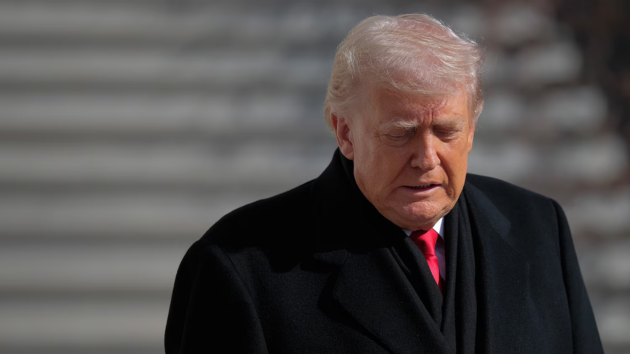
President Donald Trump departs the White House, January 27, 2026, in Washington. (Chip Somodevilla/Getty Images)
(WASHINGTON) — President Donald Trump on Tuesday touted the arrival of his border czar, Tom Homan, on a mission to Minneapolis — as he took personal charge of dealing with the backlash following the second fatal shooting of an American citizen by federal agents in the city.
The president, who had said Homan would report directly to him, sounded positive about his change in course so far, saying Homan had met with Minnesota Democratic Gov. Tim Walz and would do the same with Minneapolis Democratic Mayor Jacob Frey.
“I hear things are going very nicely,” Trump told reporters as he left the White House for Iowa, where he was set to deliver remarks on the economy. But there has been no apparent immediate change or pullback in the deployment of federal immigration enforcement agents — as Walz and Frey have demanded.
The White House has noticeably sought to put some distance between the president and the controversial words of his top officials in the immediate aftermath of the deadly shooting of Alex Pretti, a 37-year-old ICU nurse.
Trump on Sunday declined to defend the agents involved, and White House press secretary Karoline Leavitt on Monday said she hadn’t heard Trump characterize Pretti the same way as White House deputy chief of staff Stephen Miller or Homeland Security Secretary Kristi Noem — both of whom had quickly accused him of domestic terrorism without any evidence.
Trump on Tuesday also publicly broke with Miller, telling reporters he does not believe Pretti was an “assassin” as Miller had described him.
When asked if he believes Pretti’s death was justified, Trump said a “big investigation” is underway and suggested he would be monitoring it personally.
“I want to see the investigation. I’m going to be watching over it. I want a very honorable and honest investigation. I have to see it myself,” Trump said.
At the same time, Trump continued to criticize Pretti for having a gun on him, which state and local officials said he was lawfully carrying with a concealed carry permit, telling reporters: “You can’t walk in with guns.”
On what his message is for Pretti’s family, Trump told ABC News Chief White House Correspondent Mary Bruce: “Well, I’m looking at that whole situation. I love everybody. I love all of our people. I love his family. And it’s a very sad situation.”
Still, Trump stood by Noem on Tuesday and told reporters she won’t be stepping down.
“I think she’s done a very good job. The border is totally secure,” Trump said.
Noem met with Trump in the Oval Office on Monday as scrutiny grew over the shooting and the administration’s response, sources told ABC News. While sources saidNoem is expected to keep her job as of now, her focus is expected to shift to other priorities.
A person familiar with the planning said Homan is likely to focus on more targeted immigration enforcement efforts.
Homan’s arrival also comes as Customs and Border Protection commander-at-large Greg Bovino is set to leave Minneapolis to return to El Centro, California, and resume his duties as chief of that sector, multiple sources told ABC News. Some Border Patrol agents are also leaving Minneapolis.
Earlier Tuesday, in a radio interview on “Sid & Friends In the Morning,” Trump said that if Minneapolis officials give the federal government “their criminals” then it “all goes away” when asked about the possibility of some federal forces leaving the state.
“What we need is their criminals. You know, they have criminals. And all I said, ‘just give us your criminals’ and if you give us the criminals, it all goes away,” the president said.
Trump also recounted calls he had with both Walz and Frey on Monday amid growing tensions in Minneapolis.
“Actually, they were both great conversations,” Trump said. “So, let’s hope that turns out to be so.”
Walz, who was critical of the Trump administration’s immigration crackdown in an op-ed on Monday, said he and Homan agreed to an “open dialogue” after their meeting on Tuesday.
“Governor Walz met with Tom Homan this morning and reiterated Minnesota’s priorities: impartial investigations into the Minneapolis shootings involving federal agents, a swift, significant reduction in the number of federal forces in Minnesota, and an end to the campaign of retribution against Minnesota,” Walz’s office said in a statement.
“The Governor and Homan agreed on the need for an ongoing dialogue and will continue working toward those goals, which the President also agreed to yesterday. The Governor tasked the Minnesota Department of Public Safety as the primary liaison to Homan to ensure these goals are met,” the statement read.
Frey called his meeting with Homan “productive” in a series of posts on X.
“I reiterated that my main ask is for Operation Metro Surge to end as quickly as possible. Public safety works best when it’s built on community trust, not tactics that create fear or division,” he said.
Frey added he made it clear to Homan that “Minneapolis does not and will not enforce federal immigration laws.”
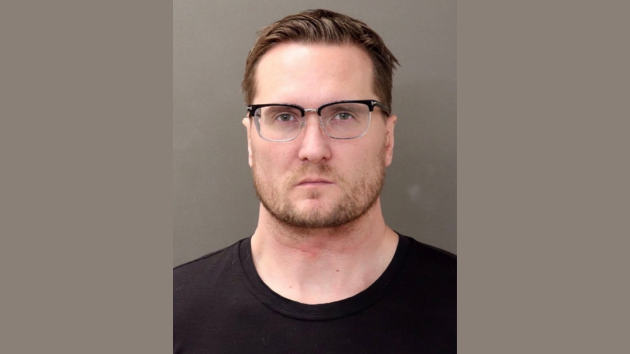
In this booking photo released by the Franklin County Sheriff’s Office, Michael McKee is shown. (Franklin County Sheriff’s Office)
(COLUMBUS, Ohio) — The doctor who is accused of gunning down his ex-wife and her husband had allegedly told his ex “he could kill her at any time,” according to court documents.
McKee and Monique Tepe married in 2015 and divorced in 2017. According to court documents, Monique Tepe’s friends and family said Monique Tepe told them McKee “had been abusive, and had made numerous threats on her life during and after their marriage.”
One witness told detectives that Monique Tepe alleged McKee strangled her and “forced unwanted sex,” court documents said.
Another witness told detectives that “McKee had told Monique that he could kill her at any time and would find her and buy the house right next to her, that she will always be his wife,” documents said.
During the Dec. 30 homicides, McKee’s phone was left at his workplace — an Illinois hospital — and “showed no activity for approximately 17 hours,” according to court documents.
Police — who zeroed in on McKee after linking him to a car seen on surveillance video — said they also recovered video “of the same suspect” by the Tepes’ house weeks before the murders, on Dec. 6, according to court documents.
On Dec. 6, the Tepes were in Indiana at the Big Ten Championship game, and during that trip Monique Tepe allegedly told friends “she was upset about something involving her ex-husband,” according to court documents.
McKee is charged with four counts of aggravated murder and one count of aggravated burglary. His defense attorney, Diane Menashe, entered not guilty pleas to all counts on his behalf during a court appearance last week. Menashe declined to comment to ABC News on Tuesday about the new allegations revealed in the court documents, saying she doesn’t comment on pending matters.
US President Donald Trump attends the signing ceremony of the Peace Charter for Gaza as part of the 56th World Economic Forum in Davos, Switzerland on January 22, 2026. (Photo by Harun Ozalp/Anadolu via Getty Images)
(WASHINGTON) — The families of two Trinidadian nationals killed in an October airstrike are suing the U.S. government for wrongful death and extrajudicial killings.
In a lawsuit filed on Tuesday, attorneys representing the families said the Oct. 14 attack was “part of an unprecedented and manifestly unlawful U.S. military campaign of lethal strikes against small boats in the Caribbean and eastern Pacific Ocean.”
The two men — Chad Joseph and Rishi Samaroo — had been fishing off the Venezuelan coast and were returning to their homes in Trinidad and Tobago when the strike occurred, according to the lawsuit.
“These premeditated and intentional killings lack any plausible legal justification,” attorneys for the families wrote. “Thus, they were simply murders, ordered by individuals at the highest levels of government and obeyed by military officers in the chain of command.”
President Donald Trump said in October that “six male narcoterrorists aboard the vessel were killed in the strike” and the vessel was affiliated with an unnamed “designated terrorist organization conducting narcotrafficking.”
The lawsuit argues that because the strike did not occur within an active armed conflict, the laws of war do not apply.
“Instead, the rules under international human rights law and federal law regulate the government’s strikes,” the lawsuit states “And those rules protect the right to life and prohibit extrajudicial killings.”
The lawsuit alleges violations of the Death on the High Seas Act and the Alien Tort Statute, which allows foreign citizens to sue in U.S. courts over human rights violations committed abroad.
One of the victims, according to the lawsuit, 26-year-old Joseph, lived in Trinidad with his wife and three children. He frequently traveled between Trinidad and Venezuela for fishing and farm work.
According to the filing, he was fearful of the trip due to reports of U.S. military strikes in the region.
“But he was determined to return to his wife and their children as soon as possible,” the lawsuit states.
On Oct. 14, Joseph’s wife heard reports of a boat strike just off the Venezuelan coast. Because no one has heard from him since Oct. 12, the family concluded that Joseph “was a passenger on board the boat that the United States destroyed on or about October 14.”
The second victim, 41-year-old Samaroo, was a Trinidadian construction worker and fisherman, the lawsuit says. He had been working on the same farm as Joseph and planned to return home to care for his mother who was sick, according to the complaint.
“Mr. Joseph and Mr. Samaroo were two of at least 125 victims of the United States’ 36 lethal military strikes against people on boats since September 2,” the attorneys said.
The families are seeking compensatory and punitive damages.
The Pentagon told ABC News on Tuesday, “As a matter of policy, the Department does not comment on pending litigation.”
As of Jan. 27, 2026, there have been 36 total kinetic strikes with 37 go-fast boats destroyed, including 1 semi-submersible and 1 low-profile vessel; with 116 narco-terrorist deaths and 10 active searches suspended, according to U.S. Southern Command.
Oren Alexander, Tal Alexander and Alon Alexander attend Chanukah With The Stars Gala on December 10, 2014 at Harmonie Club in New York City. (Photo by J Grassi/Patrick McMullan via Getty Images)
(NEW YORK) — Three sons of wealth and privilege “were partners in crime” who used their money and status to lure women and girls with promises of trips, exclusive parties and celebrity encounters so they could sexually assault them, a federal prosecutor said Tuesday during opening statements in the trial of Alon, Oren and Tal Alexander.
“These three brothers masqueraded as party boys when really they were predators,” the prosecutor, Madison Smeyser, said. “The brothers used whatever means necessary — sometimes drugs, sometimes alcohol, sometimes brute force — to carry out their rapes.”
The former real estate titans, Oren and Tal Alexander, along with their brother, Alon Alexander, have denied sexually assaulting anyone or running a sex trafficking conspiracy, as prosecutors have charged. They sat at the defense tables with their lawyers in suits and open-collar shirts.
If convicted, Oren and Alon Alexander, 38-year-old twins, and Tal Alexander, 39, could face life in prison.
“They came from a wealthy family, and they lived a life of luxury. But their luxurious lifestyle had a dark side,” Smeyser said.
A defense attorney called the brothers successful, ambitious, arrogant young men “who liked and pursued women” so they could have as much sex as possible.
“That’s not trafficking. That’s dating. That’s hooking up,” the lawyer, Teny Geragos, said during opening statements. She said the accusers, many of whom are expected to testify under pseudonyms, are motivated by shame, regret or money.
Prosecutors told the jury of six men and six women they would see a recording of Oren Alexander’s alleged rape of a then-17-year-old who will testify under the name Amelia. She was “far from sober, almost incoherent” at the time and has no memory of what happened, Smeyser said.
At an exclusive party in Manhattan, Alon Alexander allegedly raped a woman who regained consciousness to find him standing over her naked. When she told him she did not want to have sex, prosecutors said he laughed and said she already had, before raping her again.
Prosecutors said Tal Alexander invited a woman to the Hamptons, chased her into the shower, grabbed her by the neck and sexually assaulted her from behind as the woman cried, “no, no, no.”
Jurors were told they would read the brothers’ exuberant text messages after some of the encounters. “They celebrated raping women and girls,” Smeyser said.
Other messages, she said, suggested “the defendants knew they had to stay out of a courtroom like this one,” including one text that said the only thing that could bring down the brothers is “some ho complaining.”
The defense conceded the brothers were womanizers who jurors might find immoral but insisted they were not criminals.
“It was crude, it was arrogant, it will make you cringe,” defense attorney Deanna Paul said. “But we’re not here for the Asshole Awards.”
In this U.S. Coast Guard handout, the Coast Guard investigates aircraft wreckage on the Potomac River on January 30, 2025 in Washington, DC. (Petty Officer 1st Class Brandon Giles/ U.S. Coast Guard via Getty Images)
(WASHINGTON) — The National Transportation Safety Board on Tuesday presented a cockpit visual simulation demonstrating what contributed to the deadly mid-air collision between an Army helicopter and an American Airlines jet near Washington, D.C., last year.
The simulation indicates it was very difficult for both aircraft to see each other before the January 2025 crash that occurred as the jet was landing at Ronald Reagan National Airport, killing 67 people, according to the NTSB.
The first video shows the last three minutes before the collision from the viewpoint of the right seat of the helicopter.
Around 8:46:15, a magenta circle with a label “Flight 5342” appears just above the horizon on the right side of the upper portion of the screen. The label “Flight 5342” fades out about 8:46:35. The magenta circle tracks the lights of Flight 5342 and remains visible until the airplane becomes visually recognizable about a minute later.
After a Traffic Alert and Collision Avoidance System warning indicated in the transcript, the local controller on the ATC recording is heard asking the pilots if they have the CRJ (Flight 5342) in sight and the pilots confirm they do. It remains unclear what they thought they had in sight. There was only one controller working both the helicopter and plane traffic, the NTSB said.
The simulation screen goes black at the moment of the collision.
The second animation shows the viewpoint of pilots from Flight 5342 as the plane approaches the runway to land. According to the cockpit voice recorder transcript shared by the NTSB, the last words about one second before the crash from both the first officer and the captain were “oh” and “ohhh ohhhh” as the animation shows the helicopter colliding with the plane.
About 90% of wreckage from both aircraft was recovered by the NTSB.
A third animationshows what the local controller from the DCA tower saw at the time of the crash as they were handling the air traffic and issuing instructions. Based on the recordings, the NTSB said Flight 5342 was not warned by the controller of the nearby helicopter at any point. A conflict alert came 26 seconds before the collision between the two aircraft as they were 1.6 miles apart, according to the NTSB.
According to the NTSB, the local tower said they were concerned about the close proximity of the helicopter and Flight 5342.
“This coupled with the conflict alert that was active at the time, the controller should have issued a safety alert, which would have included updated traffic advisory information and an alternate course of action if feasible, neither were done. In this case, had a safety alert been issued, it would have increased the situation awareness of both crews and alerted them of their closing proximity to one another. Additionally, a timely safety alert may have allowed action to be taken by one or both crews to avoid avert the collision,” NTSB investigator Brian Soper said at the hearing.
NTSB Chair Jennifer Homendy also said that a $400 GPS device known as ADSB-In could have prevented the DCA crash. The NTSB has recommended ADSB-In be required in aircraft 17 times since 2006, but the FAA has repeatedly disregarded the recommendation, she said.
The system would have alerted the American Airlines crew 59 seconds before the crash that they were going to collide, and the helicopter crew would have been alerted 48 seconds before the crash, the NTSB chair said. The Army has since installed the system.
DCA controller overwhelmed
The controller working the night of the crash was handling both helicopter and plane traffic and had been doing so for four hours, NTSB investigators said.
A human behavior investigator said the controller’s mental awareness had diminished over time. He should have given a definitive warning of the impending collision and he should have given clear avoidance instructions, the investigator said.
NTSB investigators said the last communication between the helicopter and the controller where they asked the pilot if they have the AA5342 in sight was “not a safety alert by definition, but it was an attempt to de-conflict.”
Ninety seconds before the collision, the local controller working in the tower became overwhelmed as he was handling aircraft both on ground and in the air. On the night of the collision, the controller was working two controller positions. This is a routine practice which is usually done later at night when the aircraft volume goes down.
The NTSB said, “keeping the local control and helicopter control positions combined on the night of the accident, increased the local controller’s workload and reduced his situation awareness.”
Investigators said the controller could have asked for the positions to be decombined because of being overwhelmed, but it would have taken at least a couple of minutes before anyone else could take over. Additionally, the assistant local controller and the supervisor overseeing operations at the time could have served as an extra set of eyes to help the local controller.
However, Homendy revealed that at the time, the assistant controller was writing down information on helicopters and the supervisor did not exhibit situational awareness as they learned during the interview that the supervisor only recalled one helicopter in the area at the time when there were five.
Following the crash, the NTSB issued recommendations for better training to be provided for controllers so they can recognize safety issues and threats in the environment.
NTSB chair’s concerns
Ahead of Tuesday’s hearing, Chair Homendy said she fears that some of the agency’s safety recommendations, which will be issued at the conclusion of the hearing, may once again go unimplemented.
“Of course I’m concerned. We have 300 aviation recommendations that still haven’t been implemented. Those recommendations were issued because somebody died or was injured, and they have not been implemented yet. So here we are again,” Homendy told ABC News.
“So yes, at the end of this, I am concerned that we’re going to issue recommendations and that they won’t be implemented,” Homendy said. “I can tell you, and anyone who knows me knows I vigorously advocate for the implementation of our recommendations. I don’t care when it is. Could be 50 years later, as I did with positive train control, and I will not hold back on these.”
At Tuesday’s hearing, NTSB investigators will present their investigative findings to board members and the public. NTSB board members, including Homendy, will then question investigators and the parties to the investigation.
At the end of the hearing, the board members will vote on the probable cause of the crash and the agency’s safety recommendations. The NTSB can only make recommendations and does not have the authority to enforce them, therefore they are not always adopted.
Though a formal final report will be released two weeks after the hearing, this hearing will mark the end of what Homendy described as “one of the most complex investigations” conducted by the agency, which they had aimed to conclude by the first anniversary of the mid-air collision.
Homendy told ABC News the investigation “was not easy and it was definitely not straightforward.”
“We will start in one direction and then take it in a different direction, depending on what we’re finding, and then we’ll exclude things that didn’t have anything to do with the investigation. But we have to do our due diligence to make sure that we’re tracking all of that down, all that evidence to support that it wasn’t a factor, while also looking at the issues that were,” Homendy said.
Homendy said the helicopter altimeter discrepancy is what surprised her the most in this investigation.
“The altimeters I did not see coming, that we would have some problems with how the altimeters were reading,” Homendy said.
During last year’s three-day investigative hearing, investigators said they found discrepancies in the altitude data shown on radio and barometric altimeters on Army helicopters after conducting test flights following January’s accident.
It is likely that the helicopter crew did not know their true altitude due to notoriously faulty altimeters inside this series of Black Hawks, according to the investigation. At their closest points, helicopters and planes flew within 75 feet of each other near DCA, an astonishingly close number. During the hearings, the NTSB was told Army Black Hawks can often have wrong readings and a margin of error of +-200 feet.
Another key focus of Tuesday’s hearing is the close proximity of the helicopter route to the runways at Reagan National Airport. According to the NTSB, which cited FAA surveillance data, there were over 15,000 close-proximity events between helicopters and commercial aircraft at DCA between October 2021 and December 2024.
Homendy said warnings about the close proximity were raised by people, but they were ignored.
“Years ago, that hot spot was identified and [people] repeatedly tried to say that the helicopter route needed to be moved, and nobody listened. It was like the ultimate in government bureaucracy,” Homendy said.
“They were completely ignored. Told it couldn’t be done, not responded to, said it would probably be too political. Those are quotes from our interviews, but they went nowhere.”
At last year’s hearing, FAA officials cited “bureaucratic process” as a deterrent to addressing these issues.
Other topics expected to be discussed include the approval of helicopter routes near DCA, the experience level of the air traffic controllers working in the tower at the time of the crash, the visibility study, and the testing of the barometric altimeters.
When asked what stays with her from this investigation, Homendy pointed to a personal item recovered with the wreckage.
“In the hangar, we had the Black Hawk laid out. We had the wreckage laid out for 5342 and on the side next to 5342 there were some personal effects, and a lot of people mentioned different things, but every time I passed, there was a brown teddy bear, just eight inches maybe, and it was muddy and dried mud, dried water, and I just kept looking at the teddy bear, and that’s the thing that sticks with me,” Homendy said.