
Uvalde moms find new bond in shared grief over lost daughters

Uvalde moms find new bond in shared grief over lost daughters
Ana Rodríguez, Veronica Mata, Gloria Cazares and Kimberly Rubio speak with Nightline. — ABC News

(UVALDE, Texas) — Nearly 10 months after 19 Robb Elementary School students and two teachers were killed in one of the worst mass shootings in the country’s history, mothers of those victims told ABC News their anguish hasn’t gone away.

Veronica Mata, Ana Rodriguez, Kimberley Rubio and Gloria Cazares said while nothing can fill the void left by their daughters’ murders, the mothers said they have forged a new bond helping each other through some of their darkest moments.

“There are a lot of times that we feel alone. You know, even if there are 100 people in the room you still feel alone. But I don’t feel that when I’m with them,” Cazares told Nightline.

Nightline spoke with the mothers about their unexpected friendship and how they’ve been helping each other keep the memories of their children alive.

The mothers have spent a lot of time together, eating dinners, laughing and remembering their daughters.

Mata, who lost her daughter Tess in the May 24th shooting said that it feels hard for her anytime an extended period goes by when she doesn’t speak with the other mothers.

“I think because I feel that connection with them because of the girls and I feel like if I don’t talk to them, like, I’m missing a part of Tess,” she told Nightline.

Rubio, who lost her daughter Lexi, and Rodriguez, whose daughter Maite was killed in the shooting, said that it’s been easier to confide in one another about their grief than with others.

“Outside my husband and my children, these are the only people I talk to about this,” Rubio said.

“My family is completely understanding. They’ve supported me 100%. However, they have not lost a child. I know I’ve had Kim message me out of the blue, ‘Thinking of you. I love you,’ and she has no idea how much that– that helped me,” Rodriguez said.

On days when they have little to look forward to, the mothers said they find strength when they walk through Uvalde and see how the community has rallied behind the families.

The mothers have frequently visited the murals of their daughters that were painted by a variety of Texas artists shortly after the tragedy.

“‘I love you to the moon and back,’ that’s just what we’ve always said,” Cazares, whose daughter Jackie was shot in the massacre, said as she passed by Jackie’s mural with the group.

“If I have to go somewhere it’s the murals because there’s a little bit of joy,” Rubio said. “They’re beautiful.”

The group has also spent the past 10 months demanding justice for their daughters and other Robb Elementary School victims alongside other families who have lost loved ones to mass shootings.

Cazares added during rare moments of joy and laughter there is always a lingering a sense of guilt.

“Our kids aren’t here. They don’t get to enjoy what they used to enjoy. They’re not– some of the things that we do we shouldn’t be doing without them. No, they should be here to enjoy them too,” she said.

“I never thought I would smile again after she passed. I remember telling my mom, ‘How could I ever laugh again? How could I ever find happiness or joy in anything?'” Rodriguez said.

While their lives are forever changed, the mothers said they are grateful that they found each other.

“I feel like this relationship [among] all of us, even…with some of the other moms it’s going to be a life-long relationship that we’re always going to have because we all have that one common denominator,” Mata said.

Copyright © 2023, ABC Audio. All rights reserved.
Wellesley College students vote to admit transgender men and nonbinary applicants

Wellesley College students vote to admit transgender men and nonbinary applicants
aimintang/Getty Images

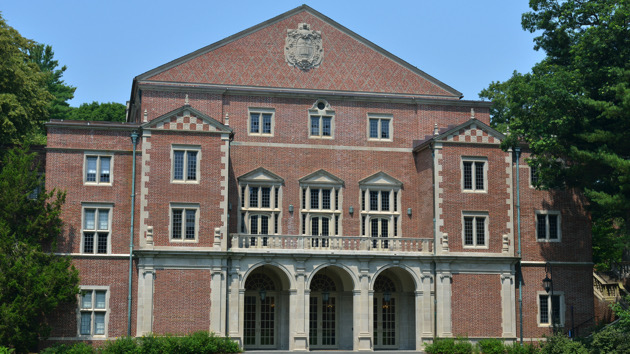
(WELLESLEY, Mass.) — Students at Wellesley College, a Massachusetts private liberal arts college for women, approved a referendum to expand the college’s admission policy and use of gender-neutral language.

Students voted on Tuesday in favor of allowing transgender men and non-binary individuals who were assigned male at birth to enroll.

In a memo released prior to the vote, Paula A. Johnson, president of Wellesley, said the outcome of the vote is “nonbinding and will not impact any of the policies or practices of the College or of student organizations at Wellesley.”

The college currently accepts applications from people who “consistently identify and live as women,” including cis, transgender, and nonbinary students.

“Although there is no plan to revisit our mission as a women’s college or our admissions policy, we will continue to engage all students in the important work of building an inclusive academic community where everyone feels they belong,” Johnson said in a separate statement to ABC News.

The memo also included a list of structural changes to be implemented following concerns shared by enrolled transgender students.

The college plans to appoint a new director for the Office of LGBTQ+ Programs and Services, offer gender and sexual orientation-affirming therapy, and expand all-gender bathrooms, among other changes.

The Wellesley College News Editorial Board responded to President Johnson’s memo in a published statement. The Board called President Johnson’s response and the Board of Trustee’s involvement as “intervening in student discourse.”

“The Wellesley News Editorial Board is once again stating that transgender and nonbinary students have always belonged and will continue to belong at Wellesley, a historically women’s college,” read the statement from the news source.

It continued, “We disapprove and entirely disagree with President Johnson’s email. As journalists, we understand the power of rhetoric to do good or harm.”

The statement closed with, “We want to end with our unequivocal support for transgender, nonbinary and gender non-conforming people at Wellesley and everywhere–who enrich all communities they are a part of.”

Mount Holyoke College, a women’s college in Massachusetts, told ABC News it has welcomed women, transgender women and men, and nonbinary and gender nonconforming students since 2014.

“Our inclusive admission policy is the 21st century expression of our founding mission to provide an intellectually adventurous education for individuals who have been marginalized on the basis of their gender, gender expression or gender identity,” the statement read.

Other women’s colleges – including Smith College, Barnard College and Bryn Mawr College – have expanded their admissions to include transgender women and nonbinary women, according to their policies listed on their respective websites.

Copyright © 2023, ABC Audio. All rights reserved.

Two dead in shooting at Oregon hotel; no ongoing threat: Police

Two dead in shooting at Oregon hotel; no ongoing threat: Police
Douglas Sacha/Getty Images

(PORTLAND, Ore.) — Two people are dead after a shooting at a hotel in Portland, Oregon, police said.

Port of Portland responded to a shooting at the Embassy Suites Portland Airport Hotel around 2 a.m. local time Wednesday. A man and woman were confirmed dead, police said. Their identities have not been confirmed.

“There is no ongoing threat to the PDX airport or the surrounding area at this time,” Port of Portland Police said in a statement.

The incident is under investigation.

Guests at the hotel told Portland ABC affiliate KATU that they heard nearly a dozen gunshots and saw blood on the floor as police escorted them out of the building.

Amid the police response, yellow crime scene tape could be seen at the entrance to the hotel, which is located near Portland International Airport. Officers could also be seen interviewing guests wrapped in blankets.

Copyright © 2023, ABC Audio. All rights reserved.

Seven Virginia deputies charged with murder in death of inmate

Seven Virginia deputies charged with murder in death of inmate
Seven Henrico County Sheriff’s deputies have been arrested and charged with second-degree murder in connection to the death of Irvo Otieno, who died in Central State Hospital in Dinwiddie, Va., while in police custody. From top left, Bradley Disse, Dwayne Bramble, Jermaine Branch, Randy Boyer; bottom from left, Tabitha Levere, Brandon Rodgers, Kaiyell Sanders. — Meherrin River Regional Jail

(HENRICO COUNTY, Va.) — Seven sheriff’s deputies from Henrico County, Virginia, have been arrested and charged with second-degree murder in the death of inmate Irvo Otieno. Otieno died while in police custody earlier this month.

Otieno, 28, was being transferred to a hospital on March 6 when he became “combative” during the intake process, according to state police. He was then physically restrained and died, according to Richmond ABC affiliate WRIC.

The deputies were arrested on Tuesday and are scheduled to appear before a grand jury on March 21, according to state records.

The seven deputies have been placed on administrative leave, pending the outcome of the cases filed against them.

The Henrico County Sheriff’s Office is also conducting an independent review of the incident and said it is fully cooperating another investigation by Virginia State Police.

“Public safety is what we stand for as a Sheriff’s Office. We will continue to maintain the highest professional standards in how we serve and protect those in our custody, the community at-large and our staff,” Henrico County Sheriff Alisa Gregory said in a statement.

The seven deputies arrested were Randy Joseph Boyer, 57; Dwayne Alan Bramble, 37; Jermaine Lavar Branch, 45; Bradley Thomas Disse, 43; Tabitha Renee Levere, 50; Brandon Edwards Rodgers, 48; and Kaiyell Dajour Sanders, 30, according to WRIC.

All seven deputies were taken to Meherrin River Regional Jail, where they are being held without bond, according to WRIC.

Copyright © 2023, ABC Audio. All rights reserved.

Experts call cryptocurrency a ‘bystander’ in SVB, Signature Bank collapses

Experts call cryptocurrency a ‘bystander’ in SVB, Signature Bank collapses
lvcandy/Getty Images

(NEW YORK) — In the wake of last year’s collapse of cryptocurrency exchange FTX, the collapse this week of Silicon Valley Bank and Signature Bank — representing the second and third largest bank failures in U.S. history — has renewed lingering questions about what role cryptocurrency is playing in financial sector failures.

Signature Bank, which is known for dealing in cryptocurrency, came under fire last year during the collapse of FTX and crypto hedge fund Alameda Research. At Silicon Valley Bank, which is known for serving the tech and startup industries since its founding 40 years ago, the withdrawal of large cryptocurrency deposits added to the fear fueling the bank run that ended in the bank’s collapse Friday.

However, experts told ABC News that cryptocurrency did not play a leading role in the banks’ failures — although the collapses will have ramifications in the cryptocurrency sector.

“I don’t think crypto has much of a role,” said David Yermack, professor of finance at NYU’s Stern School of Business. “Crypto is more or less a bystander in all of this, just like all the other companies who had deposited money.”

Yermack, who teaches a course on cryptocurrency and blockchains, said that while the situation remains fluid, two main factors appear to have contributed to the failures: The banks that failed were too concentrated in one industry, and the deregulation of banking over the last five or six years has weakened regulations.

“In the case of Silicon Valley Bank, [the concentration] would be the West Coast technology industry,” Yermack told ABC News. “And if you’ve got a group of customers who can’t pay back their loans, and they’re all correlated with each other, suddenly they all can’t pay you back together — that makes those loans a lot less valuable.”

Boston College law professor Patricia McCoy said the bank’s collapse was hastened by its large holdings of the cryptocurrency USDC, which is managed by the financial technology company Circle Internet Financial.

“At Silicon Valley Bank, really, the only role that the crypto industry played was this big deposit by Circle, which was very prone to run risk,” McCoy said. “When Circle became nervous that Silicon Valley Bank was in trouble, its natural response would be to immediately withdraw that entire very large deposit.”

“Silicon Valley Bank did not have the money — the cash — to pay all the withdrawal requests,” said McCoy. “So, the fact that Circle had such a large deposit, and it was a type of client that was prone to panic, intensified the bank run at Silicon Valley Bank.”

On the recent deregulation of banking, Yermack pointed to the banks’ investment of large amounts of capital into Treasury bonds, which are typically very safe. However, said Yermack, “because interest rates changed a lot in the last year or so, those bonds lost value — and under the accounting rules, the banks could still count them at 100 cents on the dollar.”

Simply put, Yermack said, the banks did not have to account for the depreciation in the value of the bonds, which made them look much safer than they really were.

“This gets right to the heart of the issue about how banks are supervised and regulated — that they really should have had to write those bonds down to value in real time, and make the problems more apparent much earlier,” he said.

“As somebody who deals with financial data every day, I think everything should be marked to market value,” said Yermack. “And to the extent it’s not, you run the risk of misleading people, and it seems in this case it was the banking regulators who were misled, and they just said, ‘Oh, those are government bonds. Those are the safest assets.'”

“But government bonds can lose value just like anything else,” Yermack said. “And I think … the regulators were sort of caught off guard and unawares by this.”

Copyright © 2023, ABC Audio. All rights reserved.

Why some protesters are dressed as kangaroos and clowns amid Texas hearing on abortion pill

Why some protesters are dressed as kangaroos and clowns amid Texas hearing on abortion pill
ELISA WELLS/PLAN C/AFP via Getty Images

(AMARILLO, Texas) — A ruling is expected to come down from a federal judge in Texas Wednesday that could see an abortion medication being taken off the market in the United States.

The lawsuit, filed by Alliance Defending Freedom – a Christian conservative legal advocacy group – has asked Judge Matthew Kacsmaryk of the Northern District of Texas to reverse the U.S. Food and Drug Administration’s approval of mifepristone.

If the judge rules in favor of the plaintiffs, there would be a nationwide injunction on mifepristone, affecting even states where the procedure is legal.

Another drug used in combination with mifepristone for abortions, called misoprostol, would still be available, but it’s not approved by the FDA to be used for abortions on its own.

According to a transcript of a closed-door meeting, Kacsmaryk told trial lawyers that he planned to wait until late Tuesday to make public the logistics of the hearing to avoid protests.

“This is not a gag order but just a request for courtesy given the death threats and harassing phone calls and voicemails that this division has received,” Kacsmaryk told attorneys in the case. “We want a fluid hearing with all parties being heard. I think less advertisement of this hearing is better.”

Organizers from the Women’s March said they intend to stage a “kangaroo court” outside the courthouse, where protestors will be dressed in costume to suggest the case is based entirely on fraudulent claims.

Kacsmaryk “says he doesn’t want a ‘circus-like’ atmosphere, all while behaving like a clown who treats our lives like a political game,” the organizers of the Women’s March wrote. “So, we will bring the circus to him. Come in your clown makeup, and we will show the world what the Federal Court is all about here in Amarillo, a kangaroo court!”

If Kacsmaryk rules in favor of ADF, mifepristone would, at least temporarily, be taken off the market. All states where abortion is legal would only be able to offer in-clinic procedures.

This means patients will not be able to access telehealth services to get abortion pills and clinics already experiencing a surge of patients from states where abortion is illegal could be even more inundated.

ABC News’ Anne Flaherty contributed to this report.

Copyright © 2023, ABC Audio. All rights reserved.

Exiled Chinese billionaire Guo Wengui, an ally of Steve Bannon, arrested by FBI

Exiled Chinese billionaire Guo Wengui, an ally of Steve Bannon, arrested by FBI
Former White House Chief Strategist Steve Bannon, right greets fugitive Chinese billionaire Guo Wengui before introducing him at a news conference, Nov. 20, 2018, in New York. — Don Emmert/AFP via Getty Images, FILE

(NEW YORK) — Guo Wengui, an exiled Chinese billionaire with business ties to Steve Bannon, has been arrested on federal charges out of New York.

Wengui owned the 152-foot-long yacht Lady May on which Bannon was arrested in August 2020.

Guo and Bannon have been under investigation in connection with GTV Media Group, which the Securities and Exchange Commission previously accused of violating securities laws.

The FBI arrested Guo, also known as Ho Wan Kwok, Wednesday morning in New York on charges he orchestrated a $1 billion fraud.

“Kwok is charged with lining his pockets with the money he stole, including buying himself, and his close relatives, a 50,000 square foot mansion, a $3.5 million Ferrari and even two $36,000 mattresses, and financing a $37 million luxury yacht,” U.S. Attorney Damian Williams said.

The SEC filed civil charges Wednesday that accused Guo and his financial adviser, Kin Ming Je, of “multiple offering frauds” that targeted retail investors through online and social media posts and videos.

“Since in or about April 2020, Guo has conducted fraudulent securities offerings that have collectively raised at least hundreds of millions of dollars from investors in the United States and around the world. Unbeknownst to those investors, Guo and his financial adviser, Je, misappropriated a large portion of the funds raised from certain of the Subject Offerings in order to enrich themselves and their family members,” the SEC complaint said.

Guo, 54, pitched three unregistered securities offerings to investors as a means of obtaining shares in GTV and a fourth offering as a means to obtain a crypto asset security called “H-Coin” that he falsely claimed was backed by gold reserves, the SEC said.

Wengui, a critic of the Chinese government, fled China in 2014 and is viewed as a fugitive by the PRC. He appeared on Forbes’ Billionaires List in 2015, worth an estimated $1.1 billion, but declared bankruptcy in February 2022.

Bannon helped Guo found GTV, but has not been charged.

Bannon is currently being prosecuted by the Manhattan district attorney for defrauding donors to the We Build the Wall online fundraising campaign.

Copyright © 2023, ABC Audio. All rights reserved.

Credit Suisse, Citi and more bank stocks tumble amid Silicon Valley Bank turmoil

Credit Suisse, Citi and more bank stocks tumble amid Silicon Valley Bank turmoil
Javier Ghersi/Getty Images

(NEW YORK) — Bank stocks in the U.S. and Europe tumbled on Wednesday as the global financial system continued to reckon with the Silicon Valley Bank collapse, the largest bank failure since 2008.

Shares of Credit Suisse fell more than 26% in early trading after a top backer said he would not be able to provide any more cash to support the Swiss bank.

The pressure on the banking industry appeared to strain some of the largest U.S. banks, too.

Citi fell nearly 5% on Wednesday morning while J.P. Morgan Chase and Wells Fargo each dropped nearly 4%.

The downward trend hammered the major stock indexes. The Dow Industrial Average fell more than 500 points, which amounts to a 1.3% decline; the S&P 500 and Nasdaq each fell about 1.5%.

The banking sector’s struggles mark the latest sign of fallout from the fall on Friday of Silicon Valley Bank, the 16th-largest bank in the U.S. Two days later, Signature Bank, the nation’s 29th-largest bank, closed its doors, suggesting the financial panic had spread.

Many bank stocks plummeted at the outset of this week but rallied on Tuesday, regaining much of their losses. The broad decline in early trading on Wednesday renewed fears of damage to the wider financial system.

The turn downward follows news on Tuesday that the Justice Department and the Securities and Exchange Commission are probing the fall of Silicon Valley Bank.

The Federal Reserve Board, the governing body of the Fed, announced a day earlier that it would launch a review of the “supervision and regulation of Silicon Valley Bank, in light of its failure.”

The second-biggest bank failure in U.S. history triggered a major government intervention to protect the financial system.

The Federal Deposit Insurance Corporation, which protects the stability of the financial system, took over Silicon Valley Bank on Friday in an effort to protect depositors.

Fearing a wider spread of the crisis after the collapse of Signature Bank, the FDIC, the Treasury Department and the Fed took further action on Sunday, telling depositors in both fallen banks that the FDIC would protect all of their funds, including those that exceed its $250,000 limit.

Later that day, the Fed announced an emergency lending program to cover the deposits at issue and restore wider confidence in the financial system.

Still, the worldwide fallout in the banking sector appears ongoing.

France’s two largest international banks, Societe Generale SA and BNP Paribas SA, fell more than 10% on Wednesday. Deutsche Bank AG, a top German lender, plummeted 8%.

Some financial institutions were spared, however. Schwab, the eighth-largest U.S. bank, ticked up almost 3%.

Copyright © 2023, ABC Audio. All rights reserved.

CBD hit the mainstream as a trendy sleep aid, but does it work?

CBD hit the mainstream as a trendy sleep aid, but does it work?
ArtistGNDphotography/Getty Images

(NEW YORK) — Social media users, online groups, and even celebrities like Martha Stewart, are touting CBD as a real aid for sleep, but some are beginning to wonder if the legal chemical found in marijuana really works.

Cannabidiol, known as CBD, is a compound found in marijuana but is not an intoxicant, meaning it does not cause a “high,” according to the Centers for Disease Control and Prevention.

Jessica Ater, a mother of two in Washington state, said she’s been struggling with sleep.

“I can’t sleep at night. Like that’s when my brain starts going crazy,” Ater told ABC News’ Good Morning America. “Nothing worked and, if it did work, not long term.”

After reading about CBD in an online mom’s group, Ater said she bought some CBD gummies at a dispensary that helped.

“My anxiety I mean I still have it at night, but it definitely helps shut my brain off so that I’m able to sleep,” said Ater.

However, Annie Guthrie, a college student who wanted to fall asleep earlier, said her experience with CBD chocolates didn’t work for her at all.

“I had the hardest time sleeping so I needed to try something that could help that,” Guthrie told GMA. “Nothing happened. It didn’t work. It didn’t work at all.”

Dr. Ryan Vandrey, one of the country’s preeminent scientific researchers on CBD, said CBD may have better results for people with anxiety or pain compared to those who have a hard time falling asleep.

“Someone who has insomnia might not benefit from it unless the insomnia is secondary to something else like anxiety, or pain condition,” Vandrey said to GMA.

The Food and Drug Administration has indicated that they want to create more regulations for CBD. So far they’ve only approved it for the treatment of some seizure disorders.

Vandrey said that studies that exist on CBD are small and some found that the chemical doesn’t always isolate from THC, the part of cannabis that makes you high.

“So we don’t have the large randomized controlled trials,” he said. “So we see a lot of promise but we still need more evidence.”

Copyright © 2023, ABC Audio. All rights reserved.

After the fall of Silicon Valley Bank and Signature Bank, here are tips to keep your money safe

After the fall of Silicon Valley Bank and Signature Bank, here are tips to keep your money safe
Catherine McQueen/Getty Images

(NEW YORK) — The closures of two of the nation’s largest banks over the past week have put many consumers on edge.

Silicon Valley Bank, the nation’s 16th largest bank, struggled as the sharp rise in interest rates led to a decline in the value of the bank’s Treasuries and mortgage bonds. When the bank’s value dropped, its customers, who are mostly in the tech industry, pulled their money from the institution in a so-called bank run that forced Silicon Valley Bank to close for good.

Days later, New York-based Signature Bank, the 29th-largest bank in the U.S., was ordered to close.

After the banks’ closures, even people who didn’t have money invested in Silicon Valley Bank or Signature Bank were left wondering what it might mean for them and their money.

ABC News’ Good Morning America spoke with financial expert Farnoosh Torabi, host of the “So Money” podcast, to break down what consumers need to know.

Are other banks still safe to keep money in?

Yes, according to Torabi.

“Silicon Valley Bank is making the news because it is an anomaly. It is an anomaly event in the financial world,” Torabi said. “It’s our human nature to see events like these and think this is what happens all of the time, or this is going to happen tomorrow at my bank, but it’s really important to put this in the perspective of history. Very few banks actually go completely out of business.”

The banks’ closings have prompted some people on social media to post about taking their money out of banks and storing it at home, which Torabi said would be one of the worst decisions to make at this moment.

“I can assure you that that is a not safe thing to do,” she said. “It is far worse to put your money at home, in a lockbox, under your mattress than at a bank in the United States.”

What do I need to ask my bank to make sure it is secure?

The one step Torabi says every person should take is to make sure their bank has a partnership with the Federal Deposit Insurance Corporation, better known as the FDIC.

The FDIC is an independent government agency tasked with keeping the nation’s banking system running.

Consumers can go to the FDIC website to see if their bank is insured, or ask their bank directly.

Torabi said it’s more important than ever, given the number of tech-driven, digital banks on the market, to know who is behind the bank and whether or not they are FDIC-insured.

“There are more choices as consumers, so we have to do our due diligence,” she said. “It’s very important that you do your homework, your background check, on that bank.”

What does FDIC insurance do?

If a bank is FDIC-insured, its depositors are guaranteed protection of up to $250,000 in funds for each different type of account held.

In other words, if a customer has $200,000 in checking and savings accounts at an FDIC-insured bank and that bank goes under, the FDIC will step in and pay the customer $200,000 so they do not lose the money.

Torabi said the FDIC website is, again, a great resource for people to figure out how their accounts are insured and up to what limit. In some cases, for example, a couple that has both individual and joint accounts at one bank may be insured past the $250,000 limit.

In extreme, larger cases, as with Silicon Valley Bank, the FDIC will also step in to cover beyond the $250,000 limit.

The FDIC, the Treasury Department and the Fed have told depositors in Silicon Valley Bank and Signature Bank that the FDIC would protect all of their funds, including those that exceed the $250,000 limit.

It is important to note that the FDIC does not insure risky investments like stocks, bonds or crypto.

Do I need to spread my money across multiple different banks?

Torabi said this time is a good reminder of the “importance of diversification” when it comes to our money.

“We should always be diversifying not only where we invest, but when it comes to saving, too,” Torabi said. “If you have more than $250,000 in a bank, it doesn’t necessarily mean that you’re not protected, because we know FDIC limits work in different ways, but it’s important to check. It’s important to know.”

She continued, “Maybe what you do is you put some of that money at a different institution, or you take some of it and put it in a joint account.”

Will the fall of Silicon Valley Bank and Signature Bank impact interest rates?

Over the last several months, Americans have been hit hard by both elevated inflation and aggressive interest rate hikes.

One interesting impact of the collapse of the two banks is that it could lead to slight relief for consumers.

While the Federal Reserve is expected to hike interest rates again next week to keep combating inflation, Wall Street analysts do not expect the hike to be as aggressive now because higher interest rates put even more pressure on banks, according to Rebecca Jarvis, ABC News chief business, technology and economics correspondent.

If my money wasn’t in the impacted banks, what should my biggest concern be?

According to Torabi, the economic concern she is most focused on at the moment is layoffs and making sure consumers are prepared for that worst-case scenario.

On Tuesday, for example, Facebook and Instagram parent company Meta announced it was cutting 10,000 jobs and will cancel 5,000 open positions.

Torabi said she encourages people to start thinking now about what they would need financially if they were laid off, so they can prepare.

“Doing this sort of pre-emptive crisis management now can allow you to then see, when times are still good, where the holes are in your financial life and start to fill them,” she said, adding that people should keep their resumes and networking up-to-date and ask themselves questions like, “What if I got laid off today? What would I do? Do I know how to collect unemployment? Do I have enough in savings? What would I cut out of my budget?”

Torabi said that same kind of action-oriented thinking can also apply to looking at the fall of Silicon Valley Bank and Signature Bank.

“As a consumer, as a depositor at a bank that didn’t have any relationship with SVB [Silicon Valley Bank], I think it’s not worth your time obsessing over this,” she said. “Just make sure to dot your i’s, cross your t’s, make sure your money is FDIC-insured and if you have questions, talk to your lender, talk to your bank. They would know better than anybody.”

Copyright © 2023, ABC Audio. All rights reserved.