NASA’s Solar Dynamics Observatory (SDO) captured this image of an X5.8 solar flare peaking at 9:23 p.m. EDT, May 10, 2024. (NASA)
(NEW YORK) — A moderate geomagnetic storm could bring northern lights displays to U.S. states further south than usual, forecasts show.
The National Oceanic and Atmospheric Administration Space Weather Prediction Center has issued a storm watch for a G2 geomagnetic storm due to a coronal mass ejection expected to begin Wednesday at 8 p.m. ET and continue until Thursday at 8 p.m. ET.
A coronal mass ejection is a massive eruption of solar material and magnetic field from the sun’s outer atmosphere.
Auroras can occur when the charged particles from the sun clash with the atoms and molecules in Earth’s upper atmosphere — causing those atoms and molecules to emit a glow that appears as a spectrum of light in the night sky.
In the U.S., northern lights could be visible in Alaska, Washington, Oregon, Idaho, Montana, Wyoming, North Dakota, South Dakota, Nebraska, Minnesota, Iowa, Wisconsin, Illinois, Michigan, New York, Vermont, New Hampshire or Maine, according to the NOAA aurora viewline map.
A G2 storm can also impact high-latitude power systems, spacecraft operation and high frequency radio propagation, according to NOAA. Fluctuations to weak power grids and minor impacts on satellite operations can occur as well.
Migratory animals could possibly be affected by geomagnetic storms, according to NOAA. A 2023 study found that inclement space weather may cause fewer birds to migrate during the disturbances — likely due to more difficulty in navigating — and NASA has researched whether solar storms cause an increase in marine mammal strandings, possibly due to similar navigation issues.
The month of March is often an active month for northern lights displays.
The weeks before and after the spring equinox on March 20 are considered “aurora season,” as geomagnetic storms are more likely due to the way solar wind interacts with the Earth’s magnetosphere, according to EarthSky.org.
The spring equinox comes as the solar maximum comes to a close. The sun’s 11-year cycle peaked around late 2024 and has continued to emit strong solar activity and geomagnetic storms, leading to an increase in aurora displays.
The best time to see the northern lights in the U.S. is generally between 10 p.m. and 4 a.m. local time, and traveling to the darkest location possible is recommended for the best viewing, according to NOAA.
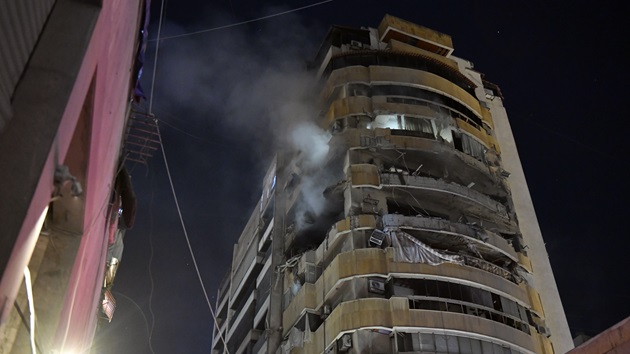
A view of the structural damage following air strikes carried out by the Israeli military in the Balata Street and El Basta areas of central Beirut, Lebanon on March 18, 2026. (Houssam Shbaro/Anadolu via Getty Images)
(LONDON) — Around 4 a.m. Wednesday, the Israel Defense Forces posted an image of several blocks in Beirut’s Bashoura neighborhood, saying in an accompanying “urgent warning” that people inside a building outlined in red should leave immediately.
“To everyone present in the building marked in red on the attached map and the adjacent buildings: You are located near a facility affiliated with the terrorist Hezbollah organization, which the Israel Defense Forces will act against,” Avichay Adraee, an IDF spokesperson, said in the Arabic-language post on social media.
About an hour later an Israeli airstrike targeted the building, reducing it to rubble.
It was not immediately clear whether anyone was inside the building at the time of its destruction. The Lebanese Ministry of Health on Wednesday said at least 10 people had been killed in overnight Israeli strikes on the capital, but did not detail where those killings had taken place. Another 27 people were injured, the ministry said.
The Israeli strikes came amid an escalation of Israel’s efforts to stamp out Hezbollah, an Iranian proxy based in Lebanon and designated by Israel and the United States as a terrorist organization.
Hezbollah on March 2 began firing missiles south into Israel, an act that it said was in support of Iran. Those launches, which effectively marked the end of a fragile ceasefire that began in November 2024, came two days after the United States and Israel launched joint airstrikes on Tehran.
The Israeli Air Force has since retaliated by carrying out strikes on the Lebanese capital and elsewhere in Lebanon, striking targets that Israel describes as Hezbollah-related.
Health officials in Lebanon said at least 912 people have been killed in strikes, along with more than 2,000 people who have been injured. Hundreds of thousands of people have been displaced by the conflict, officials said.
Among the Israeli targets have been buildings and sites throughout Lebanon associated with the Al-Qard al-Hasan Association, an organisation said to finance Hezbollah’s operations. Israel, as it posted a grainy video showing an eagle-eyed view the Bashoura-building strike, said it had overnight targeted that group. It did not explicitly link the al-Hasan group to the destroyed building.
Hezbollah has also continued targeting Israel, firing between 50 and 60 rockets overnight into the country’s north, according to the IDF. Most were intercepted, but several made direct hits, damaging property and setting fires, Israel said. Emergency medical services reported no fatalities, but several light injuries.
Israel’s air force has also over the last two weeks targeted sites across Southern Lebanon.
Israel also said on Monday it had begun a “limited and targeted” ground operation across its northern border, where it says it’s seeking to destroy Hezbollah “strongholds.” The IDF added on Tuesday that it was seeking to create an “additional layer of security for residents of northern Israel.”
Telling Lebanese residents they will not be allowed to return to southern Lebanon, Defense Minister Israel Katz has signaled Israel may carve out a buffer zone inside Lebanese territory.
“In recent days, IDF troops from the 36th Division have begun limited and targeted ground operations aimed at enhancing the forward defense area,” the IDF said in a statement. “The troops are continuing efforts to establish the forward defensive posture in order to remove threats and create an additional layer of security for residents of northern Israel.”
Israel on Wednesday issued a broad warning for anyone in southern Lebanon, saying residents south of the Litani River — which is seen in part as a geographic boundary between northern and southern Lebanon — should move north as quickly as they could.
The IDF was expecting to target “crossings” on that river, meaning bridges, in the coming hours, Israel said, adding that it was being “compelled” to carry out those strikes because of Hezbollah’s activities “with the support of the civilian population.”
“For your safety and the safety of your families, immediately move to areas north of the Litani River,” the IDF said on social media on Wednesday. “Remaining south of the Litani River may endanger your lives and the lives of your families. Please note: any movement southward may endanger your lives.”
“Accordingly, and to prevent the transfer of reinforcements and combat means, the Defense Army intends to attack crossings on the Litani River starting from midday hours today,” Adraee, the IDF spokesperson, said on social media.
It was unclear how civilians remaining in the south would be able evacuate to the north if river crossings were destroyed.
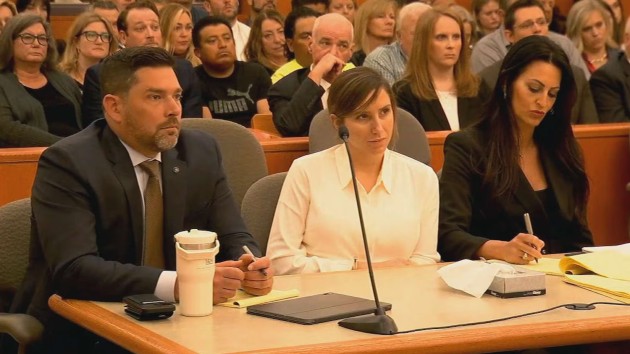
Kouri Richins who is accused of poisoning her husband with a lethal dose of fentanyl appears in court with her lawyers for a detention hearing, June 12, 2023. (ABC News)
(SUMMIT COUNTY, Utah) — When Laura, the foreperson in Kouri Richins’ murder trial, first saw the mother accused of murdering her husband, she didn’t think much of her.
“She was kind of nondescript,” she told ABC News’ “Good Morning America” in an exclusive interview. “She didn’t really show that much emotion. I was trying to get some vibe from her and it was very hard to pick up any kind of vibe.”
The foreperson was one of eight jurors in Summit County, Utah, who convicted Richins this week of murdering her husband, Eric, with a fatal dose of fentanyl in March 2022.
Richins, 35, who after her husband’s death self-published a children’s book on grieving, was found guilty on all five counts, including aggravated murder and attempted aggravated murder.
“There was never a not guilty check with anything, with any element, nothing,” the foreperson, Laura, who was juror No. 2, told ABC News of the 3-hour jury deliberations on Monday.
“Even though it was just three hours, I felt like we came into that deliberation fully loaded,” she said, adding, “To evaluate the case and to look at the evidence we had to zoom in on these little bits of evidence and kind of ignore all the fluff and ignore the drama.”
Richins in 2023 self-published her children’s book, which she said was intended to help her sons with their loss.
A month prior to her arrest in May 2023, the mom of three young sons appeared on a “Good Things Utah” segment on Salt Lake City ABC affiliate KTVX to promote the book. In the segment, Kouri Richins said her husband of nine years died “unexpectedly” and that his death “completely took us all by shock.
The jurors were shocked when they were told about the book in the final days of testimony at the trial, Laura told ABC News.
“Everyone just felt like they’re hit with a truck,” she said. “We’re like, what? What the hell is this? It was so odd and so strange.”
Richins did not testify during the three-week trial and the defense called no witnesses.
The prosecution alleged she was having an affair, was deep in debt and was desperate to inherit her husband’s estate and life insurance.
The jury found her guilty of aggravated murder and attempted aggravated murder, along with three other counts. Two were for insurance fraud connected to life-insurance policies and a third was for forgery, for forging her husband’s signature on documents.
Sentencing is scheduled for May 13 and Richins could receive 25 years to life.
“People were really sad, because they did not want to find her guilty,” Laura told ABC News of her fellow jurors. “They were really hoping that she was innocent. And we couldn’t come to that conclusion, and it was really heartbreaking.”
She added, “This devastating reality that this family was torn apart and these poor kids will really basically never have a dad or mom.”
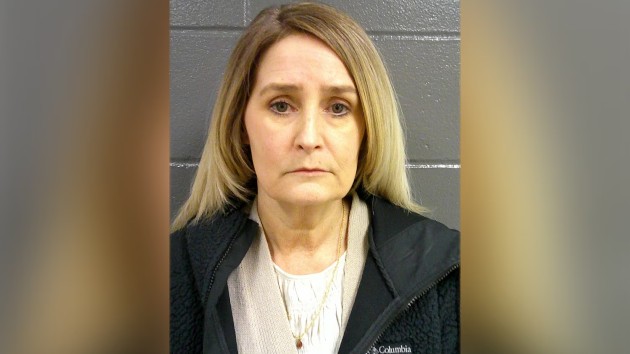
Kristin Ramsey, 53, is charged with first-degree murder in the death of Ashley Okland. (West Des Moines Police)
(WEST DES MOINES, Iowa) — A woman has been arrested in the 2011 cold case murder of an Iowa real estate agent, authorities said.
Kristin Ramsey, 53, was arrested on Tuesday for first-degree murder in the death of Ashley Okland, the West Des Moines Police said.
Police and prosecutors did not elaborate on what led to Ramsey’s arrest, but Dallas County Attorney Matt Schultz said at a Wednesday news conference, “After hearing the evidence, a Dallas County grand jury issued a true bill indicting Kristin Ramsey with the murder of Ashley Okland.”
Okland was shot and killed while working at a model townhouse on April 8, 2011, according to the Iowa Attorney General’s Office Cold Case Unit.
Okland’s death sent “shockwaves” throughout the state and “haunted” the real estate community, West Des Moines Police Assistant Chief Jody Hayes said at the news conference.
“That Friday afternoon when Ashley was taken from us seems so long ago. We had lost our hope in finding answers and having any justice,” Okland’s sister, Brittany Bruce, told reporters.
She thanked the detectives and prosecutors for their relentless work on the case.
“We have full confidence in their abilities to see this through,” she said.
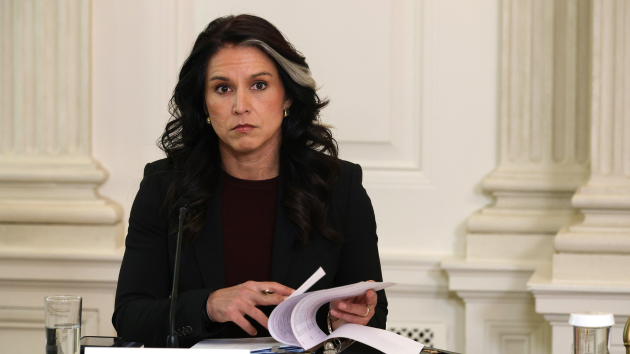
U.S. Director of National Intelligence Tulsi Gabbard attends an event where President Donald Trump delivered an announcement on his Homeland Security Task Force in the State Dinning Room of the White House on October 23, 2025 in Washington, DC. (Photo by Alex Wong/Getty Images)
(WASHINGOTN) — Director of National Intelligence Tulsi Gabbard returns to Capitol Hill this week for an annual set of hearings on worldwide threats — her most significant public appearance in months and her clearest opportunity yet to address the intelligence picture surrounding the war in Iran.
Lawmakers are expected to press Gabbard on the administration’s handling of the Iran conflict, homeland security concerns, election integrity and the broader global threat environment at a moment of rising tension.
The hearings will also offer a rare extended look at an intelligence chief who has spent much of the past year largely out of public view. The Senate Intelligence Committee is scheduled to hear from her on Wednesday, March 18, with the House hearing set for Thursday, March 19.
She heads into the hearings under fresh scrutiny after the resignation of Joe Kent, the administration’s top counterterrorism official, who stepped down Tuesday over his objections to the Iran war — the highest-profile administration official to resign publicly over the conflict.
An ODNI official told ABC News that Gabbard was not asked by the White House to fire Kent, pushing back on a report first aired by Fox News.
Kent’s resignation sharpened questions already hanging over the administration’s case for war — whether Iran posed an imminent threat to the United States.
In his resignation letter, Kent said he could not “in good conscience” support the war and argued that Iran posed “no imminent threat” to the nation, directly undercutting President Donald Trump’s repeated public justification for the conflict.
Trump has previously said Tehran posed an imminent threat and was “very nearly” in a position to strike.
Hours after Kent’s resignation became public, Gabbard moved to publicly back Trump’s authority to make that call.
In a post on X, she said the president, as commander in chief, is responsible for determining “what is and is not an imminent threat” and whether action is necessary to protect U.S. troops, the American people and the country.
She added that ODNI’s role is to coordinate and integrate intelligence, so the president has the best information available to inform his decisions, and said Trump had concluded Iran posed an imminent threat after reviewing the available intelligence.
She did not directly address Kent’s allegations or mention him by name.
The moment is especially striking for Gabbard because few figures in Trump’s orbit spent more time warning about regime change wars, intelligence failures and the cost of Washington interventionism.
As a 2020 Democratic presidential candidate, she was so vocal in her opposition to war with Iran that she sold “No War With Iran” T-shirts.
In an exclusive interview with ABC News last year, she again spoke about diplomacy, military restraint and the human cost of conflict in terms that reflected a worldview she has carried for years.
In that interview, Gabbard said the stress of her first deployment in her mid-20s turned part of her hair white, and that she kept the streak as a reminder of the high human cost of war.
“War must always be the last resort, only after all measures of diplomacy have been completely exhausted,” she told ABC News in the interview.
This week’s hearings will also unfold against the backdrop of Gabbard’s broader and unusually quiet tenure. Before taking office, she was rarely far from public view, frequently appearing on television, podcasts and social media.
As DNI, that version of her has largely faded from public view.
In recent months, she has appeared mostly in glimpses, at major administration moments.
Gabbard, a lieutenant colonel in the Army Reserve and the first person in U.S. history to serve as DNI while in military uniform, appeared in uniform at Dover Air Force Base earlier this month during the dignified transfer of six American soldiers killed in a drone strike in Kuwait in the opening hours of the war with Iran.
She also heads into the hearing with other controversies still hanging over her.
Gabbard has drawn scrutiny for her role in the administration’s election integrity push, including her appearance outside the FBI’s operation in Fulton County, Georgia, in January, where federal agents seized election materials tied to the 2020 election, and her subsequent acknowledgment that she arranged a call between President Donald Trump and the agents involved. She has also faced continuing questions about her investigations into election security in Puerto Rico and Arizona.
ABC News previously reported that Gabbard arranged a call between Trump and FBI agents involved in the seizure of election materials in Fulton County, an unusual move given the sensitivity of the investigation. In Arizona, a senior administration official told ABC News that Gabbard was not on the ground but was still “working across the agency to ensure election integrity.”
The hearing is shaping up as more than a routine annual threat assessment.
It will be the clearest public test yet of how Gabbard explains the role she has carved out inside the Trump administration, and how she reconciles the anti-war politics that helped define her rise with the office she now holds at the center of a war she is being asked to defend.
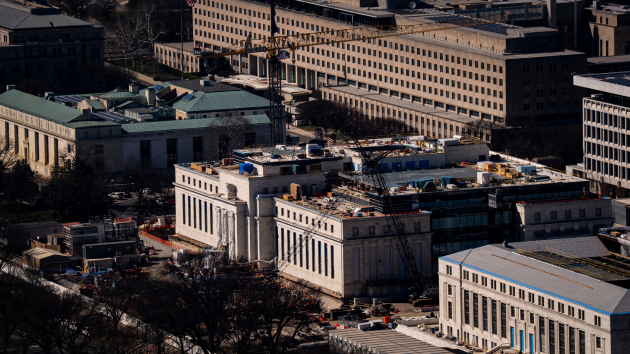
Construction on the Marriner S. Eccles Federal Reserve building on March 10, 2026 in Washington, DC. (Photo by Al Drago/Getty Images)
(WASHINGTON) — The Federal Reserve will unveil on Wednesday its latest decision on interest rates, marking the first such move since the U.S.-Israeli war with Iran drove up gasoline prices and risked a wider bout of inflation.
The elevated price increases coincide with a slowdown of economic growth, threatening to intensify an economic double-whammy known as “stagflation,” which poses difficulty for the Fed.
If the Fed opts to lower borrowing costs, it could spur growth but risk higher inflation. On the other hand, the choice to raise interest rates may slow price increases but raises the likelihood of a cooldown in economic performance.
Markets are expecting the Fed to hold interest rates steady. Investors peg the chances of interest rates being left unchanged at about 99%, according to the CME FedWatch Tool, a measure of market sentiment.
The central bank maintained the current level of interest rates at its most recent meeting in January, ending a string of three consecutive quarter-point rate cuts.
The benchmark rate stands at a level between 3.5% and 3.75%. That figure marks a significant drop from a recent peak attained in 2023, but borrowing costs remain well above a 0% rate established at the outset of the COVID-19 pandemic.
A lackluster jobs report last week showed the U.S. economy lost 92,000 jobs in February, which marked a reversal of fortunes for the labor market and erased most of the job gains recorded in 2026.
The unemployment rate ticked up from 4.3% in January to 4.4% in February, the BLS said. Unemployment remains low by historical standards.
A revised government report last week on gross domestic product (GDP) showed the economy grew at a sluggish annualized pace of 0.7% over the final three months of 2025.
Those economic headwinds helped set the conditions before the outbreak of war with Iran, which spiked oil prices and risked price increases for a host of diesel-fuel transported goods.
U.S. crude oil prices hovered at about $96 per barrel on Tuesday, soaring more than 50% since a month earlier.
Since the military conflict began, U.S. gas prices had gone up 81 cents to an average of $3.79 per gallon as of Tuesday, according to AAA.
The rate decision on Wednesday will also mark the first such move since a federal judge blocked Justice Department subpoenas to the Federal Reserve’s Board of Governors after determining the government “produced essentially zero evidence” to support a criminal investigation of Fed Chair Jerome Powell, according to an unsealed court opinion.
“A mountain of evidence suggests that the Government served these subpoenas on the Board to pressure its Chair into voting for lower interest rates or resigning,” U.S. District Judge James Boasberg said in his opinion on Friday.
Acting U.S. Attorney Jeanine Pirro blasted Boasberg as an “activist” judge and pledged to appeal his ruling.
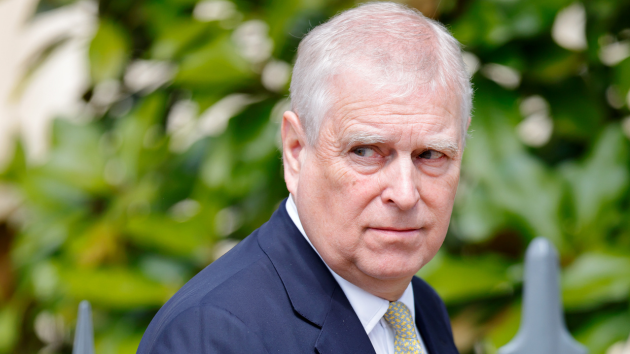
Prince Andrew, Duke of York attends the traditional Easter Sunday Mattins Service at St George’s Chapel, Windsor Castle on April 20, 2025 in Windsor, England. (Photo by Max Mumby/Indigo/Getty Images)
(NEW YORK) — One month after the arrest of former Prince Andrew, the head of London’s Metropolitan Police is pushing U.S. officials for unredacted material from the Epstein files.
In an interview with ABC News’ chief investigative correspondent Aaron Katersky, Metropolitan Police Commissioner Sir Mark Rowley said his office is in communication with the Department of Justice to access the original documents related to ongoing investigations of both Andrew Mountbatten-Windsor and former British ambassador to the U.S. Peter Mandelson.
“Of course, there’s a big body of that evidence … in the United States in all those files and at some stage we’re going to need the unredacted evidence,” Rowley said. “We need the original copy and where did it come from and that’s going to be necessary if we get to the stage of court cases.”
While Department of Justice officials have repeatedly insisted that there is nothing more to investigate stateside about the convicted sex offender and his co-conspirator Ghislaine Maxwell, officials in the United Kingdom are carrying out unprecedented investigations into both Mountbatten-Windsor and Mandelson on suspicion of misconduct in public office.
Emails released earlier this year by the Department of Justice suggested that both Mountbatten-Windsor and Mandelson appeared to share sensitive information with Epstein stemming from their roles as the U.K. trade envoy and business secretary, respectively.
In one email released by the Department of Justice and referenced by Rowley, Mandelson appeared to confirm the timing of an impending bailout with Epstein during the European Union’s sovereign debt crisis.
“It looks like it was shared with Epstein so we’re looking at that as to whether that’s a criminal offense and then colleagues in Thames Valley are looking at other documents that Andrew Mountbatten-Winsor potentially shared,” Rowley said.
According to Rowley, his department is also assessing “a whole range of suggested sexual allegations” to determine if any “merit a criminal investigation.”
Suspicion about Mountbatten-Windsor began years ago following the publication of a photograph showing the former prince with his arm around the waist of Virginia Guiffre, who said she was 17 years old at the time of the photograph. Before she died by suicide last year, Guiffre alleged that Epstein trafficked her in 2001 to have sex with the former prince. Mountbatten-Windsor has long denied wrongdoing and told the BBC in 2019 that the allegations are not credible.
When asked about the allegations made by Guiffre, Rowley claimed that the information they received from Guiffre during four recorded interviews could not support an investigation.
“With Virginia Guiffre, we did four of those interviews with her … .and those interviews didn’t give us any evidence or any allegations of sexual offending or trafficking that we could investigate in the UK,” he said. “That’s why that investigation didn’t go forward.”
However, Rowley said he hopes the renewed look at the allegations against Mountbatten-Windsor helps improve the public’s trust that law enforcement is willing to scrutinize anyone regardless of their title or status.
“Those investigations all go wherever the evidence takes them — quite comfortable with investigating sort of famous or powerful people. I think it’s really important for policing to do that, that sense of operating without fear or favor. The law applies equally to everyone, and those cases will go, say, wherever the evidence leads us to,” he said.
Rowley said the investigation into Mountbatten-Windsor comes as the Metropolitan Police is increasingly targeting sexual and domestic violence.
“We’ve developed tactics to be much more proactive and targeting the most dangerous men who pose a threat to women and children just like we do terrorists and organized crime. So, a combination of factors has seen the rates steadily coming down,” he said. “We’re making big progress and most of all — at the center of all this that matters to me and matters to policing — is trust in the police’s building in London.”
Rowley also touted some of the technology used by the Metropolitan Police to lower crime rates such as facial recognition, which he said has allowed officers to identify violent offenders while minimizing intrusion to the broader public.
While he acknowledged that the technology has raised privacy concerns, Rowley argued that the focus on targeting violent offenders using the technology can help improve the public trust — something he says is foundational to the Metropolitan Police’s 200-year history.
“[Policing] should start from the idea of having the consent of people in a democracy and use the minimum force necessary and be focused on the prevention of crime, and those ideas still guide us today,” he said.
Rowley said he hopes being upfront with the public about the work of the Metropolitan Police — from low-level street crimes to allegations against some of the most prominent people in British society — can renew the public’s trust in law enforcement.
“Policing in the UK will operate without fear or favor, that’s the fundamental principle. I think if you don’t have that, you’re never going to have the trust and confidence of the public in policing, so that’s really important to me,” he said.
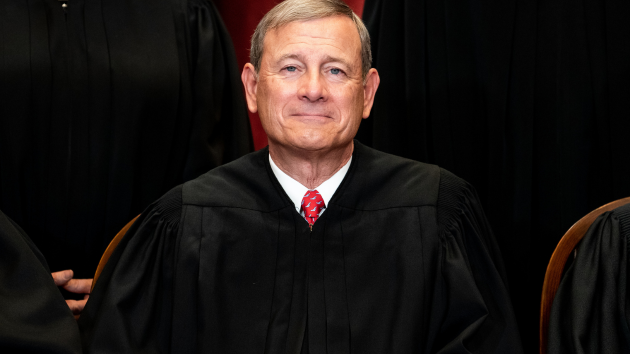
John Roberts, chief justice of the U.S. Supreme Court, during the formal group photograph at the Supreme Court in Washington, D.C., U.S., on Friday, April 23, 2021. Amy Coney Barrett’s confirmation by the Senate last year was a touchstone accomplishment for Donald Trump and congressional Republicans that solidified a 6-3 conservative majority on the court just eight days before the U.S. held its presidential election. (Photographer: Erin Schaff/The New York Times/Bloomberg via Getty Images)
(WASHINGTON) — In a rare public appearance, Chief Justice John Roberts on Tuesday addressed criticism of the Supreme Court, the federal judiciary and individual judges, saying “personally directed hostility is dangerous, and it’s got to stop.”
He did not address any specific criticism or controversy, though the comments come at a time of heightened scrutiny of the court’s recent landmark decisions on presidential power.
“It does come with the territory,” Roberts said of criticism. “It can very much be healthy. We don’t believe that we’re flawless in any way. It is important that — important that our decisions are subjected to scrutiny, and they are. The problem sometimes is that the criticism can move from a focus on legal analysis to personalities.”
Violent threats against individual judges and justices have spiked, according to law enforcement officials. Four years ago, a man was arrested outside the home of Justice Brett Kavanaugh with the intention of assassinating him. He was later convicted and sentenced to eight years in prison.
Roberts was careful to say that no “one political perspective” is responsible for the threats, but that as they become more “personal” they “can be actually quite dangerous.”
“Judges around the country work very hard to get it right,” he said, “and if they don’t, their opinions are subject to criticism. But personally directed hostility is dangerous, and it’s got to stop.”
The remarks came on the heels of a fresh wave of criticism of the Supreme Court from President Donald Trump, who has accused Roberts and several of his peers — some of whom Trump appointed to the court — of being “disloyal” and “unpatriotic” after they ruled against his sweeping global tariffs program. Trump alleged on Monday that the court is a “weaponized and unjust political organization” that is “hurting our country.”
Trump has also singled out U.S. District Judge James Boasberg for intense criticism after Boasberg on Friday blocked the Justice Department’s subpoenas of Fed Chair Jerome Powell as part of a criminal investigation into his handling of a multibillion-dollar renovation of the Federal Reserve Building.
Last year, Trump called for Boasberg’s impeachment after the judge temporarily blocked the administration’s fast-tracked deportations to Venezuela. The comments prompted a rare public response at the time from Roberts, who said in a statement that impeachment was not an appropriate recourse for a losing party in a case.
Overall, Trump has had a favorable track record at the high court during the first year of his second term, winning nearly every emergency request of permission to move forward with controversial policies being litigated in lower courts. He has also benefitted from a 2025 landmark ruling that limited the ability of judges to issue nationwide injunctions and a sweeping 2024 decision granting presidential immunity from criminal prosecution.
“I actually try not to read outside criticism too much,” Roberts told Rosenthal. “And it’s, you know, just because you’re on to something else, and you don’t want to worry too much about — you’ve done your best and that’s all you can do.”
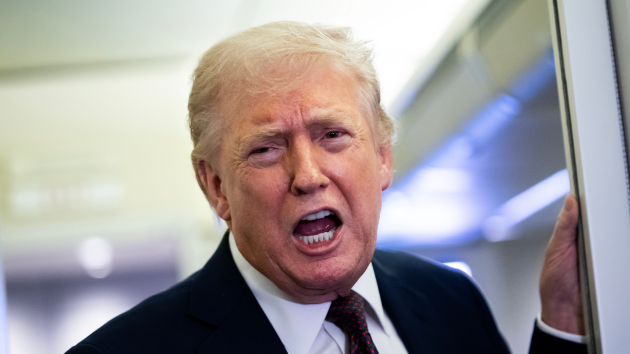
U.S. President Donald Trump speaks to members of the media onboard Air Force One on March 15, 2026 while en route to Joint Base Andrews, Maryland from West Palm Beach Florida. President Trump returned to Washington D.C. on Sunday following a weekend trip to Florida. (Photo by Nathan Howard/Getty Images)
(WASHINGTON) — After NATO allies rebuffed his call to assist the U.S. in securing the critical Strait of Hormuz, President Donald Trump said on Tuesday the U.S. doesn’t need their help after all.
“I think NATO’s making a very foolish mistake,” Trump said, airing out his grievances with the transatlantic alliance during an Oval Office meeting with Ireland’s Taoiseach Micheál Martin.
“This was a great test because we don’t need them, but they should have been there,” the president added.
Trump over the weekend requested U.S. partners in Europe and Asia send warships to help police the strait, where roughly one-fifth of the world’s oil supply is caught in the crosshairs of the U.S. and Israeli war with Iran.
No country has publicly announced plans to send ships or other kinds of assistance to unblock the strait.
“This is not our war; we did not start it,” German Defense Minister BorisPistorius said on Monday.
“We will not be drawn into the wider war,” British Prime Minister Keir Starmer similarly said.
Despite the cold shoulder from several allies, President Trump on Monday said that “numerous countries” had told him “they’re on the way.” Trump did not identify which countries, and said that Secretary of State Marco Rubio would soon provide a list.
As of Tuesday afternoon, no list had been released.
When asked what countries would join in a coalition to secure the strait, Trump said he’s had “great support from the Middle East” including Qatar, the United Arab Emirates, Saudi Arabia, Bahrain and “of course Israel” — but did not explicitly say what those countries would be doing.
In a social media post on Tuesday, Trump wrote the U.S. military had been “informed by most of our NATO ‘Allies’ that they don’t want to get involved with our Military Operation against the Terrorist Regime of Iran, in the Middle East, this, despite the fact that almost every Country strongly agreed with what we are doing, and that Iran cannot, in any way, shape, or form, be allowed to have a Nuclear Weapon.”
Trump said the U.S. didn’t need the assistance from those countries, or from “Japan, Australia and South Korea.”
“Well, we don’t need too much help, and we don’t need any help, actually,” Trump later said in the Oval Office.
When asked if he would retaliate against NATO countries for not heeding his call or if he was rethinking the alliance, Trump said no.
“I have nothing currently in mind. But I will say that I’m not exactly thrilled,” Trump said.
Trump pointed to the assistance the U.S. provided to help Ukraine fight Russia’s invasion under the Biden administration as he criticized NATO for not stepping in to help with reopening the Strait of Hormuz.
“You would have thought they would have said, ‘We’d love to send a couple of minesweepers,'” Trump said. “It’s not a big deal. It doesn’t cost very much money. But they didn’t do that. So, you know, it’s — I think it’s very unfair to the United States, not to me, but to the United States.”
Meanwhile, the impact of Iran’s stranglehold is being felt abroad and at home. The price of oil has hovered around $100 a barrel this week. In the U.S., the national average for a gallon of gas is $3.79 — up about 88 cents from a month ago.
President Trump had also called on China, which Iran is still allowing to transit the Gulf, to assist in the Strait of Hormuz. The response from China’s foreign ministry was a call for all parties to immediately stop military operations.
President Trump announced Tuesday that his previously planned trip to China is now postponed for five to six weeks. Trump didn’t provide details on why, only that he was “resetting the meeting” originally scheduled for early April.
“I look forward to seeing President Xi. He looks forward to seeing me, I think,” Trump said.
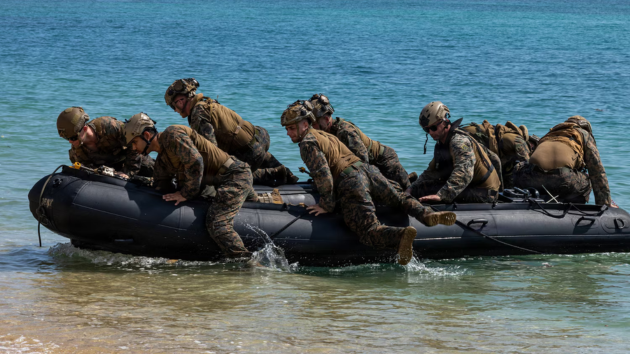
U.S. Marines land at the objective point during a simulated bilateral small boat raid at Kin Blue Training Area, Okinawa, Japan, Feb. 26, 2026. (U.S. Marine Corps)
(WASHINGTON) — The Pentagon’s decision to send the 31st Marine Expeditionary Unit, a 2,200-troop force, to the Middle East is fueling new speculation about whether the conflict with Iran couldinvolve U.S. ground troops, a step that would mark a dramatic escalation and potentially push the already unpopular war into a far more dangerous phase.
It could take up to two weeks, or the end of March, before the unit is in place and its presence unlikely to significantly shift the dynamics of the war on its own, experts say. A Marine Expeditionary Unit (MEU) can deliver an initial surge of troops quickly, but seizing and holding key terrain, or sustaining a prolonged fight, would almost certainly require a far larger ground force.
Experts say the MEU would likely be used to conduct raids across the Iranian shoreline to gain a foothold in areas across the crucial oil shipping waterway, the Strait of Hormuz, which has emerged as a contested point of the conflict.
A Quinnipiac University poll from earlier this month showed 74% of registered voters opposed sending U.S. ground troops into Iran while 20% supported it.
Asked Tuesday if he was afraid of the Iranian regime’s assertion that U.S. boots on the ground “will be another Vietnam,” President Donald Trump replied, “No, I’m not afraid. I’m really not afraid of anything.”
Sailing from the Pacific, it will likely take up to two weeks for Marines to be in place in the Middle East, and it is not yet clear what those troops would be used for. The unit operates as a self-contained, sea-based force — essentially a floating hub capable of launching troops, aircraft and equipment without relying on nearby bases or infrastructure.
Reopening the Strait of Hormuz would unlock a waterway through which 20% of the globe’s oil supply transits each day. Its closure has seen gas prices soar and markets roiled. Trump has referenced shorelines from which the Iranians can attack vessels transiting the waterway.
“Now we are pounding that area, that coast, as you know, left side,” Trump said Monday. “We’re pounding it like really pounding it hard.”
According to Michael Eisenstadt, a senior fellow at the Washington Institute, the MEU could take part in land-based “raids” on targets along that coast.
“There’s a number of missions where you can conceivably see a MEU playing a role, either unilaterally or kind of in conjunction with maybe the deployment of larger Army units,” said Eisenstadt, who believes the deployment of the MEU was likely related to the strait.
Iranian fortifications along the coast that could “interfere with convoy operations,” Eisenstadt said, could be U.S. targets. Top military leaders have said they’ve explored the potential uses of convoys, or warship escorts, to facilitate the safe passage of commercial shipping through the strait.
Raiding parties could target missile storage bunkers that are hardened and difficult for U.S. warplanes to destroy from the air.
The idea would be to “clear out the shore and then use air power to prevent them from returning once you’ve cleared out those areas,” Eisenstadt said.
Such an operation would not by itself create conditions for smooth sailing in the strait, experts told ABC News.
“My concern is that it takes so little to disrupt the shipping industry, Eisenstadt said. “If there’s a small, you know, kind of a small residual [Iranian] capability, it could still potentially be very disruptive.”
The 2,200 Marines in the MEU would limit any operation longer than a raid, which have pre-planned withdrawals. To get on land, these types of Marine units primarily seize footholds by riding small watercraft onto beaches or by helicopter insertion.
“Normally in an amphibious assault, you have all sorts of Navy landing craft behind you to sustain the force ashore. There’s none of that. There’s none of that logistical tail that would allow them to remain ashore,” said retired Marine Col. Steve Ganyard, an ABC News contributor.
Leaving strategic waters in the Pacific
The 31st Marine Expeditionary Unit is primarily based in Japan, where it routinely trains with the Japanese Self-Defense Forces on skills in high demand across the Pacific, including rapidly seizing small islands. Earlier this month, it took part in a major annual exercise that featured amphibious assault drills, marksmanship training and operations focused on capturing hostile terrain, according to the Defense Department.
Their removal from the region removes one of the primary ground combat elements in the Pacific, which could respond to a crisis with China or North Korea. Other significant combat elements in the region include the Army’s 2nd Infantry Division, stationed to bolster South Korea’s frontline against Pyongyang, as well as the Army’s 25th Infantry Division in Hawaii and the 11th Airborne Division in Alaska.
“That leaves a ground combat and amphibious capability gap in the region,” Carlton Haelig, an expert in military operations and fellow at the Center for New American Security, said.
The 11th Marine Expeditionary Unit, based out of Camp Pendleton, California, is preparing to deploy to the Pacific, according to Pentagon imagery.