Steve Bannon, former adviser to Donald Trump, speaks during the Conservative Political Action Conference (CPAC) in Grapevine, Texas, US, on Friday, March 27, 2026. (Photographer: Shelby Tauber/Bloomberg via Getty Images)
(WASHINGTON) — The Supreme Court on Monday vacated contempt-of-Congress charges against ex-Trump advisor Steve Bannon, who had refused to honor a subpoena from the committee investigating the Jan. 6 , 2021, attack, and later served a four-month sentence.
The Court did not explain its decision. There were no noted dissents.
In a brief order, the Court noted that the Trump Justice Department has moved to drop the indictment against Bannon and returned the case to a lower court for dismissal.
This is a developing story. Please check back for updates.
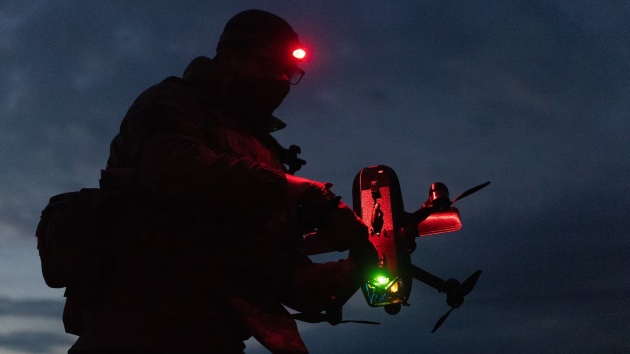
A soldier of the Unmanned Systems Forces prepares a ‘Salut’ drone on March 31, 2026 in Kharkiv, Ukraine. (Nikoletta Stoyanova/Getty Images)
(LONDON) — Ukraine launched more cross-border attack drones than Russia in a one-month period for the first time since the start of the ongoing war in 2022, according to daily data published by the Ukrainian Air Force and Russian Ministry of Defense, which was analyzed by ABC News.
Russia’s defense ministry reported downing 7,347 Ukrainian drones during March, the highest monthly total ever reported by Moscow and an average of 237 craft each day. The defense ministry only publishes figures of Ukrainian drones it claims were shot down.
Ukraine’s air force, meanwhile, said its forces faced 6,462 Russian drones and 138 missiles of various types across the course of the month, of which 5,833 drones and 102 missiles — around 90% of drones and just under 74% of missiles — were intercepted or suppressed.
Ukraine, therefore, faced a daily average of just over 208 drones and four missiles during March, according to the data published by Kyiv.
ABC News cannot independently verify the data released by either Russia or Ukraine. It is possible that both sides may seek to exaggerate the effectiveness of their air defenses, or to amplify the attacks against them as proof that their enemies are not interested in pursuing a peace deal, experts have suggested.
The combined tally of 6,600 Russian drones and missiles reported by Ukraine’s air force across the month marks a new record high for a single month of Russian long-range attacks.
Ukraine’s air force publishes what it says is a daily tally of Russian drone and missile strikes, including information as to how many munitions were intercepted and how many hit targets.
Russia launched the month’s largest overall attack in a 24-hour period by either side. Ukraine’s air force said Moscow launched 948 drones and 34 missiles into the country on March 24.
Long-range drone and missile strikes have been a key element of the conflict as both Kyiv and Moscow seek to degrade the other’s economy and undermine their ability to prosecute and fund the ongoing war. The strikes have continued despite the resumptions of U.S.-brokered peace talks.
Russia has thus far been able to launch more drones and missiles into Ukraine, with Ukrainian leaders citing Moscow’s nightly barrages as a severe threat to the country’s strategic position. But March’s data suggests the balance may be shifting more in Ukraine’s favor, as Kyiv’s long-term efforts to expand its drone and missile capabilities bear fruit.
Ukrainian President Volodymyr Zelenskyy has been clear on Kyiv’s plans to expand Ukraine’s long-range strike capabilities.
“Our production potential for drones and missiles alone will reach $35 billion next year,” Zelenskyy said in October. “Despite all the difficulties, Ukrainians are creating their national defense product that, in certain parameters, already surpasses many others in the world.”
“Never before in history has Ukrainian defense been so long-range and so felt by Russia,” Zelenskyy added. “We must make the cost of war absolutely unacceptable for the aggressor — and we will.”
To date, the majority of Ukrainian strikes are believed to have been conducted using relatively cheap, Ukrainian-made drones. Increasingly, Ukraine is also using interceptor drones designed and built by Ukrainian companies to intercept incoming Russian strike drones.
Ukraine is now producing its own cruise missiles — most notably the Flamingo, which Kyiv says has a range of more than 1,800 miles — but its drone arsenal still accounts for the vast majority of projectiles reported shot down by the Russian defense ministry, according to daily data published by Moscow.
Over the past year, Ukraine has put a special focus on attacking Russian oil refining and transport facilities, hoping — according to Ukrainian leaders — to cut into a key funding stream for Moscow and its military.
Ukraine’s most high-profile attacks of March came at Russia’s Baltic Sea ports of Ust-Luga and Primorsk — key oil export hubs. Kremlin spokesman Dmitry Peskov denounced the strikes as “terrorist attacks.”
Zelenskyy in February said Russia’s energy sector is “a legitimate target” for attacks by Ukraine, because Russia uses revenue from sales of oil to procure weapons used to attack Ukraine.
“We do not have to choose whether we strike a military target or energy,” Zelenskyy said while addressing students at the National Aviation University in Kyiv. “He sells oil, takes the money, invests it in weapons. And with those weapons, he kills Ukrainians,” Zelenskyy said of Russian President Vladimir Putin.
Russian officials have broadly sought to downplay the Ukrainian attacks, with most reports of damage or casualties attributed to falling debris from intercepted drones, rather than craft that found their mark. When Russian officials do acknowledge damage, they often describe the strikes as “terrorist attacks.”
But plenty of publicly available information — including video footage and photographs of the attacks — indicate that a significant number of Ukrainian drones do penetrate Russian air defenses and impact at sensitive military and industrial sites.
Meanwhile, drone incursions into neighboring countries — among them NATO allies — have raised concerns of the war spilling over into non-combatant nations.
NATO aircraft are regularly scrambled in NATO nations like Poland and Romania in response to Russian drone attacks along Ukraine’s western borders.
Allied officials have reported Russian drone violations in Romania, Poland, Lithuania and Latvia. Russian drones have also overflown Moldova, which is not a NATO member. Russian officials have denied responsibility for such incursions.
Stray Ukrainian drones have been reported falling in Finland, Estonia, Latvia and Lithuania.
ABC News’ Fidel Pavlenko contributed to this report.
Rep. Mike Turner, R-Ohio, appears on ABC News’ “This Week” on April 5, 2026. (ABC News)
(WASHINGTON) — Republican Rep. Mike Turner defended the U.S. war with Iran on Sunday and said that he doesn’t believe an American ground force would be required to restore freedom of navigation through the Strait of Hormuz.
“I don’t think U.S. ground troops are going to be necessary in any direct conflict,” Turner told ABC News’ “This Week” anchor George Stephanopoulos after being pressed on whether troops on the ground would be needed to reopen the strait.
“The straits are going to be open,” Turner told Stephanopoulos, but said that the U.S. cannot allow Iran to continue developing missile technology or nuclear weapons that could threaten the American homeland and Europe.
“You have to be able to address this … great sponsor of terrorism, this … global power ambition that Iran has,” he said.
Turner’s comments come as President Donald Trump has repeatedly indicated that the Strait of Hormuz is not the U.S.’s problem.
“The United States imports almost no oil through the Hormuz Strait and won’t be taking any in the future. We don’t need it. We haven’t needed it and we don’t need it,” Trump said Wednesday in a prime-time address to the nation, adding that it was the responsibility of other countries to secure the strait.
“We will be helpful, but they should take the lead in protecting the oil that they so desperately depend on,” he said.
Turner said that despite the impact of the war on global oil markets, the consequences of inaction from the U.S. against Iran would have been greater.
“Certainly, you know, Iran is going to have some things that they’re going to be able to do during the conflict,” Turner said. “But if you don’t undertake the conflict, if you just step back and watch, as the Obama administration was going to do while Iran became a nuclear power and they became North Korea, we wouldn’t be looking at the Strait of Hormuz,” he added, claiming that if Iran had developed nuclear weapons the world would be “held hostage by a terrorist state.”
“They still are being significantly diminished,” Turner said, “and their ability to be able to be marching toward a nuclear state is being eliminated.”
A Palestinian mother hugs her child as eight children evacuated from Gaza to Egypt through the Rafah Border Crossing during 2023 land attacks due to health issues return to Gaza after completing treatment, coordinated by the World Health Organization (WHO) at Nasser Medical Complex in Khan Yunis, Palestine, on March 30, 2026. (Photo by Hani Alshaer/Anadolu via Getty Images)
(NEW YORK) — When Sundus al Kurd and her daughter Bissan were separated at the start of the Israel-Hamas war in 2023, she wasn’t sure she’d see her again. Bissan was only a few days old when her mother allowed her to be medically evacuated from the Gaza strip to Egypt.
The premature baby’s life was saved, along with others, by the World Health Organization and Palestinian Red Crescent during the height of the conflict, but now the two have been reunited.
“After all this time, my daughter is finally back in my arms!” al Kurd, a young Palestinian mother, exclaims as she held her child for the first time in over two years.
“Every day, I lived with fear — fear that I might never hold her again, fear that she might forget me. But the moment I held her in my arms again, it felt like she had never been away. That moment was complete joy!” the 27-year-old al Kurd told ABC News.
Bissan, who has spent the last 2 1/2 years in Egypt, had been one of 33 premature babies trapped inside the Al Shifa hospital as the Israeli military laid siege to it in November 2023.
“Being reunited with my daughter is something I cannot fully describe. It is a mix of relief, love, and something deeper — like life returning to me after being paused for years,” al Kurd said.
“The first night we spent together was very emotional. I couldn’t sleep. I kept watching her, holding her, making sure she was really there beside me. I was afraid to close my eyes, as if it was all a dream that might disappear,” she said.
Bissan’s life had been in imminent danger in November 2023, doctors said. The neonatal unit she was in at Al Shifa hospital was running out of fuel and oxygen, cut off by the Israeli army, which had encircled the hospital, saying that Hamas had a hidden command center in its precincts, something both Hamas medical teams there strongly denied.
“They were meant to die without incubators, without oxygen, without water, but they survived every single stage of this terrible reality,” Dr. Ahmed Mokhallalati, the former head of plastic surgery at Al Shifa Hospital, told ABC News.
Mokhallalati was one of the few doctors who remained at Al Shifa throughout the Israeli siege.
“Most of the doctors were surgeons, not even pediatricians, but we felt we had to do our best to keep these kids alive,” he said. “We felt these kids were like our own babies. Every morning, we would go just to make sure they were still alive.”
He said that the extreme danger of the situation forced some parents to abandon their babies.
“There were no parents because the hospital was bombed and people were forced to flee to save their other children,” Mokhallalati said. “In the calculus of survival, mothers fled with the children who could run and left behind those who could not, making an impossible choice.”
The premature babies were left fighting for their lives for days, with one doctor and six nurses caring for them in ever-worsening conditions, he said.
“We did not know their names, we did not know their parents. They had no one to take care of them. They were wearing only small wristbands, usually with their mothers’ names, and that was the only thing we knew about them,” Mokhallalati said.
Not all the babies survived those difficult days. Five died as the team struggled to keep them fed and warm, but Mokhallalati was amazed that so many of the babies made it.
“They were meant to die at many stages but they survived every single challenge,” adding, “They were the only feeling of hope we had in all of this chaos and destruction.”
On Nov. 19, 2023, they were rescued after the WHO and the Palestinian Red Crescent were given access to the hospital. They carried the precious cargo through a war zone to a hospital in Rafah, in southern Gaza, before taking them across the border to Egypt, officials said.
“Twenty-eight were evacuated to Egypt, but seven more died there due to the difficult conditions, leaving 21 survivors. Of those, 11 have now returned on March 30, while four others came back earlier when Rafah crossing opened, and six remain in Egypt with their families,” Dr. Ahmed Al-Farra, the head of pediatrics and neonatal care at Nasser Hospital in Gaza, told ABC News.
Among those returning was 2-year-old Azzhar Kafarna. Her mother, Heba Saleh, described the ordeal of their separation to ABC News.
“For two and a half years, I felt something missing all the time,” she said.
“I missed everything — her first smile, her first steps, even the little things that any mother waits for. I used to imagine her … how she looks now, how her voice sounds, and if she would recognize me when we finally meet,” Saleh said.
She was nervous about their reunion, “When I saw her again, I didn’t know what to feel. I just hugged her tightly. It felt like I was holding all the days we lost in that one moment.”
Al-Farra examined all the toddlers when they returned to Gaza this week.
“All of the children are in generally good condition, with normal weight and growth, but many are facing complications linked to extreme prematurity,” he said.
Al-Farra says many of them, “have vision problems and need glasses because their eye nerves were not fully developed,” like Bissan, who wears a bright red pair of spectacles.
However, not all of them have come back to happy reunions.
“I don’t think all of these children have parents to return to. Some of their families were likely killed during the war,” Al-Farra said.
“In one case, there is real confusion over the child’s identity, with more than one person claiming the baby. We are still trying to identify the family, but without access to DNA testing in Gaza, we cannot confirm who the child belongs to,” he said.
Fear returning to Gaza
Both the mothers ABC News spoke with were nervous about their children returning to Gaza.
“As a mother, I feel everything at once. I’m happy she’s finally with me … but at the same time, I feel guilty, even though I had no choice. I keep thinking about all the moments I wasn’t there for.” Saled said.
“And of course, I’m worried about raising her in Gaza. I want her to feel safe, to live a normal life, but the situation here is not easy,” Saled said.
That sentiment was echoed by al Kurd.
“I am also worried. My daughter has never heard the sound of bombing before. I am afraid of how she might react if she experiences it here in Gaza. This fear is always in my heart.”
“I wish for my daughter to have a better future, a life that is safer and more stable than the one we are living now,” al Kurd said.
(NEW YORK) — The U.S. recorded strong job gains in March, rebounding from dismal losses a month earlier, a jobs report on Friday showed. The reading far exceeded economists’ expectations.
The U.S. added 178,000 jobs in March, according to the report, which marked a sharp increase from 133,000 jobs lost in the previous month.
The unemployment rate ticked down to 4.3% in March from 4.4% in February, the Bureau of Labor Statistics (BLS) said. Unemployment remains low by historical standards.
The BLS collected survey data through the second week of March, before the full effects of the oil shock set off by the Iran war.
As in previous months, the health care sector stood out as a top source of hiring in March, adding 76,000 jobs, the BLS said. The construction sector, as well as transportation and logistics, also contributed to the surge in hiring.
Employment in the federal government continued to decline in March, shedding 18,000 jobs, the BLS said. The federal government has lost 355,000 jobs, or nearly 12% of its workforce, since October 2024, a month before President Donald Trump was elected.
The government report arrived as the war continues to drive up gasoline prices and borrowing costs, threatening a drag on the economy.
The U.S. added an average of about 15,000 jobs per month in 2025, U.S. Bureau of Labor Statistics (BLS) data showed. That performance amounted to a sharp slowdown from 186,000 jobs added each month in 2024.
The U.S.-Israeli war on Iran, which began on Feb. 28, triggered one of the worst global oil shocks in decades, prompting gloomy forecasts on Wall Street of a potential U.S. recession over the coming months.
In theory, a prolonged oil shortage could drive up prices for a vast array of goods, sapping energy from consumer spending, which powers most of the nation’s economic growth.
Iran has mounted an effective closure of the Strait of Hormuz, a critical maritime trading route that facilitates the transport of about one-fifth of the global oil supply.
The U.S. is a net exporter of petroleum, meaning the country produces more oil than it consumes. But since oil prices are set on a global market, U.S. prices move in response to swings in worldwide supply and demand.
The disruption in oil shipping has pushed U.S. crude prices above $110 a barrel, which marks a staggering rise of more than 50% since the war began on Feb. 28.
Gasoline prices in the U.S. ticked up to $4.08 on average per gallon as of Wednesday, marking a leap of $1.09 over the past month, AAA data showed.
A potential jump in costs for additional goods delivered through the Strait of Hormuz — such as fertilizer and diesel fuel — could also raise prices beyond gasoline, putting pressure on the Federal Reserve to hike interest rates in an effort to quell possible inflation.
The benchmark interest rate stands at a level between 3.5% and 3.75%. That figure marks a significant drop from a recent peak attained in 2023, but borrowing costs remain well above a 0% rate established at the outset of the COVID-19 pandemic.
If the Fed moved to raise interest rates, it would hike borrowing costs for many consumer and business loans, risking a slowdown in hiring.
Speaking at Harvard University on Monday, Fed Chair Jerome Powell said the central bank could take a patient approach as it monitors potential price effects from the Middle East conflict.
“We feel like our policy is in a good place for us to wait and see how that turns out,” Powell said.
Editor’s note: This story has been updated to reflect the time period covered by the BLS survey.
U.S. Customs and Border Protection headquarters in Washington, D.C. (Photo by Kevin Carter/Getty Images)
(WASHINGTON) — An internal inspection report by Immigration and Customs Enforcement found dozens of safety and security violations at the country’s largest migrant detention center during a recent visit.
Inspectors with ICE’s Office of Detention Oversight found 49 deficiencies at Camp East Montana in El Paso, Texas, during a three-day visit.
Of those, 22 violations involved “use of force and restraints,” and included failing to document incidents, failing to provide medical exams after physical altercations, and failing to record incidents on video.
The report, however, said that none of the 49 detainees inspectors randomly interviewed made allegations of discrimination, mistreatment, or abuse.
The federal inspection of the facility, which opened in 2025, comes amid concerns from lawmakers and immigrant advocates about the treatment of detainees being held there as part of the Trump administration’s aggressive immigration crackdown.
Three people have died at the $1.2 billion facility, including a Cuban immigrant whose death was ruled a homicide by the local medical examiner. In a statement in January, the DHS said the detainee was pronounced dead after “experiencing medical distress.”
A spokesperson with the Department of Homeland Security, which oversees ICE, said that ICE has recently hired a new contractor and is “always looking at ways to improve our detention facilities to ensure we are providing the best care to illegal aliens in our custody.”
“This new contractor will allow Camp East Montana to continue abiding by the highest detention standards WITH the ability to provide MORE medical care on-site,” the statement said. “This contract also allows more on-site staff and a PRECISE quality assurance surveillance plan. ICE will have even more oversight of the contractors at this facility.”
The inspection report, released this week, identified four “priority” deficiencies within the facility’s medical department, including multiple failures to properly isolate and notify leadership regarding a detainee showing symptoms of pulmonary tuberculosis.
Inspectors found that a detainee showing symptoms of TB was not isolated, posing a potential risk to others. According to the report, the facility failed to notify ICE leadership of the medical risk.
Inspectors also found that staff at the facility did not document whether they were conducting required checks to prevent self-harm and suicide among detainees. At least one of the detainees who died is presumed to have died by suicide.
“ICE will continue to ensure that all of the detainees in our custody receive the level of care, service, and medical support they need to match our high detention standards,” the DHS statement said.
(WASHINGTON) — A U.S. fighter jet appears to have been shot down by Iran over Iranian territory, American officials confirmed to ABC News, marking a new and potentially dangerous point in the conflict.
One crew member aboard the downed two-seater F-15E has been rescued, according to a U.S. official. The status of the other crew member is unknown, according to the official.
Combat search and rescue missions have become relatively rare for U.S. forces after more than a generation of near-total air dominance, with American aircraft typically operating with limited threats to aircraft in the wars in Iraq and Afghanistan.
The early indications that the U.S. fighter was brought down by enemy fire would mark the first time Iran has successfully downed a manned American aircraft in the war, which started in February.
There are photos of the fighter that were released by Iranian state media and could not be independently verified by ABC News.
President Donald Trump has been briefed on the matter, according to White House press secretary Karoline Leavitt.
In late March, an American F-18 fighter jet narrowly dodged an Iranian surface-to-air missile, according to a U.S. official. Earlier that month, an American F-35, the Pentagon’s most advanced stealth fighter jet, had to make an emergency landing after being struck by Iranian fire. Three F-15s were also brought down over Kuwait in a friendly fire episode earlier in the war, though all six pilots ejected safely, according to U.S. officials.
The incident comes after Secretary of Defense Pete Hegseth and other U.S. officials have said that Iran’s military capabilities have been severely crippled and that the U.S. has “total air dominance” over Iran.
Trump, in a primetime address to the nation earlier this week, said the U.S. was “nearing completion” of its military objectives and that Tehran’s anti-aircraft abilities had been decimated.
“We’ve done all of it. Their navy is gone. Their air force is gone. Their missiles are just about used up or beaten,” Trump said in his speech on Wednesday night.
“They have no anti-aircraft equipment,” Trump added in his remarks. “Their radar is 100% annihilated. We are unstoppable as a military force.”
The Islamic Revolutionary Guard Corps has made a number of false claims about US aircraft being downed but the US has pushed back on those.
Iran has maintained at least some ability to continue with attacks targeting U.S. facilities in the Middle East and other countries in the region, wounding more than 300 U.S. service members, according to U.S. officials. The number of wounded has increased at a relatively steady rate each week, data reviewed by ABC News shows. Thirteen service members have been killed in action since the war began five weeks ago, according to U.S. Central Command.
This is a developing story. Please check back for updates.
(WASHINGTON) — A U.S. fighter jet appears to have been shot down by Iran over Iranian territory and a U.S. search and rescue effort is underway, three American officials confirmed to ABC News.
The status of the crew aboard the F-15E aircraft was not immediately known.
The early indications that the U.S. fighter was brought down by enemy fire would mark the first time Iran has successfully downed a manned American aircraft in the war, which started in February.
There are photos of the fighter that were released by Iranian state media and could not be independently verified by ABC News.
President Donald Trump has been briefed on the matter, according to White House press secretary Karoline Leavitt.
In late March, an American F-18 fighter jet narrowly dodged an Iranian surface-to-air missile, according to a U.S. official. Earlier that month, an American F-35, the Pentagon’s most advanced stealth fighter jet, had to make an emergency landing after being struck by Iranian fire. Three F-15s were also brought down over Kuwait in a friendly fire episode earlier in the war, though all six pilots ejected safely, according to U.S. officials.
The incident comes after Secretary of Defense Pete Hegseth and other U.S. officials have said that Iran’s military capabilities have been severely crippled and that the U.S. has “total air dominance” over Iran.
Trump, in a primetime address to the nation earlier this week, said the U.S. was “nearing completion” of its military objectives and that Tehran’s anti-aircraft abilities had been decimated.
“We’ve done all of it. Their navy is gone. Their air force is gone. Their missiles are just about used up or beaten,” Trump said in his speech on Wednesday night.
“They have no anti-aircraft equipment,” Trump added in his remarks. “Their radar is 100% annihilated. We are unstoppable as a military force.”
The Islamic Revolutionary Guard Corps has made a number of false claims about US aircraft being downed but the US has pushed back on those.
Iran has maintained at least some ability to continue with attacks targeting U.S. facilities in the Middle East and other countries in the region, wounding more than 300 U.S. service members, according to U.S. officials. The number of wounded has remained at a relatively unbroken steady rate each week, data reviewed by ABC News shows. Thirteen service members have been killed in action since the war began five weeks ago, according to U.S. Central Command.
Combat search and rescue missions have become relatively rare for U.S. forces after more than a generation of near-total air dominance, with American aircraft typically operating with limited threats to aircraft in the wars in Iraq and Afghanistan.
In 2011, Marines rescued two Air Force pilots in Libya who had ejected from their F-15 after a mechanical failure. During the 1993 Battle of Mogadishu, the mission shifted almost instantly after two U.S. Black Hawk helicopters were shot down, forcing American special operations troops to pivot toward securing crash sites and extracting surviving crew members under fire.
This is a developing story. Please check back for updates.
A burning car is seen following a crash at the Bedford Toll Plaza in Bedford, New Hampshire, March 31, 2026. (New Hampshire State Police)
(NEW HAMPSHIRE) — Voice actor and comedian Eugene Mirman thanked the “heroic people” who came to his aid after he was involved in a fiery crash at a New Hampshire toll plaza earlier this week.
New Hampshire Gov. Kelly Ayotte and her security detail came upon Tuesday’s collision — with a state trooper on her detail and two other bystanders helping pull the trapped driver from the burning vehicle, according to state police.
Mirman, 51, of “Bob’s Burgers” fame, was seriously injured in the crash.
“I am extraordinarily thankful to the heroic people that pulled me from the car and to the warm, kind and talented staff at the hospital that cared for me and got me on the mend!” Mirman said in a post on social media on Friday. “I am thankful beyond words to be here and doing relatively alright, all things considered.”
Mirman was in a “very scary car accident” and is “grateful to be on the mend,” his agent, Jay Gassner, said in a statement following the crash.
The “dangerous” collision occurred at the Bedford Toll Plaza on the F.E. Everett Turnpike shortly before noon Tuesday, according to New Hampshire State Police Director Col. Mark Hall.
The vehicle, a 2026 Lucid Gravity electric vehicle, “immediately became engulfed in flames,” Hall said during a press briefing on Tuesday. Multiple people called 911 to report the fiery crash, and that “someone in the vehicle appeared to be trapped,” police said.
The governor and her security detail came upon the accident just after the vehicle crashed into the toll plaza, as police units were responding, police said. A New Hampshire state trooper assigned to her detail and two other bystanders helped Mirman — the lone occupant — out of the burning vehicle through the window, according to Hall.
Hall said he is not identifying the trooper due to the nature of the assignment.
“It is a veteran trooper, and certainly their actions were heroic in what they did — without hesitation, put themselves in danger to render aid to somebody that clearly was in need of it,” Hall said.
“I’m proud of the State Trooper and the bystanders who saved a life at the scene of yesterday’s crash in Bedford,” Ayotte said in a statement. “It’s an example of the great work first responders do each day to keep New Hampshire safe and how Granite Staters always step up to help someone in need.”
The governor and other witnesses also provided assistance at the scene, according to Hall.
“The governor did get out of the vehicle and tried to assist in any way that she could,” Hall said, adding he believed she tried to get a fire extinguisher from a vehicle to help put the fire out.
Mirman was transported to an area hospital with serious but non-life-threatening injuries, police said.
Photos released by police showed the burning vehicle and firefighters at the scene.
The crash remains under investigation.
Mirman plays 11-year-old Gene Belcher on the hit TV show “Bob’s Burgers,” which premiered in 2011.
President Donald Trump pauses as he finishes speaking about the Iran war from the Cross Hall of the White House on Wednesday, April 1, 2026, in Washington. (Alex Brandon-Pool/Getty Images)
(WASHINGTON) — The White House, in its budget request for the 2027 fiscal year, is asking Congress to approve roughly $1.5 trillion for defense — a record-breaking military spending request as the U.S. remains in its fifth week of war with Iran.
That is a $445 billion, or a 42% increase from the 2026 total level, according to the White House. Non-defense spending would be then be reduced by $73 billion, or 10%, according to the budget released by the White House on Friday.
Major targets of the proposed spending cuts are environmental programs across many federal agencies, including canceling more than $15 billion in Department of Energy grants related to clean energy.
The White House budget also continues the Department of Education’s “path to elimination,” proposes cuts to agriculture spending by 19% and proposes slashing the Internal Revenue Service’s budget by $1.4 billion.
“The 2027 Budget builds on the President’s vision by continuing to constrain non-defense spending and reform the Federal Government,” Office of Budget and Management Director Russ Vought wrote in the request to Congress.
President Donald Trump’s budget request, which is largely a wishlist sent to Congress in order to signal the administration’s priorities, lists “reducing violent crime and protecting national security” along with “protecting the homeland and removing dangerous illegal aliens” as the other two spending priorities for the upcoming year.
The budget proposes more than $19 billion for federal law enforcement — a 15% increase from 2026. The budget maintains “critical funding” for Immigration and Customs Enforcement next year, equal to the 2026 level, including $2.2 billion to maintain 41,500 immigration detention beds.
The White House said that an investment in defense and Department of Homeland Security would be, in part, achieved through budget reconciliation.
The reconciliation process comes with a key advantage of not being subject to a filibuster. This means legislation can be passed with a simple majority vote in the Senate and that Republicans wouldn’t necessarily need Democratic support, signaling an attempt from the White House to avoid Democratic demands for non-defense increases.
“Reconciliation funding in 2027 will enable DHS to fully implement the President’s immigration enforcement initiatives, finish construction of the border wall on the Southwest border, procure advanced border security technology, and continue the largest recapitalization investment in the history of the U.S. Coast Guard,” according to the White House.