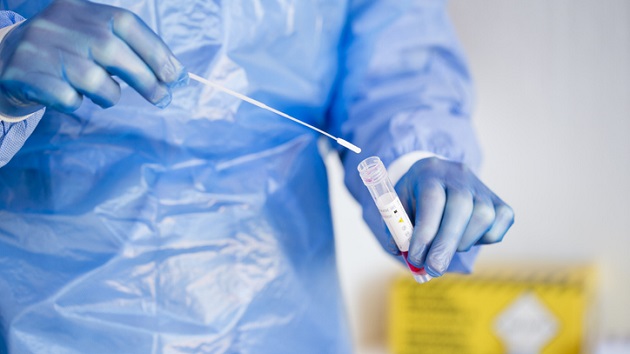
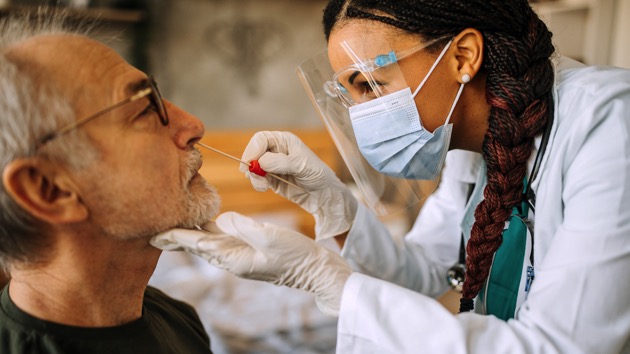
(NEW YORK) — In the wake of a flurry of warnings from officials over a potential COVID-19 resurgence in the United States, there are growing concerns among health experts that dwindling access to public data, the shuttering of COVID-19 testing sites and with an increasing number of people using at-home tests instead, it could leave the nation vulnerable to unforeseen upticks.
“Comprehensive case data is critical to an effective response. As we have seen throughout the pandemic, lack of data leads to poor decision making and ultimately costs lives,” Dr. John Brownstein, an epidemiologist at Boston Children’s Hospital and an ABC News contributor, said.
Since last summer, dozens of states and the federal agencies have opted to scale back on regular data reporting. Few states still offer COVID-19 data reports seven days a week, with most now moving to weekly or alternate-day schedules.
“Federal public health has no statutory authority to direct what and how public health data are reported. As such, CDC relies on a patchwork of approaches to collect data voluntarily provided from state and local jurisdictions,” a spokesperson from the Centers for Disease Control and Prevention said in a statement to ABC News on Monday. “This pandemic demonstrated the inadequacies of the fractured patchwork system. Immediate and complete data are needed to make the best recommendations to keep people safe and to inform policy making.”
Earlier this year, the Department of Health and Human Services also ended the requirement for hospitals to report several key COVID-19 metrics, including a daily total of the number of COVID-19 deaths, the number of emergency department overflow and ventilated patients, and information on critical staffing shortages.
The decision comes weeks after the CDC unveiled a new plan for determining COVID-19 risk in communities and updated its recommendations for face coverings, allowing nearly all of the country to go mask-free under the new guidelines.
Some health experts have criticized the guidance, suggesting it gives Americans a false sense of security, as it relies less on transmission-related data, and more on hospital bed availability.
In recent weeks, wastewater surveillance has become a critical metric. At this time, indicators suggest COVID-19 infection rates may be higher than initially thought; an uptick in the number of wastewater sites monitored by the CDC have seen an increase in the presence of the COVID-19 virus in their wastewater.
Although wastewater can be a helpful tool used as a preliminary indicator of COVID-19 trends in the U.S., experts said using it alone will not be sufficient in predicting data trends.
“While we have other surveillance tools like wastewater viral levels and hospitalization counts, testing data provides an understanding of the full extent of community transmission and ultimately risk to our health systems,” Brownstein said.
From coast-to-coast, dozens of states have moved to shutter public testing sites, as at-home COVID-19 tests have become more available in pharmacies, and offered to Americans through the federal testing program.
However, most Americans are not reporting their results to officials, and thus, experts said infection totals are likely undercounted.
Reported testing levels are now at their lowest point in eight months, with reported test numbers dropping by nearly 75% since the beginning of the year.
“Testing has always been a cornerstone of our pandemic response. Without this surveillance data, we are flying blind and are almost certainly going to repeat mistakes of the past,” Brownstein said. “When we close testing sites, we not only put individuals, their contacts and their communities at risk, we undermine critical public health infrastructure.”
Of additional concern is the potential for the CDC, which has compiled key COVID-19 metrics throughout the pandemic, to lose access to data, following the loss of federal funding.
“We are the compiler of the data, but we do not have the authority to collect it. And so we rely on states being willing to share it with us and the data use authorization, data use agreements, in order to do so,” CDC Director Dr. Rochelle Walensky told CBS News earlier this month.
When the public health declaration lapses, the agency will no longer have access to many key data metrics.
“Data related to COVID-19 test results and hospitalizations are currently available because of the public health emergency declaration. When that declaration lapses, so does CDC’s access to this important information,” the CDC representative explained.
The CDC has embarked upon an aggressive data modernization effort, the agency told ABC News. With adequate funding, these efforts will allow the sharing of data and information across the public health ecosystem.
“System-wide modernization and change to benefit all of public health requires CDC to have the authority to coordinate and guide how data are reported and shared for evidence based decision-making,” the CDC representative said. “The nation can no longer continue with the current, fractured approach of collecting public health data to be better prepared for future pandemics.”
(NEW YORK) — A new study has added to the body of research showing the risks pregnant people face due to COVID-19, especially among those who are not vaccinated.
The study, published Monday in JAMA Internal Medicine, found pregnant people with COVID-19 had more than double the risk of negative outcomes compared to pregnant people without the virus.
The negative outcomes for pregnant people with COVID-19 ranged from preterm birth and blood clots to respiratory distress syndrome and sepsis, according to researchers with Kaiser Permanente, a healthcare system, who analyzed the data of over 43,000 pregnant people during the first year of the coronavirus pandemic.
“These findings add to the growing evidence that having COVID-19 during pregnancy raises risks of serious complications,” the study’s lead author, Dr. Assiamira Ferrara, a senior research scientist and associate director of the women’s and children’s health section in the Kaiser Permanente Division of Research, said in a statement. “Coupled with the evidence that the COVID-19 vaccines are safe during pregnancy, these findings should aid patients in understanding the risks of perinatal complications and the need for vaccination.”
Earlier this year, another study found that unvaccinated pregnant people with COVID-19 and their newborn babies have a higher risk of complications from the disease, like hospitalizations and newborn deaths, compared to those who are vaccinated against the virus.
The study, led by researchers in Scotland, found that unvaccinated pregnant people who contracted COVID not only had a risk of more severe illness themselves, but also were more likely to experience pregnancy loss or preterm birth compared to other women, leading the researchers to conclude, “Addressing low vaccine uptake in pregnant women is imperative to protect the health of women and babies.”
In the United States, as of mid-March, just over 60% of all pregnant people ages 18-49 years-old in the U.S. have been fully vaccinated, prior to or during pregnancy, according to the Centers for Disease Control and Prevention.
Since the start of the pandemic, in early 2020, there have been more than 188,000 confirmed cases of COVID-19 in pregnant people in the U.S., including nearly 300 deaths, according to the CDC.
Here is what pregnant and breastfeeding people may want to know about the COVID-19 vaccines to help them make informed decisions.
1. When can pregnant people get a COVID-19 vaccine?
Everyone 5 years of age and older, including pregnant people, is now eligible to get a COVID-19 vaccination, according to the CDC.
Pregnant people can get the COVID-19 vaccine at any point in their pregnancy and while breastfeeding, and the vaccine does not need to be spaced from other vaccines, like the flu shot or Tdap booster.
2. What is the science behind the COVID-19 vaccine?
Both the Pfizer and Moderna vaccines use mRNA technology, which does not enter the nucleus of the cells and doesn’t alter the human DNA. Instead, it sends a genetic instruction manual that prompts cells to create proteins that look like part of the virus as a way for the body to learn and develop defenses against future infection.
They are the first mRNA vaccines, and have been shown to be safe during pregnancy. They do not contain a live virus.
The Johnson & Johnson vaccine uses an inactivated adenovirus vector, Ad26, that cannot replicate. The Ad26 vector carries a piece of DNA with instructions to make the SARS-CoV-2 spike protein that triggers an immune response.
This same type of vaccine has been authorized for Ebola, and has been studied extensively for other illnesses — and for how it affects women who are pregnant or breastfeeding.
The CDC has concluded that pregnant people can receive the Johnson & Johnson one-shot vaccine after reviewing more than 200 pages of data provided by the company and the U.S. Food and Drug Administration (FDA).
Vaccine experts interviewed by ABC News said although pregnant women are advised against getting live-attenuated virus vaccines, such as the one for measles, mumps and rubella, because they can pose a theoretical risk of infection to the fetus, the Johnson & Johnson vaccine doesn’t contain live virus and should be safe.
3. Are there studies on pregnant women and the COVID-19 vaccine?
Yes, studies continue to show the COVID-19 vaccine is safe and effective for pregnant people.
A study released Jan. 4 by the Centers for Disease Control and Prevention (CDC), found no increased risk of preterm or low-weight birth among babies born to pregnant people who got a COVID-19 vaccine shot, compared to babies born to unvaccinated pregnant people.
The study’s researchers, at Yale University, looked at the health data of more than 40,000 pregnant people and did not identify any safety issues with getting vaccinated while pregnant, no matter which trimester a woman was vaccinated, or how many vaccine doses she got during her pregnancy. Researchers noted most of the women included in the analysis were vaccinated in the second or third trimester, and the study didn’t include booster doses.
In a health warning issued in September urging pregnant people to get vaccinated, the CDC said data shows there is also no increased risk for miscarriage linked to receiving a COVID-19 vaccine.
“Miscarriage rates after receiving a COVID-19 vaccine were similar to the expected rate of miscarriage,” the CDC said at the time. “Additionally, previous findings from three safety monitoring systems did not find any safety concerns for pregnant people who were vaccinated late in pregnancy or for their babies.”
In addition, two studies released last summer found Pfizer and Moderna’s COVID-19 vaccines appear to be safe and effective for pregnant people, and were also found to likely offer protection as well to infants born to a vaccinated person.
One study, published May 11 in the journal Obstetrics & Gynecology, is believed to be the first to examine the impact of the COVID-19 vaccines on the placenta, according to the university. Researchers found the vaccine had no impact on pregnancy and no impact on fertility, menstruation and puberty.
A second study, led by researchers at Beth Israel Deaconess Medical Center and Harvard Medical School, looked at more than 100 women who chose to get either the Pfizer or Moderna vaccines and found that the women’s antibodies against COVID-19 after being fully vaccinated were also present in infant cord blood and breast milk.
An earlier study, a study published in the American Journal of Obstetrics & Gynecology in March found the Pfizer and Moderna vaccines are safe and effective in pregnant and lactating people and those people are able to pass protective antibodies to their newborns.
4. What are health groups saying about the COVID-19 vaccine?
In August, the CDC strengthened its recommendation for COVID-19 vaccination during pregnancy, citing new evidence of safety with the vaccines.
The nation’s two leading health organizations focused on the care of pregnant people — American College of Obstetricians and Gynecologists (ACOG) and the Society for Maternal-Fetal Medicine (SMFM) — also issued new guidelines calling on all pregnant people to get vaccinated against COVID-19.
In their joint recommendation issued in July, ACOG and SMFM said pregnant people should “feel confident” in getting vaccinated against COVID-19.
“ACOG is recommending vaccination of pregnant individuals because we have evidence of the safe and effective use of the vaccine during pregnancy from many tens of thousands of reporting individuals, because we know that COVID-19 infection puts pregnant people at increased risk of severe complications, and because it is clear from the current vaccination rates that people need to feel confident in the safety and protective value of the COVID-19 vaccines,” ACOG president Dr. J. Martin Tucker said in a statement. “Pregnant individuals should feel confident that choosing COVID-19 vaccination not only protects them but also protects their families and communities.”
“COVID-19 vaccination is the best method to reduce maternal and fetal complications of COVID-19 infection among pregnant people,” Dr. William Grobman, president of SMFM, said in a statement announcing the new recommendation, also noting the vaccines are safe before, during and after pregnancy.
The World Health Organization (WHO) also says pregnant people can be vaccinated against COVID-19.
“Limited data are currently available to assess the safety of COVID-19 vaccines in pregnancy. However, based on what we know about the kinds of vaccines being used, there is no specific reason for concern,” WHO says on its website. “None of the COVID-19 vaccines authorized to date use live viruses, which are more likely to pose risks during pregnancy.”
5. What will clinical trials be like for pregnant people?
Pfizer’s phase 2/3 trial will enroll approximately 4,000 women within weeks 24-34 of their pregnancy, the company announced in a press release.
Half will get the vaccine, and half will get a placebo.
The study will include healthy, pregnant woman age 18 and older in the U.S., Canada, Argentina, Brazil, Chile, Mozambique, South Africa, the United Kingdom and Spain.
Participants in the vaccine group will receive two doses at 21 days apart — and each woman will be followed for at least 7-10 months in order to continuously assess for safety in both participants and their infants.
Infants will also be assessed, up until 6 months of age, for transfer of protective antibodies from their vaccinated mother.
Women enrolled in the trial will be made aware of their vaccine status shortly after giving birth to allow those women who originally received placebo to be vaccinated while staying in the study.
6. Why weren’t pregnant people included in early clinical trials?
Not recruiting parents-to-be in clinical trials and medical research is nothing new, according to Dr. Ruth Faden, the founder of the Johns Hopkins Berman Institute of Bioethics and a bioethicist who studies the ethics of pregnancy and vaccines.
“For a very long time, pregnant women were not included in biomedical research evaluation efforts or clinical trials, both for concerns about fetal development and what would be the implications of giving a pregnant women an experimental drug or vaccine and also for legal liability worries from manufacturers and pharmaceutical companies,” Faden told “GMA” last month. “There’s a huge gap between what we know about the safety and effectiveness of a new drug or a new vaccine for the rest of the population and what we know about it specific to pregnancy.”
In the case of the COVID-19 vaccines, health experts have only one of the three sources of evidence that are used to evaluate safety and efficacy during pregnancy: the data on non-pregnant people who were enrolled in the clinical trials, according to Faden.
From that, Faden said, health experts can try to glean what side effects may happen to people who are pregnant, but it is not an exact science.
However, it’s considered typical — and many argue ethically appropriate — to study an unknown substance first in healthy adults and then progressively in broader and broader populations. Pregnant people and children are often tested later down the line because of concerns about potential long-term harm.
Some of the volunteers in prior COVID-19 vaccine trials that didn’t include pregnant women directly may still become pregnant during the trial. This will also give researchers some insights about the vaccine’s safety among this group.
7. Is COVID-19 more dangerous for pregnant people?
According to the CDC, COVID-19 causes a two-fold risk of admission into intensive care and a 70% increased risk of death for pregnant people.
Health experts say that with or without the vaccine, pregnant people need to continue to remain on high alert when it comes to COVID-19 by following safety protocols, including face mask wearing, social distancing and hand washing.
ABC News’ Sony Salzman, Arielle Mitropoulos, Siobhan Deshauer, Eric Strauss and Sophia Gauthier, MD, a pediatric resident physician at St. Christopher’s Hospital for Children in Philadelphia as well as a contributor to the ABC News Medical Unit, contributed to this report.
(NEW YORK) — Amid a growing COVID-19 surge occurring overseas, there are renewed concerns among health officials in the United States that the spread of the highly transmissible omicron subvariant BA.2, combined with waning vaccine immunity and the decision to end masking recommendations, could cause the country to face yet another viral resurgence.
“What we’re seeing in Europe, and particularly in the U.K., is something we really need to pay attention to because they are starting to see a reversal and a resurgence of cases,” Dr. Anthony Fauci, chief medical adviser to the White House, told “GMA3” on Friday. “So even though our cases are continuing to come down, I would not be surprised if in the next couple of weeks … that we might well see an increase in cases.”
The Centers for Disease Control and Prevention estimate that 23.1% of new cases in the U.S. are BA.2. Studies estimate that BA.2 is between 30% and 80% more infectious than the original strain, and federal data shows its presence in the U.S. is nearly doubling every week.
There are already initial indicators that the nation may be on the brink of an uptick as the nation begins to see a plateau in infection and hospitalization rates, which were previously declining.
Earlier this week, wastewater data shared by the CDC revealed that between Feb. 24 and March 10, 37% of wastewater sites monitored by the CDC have seen an increase of 100% or more of the presence of the COVID-19 virus in their wastewater. Approximately 30% of these sites have seen an increase of 1,000% or more
Nationwide, new data shows that COVID-19-related hospitalizations appear to also be plateauing following weeks of steady decline. Over the last two months, hospitalization levels had been dramatically falling, but over the last week those daily declines have become steadily smaller.
Virus-related hospitalizations now stand at about 23,000 patients, according to federal data.
“You just got over a wave of the most transmissible #SARSCoV2 variant the world has seen, with the highest level of hospitalizations in the pandemic,” Dr. Eric Topol, professor of molecular medicine at Scripps Research, said in a tweet on Thursday. “Now you are facing a variant [with] 30% more transmissibility, [without] mitigation measures, low [vaccination] coverage, and gutting funding.”
CDC Director Dr. Rochelle Walensky said Thursday that she too anticipates there could be an increase in new virus cases in the U.S. as BA.2 spreads, warning that it is “certainly … possible” that mask recommendations will have to be reimplemented.
“We want to make sure that people have an opportunity to relax their mitigation strategies when things are good, as they are right now,” Walensky said during a panel discussion with the Bipartisan Policy Center.
“But then, they should put that mask in a drawer, because if we have more cases that occur in the winter time, if we have more cases that occur because of a new variant, we want to make sure that people have the opportunity to take those masks off, so that we can re-implement them and protect people, should we need them again,” she added.
Officials are closely monitoring the viral resurgence occurring overseas, Walensky said, and looking for clues as to what it might foreshadow for the crisis in the U.S.
However, overseas, similar to the previous omicron surge, there are hopeful signs that should there be a resurgence, intensive care units and morgues will not be as overwhelmed as in past surges. In the U.K., ICU capacity has yet to see a notable increase, which experts say could ultimately prevent a significant spike in virus-related deaths.
“Their intensive care bed usage is not going up, which means they’re not seeing a blip up of severe disease,” Fauci told ABC News’ Brad Mielke on the podcast “Start Here,” in an interview that aired Friday, adding that officials in the U.K. have not reported an increase in severity due to the BA.2 subvariant.
The best way to evade a significant surge will be to get vaccinated and boosted, Fauci said.
Earlier this week, the CDC released data showing that vaccines are still dramatically reducing the risk of hospitalization or dying from COVID-19.
In January, unvaccinated adults were nine times more likely to die of COVID-19, compared to vaccinated individuals, and six times more likely to require hospitalization. Unvaccinated adults were about 21 times more likely to die of COVID-19 in January, and 12 times more likely to require hospitalization, compared to fully vaccinated and boosted adults.
Although breakthrough COVID-19 infections surged during the omicron wave in February, unvaccinated adults were still 2.8 times more likely to test positive for COVID-19 compared to fully vaccinated individuals, and 3.2 times more likely to test positive compared to fully vaccinated and boosted adults.
Experts say Americans must be flexible and willing to take on the future challenges that may present themselves as we move into the next phase of the pandemic.
“We’re not done with this pandemic as much as we all wish. We are not,” newly named White House COVID-19 coordinator Dr. Ashish Jha said during an appearance on “Good Morning America” Friday. “Whatever the pandemic throws at us, we have got to be ready for it.”
(NEW YORK) — The federal government is investing in the health and wellness of individuals at risk for or living with HIV/AIDS through mental health and substance use services from the Department of Health and Human Services (HHS).
In a release sent to ABC News, HHS announced Friday that $43.7 million from the agency’s Overdose Prevention Strategy will go towards three new grant opportunities that will be especially be targeted to underserved communities of color.
In 2020, there were almost 40 million people around the world living with HIV, according to the HHS. In the U.S., there are approximately 1.2 million people who have HIV, though about 13% don’t know it and need to be tested.
In the U.S., people of color have been majorly overrepresented in HIV diagnoses, due to a range of socioeconomic factors that increase their risk for HIV and HIV-related outcomes.
Black people represent approximately 40% of people with HIV, but make up only 13% of the U.S. population, according to HHS’ latest statistics from 2019. Hispanics and Latinos composed 25% of people with HIV, but make up 18.5% of the population.
The HHS reports that this disproportionate impact of Black and brown communities is also reflected in the demographics of newfound infections, demonstrating that prevention and treatment services are not reaching those who need it most.
“We remain committed to providing people at risk for, or living with HIV/AIDS, with the support and services they need to thrive – no matter who they are or where they live,” said Health and Human Services Secretary Xavier Becerra.
According to HHS, the funding targets areas of the country with the greatest disparities in HIV-related health outcomes and aligns with the National HIV/AIDS Strategy.
“We must increase supports and services for those who are at risk for or living with HIV/AIDS and have mental health and substance use needs,” said Miriam Delphin-Rittmon, HHS Assistant Secretary for Mental Health and Substance Use and the leader of Substance Abuse and Mental Health Services Administration.
She added, “This means connecting them to easy-to-access, culturally appropriate prevention, treatment, and recovery services.”
One grant will fund substance use disorder treatment programs for racial or ethnic minority populations at high risk for HIV/AIDs.
Another program will provide training and education around the risks of substance use and HIV/AIDS, as well as with community health workers, neighborhood navigators and peer support specialists to ensure that services are reaching those in need.
The third program, the Minority AIDS Initiative, aims to reduced the “co-occurring epidemics of HIV, Hepatitis, and mental health challenges through accessible, evidence-based, culturally appropriate treatment that is integrated with HIV primary care and prevention services.”
Anyone seeking treatment for mental health or substance use issues is urged to call SAMHSA’s National Helpline at 800-662-HELP (4357) or visit findtreatment.samhsa.gov.
(NEW YORK) — The United Nations-backed Medicines Patent Pool announced Thursday it has signed an agreement with 35 companies around the globe to produce generic versions of Pfizer’s COVID-19 antiviral pill.
The agreement will allow the treatment to be supplied to 95 low- and middle-income countries, home to more than half of the world’s population, according to the MPP.
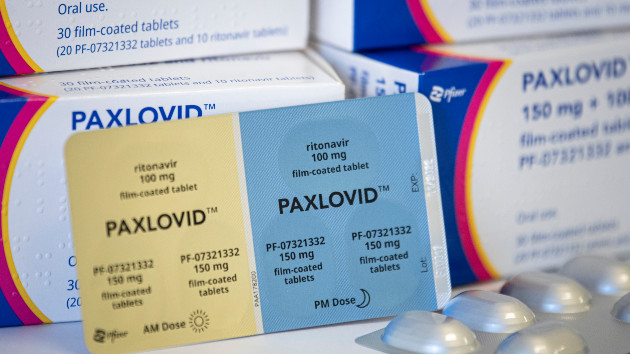
Clinical trial data has shown the pill, sold under the brand name Paxlovid, reduces the risk of hospitalization and death from COVID by 89% if taken within three days of the onset of symptoms.
Paxlovid is currently given as three pills twice daily over the course of five days.
The pill will be easier to distribute to hard-to-reach areas than monoclonal antibodies, which are given intravenously and require a medical professional to administer the treatment.
“We have established a comprehensive strategy in partnership with worldwide governments, international global health leaders and global manufacturers to help ensure access to our oral COVID-19 treatment for patients in need around the world,” Pfizer CEO Albert Bourla said in a statement.
The statement continued: “The MPP sublicensees and the additional capacity for COVID-19 treatment they will supply will play a critical role to help ensure that people everywhere, particularly those living in the poorest parts of the world, have equitable access to an oral treatment option against COVID-19.”
Paxlovid is made up of two medications: ritonavir, which is commonly used to treat HIV and AIDS, and nirmatrelvir, an antiviral that Pfizer developed to boost the strength of the first drug.
Together, they prevent an enzyme the virus uses to make copies of itself inside human cells and spread throughout the body.
According to the agreement, the companies will be able to take out sublicenses to produce raw ingredients of nirmatrelvir, co-package it with ritonavir or both steps.
Six of the companies will produce the raw ingredients, nine companies will co-package it and the remaining companies will do both, the MPP said.
The companies producing the drug span 12 countries including Bangladesh, Brazil, China, the Dominican Republic, Jordan, India, Israel, Mexico, Pakistan, Serbia, South Korea and Vietnam.
The MPP said a license was offered to a 36th company in Ukraine, but it was unable to sign due to the war with Russia.
Under the agreement, the 35 companies will not be required to pay Pfizer royalties as long as COVID-19 is classified as a public health emergency by the World Health Organization.
However, after the emergency ends, the manufacturers will be able to sell their pills to low-income countries without royalties but will be subject to a 5% to 10% royalty for sales to middle-income countries.
The MPP expects some of these companies could submit their drugs for regulatory review to health agencies in their home countries or to the WHO later this year.
In January, the group signed a similar agreement with Merck for two dozen companies to produce a generic version of its COVID-19 pill, molnupiravir.
(NEW YORK) — When the omicron wave hit the United States, it spread throughout the country like wildfire.
Different models estimate that anywhere from 50% to 75% of Americans had been infected with the variant by the end of the surge.
So, what does that mean for the rest of the U.S. population that did not contract COVID-19 during the last wave?
Because omicron has shown the ability to cause breakthrough infections despite vaccination status, this has led to fears that everyone will catch the virus at some point. However, it is important to clarify that the COVID vaccines continue to be highly effective in its primary purpose in preventing hospitalization and death.
However, public health experts said it’s not inevitable Americans who have not gotten COVID yet eventually will, and that there are several reasons people have been able to avoid infection so far, including certain behaviors such as being serious about masking and social distancing, vaccination rates and maybe even genetics.
Why some people haven’t gotten COVID yet
Doctors said there are several reasons millions of Americans have yet to contract the virus.
One of those reasons is human behaviors, meaning people take proper precautions to lower their risk of getting infected.
“Sometimes people don’t get infected because they’re extremely cautious,” Dr. Mark Siedner, an associate professor of medicine at Harvard Medical School, told ABC News. “There are people who have their own health behaviors or are concerned about their own health or their loved ones’ health.”
He continued, “Maybe they have comorbidities … they may be the kind of people who are largely homebound, or not really interacting with others or are particularly careful with things like social distancing and masking, and that certainly can stop a lion’s share of infections or certainly decrease the risk to where it’s unlikely you’d be infected.”
These people are also more likely to have been vaccinated and boosted, and the experts said it’s impossible to disregard the effect vaccination rates have had on preventing infections among Americans.
Dr. Jonathan Grein said there are also social and environmental reasons that could determine why some Americans have been infected and others haven’t, including how much time people spend with others and where they interact.
“Some people may come into more contact with people more regularly than others,” Grein, director of hospital epidemiology at Cedars-Sinai in Los Angeles, told ABC News. “There’s probably environmental reasons as well, the virus is probably transmitted more efficiently in certain circumstances like classically the indoor, poorly-ventilated space compared to outside.”
However, genetics could also be playing a role.
Dr. Stuart Ray, a professor of medicine at Johns Hopkins University, said similar circumstances have been seen in people who were at high risk for HIV but did not contract the disease.
“One of the things that was discovered was people who had mutations in [a certain] receptor … and that was associated with not getting infected with HIV and in the uncommon people who do get infected, very slow progression to AIDS,” he told ABC News.
Although there has not yet been a clearly identified gene, Ray said it’s feasible some people are genetically less susceptible to COVID.
Is infection with COVID-19 inevitable?
The experts said they don’t believe that infection with COVID-19 is inevitable or at least inevitable for everyone.
“The fact that we’re now two years in and a substantial number of people have not yet been infected is good evidence that it’s not inevitable everyone will get it,” Grein said. “One thing we’ve clearly identified is that being vaccinated is the most important variable in deciding how protected somebody may be.
However, Ray said he thinks Americans who are unvaccinated but haven’t contracted the virus yet eventually will.
“As these variants have become more and more infectious, the likelihood that those people will get infected seems significant,” he said. “I do think it’s likely that people who have not been vaccinated and not had COVID will eventually get it because we are not going to be tracking infections as closely as we have in the past and so there will be less awareness as the virus renters the community … and at some point their bubble will burst if they are not immune.”
Dr. Peter Chin-Hong, an infectious diseases specialist at the University of California, San Francisco, said the COVID situation in Hong Kong is a “horror story” of what can happen in an unvaccinated country.
Hong Kong currently has the world’s highest COVID-19 death rate with a seven-day rolling average of 37.68 per million people, according to Our World in Data.
“Many people were vaccinated in Hong Kong, but it was the reverse of the U.S.,” he said. “In the U.S, so many seniors are vaccinated and boosted, but in Hong Kong, it was the opposite. Very few seniors were vaccinated so that when they did get it, even something ‘milder’ like omicron, many people were still dying, so that is a cautionary tale.”
There is no number that determines when the U.S. has enough immunity
Early in the pandemic, Dr. Anthony Fauci and other public health experts said the U.S. needed to vaccinate 75% to 85% to achieve herd immunity.
Currently, only 65.3% of all Americans are fully vaccinated.
Then, when U.K. Prime Minister Boris Johnson announced last month he would be dropping the remaining COVID-19 restrictions in England, supporters said one of the reasons was because government figures showed more than 98% of the adult population in England has detectable COVID-19 antibodies either from previous infection or from vaccination.
But officials said there is no number in the U.S. for which officials can declare there is “enough immunity.”
“The game has been changed to some extent because the virus has been able to infect so many people and evolve,” Ray said. “It’s level of infectivity right now is so high that the levels of antibodies required to prevent infection, the level we need to achieve is hard to sustain for a long period of time.”
(GRAND RAPIDS, Mich.) — A hospital in Michigan is giving birthing parents a new way to stay connected during a cesarean section delivery.
Spectrum Health Butterworth, a hospital in Grand Rapids, Michigan, allows parents to watch the birth on a monitor display next to the operating table.
That’s how Amanda Koop got the first glimpse of her son, Charlie, when she gave birth to him at Spectrum Health Butterworth on Nov. 24, 2021.
“They turned the camera toward me right when they were going to pull him out,” Koop told “Good Morning America.” So, similar to a vaginal birth, I saw him come up and out, which was great.”
Koop, 36, had an unplanned C-section with Charlie, her first child.
She said that once it was decided she would be undergoing a C-section, a nurse asked her if she wanted the option to watch the delivery, which she otherwise would have not been able to witness. As is typical with a C-section, Spectrum Health Butterworth uses a drape to separate the expectant parents from the surgical procedure.
“I wanted to use the camera, because it could be a once-in-a-lifetime opportunity, and I didn’t want to miss those moments, his first breath, that can be something that sometimes you could miss in a C-section,” said Koop, who added that the camera also made the C-section “less anxiety-provoking.”
“For me to be able to see him in those moments, OK, he’s out and he looks great, that was extremely calming and reassuring,” she said. “There’s a lot happening in those [operating rooms]. They’re loud and they’re bright, and I could kind of focus right on him, which was really nice.”
The camera and monitor system is the same one that doctors themselves use in other surgical procedures, such as laparoscopic surgeries, according to Dr. Cheryl Wolfe, a practicing, board-certified OBGYN and vice president and department chief of women’s health at Spectrum Health, a Michigan-based health system.
Wolfe said Spectrum Health Butterworth, which delivers around 7,500 babies annually, is the only hospital she knows of in the country that has applied surgical camera technology to C-sections.
“We’re using this technology that’s been around but using it in a different way, and that is not the norm across the country,” she said. “I’m hoping that there will be more hospitals and labor and delivery units that opt to put this in place. I think their patients will be asking for it.”
Nearly 32% of all births in the United States are done by C-section, according to data from the Centers for Disease Control and Prevention.
Since the majority of C-sections are not expected, it can often feel startling for expectant parents to go from the comfort of the labor and delivery room to the sterility of the operating room, according to Wolfe.
She said the goal of giving parents the option to watch the delivery is to “flip the script” and make it a more personal experience.
“Anytime you have something unplanned, especially around something as momentous as having your child, you’re going to have some trepidation about, ‘Oh, now I need a C-section. Now I need surgery. What does that mean?'” Wolfe said. “Now you’re given an option where you can actually … watch the process, something previously you were unable to do because the technology wasn’t in place.”
The medical team is able to move the monitor so that parents can watch what they want of the delivery, as was the case during Koop’s C-section.
“I did not want to see the initial incision and getting down to the baby, so I just saw those parts that I thought were important,” Koop said, adding that the monitor’s location and flexibility also gave her husband the chance to stay by her side while choosing what he wanted to see.
“I think it can be kind of scary for people, what am I going to see, but the team does an amazing job of kind of blocking things that you don’t need to see and really focusing on that little baby,” she said. “I just thought it made such a difference in my delivery. I didn’t miss a thing.”
(WASHINGTON) — In advance of the rollout of the National Suicide Prevention Lifeline’s new three-digit number, legislators have announced a bill to help fund its implementation.
The bill includes federal funding and guidance for states and localities preparing for the July launch, including mental health block grants and $100 million to partner with cities on mobile crisis response teams to help stabilize people in need. It would also increase the amount of federal funding for the Lifeline, which runs a national backup network to receive calls that can’t be picked up at the state and local levels, and provide $10 million for an awareness campaign about the new 988 number — modeled after 911.
The 24-hour hotline has been in service since 2005 and has received more than 20 million calls.
The Substance Abuse and Mental Health Services Administration expects calls to the Lifeline to more than double during the first full year of the three-digit number, and advocates say the Lifeline is underfunded and understaffed to meet the expected increase in call volume.
Despite the effort to improve the system, advocates say, people in crisis could face delays — or might not be able to reach a counselor at all without more funding.
Rep. Tony Cárdenas, D-Calif., announced the funding bill to address that issue at a press conference Thursday.
“[My bill] is to go ahead and move 988 in the right direction — to move 988 in a direction where we’re going to have local states and local city councils and local county supervisors and mayors and governors and legislators, state legislators, to start to pass funding bills,” Cárdenas told ABC News.
The 988 Implementation Act is also co-sponsored by Rep. Lisa Blunt Rochester, D-Del., Rep. Doris Matsui, D-Calif., Rep. Brian Fitzpatrick, R-Pa., Rep. Grace Napolitano, D-Calif., Rep. Don Beyer, D-Va., and Rep. Jamie Raskin, D-Md, Rep. Seth Moulton, D-Mass.
Hannah Wesolowski, chief advocacy officer for the National Alliance on Mental Illness, said about 80% of calls to the Lifeline can be de-escalated over the phone. Of the 20% that can’t, she said, about 70% can be resolved with the help of mobile crisis response teams. The rest can go to crisis stabilization centers, after which a majority can be discharged back into the community without needing to be hospitalized.
“Mobile crisis teams, which provide an alternative to law enforcement, are so critical. Relying on law enforcement is just an ineffective way to respond to [mental health] crises. That’s not the job law enforcement signed up for, nor should we be asking them to do that,” Wesolowski said.
She added that people experiencing a mental health crisis are often taken to emergency departments that don’t specialize in psychiatric care.
“So this would really help provide capital grants and other capacity resources to build crisis receiving and stabilization facilities that really serve as kind of a psychiatric emergency room that provides that short-term stabilization, [and] connections to additional care — whether that’s helping somebody return to the community, or in some cases, might be inpatient hospitalization,” Wesolowski said. “Overwhelmingly, when this whole continuum is availabl, we can avoid a lot of that hospitalization, incarceration, homelessness and other negative outcomes that we often see with our current crisis response system.”
Taun Hall, whose son Miles was shot and killed in 2019 at age 23 while experiencing a mental health crisis in California, also spoke at the press conference. She said her family tried to get Miles help for two years, but it was “almost impossible.”
“Getting help is a reactive process and leads to criminalization, especially when police are involved and responsible for their care. This is exactly what happened to our family. I called 911 to get Miles help while he was experiencing a mental health emergency and Miles was criminalized for his Black skin,” Hall said. “He was shot and killed in the community where he lived and grew up for 18 years.”
“Everyone knows you dial 911,” Moulton said. “The same needs to be true for anyone, if you wake up in the middle of the night and you or a loved one is experiencing a mental health emergency. That’s the difference that this bill is going to make.”
Moulton, who introduced the legislation to designate 988 as the Lifeline number back in 2020, said it will save lives.
“We’ll save thousands, but we don’t want to miss a single one,” Moulton said. “We have to make sure that everybody is geared up. So no matter where you are, no matter what phone you have access to, you can get the help that you need, 24/7.”
(NEW YORK) — While many people know a trip to the hairdresser can save you from a bad hair day, it could also save your life.
That was the case for an Illinois-based woman, Mary Rahilly, who had an appointment for a cut and color. Her hairstylist, Sharon Lupo, who she visits regularly, noticed something new and unusual on her scalp — and suggested that she visit a dermatologist.
“It was almost a discolored spot. I knew I had to tell her,” Lupo told Good Morning America.
After making a rush appointment, Rahilly’s doctor could almost immediately tell it was a form of cancer and proceeded to run a biopsy, which confirmed it.
The scalp is a common place for skin cancer, Dr. Ramona Beshad, assistant professor of dermatology at St. Louis University, told GMA.
“It’s a place where skin cancers tend to be diagnosed late, because oftentimes they’re covered by hair and not easy to see,” she said.
In Rahilly’s case, Lupo was able to get a good look at what was hiding underneath her client’s hair.
Luckily, Rahilly got the squamous cell on her scalp removed before it spread.
“She knows I’m grateful and that, you know, she’s an awesome person. She is,” Rahilly said. Lupo chimed in, sharing that Rahilly called her a hero.
Skin cancer is one of the most common cancers in the United States, with one in five Americans developing it by the age of 70, according to the Skin Cancer Foundation.
Because hairstylists can play an integral role in spotting skin cancer in this often-hidden area, Beshad started Stylists Against Skin Cancer, a program to teach cosmetology students how to properly identify these cancers.
There’s also another program Sty-Lives, short for Styling Hair and Saving Lives, that is led by two Ontario-based medical students and has launched across Canada with the Save Your Skin Foundation. The foundation trains hairdressers to spot lesions on the ears, faces and scalps of their clients.
Dr. Whitney Bowe, a dermatologist, shared some of her tips and best practices for spotting skin cancer with GMA.
“I highly recommend doing a self exam every month and looking at your skin closely from head to toe,” she said.
Bowe also recommends recruiting a friend or loved one to look at places you can’t see, such as behind your ears, your back and the back of your neck as well as the legs.
When looking for skin cancer, Bowe says to look at:
A- Asymmetry
B- Border
C- Color
D- Diameter
E- Evolution
When it comes to the summer months, skin cancer prevention is key, according to Bowe.
She suggests broad spectrum sunscreen and re-applying every two hours to dry skin or more often if you are wet, swimming or sweating.
“But sunscreen is not enough,” she added. “Also wear sun protective fabric, a broad rimmed hat, sunglasses, and seek shade especially when the sun is at its peak.”
(ATLANTA) — Experts fear that COVID-19 cases in the United States will rise in the next few weeks as the new BA.2 variant continues to spread.
Data from the Centers for Disease Control and Prevention shows BA.2, which is a subvariant of omicron, has been tripling in prevalence every two weeks.
As of the week ending March 11, BA.2 makes up 23.1% of all COVID cases in the U.S. compared to 7.1% of all cases the week ending Feb. 26, according to the CDC.
Although the original omicron variant still makes up the majority of America’s COVID infections, its prevalence has dropped over the same period, from 74.5% to 66.1%.
Dr. Anthony Fauci, the nation’s top infectious disease expert, said given the growing prevalence of BA.2, he expects cases will increase within the next month.
“I would expect that we might see an uptick in cases here in the United States because, only a week or so ago, the CDC came out with their modification of the metrics for what would be recommended for masking indoors, and much of the country right now is in that zone, where masking indoors is not required,” Fauci told ABC affiliate KGTV Wednesday.
Fauci added that he believes BA.2 will become the dominant variant in the country, surpassing the original omicron variant.
He noted several European countries — such as Finland, France, Germany, the Netherlands and the United Kingdom — have reported a spike in COVID-19 over the last couple of weeks.
In the U.K., 93,943 cases were recorded Wednesday, according to Johns Hopkins University, more than double the 45,303 recorded two weeks earlier.
“It has a transmission advantage over BA.1,” Fauci said. “Namely, it is more likely to transmit, which is the reason why we’re seeing the uptick in cases in the UK and in the European countries, that have pulled back a bit on their mitigation.”
Last month, U.K. Prime Minister Boris Johnson announced any remaining COVID-19 measures in England would be dropped so the country could move into a new phase of the pandemic, which he described as “living with COVID.”
Several European countries followed suit, as did the U.S., which eased masking guidance for 70% of the country, including for schools.
Fauci said he is encouraged that BA.2 does not appear to cause more severe disease, but warned if the U.S. experiences another COVID wave, Americans must be willing to readopt mitigation measures.
“We have to be careful that if we do see a surge as a result of that, that we’re flexible enough to reinstitute the kinds of interventions that could be necessary to stop an additional surge,” he said. “I hope that doesn’t happen. But we’ll just have to wait and see.”
ABC News’ Arielle Mitropoulos contributed to this report.